Skip to content
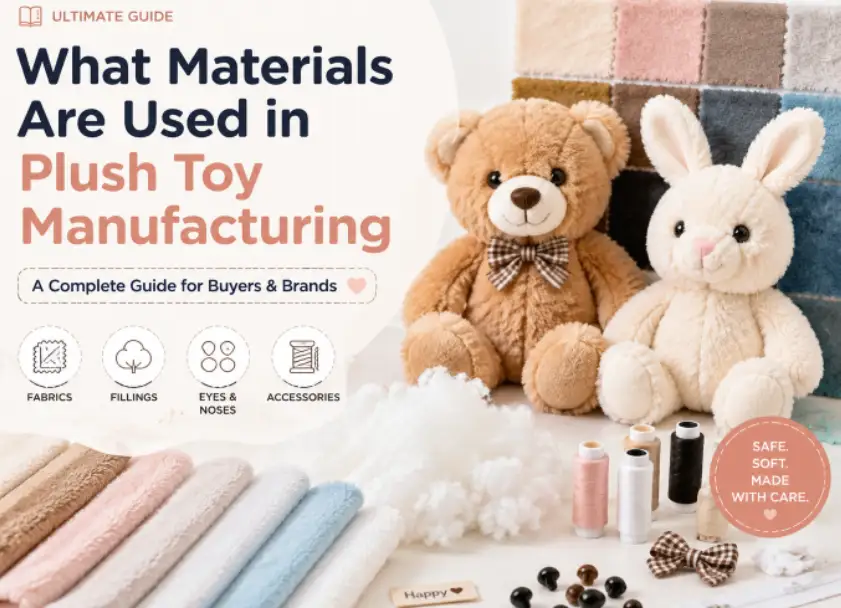
What Materials Are Used in Plush Toy Manufacturing? Understanding the fabrics, fillings, safety accessories, and certified materials used in plush toys helps you create safer, higher-quality products that meet global standards. Ask a plush toy buyer what their product is “made of,” and most will answer with a single word: fabric, stuffing, or fur. The real answer is longer, and it matters far more than most sourcing conversations acknowledge.
A finished plush toy is an assembly of six or seven distinct material categories — outer fabric, filling, safety accessories, thread, reinforcement components, backing material, and packaging — each sourced from a different supplier tier, each carrying its own cost range, compliance profile, and quality variance. A quotation that names only “plush fabric” and “PP cotton filling” describes perhaps 60 percent of what actually determines how a toy feels, performs, and passes inspection.
This gap matters commercially. Buyers who understand the material stack behind a plush toy can read a quotation the way an engineer reads a bill of materials — spotting where corners have been cut, where certification is missing, and where a marginally higher unit price reflects a genuinely different product rather than a worse deal. Buyers who do not understand the material stack are left comparing finished units on price and appearance alone, which is precisely the comparison that produces expensive surprises after bulk production begins.
This guide breaks down every material category used in plush toy manufacturing — what each one is, how the common variants differ, what drives cost within each category, and which compliance considerations apply. It is written for buyers, product managers, and brand teams who need to evaluate plush toy specifications with the same rigor they would apply to any other manufactured product.
What Are the Core Material Categories in Plush Toy Manufacturing?
Every plush toy, regardless of design complexity, is built from the same set of core material categories. Understanding this structure is the starting point for any serious material evaluation, because it gives buyers a checklist against which any quotation or specification sheet can be measured.
Plush toy manufacturing uses seven core material categories: outer fabric (the visible surface), filling material (the internal stuffing that gives shape and softness), safety accessories (eyes, noses, joints, and any attached hard components), thread and stitching materials (structural and decorative), reinforcement and backing materials (fabric layers that support seams and internal structure), weighting materials (for weighted plush products), and packaging materials. Each category carries independent quality tiers, cost implications, and compliance requirements that combine to determine the total material cost and safety profile of the finished product.
Core Material Categories in Plush Toy Manufacturing
| Material Category | Function | Typical Share of Material Cost | Key Variable |
|---|---|---|---|
| Outer fabric | Visible surface, texture, appearance | 35–45% | Fiber type, pile height, density |
| Filling material | Shape, softness, weight | 20–30% | Fiber grade, density, compliance |
| Safety accessories | Eyes, noses, joints, closures | 10–20% | Material, attachment method, testing |
| Thread and stitching | Seam strength, embroidery detail | 5–10% | Tensile strength, colorfastness |
| Reinforcement/backing | Seam support, structural integrity | 5–8% | Fabric weight, placement |
| Weighting material (if applicable) | Added weight for sensory or comfort products | Varies | Material type, containment design |
| Packaging | Protection, presentation, and compliance labeling | 5–10% | Material, printing, structural design |
These proportions shift depending on product type. A simple flat plush character skews heavily toward fabric and filling cost, while a plush toy with embedded electronics, weighted inserts, or multiple attached accessories shifts a larger share of material cost toward the accessories and reinforcement categories. Any material discussion — whether internal costing or supplier comparison — should be organized around this seven-category structure rather than treated as a single undifferentiated “material” line item.
Why Material Selection Is the Single Biggest Lever on Plush Toy Cost and Quality
Materials typically represent 40 to 60 percent of the total production cost of a plush toy, making material selection the single largest lever available to both buyers and manufacturers for managing cost, quality, and compliance simultaneously. Labor and overhead costs are relatively fixed within a given factory’s operating structure; material costs, by contrast, can vary by a factor of two or three within the same product category depending on the specific fiber, grade, and certification chosen.
This is why two quotations for what appears to be an identical 12-inch plush bear can differ by 25 to 40 percent in unit price without either factory misrepresenting anything — they are simply quoting different material stacks. Recognizing this is the first step toward reading plush toy specifications critically rather than comparing finished-unit prices in isolation.
What Types of Outer Fabric Are Used in Plush Toys, and How Do They Differ?
Outer fabric is the material category buyers notice first, because it determines how the toy looks and feels in the hand — but it is also the category with the widest quality spread and the most frequent source of specification ambiguity in quotations.
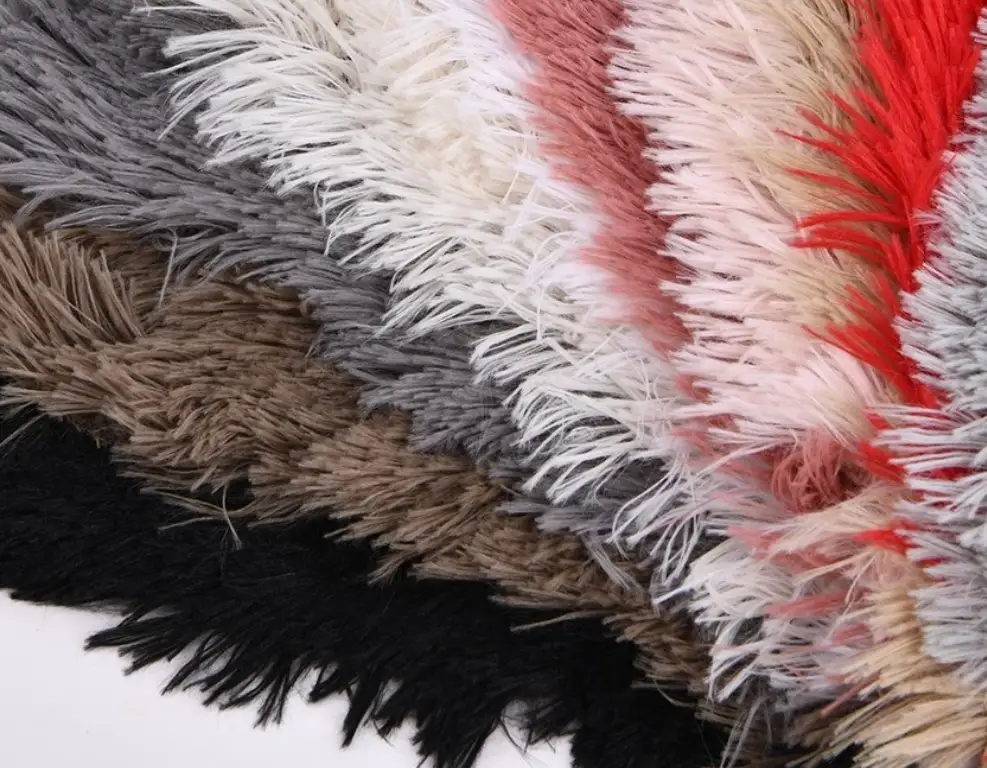
The outer fabric used in plush toy manufacturing falls into several distinct categories: minky (also called cuddle fabric), velboa, faux fur (short-pile and long-pile), fleece, sherpa, and specialty fabrics such as bamboo-blend or organic cotton plush. Each fabric type is defined by fiber content, pile height, pile density, and backing construction — variables that determine both the tactile quality of the finished toy and its cost per meter.

Comparison of Common Outer Fabrics Used in Plush Toy Manufacturing
| Fabric Type | Typical Fiber Content | Pile Height | Common Use Case | Relative Cost |
|---|---|---|---|---|
| Minky / cuddle plush | 100% polyester | Very short (1–3mm) | Baby comforters, soft toys, blankets | Low–Mid |
| Velboa | Polyester, sometimes poly-cotton blend | Short (2–5mm) | Character plush, standard stuffed animals | Low–Mid |
| Short-pile faux fur | Polyester or acrylic | 5–15mm | Realistic animal plush, textured surfaces | Mid |
| Long-pile faux fur | Polyester or acrylic, sometimes a modacrylic blend | 20–50mm+ | Premium animal replicas, shaggy character designs | Mid–High |
| Fleece/sherpa | Polyester | Textured loop or brushed surface | Blankets, plush-lined accessories | Low |
| Bamboo/organic cotton blend | Cotton or bamboo viscose blend | Varies | Eco-positioned or premium infant lines | High |
Fabric weight, measured in grams per square meter (GSM), is a specification that buyers frequently overlook but that has a direct relationship to both feel and durability. A minky fabric at 280 GSM feels noticeably thinner and less substantial than the same fabric at 380 GSM, and the lower-weight version is also more prone to seam stress and thinning at high-friction points such as ears, paws, and tails. Requesting GSM specification alongside fabric name is one of the simplest ways to add precision to a fabric comparison across suppliers.
Tip: When a quotation lists only a fabric name such as “minky” or “faux fur” without a GSM figure, pile height, or fiber composition, request all three before comparing prices. Two suppliers can quote “minky” fabric at prices that differ by 30 percent because one is specifying 240 GSM economy-grade material and the other 340 GSM premium-grade material — a difference that is invisible until the fabric name is unpacked into its underlying specification.
How Does Pile Density Affect the Feel and Durability of Plush Fabric?
Pile density — the number of fiber tufts per unit area of backing fabric — is distinct from pile height and affects both the visual richness of the fabric surface and its resistance to matting and thinning over repeated handling. A high-density, short-pile fabric can feel more luxurious and hold its appearance longer than a low-density, long-pile fabric, even though the latter may look more dramatic in initial photography. Buyers evaluating fabric samples should assess density by parting the pile with a finger and observing how much backing fabric is visible; a high-quality plush fabric shows minimal backing through the pile even when compressed, while a lower-density fabric reveals visible gaps.
What Is the Difference Between Woven and Knitted Backing Fabric?
The backing structure beneath the pile — the base fabric into which fibers are tufted or knitted — is typically either a knitted backing or a woven backing, and this distinction affects both stretch behavior and seam performance. Knitted backings offer more stretch and drape, which suits rounded plush forms and curved seams, while woven backings offer more dimensional stability and are often preferred for flat panels, appliqué pieces, or products requiring precise pattern registration. Specification sheets that do not indicate backing type leave an important durability variable unaddressed, particularly for products with complex three-dimensional shaping.
How Do Compliance Standards Affect Outer Fabric Selection?
Fabric intended for regulated markets — the United States, the European Union, and increasingly other jurisdictions with consumer product safety frameworks — must meet flammability and chemical safety requirements that vary by market. In the US, plush fabric is generally subject to the flammability requirements under 16 CFR Part 1610, while chemical restrictions under CPSIA apply to any accessible surface material.
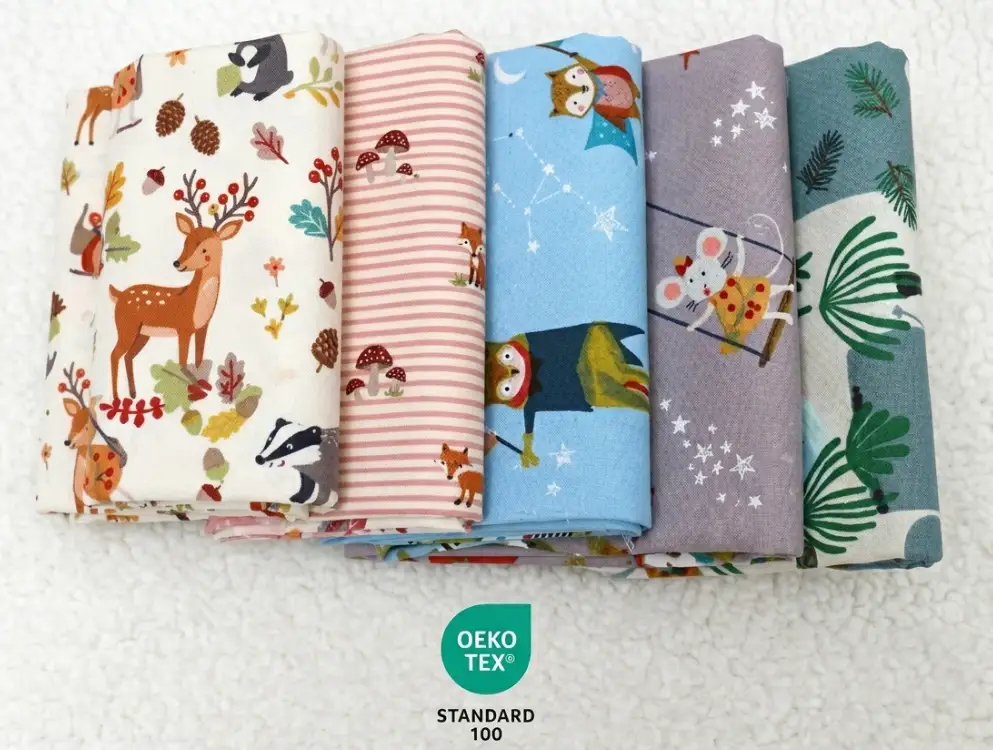
In the EU, EN 71-2 flammability requirements and REACH chemical restrictions apply. Fabric suppliers with OEKO-TEX Standard 100 certification provide documentation that the fabric has been tested for a defined list of harmful substances, which substantially reduces the buyer’s compliance verification burden compared to uncertified fabric sources.
What Filling Materials Are Used Inside Plush Toys?
Filling material is the internal component that gives a plush toy its shape, softness, and resilience after repeated compression — and it is also one of the most frequently misunderstood elements of plush toy specification, because “PP cotton” is used as a catch-all term that obscures meaningful quality variation.
The filling materials used in plush toy manufacturing are primarily polypropylene (PP) cotton — a synthetic fiberfill — supplemented in specific product types by memory foam beads, glass or plastic microbeads for weighted products, recycled fiber fill, and, in a smaller segment of the market positioned around sustainability, natural fillings such as buckwheat hulls or organic cotton fiber. Each filling type differs in cost, feel, weight, and compliance profile, and the choice of filling has a direct effect on how the finished toy compresses, rebounds, and ages with use.
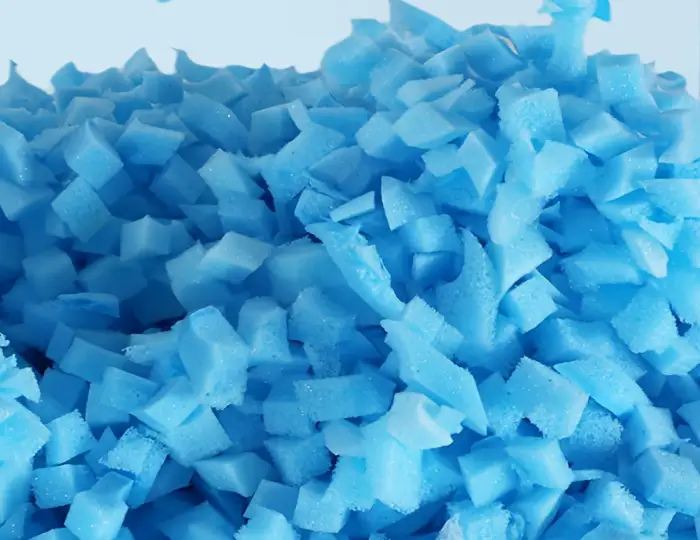
Comparison of Common Filling Materials Used in Plush Toy Manufacturing
| Filling Type | Feel/Function | Compliance Notes | Typical Use |
|---|---|---|---|
| Standard PP cotton (virgin fiber) | Soft, resilient, consistent rebound | Requires flammability and chemical testing | Most stuffed animals and character plush |
| Recycled PP cotton | Slightly less uniform rebound, softer initial feel | Same testing requirements; sourcing traceability matters | Sustainability-positioned product lines |
| Microbead / plastic pellet fill | Adds shifting weight, used in limbs or bean-bag bases | Choking hazard scrutiny for small parts; containment testing critical | Bean-bag style plush, weighted limbs |
| Glass bead fill (weighted plush) | Dense, evenly distributed weight | Requires reinforced containment and seam testing | Weighted comfort and sensory plush |
| Memory foam/foam chip blend | Slower rebound, denser hand-feel | Flammability testing on the foam component is required | Premium cushions, specialty plush |
| Natural fiber (buckwheat, organic cotton) | Firmer, more textured feel | Allergen and pest-control sourcing verification needed | Niche eco-positioned products |
Filling density — measured by how tightly the fiber is packed and how much fill by weight goes into a given plush volume — is the variable most responsible for the difference between a toy that feels substantial and holds its shape and one that feels thin or collapses after handling. A factory quoting a lower unit price frequently achieves part of that savings by reducing fill density by 15 to 25 percent relative to a standard specification — a change that is essentially invisible in a written quotation but immediately apparent when comparing physical samples side by side.
Tip: Always request physical pre-production samples before confirming bulk production, and specifically compress the sample by hand to assess fill density and rebound. A written filling specification cannot substitute for a physical hand-feel check — density differences that are easy to feel are difficult to describe precisely enough to prevent a factory from interpreting a written spec more loosely than intended.
Why Filling Compliance Testing Is Non-Negotiable for Regulated Markets
Filling material sold into the US and EU markets must meet specific compliance requirements regardless of whether the filling is virgin or recycled fiber. In the US, filling materials are subject to flammability testing and must be free of prohibited substances under CPSIA; many states also require filling material to be registered and tagged under state-level stuffed toy laws that predate federal requirements, such as the registration numbers seen on law-tag labels.
In the EU, EN 71-1 mechanical and physical safety requirements extend to filling material behavior when a seam fails during use testing. Buyers sourcing for either market should request a filling material test report as a standard element of the pre-production documentation package rather than treating it as an optional add-on.
How Does Recycled Filling Compare to Virgin Filling in Practice?
Recycled PP cotton filling — made from post-consumer or post-industrial polyester fiber waste — has become an increasingly common request from brands positioning products around sustainability claims. In practice, recycled filling performs comparably to virgin filling in softness and compliance when sourced from a reputable supplier with proper cleaning and processing standards, though it can show slightly more variability in fiber length and color consistency batch to batch.
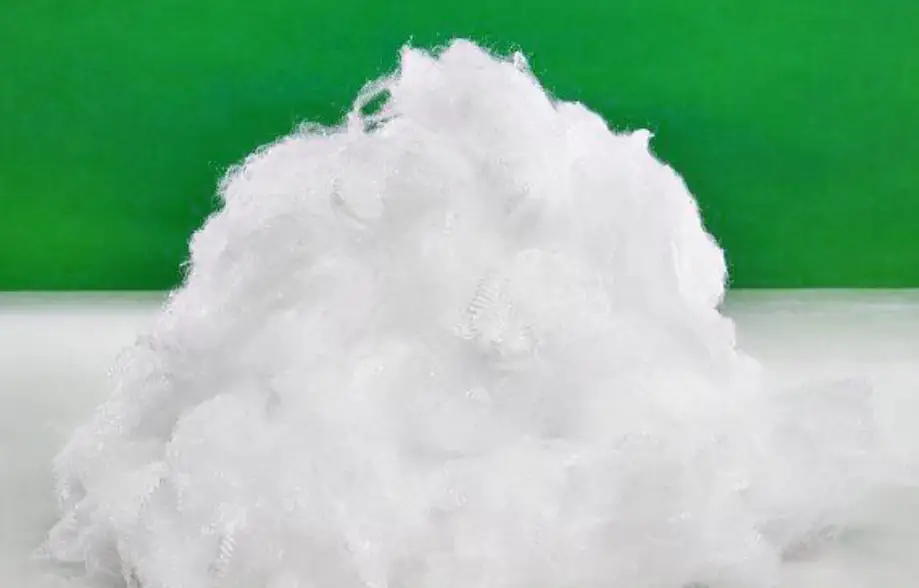
Buyers requesting recycled filling should ask for the recycled content percentage in writing and, where the sustainability claim will be used in marketing, request supporting documentation such as a Global Recycled Standard (GRS) certificate rather than accepting an unverified recycled claim.
What Safety Accessories and Components Go Into a Plush Toy?
Safety accessories are the hard or semi-hard components attached to a plush toy — eyes, noses, joints, snap closures, and any embedded mechanical or electronic parts — and they represent the material category with the highest compliance sensitivity in the entire plush toy assembly, because these are the components most likely to detach and create a choking hazard.
Safety accessories used in plush toy manufacturing include plastic safety eyes and noses (with locking washers), embroidered or appliqued facial features (used as a compliance-driven alternative to attached hard eyes for products intended for very young children), plastic or metal joint discs for movable limbs, snap fasteners, and any electronic components such as sound modules, LED inserts, or motorized parts used in interactive plush products. The selection between attached hard components and embroidered alternatives is frequently the single most consequential compliance decision in the entire product specification.
Common Plush Toy Safety Accessories and Their Compliance Requirements
| Accessory Type | Material | Compliance Consideration | Typical Application |
|---|---|---|---|
| Plastic safety eyes/noses | ABS or acrylic plastic with a locking washer | Requires pull-test documentation (minimum 90N typical standard) | Products for children ages 3+ |
| Embroidered features | Thread, no hard component | Eliminates small-parts choking risk entirely | Infant and toddler-safe product lines |
| Joint discs | Plastic or cardboard-reinforced disc with cotter pin | Pull and torque testing for movable limb security | Jointed teddy bear-style plush |
| Snap fasteners/hook closures | Metal or plastic snap components | Small parts testing, corrosion resistance for washable products | Removable accessories, clothing on plush |
| Sound modules/electronics | Circuit board, battery compartment, speaker | Battery compartment security, electrical safety testing | Interactive and sound-activated plush |
For plush toys marketed to children under three years of age, most safety standards in both the US and EU either prohibit or place tightly controlled requirements on attached hard components, precisely because small parts create a choking hazard that soft embroidered alternatives eliminate entirely. Any specification for an infant- or toddler-targeted plush toy should default to embroidered or appliqued features unless there is a specific, tested justification for using attached components.
How Is Accessory Attachment Strength Tested and Verified?
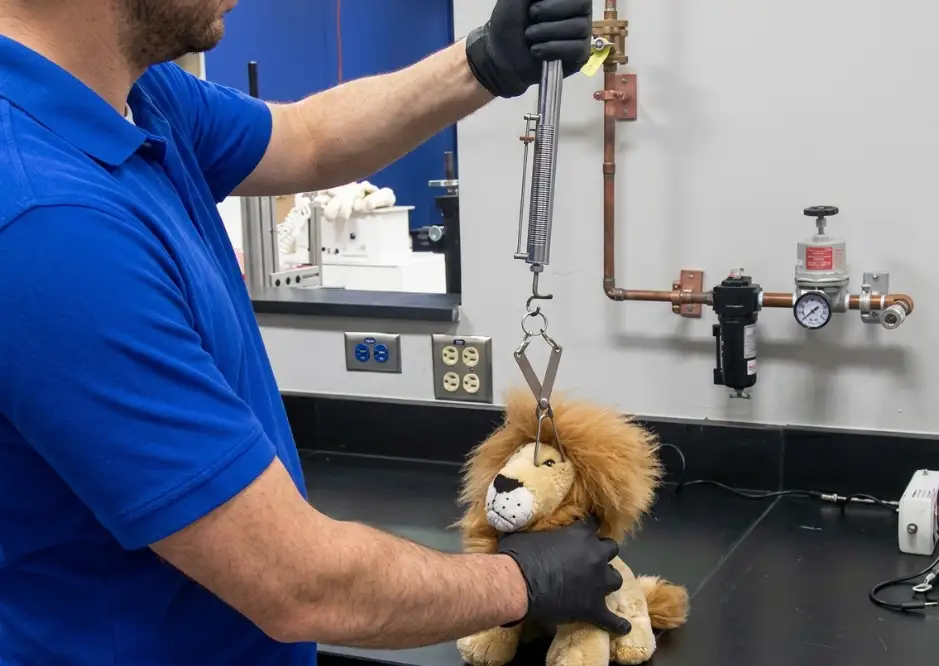
Attached components such as safety eyes are tested using a pull-test protocol that applies a specified tensile force — commonly 90 Newtons under ASTM F963 and similar force requirements under EN 71-1 — to confirm the component does not detach under force approximating what a child could realistically apply.
This testing must be conducted on production units, not only on pre-production samples, because attachment consistency can vary with production line speed, operator technique, and washer quality across a full production run. Buyers should request batch-level pull-test documentation, not a single test report generated once at the sampling stage and assumed to apply to the entire order.
What Electronic Components Require Additional Safety Scrutiny?
Interactive plush products incorporating sound modules, motors, or lighting elements introduce an additional layer of material and component review beyond standard soft-toy compliance. Battery compartments must meet child-resistant closure requirements in most regulated markets, wiring and circuit components must meet relevant electrical safety standards, and any embedded magnets — increasingly used in some interactive designs — are subject to particularly stringent scrutiny in the US following heightened regulatory attention to magnet ingestion hazards.
Buyers developing electronic plush products should treat the electronic component supply chain as a separate compliance workstream from the soft-goods material stack, with its own testing and documentation requirements.
What Thread, Stitching, and Reinforcement Materials Matter for Durability?
Thread and reinforcement materials receive far less specification attention than fabric and filling, yet they are frequently the point of failure in a plush toy that otherwise uses good-quality primary materials — because a toy is only as durable as its weakest seam.
Thread used in plush toy construction is typically polyester or a polyester-cotton blend, selected for tensile strength, colorfastness, and resistance to fraying under the repeated stress that seams experience during play. Reinforcement materials — additional fabric layers stitched into high-stress points such as limb joints, tail attachments, and appliqued feature edges — provide additional structural support that prevents seam failure at the specific points most likely to experience repeated pulling force.
Thread and Reinforcement Materials Used in Plush Toy Manufacturing
| Material Element | Specification Factor | Why It Matters |
|---|---|---|
| Construction thread | Tensile strength (denier/ply count) | Determines seam failure resistance under stress |
| Embroidery thread | Colorfastness rating | Prevents fading or bleeding during washing |
| Reinforcement patches | Fabric weight and placement | Prevents tearing at high-stress attachment points |
| Seam type | Double-stitch vs single-stitch | Directly affects seam durability under repeated stress |
Tip: For any plush toy with attached limbs, tails, or ears — the parts most frequently pulled during play — specifically request double-stitched seams with reinforcement patches at the attachment point, and confirm this in writing in the production specification rather than assuming it is standard practice. Single-stitch construction at these stress points is one of the most common causes of post-sale product failure and return claims, and it is a low-cost change to correct before production begins.
How Does Colorfastness Testing Prevent Post-Sale Quality Complaints?
Thread and fabric colorfastness — the resistance of dye to bleeding or fading under washing, rubbing, or saliva exposure — is tested using standardized rub-fastness and wash-fastness protocols, and it is a frequent source of post-sale complaints when overlooked during material sourcing. A plush toy with dark-colored embroidery thread on a light-colored fabric base is particularly vulnerable to visible dye bleed if colorfastness has not been verified, and this failure mode typically only becomes apparent after the product has been laundered by an end consumer — well past the point where a defect can be caught through pre-shipment inspection alone.
How Do Backing, Lining, and Structural Materials Affect Product Quality?
Backing and lining materials sit between the visible outer fabric and the internal filling, and while they are invisible in the finished product, they play a significant role in shape retention, seam durability, and — for weighted products — safe containment of internal fill materials.

Structural backing materials in plush toy manufacturing include non-woven interfacing used to stiffen flat panels such as ears or appliqued features, muslin or similar lightweight woven fabric used as an inner containment layer for loose-fill products, and specialized reinforced fabric used specifically for weighted plush products where the containment layer must resist the abrasive and concentrated stress that dense fill materials such as glass beads or plastic pellets place on internal seams.
Why Weighted Plush Products Require Specialized Containment Materials
Weighted plush toys — designed to provide calming sensory pressure — use dense fill materials such as glass beads or plastic pellets that place significantly more stress on internal seams than standard fiberfill. A containment approach adequate for standard PP cotton filling is frequently inadequate for weighted fill, because the denser material concentrates stress at seam points and can escape through gaps that would never be exposed by lighter fiberfill.
Weighted plush products should use a dedicated inner containment bag, constructed from a tightly woven fabric with reinforced double-stitched seams, that holds the weighted fill independently of the outer plush shell — providing a second layer of containment in the event the outer shell seam is compromised.
Tip: For any weighted plush product, request confirmation that the weighted fill is contained in a separate inner pouch rather than loose within the main body cavity, and ask specifically what seam reinforcement is used on that inner pouch. This single specification question addresses the most common and most serious quality failure mode in the weighted plush category — fill leakage — which creates both a safety hazard and a near-certain product return.
What Role Do Compliance Certifications Play in Material Selection?
Compliance certification is not a separate consideration layered on top of material selection — it is an integral part of what determines whether a given material is actually suitable for a specific target market, and treating certification as an afterthought is one of the most common and costly mistakes in plush toy sourcing.
The compliance certifications and standards most relevant to plush toy materials include OEKO-TEX Standard 100 for chemical safety in textiles, REACH compliance for chemical restrictions in the EU, CPSIA requirements for lead and phthalate content in the US, ASTM F963 for physical and mechanical safety, EN 71 (parts 1, 2, and 3) for the EU market, and, for products marketed specifically to infants, additional flammability and small-parts requirements that apply at a stricter threshold than standard children’s products.
Key Compliance Certifications for Plush Toy Materials
| Certification/Standard | What It Covers | Applicable Market | Material Relevance |
|---|---|---|---|
| OEKO-TEX Standard 100 | Chemical substances in textiles | Global, widely recognized | Fabric, thread, filling |
| REACH | Chemical substance restrictions | European Union | All materials with chemical content |
| CPSIA | Lead, phthalates, tracking labels | United States | All accessible surface and component materials |
| ASTM F963 | Physical, mechanical, and flammability safety | United States | Accessories, filling, fabric flammability |
| EN 71-1/2/3 | Mechanical, flammability, chemical migration | European Union | Full material stack |
| GRS (Global Recycled Standard) | Recycled content verification | Global marketing claim support | Recycled filling and fabric claims |
How Should Buyers Verify That Certification Claims Are Genuine?
Certification claims should always be verified against the certifying body’s public database or direct documentation request, rather than accepted on the basis of a supplier’s verbal assurance or a logo included in a presentation deck. OEKO-TEX certificates, for example, include a certificate number that can be checked against the organization’s public verification tool, and any supplier unable or unwilling to provide a verifiable certificate number for a claimed certification should be treated as a compliance risk requiring further investigation before the material specification is finalized.
What Happens When Materials Fail Compliance Testing After Production?
When a material fails compliance testing after bulk production has been completed — a scenario more common than buyers typically expect — the consequences cascade through the entire order: the affected batch cannot ship to the regulated market, the non-compliant material must be traced and, where possible, replaced, and the corrected product must undergo retesting before it can proceed. This scenario is entirely avoidable through pre-production material certification verification, and the cost of that verification step is consistently a small fraction of the cost of a post-production compliance failure.
How Do Material Costs Break Down Across a Typical Plush Toy?
Understanding the proportional cost breakdown across material categories allows buyers to identify where a supplier’s pricing is likely concentrated and where cost-reduction requests are most likely to compromise quality or compliance.
A representative material cost breakdown for a standard 12-inch character plush toy, produced at moderate volume with certified materials for the US and EU markets, allocates roughly 38 percent to outer fabric, 24 percent to filling, 16 percent to safety accessories, 8 percent to thread and reinforcement, 6 percent to backing and lining materials, and 8 percent to packaging — though these proportions shift for products with electronics, weighting, or unusually complex accessory requirements.
Typical Material Cost Breakdown for a Plush Toy
| Material Category | Approx. Share of Total Material Cost | Cost Reduction Risk If Compressed |
|---|---|---|
| Outer fabric | 38% | High — directly visible quality impact |
| Filling | 24% | High — affects feel, shape retention, and compliance |
| Safety accessories | 16% | Very high — direct safety and compliance implications |
| Thread/reinforcement | 8% | Moderate — affects long-term durability |
| Backing/lining | 6% | Moderate — affects shape retention and containment |
| Packaging | 8% | Low–moderate — affects presentation, not product safety |
This breakdown is useful specifically because it identifies where cost reduction requests carry the highest risk. A buyer negotiating for a lower unit price should understand that reductions concentrated in fabric, filling, or accessories are the reductions most likely to be achieved by lowering material grade rather than improving production efficiency — while reductions in packaging cost are more likely to be genuine efficiency gains that do not compromise the product itself.
How Should Buyers Choose Materials for Their Specific Plush Toy Project?
Material selection should be driven by the product’s target age group, target market compliance requirements, positioning (value, mid-market, or premium), and functional requirements — not simply by matching whatever material a factory defaults to using for a similar-looking product.
Buyers should choose plush toy materials by first establishing the non-negotiable requirements — target market compliance standards and target age group safety requirements — and then selecting fabric, filling, and accessory grades within those constraints based on positioning and budget. A product for children under three should default to embroidered features and lightweight, well-tested filling; a premium adult-collector plush can justify higher-pile-height faux fur and more elaborate attached accessories because the target consumer is not subject to the same small-parts risk profile.
Tip: Build a written material specification sheet for every new product before requesting quotations — naming fabric type, GSM, fiber content, filling type and density, accessory attachment method, and required certifications. Sending this specification to multiple suppliers, rather than sending only a design reference image, is the single most effective way to receive quotations that can actually be compared on a like-for-like basis.

How Does Product Positioning Influence Material Grade Selection?
Value-tier plush products, typically sold through mass retail or promotional channels, generally use standard-grade minky or velboa fabric, standard PP cotton filling, and cost-efficient attached accessories where age-appropriate. Mid-market products often upgrade to higher-density fabric and filling with more consistent quality control, while premium and licensed-IP products frequently specify longer-pile faux fur, higher-density filling, and more elaborate joint or accessory construction that increases both material cost and perceived value. None of these tiers is inherently “correct” — the right material grade is the one that matches the product’s price point, target consumer expectations, and compliance requirements for its intended market and age group.
Why Sustainability-Positioned Products Require Additional Material Diligence
Brands positioning plush products around sustainability claims — recycled filling, organic cotton fabric, reduced plastic packaging — carry an additional diligence burden because these claims are subject to increasing regulatory and consumer scrutiny around greenwashing. Any sustainability claim used in marketing should be backed by a verifiable, supplier-provided certificate rather than an unverified assurance, and buyers should budget additional lead time for sourcing genuinely certified sustainable materials, which are not always available at the same volume or lead time as standard material equivalents.
Conclusion
The materials used in plush toy manufacturing are far more varied and consequential than the shorthand terms — “plush fabric,” “PP cotton filling” — that appear in most quotations suggest. Outer fabric alone spans at least six distinct categories with meaningful cost and quality variation; filling material choice affects feel, compliance, and durability; safety accessories carry the highest compliance sensitivity of any material category; and thread, reinforcement, and backing materials — the components least visible in a finished product — are frequently where product durability is won or lost.
Buyers who understand this material structure are equipped to read specifications and quotations critically, ask the right verification questions before committing to bulk production, and recognize when a lower price reflects genuine efficiency versus a quietly reduced material grade. That understanding is the foundation of every other sourcing decision that follows — because no amount of production oversight or quality inspection can fully compensate for a material specification that was wrong from the start.
The investment required to build a complete, written material specification before requesting quotations is small relative to the cost of discovering a material mismatch after a production run has already been completed. For any new plush toy project, that specification sheet — not the finished-unit price — is where the sourcing process should genuinely begin.
FAQ
Q1: What is the most common plush toy filling material, and is it safe for children?
Polypropylene (PP) cotton is the most common filling material used in plush toy manufacturing, valued for its softness, consistent rebound after compression, hypoallergenic properties, and relatively low cost compared to natural fiber alternatives. PP cotton is safe for children when it meets applicable flammability and chemical safety testing requirements under standards such as ASTM F963 in the US or EN 71 in the EU, and when it is properly contained within a securely seamed shell that prevents access to the filling itself.
Buyers should always request test documentation confirming the specific filling batch used in production has passed relevant safety testing, rather than assuming that “PP cotton” as a generic term guarantees compliance — testing verifies the specific material lot, not the material category in general.
Q2: What is the difference between minky fabric and faux fur, and which is better for plush toys?
Minky fabric, also called cuddle fabric, has a very short, dense pile that creates a smooth, soft surface texture and is typically used for products where a sleek, huggable feel is prioritized, such as baby comforters and simple character plush. Faux fur has a longer pile — ranging from short textured fur to long shaggy fur — and is used to replicate the appearance of real animal fur, making it the preferred choice for realistic animal replicas and premium character plush where visual texture is a key selling point.
Neither fabric is inherently better; the right choice depends on the design intent, target price point, and whether the product prioritizes a sleek modern feel or a textured, lifelike appearance. Buyers should base fabric choice on the design reference and target market positioning rather than defaulting to whichever fabric a factory happens to have most readily in stock.
Q3: Why do some plush toys use embroidered eyes instead of plastic safety eyes?
Embroidered eyes are used instead of plastic safety eyes primarily to eliminate the choking hazard associated with small, hard, detachable components, and they are the standard or required approach for plush toys marketed to infants and children under three years of age under most safety standards in the US and EU. Embroidered features also eliminate the risk of attachment failure over the product’s lifespan, since there is no mechanical joint that can loosen or detach through repeated handling.
The tradeoff is primarily aesthetic and cost-related — embroidered features are generally less expensive per unit than attached plastic components but can appear less dimensional or expressive than three-dimensional safety eyes, which is why embroidered features are near-universal for infant products but attached eyes remain common for products targeted at older children and collectors where the small-parts restriction does not apply.
Q4: How can buyers verify that a supplier’s material certifications are genuine rather than just claimed?
Buyers should request the specific certificate number for any claimed certification — such as an OEKO-TEX Standard 100 certificate — and verify that number directly against the certifying organization’s public database or verification tool rather than relying on a logo or verbal assurance included in supplier marketing materials. It is also reasonable to request that the certificate name the specific supplier and product category covered, since certifications are typically issued for specific facilities or material lines rather than as a blanket claim covering an entire factory’s full product range.
Suppliers with genuine certifications will provide this documentation readily and specifically; resistance to providing a verifiable certificate number, or vague responses about certification status, should be treated as a signal warranting further investigation before finalizing a material specification.
Q5: What causes plush toy seams to fail, and how can buyers prevent this in their material specification?
Plush toy seam failure is most commonly caused by insufficient thread tensile strength, single-stitch construction at high-stress attachment points such as limbs and tails, and inadequate reinforcement patching at these same stress points — combined with filling density that places more mechanical stress on seams than the stitching was designed to withstand.
Buyers can prevent this by specifying double-stitched construction with reinforcement patches at all limb, ear, and tail attachment points as a standard requirement in their production specification, and by requesting that pre-production samples undergo basic stress testing — repeated pulling at attachment points — before bulk production is approved. This is a low-cost specification addition relative to the cost of post-sale returns caused by seam failure, which is one of the most common quality complaints in the plush toy category.
Q6: Are recycled materials in plush toys as durable and safe as virgin materials?
Recycled PP cotton filling and recycled polyester fabric, when sourced from a reputable supplier with proper processing and cleaning standards, perform comparably to virgin material equivalents in softness, durability, and compliance testing outcomes. The main practical differences are slightly greater batch-to-batch variability in fiber length and color consistency, and a generally more limited supplier base and higher cost premium for recycled material relative to virgin material, since recycled fiber processing involves additional collection and reprocessing steps.
Recycled materials still require the same flammability and chemical safety testing as virgin materials — recycled content does not exempt a product from any compliance requirement — and buyers making recycled content claims in marketing should request Global Recycled Standard (GRS) or equivalent documentation to support the claim.
Q7: What material considerations are unique to weighted plush toys?
Weighted plush toys use dense fill materials such as glass beads or plastic pellets to create calming sensory pressure, and these materials place substantially more stress on internal seams than standard fiberfill, requiring a dedicated inner containment pouch with reinforced double-stitched seams rather than relying on the outer shell seam alone for containment.
Weighted fill materials also require specific attention to particle size and containment testing to prevent leakage, since a breach in a weighted product releases materials that present both a choking and inhalation hazard distinct from standard soft-fill escape. Buyers sourcing weighted plush products should treat the containment system as a distinct engineering specification, verify that the inner pouch is independently seam-tested, and request specific weight-per-unit consistency data to confirm that fill distribution meets the sensory design intent across the full production run.