Skip to content
How flammability testing actually works for soft toys, which standards govern it in different markets, what causes a plush toy to fail, and how buyers can verify compliance before a product ever reaches a shelf.
What Is Plush Toy Flammability Testing and Why Is It Required?
Flammability testing is the standardized laboratory process that determines how quickly a fabric or material ignites and burns when exposed to a small open flame, under controlled conditions that simulate realistic accidental exposure — a lit candle, a stovetop flame, a cigarette lighter left within a child’s reach. For plush toys specifically, this testing exists because soft, fibrous textile surfaces with raised pile behave very differently in a fire scenario than smooth, dense fabrics, and because plush toys are handled, carried, and kept close to children far more consistently than almost any other textile product category.
Flammability testing is required by regulation in essentially every major consumer market because textile flammability was, historically, a genuine and measurable cause of injury before standardized testing and flame-resistant material requirements became mandatory. A plush toy that ignites easily and burns rapidly presents a direct fire and burn injury risk to the child holding it, and an indirect risk to the surrounding environment if the fire spreads before it can be extinguished. Regulatory flammability testing exists specifically to keep products with unacceptable burn characteristics off the market before they reach a child at all.
How Flammability Risk Differs for Soft Toys vs Other Products
Plush toys present a flammability risk profile that differs meaningfully from garments, furniture textiles, or hard plastic toys. Raised pile fabric — the soft, fibrous surface that gives a plush toy its characteristic texture — has a much greater surface area exposed to air per unit of fabric than a flat woven textile, which generally allows flame to spread across the surface more readily if the fiber itself is not flame-resistant.
At the same time, plush toys are typically filled with polyester or PP cotton stuffing that, depending on its specific composition, can either slow or accelerate burning once the outer fabric has ignited. This combination of high-surface-area pile fabric and synthetic filling is precisely why flammability testing treats plush toys as a distinct product category with its own defined test method, rather than applying a generic textile flammability standard across all product types.

Flammability Standards and Regulatory Frameworks for Plush Toys
Flammability compliance requirements vary by destination market, and a product tested and approved for one region’s standard is not automatically compliant with another region’s requirements, even when the underlying test methods appear similar on the surface.
Major Flammability Standards Applicable to Plush Toys
| Standard | Region | What It Requires |
|---|---|---|
| 16 CFR 1610 | United States (general textile flammability) | Standard flammability test for clothing textiles, referenced for toy surface materials |
| ASTM F963 | United States (toy-specific) | Includes a dedicated flammability test method specific to toys, including plush and stuffed items |
| EN 71-2 | European Union | Flammability requirements specific to toys, including burn rate and prohibited material categories |
| ISO 8124-2 | International | International toy safety standard covering flammability, often harmonized with regional requirements |
| CCPSA Toy Regulations | Canada | Canadian flammability requirements for children’s toys, closely aligned with US standards |
| AS/NZS ISO 8124 | Australia / New Zealand | Adopts ISO 8124 flammability requirements with regional labeling additions |
Why Multiple Standards Often Apply to the Same Product
A plush toy manufactured for global distribution frequently needs to satisfy more than one flammability standard simultaneously, because the product will be sold into multiple markets with different regulatory frameworks. In practice, this usually means testing against the strictest applicable requirement among the target markets and using that result as the baseline, since a fabric and construction combination that passes the more conservative standard will generally also satisfy the less stringent ones — though this should always be confirmed through actual testing against each specific applicable standard rather than assumed.
Tip: If a plush toy will be sold in more than one region, request flammability test reports specific to each destination market’s standard rather than accepting a single test report and assuming it covers every market. A product tested only against ASTM F963 has not been formally verified against EN 71-2, even if the two standards share a broadly similar testing philosophy.
How the Flammability Test Is Actually Conducted
Flammability testing for plush toys follows a defined laboratory procedure designed to produce consistent, repeatable results regardless of which accredited lab performs the test. Understanding the basic mechanics of the test helps buyers interpret test reports accurately rather than treating a pass or fail result as an unexplained black box.
Sample Preparation and Conditioning
Before testing begins, fabric samples are conditioned in a controlled environment at a specified temperature and humidity for a defined period, since moisture content in a textile sample measurably affects how readily it ignites and burns. Samples are typically cut to a standardized size and mounted in a specific test frame orientation, usually at a 45-degree angle, which is the geometry most flammability standards for textiles and toys specify.
Flame Exposure and Burn Rate Measurement
A controlled, standardized flame — typically from a calibrated gas burner — is applied to the bottom edge of the mounted sample for a specified exposure time, usually one second, after which the flame is removed, and the rate at which the burn front travels up the sample is measured against timed reference marks on the test frame. This burn rate — expressed as the time required for the flame front to travel a specified distance, commonly measured in seconds per given length of travel — is the primary quantitative output of the test.
Pass/Fail Determination
The measured burn rate is compared against the maximum allowable rate defined by the applicable standard. A sample that burns faster than the allowable threshold fails the test, regardless of how the fabric performs in other respects such as color fastness or texture retention. Some standards also assess whether the fabric self-extinguishes after flame removal, whether it produces flaming debris that could spread fire beyond the immediate burn area, and whether smoke or char characteristics fall within acceptable limits.

Standard Flammability Test Parameters by Method
| Test Element | Typical Specification | Purpose |
|---|---|---|
| Sample mounting angle | 45 degrees from horizontal | Standardizes flame spread geometry across all tested samples |
| Flame exposure duration | 1 second (varies slightly by standard) | Simulates brief accidental flame contact |
| Conditioning environment | Controlled temperature and humidity for a defined period | Ensures consistent moisture content before testing |
| Number of samples tested | Multiple specimens per fabric lot, both face and reverse orientation where applicable | Accounts for directional or pile-orientation variation |
| Burn rate measurement | Time for flame front to travel a specified reference distance | Provides the primary quantitative pass/fail metric |
| Debris and after-flame observation | Visual assessment during and after the test | Identifies additional fire spread and self-extinguishing behavior |
What Materials and Treatments Affect Flammability Performance
Flammability outcomes are determined by a combination of fiber composition, fabric construction, pile characteristics, and any flame-retardant treatment applied — not by any single factor in isolation. Two fabrics with an identical fiber content but different pile heights or weave densities can produce measurably different burn rates.
Fiber Content and Base Flammability
Different base fibers have inherently different flammability characteristics before any treatment is applied. Polyester generally melts and tends to self-extinguish more readily than cotton, which burns steadily once ignited without an inherent tendency to self-extinguish. Acrylic fibers, commonly used in plush and pile fabrics for their softness and color vibrancy, tend to burn more readily and rapidly than either polyester or cotton, which is why acrylic-heavy pile fabrics often require closer flammability scrutiny and, in some cases, flame-retardant treatment to reliably pass testing.
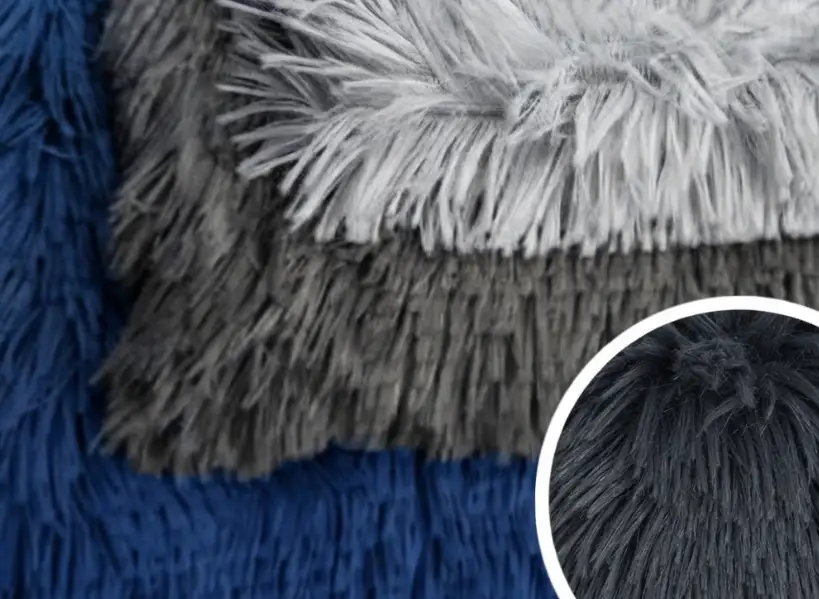
Pile Height and Density
Higher pile height generally increases flammability risk, because taller pile fibers have more surface area exposed to air and ignite more readily than a tightly woven, low-pile fabric of the same fiber content. Denser pile — more fibers per unit area — can partially offset this risk by limiting oxygen access to individual fibers, but pile height remains one of the more significant fabric-construction variables affecting flammability test outcomes.
Material and Construction Factors Affecting Flammability Risk
| Factor | Effect on Flammability | Typical Mitigation |
|---|---|---|
| Acrylic fiber content | Increases ignition and burn rate | Blend with lower-flammability fiber or apply flame-retardant treatment |
| Polyester fiber content | Generally moderate, tends to melt and self-extinguish | Usually requires less additional treatment than acrylic |
| Cotton fiber content | Burns steadily, no natural self-extinguishing tendency | Flame-retardant finishing treatment where required |
| High pile height | Increases surface area exposed to flame | Reduced pile height or increased pile density |
| Loose or low-density weave | Allows faster flame progression through fabric | Tighter backing weave or bonded fabric construction |
| Surface finishing residue | Can act as accelerant if not properly processed | Controlled, tested finishing chemical process |
Flame Retardant Treatments: Chemical vs Inherent
Flame resistance in textiles is achieved in one of two fundamentally different ways. Inherent flame resistance comes from the fiber’s own molecular structure — certain synthetic fibers are chemically formulated to resist ignition without any additional topical treatment, and this resistance does not wash out or degrade significantly over the product’s lifespan. Chemically applied flame retardant treatments, by contrast, are topical or finishing-stage treatments applied to a base fiber that does not have inherent flame resistance, and these treatments can, in some cases, diminish in effectiveness after repeated washing unless specifically formulated to be wash-durable.
Tip: When a fabric relies on a chemically applied flame-retardant treatment rather than inherent fiber resistance, request wash-durability test data specifically, not just an initial pass result. A treatment that passes flammability testing on an unwashed sample can perform differently after the repeated washing that a plush toy will realistically undergo over its useful life.
Common Reasons Plush Toys Fail Flammability Testing
Understanding the most frequent, recurring causes of flammability test failure helps both buyers and production teams anticipate and prevent issues before a costly test failure late in the production timeline.
Common Causes of Flammability Test Failure
| Failure Cause | Why It Happens | Prevention Approach |
|---|---|---|
| Untested fabric substitution | A different fabric batch or supplier fabric is used without retesting | Retest flammability whenever the fabric source or lot changes |
| High-pile acrylic fabric without treatment | Inherently flammable fiber used without adequate mitigation | Fiber blend adjustment or verified flame-retardant finishing |
| Degraded flame-retardant finish after washing | Non-durable topical treatment loses effectiveness over wash cycles | Specify and verify wash-durable flame-retardant treatments |
| Inconsistent finishing process control | Flame-retardant chemical is applied unevenly across a production run | Process control monitoring during fabric finishing |
| Testing an unrepresentative sample | Lab sample does not match actual bulk production fabric | Test samples pulled directly from bulk production material |
The Fabric Substitution Risk
One of the most common and most preventable causes of flammability failure occurs after a product has already passed initial testing — when a fabric substitution happens later in the supply chain without triggering a retest. This can happen when a preferred fabric becomes unavailable, and a visually similar alternative is substituted, when a new fabric lot from the same supplier has a different fiber blend ratio than the originally tested lot, or when cost pressure leads to a lower-cost fabric being used without the buyer’s awareness.
Because flammability performance can vary meaningfully even between fabrics that look and feel similar, any fabric change — however minor it may seem — warrants a fresh flammability test rather than an assumption of continued compliance.

Tip: Build a contractual requirement into every purchase agreement that any fabric substitution, supplier change, or finishing process change triggers mandatory flammability retesting before the affected batch can ship. Relying on a single flammability approval at the start of a program, without a retest trigger for material changes, leaves a meaningful and preventable compliance gap open for the life of the product line.
How to Verify Flammability Compliance Before Production or Purchase
Verifying flammability compliance requires more than a general safety claim on a product listing or packaging — it requires specific, traceable documentation tied to the actual fabric and production batch in question.
- Request the actual test report, not just a compliance statement, and confirm it specifies the exact standard, sample details, and result values rather than a generic pass/fail summary.
- Confirm the test date and fabric lot referenced in the report match the current production material, not an earlier, potentially different fabric batch.
- Verify the testing lab is accredited for the relevant standard, since results from an unaccredited or informal internal test carry less assurance than third-party accredited lab results.
- Check whether the test covers every applicable destination market standard, particularly for products distributed across multiple regions with different flammability requirements.
- Ask about retest triggers — specifically, what fabric, supplier, or process changes would require a new flammability test, and whether that protocol is actually being followed for reorders.
Tip: Do not rely on a visual or tactile assessment to judge flammability risk. A soft, fluffy pile fabric and a tightly woven, low-pile fabric can look and feel similarly “safe” to the touch while having significantly different burn rates under actual flame testing — flammability performance is not something that can be reliably judged by handling a sample.
Frequently Asked Questions
Is flammability testing legally required for all plush toys, or only for certain markets?
Flammability testing is a legal requirement in virtually every major consumer market that regulates children’s toys, including the United States, the European Union, Canada, and Australia, though the specific standard and test method referenced differ by region. There is no major consumer toy market where flammability testing is entirely optional for products intended for children. Sellers distributing into multiple regions need to confirm compliance with each applicable regional standard specifically, since passing one region’s test does not automatically satisfy another region’s requirements.
Does a flame-retardant label on a plush toy mean it cannot catch fire at all?
No. Flame-retardant certification means the fabric meets a defined maximum burn rate and, in many cases, self-extinguishing behavior under standardized test conditions — it does not mean the fabric is entirely fireproof or incapable of burning under any circumstance. A properly flame-retardant-treated plush toy will resist ignition from brief accidental flame exposure and burn slowly enough to limit injury risk if it does ignite, but sustained direct flame exposure will still eventually cause most textiles, including flame-retardant ones, to burn. Flammability compliance is about acceptable risk reduction under realistic accidental exposure scenarios, not absolute fire immunity.
How often does fabric need to be retested for flammability during ongoing production?
Flammability retesting should occur whenever there is any change to the fabric source, fiber blend, finishing process, or supplier — not on a fixed calendar schedule independent of these changes. A stable, unchanged fabric supply chain does not necessarily require retesting on every single reorder if the material is genuinely identical and documented as such, but any deviation, however minor it may appear, warrants a fresh test. Buyers working with new or less established suppliers should generally request more frequent verification testing than they would with a long-established, consistently performing fabric source.
Why do some plush toys made from natural fibers like cotton face more flammability scrutiny than synthetic ones?
Cotton and other natural cellulosic fibers do not have an inherent self-extinguishing tendency the way some synthetic fibers do, and they can sustain steady combustion once ignited unless specifically treated with a flame-retardant finish. This does not mean natural fiber plush toys are automatically unsafe — many pass flammability testing without difficulty, particularly in tighter weave constructions with lower pile height — but it does mean natural fiber products more often rely on an added flame-retardant treatment to reliably meet the required burn rate threshold, compared with certain synthetic fibers that may have some degree of inherent resistance built into the fiber itself.
Can a plush toy pass flammability testing in one batch and fail in a later batch of the “same” product?
Yes, and this is one of the more commercially significant risks in ongoing plush toy production. Even when a product specification remains nominally unchanged, variation between fabric production lots, inconsistency in flame-retardant finishing application, or an undisclosed supplier substitution can all produce a later batch with different flammability performance than the originally tested and approved batch. This is precisely why flammability compliance should be treated as an ongoing verification requirement tied to specific production batches, rather than a one-time approval that is assumed to apply indefinitely to every future production run of a nominally identical product.
What is the difference between flammability testing and general toy safety testing?
Flammability testing is one specific component within a broader toy safety testing program, which also covers mechanical and physical hazards such as small parts and sharp edges, chemical safety such as heavy metal and phthalate limits, and, for electronic or battery-containing toys, electrical safety requirements. A product can pass flammability testing while still failing other safety categories, and a comprehensive safety compliance program addresses flammability as one required element among several, rather than treating it as a stand-in for overall product safety.
Do smaller plush toy accessories, like keychains or small charms, need to pass the same flammability testing as full-size plush toys?
Generally yes — flammability requirements typically apply based on the product’s fabric and intended use category rather than its physical size alone, meaning a small plush keychain made from the same or similar pile fabric as a full-size plush toy is generally subject to the same flammability testing requirements under most applicable standards. Buyers should not assume that a smaller accessory item is automatically exempt from flammability testing simply due to its reduced size, and should confirm testing coverage specifically for every distinct product and fabric combination in a given line, including smaller accessory items.