Skip to content
A practical guide for brands and buyers sourcing Christmas plush toys — covering fabric and filling selection, safety compliance, customization options, seasonal production timelines, and quality control checkpoints.
What Is Christmas Plush Toy Manufacturing?
Christmas plush toy manufacturing is the specialized production process behind holiday-themed stuffed animals and soft toys — reindeer, snowmen, Santa figures, plush ornaments, and festive character toys designed to sell within a tightly compressed holiday retail window.
While the underlying stuffed animal manufacturing techniques share much in common with year-round plush production, Christmas plush toy manufacturing carries its own set of constraints: seasonal fabric trends, tighter compliance scrutiny around gift-giving products intended for children, compressed sampling timelines, and production schedules that must land finished goods on retail shelves well before the holiday shopping season begins.
Understanding these seasonal dynamics — rather than treating Christmas plush as simply a standard soft toy with a holiday print — is what separates a smooth production run from a program that misses its shipping window entirely. Because holiday plush toys are almost always positioned as gifts, buyers and retailers also tend to hold these products to a higher bar for gift box presentation, softness, and finishing quality than everyday plush lines.
The category also spans a wider design range than many buyers initially expect. Christmas plush manufacturing covers everything from small tree ornament plush and stocking stuffers to mid-size huggable character toys to large floor-standing display pieces used in retail window displays and home decor. Each size category carries its own manufacturing considerations — an ornament-sized plush faces different filling and hanging-loop attachment requirements than a two-foot floor plush, even though both fall under the same broad Christmas plush toy manufacturing umbrella.

Tip: Lock your Christmas plush toy design and materials no later than early spring for a holiday-season delivery. Fabric mills and trim suppliers experience their own seasonal capacity crunch as multiple brands compete for the same holiday-themed materials in the months leading up to peak production.
Why Seasonal Demand Shapes the Manufacturing Process
Christmas plush toys experience an extreme demand curve compared to core, year-round plush lines. The vast majority of unit sales concentrate into a roughly ten-to-twelve-week retail window, which means manufacturers must complete the entire production run, quality inspection, and shipping cycle well ahead of that narrow selling period. A delay of even two or three weeks during sampling or bulk production can push a shipment past the point where it can still reach retail shelves in time for the season, turning finished inventory into a much harder sell the following year.
This compressed timeline drives several practical consequences for how Christmas plush toy manufacturing is planned. Factories often reserve production capacity for holiday programs many months in advance, fabric and trim orders are placed earlier than for standard plush lines, and buyers who wait until late summer to begin sourcing frequently find themselves competing for the same limited factory capacity as every other holiday program launching that year.
Retailers compound this pressure with their own internal deadlines. Large retail buyers typically require finished goods to arrive at distribution centers eight to ten weeks ahead of the actual holiday selling period, to allow time for receiving, allocation, and shelf-setting across store networks before shoppers begin browsing seasonal displays.
E-commerce and direct-to-consumer brands generally have more flexibility than big-box retail timelines, but even direct-to-consumer programs benefit from finishing production well ahead of peak shopping weeks, since expedited air freight to correct a late production run erodes margin quickly on a product category that already carries seasonal markdown risk if it misses its window entirely.
Common Christmas Plush Toy Categories
Christmas plush toy manufacturing spans several distinct product categories, each with different design and engineering priorities. Character plush — Santa, reindeer, snowmen, and gingerbread figures — typically emphasizes facial expression and brand-recognizable silhouette.
Ornament plush, sized for hanging on a tree, requires secure loop attachment and lightweight filling to avoid stressing branches. Interactive plush, incorporating sound modules, light-up features, or simple movement mechanisms, adds electronic component sourcing and additional safety testing to the standard textile production process. Collector-oriented display plush, often produced in limited runs, prioritizes premium fabric and finishing over lower unit cost.
Materials Used in Christmas Plush Toy Manufacturing
Material selection for holiday plush toys balances softness, colorfastness, durability, and — critically — compliance with children’s product safety regulations, since the overwhelming majority of Christmas plush toys are purchased as gifts for children. The table below summarizes the materials most commonly specified across Christmas plush toy production.
Common Materials in Christmas Plush Toy Manufacturing
| Material | Typical Use | Key Property |
|---|---|---|
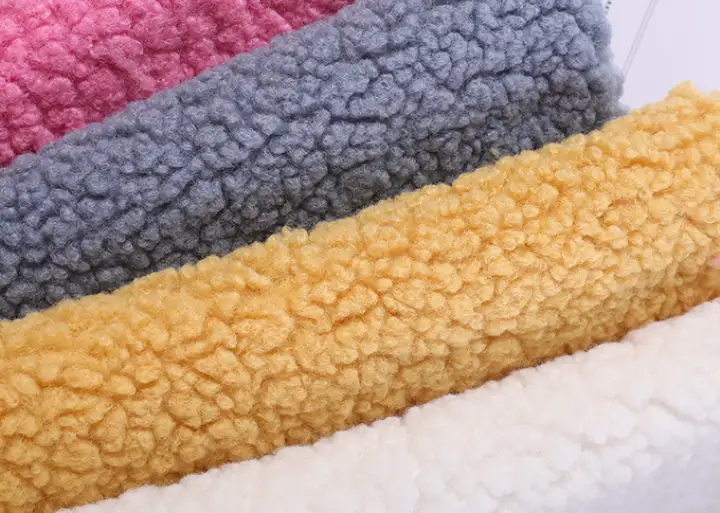
| Short-pile plush fabric (minky) | Body fabric for classic soft toys | Soft hand-feel; wide color range for holiday palettes |
| Long-pile faux fur | Reindeer, polar bear, and winter animal designs | Realistic texture; higher shedding risk if low quality |
| Sherpa/fleece fabric | Santa suits, snowman bodies, blanket-style plush | Warm appearance; budget-friendly; easy to sew |
| Felt and non-woven fabric | Small appliqué details, ornament-style plush | Holds shape without fraying; used for decorative trim |
| Polyester fiberfill | Primary stuffing material | Hypoallergenic; washable; consistent loft and firmness |
| Plastic safety eyes/noses | Facial features on character plush | Regulated component: locking washers required for child safety |
| Embroidery and woven trim | Facial detailing, scarves, name tags | Durable decoration; avoids choking hazards of loose small parts |
Fabric selection should also account for how the plush toy will be photographed and merchandised. Holiday plush frequently appears in gift-set bundles, on-shelf displays, and seasonal catalog photography, where color saturation and consistency across a production run matter more than for a toy sold individually. Lab-dip approval and dye-lot control become especially important when a program includes multiple SKUs meant to coordinate visually as a themed collection.
Filling Density and Firmness Considerations
Filling density directly affects how a plush toy looks and feels on the shelf. Christmas plush toys intended for display — tree-topper figures, mantel decorations, or oversized floor plush — are typically stuffed to a firmer density that holds a defined shape under gravity and repeated handling in a retail environment. Huggable plush intended primarily for children’s play, by contrast, is usually stuffed to a softer density that prioritizes comfort over rigid shape retention.
Safety Standards and Compliance for Christmas Plush Toys
Because Christmas plush toys are overwhelmingly marketed and purchased as children’s gifts, compliance with children’s product safety regulations is non-negotiable, regardless of the destination market. Depending on the target country, a holiday plush program may need to satisfy several overlapping regulatory frameworks simultaneously.
Safety Compliance Standards for Christmas Plush Toys
| Standard | Region | Key Requirements |
|---|---|---|
| CPSIA | United States | Lead and phthalate limits; third-party testing for children’s products; tracking labels |
| ASTM F963 | United States | Mechanical and physical safety, including small parts, seam strength, and flammability |
| EN71 (Parts 1–3) | European Union | Mechanical/physical properties, flammability, and migration of certain chemical elements |
| REACH | European Union | Restriction of hazardous substances in materials and components |
| ISO 8124 | International reference standard | Toy safety requirements are widely referenced alongside regional standards |
Small parts testing carries particular weight for Christmas plush toys, since seasonal designs frequently include decorative accessories — jingle bells, sequins, small buttons, or miniature ornaments — that must be securely attached or, for products intended for younger children, avoided entirely if they present a choking hazard. Flammability testing is another area that deserves close attention for holiday plush, given that these products are often displayed near candles, string lights, and other seasonal decor where fire risk awareness is already heightened.
Tip: Confirm the intended age grading for each Christmas plush SKU before finalizing decorative trim. A design intended for children under three years old has materially stricter small-parts and choking-hazard requirements than a decorative or collector-oriented plush aimed at an older audience, and this distinction should drive trim and accessory decisions from the earliest design stage.
Design, Sampling, and Approval Process for Holiday Plush
The design and sampling process for Christmas plush toys generally follows the same core stages as standard plush toy development — concept sketch, pattern development, prototype sample, and pre-production sample — but on a more compressed timeline dictated by the fixed holiday shipping deadline. Color matching against seasonal Pantone references, tree ornament sizing constraints, and coordination across multi-SKU collections add additional review cycles that must be planned into the schedule from the outset.
Pattern development for character-based Christmas plush deserves particular attention during the concept stage, since holiday characters often need to read clearly as a recognizable figure — Santa, a specific reindeer, a snowman — from a distance on a crowded retail shelf. Silhouette clarity, proportional head-to-body ratio, and distinctive color blocking all contribute more to shelf recognition than fine facial detail, a lesson that experienced plush designers apply from the earliest concept sketch rather than discovering only after a detailed but visually muddled prototype fails to stand out in a retail setting.
Color Matching for Seasonal Palettes
Christmas plush programs typically rely on a narrower, more tightly specified color palette than year-round product lines — traditional reds, greens, and whites alongside metallic gold or silver accents. Because these colors need to coordinate precisely across fabric, embroidery thread, and trim sourced from different suppliers, lab-dip approval rounds often take longer for holiday programs than for standard plush colorways, and buyers should budget extra time in the schedule accordingly.
Customization Options for Holiday Plush Toys
Customization is a major driver of differentiation in the Christmas plush category, where retailers and brands compete heavily on exclusive designs each season. Common customization options include embroidered names or dates for personalized gift plush, printed woven labels for brand storytelling, coordinated gift-set packaging, and scent or sound modules for interactive holiday characters. Each customization option adds incremental cost and, in some cases, additional compliance testing — sound modules containing batteries, for example, trigger additional electrical and battery-compartment safety requirements beyond standard textile testing.

Personalization programs, where a customer’s name or a specific date is embroidered onto an individual plush toy after the base product has already been manufactured, introduce a distinct operational challenge separate from standard bulk production. These programs typically require either an on-demand embroidery step performed close to the point of fulfillment or a pre-planned batch personalization run scheduled after core inventory has arrived at a distribution or fulfillment center, and buyers should clarify with their manufacturer which model applies before committing to a personalization offer on their retail site.
Tip: If your Christmas plush design includes a battery-powered sound or light module, confirm battery compartment lock-screw requirements and relevant electrical safety testing early in development. Retrofitting compliance into an already-finalized design is far more disruptive than specifying compliant components from the prototype sample.
Seasonal Production Planning and Lead Times
Because Christmas plush toys must be manufactured, inspected, and shipped well ahead of the holiday selling season, production planning typically works backward from the required delivery date at the destination. The table below outlines a representative production timeline for a typical Christmas plush program targeting a fall retail launch.
Typical Christmas Plush Toy Production Timeline
| Stage | Typical Duration | Recommended Start (for Q4 retail delivery) |
|---|---|---|
| Design finalization and pattern development | 2–4 weeks | Late winter / early spring |
| Prototype sample and revisions | 3–5 weeks | Spring |
| Pre-production sample and compliance testing | 3–4 weeks | Late spring |
| Bulk fabric and trim procurement | 4–6 weeks | Early summer |
| Bulk production | 4–8 weeks (volume dependent) | Mid-summer |
| Final quality inspection and shipping | 2–4 weeks | Late summer |
Ocean freight transit time, customs clearance, and retailer receiving windows all sit on top of this manufacturing timeline, which is why experienced buyers begin Christmas plush sourcing conversations six to nine months before the actual retail selling season, even though the finished product will only be on shelves for a fraction of that time.
Managing Minimum Order Quantities and Capacity Booking
Minimum order quantities for Christmas plush programs tend to scale with the level of customization requested — a fully custom character design with dedicated tooling for eyes, noses, or molded accessories generally carries a higher MOQ than a design built from existing pattern blocks with holiday-specific fabric and trim substitutions. Booking production capacity early in the calendar year, before the factory’s holiday season slate fills up, is often more important to securing a favorable delivery date than negotiating unit price alone.
Quality Control for Christmas Plush Toys
Quality control for holiday plush toys follows the same fundamental inspection principles as year-round plush production — checking stitching integrity, filling consistency, safety component attachment strength, and color accuracy — but with additional scrutiny on gift-ready presentation, since Christmas plush is disproportionately purchased for direct gift-giving rather than casual retail browsing.

Key Quality Control Checkpoints for Christmas Plush Toys
| Checkpoint | What Is Verified | Typical Inspection Stage |
|---|---|---|
| Seam and stitch strength | Pull-test resistance meets safety and durability thresholds | Pre-production and during production (AQL sampling) |
| Filling consistency and weight | Uniform loft and firmness across units; correct fill weight per spec | During production and final inspection |
| Safety component security | Eyes, noses, and attachments pass pull-force requirements | Pre-production sample testing and final inspection |
| Color accuracy and consistency | Match to approved lab dips; no visible dye-lot variation across units | Incoming fabric inspection and final inspection |
| Packaging and gift presentation | Box structural integrity, print quality, and assembly accuracy | Final inspection before shipment |
Third-party inspection agencies typically apply Acceptable Quality Limit (AQL) sampling plans during both in-line production checks and final random inspection before a shipment is authorized to load. For Christmas plush programs, buyers frequently tighten AQL sampling levels compared to standard plush lines, given the higher visibility and brand-reputation stakes associated with a defective gift product reaching a consumer during the holiday season.
Documentation discipline matters as much as the physical inspection itself for holiday plush programs. Test reports for flammability, small parts, and restricted substances should be collected and archived for every fabric lot and component batch used in production, not just for the initial pre-production sample. Because Christmas plush programs frequently pull from multiple fabric dye lots to meet compressed timelines, maintaining a clear paper trail connecting each production batch to its corresponding test documentation is essential for responding quickly to any post-market compliance inquiry or retailer audit request.
Packaging and Retail Presentation for Holiday Plush
Packaging plays an outsized role in the Christmas plush category compared to everyday soft toys, since gift presentation directly influences purchase decisions at retail and the unboxing experience after purchase. Common packaging approaches include header-card poly bag packaging for mass retail, printed gift boxes for premium positioning, and clear window boxes that let the plush toy’s texture and detail sell itself on the shelf. Sustainability considerations increasingly factor into holiday packaging decisions as well, with recyclable and reduced-plastic packaging options growing in demand across seasonal gift categories.
Retail-ready packaging formats also need to account for how the product will actually be displayed once it reaches the store. Peg-hook compatible packaging, shelf-stable box structures that resist crushing when stacked, and barcode placement that satisfies each retailer’s specific receiving requirements are all details that should be confirmed against the destination retailer’s packaging guidelines well before bulk packaging materials are ordered. A packaging design that looks appealing in isolation can still be rejected at a retailer’s distribution center if it fails to meet that retailer’s specific structural or labeling requirements.
Tip: Test final packaging structural integrity under real shipping and handling conditions — not just on a sample unit handled carefully in a design meeting. Christmas plush toys packed for retail display often travel through multiple handling points before reaching the shelf, and packaging that looks perfect in a showroom can fail during actual distribution if it hasn’t been drop-tested and compression-tested beforehand.
Sustainable and Eco-Friendly Christmas Plush Options
Sustainability has become an increasingly important consideration in Christmas plush toy manufacturing, driven by both retailer requirements and consumer preference for lower-impact gift products. Recycled polyester fiberfill and recycled plush fabrics, made from post-consumer plastic bottles, are now widely available at price points comparable to virgin materials, allowing brands to shift to more sustainable inputs without a significant cost penalty. Water-based, low-VOC printing methods for character details and reduced-plastic packaging formats round out the most commonly requested sustainability upgrades for holiday plush programs.
Buyers evaluating sustainable material claims should request supporting documentation — such as Global Recycled Standard (GRS) certification for recycled content fibers — rather than relying on generic “eco-friendly” marketing language from a supplier, since verified certification provides a defensible basis for any sustainability claims made on retail packaging or marketing materials. This due diligence step has become increasingly important as retailers tighten their own scrutiny of sustainability claims across seasonal gift assortments.
Frequently Asked Questions
1. When should I start the sourcing process for a Christmas plush toy program?
Most experienced buyers begin the sourcing conversation for a Christmas plush toy program six to nine months before the intended holiday retail launch. This lead time accounts for design finalization, sampling, compliance testing, bulk material procurement, production, and shipping — all of which must be completed well before the compressed holiday selling window begins.
2. What safety certifications are required for Christmas plush toys sold to children?
The specific certifications required depend on the destination market, but commonly required standards include CPSIA and ASTM F963 for the United States, and EN71 alongside REACH compliance for the European Union. Regardless of destination, third-party laboratory testing for mechanical safety, flammability, and restricted substances is standard practice for any Christmas plush toy marketed to children.
3. What is the difference between short-pile plush and long-pile faux fur for holiday designs?
Short-pile plush fabric, sometimes called minky, offers a smooth, dense texture well suited to classic character shapes and detailed facial features. Long-pile faux fur provides a more realistic, textured appearance, often used for reindeer, polar bears, and other winter animal designs, but requires tighter quality control to prevent excessive shedding and more careful seam construction to manage the longer fibers during sewing.
4. How does minimum order quantity vary for custom Christmas plush designs?
Minimum order quantity generally scales with the degree of customization requested. A design built from existing pattern blocks with seasonal fabric and trim substitutions typically carries a lower MOQ than a fully custom character requiring new tooling for safety eyes, noses, or molded accessories. Buyers planning smaller test-market quantities should discuss pattern reuse options with their manufacturer early in the design process to keep MOQ requirements manageable.
5. What quality control steps are unique to Christmas plush toys compared to standard plush lines?
While core quality checkpoints — stitching, filling, and safety component attachment — remain consistent across plush categories, Christmas plush programs typically apply tighter AQL sampling levels and additional scrutiny on packaging and gift presentation quality, given that these products are predominantly purchased as gifts. Color consistency checks against approved seasonal lab dips also receive closer attention, since holiday collections frequently coordinate multiple SKUs around a shared color story.
6. Can Christmas plush toys be made with sustainable or recycled materials?
Yes. Recycled polyester fiberfill and recycled plush fabrics made from post-consumer plastic bottles are widely available and commonly used in Christmas plush production at price points close to virgin material equivalents. Water-based printing and reduced-plastic packaging are additional sustainability upgrades frequently requested for holiday plush programs seeking to reduce environmental impact without compromising product quality.
7. What happens if a Christmas plush shipment is delayed past the holiday selling window?
A shipment that arrives after the holiday selling window has effectively closed becomes significantly harder to sell at full price, often requiring markdown, off-season liquidation, or storage until the following year’s holiday season. This risk is precisely why production planning for Christmas plush works backward from the retail delivery deadline, with buffer time built in at each stage to absorb potential delays in sampling, material procurement, or production without jeopardizing the final delivery date.