Skip to content
Common Defects in Plush Toy Production can affect product quality, safety, and customer satisfaction, making it essential for brands to understand potential manufacturing issues and work with reliable plush toy suppliers. Plush toy defects are not random. Each defect type has a specific root cause that originates at a predictable stage of production — and understanding that origin is the first step toward preventing it.
Every plush toy defect can be traced to a specific point in the production process. A color mismatch does not appear out of nowhere — it originates when an off-standard fabric batch is accepted without comparison against the approved swatch. An uneven, lumpy torso does not appear randomly — it originates when a stuffing machine setting drifts, and nobody catches the drift before hundreds of units have been filled. A loose safety eye does not appear by accident — it originates in an assembly step where attachment force or technique fell short of the specification.
Because every defect category has an identifiable origin, understanding the full catalog of common plush toy defects — what they look like, where they come from, and how severe they are — gives buyers and quality teams the ability to inspect more precisely, ask more targeted questions of a production partner, and catch problems while they are still cheap to fix. A defect caught at first-off inspection affects five units. The same defect discovered after a full production run has shipped can affect an entire retail launch.
This guide catalogs the defect categories that recur most often in plush toy manufacturing, explains the production stage each one typically originates from, and outlines how severity is classified so that buyers can calibrate their inspection priorities against the defects that matter most.

Plush toys present a defect profile that differs meaningfully from other soft goods or general consumer products. The combination of fabric, filling, embroidery, and mechanically attached accessories in a single unit means that a defect in any one component category can originate independently of the others — a perfectly stuffed, perfectly seamed product can still fail final inspection because of a single loose eye, and a flawlessly attached accessory does nothing to correct an uneven stuffing pattern elsewhere in the same unit. This multi-component nature is precisely why a category-by-category understanding of defect origins, rather than a single generic quality checklist, produces more reliable inspection outcomes.
What Are the Most Common Defect Categories in Plush Toy Production?
Plush toy defects fall into a relatively small number of recurring categories, even though the specific product designs, materials, and construction methods across a manufacturer’s catalog vary widely. Understanding these categories — rather than treating every defect as a unique, unrelated event — is what allows a quality system to be built around prevention rather than case-by-case firefighting.
The most common defect categories in plush toy production are material and fabric defects, stuffing and filling defects, dimensional and shape defects, seam and sewing defects, embroidery and surface finishing defects, accessory and attachment defects, and compliance and labeling defects. Each category clusters around a specific stage of the production process and a specific set of root causes.
Overview of Common Plush Toy Defect Categories
| Defect Category | Typical Examples | Root Cause Stage | Detection Difficulty |
|---|---|---|---|
| Material and fabric | Color deviation, pile height variation, contamination | Incoming material | Low — visible at inspection |
| Stuffing and filling | Under-stuffing, over-stuffing, lumping, uneven density | Stuffing production stage | Medium — requires handling or weighing |
| Dimensional and shape | Wrong size, asymmetry, collapsed sections | Pattern making and cutting | Low to medium — measurement dependent |
| Seam and sewing | Weak seams, puckering, misalignment | Sewing stage | Medium — some defects only appear under stress |
| Embroidery and finishing | Position drift, tension issues, loose threads | Embroidery and finishing stages | Low — visible under standard inspection |
| Accessory and attachment | Loose eyes, detachment, mispositioned parts | Assembly stage | High — requires pull force testing |
| Compliance and labeling | Chemical non-compliance, missing warnings | Material sourcing and pre-production | Very high — requires lab testing |
Tip: When reviewing a factory’s quality documentation, ask which of these seven categories their inspection checklist actually covers in measurable detail. A checklist that only addresses visible cosmetic defects — while treating stuffing density, seam strength, and accessory pull force as informal checks — has a significant blind spot in exactly the categories most likely to generate warranty claims and safety complaints.
What Causes Material and Fabric Defects in Plush Toys?
Material and fabric defects originate before production even begins, in the incoming materials that form the outer surface of every plush toy. Because fabric quality is directly visible to the end customer and directly determines the tactile experience of the finished product, this defect category is among the most commercially damaging when it slips through undetected.
Unlike defects that develop during production — where a specific machine setting or operator technique is the identifiable cause — material and fabric defects are frequently inherited from a supplier decision made before the fabric ever reaches the production floor. This means the most effective prevention point for this entire category sits earlier in the supply chain than for almost any other defect type covered in this guide: at the fabric mill relationship and the incoming inspection protocol, rather than anywhere within the plush factory’s own production line.
Color Deviation
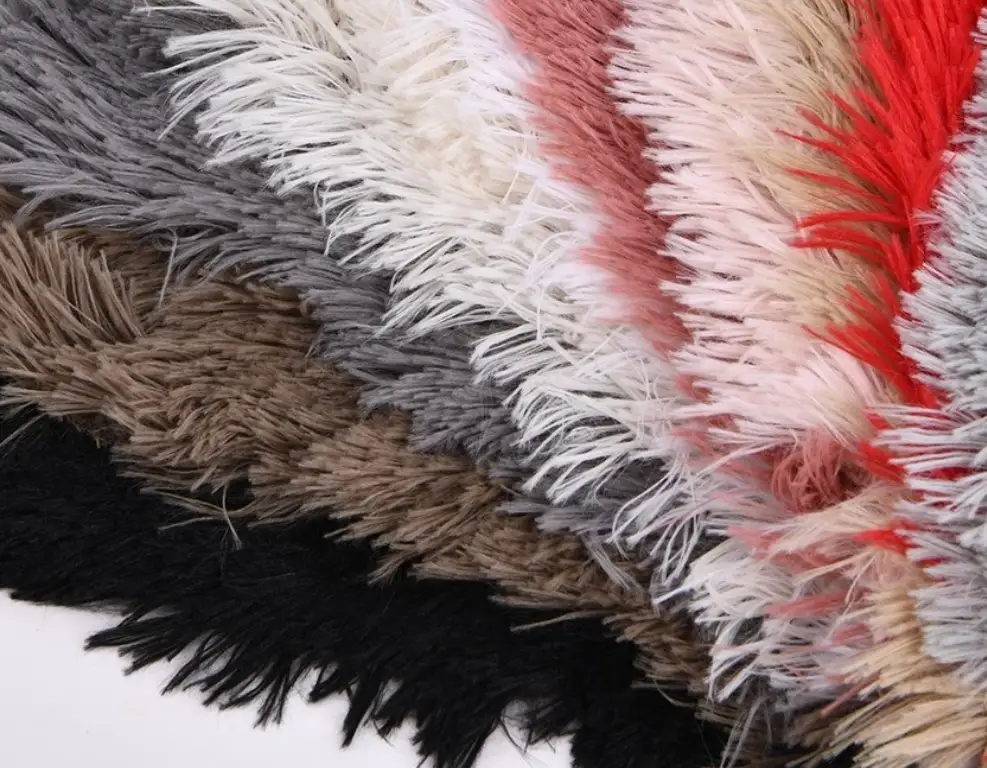
Color deviation occurs when the outer fabric used in production does not match the approved color standard within an acceptable tolerance. This can happen because a new fabric batch was accepted without comparison against the approved swatch, because different sections of a production run used fabric from different dye lots, or because the fabric was compared under inconsistent lighting rather than a standardized D65 light source. Color deviation is particularly damaging for licensed characters and branded products, where customers have precise color expectations tied to brand identity.
Pile Height and Texture Inconsistency
Pile height inconsistency — variation in how long or dense the fabric’s fiber pile is across a production batch — changes both the visual appearance and the tactile softness of the finished product. It typically originates from fabric mill variation between production lots, and it is one of the defect categories most likely to be invisible in a quick visual check but immediately apparent when a customer handles the product directly and compares it against a previous purchase or a product photo.
Fabric Contamination and Surface Defects
Fabric contamination — oil marks, dirt, foreign fiber inclusion, or surface staining — usually originates from inadequate handling and storage conditions rather than from the fabric mill itself. Surface defects such as weave irregularities, snags, or thin spots more commonly originate at the mill and should be caught during incoming inspection rather than discovered mid-production.
Material and Fabric Defect Reference
| Defect | Common Cause | Where It Is Typically Caught | Prevention Approach |
|---|---|---|---|
| Color deviation | Batch not compared against approved swatch | Incoming inspection, final inspection | D65 lighting comparison on every new roll |
| Pile height variation | Fabric mill lot-to-lot inconsistency | Incoming inspection | Pile height measurement against tolerance |
| Fabric contamination | Poor storage or handling conditions | Incoming inspection, pre-cutting check | Clean, controlled fabric storage protocol |
| Weave irregularities | Fabric mill defect | Incoming inspection | Roll-by-roll surface inspection before cutting |
| Pilling or surface wear | Low-grade fiber or finishing process | Final inspection, post-delivery review | Fabric grade specification and mill qualification |
What Are the Most Common Stuffing and Filling Defects?
Stuffing defects are among the most commercially visible defect categories in plush toy production, because they directly determine the product’s three-dimensional shape, firmness, and the visual expression of any character features. Stuffing defects are also among the defects most likely to be inconsistent within a single production run rather than uniform across it, which makes interval monitoring especially important.
Under-Stuffing and Over-Stuffing
Under-stuffing produces a flat, deflated appearance that fails to hold the intended silhouette, while over-stuffing distorts proportions and places excess stress on seams — sometimes to the point of seam failure. Both conditions typically originate from stuffing machine calibration drift or from manual stuffing operators applying inconsistent fill volume by feel rather than by a measured standard.
Lumping and Uneven Density
Lumping — visible clumps or voids within the filling — occurs when stuffing material is not distributed evenly throughout the cavity during the filling process, often in products with complex shapes, narrow limbs, or multiple compartments that are harder to fill uniformly than a simple rounded body. Uneven density across different areas of the same unit produces a product that feels inconsistent when handled, with some sections firm and others noticeably softer.
Weighted Bead Migration and Leakage
For weighted plush products, glass or plastic bead filling introduces defect risks that standard PP cotton filling does not present. Bead migration — where weighted filling shifts unevenly within compartments not properly divided by internal seams — creates an unbalanced product. Bead leakage through weak seams or inadequate compartment stitching is a safety-relevant defect, since small beads present a choking hazard if they escape the product.
How Product Complexity Affects Stuffing Defect Risk
Stuffing defect risk is not distributed evenly across a product catalog — it scales with design complexity. A simple, rounded body shape with a single fill cavity is comparatively forgiving; even moderate variation in fill technique produces a product that still looks and feels acceptable. A character design with narrow limbs, multiple appendages, articulated joints, or several separate internal compartments multiplies the number of places where uneven distribution, lumping, or under-filling can occur, and multiplies the operator skill required to fill every section correctly and consistently.
Buyers commissioning complex character designs should expect — and specifically request — a more detailed stuffing work instruction and a tighter interval monitoring schedule than would be appropriate for a simple, standard-shape product.
Tip: For any weighted plush product, specifically ask whether internal compartment seams are being pull-tested separately from the outer seams. A weighted product can pass a standard outer seam check while still having a failure point in the internal compartment stitching that only a targeted test would catch.

Stuffing and Filling Defect Reference
| Defect | Visual/Tactile Symptom | Typical Root Cause | Severity Class |
|---|---|---|---|
| Under-stuffing | Flat, deflated appearance | Machine calibration below target density | Major |
| Over-stuffing | Distorted proportions, seam stress | Machine calibration above target density | Major |
| Lumping | Visible clumps or voids | Uneven distribution during filling | Major |
| Uneven density across unit | Inconsistent firmness by area | Inconsistent operator technique | Major |
| Bead migration | Unbalanced weight distribution | Missing or inadequate internal compartments | Major |
| Bead leakage | Filling escaping through seam | Weak compartment or outer seam | Critical |
What Dimensional and Shape Defects Occur in Plush Toy Production?
Dimensional and shape defects affect the overall size, silhouette, and proportional balance of a finished plush toy relative to the approved sample and technical specification. Unlike stuffing defects, which can vary between individual units within an otherwise correct pattern, dimensional and shape defects often originate earlier, in the pattern-making and cutting stages, and tend to replicate consistently across an entire production run once they occur.
Size Deviation
Size deviation — a finished product that measures larger or smaller than the approved dimensional tolerance — most often originates from a pattern grading error, a cutting template that was not properly calibrated against the approved pattern, or a change in fabric stretch characteristics between the sample fabric and the bulk production fabric.
Asymmetry and Proportion Imbalance
Asymmetry occurs when paired features — ears, arms, eyes — are not positioned or sized identically on either side of the product. Proportion imbalance describes a broader shape issue where the relative size of different body sections does not match the approved design intent. Both defects commonly originate from inconsistent panel cutting or from assembly technique variation between operators.
Collapsed or Distorted Sections
Collapsed sections — areas that fail to hold their intended three-dimensional form — usually result from a combination of insufficient stuffing in that specific area and a pattern or seam structure that does not provide adequate support for the intended shape. This defect is especially common in narrow extremities such as ears, tails, and limbs.
Why Dimensional Defects Are Harder to Correct Mid-Production Than Other Categories
Dimensional and shape defects differ from most other categories in one important respect: once a pattern or cutting error has been introduced, it typically cannot be corrected within the same production batch without re-cutting the affected panels entirely. Stuffing density can be adjusted mid-run by recalibrating a machine. Seam tension can be corrected by adjusting a sewing machine setting.
But a pattern that was graded incorrectly, or a cutting template that was set up against the wrong reference, produces panels that are wrong from the moment they are cut — meaning every unit assembled from those panels carries the same defect until the pattern error is identified and the affected panels are replaced. This is precisely why pattern verification before cutting begins delivers a disproportionately high return relative to its cost: it is the last point at which a dimensional error can be caught before it becomes embedded in physical, already-cut material.
Dimensional and Shape Defect Reference
| Defect | Root Cause Stage | Prevention Control |
|---|---|---|
| Size deviation | Pattern grading or cutting template error | Pattern verification before cutting begins |
| Asymmetry | Inconsistent panel cutting or assembly | Cut piece measurement checks, work instructions |
| Proportion imbalance | Pattern design or stuffing distribution error | Counter sample comparison, first-off inspection |
| Collapsed sections | Insufficient stuffing or pattern support | Stuffing technique guidance for narrow sections |
What Seam and Sewing Defects Should Buyers Watch For?
Seam and sewing defects affect both the cosmetic appearance and the structural integrity of a plush toy. Because seams are what hold the entire product together under normal handling and play, seam defects sit at the boundary between cosmetic issues and genuine safety risks — a seam that looks acceptable at final inspection can still open under the stress of normal use if the underlying stitch quality was inadequate.
Weak Seams and Open Stitching
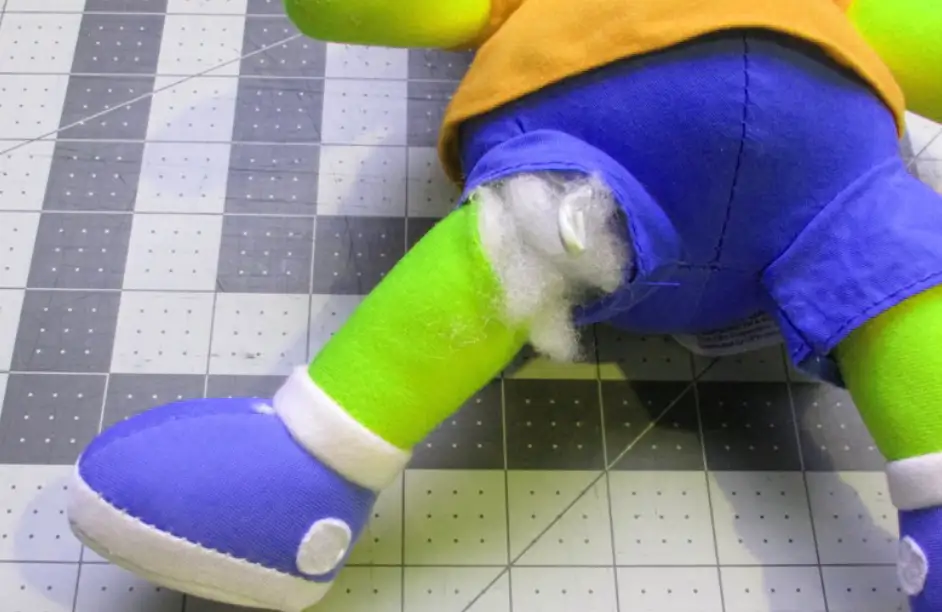
A weak seam has insufficient stitch density, incorrect tension, or thread that does not meet the required tensile strength for the product’s intended use. Weak seams frequently pass a visual inspection, since they can look identical to a properly constructed seam until pull-tested or subjected to normal handling stress. This makes seam strength testing — rather than visual inspection alone — an essential part of any rigorous quality protocol.
Puckering and Misalignment
Puckering — a rippled or bunched appearance along a seam line — typically results from incorrect thread tension or mismatched fabric feed rates between the two panels being joined. Panel misalignment, where two fabric pieces are not joined at their intended registration points, produces visible asymmetry and can distort the overall shape of the finished product, particularly on complex, multi-panel character designs.
Why Seam Defects Are Disproportionately Under-Detected
Of every defect category described in this guide, seam and sewing defects have the largest gap between how often they are actually present and how often they are actually detected during standard inspection. This gap exists because most seam defects are functional rather than purely cosmetic — a seam can look entirely correct in a static visual inspection and still fail once the product is handled, squeezed, or pulled during normal play. Visual-only final inspection protocols systematically under-detect this category, which is why seam strength testing on a physical sample — not just a visual pass — should be treated as a mandatory element of any inspection protocol rather than an optional add-on.
Seam and Sewing Defect Reference
| Defect | Symptom | Typical Cause | Detection Method |
|---|---|---|---|
| Weak seam | Opens under normal handling stress | Low stitch density, incorrect tension, weak thread | Pull force test, not visual check alone |
| Open stitching | Visible gap in seam line | Thread breakage or skipped stitches | Visual inspection |
| Puckering | Rippled or bunched fabric along seam | Incorrect tension or feed rate mismatch | Visual inspection |
| Panel misalignment | Visible offset between joined panels | Inaccurate registration during sewing | Visual comparison to counter sample |
Tip: Request that seam strength be verified with an actual pull force test on a sample from every production run, not just at the sample approval stage. A seam construction method that passed testing on a hand-sewn development sample does not automatically perform the same way once it is replicated at production speed on a different machine operator’s line.
What Are Common Embroidery and Surface Finishing Defects?
Embroidery and surface finishing defects affect the fine cosmetic details that give a plush toy its character and finished appearance. These defects are often small in physical scale but disproportionately noticeable to customers, because facial features and surface finish are exactly where the human eye is naturally drawn on any character-based product.
This category also tends to be the one most closely tied to brand and licensing risk. For products built around a licensed character or an established brand identity, customers and licensors alike hold precise expectations for exactly how facial features should look — expectations that are considerably less forgiving than for a generic, non-character design where minor variation in expression is less likely to be noticed or objected to.
Embroidery Position Drift
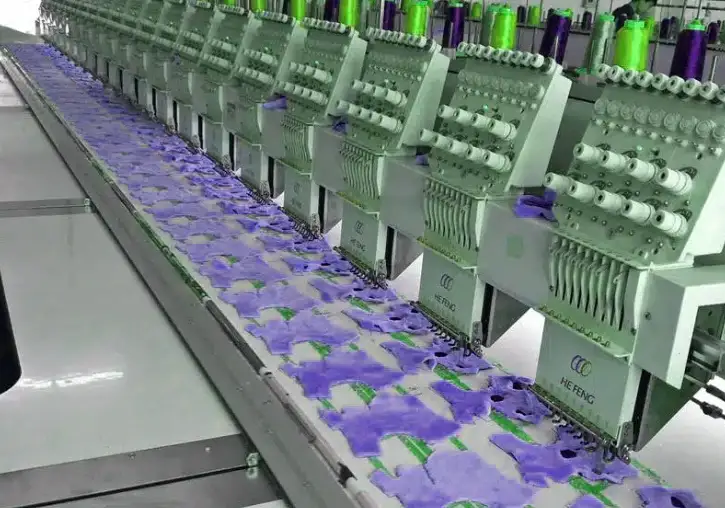
Embroidery position drift describes a gradual shift in where facial features or design elements are stitched relative to their approved coordinates, accumulating across a production run as an embroidery machine’s positioning reference degrades or as hoop placement technique varies between setups. Because eye and nose position determine a character’s perceived emotional expression, even a small positional shift of a few millimeters can visibly change how a product looks to a customer.
Tension and Thread Quality Issues
Embroidery tension issues produce puckered fabric around the stitched area or loose, poorly defined stitching that looks unfinished. Thread color deviation, similar to fabric color deviation, results from embroidery thread batches not being verified against the approved color reference before production.
Loose Threads and Finishing Defects
Loose or untrimmed threads, rough cut edges, and surface marks left from handling or processing are finishing-stage defects that typically originate at the very end of the production line, right before packing. These defects are usually the easiest to prevent, since they require only a consistent pre-pack visual inspection standard rather than any process recalibration.
Tip: Ask for embroidery position to be checked against measured coordinates at regular intervals throughout a production run, not compared visually against the previous unit off the line. Visual comparison to the immediately preceding unit allows drift to accumulate gradually and invisibly, since each unit only looks slightly different from the one before it.
What Accessory and Attachment Defects Pose Safety Risks?
Accessory and attachment defects are the defect category with the most direct connection to product safety, particularly for plush toys intended for young children. Safety eyes, noses, bows, and other small attached components are all potential choking hazards if they detach from the product, which is why this defect category receives the most stringent testing standards of any covered in this guide.
Loose or Detaching Accessories
A loose accessory has not been attached with sufficient force, using the correct washer or locking mechanism, or through the specified attachment technique. This defect frequently passes casual visual inspection, since a slightly loose accessory can look identical to a properly secured one — which is why pull force testing, not visual inspection, is the appropriate verification method.
Mispositioned Accessories
Mispositioned accessories — eyes, noses, or other features placed at the wrong location or asymmetrically — are typically an assembly technique issue rather than a materials issue, originating from inconsistent operator placement rather than from a defective component itself.
Attachment Method and Pull Force Standards
Regulatory and voluntary safety standards, including ASTM F963 and EN 71, specify minimum pull force requirements that attached components on children’s plush toys must withstand without detaching. Meeting these standards requires not just a strong attachment method at the design stage, but consistent verification that every unit in a production run actually achieves the required force — since attachment quality can vary meaningfully between individual units even when the specified method is followed correctly.
Accessory and Attachment Defect Reference
| Defect | Safety Relevance | Typical Root Cause | Verification Method |
|---|---|---|---|
| Loose safety eyes/noses | Critical — choking hazard | Insufficient attachment force or technique | Manual pull force test (minimum 90 N for ASTM/EN71-covered products) |
| Detached accessories | Critical — choking hazard | Attachment mechanism failure | 100% pull test on safety-critical components |
| Mispositioned accessories | Cosmetic, non-safety | Operator placement inconsistency | Visual comparison to counter sample |
| Loose bows, tags, or trims | Moderate — potential secondary hazard | Insufficient stitching or adhesive | Manual pull test at reduced force threshold |
What Compliance and Labeling Defects Commonly Occur?
Compliance and labeling defects are unique among the categories in this guide because they are frequently invisible to physical inspection. A product can look and feel perfect while still carrying a chemical non-compliance issue that only laboratory testing can detect, or a labeling error that only careful content review — not a glance at the label — would catch.
Chemical Non-Compliance
Chemical non-compliance includes restricted azo dyes in fabric, excessive heavy metal content in filling or accessories, and phthalate concentrations above regulatory limits in plastic components. These issues originate at the material sourcing stage and cannot be identified through physical or visual inspection — they require valid, current compliance documentation and, ideally, third-party laboratory testing.
Labeling and Documentation Errors
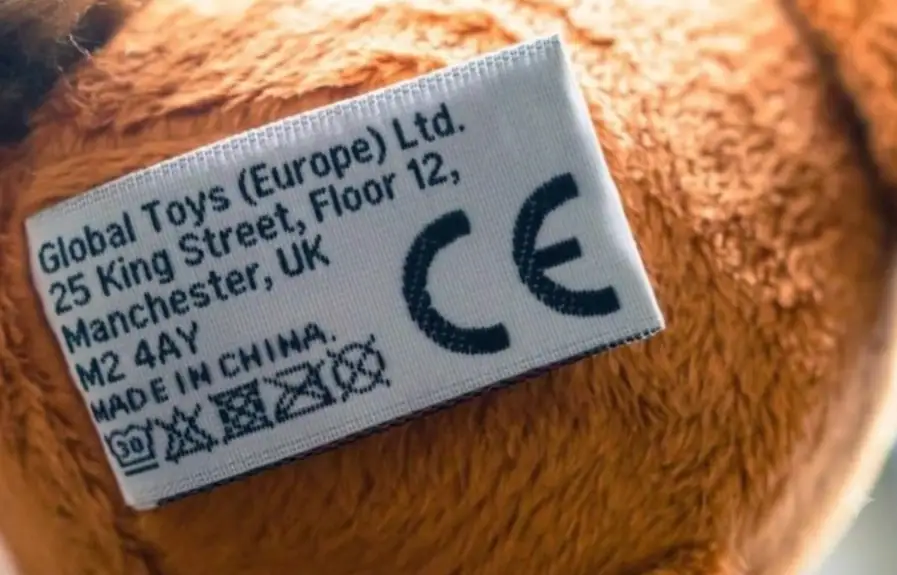
Labeling defects include missing or incorrect care instructions, absent age grading or choking hazard warnings, incorrect country-of-origin marking, and content that does not match the destination market’s specific regulatory requirements. Because labeling requirements vary meaningfully between markets — a label compliant for one country may be missing required elements for another — labeling defects most often originate from a mismatch between the product’s actual destination market and the label template that was applied during production.
Why Compliance Defects Carry Consequences Beyond the Individual Shipment
Compliance and labeling defects differ from every other category in this guide in one important respect: their consequences frequently extend beyond the affected shipment itself. A cosmetic or dimensional defect typically results in rework, rejection, or a customer complaint tied to that specific batch.
A chemical compliance failure, by contrast, can trigger regulatory action, mandatory recall, retail platform delisting, and in some jurisdictions financial penalties — consequences that persist regardless of how the affected units are eventually handled. This asymmetry in downstream consequence is the reason compliance documentation review deserves a level of scrutiny disproportionate to how rarely compliance defects actually occur relative to more common cosmetic and structural defect categories.
Tip: Never treat a supplier’s general compliance certification as sufficient proof for a specific shipment. Request the certificate that corresponds to the actual material lot and production batch being shipped, and confirm the certification scope actually covers the specific regulation relevant to the destination market — a REACH-compliant fabric is not automatically compliant with every other market’s chemical regulations.
At Which Production Stage Does Each Defect Type Typically Originate?
Mapping each defect category to the specific production stage where it most commonly originates is one of the most useful diagnostic tools available to both buyers and quality teams, because it turns a defect finding into a specific, actionable investigation point rather than a vague quality complaint.
This mapping is especially valuable when a defect is discovered after the fact — in final inspection or after delivery — because it narrows the investigation immediately. A color deviation finding points the investigation toward incoming material inspection records and fabric batch documentation, not toward the sewing line. A loose accessory finding points toward assembly-stage attachment technique and pull force testing records, not toward the fabric supplier. Using this map as a starting checklist, rather than investigating every possible cause for every defect, meaningfully shortens the time between a defect being found and its root cause being identified.
Defect Category to Production Stage Root Cause Map
| Defect Category | Primary Origin Stage | Secondary Origin Stage | Where First Detectable |
|---|---|---|---|
| Material and fabric | Incoming material receipt | Storage and handling | Incoming inspection |
| Dimensional and shape | Pattern making | Cutting | Post-cutting panel check |
| Stuffing and filling | Stuffing production | Machine calibration | First-off and interval IPQC |
| Seam and sewing | Sewing production | Operator technique | Sewing quality checkpoint |
| Embroidery and finishing | Embroidery production | Pre-pack finishing | Interval IPQC, pre-pack inspection |
| Accessory and attachment | Assembly stage | Component sourcing | Pull force interval check |
| Compliance and labeling | Material sourcing | Pre-production label setup | Documentation review, lab testing |
How Are Plush Toy Defects Classified by Severity?
Not every defect carries the same consequence, and treating a minor cosmetic issue with the same urgency as a safety-critical failure wastes inspection resources on the wrong priorities. Standard AQL-based inspection practice classifies defects into critical, major, and minor severity tiers, each with a different acceptable quality level threshold applied during final inspection.
This three-tier severity system matters most in how it shapes sampling math during final inspection. Because critical defects are inspected at a much tighter AQL than minor defects, a batch can be rejected for containing just one or two critical defects in the inspected sample, while the same sample could contain several times that number of minor defects and still pass. Understanding this asymmetry helps buyers interpret inspection reports correctly — a report showing zero critical defects and several minor defects generally represents an acceptable batch, while a report showing even a small number of critical defects warrants a full stop regardless of how clean the rest of the report looks.
Critical Defects
Critical defects present a direct safety risk to the end user — most commonly a choking hazard from a detachable small part, a sharp point or edge, or a chemical non-compliance issue. Critical defects typically carry the strictest acceptance threshold in final inspection, often AQL 1.0 or tighter, meaning a batch can be rejected outright even with a very small number of critical defects found in the sample.
Major Defects
Major defects significantly affect the product’s function, appearance, or salability without presenting an immediate safety risk — examples include color deviation, uneven stuffing, seam misalignment, and dimensional deviation beyond tolerance. Major defects are typically inspected at AQL 2.5.
Minor Defects
Minor defects are small cosmetic issues that a typical customer is unlikely to notice or object to under normal use — light thread trimming inconsistencies or very minor surface marks that fall within acceptable finishing variation. Minor defects are typically inspected at a looser AQL level, often 4.0.
Defect Severity Classification Reference
| Severity Tier | Definition | Example Defects | Typical AQL Applied |
|---|---|---|---|
| Critical | Direct safety risk to end user | Loose small parts, chemical non-compliance, sharp points | 1.0 or tighter |
| Major | Significant impact on function or salability | Color deviation, uneven stuffing, seam misalignment | 2.5 |
| Minor | Small cosmetic issue, low customer impact | Minor thread trimming variance, light surface marks | 4.0 |
How Can Buyers and Factories Prevent These Defects Systematically?
Cataloging defects is only useful if it feeds into a prevention system rather than remaining a static reference list. Each defect category described in this guide maps to a specific set of upstream controls that address it at, or close to, its root cause rather than waiting to catch it at final inspection.

Effective, systematic defect prevention combines incoming material inspection to eliminate material-origin defects before production begins, pre-production controls such as pattern verification and counter sample comparison to catch process setup errors, in-process quality monitoring at defined intervals to catch drift before it accumulates across a full production run, and a final inspection protocol calibrated to the correct AQL level for each defect’s severity classification.
Tip: Build a simple internal defect log that records every defect found — by category, by production stage, and by severity — across every order from a given production partner. Over several orders, this log reveals recurring defect patterns far more clearly than any single inspection report, and it gives buyers concrete, specific data to raise in supplier discussions rather than general quality concerns.
Conclusion
The defects that recur most often in plush toy production are not mysterious or unpredictable — they cluster into a manageable number of categories, each with an identifiable origin point in the production process and a specific control that addresses it most effectively. Material and fabric defects originate in incoming inspection. Stuffing defects originate in machine calibration and interval monitoring. Seam, embroidery, and accessory defects originate in assembly-stage technique and require targeted verification methods beyond simple visual inspection. Compliance defects originate in material sourcing and require documentation and testing rather than physical inspection alone.
Buyers who understand this defect catalog — and who use it to ask specific, targeted questions about how a production partner’s quality system addresses each category — consistently catch more issues earlier, at lower cost, than buyers who rely on a general final inspection to catch whatever defects happen to be present. Building inspection priorities around this categorized understanding of where defects come from, rather than treating every defect as an isolated surprise, is the most direct path to consistently reliable plush toy production quality.
No production system, however well managed, eliminates every defect entirely — plush toy manufacturing involves enough manual, skill-dependent operations that some level of variation is inherent to the process. The realistic goal is not zero defects but a system where defects are caught at the earliest, cheapest possible stage, where severity is correctly classified so that critical issues never reach a customer, and where recurring patterns are investigated and corrected rather than repeatedly reworked without addressing the underlying cause.
Buyers and production partners who share this framework, and who communicate defect data openly against it, consistently build more reliable, lower-friction manufacturing relationships than those who treat quality as a pass-or-fail judgment applied only at the very end of the process.
Frequently Asked Questions
Which defect category causes the most customer complaints in plush toy products?
Stuffing and filling defects are among the most frequent sources of customer complaints, because they directly affect how a product feels and looks in hand — a flat, under-stuffed product or one with visible lumps is immediately noticeable to a customer even without close inspection. Accessory and attachment defects, while less frequent numerically, tend to generate the most serious complaints when they occur, since a detached small part raises safety concerns rather than simple dissatisfaction. Buyers focused on minimizing complaint volume should prioritize interval stuffing density checks, while buyers focused on minimizing safety-related escalations should prioritize accessory pull force testing.
Can most plush toy defects be caught through visual inspection alone?
No. While many defects — color deviation, visible surface marks, loose threads, obvious asymmetry — are catchable through careful visual inspection, several of the most consequential defect categories are not. Weak seams often look identical to properly constructed seams until pull-tested. Loose accessories can appear secure until subjected to force testing. Stuffing density variation is often only detectable by handling or weighing a unit rather than looking at it. Chemical non-compliance is entirely undetectable without laboratory testing. A quality protocol that relies solely on visual inspection will systematically miss these categories regardless of how thorough or experienced the inspector is.
How many units should be checked to catch stuffing density defects reliably?
Because stuffing density defects tend to result from gradual machine calibration drift rather than a single isolated error, interval checking throughout the production run is more effective than checking a single large sample at the end. A practical approach is to weigh or measure a small sample — commonly three units — at intervals of every 150 to 200 units produced, which catches density drift after it has affected a limited number of units rather than allowing it to accumulate across an entire run before detection. For high-precision or premium products, shorter intervals provide tighter control at a modest increase in inspection time.
Are dimensional and shape defects always caused by the mold or pattern, or can they occur during assembly?
Both are possible, and distinguishing between them determines the correct corrective action. A dimensional defect that appears consistently across every unit in a production run — the same size deviation, the same proportion imbalance, repeated identically — almost always originates from a pattern or cutting template error, since a consistent process error produces a consistent result. A dimensional or shape defect that varies from unit to unit — sometimes present, sometimes not, in different specific locations — more often originates from assembly-stage technique inconsistency between operators, such as variable panel alignment or inconsistent stuffing distribution in complex sections. Reviewing whether a defect is consistent or variable across a sample is a quick, practical way to narrow down its likely origin before a full investigation.
What pull force standard should accessories on children’s plush toys meet?
Regulatory frameworks such as ASTM F963 in the United States and EN 71 in the European Union specify minimum force requirements that small attached parts on children’s products must withstand without detaching, generally in the range of 90 newtons for components accessible to young children, though exact requirements vary by specific component type, product age grading, and applicable regional standard. Buyers should confirm the specific standard applicable to their target market and product age grading rather than assuming a single universal threshold, and should request evidence that pull testing is performed at the correct force level on an ongoing basis throughout production rather than only during initial sample approval.
If a defect is classified as minor, does that mean buyers should not be concerned about it?
A minor classification means the defect has limited impact on function, safety, or typical customer perception — not that it should be ignored entirely. A single minor defect on an isolated unit is generally an acceptable, expected occurrence in any manufacturing process. However, a pattern of recurring minor defects across many units, or minor defects concentrated in a specific area of the product, can indicate an underlying process issue that, left unaddressed, may eventually produce more serious defects. Tracking minor defect patterns over time — rather than dismissing them individually — helps identify emerging process problems before they escalate into major or critical defect categories.
How should buyers respond when the same defect category recurs across multiple production orders from the same source?
A recurring defect pattern across multiple orders indicates that the corrective action taken after the first occurrence did not actually address the root cause — either because the true cause was misdiagnosed, or because the corrective action was applied inconsistently in subsequent runs. The appropriate response is to request a specific root cause investigation and written corrective action plan rather than accepting a general assurance that the issue will be fixed. Buyers should also request verification data from the next production run — first-off inspection results or interval IPQC data specific to the previously affected defect category — to confirm the corrective action was actually effective before accepting the pattern as resolved.