Skip to content
Everything designers, product developers, and sourcing teams need to know about recycled fabrics, organic fibers, sustainable fillings, certifications, and manufacturing practices for environmentally responsible plush toys.
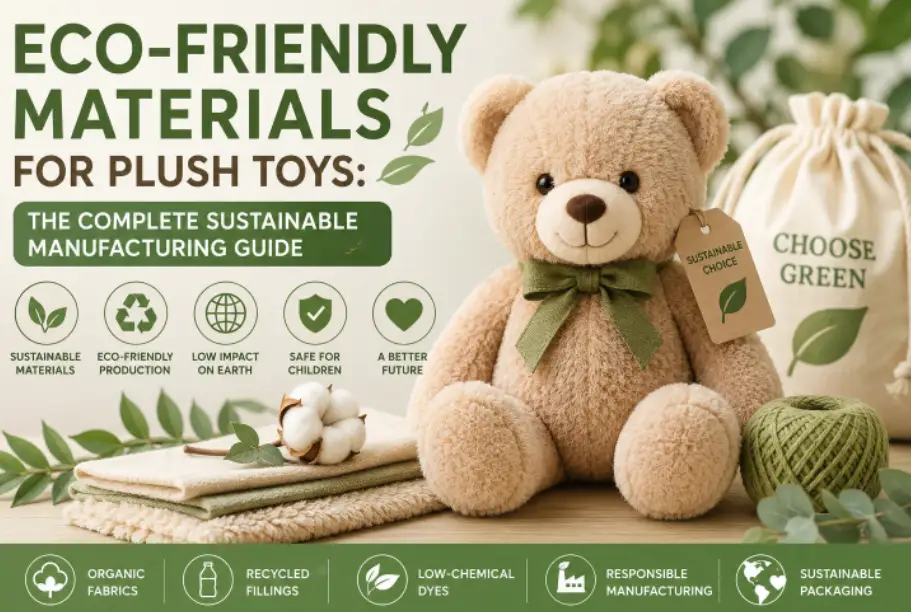
Eco-friendly materials for plush toys are no longer a niche request — they have become a defining requirement for brands, retailers, and parents who expect soft toys to be gentle on both children and the environment. This guide breaks down the fabrics, fillings, certifications, and production choices that separate genuinely sustainable plush manufacturing from surface-level “green” marketing.
What Are Eco-Friendly Plush Toy Materials?
Eco-friendly plush toy materials refer to fabrics, fibers, and fillings that reduce environmental impact across their lifecycle — from raw material extraction and processing through manufacturing, use, and eventual disposal. This includes recycled polyester made from post-consumer plastic bottles, organically grown cotton cultivated without synthetic pesticides, plant-based and biodegradable stuffing, natural dyes, and water-efficient finishing processes.
A material only qualifies as genuinely sustainable when its full supply chain is considered. A recycled fabric that is dyed using high-water, high-chemical processes has traded one environmental burden for another. Because of this, sustainable plush manufacturing looks at fiber origin, water and energy consumption during processing, chemical safety, biodegradability at end of life, and the durability of the finished toy — since a toy that falls apart quickly generates more waste than one built to last.
It is also worth distinguishing between materials that are sustainably sourced and materials that are sustainably processed, because a plush toy claiming an eco-friendly designation may address only one of these dimensions. Organic cotton, for example, addresses cultivation practices but does not automatically guarantee low-impact dyeing or water-efficient finishing further down the supply chain.
Recycled polyester addresses feedstock origin but does not by itself resolve the non-biodegradable nature of the finished fiber. Understanding these distinctions allows product teams to make informed trade-offs rather than assuming that any single eco-friendly plush material checks every sustainability box simultaneously.
Tip: When evaluating a new eco-friendly fabric supplier, ask for lifecycle documentation rather than a single sustainability claim. A fabric described as “eco-friendly” without a certification number, mill location, or fiber content breakdown should be treated as a marketing term rather than a verified attribute.
Why Sustainable Plush Manufacturing Matters
The plush toy category has historically relied on virgin polyester knit fabrics and petroleum-based polyester fiberfill, both of which are inexpensive and consistent in quality but carry a meaningful environmental footprint. As retail buyers and consumers increasingly scrutinize supply chains, sustainable stuffed animal manufacturing has shifted from a differentiator to a baseline expectation in many product categories, particularly toys aimed at environmentally conscious parents, museum gift shops, zoo and aquarium retail programs, and premium children’s brands.
Environmental Impact of Conventional Plush Fill and Fabric
Conventional polyester plush fabric and fiberfill are derived from virgin petrochemical feedstocks, requiring significant energy input during polymer synthesis and fiber extrusion. At the end of life, these materials are not biodegradable and, if landfilled, persist for decades. Dyeing conventional synthetic fabric is also water- and chemical-intensive, and wastewater from uncontrolled dye processes is a recognized contributor to textile-related water pollution in manufacturing regions.
Consumer and Retailer Demand Shifts
Retailers increasingly request documentation proving recycled content, organic certification, or chemical compliance before listing plush products, and many require this documentation as a condition of purchase order approval rather than as an optional selling point. This shift means that eco-friendly plush toy materials now intersect directly with sourcing strategy, not just product design.
Educational institutions, museum retail programs, zoo and aquarium gift shops, and children’s hospital gift stores have been particularly early adopters of sustainable plush requirements, often specifying recycled content minimums or organic material sourcing directly in their procurement guidelines. This buyer segment has helped normalize eco-friendly plush materials well beyond the boutique or premium price tier, pushing sustainable sourcing further into mainstream mass-market plush production than it might otherwise have reached on consumer demand alone.
Regulatory Pressure and Extended Producer Responsibility
Beyond voluntary retailer standards, a growing number of jurisdictions are introducing extended producer responsibility (EPR) legislation that holds manufacturers and importers financially accountable for the end-of-life disposal of the products they place on the market, including textiles and children’s products. While plush toys are not always singled out specifically within early EPR frameworks, the broader regulatory direction toward textile waste reduction and recyclability disclosure is expected to influence plush material sourcing decisions over the coming years, making early adoption of eco-friendly plush materials a way to stay ahead of compliance requirements rather than scramble to meet them retroactively.
Core Categories of Eco-Friendly Plush Materials
Sustainable plush construction generally draws from four material categories: recycled synthetic fabrics, organic natural fibers, alternative plant-based fibers, and sustainable filling materials. Each category carries distinct handfeel, durability, cost, and compliance characteristics.
Recycled Polyester (rPET) Plush Fabric
Recycled polyester plush fabric is manufactured by breaking down post-consumer plastic — most commonly PET beverage bottles — into flakes, which are then melted and re-extruded into polyester fiber. This fiber is knit into plush pile fabric using the same equipment and processes used for virgin polyester, meaning the softness, color range, and pile height achievable with recycled polyester plush are nearly identical to conventional plush fabric. This makes rPET one of the easiest eco-friendly substitutions for manufacturers to adopt without significant retooling.
Recycled polyester plush is typically certified under the Global Recycled Standard (GRS), which verifies recycled content percentage and tracks the material through the supply chain via transaction certificates.
Organic Cotton and Natural Fiber Plush
Organic cotton plush uses cotton grown without synthetic pesticides, herbicides, or genetically modified seed, typically certified under the Global Organic Textile Standard (GOTS). Organic cotton plush fabric has a shorter, denser pile than polyester plush and a distinct natural handfeel that many premium and newborn-focused brands prefer. Because organic cotton is a natural fiber, it is biodegradable at the end of its life, though its production requires more water per unit of fiber than recycled polyester.
Bamboo-Derived and Alternative Plant Fibers
Bamboo viscose and lyocell fibers are increasingly used in eco-friendly plush blends for their soft handfeel and rapid renewability — bamboo grows significantly faster than cotton and generally requires less irrigation and no pesticide input. However, the chemical processing required to convert bamboo pulp into usable textile fiber varies significantly by mill; closed-loop processes that recapture and reuse processing chemicals are meaningfully more sustainable than open-loop viscose processing, so mill selection matters as much as fiber choice.
Recycled and Plant-Based Filling Materials
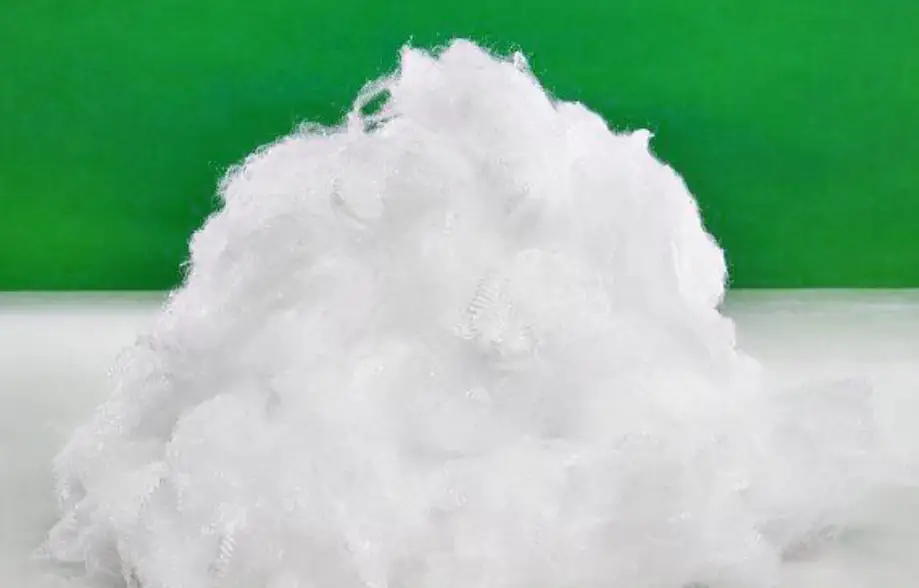
Filling accounts for a substantial share of a plush toy’s total material volume, making sustainable filling choice one of the highest-impact decisions in eco-friendly plush design. Recycled polyester fiberfill, made from the same post-consumer PET stream as recycled plush fabric, is the most widely adopted substitute for virgin fiberfill. Plant-based alternatives such as kapok fiber, corn-fiber (PLA-based) filling, and wool-blend filling are also used in premium and specialty plush lines.

Comparison of Common Eco-Friendly Plush Fabric Types
| Fabric Type | Primary Source | Handfeel | Typical Certification |
|---|---|---|---|
| Recycled polyester (rPET) plush | Post-consumer PET bottles | Close match to virgin polyester plush; smooth, dense pile | GRS (Global Recycled Standard) |
| Organic cotton plush | Certified organically grown cotton | Shorter pile, natural matte texture | GOTS (Global Organic Textile Standard) |
| Bamboo viscose/lyocell blend | Bamboo pulp, chemically processed | Very soft, silky drape | OEKO-TEX Standard 100; FSC (source bamboo) |
| Recycled wool blend | Reclaimed pre- or post-consumer wool | Warm, slightly coarse, natural loft | RWS (Responsible Wool Standard) or GRS |
| Hemp-cotton blend | Hemp fiber blended with cotton | Firmer, durable, coarser than cotton alone | OEKO-TEX Standard 100 |
Tip: rPET plush and organic cotton plush are not interchangeable in every design. Reserve organic cotton for shorter-pile, structured plush shapes where its denser texture reads as premium, and use recycled polyester for long-pile, huggable characters where a soft, flowing handfeel is the priority.
Safety Certifications and Compliance for Sustainable Plush Toys
Sustainability claims do not exempt a plush toy from standard safety compliance requirements. Eco-friendly plush toys sold in the United States, the European Union, and most other regulated markets must still meet mechanical, flammability, and chemical safety standards regardless of fiber origin.
Key Certifications for Sustainable Plush Materials
Multiple certification bodies address different aspects of sustainability and safety, and it is common — and often necessary — for a single fabric or filling to carry more than one certification simultaneously.
Key Certifications Relevant to Eco-Friendly Plush Toy Materials
| Certification | What It Verifies | Applies To |
|---|---|---|
| GRS (Global Recycled Standard) | Verified recycled content percentage and chain of custody | Recycled polyester fabric and fiberfill |
| GOTS (Global Organic Textile Standard) | Organic fiber content plus environmental and social processing criteria | Organic cotton and other organic natural fibers |
| OEKO-TEX Standard 100 | Absence of harmful chemical substances above the defined limits | Finished fabric, dyes, and trims |
| ASTM F963 / EN 71 | Mechanical safety, flammability, and toxicological requirements for toys | Finished plush toy regardless of material origin |
| FSC (Forest Stewardship Council) | Responsible sourcing of wood-derived pulp fibers | Bamboo viscose, lyocell, and similar regenerated fibers |
Chemical Safety Considerations in Eco-Friendly Plush
Natural dyes and low-impact dye processes are frequently promoted alongside eco-friendly plush materials, but colorfastness and washability testing remain essential regardless of dye source. Flame retardant treatment is another area requiring careful attention: some eco-friendly fabrics achieve flammability compliance through inherent fiber properties, while others still require topical or additive flame retardant treatment, which must itself be evaluated for chemical safety under applicable toy safety regulations.
Tip: Request third-party OEKO-TEX Standard 100 test reports for every dye lot used in eco-friendly plush production, not just an annual mill certificate. Dye formulations can vary between production runs, and a single outdated report should not be relied upon for ongoing compliance.
Sustainable Filling Materials: Alternatives to Virgin Polyester Fiberfill
Filling material choice affects not only environmental impact but also loft retention, washability, and tactile quality — all of which influence how a plush toy performs after repeated hugging and laundering.
Comparison of Sustainable Plush Filling Materials
| Filling Type | Source | Loft Retention | Biodegradable |
|---|---|---|---|
| Recycled polyester fiberfill | Post-consumer PET | High; comparable to virgin fiberfill | No |
| Kapok fiber | Seed pod fiber from the kapok tree | Moderate; softens with washing | Yes |
| Corn-fiber (PLA) filling | Fermented plant starch, typically corn | Moderate to high | Yes, under industrial composting conditions |
| Recycled wool fiber | Reclaimed wool textile waste | High; naturally resilient | Yes |
| Bamboo fiber filling | Processed bamboo pulp fiber | Moderate | Yes |
Recycled polyester fiberfill remains the dominant choice for mainstream eco-friendly plush toys because it offers a familiar hand and washability profile at a cost premium manufacturers and retailers can reasonably absorb. Kapok and corn-fiber fillings appeal to fully biodegradable product lines but typically require more careful washability testing, as some plant-based fillings compress or clump after repeated machine washing.
Sourcing Eco-Friendly Plush Materials: What to Ask Suppliers
Evaluating a fabric or filling supplier for an eco-friendly plush program requires more than reviewing a single certificate. A structured sourcing conversation should confirm fiber origin, processing location, certification scope, and testing history before a material is committed to a production order.
Verifying Recycled Content Claims
Recycled content claims should always be backed by a valid, in-date transaction certificate under the Global Recycled Standard or an equivalent recognized scheme, specifying the exact recycled content percentage rather than a general “made with recycled materials” statement. Buyers should also confirm whether the recycled content is pre-consumer (manufacturing waste) or post-consumer (used products such as beverage bottles), since post-consumer recycled content is generally viewed as delivering a stronger environmental benefit and is more heavily weighted in many retailer sustainability scorecards.
Evaluating Mill Water and Energy Practices
For fabrics requiring wet processing, such as dyeing and finishing, ask suppliers about wastewater treatment capacity, water recycling rates, and energy source at the finishing mill. Mills operating closed-loop water systems and using renewable or lower-carbon energy sources represent a meaningfully lower environmental footprint than mills relying solely on virgin water intake and grid electricity from high-carbon sources, even when the underlying fiber is identical.
Assessing Minimum Order Quantities and Lead Times
Because eco-friendly plush materials often come from a smaller supplier base than conventional materials, minimum order quantities and lead times can differ substantially from standard sourcing timelines. Organic cotton and plant-based fillings, in particular, may require longer advance ordering windows and higher minimum quantities than recycled polyester, which should be factored into product development and launch scheduling well before a design is finalized.
Manufacturing Process Adjustments for Eco-Friendly Plush
Switching to eco-friendly materials frequently requires adjustments beyond simple fabric substitution, particularly in the dyeing, cutting, and waste handling stages of production.
Dyeing and Finishing Considerations
Recycled polyester fiber can carry slight color variation from batch to batch because feedstock (recycled bottle flakes) is less chemically uniform than virgin polyester chips. This makes color-matching and dye-lot testing more important in sustainable plush production, and manufacturers should budget additional time for dye approval rounds when transitioning a design from virgin to recycled fabric.
Waste Reduction in Cutting and Sewing
Nesting cutting patterns more efficiently across fabric rolls reduces offcut waste, and many sustainable plush manufacturers now route fabric scraps back into filling material through mechanical shredding, effectively closing the loop between fabric waste and stuffing supply. Packaging waste reduction — replacing plastic polybags with recycled or compostable alternatives and minimizing printed insert cards — is frequently paired with material-level sustainability initiatives to strengthen the overall environmental profile of a finished plush product.
Tip: Build a fabric offcut recovery step into your production specification from the start rather than retrofitting it later. Factories that shred and reuse fabric scraps as supplemental filling material can meaningfully reduce total material cost while strengthening a product’s sustainability claims.
Cost and Sourcing Considerations for Eco-Friendly Plush Materials
Eco-friendly materials generally carry a cost premium over conventional virgin materials, though the size of that premium varies significantly by material type and order volume.
Typical Cost Premium and Sourcing Notes by Material Type
| Material | Typical Cost Premium vs. Virgin Equivalent | Sourcing Note |
|---|---|---|
| Recycled polyester (rPET) plush fabric | 5%–15% | Widest mill availability; smallest premium of eco-options |
| Recycled polyester fiberfill | 10%–20% | Available from most major fiberfill suppliers with GRS certification |
| Organic cotton plush fabric | 30%–60% | Fewer certified mills; longer lead times are common |
| Kapok or corn-fiber filling | 25%–50% | Limited supplier base; minimum order quantities can be high |
| Bamboo viscose blend fabric | 15%–35% | Mill quality varies significantly; closed-loop mills carry a higher cost |
Because recycled polyester carries the smallest cost premium and the broadest supplier base, it is the most practical entry point for manufacturers transitioning an existing plush line toward sustainable materials without a substantial cost increase or design overhaul.

Durability, Washability, and Quality Control for Eco-Friendly Materials
Sustainable materials must meet the same durability expectations as conventional plush fabric and filling, since a toy that wears out quickly undermines its own environmental value proposition. Quality control protocols for eco-friendly plush should include pile abrasion resistance, seam strength, colorfastness to washing and rubbing, and filling loft retention after repeated laundering cycles.
Durability and Testing Benchmarks for Eco-Friendly Plush Materials
| Test | What It Measures | Typical Pass Threshold |
|---|---|---|
| Pile abrasion resistance (Martindale) | Surface wear resistance of plush pile fabric | 10,000+ rubs without visible pile loss |
| Seam strength | Force required to pull a sewn seam apart | Minimum thresholds per applicable toy safety standard |
| Colorfastness to washing | Dye stability through laundering cycles | Grade 4 or higher on the standard grey scale |
| Filling loft retention | Recovery of filling shape after compression and washing | Minimal permanent compression after 5 wash cycles |
| Pull and torque testing | Attachment strength of eyes, noses, and appendages | Meets minimum force requirements per age grading |
Tip: Run washability and loft-retention testing on eco-friendly filling materials before committing to full production, especially for plant-based fillings such as kapok or corn fiber. These materials can behave differently from polyester fiberfill after repeated machine washing, and early testing prevents costly rework after retail complaints.
Design Considerations for Eco-Friendly Plush Toys
Designing for sustainable materials often means adapting silhouette, pile length, and construction technique to the characteristics of the chosen fabric and filling rather than forcing an existing design onto a new material without adjustment.
- Favor simpler, rounder silhouettes for organic cotton plush, since its shorter pile and firmer hand do not drape as forgivingly around sharp seams as long-pile polyester.
- Reduce the number of separately stuffed appendages when using plant-based filling, as more seams mean more opportunities for filling migration and clumping over time.
- Specify embroidered rather than printed facial features where possible, since embroidery avoids the plastisol and solvent-based inks associated with some printed plush graphics.
- Use recycled or FSC-certified paperboard hang tags and avoid laminated finishes that prevent the recyclability of the packaging.
Color palette selection also plays a supporting role in sustainable plush design. Because dye-lot consistency can be harder to guarantee with recycled and natural fibers, designers who build in intentional color variation — mottled, heathered, or multi-tone plush treatments — turn a potential manufacturing limitation into a distinctive aesthetic feature rather than fighting against it. This approach reduces rejected fabric batches due to minor shade variation and can shorten dye-approval cycles during production.
When a design brief calls for an exact, saturated color match rather than an intentional multi-tone effect, it is worth requesting a physical lab dip from the recycled or organic fabric mill before finalizing artwork. Building in one extra approval round at the swatch stage is far less costly than discovering a color mismatch after a full production run has already been dyed, and it gives the design team a real-world reference point rather than relying on a digital color chip that may render differently once applied to a textured plush pile.
Future Trends in Sustainable Plush Manufacturing
Material innovation in the plush category continues to accelerate, with mills developing higher-recycled-content polyester blends, improved closed-loop bamboo processing, and mushroom mycelium-derived leather alternatives for plush accessories and accents. Traceability technology, including blockchain-based fiber tracking and digital product passports, is also expanding, giving brands more granular verification of recycled content claims than transaction certificates alone previously allowed. As regulatory pressure around extended producer responsibility and textile waste grows in major markets, sustainable plush manufacturing is likely to shift from a premium positioning strategy to a baseline compliance expectation across the broader toy industry.
Another emerging direction is the development of mono-material plush construction, where fabric, filling, and thread are all manufactured from the same recycled polyester polymer family. Mono-material construction simplifies end-of-life recycling because the entire toy can theoretically be reprocessed as a single material stream, rather than requiring separation of dissimilar fibers, foams, and plastics before recycling — a separation step that is rarely performed in practice and remains one of the primary barriers to genuine plush toy circularity today.
Take-back and repair programs are also beginning to appear alongside material-level sustainability efforts, allowing worn plush toys to be refurbished, restuffed, or responsibly recycled rather than discarded. While still uncommon in the broader plush market, these programs extend the practical lifespan of a plush toy well beyond its original sale, which — from a full lifecycle perspective — can deliver a greater environmental benefit than any single material substitution on its own.

Frequently Asked Questions
Are eco-friendly plush toys as durable as conventional plush toys?
When properly engineered and tested, eco-friendly plush toys can match the durability of conventional plush. Recycled polyester fabric and fiberfill perform very similarly to their virgin counterparts because the underlying polymer is chemically the same; only the feedstock differs. Natural and plant-based materials such as organic cotton, kapok, and bamboo blends require more careful quality control, since fiber consistency and loft retention can vary more than with synthetic materials. The key factor is not the material category itself but whether the manufacturer has conducted adequate abrasion, seam strength, and washability testing before scaling to full production.
What is the difference between recycled polyester and organic cotton plush fabric?
Recycled polyester plush is made by reprocessing post-consumer PET plastic, most commonly beverage bottles, into new polyester fiber that is knit into plush pile fabric nearly identical in look and feel to virgin polyester plush. Organic cotton plush, by contrast, is a natural fiber grown without synthetic pesticides or genetically modified seed, resulting in a shorter, denser pile with a more matte, natural handfeel. Recycled polyester is generally more cost-effective and easier to source at scale, while organic cotton is prized for its natural fiber content and biodegradability, though it typically carries a higher cost premium and more limited mill availability.
Do eco-friendly plush toys still need to pass standard toy safety testing?
Yes. Eco-friendly plush toys must meet the same mechanical, flammability, and chemical safety requirements as any other plush toy sold in a given market, including standards such as ASTM F963 in the United States or EN 71 in the European Union. Sustainability certifications like GRS or GOTS address material origin and processing criteria, not toy safety compliance, so both categories of testing are required independently. Manufacturers should never treat a sustainability certification as a substitute for mandatory toy safety testing.
What certifications should I look for when sourcing sustainable plush materials?
The most relevant certifications depend on the material type. For recycled polyester fabric and fiberfill, the Global Recycled Standard (GRS) verifies recycled content percentage and supply chain traceability. For organic natural fibers such as cotton, the Global Organic Textile Standard (GOTS) verifies both organic content and environmentally responsible processing. OEKO-TEX Standard 100 applies broadly across fabric types and confirms the absence of harmful substances above defined safety limits. For wood-pulp-derived fibers like bamboo viscose, FSC certification addresses responsible sourcing of the underlying pulp. Requesting the specific certificate and transaction documentation, rather than relying on a general sustainability statement, is the most reliable way to verify a supplier’s claims.
Is plant-based plush filling safe for machine washing?
Most plant-based fillings, including kapok fiber and corn-fiber (PLA) filling, can withstand machine washing, but they generally require more careful care instructions than recycled polyester fiberfill. Repeated washing and drying cycles can cause some plant-based fillings to compress, clump, or lose loft more quickly than synthetic alternatives. Manufacturers should conduct multi-cycle wash testing during product development and provide clear care labeling to consumers, since improper drying temperatures are a common cause of premature filling degradation in plant-based plush products.
How much more expensive are eco-friendly plush materials compared to conventional materials?
Cost premiums vary considerably by material category. Recycled polyester fabric and fiberfill typically carry the smallest premium, often in the range of five to twenty percent above virgin equivalents, because recycling infrastructure and mill availability are well established. Organic cotton and plant-based fillings such as kapok generally carry larger premiums, sometimes exceeding thirty to fifty percent, due to a smaller supplier base, more complex certification requirements, and lower production volumes relative to synthetic alternatives. Order volume, mill relationships, and long-term sourcing commitments can meaningfully reduce these premiums over time.
Can recycled polyester plush fabric be dyed to match any color?
Recycled polyester plush fabric can be dyed across a similar color range to virgin polyester, but color consistency requires closer management. Because recycled feedstock is sourced from a less chemically uniform stream of post-consumer plastic than virgin polyester chips, batch-to-batch color variation can be more pronounced. Manufacturers typically address this by running additional dye-lot approval rounds and by sourcing recycled polyester from mills with tighter feedstock quality control, both of which help maintain consistent color matching across production runs.
What happens to eco-friendly plush toys at the end of their life?
End-of-life outcomes depend heavily on material composition. Plush toys made from natural fibers such as organic cotton, kapok filling, or recycled wool are biodegradable under appropriate conditions, though a fully biodegradable outcome generally requires that trims, threads, and any plastic safety eyes also be removed or be compatible with composting. Recycled polyester plush is not biodegradable, but because it originates from and can potentially re-enter plastic recycling streams, its environmental impact is framed around circularity rather than biodegradability. No mainstream plush toy today is fully compostable as a complete finished product due to the mixed materials — fabric, filling, thread, and safety components — used in construction.