Skip to content
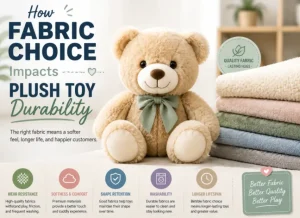
A complete framework for understanding why fabric selection — not stuffing, not stitching alone — is the single largest determinant of how long a plush toy survives real-world handling, and how to evaluate fabric durability before committing to a production run.
Plush toy durability is not decided at the final inspection stage. It is decided months earlier, at the point in development where a fabric swatch is selected, approved, and locked into the tech pack. A plush toy that fails prematurely — matted pile, split seams, faded color, thinning fabric over stress points — is very rarely failing because of a single catastrophic defect. It is failing because a fabric with insufficient abrasion resistance, inadequate weight, or unstable dye was approved for an application it was never engineered to withstand.
Buyers who source plush toys more than once eventually learn a pattern that is not obvious the first time around: two plush toys can look nearly identical on a sampling table and perform completely differently after three months of real handling. The stitching can be identical. The stuffing can be identical. The construction pattern can be identical. And the durability outcome can still diverge sharply — because the fabric underneath the surface was never equivalent to begin with.
This guide explains exactly how fabric choice impacts plush toy durability — which fabric properties actually determine long-term performance, how different plush fabric types compare, how fabric weight and colorfastness interact with construction quality, and how buyers can evaluate fabric durability before a production run begins rather than discovering the gap after customers do.

Why Does Fabric Choice Matter More Than Any Other Durability Factor in Plush Toys?
Fabric choice matters more than any other single durability factor in plush toy construction because the outer fabric is the only component that is in constant, direct contact with every source of mechanical and environmental stress the product experiences. Stuffing is protected by the fabric shell. Stitching only fails at the rate the surrounding fabric allows it to fail. Accessories are only as secure as the fabric they are anchored into. The fabric is not one input among several — it is the layer that determines how much stress every other component is even exposed to.
This is why a durability assessment that focuses primarily on stitch density or filling quality, while treating fabric as a fixed, interchangeable input, consistently misses the largest lever available for improving plush toy longevity. A well-stitched seam in a low-abrasion-resistance fabric will still fail early, because the fabric around the seam degrades and loses the structural integrity the stitching depends on. A high-density, well-calibrated filling inside a fabric shell with poor pile retention will still look worn and flattened within weeks, because the visible surface — not the internal filling — is what communicates wear to the end user.
Relative Contribution of Construction Components to Overall Plush Toy Durability
| Component | Primary Durability Role | Failure Dependency on Fabric Quality |
|---|---|---|
| Outer fabric | Absorbs all surface abrasion, flex stress, and UV/wash exposure | Independent — fabric quality is the root variable |
| Seams and stitching | Holds fabric panels together under tension | High — seam strength is capped by the fabric it is sewn into |
| Filling material | Provides shape and internal support | Moderate — filling loft is visible only through the fabric |
| Accessories (eyes, noses, trims) | Anchored features subject to repeated pulling | High — attachment security depends on fabric tear strength |
| Embroidery | Decorative surface detail | Moderate — thread tension interacts with fabric stretch behavior |
Reading this comparison correctly requires understanding that these components are not independent variables contributing separately to a total durability score. They are hierarchically dependent — the fabric sets the ceiling on what every other component can achieve, and no amount of quality investment elsewhere in the construction can raise a product’s durability above the ceiling that its fabric establishes.
The Weakest Link Principle in Plush Toy Construction
Plush toy durability follows what is best understood as a weakest link principle: the product’s actual field lifespan is determined by its least durable major component, not by the average durability of all its components combined. A plush toy built with premium filling, reinforced stitching, and a compliance-tested accessory package will still fail early if its outer fabric has poor abrasion resistance — because the fabric is the component customers touch, see, and stress first, and it is the component that fails first in the overwhelming majority of real-world durability complaints.
This principle has a direct, practical implication for how development budgets should be allocated. Buyers who are optimizing a plush toy program for durability under a fixed cost target get more durability improvement per dollar spent upgrading fabric grade than from an equivalent dollar spent upgrading stitch density, thread grade, or filling density — because the fabric upgrade raises the ceiling that every other component operates under, while upgrades to lower-hierarchy components cannot exceed a ceiling the fabric has already set.
In practice, this means a development review that surfaces a durability concern should always ask first whether the fabric specification is adequate for the product’s intended handling intensity before investing in upgrades further down the construction hierarchy. A buyer who responds to reported durability complaints by tightening stitch density or upgrading filling, without first reassessing the fabric that both of those components depend on, is addressing symptoms rather than the underlying cause — and is likely to see the same complaint pattern persist even after the secondary upgrades are implemented.
What Fabric Properties Actually Determine Long-Term Durability?
Fabric durability is not a single measurable property — it is the combined outcome of several independent fabric characteristics, each of which governs a different failure mode. A fabric can score well on one durability dimension and poorly on another, which is why evaluating plush fabric on a single metric, such as GSM weight alone, produces an incomplete and sometimes misleading picture of how the fabric will actually perform in use.
The fabric properties that actually determine long-term plush toy durability are fiber type, weave or knit density, pile height and construction, tensile and tear strength, abrasion resistance, and colorfastness — and each of these properties responds to a different type of mechanical or environmental stress that a plush toy encounters over its service life.

Key Fabric Properties and the Durability Failure Mode Each One Governs
| Fabric Property | Failure Mode It Governs | Why It Matters for Plush Toys |
|---|---|---|
| Fiber type (polyester, acrylic, cotton blend) | Pilling, moisture retention, heat sensitivity | Determines base wear resistance and washability |
| Weave / knit density | Stretching, pile shedding, seam grip | Denser construction resists distortion and fiber loss |
| Pile height and backing | Matting, flattening, bald patches at stress points | Shorter, well-backed pile resists crushing better than loose long pile |
| Tensile and tear strength | Seam blowouts, panel tearing under pulling force | Directly determines how the fabric performs under child-handling stress |
| Abrasion resistance | Surface thinning, sheen loss, fiber breakage from rubbing | Predicts how the product looks after repeated hugging and dragging |
| Colorfastness | Fading, bleeding, discoloration from light, sweat, or washing | Governs how “worn” the product appears even before structural wear begins |
Fiber Type and Its Effect on Wear Resistance
The overwhelming majority of plush toy fabrics are constructed from polyester fiber, either 100 percent polyester or a polyester-dominant blend, because polyester offers a favorable combination of softness, colorfastness, low moisture absorption, and cost efficiency at production scale. Within polyester-based plush fabrics, the specific fiber denier — the linear density of the individual fiber strands — has a measurable effect on wear resistance: finer deniers typically produce a softer hand feel but lower abrasion resistance, while coarser deniers trade some softness for meaningfully improved resistance to surface wear and pilling.
Acrylic fibers are used in some plush fabrics for their fur-like appearance and vivid color reproduction, but acrylic pile is generally more prone to matting and pilling under repeated friction than polyester pile of comparable construction, which is why acrylic-heavy fabrics are more commonly specified for lower-handling, display-oriented products than for plush toys intended for sustained daily play.
Weave and Knit Structure vs. Pile Durability
Most plush fabrics are knit rather than woven, because knit construction produces the stretch and drape characteristics needed to wrap around three-dimensional stuffed forms without puckering or restricting the stuffing process. Within knit plush construction, the density of the backing knit — how tightly the base structure is looped before the pile fibers are anchored into it — directly determines how securely the pile fibers are held in place under repeated abrasion.
A loosely knit backing allows individual pile fibers to work loose under repeated rubbing, producing the visible shedding and thinning that buyers describe as a plush toy “losing its fur” after moderate use. A tightly knit backing anchors pile fibers more securely, meaningfully extending the point at which visible pile loss becomes apparent — even when the pile fiber itself is otherwise identical between the two fabrics.
Fabric Selection Tip: Ask for the backing knit density specification, not just the pile height, when evaluating a fabric swatch. Two swatches with identical pile height and visual appearance can have significantly different pile retention if their backing knit density differs — and this difference is not visible in a casual hand-feel assessment.
How Do Different Plush Fabric Types Compare in Durability Performance?
Plush fabric is not a single material category. It spans a range of distinct constructions — short-pile minky, long-pile faux fur, sherpa and fleece, velboa, and PV plush among others — each with a different durability profile suited to different product applications. Selecting the wrong fabric type for a product’s intended use case is one of the most common and most avoidable sources of premature plush toy failure.
Different plush fabric types compare in durability performance primarily along three dimensions: abrasion resistance under repeated handling, pilling and matting tendency over the product’s service life, and dimensional stability when the fabric is stretched over a stuffed form. No single fabric type scores best across all three dimensions, which is why fabric type selection should be matched deliberately to the product’s expected use pattern rather than chosen primarily on softness or visual appeal.

Durability Comparison of Common Plush Toy Fabric Types
| Fabric Type | Abrasion Resistance | Pilling / Matting Risk | Best-Suited Application |
|---|---|---|---|
| Short-pile minky (velour-style) | High | Low | High-handling toys, infant and toddler plush, frequently washed products |
| Long-pile faux fur (10mm+) | Moderate to low | High if backing density is low | Display and gift plush, lower-handling collectible products |
| Sherpa/fleece | Moderate | Moderate | Blanket-style plush, comfort items, lower-friction contact areas |
| Velboa | High | Low | Realistic animal plush requiring a smooth, short, dense surface |
| Standard PV plush (polyester velvet) | Moderate | Moderate | General-purpose plush toys across most price and quality tiers |
| Bamboo/cotton-blend plush | Moderate to low | Low to moderate | Premium or eco-positioned plush where softness is prioritized over heavy handling |
Short-pile minky and velboa consistently outperform long-pile faux fur on abrasion resistance because their shorter fiber length gives individual pile fibers less leverage to bend, mat, and break under repeated friction. This is precisely why short-pile fabrics dominate the infant and toddler plush category, where products are handled constantly, dragged across floors, chewed, and washed far more frequently than gift- or display-oriented plush aimed at older children or collectors.
Long-pile faux fur, by contrast, offers a visual and tactile richness that short-pile fabrics cannot match, which is why it remains popular for premium and character-driven plush design — but this durability tradeoff should be an explicit, informed design decision rather than an overlooked consequence of choosing a fabric primarily for its sampling-table appeal.
Fabric Selection Tip: Match fabric type to the product’s realistic handling pattern, not its display context. A plush toy photographed for an e-commerce listing sits still; the same plush toy in a child’s daily rotation does not. Specify fabric type based on the second scenario, not the first.
Recycled and Bio-Based Plush Fabrics: Durability Considerations
Demand for recycled polyester and bio-based plush fabrics has grown steadily as buyers respond to sustainability expectations from retail partners and end consumers, and this shift introduces durability considerations that differ somewhat from conventional virgin polyester plush fabric. Recycled polyester fiber, produced from post-consumer or post-industrial plastic feedstock, can exhibit greater variability in fiber consistency and dye uptake between production batches than virgin fiber, which makes the batch-consistency inspection practices described later in this guide even more important when a program specifies recycled content.
This variability does not mean recycled or bio-based fabrics are inherently less durable — well-processed recycled polyester plush can perform comparably to virgin fiber equivalents on abrasion resistance and pilling metrics — but it does mean that buyers specifying these materials should request the same quantified durability testing discussed throughout this guide rather than assuming sustainability credentials and durability performance are automatically aligned. Treating “recycled” or “eco-friendly” as a durability claim on its own, without supporting test data, carries the same risk as treating any other fabric marketing claim as a substitute for verified performance data.
How Does Fabric Weight (GSM) Affect Seam Strength and Shape Retention?
Fabric weight, measured in grams per square meter (GSM), is one of the most frequently referenced but least completely understood specifications in plush toy sourcing. GSM is often treated as a simple proxy for quality — heavier is assumed to mean better — but the relationship between GSM and durability is more specific than that assumption suggests, and it interacts directly with two separate outcomes: seam strength and shape retention.
Fabric weight affects seam strength and shape retention because heavier fabrics distribute stitching tension across more fiber mass per unit of seam length, resisting the pulling and stress-tearing that light fabrics are more prone to at seam lines, while also holding their shape against the internal pressure of stuffing more consistently over time than lighter fabrics, which stretch and lose definition under sustained filling pressure.
Low-GSM Fabric Risks
Fabrics below approximately 250 GSM are more prone to seam-line tearing under the tension of stuffing pressure and handling stress, because there is less fiber mass at the seam allowance to resist the pulling force each stitch transmits into the surrounding material. Low-GSM fabrics are also more prone to see-through or show-through defects, where the internal stuffing or seam construction becomes visible through the fabric surface, and to stretching out of shape around high-stress areas such as limb joints and neck seams on jointed or posed plush designs.
These risks do not mean low-GSM fabric is always an inappropriate choice — for products where light weight and fluid drape are priorities, and where handling intensity is expected to be low, a lighter fabric can be a reasonable, deliberate specification. The risk arises specifically when a low-GSM fabric is specified for a product that will experience high handling intensity without that tradeoff being consciously evaluated.

High-GSM Fabric Tradeoffs
Fabrics above approximately 400 to 450 GSM offer meaningfully improved seam strength and shape retention, but they introduce tradeoffs of their own: increased material cost per unit, a stiffer hand feel that can reduce the perceived softness that is often central to a plush toy’s appeal, and in some cases reduced flexibility that can make certain jointed or highly detailed construction techniques more difficult to execute cleanly. Heavier fabrics also add shipping weight, which becomes a meaningful cost factor at scale for buyers shipping large plush toy volumes internationally.
The practical GSM range that balances durability against softness and cost for most general-purpose plush toys falls between roughly 280 and 380 GSM — a range that provides meaningfully improved seam and shape durability over low-GSM fabrics without the cost, stiffness, and weight penalties that come with the heaviest fabric options.
Development Tip: Specify GSM as a range with a tolerance band, not a single target number, in the tech pack. Fabric weight naturally varies a few percent between production lots even within a consistent supplier relationship, and a tolerance band prevents minor, normal variation from triggering unnecessary rejection at incoming inspection.
What Role Does Colorfastness and Dye Quality Play in Perceived Durability?
Structural failure is not the only way a plush toy is perceived as having worn out. Color fading, dye bleeding, and discoloration from light exposure, perspiration, or repeated washing all signal “worn out” to an end customer just as effectively as a torn seam or a matted pile — often earlier, because color change is the first visible sign of aging that a customer notices, well before any structural component actually fails.
Colorfastness and dye quality play a disproportionately large role in perceived durability because customers evaluate product condition primarily through visual inspection, and faded or unevenly discolored fabric communicates deterioration immediately and unambiguously, regardless of whether the underlying fiber and seam integrity remain fully intact. A structurally sound plush toy with visibly faded color is judged as worn out by the customer holding it, even though the actual mechanical durability of the product may be largely unaffected.
Common Colorfastness Test Methods and What Each One Predicts
| Test Method | What It Measures | Real-World Failure It Predicts |
|---|---|---|
| Colorfastness to rubbing (crocking) | Dye transfer under dry and wet friction | Color transfer onto skin, clothing, or other fabrics during play |
| Colorfastness to washing | Color retention and bleeding across repeated wash cycles | Fading and dye bleeding onto other laundry items |
| Colorfastness to light | Color stability under prolonged light exposure | Fading in window displays, sunlit play areas, or storage |
| Colorfastness to perspiration | Dye stability against acidic and alkaline sweat exposure | Discoloration from prolonged skin contact, common in infant plush |
| Colorfastness to saliva | Dye and material stability under saliva exposure | Relevant specifically for infant and teething-stage plush toys |
Each of these test methods predicts a different real-world failure scenario, and specifying only one — colorfastness to washing, for example, while omitting colorfastness to rubbing — leaves a durability gap that will not be caught until the product is already in a customer’s hands and the specific failure mode the omitted test would have predicted actually occurs.
Dye quality interacts with fiber type in ways that also affect colorfastness performance independent of the testing regime applied. Polyester fiber generally accepts disperse dyes with strong, stable bonding, producing better inherent colorfastness than natural fibers dyed with less stable dye classes — which is one of the underlying reasons polyester-dominant plush fabrics have become the industry default for products where color stability over the product’s service life is a priority.
Quality Tip: Request colorfastness test results specifically for the darkest and most saturated colors in a multi-color design, not just an average across the palette. Dark, saturated dyes are consistently the most likely to bleed or crock, and a passing average result can still conceal a failing result on the single color most likely to cause a visible problem.
How Do Incoming Fabric Inspection and Batch Consistency Prevent Durability Defects?
Fabric specification on paper and fabric performance in the finished product are only as connected as the inspection system that verifies every incoming roll actually matches what was specified and approved. A tech pack that correctly specifies fiber type, GSM, pile height, and colorfastness requirements provides no durability benefit if the fabric that actually enters production varies from those specifications without being caught before cutting begins.
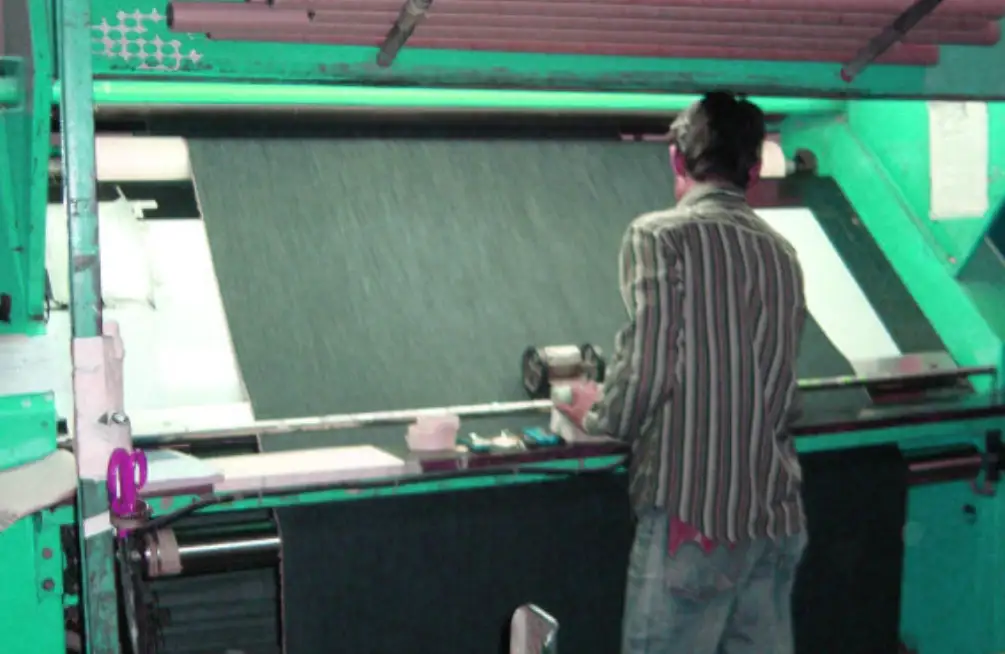
Incoming fabric inspection and batch consistency checks prevent durability defects by identifying material that does not meet the approved specification before it is committed to production, at the stage in the manufacturing process where correction is cheapest and fastest. A fabric batch that has drifted from the approved pile height, density, or color standard produces a finished plush toy with a durability profile that no longer matches what was validated during development — and this drift is invisible in the finished product until the affected units begin failing in the field.
Fabric-Specific Incoming Inspection Checkpoints and What Each One Catches
| Inspection Checkpoint | Method | Durability Defect Prevented |
|---|---|---|
| Color comparison under D65 lighting | Swatch comparison against approved standard | Batch-to-batch dye variation and premature-looking mismatch |
| GSM weight verification | Sample cutting and weighing against specification | Seam strength and shape retention shortfalls from underweight fabric |
| Pile height and density measurement | Physical measurement against approved swatch | Premature matting or shedding from backing density drift |
| Surface defect inspection | Visual roll inspection for weave flaws, contamination, thin spots | Localized weak points that fail early under normal stress |
| Colorfastness spot verification | Rub and wash spot test on incoming batch samples | Dye instability not caught by visual color comparison alone |
The most consequential gap in many fabric inspection systems is not the absence of inspection for a first production order, but the absence of equivalent inspection for reorders. Buyers and factories alike often treat a reorder as lower risk because the fabric has “already been approved” — but the approval applied to the original sample batch, not to every subsequent roll delivered by the mill over the life of the program. Batch-to-batch fabric variation is a normal characteristic of textile manufacturing, and reorders without renewed inspection are exposed to exactly the same durability drift risk as a first order with no inspection at all.
Quality Tip: Apply the same fabric inspection rigor to reorders as to first orders. The most common source of durability complaints on established, previously validated products is unmonitored batch drift in a fabric that was correctly specified and approved the first time but was never re-verified on subsequent deliveries.
How Does Fabric Selection Interact With Stitching and Construction to Determine Overall Durability?
Fabric and construction are not independent durability inputs that simply add together. They interact — the correct stitching approach for one fabric type can be the wrong stitching approach for another, and a construction technique that performs well on one fabric weight can actively damage a different fabric weight. Understanding these interactions is what separates a durability specification that works on paper from one that actually performs in the finished product.
Fabric selection interacts with stitching and construction to determine overall durability because thread strength, seam allowance, and stitch density must all be matched to the specific tensile behavior, thickness, and pile characteristics of the fabric being sewn — a mismatch in any of these pairings creates a structural weak point regardless of how well either the fabric or the stitching technique performs in isolation.
Matching Thread Strength to Fabric Type
Thread that is too strong relative to the fabric it is sewn into does not improve seam durability — it shifts the failure point from the seam itself to the surrounding fabric, which tears before the thread breaks under stress. Thread that is too weak relative to the fabric allows the seam to fail first, wasting the durability potential the fabric itself could otherwise deliver. The correct approach matches thread tensile strength to the fabric’s own tear strength, so that the seam and the surrounding fabric fail at approximately the same stress threshold rather than one failing significantly before the other.
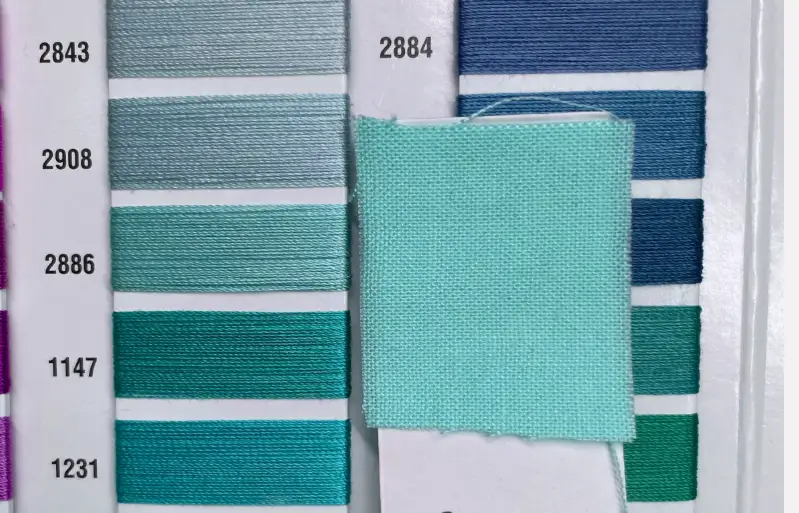
This matching principle also applies to thread type, not just strength. Polyester core-spun thread is the standard choice for most plush toy construction because its tensile behavior — including a degree of elasticity under stress — complements the stretch characteristics of knit plush fabric better than a purely rigid thread, which can create stress concentration points at the stitch line when the surrounding knit fabric flexes under normal handling.
Seam Allowance Adjustments for Pile Fabrics
Pile fabrics — particularly longer-pile faux fur — require wider seam allowances and specific construction techniques, such as pile-tucking during sewing, to prevent pile fibers from being caught and compressed into the seam line itself. A seam that traps pile fiber within the stitch line creates a visibly compromised, weaker seam than one where the pile has been correctly tucked away from the stitching path before the seam is closed. This is a construction technique detail that has no equivalent requirement in short-pile or non-pile fabric construction, illustrating directly how fabric type selection changes the correct construction approach rather than simply adding a separate, independent durability input.
Production Tip: Confirm that seam allowance and stitching technique specifications in the tech pack are fabric-specific, not copied from a previous product using a different fabric type. A seam allowance and stitch density that performed well on a short-pile minky product will not automatically transfer correctly to a long-pile faux fur version of the same design.
How Should Buyers Evaluate Fabric Durability Before Committing to a Production Run?
The most reliable way to prevent fabric-driven durability failures is to evaluate fabric durability systematically before a production run begins, rather than relying on visual inspection and hand-feel assessment of a sampling-table swatch — both of which are poor predictors of how a fabric will actually perform after weeks or months of real handling, washing, and environmental exposure.
Buyers should evaluate fabric durability before committing to a production run by requesting specific, quantified test results for abrasion resistance, colorfastness, and tensile strength, rather than relying on subjective swatch assessment, because these quantified tests predict field performance in ways that visual and tactile inspection cannot.
Fabric Durability Testing Checklist for Pre-Production Evaluation
| Test | What It Confirms | Typical Reference Benchmark |
|---|---|---|
| Martindale abrasion test | Surface wear resistance under repeated rubbing cycles | Higher cycle counts before visible wear indicate stronger abrasion resistance |
| Pilling resistance test | Tendency of pile fibers to form surface pills under friction | Graded on a standard scale; higher grades indicate lower pilling tendency |
| Tensile / tear strength test | Force required to tear the fabric along and across the grain | Compared against the fabric’s GSM and intended stress exposure |
| Colorfastness (rub, wash, light) | Dye stability under the specific exposure types relevant to the product | Graded on a standard scale; higher grades indicate better stability |
| Seam slippage test | Resistance of the fabric to fibers pulling apart at a stitched seam under tension | Lower slippage under standard test force indicates better seam-holding capacity |
| Dimensional stability/shrinkage test | Fabric behavior after washing or heat exposure | Minimal dimensional change indicates stable shape retention over the product’s life |
Requesting this testing does not need to mean commissioning new laboratory testing for every fabric under consideration. Established, experienced fabric suppliers typically maintain test reports for their standard fabric offerings, and requesting these existing reports as part of fabric evaluation is a low-cost, low-friction way to access quantified durability data without adding meaningful time or cost to the development timeline. Testing gaps typically only arise for genuinely new or custom-developed fabrics, where dedicated pre-production testing becomes a necessary, worthwhile investment given the durability risk of committing to an unvalidated material at scale.
A parallel, complementary evaluation approach is accelerated wear simulation on an actual sewn sample — subjecting a finished sample to repeated flexing, rubbing, and handling cycles that approximate weeks or months of real use compressed into a shorter testing window. This approach evaluates fabric, stitching, and construction together, as an integrated system, rather than assessing fabric properties in isolation — which is valuable because, as established earlier in this guide, fabric and construction interact in ways that isolated fabric testing alone cannot fully capture.
Development Tip: Build a simple accelerated wear test into your standard sampling protocol — repeatedly rubbing, flexing, and handling a finished sample by hand for a defined period before final approval. This inexpensive, low-tech test frequently surfaces pilling, seam, and pile-shedding issues that a static swatch review does not reveal. Pair it with a standing requirement to request existing test reports for every new design, not just large or high-risk orders — the cost of asking is close to zero, while the cost of discovering a durability gap after production is complete is consistently high.
How Should Durability Requirements Change Based on the Plush Toy’s Intended Use Case?
Not every plush toy needs the same durability profile, and specifying premium, maximum-durability fabric for every product regardless of its intended use is an inefficient allocation of development budget just as much as under-specifying fabric for a high-handling product is a durability risk. The correct fabric durability target is use-case-specific, and defining that target accurately at the start of development prevents both types of misallocation.
Durability requirements should change based on the plush toy’s intended use case because different applications expose the product to fundamentally different intensities and types of mechanical, chemical, and environmental stress — and matching fabric specification to the actual expected stress profile produces better cost efficiency than applying a uniform durability standard across an entire product catalog regardless of how each item will actually be used.

Fabric Durability Priorities by Plush Toy Application
| Application | Primary Stress Type | Fabric Priorities |
|---|---|---|
| Infant and toddler plush | Chewing, frequent washing, prolonged skin contact | Short pile, high wash-colorfastness, high saliva/perspiration colorfastness |
| Everyday companion/comfort plush | Sustained daily handling, dragging, sleeping contact | High abrasion resistance, mid-to-high GSM, strong seam-supporting weight |
| Gift and seasonal plush | Lower handling intensity, higher visual scrutiny at purchase | Visual appeal and softness prioritized; moderate durability sufficient |
| Promotional and event plush | Minimal ongoing handling, brief usage lifespan expected | Cost efficiency prioritized; baseline durability standard adequate |
| Licensed collector plush | Display-focused, careful handling, long-term storage | High colorfastness to light, dimensional stability during storage |
| Outdoor or pet-adjacent plush | UV exposure, moisture, abrasive outdoor surfaces | UV-stable colorfastness, high abrasion resistance, moisture-resistant fiber |
Infant and toddler plush represents the most demanding durability category in practical terms, not because these products necessarily experience the highest mechanical stress, but because they combine frequent washing, direct and prolonged skin contact, and a strict compliance environment that further narrows acceptable material choices. A fabric that would be entirely adequate for a gift-oriented adult collectible can fail rapidly, or fail compliance testing outright, when applied to an infant product without adjustment for this different stress and regulatory profile.
Everyday companion and comfort plush — the category that includes bedtime companions and daily-carry comfort items — represents the highest sustained mechanical stress category, because these products are handled essentially continuously over months or years rather than occasionally over a shorter display or gifting lifecycle. Fabric specification for this category should weight abrasion resistance and seam-supporting GSM most heavily among the durability priorities discussed throughout this guide, since these are the properties most directly tested by sustained daily handling.
Promotional and event plush occupies the opposite end of the durability spectrum in a way that is often under-appreciated by buyers accustomed to specifying for higher-durability categories. These products are frequently used briefly and are not expected to remain in active use for extended periods, which means allocating premium fabric budget to this category often produces limited practical benefit relative to a moderate, cost-efficient specification that still meets baseline safety and presentation standards. Recognizing this distinction allows buyers to concentrate fabric quality investment where it delivers the most durability value, rather than applying a uniform premium standard across product lines with very different actual use patterns.
Building Fabric Durability Into Every Stage of Plush Toy Development
Fabric choice is not one input among several equally weighted durability factors — it is the foundational variable that determines the ceiling every other component in a plush toy’s construction operates beneath. A durability strategy that focuses primarily on stitching, filling, or accessory quality while treating fabric selection as a largely aesthetic decision will consistently underperform a strategy that treats fabric as the primary durability lever it actually is.
The practical path to durable plush toys runs through every stage covered in this guide: selecting a fabric type matched to the product’s realistic handling intensity, specifying GSM and pile construction within a range that balances durability against cost and softness, requiring quantified abrasion and colorfastness testing rather than relying on visual swatch assessment, matching thread and construction technique to the specific fabric being used, and maintaining incoming inspection rigor across every production batch — not just the first one.
Buyers who build fabric durability evaluation into their standard development process, rather than treating it as an occasional or exceptional step, consistently experience fewer field durability complaints, lower return and rework rates, and plush toy programs that hold up to the sustained, repeated handling that is the entire reason a customer bought a plush toy in the first place.
Frequently Asked Questions
1. What is the single most important fabric specification to get right for plush toy durability?
There is no single specification that determines durability in isolation, but if forced to prioritize one, abrasion resistance — best assessed through a quantified test such as a Martindale cycle count rather than hand-feel assessment — has the strongest direct correlation with how a plush toy will actually look and perform after sustained real-world handling. GSM weight and pile backing density both feed into abrasion performance, which is why these specifications should be evaluated together rather than treating any single number as a standalone durability guarantee. A fabric with excellent colorfastness and adequate GSM can still fail early if its abrasion resistance is poor, because surface wear is typically the first and most visible failure mode a customer notices.
2. Does a higher GSM fabric always mean a more durable plush toy?
Not necessarily, and treating GSM as a standalone durability proxy is one of the more common mistakes in fabric evaluation. Higher GSM generally improves seam strength and shape retention, but durability also depends on fiber type, weave density, and pile construction — a heavy fabric with a loosely knit backing can still shed pile fibers rapidly under abrasion, while a moderately weighted fabric with a dense, well-constructed backing can outperform it. GSM is one input into a durability profile, not a complete measure of it, and evaluating GSM alongside abrasion resistance, pilling tendency, and backing density produces a far more reliable durability picture than GSM considered in isolation.
3. How can buyers tell if a fabric swatch will hold up to real handling before committing to production?
Visual and hand-feel assessment of a swatch is a poor predictor of long-term durability performance because it cannot reveal how the fabric behaves under repeated stress over time. The more reliable approach combines two elements: requesting quantified test data — Martindale abrasion cycles, pilling grade, colorfastness ratings, and tensile strength — from the fabric supplier, and conducting a simple accelerated wear test on an actual sewn sample by repeatedly handling, flexing, and rubbing it before final approval. Neither approach requires significant time or cost, and together they surface the durability issues — premature pilling, pile shedding, seam slippage, color instability — that a static swatch review consistently misses until the product is already in mass production or, worse, already in a customer’s hands.
4. Why do two plush toys that look identical on a sampling table sometimes perform very differently after a few months of use?
This pattern almost always traces back to fabric differences that are not visible or apparent at the sampling stage — differences in backing knit density, fiber denier, dye stability, or batch-to-batch material variation that a casual comparison cannot detect but that become clearly visible after weeks or months of real handling, washing, and light exposure. Two fabrics can share the same visual color, the same approximate pile height, and even the same GSM weight while differing significantly in backing construction quality or dye bonding stability — differences that only manifest as pilling, shedding, or fading well after the sampling and approval stage has passed. This is precisely why quantified fabric testing, rather than visual sampling comparison alone, is necessary to reliably predict durability outcomes before a full production commitment is made.
5. Is it worth paying more for a premium fabric if the rest of the plush toy construction is only average quality?
Generally yes, within reason, because of the weakest-link relationship between fabric and every other construction component described throughout this guide. A premium fabric raises the durability ceiling that the rest of the construction operates beneath, meaning that even average-quality stitching and filling will perform better on a premium fabric than they would on a low-grade one — because the fabric is the component most directly exposed to the stresses that cause visible wear and failure. That said, the fabric upgrade delivers the most value when paired with construction quality that is at least adequate rather than genuinely poor; a premium fabric sewn with insufficient seam allowance or mismatched thread strength will still underperform its potential, because construction quality below a basic competence threshold can undermine even the best available fabric.