Skip to content
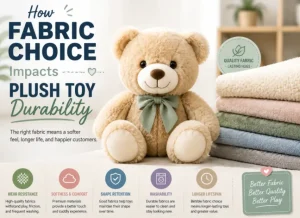
How Plush Fabric Affects Plush Toy Quality explores how different fabric types influence softness, durability, appearance, safety, and the overall value of a finished plush toy. A materials engineering look at how fiber content, pile height, GSM, knit construction, and finishing treatments determine the feel, durability, safety, and washability of a stuffed toy.
Plush fabric is the single biggest determinant of how a stuffed toy looks, feels, wears, and performs against safety standards over its usable life. In short: fiber content, pile height, GSM (grams per square meter), knit construction, and finishing treatment together decide whether a plush toy feels premium and huggable or thin and disposable, whether it resists pilling and shedding after repeated washing, and whether it passes flammability and chemical compliance testing in its target market.
This guide walks through each fabric variable individually — from fiber type through knit structure to dyeing and finishing — so product developers, buyers, and quality teams can specify plush fabric with the same rigor typically applied to any other engineered material.
What Is Plush Fabric and Why Does It Matter for Toy Quality?
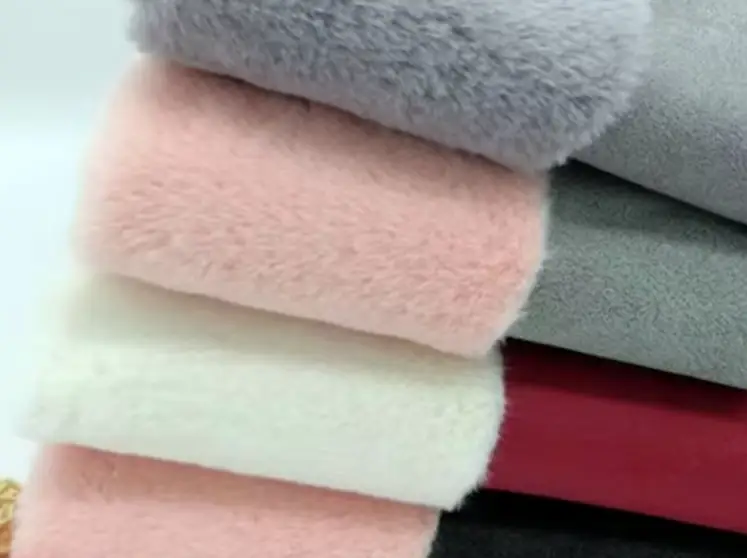
Plush fabric is a pile fabric, most commonly knitted rather than woven, in which a dense layer of raised fiber loops or cut fibers stands up from a backing structure to create the soft, textured surface associated with stuffed toys. Unlike a flat woven fabric, plush fabric’s quality is defined not just by its fiber content but by an interconnected set of construction variables — pile height, pile density, backing tightness, and finishing treatment — that together determine how the fabric handles, drapes over a stuffed form, and holds up under years of hugging, washing, and general handling.
Because plush fabric covers the entire visible and touchable surface of the finished toy, it disproportionately shapes a customer’s first impression and ongoing perception of quality compared to any other single component in the toy’s bill of materials. A well-engineered internal structure and premium filling can be completely undermined by a thin, low-density fabric that flattens after a few weeks of handling, while a well-chosen fabric can make even a modestly filled plush feel substantially more premium than its underlying cost would suggest.

Fiber Content and Its Effect on Feel and Durability
The fiber used to construct plush fabric — most commonly polyester, though cotton blends and recycled fibers are increasingly common — has a direct effect on softness, resilience, colorfastness, and long-term durability.
Polyester Plush Fabric
Polyester is by far the dominant fiber used in plush fabric production, valued for its consistent softness, strong colorfastness, resistance to shrinkage, and relatively low cost compared to natural fiber alternatives. Polyester fiber also resists moisture absorption, which helps plush toys dry faster after washing and reduces the risk of mildew or odor retention compared to fabrics with higher natural fiber content, making it a practical default for the vast majority of mass-market plush production.
Cotton and Natural Fiber Blends
Cotton and other natural fiber blends appear in plush fabric less frequently than polyester, typically reserved for premium or naturalistic product lines marketed around organic or natural material positioning. Natural fiber blends can offer a distinct tactile quality that some customers associate with a more premium or “authentic” feel, but they generally come with tradeoffs in colorfastness, shrink resistance, and overall durability compared to well-engineered polyester plush fabric, along with a meaningfully higher material cost.
Recycled and Eco Fiber Content
Recycled polyester fiber, produced from post-consumer plastic bottles or textile waste, has become an increasingly common option in plush fabric as brands respond to sustainability expectations from both retailers and consumers. Fabric performance from recycled polyester fiber has improved substantially as processing technology has matured, though buyers should still request colorfastness and pilling test data specific to the recycled fiber source being used, since fiber quality can vary more between recycled fiber suppliers than between established virgin polyester suppliers.
Plush Fabric Fiber Content Property Comparison
| Fiber Type | Softness / Feel | Colorfastness | Durability | Relative Cost |
|---|---|---|---|---|
| Virgin polyester | Consistent, smooth | Excellent | Very good | Low (baseline) |
| Recycled polyester | Comparable to virgin in modern grades | Good to excellent | Good; varies by source quality | Low to moderate |
| Cotton blend | Natural, slightly textured | Fair to good; more prone to fading | Fair; more shrink-prone | Moderate to high |
| Polyester-acrylic blend | Soft with added loft | Good | Good | Moderate |
| Bamboo-derived fiber blend | Very soft, smooth drape | Fair to good | Fair; more delicate handling required | Moderate to high |
Fiber Tip: When evaluating a natural or blended fiber fabric for a new product line, request accelerated wash-cycle test results before committing to production, not just a hand-feel sample. Fabrics that feel excellent on day one can perform very differently after the repeated wash cycles a plush toy realistically experiences over its lifetime.
Pile Height, Density, and GSM: The Core Quality Indicators
Beyond fiber type, the physical construction of the pile itself — how tall it stands, how densely it is packed, and how much it weighs per unit area — drives most of what customers perceive as plush “quality” when they pick up a toy.
Pile Height and Its Effect on Huggability
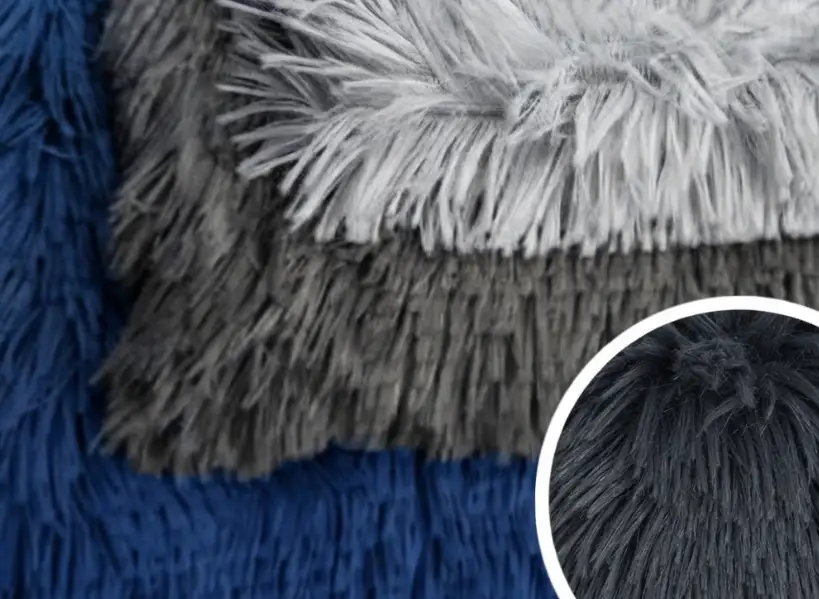
Pile height refers to the length of the raised fiber standing above the fabric backing, and it directly shapes both the visual character and tactile experience of the finished plush. Short-pile fabrics, typically under 3 mm, create a smooth, velvet-like surface well suited to detailed character faces and smaller plush where excessive pile would obscure fine features. Longer pile fabrics, ranging from 8 mm up to 25 mm or more for shaggy or realistic fur-style designs, create a deeper, more luxurious hand-feel but require more careful seam construction to prevent pile fibers from being trapped or crushed into the seam line during sewing.
GSM and Its Relationship to Perceived Quality
GSM measures the total fabric weight per square meter, capturing the combined contribution of backing weight and pile density in a single comparable number that makes it possible to benchmark fabric quality objectively across suppliers. Higher GSM fabric generally feels denser and more substantial in hand, and it typically — though not always — correlates with better pile recovery after compression, meaning the fabric springs back to its original loft more reliably after being squeezed or sat on. However, GSM alone does not guarantee quality, since two fabrics with identical GSM can still differ meaningfully in feel if one achieves its weight through denser, shorter pile and the other through a heavier but less tightly packed backing.
Backing Tightness and Knit Density
The backing structure that anchors the pile fibers in place has a major effect on how well the fabric resists pile pull-out, seam fraying, and long-term shedding. A tightly knitted backing holds pile fibers more securely and resists stretching or distortion during the cutting and sewing process, while a loosely knitted backing is more prone to runs, gaps, and premature pile loss, particularly at seam edges where the fabric experiences the most mechanical stress during construction and subsequent handling.
Plush Fabric GSM and Pile Height Quality Tier Reference
| Quality Tier | Typical GSM Range | Typical Pile Height | Perceived Quality Level |
|---|---|---|---|
| Economy / promotional | 250–350 GSM | 2–5 mm | Basic; acceptable for low-cost or giveaway items |
| Standard retail | 350–450 GSM | 3–10 mm | Good; suitable for most mainstream plush |
| Premium retail | 450–550 GSM | 8–18 mm | Very good; noticeably denser hand-feel |
| Collectible / museum-grade | 550–700+ GSM | 10–25 mm | Excellent; premium tactile and visual impression |
Quality Tip: When comparing fabric samples from different suppliers, evaluate pile recovery by compressing a swatch firmly for several seconds and observing how quickly and fully it springs back. This simple test reveals backing and pile density quality that a GSM number alone cannot fully capture.
Weave and Knit Construction Types
The underlying construction method used to produce plush fabric affects stretch, drape, and how well the fabric conforms to a three-dimensional stuffed form without puckering or distortion.
Warp Knit vs. Circular Knit Plush Fabric
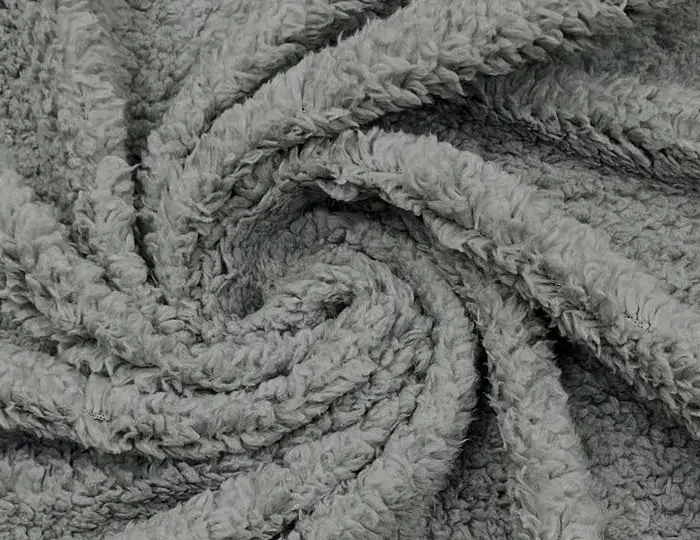
Warp knit plush fabric is produced on specialized knitting machines that create a stable, low-stretch structure well suited to plush designs requiring precise shape retention, such as structured character faces or flat-backed designs. Circular knit plush fabric offers greater stretch and drape, making it easier to work with on rounded, organic body shapes where the fabric needs to conform smoothly around curves without visible seam puckering, though the added stretch can make precise pattern matching slightly more challenging during cutting and sewing.
Woven Backing vs. Tricot Backing
Woven-backed plush fabric generally offers superior dimensional stability and seam strength, resisting stretch and distortion better during the stuffing process when internal filling pressure pushes outward against the fabric and seams. Tricot-backed plush fabric offers more give and a softer overall hand-feel but requires more careful seam reinforcement on high-stress areas such as limb joints or attachment points where filling pressure concentrates, since the more elastic backing is comparatively more prone to seam slippage under sustained tension.
Plush Fabric Construction Type Comparison
| Construction Type | Stretch Characteristic | Shape Retention | Best Application |
|---|---|---|---|
| Warp knit, woven backing | Low stretch | Excellent | Structured faces, flat-backed designs, licensed character accuracy |
| Circular knit, tricot backing | High stretch | Good, with proper seam reinforcement | Rounded body shapes, realistic animal forms |
| Warp knit, tricot backing | Moderate stretch | Good | Balanced applications needing some drape with stability |
| Circular knit, woven backing | Low to moderate stretch | Very good | Larger plush needing both drape and seam durability |
Color, Print, and Finishing Treatments
Beyond the base fabric structure, dyeing method and finishing treatments determine how well a plush fabric’s color and surface characteristics hold up through production and continued use.
Dyeing Methods and Colorfastness
Solution-dyed fabrics, where colorant is introduced during fiber extrusion rather than applied afterward, generally offer superior colorfastness and resistance to fading from washing, sunlight, or repeated handling compared to piece-dyed fabrics, where color is applied to already-formed fabric. Piece-dyed plush fabric remains more common due to greater color flexibility and lower minimum order quantities per color, but it requires more rigorous colorfastness testing, particularly for products expected to be washed frequently or exposed to prolonged sunlight in retail display or use.
Anti-Pilling and Anti-Static Finishing Treatments
Anti-pilling finishing treatments chemically or mechanically stabilize the pile fiber to resist the small fiber balls that form on fabric surfaces from friction during normal handling, meaningfully extending the visual lifespan of a plush toy subjected to frequent hugging or washing. Anti-static finishing treatments reduce the fabric’s tendency to attract dust and lint through static charge, which is a particularly relevant consideration for lighter-colored plush fabric where accumulated dust and lint are more visually noticeable than on darker colors.
Printed Patterns vs. Woven-In or Knitted-In Patterns
Printed patterns applied to the surface of finished plush fabric offer design flexibility and lower minimum order quantities per pattern, but the printed layer sits on top of the pile fiber and can gradually wear or crack with repeated flexing and washing. Patterns knitted or woven directly into the fabric structure itself, where color variation comes from the yarn rather than a surface print, offer superior long-term durability since there is no separate print layer to wear away, though this approach typically requires higher minimum order quantities and longer lead times to set up production.
Finishing Tip: For plush products expected to be machine washed regularly, such as infant and toddler comfort items, prioritize solution-dyed or knitted-in color over surface printing wherever the design allows, and confirm anti-pilling treatment is applied, since these two factors together have an outsized effect on how the product looks after its first several wash cycles.
Sustainability Considerations in Plush Fabric Selection
Fabric choice increasingly intersects with sustainability positioning, and understanding how eco-oriented fabric options perform against conventional fabric matters for both marketing accuracy and product durability.
Recycled Content Certification and Traceability
Fabric marketed with recycled content claims should carry supply chain traceability documentation, such as chain-of-custody certification, that verifies the recycled content percentage stated on the product actually reflects the material used in that specific fabric lot. Without this documentation, recycled content claims are difficult to substantiate credibly to retailers or regulators, particularly as scrutiny of sustainability marketing claims across the consumer goods industry continues to increase.
Dyeing Process Water and Chemical Impact
Conventional piece-dyeing processes are water- and chemical-intensive, and some fabric suppliers now offer reduced-water or closed-loop dyeing processes as a lower-impact alternative, though these processes can carry a cost premium and sometimes a more limited color palette than conventional dyeing. Solution-dyeing, beyond its colorfastness advantage discussed earlier, also generally uses less water than piece-dyeing since color is introduced during fiber formation rather than applied to finished fabric in a separate wet process, giving it a secondary sustainability advantage alongside its durability benefit.
Sustainability Tip: When a program specifies recycled-content fabric for marketing purposes, request the specific chain-of-custody certification document per fabric lot rather than a general supplier sustainability statement. Lot-specific documentation protects against claim substantiation issues if the product’s environmental marketing is later questioned by a retailer or regulator.
Fabric Impact on Safety and Compliance
Fabric choice affects far more than aesthetics — it directly influences flammability performance and chemical compliance outcomes during mandatory safety testing.
Flammability Performance by Fabric Type
Fiber content and pile density both influence how a plush fabric performs under flammability testing, with synthetic pile fabrics generally required to meet specific burn rate limits under applicable toy safety standards before a product can be sold in most regulated markets. Longer, denser pile fabric can behave differently under flame testing than shorter pile fabric of the same fiber content, since pile height and density affect how readily flame propagates across the fabric surface, which is why flammability testing must be performed on the actual production fabric construction rather than assumed from fiber content alone.
Chemical Testing Considerations for Dyes and Finishing Agents
Dyestuffs and finishing chemicals used in plush fabric production are subject to restricted substance limits under most toy safety regulations, including limits on certain azo dyes that can break down into restricted aromatic amines, as well as limits on formaldehyde that can be introduced through certain finishing or wrinkle-resistance treatments. Sourcing fabric from suppliers with current, product-specific chemical test reports — rather than relying on general industry reputation — is the most reliable way to confirm a fabric will pass the chemical testing required for the target market before committing to full production.
Fabric-Related Compliance Considerations Reference
| Compliance Area | Fabric Factor Involved | Testing Consideration |
|---|---|---|
| Flammability/burn rate | Fiber content, pile height, pile density | Must test actual production fabric, not fiber type alone |
| Restricted azo dyes | Dyeing method and dyestuff selection | Requires a current dyestuff-specific chemical test report |
| Formaldehyde content | Finishing and wrinkle-resistance treatments | Verify finishing chemical compliance with the supplier |
| Heavy metal content (lead, cadmium) | Pigments and dye formulations | Request a certificate of conformity per fabric lot |
| Colorfastness to saliva and perspiration | Dyeing method and fiber type | Relevant for products intended for young children |
Compliance Tip: Request fabric-level compliance documentation at the same time as color and hand-feel approval, rather than waiting until final product testing. Discovering a chemical compliance issue at the fabric stage is far less costly and time-consuming to resolve than discovering it after full garment-level testing on finished units.
How Fabric Choice Affects Washability and Durability Over Time
The true test of plush fabric quality often only becomes apparent after repeated washing and handling, which is why durability evaluation should look beyond the initial off-the-roll sample.
Pilling and Matting After Repeated Handling
Pilling occurs when friction causes short, loose fibers to tangle into small balls on the fabric surface, and it is influenced by fiber quality, pile density, and whether an anti-pilling finish has been applied during fabric production. Matting, where longer pile fibers tangle and clump together rather than forming discrete pills, is more common on longer-pile fabrics and can be reduced through proper pile alignment during finishing and by selecting fibers with good resilience and recovery characteristics.

Colorfastness After Washing and Sun Exposure
Colorfastness testing evaluates how well a fabric’s color holds up under standardized washing, rubbing, and light exposure conditions, and fabrics that perform well on initial visual inspection can still fail these standardized tests if the dyeing method or dyestuff quality is inadequate. Products intended for frequent washing, such as infant comfort items, warrant more rigorous colorfastness-to-washing testing than display or collectible plush that customers are unlikely to machine wash regularly.
Shedding and Loose Fiber Release
Shedding, where individual pile fibers release from the backing structure over time, is influenced primarily by backing tightness and how securely the pile fiber is anchored during the knitting process. Excessive shedding is both a durability concern, since the fabric visually thins over time, and in some cases a safety consideration if loose fiber accumulation becomes significant enough to pose an inhalation concern for very young children, making backing quality an important specification criterion even though it is largely invisible on casual inspection of a finished sample.
Durability Tip: Run a simple pre-production shedding check by rubbing a fabric swatch firmly against a dark, contrasting surface for a fixed number of strokes and inspecting the surface for loose fiber transfer. This low-cost test can flag a poorly backed fabric before it reaches full production, when correcting the issue becomes far more expensive.
Common Fabric-Related Defects and Quality Control Checks
Several recurring fabric-related defects account for the majority of quality rejections traced back to the outer shell material rather than construction or filling issues.
Common Plush Fabric Defects and Quality Control Checks
| Defect | Likely Cause | Quality Control Check |
|---|---|---|
| Bald spots / thin patches in the pile | Uneven knitting tension or fiber shortage during production | Visual inspection under raking light across the full panel |
| Color shading between fabric rolls | Dye lot variation between production batches | Lot-matching verification before cutting; use a single dye lot per unit |
| Excessive shedding | Loose or under-tensioned backing knit | Rub test for loose fiber transfer |
| Premature pilling | Missing or inadequate anti-pilling finish | Accelerated wear/pilling test on sample fabric |
| Seam pile trapping | Long pile fiber caught in the seam during sewing | Post-sew brush-out inspection along all seam lines |
Choosing the Right Fabric for Different Plush Categories
Fabric selection should be driven by the specific functional and cosmetic requirements of each plush category rather than a one-size-fits-all default, since an infant comfort item, a licensed collectible, and a promotional giveaway plush each place very different demands on the fabric. Infant and toddler comfort plush benefit most from soft, low-pile, machine-washable fabric with strong colorfastness and anti-pilling treatment, since these products are washed frequently and handled almost constantly.
Licensed and collectible plush generally warrant premium, higher-GSM fabric with tightly controlled color matching against approved reference standards, since these products are judged heavily on visual and tactile fidelity to the source character. Promotional and giveaway plush, where cost control is often the primary driver, can generally use economy-tier fabric successfully as long as basic compliance and minimum durability thresholds are still met, since the expected handling life of these products is typically much shorter than a retail collectible.
Frequently Asked Questions
What is the most important factor in plush fabric quality?
No single factor determines plush fabric quality on its own; GSM, pile height, backing tightness, and finishing treatment all interact to produce the final hand-feel and durability outcome. That said, backing tightness is often the most overlooked factor despite being one of the most important, since a poorly anchored pile will shed and pill regardless of how impressive the fabric’s GSM or pile height numbers look on a specification sheet.
Does higher GSM always mean better plush fabric quality?
Higher GSM generally correlates with a denser, more substantial feel and often better pile recovery, but GSM alone does not guarantee quality since two fabrics with identical GSM can differ in feel depending on whether that weight comes from dense, well-anchored pile or a heavier but less securely knitted backing. GSM should be evaluated alongside pile recovery, backing tightness, and finishing treatment rather than as a standalone quality benchmark.
Is recycled polyester plush fabric as durable as virgin polyester?
Modern recycled polyester fiber has closed much of the performance gap with virgin polyester in terms of softness and durability, though quality can still vary more between recycled fiber suppliers than between established virgin fiber suppliers. Requesting colorfastness and pilling test data specific to the recycled fiber source, rather than assuming performance parity, is the most reliable way to confirm durability before committing to a full production run.
Why do some plush toys pill faster than others?
Pilling speed is influenced primarily by fiber quality, pile density, and whether an anti-pilling finishing treatment has been applied during fabric production, with lower-quality or untreated fiber pilling noticeably faster under normal handling and washing. Fabrics intended for products that will be washed and handled frequently, such as infant comfort items, should specifically be evaluated and treated for pilling resistance rather than relying on visual inspection of an unwashed sample.
What is the difference between warp knit and circular knit plush fabric?
Warp knit plush fabric offers a stable, low-stretch structure well suited to designs requiring precise shape retention, such as structured character faces, while circular knit plush fabric offers greater stretch and drape that conforms more easily to rounded, organic body shapes. The right choice depends on the specific silhouette being molded in fabric — flatter, more structured designs generally favor warp knit, while rounded, curved forms often work better with circular knit’s added give.
How does fabric choice affect flammability compliance?
Fiber content, pile height, and pile density all influence how a plush fabric performs under flammability testing, since pile characteristics affect how readily flame propagates across the fabric surface even when fiber content is held constant. Because of this, flammability testing must be performed on the actual production fabric construction — including the specific pile height and density being used — rather than assumed from fiber type alone, since two fabrics of the same fiber content can perform differently under flame testing based on pile construction.
Should infant plush toys use a different fabric than adult collectible plush?
Yes, infant and toddler plush generally warrant softer, lower-pile, highly washable fabric with strong colorfastness and anti-pilling treatment given the frequency of washing and handling these products experience, along with typically tighter regulatory scrutiny for the youngest age grades. Adult collectible plush, by contrast, is often judged more on visual and tactile fidelity to a licensed character or premium aesthetic, which frequently favors higher-GSM, longer-pile fabric that would be less practical for a frequently washed infant product.
How can I test plush fabric quality before committing to full production?
Useful pre-production checks include a compression and recovery test to evaluate pile resilience, a rub test against a contrasting surface to check for loose fiber shedding, and requesting supplier documentation for colorfastness, pilling resistance, and applicable chemical and flammability compliance on the specific fabric lot being considered. Combining hands-on sample evaluation with supplier-provided test data gives a far more reliable quality picture than relying on visual and tactile impression from a single small swatch alone.