Skip to content
When choosing a plush toy manufacturer, child safety is always the top priority. This guide explains how plush toy factories ensure child safety through material selection, production control, safety testing, and strict quality inspections to create soft, durable, and reliable toys that meet global safety requirements.
An inside look at the material inspection, component attachment control, needle and metal detection, chemical screening, and final inspection systems that a well-run plush toy factory uses to keep children safe — and what buyers should look for when evaluating a production partner.
Child safety in plush toy manufacturing is not the outcome of a single inspection at the end of the line — it is the cumulative result of dozens of small, repeated checks built into every stage of production, from the moment raw fabric arrives at the warehouse to the moment a finished toy is sealed in its retail packaging. Understanding how a disciplined factory actually structures these checks helps buyers evaluate whether a production partner’s safety claims are backed by real process control or by paperwork alone.
This guide walks through the safety systems a well-run plush toy factory maintains at each production stage, explains what each check is designed to catch, and highlights the questions buyers should ask when assessing a factory’s real-world safety discipline rather than its marketing claims.

Why Child Safety Starts Before the First Stitch
The most effective safety controls in plush toy production happen before a single piece of fabric is cut. Design review is the first checkpoint: an experienced factory reviews a new product’s technical pack for small-parts risk, cord and drawstring length, sharp-edge potential in wire armatures, and battery compartment design on interactive items, flagging problems while changes are still a matter of adjusting a pattern rather than reworking finished goods. A factory that skips this step and moves straight from sketch to sample is deferring safety risk to a much more expensive stage of production.
A thorough design review typically walks through the product from the intended age grading downward: if a toy is meant for children under three, every attached component is evaluated against small-parts sizing at the design stage, not left to be caught later by a lab report on the finished sample. Reviewers also consider how the toy will actually be handled — whether it is likely to be chewed, thrown, machine-washed, or exposed to repeated tugging — because real-world use patterns often expose weaknesses that a static visual review of a design sketch would miss. Factories that involve their quality and safety team in this review, rather than leaving it solely to design and merchandising staff, tend to catch a wider range of issues at this early stage.
Material selection follows the same logic. Fabric, stuffing fill, thread, and trim components are chosen not only for hand-feel and appearance but against a pre-approved list of materials that have a track record of passing chemical and flammability testing. Factories that maintain an approved materials library — rather than sourcing a new fabric or filler for every order based purely on price — reduce the odds of introducing an untested chemical or flammability risk into a new design.
Tip: Ask a prospective factory whether it maintains an approved materials list with existing test history. A factory that can point to prior test data for a fabric or filler is generally faster to certify a new design than one sourcing every material fresh for each order.
Raw Material Inspection and Incoming Quality Control
Once materials are selected, the discipline shifts to confirming that every incoming shipment actually matches the approved specification. Incoming quality control (IQC) is the checkpoint where a factory verifies that fabric, stuffing, thread, and trims received from suppliers match the color, weight, composition, and chemical profile that were approved during sampling — not simply that the delivery arrived on schedule.
Fabric and Pile Inspection
Incoming fabric rolls are checked for pile height consistency, colorfastness, weave or knit integrity, and visible defects such as thin spots or dye streaks that could weaken seam strength later in production. Fabric batches are also cross-checked against the dye lot used in the originally tested sample, because a new dye lot — even of the nominally same color — can carry a different chemical profile and therefore requires its own chemical screening before it is released to the cutting floor.
Stuffing and Fill Material Inspection
Stuffing fill, whether virgin polyester fiber, recycled fiber, or alternative fill materials, is checked for cleanliness, fiber length, and the absence of foreign contaminants such as metal fragments, plastic shards, or organic debris that could have entered the fill during processing or transport. Factories handling recycled fill run additional contamination screening, since recycled fiber sources carry a higher baseline risk of hidden metal fragments compared with virgin fiber.
Trim and Hardware Inspection
Plastic eyes, noses, joints, squeakers, and any decorative hardware are checked dimensionally against the approved sample — confirming they are not undersized in a way that would make them pass the small-parts cylinder test differently than the originally certified component — and visually inspected for burrs, sharp mold flash, or casting defects that could create a laceration risk once attached to the toy body.
Thread and Adhesive Inspection
Thread used for stitching safety-relevant seams and component attachments is checked for tensile strength and colorfastness before release to production, since thread that snaps under lower-than-specified force undermines every downstream tension test performed on the finished component, regardless of how well the attachment pattern itself was designed. Where adhesives are used — for example, in some squeaker or joint assemblies — incoming batches are checked against cure time and bond strength specifications, because an adhesive that cures more slowly than expected can leave components under-bonded if production does not allow adequate dwell time before the next handling step.
Incoming Material Inspection Checklist
| Material | Primary Checks | Risk Addressed |
|---|---|---|
| Outer fabric / plush pile | Dye lot match, colorfastness, pile height, weave integrity | Chemical variance, seam weakness, flammability drift |
| Stuffing/fill material | Cleanliness, fiber length, contamination screening | Foreign object ingestion, choking hazard |
| Plastic eyes/noses/joints | Dimensional check, mold flash inspection | Small parts sizing, sharp edge risk |
| Thread and stitching supplies | Tensile strength, colorfastness | Seam failure, dye migration |
| Electronic inserts (sound/motion modules) | Battery compartment fit, wiring insulation check | Battery access risk, electrical hazard |
Specific inspection parameters vary by product category and target market standard; the checklist above reflects commonly applied checkpoints across plush toy production.
Component Attachment and Mechanical Safety in Production
The way small components are attached to a plush toy body is one of the most consequential decisions a factory makes for mechanical safety, and it is a decision that is revisited constantly on the production floor, not just at the design stage. Embroidered or heat-transferred eyes and noses generally outperform glued plastic components on tension testing, because stitching distributes pulling force across a wider area of fabric rather than concentrating it on a single glued point. Where plastic components are required for design reasons, factories reinforce attachment with washer-lock or safety-lock fasteners on the inside of the toy body, rather than relying on adhesive alone.

During production, in-line tension testing is performed on a sampling basis at the sewing and finishing stations — not just on the original approved sample — to confirm that the attachment method is holding up consistently across the full production run, since thread tension, adhesive cure time, and operator technique can all introduce variation across thousands of units.
Cords, drawstrings, and hanging ribbons receive their own dedicated check during production, since length limits for these components are typically tied to the toy’s age grading and are easy to drift out of specification if a supplier substitutes ribbon stock or an operator misreads a cutting guide. Factories controlling this risk measure cord length at the cutting station against a fixed template rather than relying on visual estimation, and any drawstring intended for a toy graded for children under three is checked to confirm it does not exceed the maximum length permitted for that age category, with any excess trimmed or the component redesigned before the run continues.
Tip: When comparing factories, ask specifically how attachment method is verified during mass production, not only at the sampling stage. A factory that can describe an in-line tension-testing sampling frequency is demonstrating ongoing control, not a one-time pass.
Component Attachment Methods and Safety Performance
| Attachment Method | Typical Application | Relative Tension Performance |
|---|---|---|
| Embroidered eyes/nose | Toys for infants and children under 3 | High — force distributed across stitched area |
| Heat-transfer printed features | Flat facial features on soft-body toys | High — no protruding component to pull |
| Plastic eyes with washer-lock fastener | Character plush with dimensional features | Moderate to high — reinforced mechanical lock |
| Glued plastic components (unreinforced) | Generally avoided for young children’s products | Lower — single point of adhesive failure |
| Sewn-on fabric appliqué trims | Bows, patches, decorative accents | High when stitched with reinforced thread |
In-Line Quality Control During Cutting, Sewing, and Stuffing
Between incoming inspection and final inspection, in-line quality control (IPQC) monitors the toy as it moves through cutting, sewing, and stuffing stations. Cutting accuracy affects seam allowance, and an undersized seam allowance increases the risk of seam failure under the tension a child applies while playing, which can expose stuffing or create a new small-parts risk if trim components come loose along a weakened seam.
Stuffing density is checked at intervals throughout a production run, both for consistency of feel and firmness — a quality attribute — and for confirmation that stuffing has not been packed so densely that it creates unusual internal pressure on seams, or so loosely that voids form near attachment points where a component’s anchor stitching could work free over time. Seam strength testing on random in-process samples, pulling seams to a defined force, catches thread tension or needle-spacing problems before they propagate across an entire batch.
Many factories weigh stuffing fill by unit rather than relying on visual estimation alone, using calibrated scales at the stuffing station to confirm each toy falls within a defined weight tolerance for its size and design. This weight-based check is a simple but effective way to catch under-stuffing, which can leave a toy feeling collapsed and place uneven strain on seams, and over-stuffing, which can push internal pressure past what a seam was designed to hold during normal play.
Needle and Metal Detection Systems
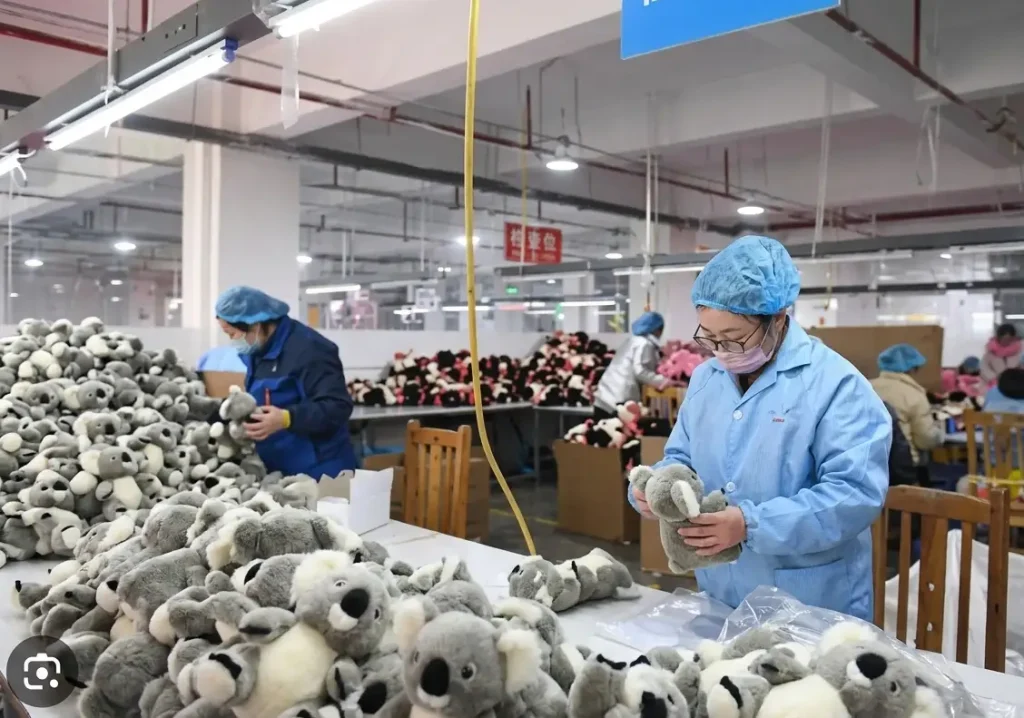
Because plush toy production relies heavily on industrial sewing machines, broken sewing needle tips are one of the most persistent contamination risks in the industry — a needle can snap during stitching and lodge inside the stuffing without any visible external sign. Controlling this risk requires two overlapping systems: a broken needle policy and metal detection.
A broken needle policy requires operators to recover every fragment of a broken needle before restarting a machine, log the incident, and quarantine any units produced since the needle’s last confirmed intact inspection until the missing fragment is located or the units are metal-detected and cleared. Every finished plush toy is then passed through a calibrated metal detector before packing, tuned to detect ferrous and non-ferrous fragments at a sensitivity level appropriate to the toy’s fill density and size. Units that trigger a metal detector alarm are pulled, inspected, and either cleared or rejected — they are never packed on the assumption that the alarm was a false positive without physical verification.
Tip: Ask how frequently metal detectors are calibrated and with what reference test pieces. A detector that has not been calibrated against a known ferrous and non-ferrous test standard within the shift can miss fragments even while appearing to function normally.
Needle and Metal Detection Protocol Overview
| Control Point | Method | Action on Failure |
|---|---|---|
| Broken needle recovery | Mandatory fragment count and log at point of breakage | Quarantine units since last confirmed intact needle |
| 100% metal detection | Calibrated detector scan of every finished unit | Pull, physically inspect, clear or reject |
| Detector calibration | Ferrous and non-ferrous test piece check each shift | Recalibrate or replace unit before resuming scanning |
| Needle inventory control | Issue and return count matched against usage log | Investigate discrepancy before shipment release |
Chemical Safety Management on the Factory Floor
Chemical safety is not only a laboratory function performed on finished samples — a disciplined factory manages chemical risk continuously on the production floor. Dye lot tracking links each roll of fabric to its chemical test record, so that if a new dye lot is introduced mid-order, production can be held until that specific lot clears screening, rather than assuming the fabric type as a whole remains compliant regardless of which batch supplied it.
Many factories maintain an in-house XRF (X-ray fluorescence) screening station as a first-pass check on incoming materials and components, testing for elevated levels of lead, cadmium, and other restricted elements before materials are released to production. XRF is fast and non-destructive, making it suitable for screening a high volume of incoming lots, though it functions as a triage tool — any borderline or elevated reading is escalated to full wet-chemistry testing at an accredited external laboratory rather than treated as a final pass or fail on its own.

Restricted substance lists — covering phthalates, azo dyes, formaldehyde, and other chemicals restricted under destination market regulations — are maintained centrally and communicated to fabric, trim, and adhesive suppliers as a condition of doing business, rather than left to individual purchasing staff to track informally.
Some factories go further by requiring suppliers to submit a signed material declaration for every shipment, listing the chemical composition of the fabric, dye, or adhesive being supplied against the restricted substance list. While a declaration alone does not replace laboratory testing, it creates a documented chain of accountability — if a later test result reveals a problem, the declaration identifies exactly which supplier certified the material and provides a clear basis for corrective action or supplier disqualification.
Final Inspection and AQL Sampling
Final inspection is the last structured checkpoint before a shipment is packed and released, and it is typically conducted against an Acceptable Quality Limit (AQL) sampling plan, which defines how many units from a given shipment size must be inspected and how many defects of each severity level are tolerated before the shipment is rejected. Safety-related defects — a loose eye, an exposed wire, an oversized gap in a seam — are classified as critical or major defects, carrying a much lower acceptance threshold than minor cosmetic defects such as a slightly uneven bow placement.
Random sampling for final inspection draws units from across the full shipment, including different cartons and production dates within the order, rather than concentrating sampling on a single, easily accessible section of the warehouse floor, which can otherwise miss defects concentrated in a specific production shift or machine.
A well-run final inspection also records defects by location and cause, not just by count, so that a spike in a particular defect type can be traced back to a specific machine, operator shift, or material lot rather than logged as an isolated occurrence. This level of detail is what allows a factory to move from reactive defect sorting — simply pulling bad units — to proactive process correction that reduces the defect rate on the next production run. Buyers who receive only a pass/fail summary from final inspection are missing this diagnostic value; a full inspection report broken down by defect type and location is a far more useful document for ongoing supplier management.
AQL Sampling Severity Levels and Typical Acceptance Criteria
| Defect Classification | Example | Typical Acceptance Approach |
|---|---|---|
| Critical defect | Detached small part, exposed sharp wire, functioning battery compartment left open | Zero tolerance — shipment rejected on any occurrence |
| Major defect | Loose eye/nose below tension threshold, weak seam, incorrect labeling | Low tolerance — tight AQL limit, typically 1.0–1.5 |
| Minor defect | Slight color variation, uneven stitching on non-safety trim | Higher tolerance — typically AQL 2.5–4.0 |
Specific AQL levels are agreed between buyer and factory per order; the classifications above reflect common industry practice rather than a fixed regulatory requirement.
Packaging, Labeling, and Batch Traceability
Safety controls extend into packaging. Retail packaging is checked for choking hazard warning placement, correct age grading printed on the package, and secure closure of any poly bags used in the packing process, since loose plastic film presents its own suffocation risk for young children if not properly ventilated or sized according to market-specific packaging safety rules.
Every finished carton is coded with a batch or lot number that links back to the specific production date, fabric dye lots, stuffing lot, and quality control records for that run. This traceability is what allows a factory — or a buyer — to isolate a specific affected batch in the rare event that a safety issue is identified after goods have shipped, rather than having to treat an entire season’s production as suspect.
Packaging materials themselves are also reviewed for safety, particularly on products aimed at very young children. Poly bags used to protect the plush toy during transit are checked for correct thickness and, where required by market regulation, ventilation holes or suffocation warning labels. Cardboard inserts, hang tags, and any small printed materials included in the packaging are checked against the same small-parts logic applied to the toy itself, since a detachable hang tag or an unsecured insert can present a similar hazard to a loose plastic eye if it becomes accessible to a young child.
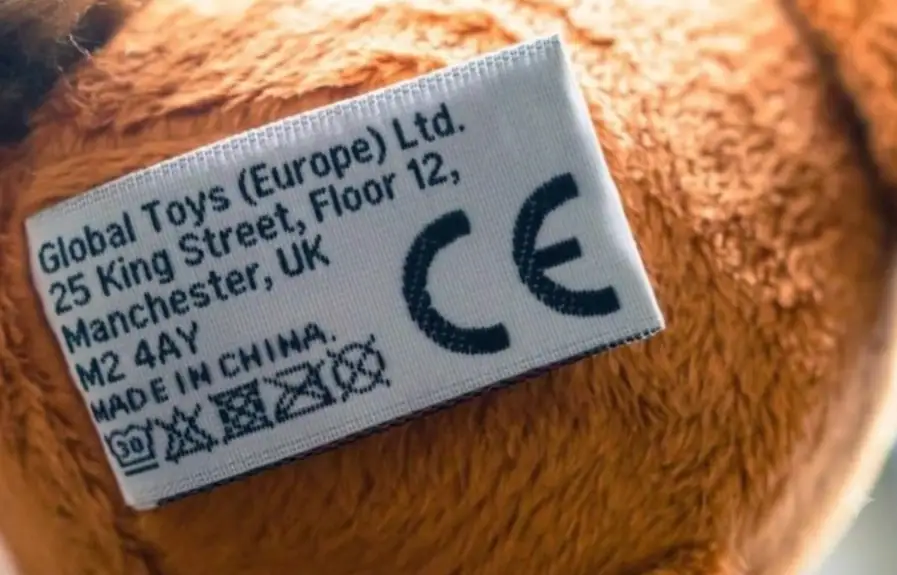
Tip: Request a sample of the batch coding system before production begins, and confirm the code appears on both the product tracking label and the shipping carton. A traceability system that only exists on the carton, not the product itself, breaks down once units are separated from their original packaging at retail.
Staff Training and Safety Culture
Equipment and checklists only function as well as the people operating them. Factories with strong child safety records generally invest in structured operator training covering why each check matters, not just how to perform it mechanically — an operator who understands that a seam allowance tolerance exists to prevent stuffing exposure is more likely to flag a marginal unit than one simply following a measurement instruction by rote.
Regular internal audits, cross-training between quality control stations, and a clear escalation path for operators who identify a potential safety issue — without fear of production-line pressure overriding a legitimate quality hold — are cultural markers that tend to correlate with lower defect rates over time. Buyers evaluating a factory can learn a surprising amount by asking floor-level staff, through a translator if necessary, what happens when they find a defect, rather than relying solely on management’s description of the quality system.
It is worth noting that not all plush toy factories apply these controls with the same rigor. While the general categories — incoming inspection, in-line quality control, needle and metal detection, chemical screening, and final inspection — are common across disciplined manufacturers, the consistency and documentation behind each check vary significantly. This is why buyers benefit from verifying process specifics, such as calibration logs and defect classification records, rather than accepting a general assurance that safety procedures are “in place.”
Tip: During a factory visit, watch whether a line operator feels able to stop production to flag a defect without visibly seeking permission first. That single observation often reveals more about real safety culture than a reviewed procedure document.
Testing Interactive and Electronic Plush Toys
Plush toys with embedded sound modules, motion sensors, or LED components carry an additional layer of safety control beyond the standard mechanical, chemical, and flammability checks. Battery compartments are tested for security against a defined tool-opening resistance standard, confirming a child cannot access the battery cavity using common household items such as a coin or fingernail, and every compartment on the production line is spot-checked at intervals to confirm the locking mechanism has not been weakened by assembly wear.
Wiring and circuit assemblies are inspected for insulation integrity and correct polarity before the electronic module is sealed inside the plush body, because a wiring fault discovered after final assembly is far more costly to correct than one caught during sub-assembly inspection. Sound and motion modules are also functionally tested on a sampling basis — confirming the module operates as intended and does not generate excess heat during extended use — since a malfunctioning module can occasionally overheat components in a way that a purely visual inspection would not catch.
For products with wireless or Bluetooth connectivity, factories coordinate with accredited labs on electromagnetic compatibility (EMC) testing, which sits outside the scope of standard toy safety mechanical and chemical testing but is a mandatory requirement in several destination markets before an electronic toy can be sold.
Working With Independent Labs and Continuous Improvement
No factory-internal system, however disciplined, substitutes for periodic testing by an accredited independent laboratory. Mature factories treat third-party lab results as an input into a continuous improvement loop rather than a pass/fail event disconnected from daily operations — when a lab identifies a defect trend, whether a recurring tension-test marginal pass on a specific eye supplier or an elevated chemical reading tied to a particular dye lot, the finding feeds back into supplier selection, in-line inspection frequency, or design specifications for future orders.
This feedback loop, formalized through a corrective and preventive action (CAPA) process, is what separates a factory that merely passes required tests from one that is systematically reducing defect risk order over order. Buyers can gauge the strength of this loop by asking a factory for examples of a defect trend it identified and corrected in the past year, rather than accepting a general assurance that “quality is a priority.”
Common Plush Toy Defects Identified in Testing and Typical Corrective Actions
| Defect Trend | Likely Root Cause | Corrective Action |
|---|---|---|
| Marginal tension test results on plastic eyes | Adhesive cure time inconsistent across shifts | Switch to washer-lock fastening or extend cure dwell time |
| Elevated lead reading in a specific dye lot | Unscreened dye batch substitution by fabric supplier | Quarantine lot; require pre-shipment dye testing going forward |
| Recurring metal detector false triggers | Detector miscalibration or stuffing density variance | Recalibrate detector; standardize stuffing density control |
| Seam failures concentrated on one production line | Thread tension drift on a specific machine | Machine maintenance; retrain operator; increase in-line sampling |
Frequently Asked Questions
What is the difference between incoming quality control and final inspection?
Incoming quality control (IQC) checks raw materials — fabric, stuffing, trims, thread — against the approved specification before they are released to production. Final inspection checks the completed, packed product before shipment, typically using an AQL sampling plan across the full order. Both checkpoints matter: a factory that only inspects finished goods can still ship a batch made from a bad material lot, since the finished-goods inspection may not catch a chemical issue that requires laboratory testing rather than visual review.
How often are metal detectors calibrated in plush toy production?
Well-run factories calibrate metal detectors at the start of every shift, and often again mid-shift on high-volume lines, using known ferrous and non-ferrous test reference pieces sized to the sensitivity level the equipment is expected to detect. A detector that has drifted out of calibration can continue to run and appear functional while missing smaller fragments, which is why calibration logs — not just the presence of a detector on the line — are what a buyer should ask to review.
Can a broken sewing needle really end up inside a finished plush toy?
Yes, and this is precisely why needle detection and metal detection are treated as separate, overlapping controls rather than a single safeguard. A needle can snap during stitching, and a fragment can become embedded in stuffing or seam allowance without any visible sign on the toy’s exterior. A documented broken needle policy — recovering every fragment and quarantining units produced since the last confirmed intact needle — combined with 100% metal detection before packing is the standard combination used to close this risk.
Why does dye lot matter if the fabric color and type are unchanged?
Dye lots can vary in chemical composition even when the visible color and fabric construction are nominally identical, because dye batches are mixed separately and can draw on different pigment or dye-house sources over time. A chemical test performed on one dye lot does not guarantee the same result for a later lot of the same color, which is why dye lot tracking and re-screening of new lots is a standard control in disciplined production rather than an optional extra step.
What is AQL sampling, and why doesn’t a factory inspect every single unit?
Acceptable Quality Limit (AQL) sampling is a statistically defined method for inspecting a representative subset of a shipment rather than every unit, calibrated so that the sample size and defect tolerance give a defined confidence level about the quality of the full batch. Full 100% inspection is reserved for the highest-risk checks, such as metal detection, where the cost of missing a single defective unit is too high to accept statistically; AQL sampling is used for broader quality and safety attributes where a representative sample provides adequate assurance at a practical cost and timeline.
How do factories handle a defect found after a shipment has already left the warehouse?
This is where batch traceability becomes critical. If a defect or safety issue is identified after shipment — whether through a customer complaint, a retailer’s incoming inspection, or a later lab result — the batch or lot code on the product and carton allows the factory and buyer to identify which specific production run, fabric dye lots, and quality control records are implicated, and to isolate corrective action to that batch rather than treating an entire season’s output as suspect. Factories without functioning batch traceability have a much harder time responding precisely to a post-shipment issue.
What role does staff training play compared to equipment and checklists?
Equipment and checklists set the floor for safety control, but staff training determines how consistently that floor is actually maintained day to day. An operator who understands the reasoning behind a check — why a seam allowance tolerance exists, why a marginal tension test result should be flagged rather than passed through — is more likely to catch a borderline case than one following a measurement step without context. Factories that invest in ongoing training and maintain a culture where operators can pause production to flag a concern tend to show more consistent safety outcomes over time than those relying on equipment and documentation alone.