Skip to content
How to Choose a Reliable Plush Toy Manufacturer starts with understanding a supplier’s quality standards, production capability, and commitment to consistent, safe, and high-quality products.
A practical framework for brand teams, product developers, and gift-industry buyers evaluating plush toy manufacturers — covering production capacity, safety compliance, sample quality, MOQ and lead time realities, cost transparency, and the red flags that separate a dependable long-term partner from a risky one-off order.
Why Choosing the Right Plush Toy Manufacturer Matters
Selecting a plush toy manufacturer is rarely a decision that can be reversed cheaply once production has started. Tooling for custom shapes, approved color standards, and safety test reports are all tied to a specific factory’s process, so switching manufacturers mid-program typically means re-sampling, re-testing, and absorbing new lead times from scratch. The stakes are higher than with many other product categories because plush toys are handled directly by children, which means manufacturing reliability is inseparable from product safety.
A reliable plush toy manufacturer is defined less by size and more by consistency: consistent stitching quality across thousands of units, consistent adherence to an approved safety testing protocol, and consistent communication when a production issue arises rather than after it has already shipped. This guide breaks that consistency down into concrete criteria that can be verified before a single deposit is paid, along with the warning signs that most often precede a failed sourcing relationship.

Because plush toy manufacturing spans everything from small artisanal runs to large licensed and promotional programs, no single factory profile is “correct” for every buyer. The right manufacturer is the one whose equipment, quality systems, and order-volume sweet spot actually match the buyer’s product and business model — a mismatch on any of these dimensions tends to surface as friction later, even when the factory itself is competent.
It is also worth acknowledging that “reliable” means something slightly different depending on the buyer’s position in the market. A startup brand launching its first product line is usually most exposed to sampling accuracy and communication clarity, since a single miscommunicated specification can consume a disproportionate share of limited development budget.
A larger, established brand scaling an existing product line is more exposed to production consistency across thousands of units and the manufacturer’s ability to hold capacity during peak seasonal demand. Both buyers are looking for the same underlying trait — a factory that performs the same way today as it did during the sampling phase — but the specific risks worth prioritizing during vetting differ by scale.
Key Criteria for Evaluating Plush Toy Manufacturers
Before comparing quotes, it helps to score prospective manufacturers against a consistent set of criteria. The categories below cover the areas most likely to predict whether a factory will perform reliably at scale, not just on a single sample.
Core Evaluation Criteria for Plush Toy Manufacturers
| Criteria | What to Verify | Why It Matters |
|---|---|---|
| Production capacity | Monthly output, number of sewing lines, staffing levels | Predicts whether the factory can meet your volume without overcommitting |
| Quality control system | In-line inspection points, AQL sampling standard used | Determines consistency across large production runs |
| Safety certifications | Valid test reports for target markets, testing frequency | Non-negotiable for legal compliance and consumer safety |
| Specialization fit | Portfolio of similar products, fabric, and size range experience | Reduces sampling rounds and technical miscommunication |
| Communication responsiveness | Response time, clarity of technical answers during inquiry | Early indicator of how issues will be handled during production |
| Financial stability | Years in operation, factory ownership structure | Reduces the risk of mid-order factory closure or capacity collapse |
Production Capacity and Equipment
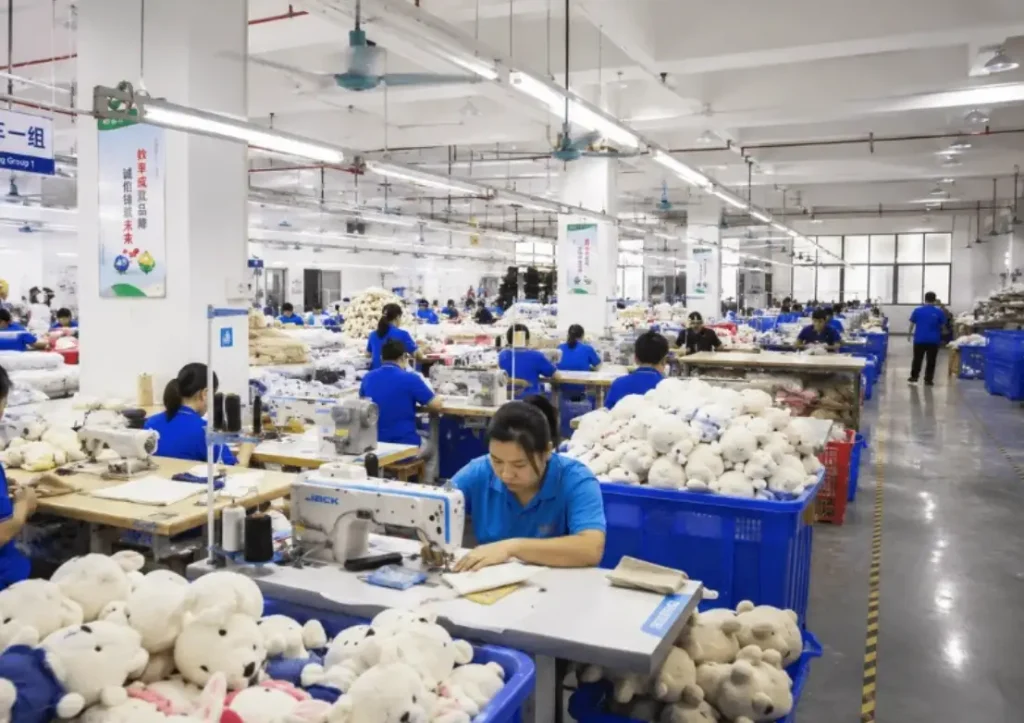
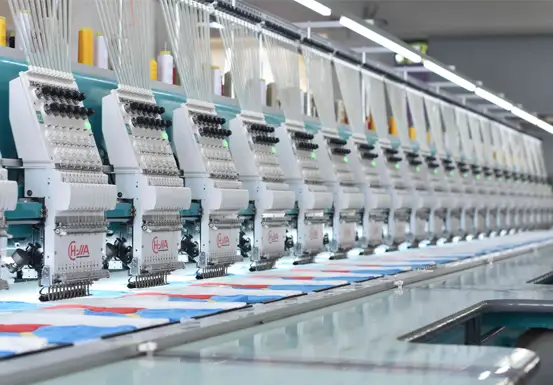
A factory’s stated production capacity should be checked against its actual equipment count, not just a verbal claim. Plush toy manufacturing relies on a mix of cutting equipment, multi-needle embroidery machines, sewing lines, and stuffing stations, and a factory genuinely capable of a stated monthly output will usually be willing to share equipment counts, staffing numbers, or a virtual factory tour without hesitation. Vague or evasive answers to specific capacity questions are one of the earliest signals that a supplier may be a trading company rather than an actual manufacturer.
Quality Control Systems
Reliable plush toy manufacturers operate quality control at multiple stages rather than relying solely on a final inspection before shipment. In-line checks after cutting, after sewing, and after stuffing catch defects early, before a flawed component is built into dozens of finished units. Ask specifically which Acceptable Quality Limit (AQL) standard a factory applies to outgoing shipments and how many inspection checkpoints exist between raw material intake and final packing — factories with a mature quality system will have this documented and ready to share rather than described only in general terms.
Traceability is another dimension worth probing during this stage. A factory that can trace a specific fabric roll or filling batch back to its supplier is in a far stronger position to isolate and correct a defect than one that cannot identify where a problematic material entered the process. This becomes especially relevant if a compliance issue surfaces after shipment, since regulators and retail partners increasingly expect a documented corrective-action trail rather than a general assurance that the issue “won’t happen again.”
It is also worth asking a prospective manufacturer for their internal defect rate data from the last two to three production runs, rather than accepting only a stated AQL target. A factory that tracks and shares real defect-rate history is demonstrating an active quality system, while a factory that can only cite a generic industry-standard figure may not be measuring its own performance in any meaningful way. This single question often does more to separate genuinely quality-driven factories from those that treat compliance as a paperwork exercise than any other question in the initial vetting conversation.
Safety Compliance and Certifications to Verify
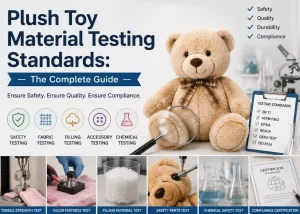
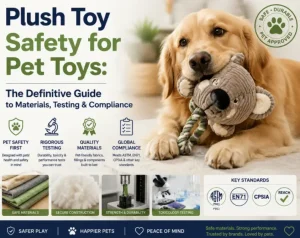
Safety compliance is the single most important filter in plush toy manufacturer selection, since it directly determines whether a shipment can legally enter the target market and whether the finished product is genuinely safe for its intended user. Certifications should always be verified against the specific product and target market, since a valid certificate for one product line does not automatically extend to a different plush design or fabric combination.
CPSIA and Third-Party Testing
For products sold into the United States, compliance with the Consumer Product Safety Improvement Act (CPSIA) requires third-party testing from an accredited lab covering lead content, phthalates, flammability, and mechanical hazards such as small parts and sharp points. A reliable manufacturer will be able to produce recent, product-specific test reports rather than only a generic factory-level certificate, and will understand that testing must be repeated whenever a material, dye lot, or trim component changes.

Material Safety Documentation
Beyond finished-product testing, dependable manufacturers maintain documentation on the raw materials themselves — fabric composition, dye certifications, and stuffing material sourcing — which supports faster resolution if a compliance question arises after shipment. Factories that cannot produce basic material documentation on request often lack full visibility into their own supply chain, which is itself a risk factor even if a finished-product test report exists.
This matters most when a factory sources fabric or filling from a subcontracted supplier rather than producing it in-house, which is common practice across the plush toy manufacturing industry and not inherently a problem. The concern arises only when a factory cannot say with confidence which subcontracted supplier provided a given material lot, since that gap makes it difficult to respond quickly if a specific batch is later flagged during testing or by a regulator.
Common Safety Certifications and What They Cover
| Certification/Standard | Primary Market | What It Covers |
|---|---|---|
| CPSIA / ASTM F963 | United States | Lead, phthalates, flammability, mechanical hazards |
| EN71 (Parts 1–3) | European Union | Mechanical/physical properties, flammability, chemical migration |
| ISO 8124 | International/reference standard | Safety aspects related to mechanical and physical properties |
| OEKO-TEX Standard 100 | International, fabric-level | Harmful substance limits in textiles and trim materials |
| Factory social compliance audit | International, brand-required | Labor practices, working conditions, factory management systems |
Tip: Request the actual test report, not just a certificate summary, and check that the tested sample description matches your product’s fabric, filling, and trim components exactly. A test report for a similar plush toy with different filling material or a different fabric blend does not confirm compliance for your specific product.
Evaluating Factory Experience and Specialization
Not all plush toy manufacturers serve the same segment of the market equally well. Specialization — by product type, size range, or customer type — often matters more than overall factory size when predicting how smoothly a new product will move through sampling and production.
OEM vs. ODM Capabilities
OEM (original equipment manufacturing) factories produce to a buyer’s own design and specification, while ODM (original design manufacturing) factories offer in-house design development in addition to production. Buyers with a fully resolved design and technical pack are generally well served by an OEM-focused factory, while buyers who need help translating a concept sketch into a manufacturable pattern benefit from a factory with genuine ODM design capability. Clarifying which model a factory actually offers — rather than assuming any factory can do both equally well — avoids a mismatch that often surfaces only after the first sample misses the mark.
Sample Development Process
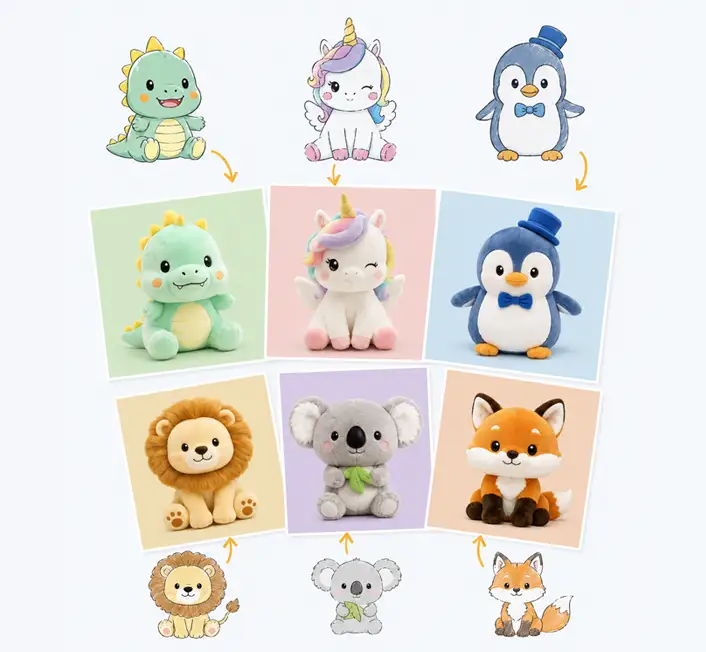
A manufacturer’s sample development process is one of the clearest previews of how a full production run will go. Reliable factories typically walk a new design through a proto sample, followed by one or two rounds of revision, before locking a final approved sample that becomes the reference standard for mass production. Factories that skip straight to a “close enough” sample, or that push back on reasonable revision requests, often carry that same lack of precision into bulk production.
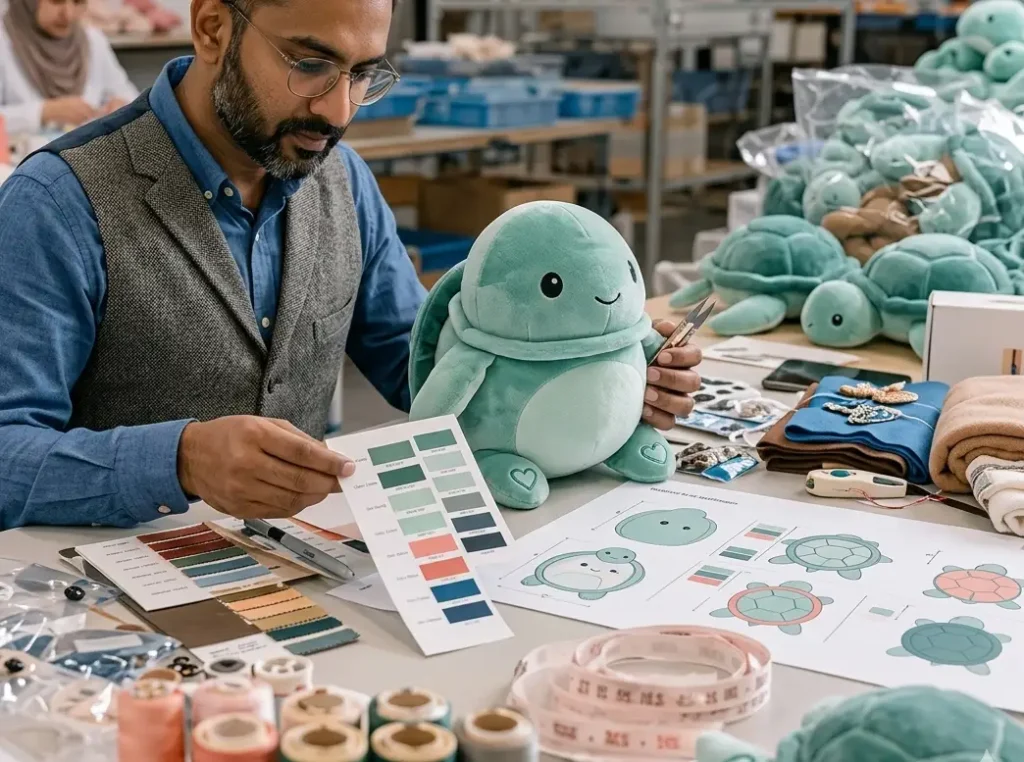
The way a factory documents sample versions is also worth noting. Reliable manufacturers typically assign a version number or date to each sample round and retain a physical or photographic record of what was approved at each stage, so that if a discrepancy appears in bulk production, both sides can point to a specific, agreed reference point rather than relying on memory or informal photos exchanged over chat. This documentation habit tends to correlate strongly with how the same factory manages its broader production paperwork.
Factory Specialization Types and Best Fit
| Specialization Type | Strongest For | Considerations |
|---|---|---|
| OEM production specialist | Buyers with a finalized design and tech pack | Limited in-house design support |
| ODM design-and-production | Buyers starting from a concept or sketch | Design fees may apply; IP ownership should be clarified upfront |
| Licensed/character plush specialist | Brand-accurate collector and licensed lines | Often requires higher MOQ and stricter approval cycles |
| Promotional/corporate plush specialist | Branded giveaways, events, and trade-show plush | Optimized for speed and simplified accessory sets |
| Baby/infant-safety specialist | Products for the youngest age grades | Stricter internal material and attachment standards |
Tip: Ask to see three to five past projects that are genuinely comparable to your product — similar size, similar fabric, similar level of design complexity — rather than a general portfolio. A factory’s best-case portfolio pieces do not always reflect what a typical order in your specific product category will actually look like.
Communication, MOQ, and Lead Time Considerations
Minimum order quantity and lead time expectations vary significantly across plush toy manufacturers, and mismatched expectations here are one of the most common sources of friction between buyers and factories after a relationship has already begun.
Minimum Order Quantities
MOQ is typically driven by fabric minimums, trim component minimums, and the factory’s own line-scheduling economics rather than an arbitrary policy. Factories sourcing standard stock fabrics in common colors can often support lower MOQs than factories required to dye fabric to a custom color match, since custom dye lots carry their own minimum yardage requirements from the textile mill. Buyers testing a new product concept should ask specifically which components of their design are driving the quoted MOQ, since adjusting even one variable — a custom color, a specialty trim — can sometimes unlock a meaningfully lower minimum.
It is also useful to distinguish between a factory’s stated MOQ and its preferred order volume. Many manufacturers will technically accept an order below their stated minimum but price it at a significant premium, since a small run still consumes a comparable amount of setup time and line-scheduling capacity as a larger one. Buyers planning a phased rollout — a small pilot batch followed by a larger reorder — are often better served by being transparent about that plan upfront, since some factories will offer more favorable pilot pricing in exchange for a documented commitment to a larger follow-on order.
Typical Lead Times
Lead time for a new plush toy program includes sampling time in addition to bulk production time, and buyers who only budget for the production stage are routinely surprised by how much calendar time the sampling and approval cycle consumes. Reliable manufacturers will provide a lead time estimate broken into distinct phases — sampling, material procurement, production, and quality inspection — rather than a single combined number, which makes it easier to identify where delays are actually occurring if a program falls behind schedule.
Seasonal timing also affects realistic lead times more than many first-time buyers expect. Factories serving the plush toy category often experience a pronounced volume surge ahead of major gift-giving and back-to-school periods, and a lead time quoted during a slower month may not hold if the same order is placed during peak season. Asking a manufacturer directly whether current quoted lead times reflect their standard capacity or an already-loaded production schedule is a simple way to avoid an unpleasant surprise closer to a hard shipping deadline.
Typical MOQ and Lead Time Ranges by Order Type
| Order Type | Typical MOQ Range | Typical Total Lead Time |
|---|---|---|
| Standard fabric, stock color, simple design | 500–1,000 units | 25–35 days |
| Custom color match, standard fabric type | 1,000–3,000 units | 35–45 days |
| Fully custom design with multiple accessories | 2,000–5,000 units | 45–60 days |
| Licensed/collector-grade multi-piece product | 3,000+ units | 50–70 days |
| Small-batch sampling or pilot run | 50–300 units | 15–25 days |
Tip: Lock your fabric color and material specification as early as possible in the sampling process. Color and material changes requested after the first approved sample are one of the most common causes of lead-time overruns, since they frequently require a new material order from the mill rather than a simple factory-side adjustment.
Red Flags When Vetting a Plush Toy Manufacturer
Certain patterns during early communication and sampling reliably predict problems later in a production relationship. Recognizing these red flags before placing a deposit is far less costly than discovering them mid-production.
Warning Signs During Factory Communication
Factories that avoid specific technical questions, provide inconsistent answers across different staff members, or pressure a buyer toward a large first order before any sample has been approved should be treated with caution. A reliable manufacturer is generally comfortable walking a new buyer through its process step by step, including realistic expectations about sample timing and potential technical constraints, rather than promising an unusually fast or unusually cheap outcome with no caveats.
Another subtle but telling pattern is how a factory responds when a buyer points out a genuine problem with a sample. Manufacturers confident in their own process tend to acknowledge the issue directly and explain how it will be corrected, while manufacturers under pressure to close a deal sometimes minimize a clear defect or attribute it to factors outside their control. The tone of that specific conversation is often a better predictor of how quality disputes will be handled during bulk production than anything stated in a general capabilities presentation.
Sample Quality Red Flags
Beyond obvious defects, subtler sample issues are worth watching for: inconsistent stuffing density across the same sample batch, stitching that varies noticeably in tightness from one seam to another, or fabric color that visibly drifts from the approved standard under different lighting. These inconsistencies, even in a small sample batch, tend to compound at production scale rather than resolve themselves.
Red Flags vs. Indicators of a Reliable Manufacturer
| Area | Red Flag | Indicator of Reliability |
|---|---|---|
| Certifications | Only a generic factory certificate, no product-specific report | Recent, product-specific third-party test report provided readily |
| Communication | Vague or inconsistent answers to technical questions | Clear, specific answers with documentation to back them up |
| Sampling | Pushes back on reasonable revision requests | Structured revision process with clear versioning |
| Pricing | Price drops sharply with no explanation when questioned | Transparent cost breakdown by component and process |
| Capacity | Evasive about equipment, staffing, or current order load | Willing to share capacity details or a factory tour |
Tip: If a quoted price changes dramatically after you ask detailed technical questions, treat that as a signal rather than a coincidence. It often indicates the initial quote was based on a lower specification than what you actually described, or that margins are being adjusted opportunistically based on perceived buyer sophistication.
Pricing Structures and Cost Transparency
Understanding what actually drives plush toy manufacturing cost makes it far easier to evaluate whether a quote is reasonable and to identify where hidden fees might be introduced later in a program.
What Influences Plush Toy Manufacturing Cost
Unit cost is shaped by fabric type and yardage, filling material and density, pattern complexity and panel count, embroidery or printing detail, accessory components, packaging requirements, and order volume. Because these variables interact — a more complex pattern also consumes more labor minutes and often more fabric through cutting waste — a transparent manufacturer will typically be able to break a quote down by these components rather than presenting only a single bottom-line number per unit.
Avoiding Hidden Fees
Common areas where unexpected costs appear include sample fees that are not credited against a future bulk order, tooling or mold fees for custom accessory components, testing fees billed separately from the unit price, and shipping or packaging costs that were not included in the original quote comparison. Requesting a complete cost breakdown before committing — covering sampling, testing, packaging, and freight terms — makes it possible to compare quotes across manufacturers on a genuinely equal basis rather than comparing incomplete numbers.
Payment terms deserve the same scrutiny as unit pricing, since they affect overall program risk even when the quoted price itself is competitive. A typical arrangement involves a deposit at order confirmation and a balance payment before or upon shipment, but the exact split, the currency used, and any conditions tied to inspection results can vary meaningfully between manufacturers. Buyers new to a factory relationship often benefit from tying at least part of the balance payment to an independent pre-shipment inspection passing, rather than releasing full payment purely on the factory’s own sign-off.
Primary Cost Drivers in Plush Toy Manufacturing
| Cost Driver | Impact on Unit Price | Common Hidden Fee Risk |
|---|---|---|
| Fabric type and color | High: custom dye lots increase cost significantly | Extra dye-lot minimum fee if color changes late |
| Pattern complexity | Moderate–high; more panels increase labor time | Underestimated at the quoting stage, adjusted after sampling |
| Filling material and density | Moderate; affects both cost and compliance testing | Rarely hidden, but density changes affect retest cost |
| Accessories and trim | Moderate; scales with component count | Tooling or die-cutting setup fees |
| Safety testing | Fixed per product/material combination | Retesting fees if the specification changes mid-program |
| Packaging and freight | Variable; often quoted separately | Freight terms (FOB vs. CIF) are misunderstood at the quoting stage |
Tip: Always confirm whether a quoted price is FOB (free on board) at the factory’s port or includes freight to your destination. Comparing an FOB quote from one manufacturer against a landed-cost quote from another is one of the most common ways buyers misjudge which supplier is actually more competitively priced.
Steps to Vet and Onboard a New Plush Toy Manufacturer
A structured onboarding process reduces the risk of surprises once real production volume is committed. The steps below reflect the sequence most experienced buyers follow before scaling a new manufacturing relationship.
Factory Audits and Site Visits
Where volume justifies the cost, a factory audit — either conducted in person or through a qualified third-party auditing service — verifies that the equipment, staffing, and quality systems described during initial communication actually match reality on the production floor. Audits also surface labor and working-condition issues that are increasingly a compliance requirement for brands selling through major retail channels, independent of the product’s own safety testing status.
For buyers unable to travel or commission a full audit, even a structured video walkthrough of the sewing floor, stuffing station, and warehouse can surface useful signals — visible organization of work-in-progress inventory, clearly labeled material storage, and orderly quality-inspection stations are all consistent with the kind of operational discipline that tends to carry through into consistent product output. A factory that is reluctant to show its actual production floor, even remotely, warrants additional caution regardless of how strong its sample or its sales presentation looks.
Building a Long-Term Manufacturing Partnership
Once a manufacturer has passed initial vetting and produced an approved sample and a successful first production run, the relationship benefits from continued structure rather than assuming reliability is now permanent: periodic reinspection of test reports, ongoing review of defect-rate data, and clear escalation paths for quality issues all help maintain the same standard as order volume grows. Manufacturers who remain transparent and responsive as a relationship scales — rather than only during the courtship phase of a first small order — are the ones most likely to remain reliable partners over multiple years and product cycles.
Frequently Asked Questions
Q1. What is the most important factor when choosing a plush toy manufacturer?
Safety compliance and quality control consistency are generally the most important factors, since they directly affect whether a product can legally be sold and whether it performs the same way across every unit in a production run. Production capacity and specialization fit matter as well, but a factory with excellent capacity and weak quality control still represents significant risk to a buyer’s brand and legal exposure.
Q2. How can I verify that a plush toy manufacturer’s safety certifications are genuine?
Request the actual test report rather than a certificate summary, confirm that the tested sample description matches your specific product’s fabric, filling, and trim, and check that the issuing lab is an accredited, recognized testing body for your target market. Reports that are generic, outdated, or for a materially different product should not be treated as valid coverage for your item.
Q3. What is a reasonable minimum order quantity for a first plush toy order?
A first order using standard fabric in a stock color can often be placed in the 500–1,000 unit range, while custom color matching or fully custom accessory components typically push the minimum higher due to material dye-lot and component sourcing minimums. Some manufacturers also offer smaller pilot runs in the 50–300 unit range specifically for market testing before a full production commitment.
Q4. How long does it typically take to develop and produce a custom plush toy?
Total lead time usually spans 25 to 70 days, depending on design complexity, including both the sampling and approval cycle and the bulk production run itself. Simple designs using existing fabric and color standards move fastest, while licensed or multi-accessory collector-grade products require the longest combined sampling and production timeline.
Q5. What are the biggest red flags when evaluating a plush toy manufacturer?
Vague or inconsistent answers to specific technical questions, reluctance to share equipment or capacity details, sample quality inconsistencies within the same batch, and price quotes that shift dramatically once detailed questions are asked are among the most reliable warning signs. Pressure to commit to a large order before any sample has been reviewed and approved is another common red flag.
Q6. Should I choose an OEM or ODM plush toy manufacturer?
An OEM-focused manufacturer is the better fit if you already have a finalized design and technical specification, since OEM factories concentrate on precise production to your existing pattern. An ODM manufacturer, which offers in-house design development, is more useful if you are starting from a concept sketch and need help translating that concept into a manufacturable plush pattern.
Q7. What hidden fees should I watch for when comparing plush toy manufacturer quotes?
Common hidden fees include sample charges that are not credited against a future bulk order, tooling or die-cutting setup fees for custom accessory components, safety testing fees billed separately from the unit price, and freight or packaging costs excluded from an initial quote. Requesting a complete, itemized cost breakdown before committing allows quotes from different manufacturers to be compared on equal terms.
Q8. Is a factory audit necessary before placing a large plush toy order?
A factory audit is not strictly required for every order, but it becomes increasingly valuable as order volume and program duration increase, since it verifies that a factory’s actual equipment, staffing, and quality systems match what was represented during initial communication. Many brands also require a passed social compliance audit as a standard condition before releasing large production volumes through major retail channels.