Skip to content

How to Import Plush Toys From China successfully starts with choosing a reliable manufacturer, understanding safety requirements, and planning every step from sampling to shipping for a smooth import process. A practical, step-by-step walkthrough of sourcing, sampling, safety compliance, production, quality inspection, shipping, and customs clearance for buyers importing plush toys from Chinese factories.
Importing plush toys from China is one of the most accessible entry points into the toy trade, but it is also one of the easiest categories to get wrong. Soft toys sit inside a strict regulatory bracket because they are marketed to children, which means a shipment can be held, relabeled, or rejected at customs over a missing test report just as easily as it can over a defective stitch.
This guide walks through the entire plush toy import process in the order a first-time or growing buyer will actually experience it: finding a supplier, confirming safety compliance, sampling, production, quality inspection, shipping, and customs clearance.
What Does It Take to Import Plush Toys From China?
Successfully importing plush toys from China requires four things working together: a supplier capable of the specific plush construction you need, safety documentation that matches your destination market, a realistic production and shipping timeline, and an inspection step that happens before the goods leave the factory rather than after they arrive at your warehouse. Missing any one of these four elements is the most common reason first shipments get delayed, rejected, or sold at a loss.
Plush toys differ from rigid injection-molded toys in a few structural ways that directly affect sourcing decisions. Fabric selection, fill material, seam construction, and small-parts attachment (eyes, noses, joints) each carry their own testing requirements, and each is a place where a factory can quietly cut costs in ways that are invisible until a toy fails a pull test or a lab report comes back with excess heavy metals in a dye lot.

How Do You Find a Reliable Plush Toy Supplier?
A reliable plush toy supplier is one with demonstrated experience in soft toy construction specifically, not general toy manufacturing. Because plush production involves cut-and-sew fabric work, hand or machine embroidery, fiber filling, and often hidden safety-lock joints, a factory that primarily runs plastic or electronic toys will frequently subcontract the sewing work to a third party you never see or approve, which introduces quality variability you cannot control from a distance.
What Should You Check Before Placing an Order?
Before committing to any plush toy factory, verify three things directly rather than relying on the sales representative’s word: an active business license matching the company’s registered name, prior export history to your destination market (ask for anonymized shipping records or client references in a comparable category), and in-house testing capability for basic checks like tensile pull-strength on attached parts. Factories with genuine export experience will produce this information without hesitation; reluctance is itself a signal worth weighing heavily.
How Many Samples Should You Request?
Most experienced buyers request two to three sampling rounds before committing to bulk production: a pre-production sample confirming fabric, color, and general construction; a counter-sample after any revisions; and, for larger or licensed programs, a pre-shipment sample pulled from the actual finished-goods batch. Skipping the counter-sample round is the single most common shortcut that leads to bulk shipments arriving with a noticeably different fabric hand-feel, fill density, or color match than what was originally approved.
Supplier Vetting Checklist: What to Confirm Before Ordering
| Verification Point | Why It Matters | How to Confirm |
|---|---|---|
| Business license & export scope | Confirms legal capacity to export toys under your category | Request scanned license; cross-check registered name on customs paperwork |
| Soft toy production history | Cut-and-sew skill differs from rigid plastic or electronics manufacturing | Ask for photos/videos of the actual sewing floor, not a showroom |
| In-house safety testing equipment | Reduces reliance on last-minute third-party lab bookings | Ask for an equipment list or a facility walkthrough video |
| Prior compliance certificates | Shows familiarity with your destination market’s standards | Request redacted test reports from comparable previous orders |
| Minimum order quantity flexibility | Determines feasibility for smaller or trial orders | Compare MOQ across at least 3 shortlisted factories |
| Sample lead time | Signals real production bandwidth versus overbooking | Request a written sample delivery date and hold them to it |
Tip: Ask every shortlisted factory the same question in writing: “What was the last plush toy safety issue you had, and how did you fix it?” A factory with real export experience will give a specific, technical answer. A factory that says “we’ve never had any issues” is either inexperienced or not being candid, and both are reasons for caution.
What Safety Standards and Certifications Are Required?
Plush toys sold into most major markets must comply with mechanical, chemical, and flammability safety standards specific to children’s products, and the applicable standard depends entirely on the destination country rather than the country of manufacture. The three most commonly required frameworks are the EU’s EN71 series, the United States’ ASTM F963 combined with CPSIA requirements, and destination-specific flammability rules that apply even when the base toy safety standard is otherwise satisfied.
Chemical testing on plush toys typically covers heavy metals in dyes and printed elements, phthalate content in any plastic components (eyes, noses, joints), and formaldehyde levels in fabric treatments. Mechanical testing covers small-parts choking hazards, pull-force testing on attached components such as eyes and bows, and seam-strength testing to confirm stuffing cannot be easily exposed.
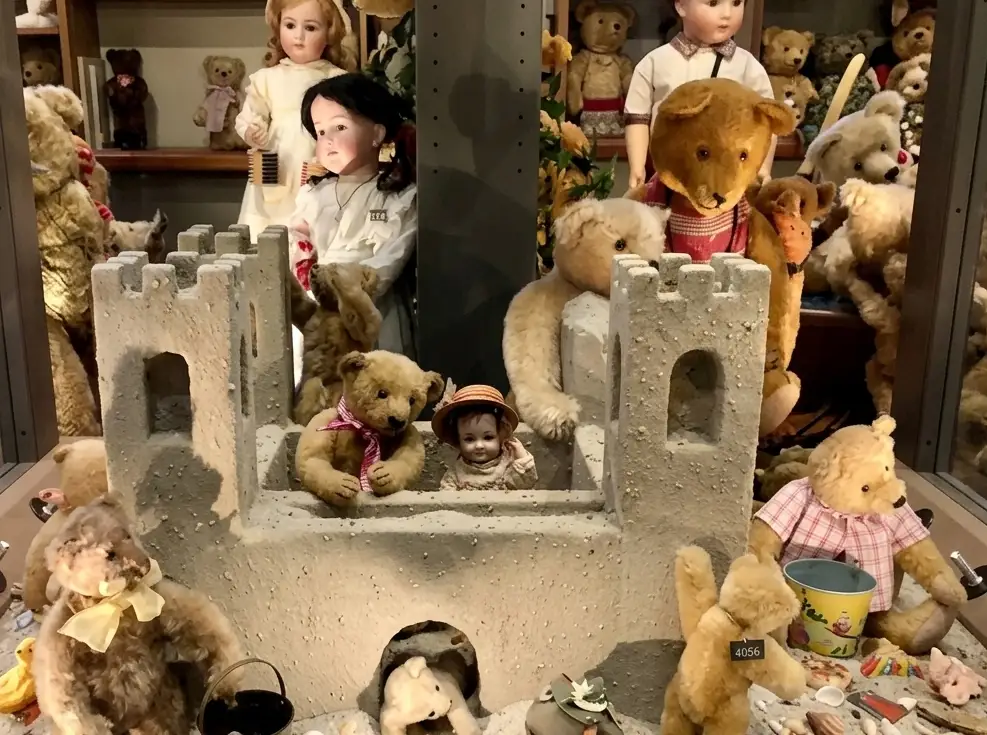
Age grading also affects which tests apply and how strictly they are enforced. A plush toy labeled for children under three years old is held to a stricter small-parts standard than one marketed to older children or sold as a collectible, because younger children are more likely to mouth or bite a toy. Buyers should settle on the intended age range early in the design process, since it directly determines whether certain trims — button eyes, hard plastic accessories, small bows — are permissible at all, rather than leaving age grading as an afterthought once a design is already finalized.
Why Does Fabric and Fill Sourcing Matter for Compliance?
The fabric and fill used in a plush toy are not interchangeable commodity inputs from a compliance standpoint. Recycled or unbranded polyester fill can carry inconsistent flammability performance from batch to batch, and printed fabric sourced from an unapproved supplier can introduce heavy-metal dye contamination that a factory’s own quality team may not catch without a lab test. Requiring the factory to source fill and printed fabric only from suppliers with existing test reports on file is one of the simplest ways to reduce compliance risk before production even starts.
Key Plush Toy Safety Standards by Destination Market
| Market | Primary Standard | Core Testing Focus |
|---|---|---|
| European Union | EN71-1/2/3 | Mechanical/physical properties, flammability, chemical migration |
| United States | ASTM F963 + CPSIA | Small parts, lead content, phthalates, tracking labels |
| United Kingdom | UKCA (post-Brexit equivalent of CE) | Same technical basis as EN71 with UK-specific marking |
| Australia/New Zealand | AS/NZS ISO 8124 | Mechanical safety, flammability of fabric surfaces |
| Canada | Canada Consumer Product Safety Act (CCPSA) | Similar chemical/mechanical scope with Canadian labeling rules |
Tip: Request the actual lab test report PDF, not a certificate summary page. Full reports list the specific fabric batch, dye lot, and sample date tested — details you need if a later production run switches fabric supplier without notice, which is a common and easily missed cost-cutting shortcut.
How Does the Plush Toy Import Process Work Step by Step?
The plush toy import process generally follows six stages: supplier shortlisting, sample approval, deposit and purchase order confirmation, production, pre-shipment inspection, and shipping/customs clearance. Understanding roughly how long each stage takes lets a buyer set realistic delivery expectations with their own retail or distribution partners.
What Happens During Production?
Once a purchase order and deposit are confirmed, the factory sources approved fabric and fill material, cuts pattern pieces, and begins assembly in batches. For licensed or character-based plush programs, factories typically require artwork or pattern approval separately from the general sample approval, since embroidery and print placement are handled by a different production line than basic construction. Buyers should build in extra time for this approval step on any design with custom printing, embroidery, or licensed characters.
Batch sequencing matters more in plush production than buyers often expect. Because cutting, sewing, filling, and finishing (eyes, bows, tags) happen on separate lines, a delay at any single station can back up the entire order. Factories with dedicated soft-toy production floors generally sequence these stations more predictably than mixed factories juggling plush alongside plastic or electronic toy lines, which is another reason specialization matters more than overall factory size when selecting a supplier.
How Should Packaging Be Approved?
Packaging approval is frequently treated as an afterthought, but it deserves the same rigor as the toy itself. Polybag thickness and warning label wording (particularly small-parts choking warnings) are regulated in many markets, and retail-ready packaging such as header cards or window boxes needs a separate structural approval pass to confirm it survives the transit and handling conditions of the chosen shipping method. Approving packaging in parallel with, rather than after, bulk production keeps the overall timeline from stretching unnecessarily.
How Is Quality Controlled Before Shipment?
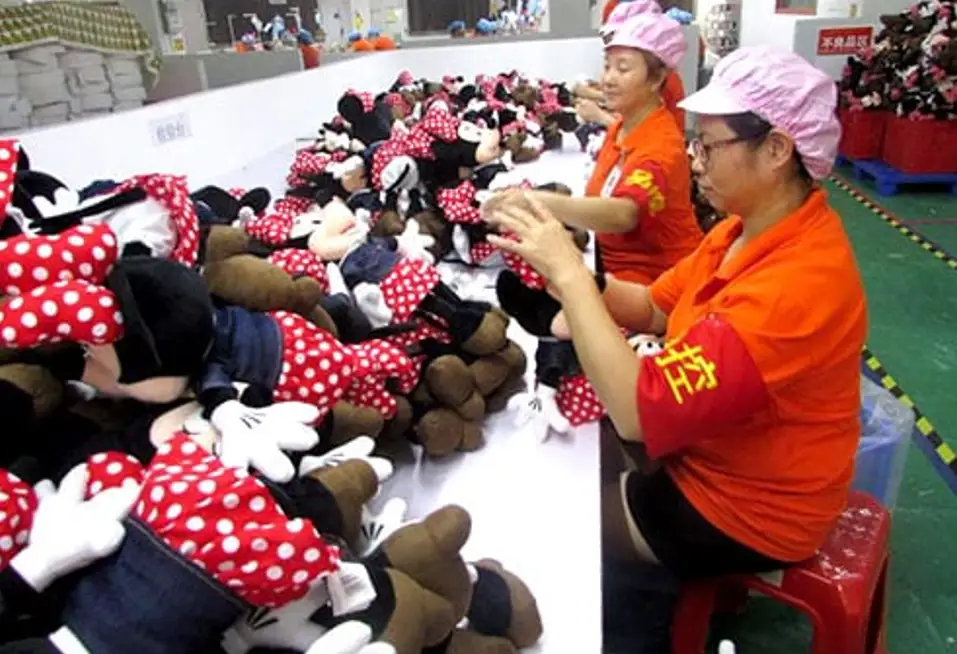
Quality control on plush toy orders should happen at a minimum of twice: during production (a mid-line check catching construction issues before the full batch is finished) and before shipment (a final random-sample inspection against an agreed AQL — acceptable quality limit). A pre-shipment inspection checks stitching consistency, fill weight and distribution, color accuracy against the approved sample, attached-parts pull strength, and packaging integrity, and should always happen before the shipment leaves the factory, not after it clears customs at destination.
Typical Plush Toy Import Timeline by Stage
| Stage | Typical Duration | Key Risk if Rushed |
|---|---|---|
| Supplier shortlisting & vetting | 1–3 weeks | Overlooking construction capability or export history |
| Sampling & approval rounds | 2–4 weeks | Skipping the counter-sample causes a bulk deviation |
| Bulk production | 25–45 days | Compressed timelines correlate with skipped mid-line checks |
| Pre-shipment inspection | 1–2 days on-site | Skipping this step is the top cause of post-arrival disputes |
| Ocean freight transit | 25–40 days (port-to-port) | Peak-season congestion adds 1–3 weeks unpredictably |
| Customs clearance at the destination | 2–7 days | Missing test reports or mislabeled HS codes cause holds |
Tip: Book the pre-shipment inspection to occur when 80–100% of the order is finished and packed, not earlier. Inspecting too early only samples goods that are, by definition, the factory’s best work-in-progress, and misses defects that surface only once the full batch and packaging process is complete.
What Are the Shipping and Customs Requirements?
Plush toys are lightweight but bulky relative to their weight, which makes them one of the categories most sensitive to the choice between sea freight, air freight, and express courier. The right choice depends primarily on order volume, timeline flexibility, and per-unit cost tolerance.
Sea Freight vs Air Freight vs Express Courier
Sea freight is the standard choice for full container or consolidated container loads and offers the lowest per-unit shipping cost, at the expense of a longer and less flexible timeline. Air freight cuts transit time dramatically but at a meaningfully higher cost per kilogram, making it more suitable for smaller reorders, urgent replenishment, or high-value licensed plush lines where speed to market outweighs cost. Express courier services are typically reserved for samples, small trial orders, or urgent partial shipments rather than full commercial volumes.
Plush toys present a specific freight-planning challenge because they are volumetric rather than weight-driven cargo: a container can reach its cubic capacity long before it reaches its weight limit. This means cost efficiency depends heavily on compression packaging (vacuum-sealed polybags, flattened header cards) and on accurately calculating carton dimensions before booking a container size, since underestimating cube can leave a buyer paying for a larger container than the order actually requires, or conversely running short on space for a fully packed order.

Should You Use a Freight Forwarder or Book Directly?
Most buyers importing plush toys for the first time work through a freight forwarder rather than booking directly with a shipping line, since a forwarder can consolidate smaller volumes into shared containers (LCL), handle documentation, and coordinate customs clearance at destination as a single point of contact. Direct booking becomes more cost-effective only once order volumes are consistently large enough to fill a full container on a predictable schedule.
Shipping Method Comparison for Plush Toy Imports
| Method | Best For | Typical Transit Time | Relative Cost per Unit |
|---|---|---|---|
| Sea freight (FCL/LCL) | Full commercial production volumes | 25–40 days port-to-port | Lowest |
| Air freight | Reorders, urgent replenishment, high-value plush | 5–10 days | Moderate–high |
| Express courier | Samples and small trial batches | 3–6 days | Highest |
Tip: Confirm the HS (Harmonized System) code for plush toys with your customs broker before the shipment departs, not after it arrives. Plush toys are sometimes miscategorized under general textile codes rather than toy-specific codes, which affects both the duty rate applied and whether toy-specific safety documentation will be requested at clearance.
What Import Duties, Taxes, and Documentation Are Needed?
Import duty rates on plush toys vary by destination country and trade agreement status, and are generally calculated on the customs (declared) value of the shipment rather than the retail value. Beyond duty, most destinations apply an additional import tax such as VAT, GST, or a national sales tax at the point of clearance, calculated on the combined value of goods, freight, and duty.
Standard documentation for a plush toy shipment includes a commercial invoice, packing list, bill of lading or air waybill, certificate of origin where applicable, and the safety test reports or compliance certificates relevant to the destination market. Missing or inconsistent documentation — particularly a declared value that does not match the commercial invoice, or a product description that does not match the HS code — is a far more common cause of customs delay than any issue with the toys themselves.
Tip: Keep the product description on every shipping document identical, word for word, across the commercial invoice, packing list, and customs declaration. Even minor inconsistencies — “plush toy” on one document and “stuffed animal” on another — can trigger a manual customs review that adds days to clearance.
What Common Mistakes Should First-Time Importers Avoid?
The most frequent and costly mistakes in plush toy importing are rarely about the product itself; they are about process discipline. Skipping the counter-sample round, relying solely on a factory’s self-issued compliance claims rather than an independent lab report, compressing production timelines to the point that mid-line quality checks are skipped, and failing to confirm the correct HS code before shipment are among the issues responsible for the large majority of delayed, rejected, or unprofitable first orders.
Another overlooked mistake is treating the first successful order as proof that no further checks are needed. Fabric suppliers, dye lots, and even sewing subcontractors can change between orders without notice, particularly at factories under cost pressure. Re-verifying test reports and re-approving samples for every new production run — not just the first one — protects against a supplier substituting materials once a buying relationship feels established. Building each of these checks into a standard operating procedure, rather than treating them as optional, is what separates a repeatable, scalable import relationship from a one-off gamble.
Frequently Asked Questions
What is the minimum order quantity for importing plush toys from China?
Minimum order quantities for plush toys typically range from a few hundred to a few thousand pieces per design, depending on the factory’s setup cost for cutting dies, embroidery programming, and packaging. Simpler, unlicensed designs using stock fabric colors generally carry lower MOQs than custom-printed or licensed characters, since the latter require dedicated tooling and artwork approval that only becomes cost-effective at higher volumes.
How long does it take to import plush toys from China from order to delivery?
A complete plush toy import cycle — from finalized sample approval through sea freight arrival at destination — typically takes between 10 and 16 weeks, depending on production complexity, factory workload, and shipping method. Air freight can shorten the transit portion significantly, but the sampling and production stages remain the larger share of total lead time and cannot be meaningfully compressed without increasing quality risk.
Do plush toys need safety certification before they can be imported?
Yes. Plush toys sold as children’s products in nearly every major market require compliance with a recognized toy safety standard, such as EN71 in the European Union or ASTM F963/CPSIA in the United States, along with country-specific labeling and, in many cases, a children’s product certificate or conformity declaration. These requirements apply regardless of order size, and customs authorities can request supporting documentation at the point of entry.
What is the difference between a pre-production sample and a pre-shipment sample?
A pre-production sample is made before bulk manufacturing begins and is used to confirm fabric, color, construction method, and overall design before committing to a full production run. A pre-shipment sample, by contrast, is pulled directly from the finished bulk batch after production is complete and is used to confirm that the delivered goods actually match what was approved earlier — catching any drift in fabric, fill, or color that occurred during mass production.
How is quality inspected before a plush toy shipment leaves the factory?
Pre-shipment inspection for plush toys typically follows a statistical sampling method such as AQL (Acceptable Quality Limit), where a randomly selected subset of the finished, packed order is checked against agreed criteria: stitching consistency, fill weight and evenness, color match to the approved sample, pull-strength on attached small parts such as eyes and noses, and packaging condition. Inspection should be scheduled once the order is close to fully complete and packed, rather than early in the production run.
What documents are required to clear customs when importing plush toys?
Standard customs clearance documentation for a plush toy shipment includes a commercial invoice, detailed packing list, bill of lading or air waybill, certificate of origin where a trade agreement applies, and the relevant safety test reports or compliance certificates for the destination market. Keeping product descriptions, declared values, and quantities consistent across every document is essential, since discrepancies are one of the most common triggers for a manual customs review and shipment delay.