Skip to content
Manufacturing eco-friendly toys requires more than choosing sustainable fabrics; it involves careful material selection, safe production processes, strict quality control, and compliance with global toy safety standards. This guide explains how to manufacture Eco-Safe plush Toys and the key steps brands should consider when creating soft toys that are safe for children and better for the environment.
A practical guide to building an eco-safe plush toy manufacturing program — from fabric and stuffing selection to chemical testing, low-impact dyeing, waste reduction, and the labeling requirements buyers need to meet across markets.
Manufacturing an eco-safe plush toy means controlling three things at once: what the toy is made from, what chemicals touch the fabric and stuffing during production, and how much waste the process generates from cutting through packaging.
A plush toy can look “eco” on the hang tag and still fail a chemical safety test, and a toy can pass every chemical test and still rely on virgin polyester, non-biodegradable stuffing, and single-use plastic packaging that undercuts the sustainability claim entirely. Building a genuinely eco-safe plush toy program requires attention to material sourcing, dye and finishing chemistry, stuffing selection, factory-floor waste habits, and compliant labeling — not any single one of these in isolation.
This guide walks through each stage of eco-safe plush toy manufacturing in the order a design and sourcing team typically works through it — material selection, chemical safety, production waste, packaging, and compliance labeling — with reference data and practical tips that apply whether the program covers a single character or a full multi-SKU plush line.
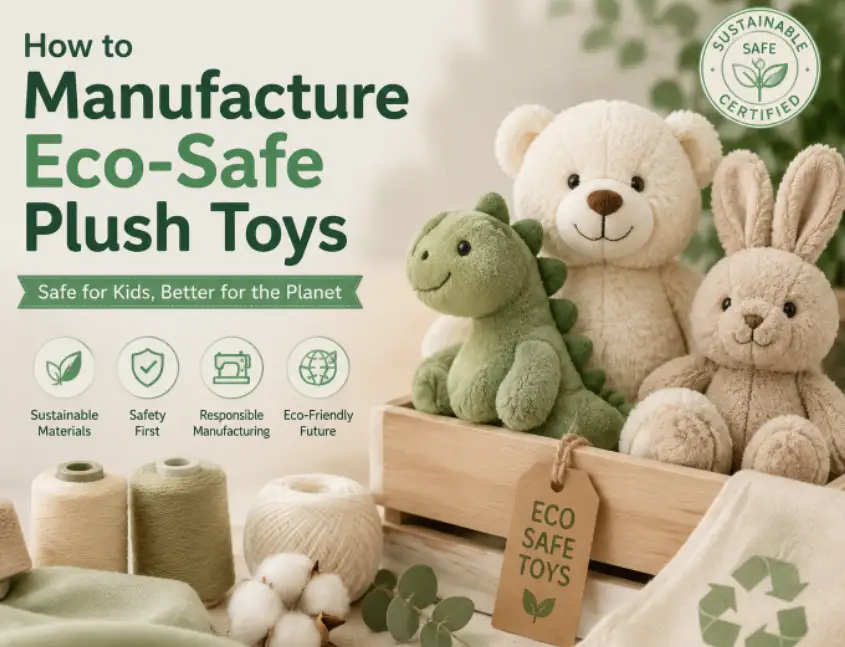
Demand for eco-safe plush toys has grown steadily as retailers add sustainability criteria to their vendor requirements and consumers increasingly ask about material sourcing before purchasing children’s products. That growing demand has made eco-safe manufacturing a mainstream sourcing consideration rather than a niche premium category, which means the standards and documentation expectations around these claims have also become more rigorous over time.
What “Eco-Safe” Actually Means for a Plush Toy
The term “eco-safe” is used loosely across the toy industry, but for a plush toy it generally covers two distinct requirements that are easy to conflate. The first is environmental impact — the fabric, stuffing, dyes, and packaging materials used, and how much waste the manufacturing process generates. The second is chemical and physical safety — whether the finished toy is free of harmful substances, meets flammability and mechanical safety requirements, and is safe for the intended age group to touch, chew, and hug repeatedly over years of use.
A plush toy that is genuinely eco-safe satisfies both requirements simultaneously: it is made from lower-impact materials and produced with reduced waste, and it also passes the same chemical and mechanical safety testing required of any conventional plush toy sold into the same market. Neither requirement substitutes for the other — a fully recycled fabric that fails azo dye testing is not eco-safe, and a chemically compliant toy made entirely from virgin petroleum-based fiber with no waste reduction measures is not meaningfully more sustainable than a conventional plush product.
Choosing Eco-Friendly Fabrics Without Compromising Durability
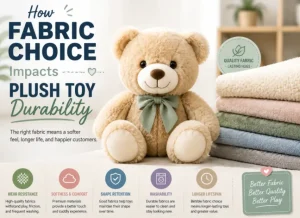
Fabric selection is the single largest driver of a plush toy’s environmental footprint, since it determines both the raw material impact and, in many cases, the dye and finishing chemistry needed downstream. The most common eco-friendly plush fabric options each carry different tradeoffs in cost, hand-feel, durability, and dye compatibility, which is why fabric choice needs to be evaluated against the specific toy’s use case rather than selected purely on sustainability marketing appeal.
Common Eco-Friendly Plush Fabric Options Compared
| Fabric Type | Environmental Advantage | Design Tradeoff |
|---|---|---|
| Recycled PET (rPET) plush | Diverts plastic bottles from landfill; lower virgin-resin demand | Pile softness and color depth can vary by recycling batch |
| Organic cotton plush | Grown without synthetic pesticides; biodegradable fiber | Higher cost; shorter pile options limit some character styles |
| Bamboo-blend plush | Fast-growing renewable source; low water input crop | Often blended with synthetic fiber for durability, reducing pure-bamboo claims |
| Hemp-blend plush | Low pesticide and water requirements; durable fiber | Coarser hand-feel typically requires blending for plush softness |
| Conventional polyester plush | Lowest cost; widest color and pile range | Petroleum-based; not biodegradable; higher lifecycle impact |
Recycled polyester plush has become the most widely adopted eco-friendly fabric choice in the industry precisely because it preserves the soft hand-feel and wide color range that conventional polyester plush offers, while substantially reducing virgin material use. Natural fiber options like organic cotton or hemp blends offer stronger biodegradability claims but typically involve higher material cost and more limited pile texture options, which can restrict certain character designs that depend on very long or very dense pile.
Sourcing Tip: Request a recycled-content certificate (not just a supplier claim) for any rPET fabric before committing to a production run. Recycled content percentages on plush fabric can vary significantly between lots, and a documented certificate is what buyers and retailers will ultimately ask for during compliance review.
Fabric Weight and Durability Still Matter for Sustainability
A genuinely eco-safe plush toy also needs to last, since a toy that falls apart after light use generates more total waste over its lifecycle than a slightly heavier-impact toy that survives years of handling. Fabric GSM, pile density, and backing quality should be evaluated with durability in mind, not just raw material sourcing, since a toy that needs to be replaced quickly undermines any sustainability advantage gained from the fabric choice itself.
Selecting Safe, Sustainable Stuffing Materials
Stuffing selection affects both the environmental profile and the safety profile of a plush toy simultaneously, since stuffing sits in direct, prolonged contact with a child’s skin and mouth. Recycled polyester fiberfill made from post-consumer plastic bottles has become the standard eco-friendly stuffing choice, offering the same fill characteristics as virgin polyester fiberfill while diverting plastic waste from landfill or incineration.
Plush Stuffing Materials: Sustainability and Safety Comparison
| Stuffing Material | Sustainability Profile | Safety Consideration |
|---|---|---|
| Recycled PET fiberfill | Made from post-consumer plastic bottles; widely recyclable process | Must be washed and processed to remove residual contaminants before use |
| Organic cotton fiberfill | Biodegradable; grown without synthetic pesticides | Requires flame-retardant treatment review depending on market requirements |
| Wool fiberfill | Renewable, biodegradable natural fiber | Potential allergen consideration; requires clear labeling |
| Virgin polyester fiberfill | Lowest environmental credential of common options | Widely tested and well understood safety profile |
| Bean or grain-based fill | Biodegradable, low-impact material | Generally unsuitable for young children due to choking and moisture risk |
Whatever stuffing material is chosen, it needs to meet the same flammability, cleanliness, and contamination-control standards required of any plush toy filling, regardless of its environmental credentials. Recycled fiberfill in particular needs to be sourced from a supplier with a documented cleaning and processing protocol, since improperly processed recycled fiber can carry contaminants or odor that would not be present in virgin material.

Sourcing Tip: Always request a stuffing supplier’s cleanliness and processing documentation separately from their recycled-content certificate — the two are not the same thing, and a fiberfill can be genuinely recycled while still failing a contamination or odor check if processing standards were not properly controlled.
Chemical Safety and Testing Requirements for Eco-Safe Plush Toys
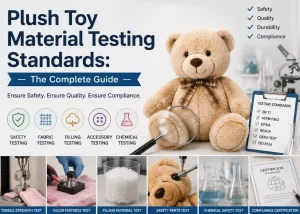
Chemical safety testing is non-negotiable for any plush toy regardless of how sustainable its raw materials are, since a toy made from recycled or natural fiber can still fail testing if dyes, adhesives, or finishing chemicals introduce restricted substances. The specific tests required vary by destination market, but a core set of chemical safety checks applies almost universally to plush toys intended for children.
Core Chemical and Safety Tests Applied to Plush Toys
| Test Category | What It Checks | Why It Matters for Eco-Safe Claims |
|---|---|---|
| Azo dye testing | Presence of restricted amine-releasing dyes | Common failure point even on naturally sourced or recycled fabrics |
| Heavy metals (lead, cadmium) | Trace metal content in dyes, trims, and fasteners | Can originate from pigments or hardware regardless of fabric sustainability |
| Phthalates | Plasticizer content in any plastic components (eyes, noses) | Relevant to any plush toy with molded plastic parts |
| Formaldehyde content | Residual formaldehyde from finishing or adhesive processes | Can be introduced during fabric finishing even on organic fiber |
| Flammability testing | Burn rate of fabric and stuffing combination | Required for all plush toys; natural fibers must still pass this test |
One of the more common misconceptions in eco-safe plush development is assuming that natural or recycled materials are automatically safer from a chemical standpoint. In practice, dyes, adhesives, and finishing treatments applied during production are frequently the actual source of a restricted substance failure, regardless of whether the base fabric is organic cotton, recycled polyester, or conventional synthetic fiber. Chemical testing needs to be applied to the finished fabric and trim as produced, not assumed from the raw fiber source alone.
Compliance Tip: Test a fabric after dyeing and finishing, not before. A pre-dye fiber sample passing a chemical screen tells you nothing about what the dye bath, fixing agent, or softening treatment may introduce later in the process — always test the fabric state that will actually reach the finished toy.
Low-Impact Dyeing and Finishing Processes
Dyeing and finishing are among the most water- and chemical-intensive stages of plush fabric production, and they represent one of the clearest opportunities to reduce environmental impact without changing the base fiber at all. Low-impact and reactive dye processes typically use less water and generate less chemical wastewater than older dye methods, while still achieving the color depth and colorfastness plush fabric requires.
Finishing treatments — softeners, anti-pilling agents, flame-retardant coatings where required — should be selected with the same scrutiny applied to dye chemistry, since these treatments are applied directly to the fabric surface that a child will have prolonged skin contact with. Requesting a finishing agent’s safety data sheet and confirming it against the destination market’s restricted substance list is a standard part of due diligence for any eco-safe plush program, not an optional extra step reserved for premium lines.
Reducing Waste in Cutting, Sewing, and Production
Fabric waste generated during cutting is one of the most controllable sources of environmental impact in plush toy manufacturing, and it is largely a function of pattern layout efficiency rather than fabric choice. Nesting pattern pieces efficiently across a fabric roll, reusing offcuts for smaller components like ears or paw pads, and tracking cutting yield as a standard production metric all reduce waste without requiring any change to material sourcing.
Thread, adhesive, and packaging waste at the sewing and finishing stage add up across a production run in ways that are easy to overlook when the focus stays entirely on fabric and stuffing sustainability. Reviewing the full production line — not just the raw materials entering it — for waste reduction opportunities typically uncovers cost savings alongside the environmental benefit, since reduced fabric waste directly reduces material spend per unit.
Production Tip: Track cutting yield (usable fabric area versus total fabric purchased) as a standard production metric for every plush style, not just new designs. A style with unexpectedly low yield often indicates a pattern layout problem that can be corrected before the next production run, reducing both waste and per-unit cost.
Packaging Choices for Eco-Safe Plush Toys
Packaging is frequently the weakest link in an otherwise genuinely eco-safe plush toy program, since a toy made from recycled fabric and organic stuffing can still ship in a plastic polybag, non-recyclable printed box, and excess void-fill material. Recyclable or FSC-certified cardboard packaging, water-based printing inks, and minimized void-fill are the most common improvements made once fabric and stuffing sourcing has already been addressed.
Polybags used for individual unit protection during shipping present a particular challenge, since many markets require some form of moisture and dust protection for retail plush toys, and paper alternatives do not always provide equivalent protection during long-distance shipping. Compostable or recycled-content polybag film is increasingly used as a middle-ground solution, though it needs to be evaluated against the destination market’s specific packaging labeling and choking-hazard warning requirements.

Labeling and Certification Requirements Across Markets
Eco-safe plush toys still need to meet the same age grading, choking hazard, and country-of-origin labeling requirements as any conventional plush toy, and sustainability claims printed on packaging are themselves subject to regulation in many markets to prevent unsubstantiated “greenwashing” claims. A recycled-content or organic-material claim generally needs to be backed by a supplier certificate that can be produced if a regulator or retailer requests substantiation.
Core Labeling Requirements by Market for Plush Toy Compliance
| Market | Core Safety Labeling Requirement | Sustainability Claim Consideration |
|---|---|---|
| United States | CPSIA tracking label; age grading; choking hazard warning where applicable | FTC Green Guides govern substantiation of environmental claims |
| European Union | CE marking; EN 71 compliance reference; manufacturer/importer details | Green claims increasingly require documented evidence under EU guidance |
| United Kingdom | UKCA marking; age grading; importer details | Environmental claims subject to consumer protection advertising rules |
| Australia | Mandatory safety standard reference; age grading | Environmental claims reviewed under Australian Consumer Law |
Because sustainability labeling requirements are evolving faster than core toy safety standards in most markets, it is worth confirming current requirements with the specific destination market’s regulator or a compliance specialist before finalizing packaging artwork, rather than relying on a previous production run’s labeling as a template.
Compliance Tip: Keep every recycled-content, organic, or low-impact production claim backed by a dated supplier document on file, even for claims that seem minor. Retailers and regulators increasingly request substantiation for environmental claims after a product is already on shelf, and having documentation ready avoids a costly relabeling or recall scenario.
Working With a Factory on Eco-Safe Production Standards
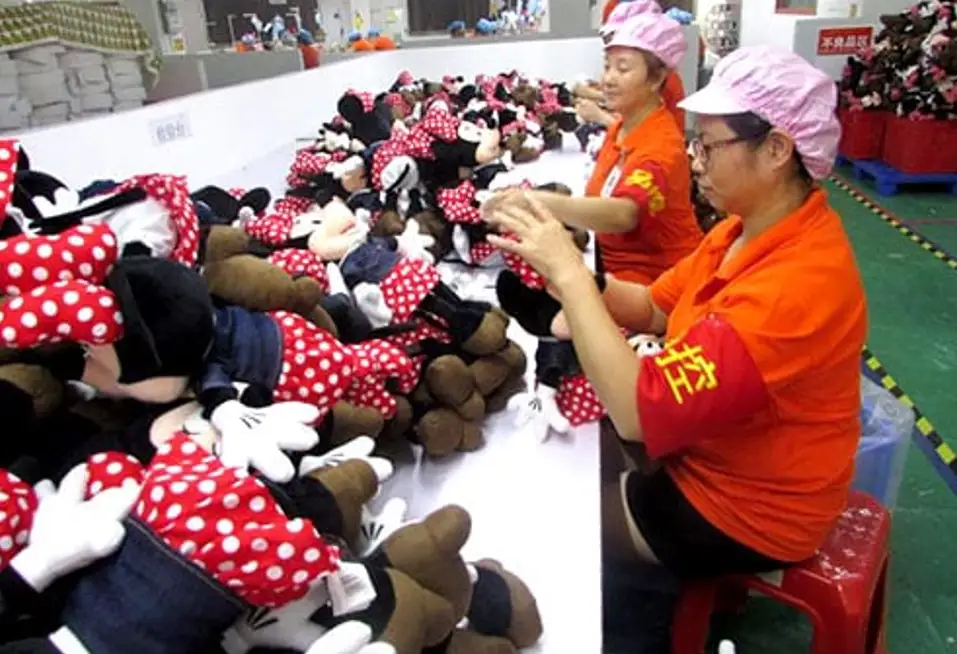
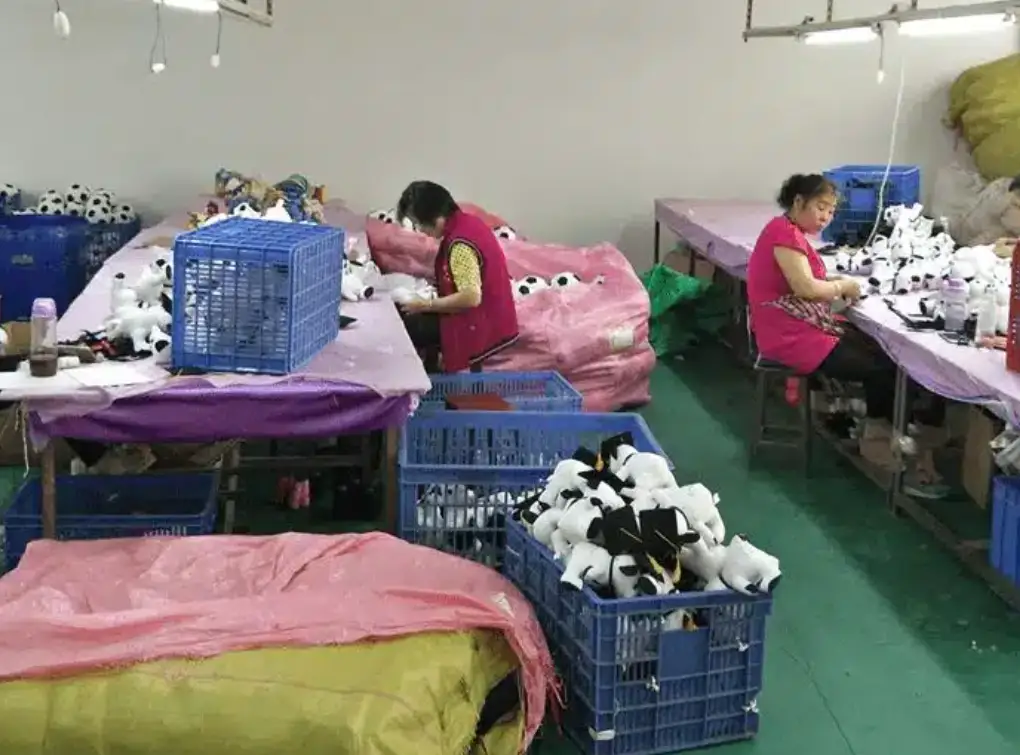
Achieving consistent eco-safe production depends as much on factory process discipline as it does on material selection, since a factory that sources certified recycled fabric but does not control dye chemistry, waste segregation, or documentation practices will struggle to deliver consistent results across production runs. Reviewing a factory’s environmental and chemical management systems — not just its finished-product test reports — is an increasingly standard part of eco-safe plush sourcing due diligence.
A factory that already runs a documented wastewater treatment process, maintains segregated recycling streams for fabric and stuffing offcuts, and can produce chemical management documentation on request is generally better positioned to support an eco-safe program consistently than one that only tests the finished product after the fact. Building these questions into the initial factory qualification process, rather than raising them only after a production issue occurs, is one of the most effective ways to protect an eco-safe plush program over the long term.
Auditing Beyond the Finished Sample
A finished plush sample passing chemical and safety testing confirms that a specific batch met requirements, but it does not confirm that the underlying production process is consistently controlled across every future run. Periodic factory process audits — reviewing dye lot records, waste segregation practices, and stuffing supplier documentation — provide a more reliable long-term guarantee of consistent eco-safe production than relying on finished-sample testing alone.
This distinction becomes especially important across large production runs or long-running product lines, where a single passed test early in the relationship can create a false sense of ongoing assurance. Building a recurring audit schedule into the factory relationship — rather than treating the initial qualification audit as a one-time gate — helps catch process drift, such as a change in dye supplier or a lapse in waste segregation practice, before it results in a failed shipment or a compromised sustainability claim.
Building an Eco-Safe Plush Program That Holds Up Over Time
An eco-safe plush toy program is strongest when material sourcing, chemical safety testing, waste reduction, packaging, and compliant labeling are treated as one connected system rather than a checklist completed in isolation. A recycled fabric choice loses much of its value if paired with untested dye chemistry, non-recyclable packaging, or unsubstantiated environmental claims on the label — and conversely, a fully compliant, well-tested toy made from lower-impact materials with minimized production waste represents a genuinely defensible eco-safe claim that can withstand regulator, retailer, and consumer scrutiny alike.
Teams starting this process for the first time generally get the best results by sequencing the work rather than attempting every change at once: confirm chemical safety testing on any new fabric or stuffing first, since this is the requirement that cannot be compromised regardless of sustainability goals, then layer in waste reduction, packaging improvements, and accurate labeling once the underlying materials are already proven safe. Approaching the transition in this order reduces the risk of having to unwind a sustainability claim after discovering a chemical compliance issue late in the process.
Recyclable, Biodegradable, and Compostable: Why the Distinction Matters
These three terms are frequently used interchangeably in plush toy marketing, but they describe genuinely different end-of-life outcomes, and conflating them is one of the most common sources of an unsubstantiated environmental claim. Understanding the distinction is important both for accurate labeling and for setting realistic expectations about a plush toy’s actual environmental footprint.
Recyclable Materials
A recyclable material can theoretically be reprocessed into new raw material, but for a finished plush toy this claim is rarely straightforward, since a stuffed toy typically combines multiple material types — fabric, stuffing, plastic eyes, thread — that are not easily separated for recycling through standard consumer recycling streams. Claiming a finished plush toy itself is “recyclable” without qualification is a common labeling mistake; it is generally more accurate to describe specific components, such as packaging, as recyclable rather than the assembled toy.
Biodegradable Materials
A biodegradable material breaks down naturally over time through microbial action, but the timeframe and conditions required vary enormously between materials. Natural fibers like organic cotton or wool biodegrade under normal environmental conditions, while many “biodegradable” synthetic blends require industrial composting conditions that are not available to most consumers, making an unqualified biodegradability claim potentially misleading unless the required conditions are also disclosed.
Compostable Materials
Compostable is a more specific and testable claim than biodegradable, generally requiring a material to break down within a defined timeframe under specific composting conditions, often verified against a recognized compostability standard. Compostability claims on plush toy packaging — particularly polybag film — should reference the specific standard the material has been tested against, rather than using the term generically.
Labeling Tip: Avoid printing an unqualified “biodegradable” or “eco-friendly” claim directly on a finished plush toy’s permanent label unless every component of the toy meets that standard. It is safer and more accurate to apply sustainability claims to specific certified components — the outer fabric, the stuffing, or the packaging — rather than the assembled product as a whole.
Cost Considerations When Switching to Eco-Safe Materials
Eco-friendly fabrics and stuffing typically carry a cost premium over conventional virgin materials, though the size of that premium has narrowed considerably as recycled polyester supply chains have matured. Organic cotton and hemp-blend fabrics generally carry the largest premium due to lower crop yields and more limited processing infrastructure compared to recycled synthetic fiber, while recycled polyester plush has, in many markets, approached cost parity with conventional polyester as recycling volumes have scaled.
Beyond raw material cost, an eco-safe program often introduces additional costs in chemical testing frequency, supplier documentation management, and factory auditing, since verifying environmental and safety claims consistently requires more oversight than sourcing on price and finished-sample testing alone. These costs are frequently offset, at least partially, by waste reduction gains at the cutting and production stage, and by growing retailer and consumer willingness to pay a premium for verified sustainable products — though this offset varies significantly by market and price tier.
A realistic budget for transitioning an existing plush line to eco-safe materials should account for fabric and stuffing cost changes, one-time costs associated with updated chemical testing and certification, and the administrative cost of maintaining ongoing supplier documentation, rather than assuming the switch is cost-neutral simply because recycled material prices have become more competitive with conventional options.
Sourcing Tip: When budgeting a transition to eco-safe materials, request quotes for both the material switch alone and the material switch combined with updated testing and certification, since teams frequently underestimate the ongoing documentation and testing cost while focused only on the per-unit fabric price difference.
Communicating Eco-Safe Claims to Retailers and Consumers
Once material sourcing, chemical testing, waste reduction, and packaging have been addressed, the final piece of an eco-safe plush program is communicating those efforts accurately to retailers and end consumers without overstating what has actually been achieved. Retailers increasingly request supporting documentation before accepting an environmental claim on a product listing, and having that documentation organized and ready — rather than assembled reactively after a request — significantly speeds up retail onboarding for a new eco-safe plush line.
Specific Claims Hold Up Better Than General Ones
A specific, verifiable claim such as “outer fabric made from 80% recycled post-consumer PET, certified by [certification body]” is far more defensible than a general claim like “eco-friendly” printed without qualification. Specific claims are also generally easier for a retailer’s compliance team to review and approve quickly, since they can be checked directly against the supporting certificate rather than requiring a subjective judgment about what “eco-friendly” means in context.
Consistency Across Packaging, Product Listings, and Marketing
Sustainability claims should match exactly across the physical product packaging, online product listings, and any marketing materials, since inconsistent claims across these channels are a common trigger for regulator or retailer scrutiny. If a packaging label states a specific recycled-content percentage, that same figure — not a rounded-up or more general version — should appear consistently wherever the product is described.
Consumers evaluating plush toys for sustainability are generally looking for the same signals a retailer’s compliance team looks for: specific material composition, recognized certification marks, and clear evidence that safety testing has not been sacrificed in pursuit of an environmental claim. Building the eco-safe program with this level of transparency in mind from the outset — rather than retrofitting documentation after a product is already on shelf — tends to produce a stronger, more defensible sustainability position across every audience that will eventually evaluate it.
Frequently Asked Questions
Does using recycled fabric automatically make a plush toy chemically safe?
No. Recycled or organic fabric addresses the raw material sourcing side of sustainability, but chemical safety depends heavily on the dyes, adhesives, and finishing treatments applied during production. A recycled polyester fabric can still fail azo dye or heavy metal testing if the dye process used to color it is not properly controlled. Chemical testing should always be conducted on the fabric in its finished, dyed, and treated state — not assumed based on the raw fiber source alone.
What is the most common eco-friendly fabric used in plush toy manufacturing?
Recycled polyester (rPET) plush is currently the most widely adopted eco-friendly fabric option in the industry, largely because it preserves the soft hand-feel, wide color range, and pile texture options that conventional polyester plush offers, while significantly reducing virgin petroleum-based material use. Organic cotton, bamboo, and hemp blends are also used, but typically involve higher cost and more limited texture options compared to recycled polyester.
Is recycled polyester stuffing as safe as virgin polyester fiberfill?
Recycled PET fiberfill can be just as safe as virgin polyester fiberfill, provided it has been properly washed and processed to remove contaminants from the post-consumer plastic source material. The key safety consideration is not the recycled origin itself, but whether the supplier follows a documented cleaning and processing protocol. Buyers should request this processing documentation separately from a recycled-content certificate, since the two address different aspects of stuffing quality.
What chemical tests are required for an eco-safe plush toy?
Core chemical tests typically include azo dye testing, heavy metals screening (particularly lead and cadmium), phthalate testing for any plastic components such as eyes or noses, formaldehyde content testing related to finishing processes, and flammability testing of the finished fabric and stuffing combination. These tests apply regardless of whether the plush toy is made from natural, recycled, or conventional synthetic materials, since dyes and finishing chemistry — not the base fiber — are frequently the actual source of a restricted substance failure.
How can a plush toy manufacturer reduce fabric waste during production?
The most effective waste reduction happens at the pattern layout and cutting stage, where efficient nesting of pattern pieces across a fabric roll directly reduces offcut waste. Offcuts can often be reused for smaller components like ears, paw pads, or trim details rather than discarded. Tracking cutting yield — the ratio of usable fabric area to total fabric purchased — as a standard production metric for every style helps identify pattern layout problems that would otherwise go unnoticed across repeated production runs.
Are sustainability claims on plush toy packaging regulated?
Yes, in most major markets. Environmental or sustainability claims printed on toy packaging — such as “recycled,” “organic,” or “eco-friendly” — are subject to consumer protection and advertising regulations intended to prevent unsubstantiated or misleading claims. Manufacturers and importers are generally expected to have supplier documentation on file that can substantiate any environmental claim if requested by a regulator or retailer, separate from the toy’s core safety compliance documentation.
What packaging materials are considered eco-safe for plush toys?
Recyclable or FSC-certified cardboard, water-based printing inks, and minimized void-fill material are the most commonly adopted eco-safe packaging improvements. Polybags used for individual unit protection during shipping remain a challenge, since many markets require some form of moisture and dust protection that paper alternatives do not always match; compostable or recycled-content polybag film is increasingly used as a middle-ground option, subject to destination market labeling requirements.
How does a buyer verify that a factory’s eco-safe claims are legitimate?
Verification typically involves reviewing documentation beyond the finished product test report, including recycled-content certificates for fabric and stuffing suppliers, chemical management and wastewater treatment records, and evidence of waste segregation practices on the factory floor. Periodic process audits — rather than relying solely on finished-sample testing — provide a more reliable long-term picture of whether a factory consistently maintains the practices behind its eco-safe claims across multiple production runs, not just a single sampled batch.