Skip to content
The global licensed merchandise market generates hundreds of billions of dollars annually, and plush toys represent one of its most enduring and commercially significant product categories. From beloved animated characters and sports team mascots to literary figures and video game icons, licensed plush toys sit at the intersection of intellectual property law, precision manufacturing, and consumer emotion. Yet the process of bringing a licensed plush product to market is considerably more complex than standard private-label production.
A licensed plush toy is not simply a stuffed animal bearing a character’s likeness — it is a contractually governed product that must satisfy the requirements of a rights holder (licensor), meet international toy safety standards, pass through formal design approval processes, and be produced in a factory that the licensor has authorised or vetted. For brand owners, entertainment studios, sports organisations, and the manufacturers and distributors who work with them, understanding how licensed plush toy manufacturing works is essential to managing cost, risk, and quality.
This guide walks through every stage of the licensed plush supply chain: from securing intellectual property rights to factory qualification, artwork approval, bulk production, quality inspection, and post-market compliance. Whether you are a brand entering licensing for the first time, a licensee adding plush to an existing product portfolio, or a sourcing professional evaluating manufacturer options, this resource provides the foundational knowledge you need.
What Is a Licensed Plush Toy and How Does the Licensing System Work?
A licensed plush toy is a soft stuffed product that incorporates intellectual property — a character design, logo, name, likeness, or other protected creative element — under the terms of a formal legal agreement between the IP owner (licensor) and the party manufacturing or selling the product (licensee). Without a valid licensing agreement, any plush product bearing protected IP constitutes trademark or copyright infringement, regardless of how the product is distributed or sold.
The Structure of a Toy Licensing Agreement
A toy licensing agreement is a commercial contract that defines the precise scope of rights granted and the obligations of both parties. Core elements of any licensing agreement include the grant of rights (which specific IP may be used, in which product categories, and in which territories), the royalty rate and advance, the approval process for product design and marketing materials, the quality and compliance standards that must be met, the authorised manufacturer requirements, and the term and termination conditions.
Licensing agreements are almost always territory-specific. A licensee might hold rights to produce and sell a plush product in North America but not in Europe or Asia. This territorial segmentation has significant implications for both compliance (different regions require different safety certifications) and distribution (a product cannot legally be sold outside the licensed territory).
Licensor and Licensee Roles
The licensor is typically an entertainment studio, sports league, literary estate, character developer, or brand owner. Licensors generate revenue from their IP without bearing the cost of product development, inventory, and distribution — their primary contribution is the creative and legal asset. The licensee is the party that pays for the right to use the IP and takes on the commercial risk of manufacturing and selling the licensed product. In practice, a licensee often works with a third-party manufacturer rather than producing in-house, which introduces a three-party relationship between licensor, licensee, and factory.
Key distinction: Many manufacturers describe themselves as “licensed” when they mean they are an authorised production partner for a licensee, not that they hold the licence themselves. True licence holders have a direct contractual relationship with the IP owner and are responsible for royalty reporting and compliance obligations.
Core Elements of a Plush Toy Licensing Agreement
| Agreement Element | What It Covers | Why It Matters in Plush |
|---|---|---|
| Grant of Rights | Specific characters, logos, and IP elements; product categories; territories | Defines exactly which designs can appear on which products, in which markets |
| Royalty Rate | Percentage of net sales paid to licensor, typically quarterly | Directly affects unit economics; plush royalties typically range 10–18% of net sales |
| Advance / Guarantee | Non-refundable upfront payment against future royalties | Licensor’s risk mitigation can range from thousands to millions, depending on IP value |
| Approval Process | Stages at which the licensor reviews and approves product development | Adds weeks or months to the development timeline; non-compliance can halt production |
| Authorised Manufacturers | List of criteria for approved production facilities | Not all factories are eligible; the licensor may require a factory audit or pre-approval |
| Quality Standards | Minimum safety, material, and workmanship requirements | Failure to meet standards can trigger a product recall and licence termination |
| Territory | Countries or regions where the licensed product may be sold | Restricts distribution; products cannot be diverted outside the licensed territory |
| Term | Duration of the licence, including renewal and termination provisions | Affects inventory planning; unsold stock cannot be sold after the licence expiry |
How Are Royalty Rates Structured in Licensed Plush Toy Manufacturing?
Royalties are the economic engine of the licensing system. For a licensee, the royalty rate is a direct cost that must be factored into every unit’s pricing model. Understanding how royalty rates are set, how they vary by IP type, and how they are calculated and reported is fundamental to determining whether a licensed plush programme is commercially viable.
Typical Royalty Rate Ranges for Plush Toys
Royalty rates in toy licensing are generally expressed as a percentage of net sales — the actual invoiced value after allowable deductions such as freight, taxes, and trade discounts. For plush toys, royalty rates across the industry typically fall in the range of 10% to 18%, though this varies significantly by IP category. Entertainment properties tied to active theatrical or streaming releases often command rates at the higher end of this range or above, reflecting the premium value of the promotional context. Sports team licensing programmes, where multiple licensees compete for a share of the same fan base, tend to operate at mid-range royalty rates. Lesser-known or independent IP may be licensed at lower rates, particularly for emerging licensees.
In addition to the ongoing royalty, licensors typically require a minimum guaranteed royalty — an amount the licensee commits to paying regardless of actual sales. This guarantee protects the licensor’s revenue and incentivises the licensee to actively market and sell the product. The advance payment made at contract signing is credited against future royalties but is generally non-refundable if the guarantee is not met through sales.
Royalty Calculation and Reporting
Royalties are calculated on a per-sale basis and reported to the licensor at regular intervals — typically quarterly. Licensees must maintain auditable sales records, and most licensing agreements give the licensor the right to audit the licensee’s books. For manufacturers who act as licensees selling directly to retail, the calculation is straightforward. For those in a more complex supply chain — where a manufacturer produces for a licensee who then sells to a distributor — clear contract language about who bears the royalty obligation at each tier is essential.
Commercial Planning Tip: When building a unit cost model for licensed plush, treat the royalty rate as a first-line deduction from revenue, not an afterthought. At a 14% royalty rate on a product retailing at $14.99 with a standard retail-to-wholesale ratio, the royalty obligation can consume a substantial portion of the manufacturer’s margin — model this before committing to a minimum guarantee.
Royalty Rate Benchmarks by IP Category in Plush Toy Licensing
| IP Category | Typical Royalty Range | Advance / Guarantee Level | Key Variable |
|---|---|---|---|
| Major entertainment studio character (active release) | 14–18% | High ($50K–$500K+) | Theatrical / streaming window timing |
| Major entertainment studio character (classic / back catalogue) | 12–16% | Medium ($20K–$150K) | Ongoing fan demand, nostalgia cycle |
| Sports league/team licensing | 10–14% | Medium (varies by league) | Number of competing licensees |
| Video game IP | 12–16% | Medium ($15K–$100K) | Game release cadence and fandom size |
| Literary / publishing IP | 10–14% | Low–Medium ($5K–$50K) | Book sales, adaptation status |
| Independent / emerging IP | 8–12% | Low ($2K–$20K) | Social media reach, niche audience size |
| Corporate mascot/brand character | Variable (often fee-based) | Project fee model common | Brand owner objectives, not royalty-driven |
What Is the Licensed Plush Toy Design Approval Process?
The design approval process is one of the most operationally demanding aspects of licensed plush manufacturing. Unlike standard private-label production, where the buyer has full creative control, a licensed product must pass through a multi-stage review by the licensor’s licensing team — and sometimes by the original character creators — before production can begin. Managing this process efficiently is a critical capability for any licensee.
Stages of the Approval Workflow
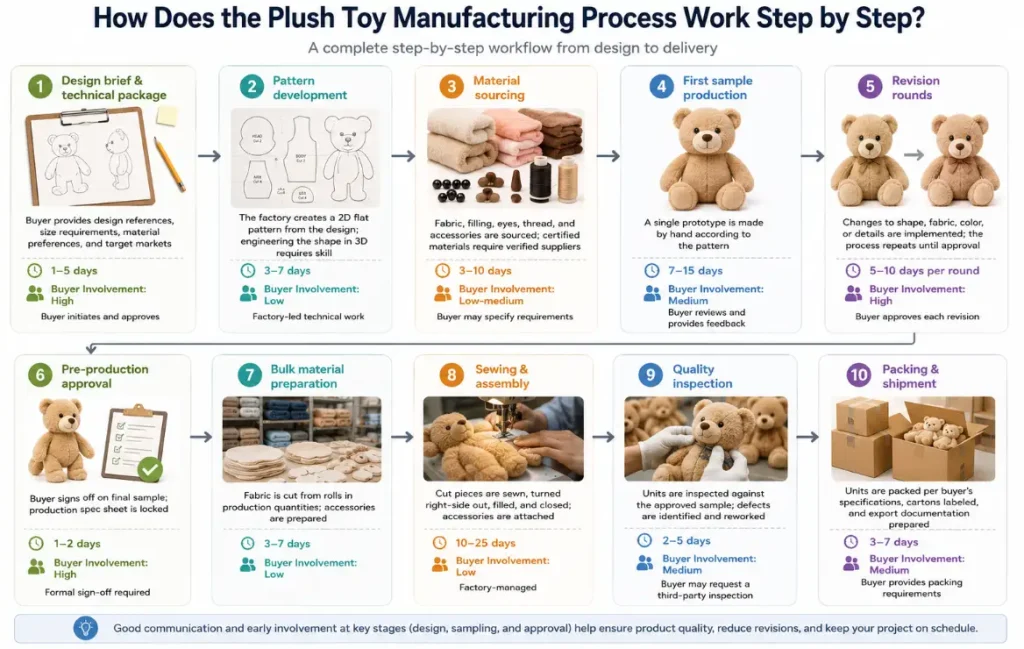
Most major licensors operate a structured approval workflow with defined stages, each requiring the submission of materials and formal written approval before the next stage can begin. A typical workflow for a new licensed plush product moves through the following phases:
Concept / Sketch Approval: The licensee submits initial design sketches showing how the character or IP will be interpreted in plush form. This stage establishes proportions, colour palette, and overall aesthetic direction. Licensor feedback at this stage typically addresses character fidelity — how closely the plush interpretation matches the official character bible or style guide.
Pre-Production Sample (Prototype) Approval: A physical prototype is produced and submitted to the licensor for review. This is the most critical approval stage in plush, because the translation from flat artwork to three-dimensional fabric construction introduces variables that cannot be fully assessed on paper. Common feedback at this stage includes facial expression adjustments, colour accuracy issues, proportion corrections, and surface texture concerns.
Pre-Production (PP) Sample Approval: After any corrections from the prototype stage, a sample made from the actual bulk production materials is submitted. This sample must match the approved prototype and be produced under conditions representative of the full production run. Approval at this stage gives the green light for bulk manufacturing to begin.
Production Sample / Gold Seal Sample: Once bulk production commences, a sample pulled from the production run is submitted to the licensor. This “gold seal” sample becomes the reference standard against which the full production run is judged. It is archived by the licensor and can be used as evidence in any subsequent quality dispute.
Timeline Management Tip: Build a separate approval timeline alongside your production timeline, and track them in parallel. Licensor review periods at each stage can range from 5 to 21 business days, depending on the licensor’s team capacity and internal processes. Missing one approval deadline cascades through the entire production schedule — factor in buffer time at every stage, especially around peak periods such as Q4 product launches.
Licensed Plush Design Approval Stages: Submissions, Timelines, and Common Issues
| Approval Stage | What Is Submitted | Typical Review Period | Common Feedback / Issues |
|---|---|---|---|
| Concept / Sketch | 2D design sketches, colour references, size indication | 5–10 business days | Proportion deviations, colour palette mismatch, and missing character details |
| Prototype (Salesmen’s Sample) | Handmade or early-stage 3D physical sample | 7–14 business days | Facial expression fidelity, eye placement, colour accuracy vs. Pantone spec |
| Pre-Production (PP) Sample | Production-material sample, full construction | 7–14 business days | Fabric shade variation, embroidery quality, seam placement |
| Gold Seal / Production Sample | Sample pulled from bulk production run | 5–10 business days | Consistency vs. approved PP sample, tag, and label accuracy |
| Packaging Approval (if applicable) | Printed or digital packaging artwork with all required marks | 5–10 business days | Missing copyright notices, incorrect territory statements, and wrong age grading |
Which Factories Are Eligible to Manufacture Licensed Plush Toys?
Not every plush toy factory is eligible to produce licensed products. Major licensors — particularly entertainment studios, sports leagues, and premium brand owners — maintain lists of approved or pre-qualified manufacturers, and require that any production for their licensed programmes takes place exclusively at facilities that have passed their audit or qualification criteria. Understanding what licensors look for in a manufacturing partner is essential for both licensees selecting production partners and factories seeking to expand into the licensed product segment.
Factory Audit Standards and Social Compliance
The most widely recognised factory audit frameworks in the toy industry include ICTI CARE (now operating under the IETP — International Ethical Toy Program), BSCI (Business Social Compliance Initiative), and SA8000. These audits assess working conditions, labour practices, health and safety standards, wage and hour compliance, and management systems at the factory level. Most major entertainment studio licensors require that any plush manufacturing facility hold a current, valid IETP certificate or equivalent.
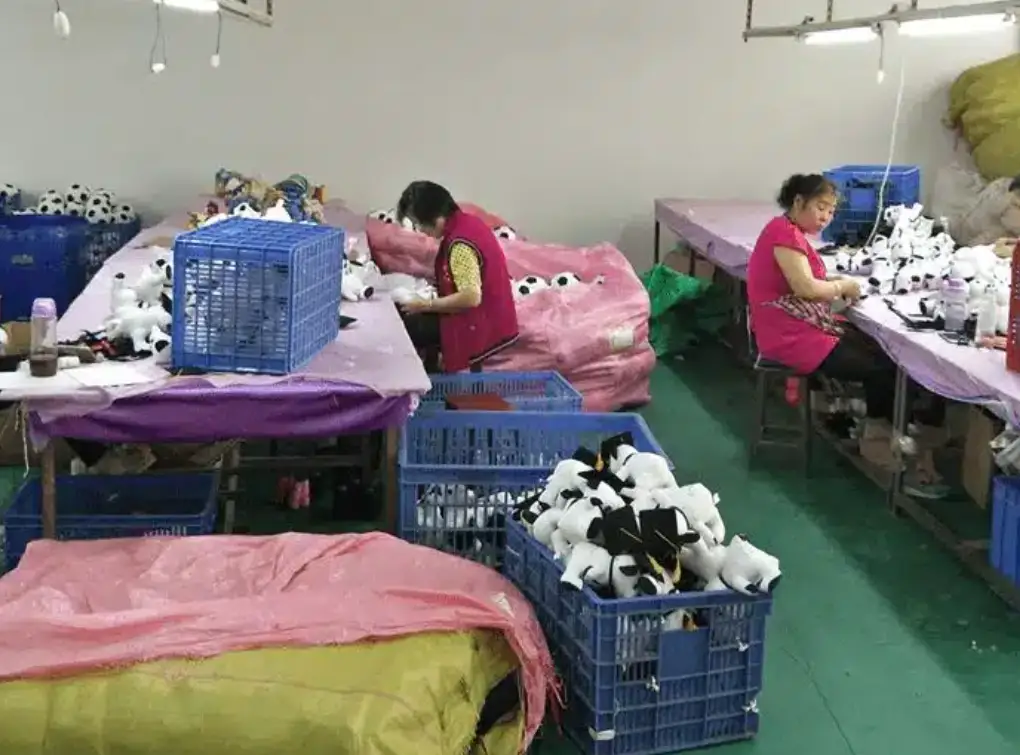
Beyond social compliance auditing, licensors may conduct their own brand-specific factory assessments, evaluating the facility’s quality management systems, production capacity, experience with character plush production, and physical security measures. Intellectual property protection is a significant concern — licensors need assurance that proprietary character artwork and design files will not be misused or shared with unauthorised parties.
Quality Management System Requirements
Factories producing licensed plush for major brand programmes are typically expected to operate under a documented quality management system, even where formal ISO 9001 certification is not always mandatory. Key QMS elements evaluated by licensor quality teams include incoming material inspection protocols, in-process quality control checkpoints, final inspection procedures, defect classification and rejection rate tracking, and corrective action processes. A factory’s ability to produce and maintain a production control plan and communicate proactively about quality issues is frequently cited by licensors as a differentiating factor.
Factory Qualification Requirements for Licensed Plush Production
| Requirement Category | Specific Requirement | Governing Body / Standard | Licensor Priority Level |
|---|---|---|---|
| Social Compliance Audit | Valid IETP / BSCI / SA8000 certificate | IETP, Business Social Compliance Initiative | Mandatory for most major licensors |
| Product Safety Testing | Access to accredited third-party test labs; ability to provide test reports per required standards | CPSC, EN 71, ISO 8124 | Mandatory |
| IP Security | Controlled access to design files; NDA capability; artwork destruction post-production | Licensor-specific policy | High |
| Quality Management | Documented QMS; in-process inspection; AQL-based final inspection | ISO 9001 or equivalent | High |
| Character Production Experience | Demonstrated experience producing 3D character plush with embroidery and complex construction | Licensor evaluation | Medium–High |
| Capacity and Lead Time | Sufficient capacity to meet programme volumes within contracted timelines | Licensee/licensor agreement | Medium |
| Environmental Standards | Compliance with Oeko-Tex or equivalent; waste and chemical management | Oeko-Tex, REACH | Medium (growing) |
What Safety and Compliance Standards Must Licensed Plush Toys Meet?
Licensed status does not exempt a plush toy from any applicable product safety regulation. In fact, licensed products are subject to heightened scrutiny precisely because their high visibility makes non-compliance incidents more damaging to the brand. A recalled licensed plush toy generates reputational harm for both the licensee and, by association, the licensor — making compliance a shared commercial interest rather than a contractual formality.
US Market: ASTM F963 and CPSIA
For licensed plush toys sold in the United States, the primary safety framework is ASTM F963, the Standard Consumer Safety Specification for Toy Safety, combined with the requirements of the Consumer Product Safety Improvement Act (CPSIA). CPSIA mandates third-party testing by a CPSC-accepted laboratory for all children’s products, including toys intended for children under 12. It also establishes total lead content limits (100 ppm in substrate; 90 ppm in surface coatings) and requires each product to carry a permanent tracking label identifying the manufacturer, production date, and batch information.
EU Market: EN 71 and CE Marking
In the European Union, licensed plush must bear the CE mark, confirming conformity with the EN 71 toy safety standard across its three primary parts: mechanical and physical properties (Part 1), flammability (Part 2), and migration of certain chemical elements (Part 3). The EU Toy Safety Directive also requires that a Declaration of Conformity accompany the product through the supply chain. For plush toys sold in the UK post-Brexit, UKCA marking is required in addition to or instead of CE marking.
Chemical and Material Safety
Beyond market-specific toy safety standards, licensed plush must comply with chemical substance regulations that govern the materials used in production. In Europe, REACH restricts the use of substances of very high concern (SVHCs) in textile components, stuffing materials, and trims. Phthalates — commonly found in some PVC plastic trims — are restricted under both REACH and CPSIA. Many major licensors additionally require Oeko-Tex Standard 100 certification for all fabric and fill materials used in licensed products, providing a direct material-level assurance that no harmful substances are present above threshold levels.
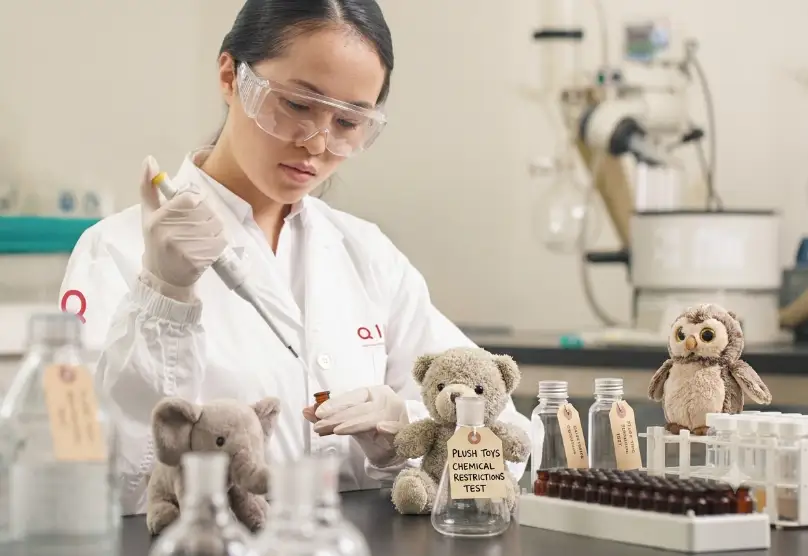
Compliance Documentation Tip: Organise your compliance documentation into a product technical file before production begins, not after. The file should include: the applicable safety standards checklist, third-party test reports for all components and the finished product, the Declaration of Conformity (for EU), the licensor’s approval correspondence, and the factory’s current audit certificate. A well-maintained technical file dramatically reduces the time required to respond to a retailer’s compliance query or a regulatory investigation.
Safety and Compliance Requirements for Licensed Plush by Market
| Market | Primary Standard | Certification / Mark | Testing Requirement | Chemical Regulation |
|---|---|---|---|---|
| United States | ASTM F963 | CPSC Children’s Product Certificate (CPC) | Third-party testing at a CPSC-accepted lab; mandatory | CPSIA (lead, phthalates); CA Prop 65 |
| European Union | EN 71 Parts 1–3 | CE Mark + Declaration of Conformity | Third-party or self-declaration, depending on risk level; a notified body for some categories | REACH, EU Toy Safety Directive |
| United Kingdom | EN 71 (retained) | UKCA Mark | Third-party testing; UK-based responsible person required | UK REACH (post-Brexit) |
| Australia / NZ | AS/NZS 8124 | Mandatory supplier declaration | Third-party testing recommended; mandatory for regulated products | ACCC chemical safety guidelines |
| Canada | CCPSA / SOR/2011-17 | No mark required; importer compliance declaration | Third-party testing strongly recommended; mandatory for some categories | Canada Consumer Product Safety Act |
| Japan | ST Mark (voluntary) | ST Mark (Japan Toy Safety Standard) | Third-party testing through a JSA-approved body | Act on Control of Household Products Containing Harmful Substances |
How Does the Licensed Plush Production Process Work From Brief to Delivery?
The end-to-end production of a licensed plush toy follows a structured sequence of activities that is more complex than standard plush manufacturing because of the interlocking requirements of the licensing agreement, the approval workflow, and compliance obligations. Understanding this sequence — and where the critical path decisions lie — is essential for managing the production calendar effectively.
From Character Brief to Pattern Engineering
Production begins with the licensor providing the licensee with access to the official character bible or style guide — a document that defines the approved colours (typically in Pantone references), facial proportions, distinctive design features, and any mandatory graphic elements. The licensee’s design team or manufacturer then produces an engineering brief for the plush: translating the 2D character design into a 3D construction plan that specifies fabric types and colourways, pattern pieces, embroidery design files, fill weight, and component specifications.
This translation from flat character art to three-dimensional plush construction is the most technically demanding phase of development. A character whose charm depends on precise facial proportions or specific eye placement requires experienced pattern engineers and skilled sample makers to achieve acceptable fidelity. Many licensed programmes require multiple prototype iterations before the licensor’s approval team accepts the three-dimensional interpretation.
Bulk Production and Quality Control
Once PP sample approval is secured, bulk production can commence. In a well-managed licensed plush programme, the factory operates against a production control plan that defines inspection points, quality criteria, and defect classification at each stage of the manufacturing process. In-line quality checks during fabric cutting, sewing, stuffing, and finishing catch issues before they compound across thousands of units.
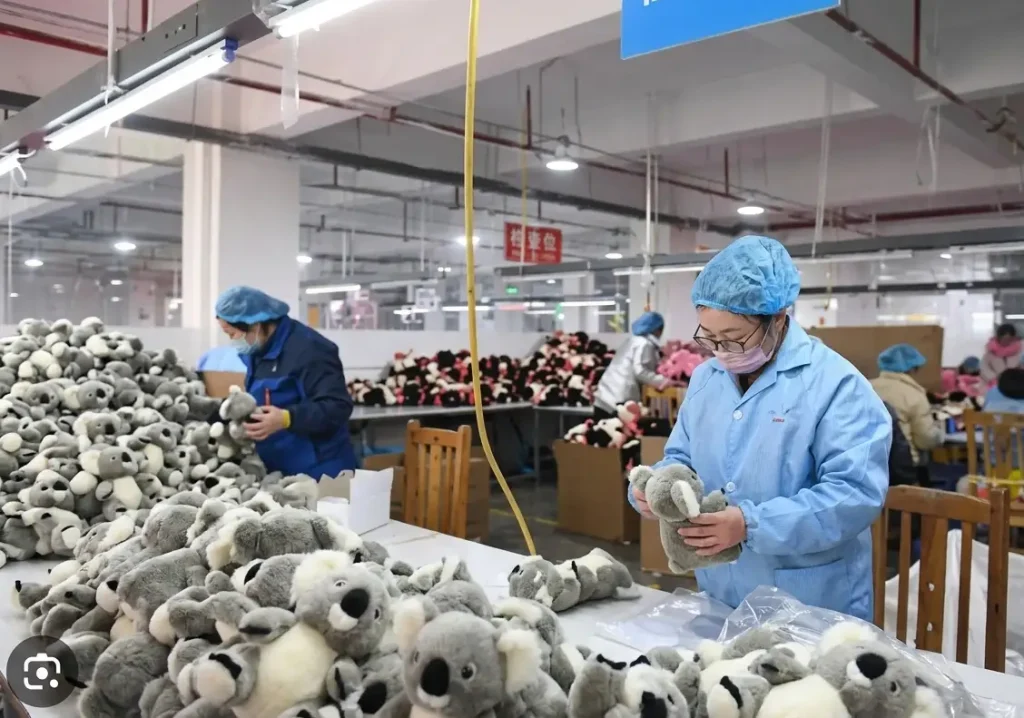
Pre-shipment inspection is a standard requirement in licensed plush supply chains. Most licensors and retailers specify inspection against AQL (Acceptance Quality Limit) sampling plans, where the acceptable defect rate at different severity levels is defined in advance. For licensed products, even minor defects such as slightly off-centre embroidery or marginal colour variation can constitute a deviation from the approved gold seal sample.
Shipping, Labelling, and Territory Compliance
Licensed plush must carry specific labelling required by both the licensor and the destination market’s regulations. Licensor-required labelling typically includes copyright notices (© [year] [IP owner name]), trademark attributions, and sometimes the “Licensed by” designation. Regulatory labelling requirements vary by market but generally include age grading, safety warnings, country of origin, care instructions, and tracking information. Products distributed outside the licensed territory — even inadvertently through parallel import channels — constitute a licence breach that can result in termination.
Licensed Plush Production Timeline: Key Phases and Calendar Estimates
| Phase | Activity | Estimated Duration | Critical Path Item |
|---|---|---|---|
| 1. Pre-Development | Licence agreement execution; style guide/character bible receipt | 2–8 weeks | Legal sign-off delays are the most common cause of timeline slippage |
| 2. Concept Design | Engineering brief; 2D design development; concept sketch submission | 1–3 weeks | Licensor concept approval |
| 3. Prototype Development | Pattern engineering; first prototype (salesmen’s sample) production | 3–5 weeks | Sample shipping to licensor; international transit time |
| 4. Prototype Approval | Licensor review; revision cycles (may require 2–3 iterations) | 2–6 weeks | Number of revision rounds required |
| 5. PP Sample | Production material sample produced; submitted for PP approval | 2–3 weeks | Colour accuracy of bulk fabric vs. approved prototype |
| 6. Bulk Production | Full manufacturing run; in-line QC; finished goods inspection | 5–9 weeks | Factory capacity; concurrent programme conflicts |
| 7. Compliance Testing | Third-party lab testing of finished product; report issuance | 1–3 weeks | Lab turnaround time; any test failure requiring retest |
| 8. Shipping & Delivery | Sea freight (3–5 weeks) or air freight (5–7 days); customs clearance | 1–5 weeks | Port congestion; seasonal shipping surcharges |
| Total (typical) | Concept to warehouse receipt | 120–190 days | Approval delays and revision cycles are the primary variables |
Production Planning Tip: For seasonal licensed plush programmes — particularly those tied to film releases, sports seasons, or holiday windows — work backwards from the retail shelf date and add a minimum of 15 days of buffer beyond the delivery window. A production programme targeting a Q4 holiday launch that hasn’t cleared PP sample approval by early July is already at risk of missing its window via sea freight.
What Are the Costs Involved in Licensed Plush Toy Manufacturing?
The cost structure of a licensed plush programme is more complex than standard private-label plush, with additional cost layers stemming from the licensing relationship itself, the approval process, and the compliance requirements. A realistic understanding of the full cost model is essential before committing to a licensed programme.
Product Cost Components
The factory cost of a licensed plush toy — what the manufacturer charges — is influenced by the same factors as any plush product: size, fabric specification, construction complexity, embroidery intensity, and order volume. Licensed character plush with precise embroidered facial features, multi-fabric body construction, and attached accessories typically carries a higher factory cost than comparable standard plush due to the skill and time required to achieve character fidelity.
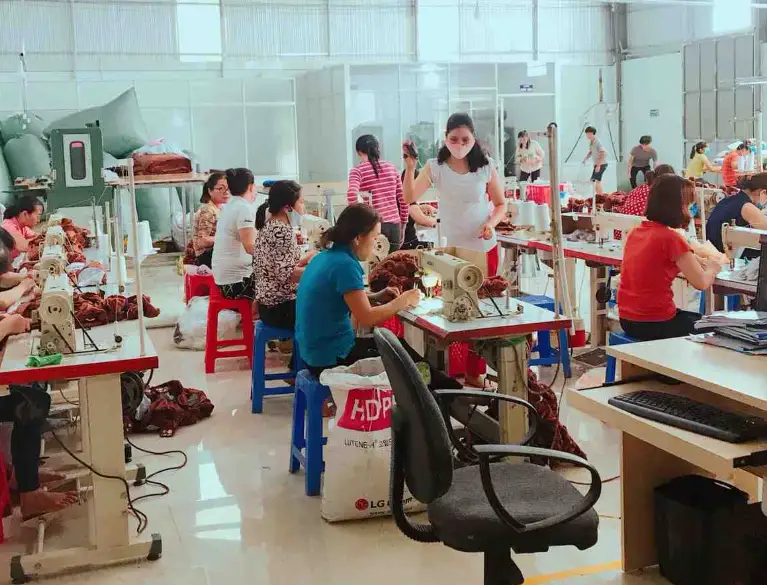
On top of factory cost, a licensee’s total landed cost must incorporate: royalties (typically 10–18% of net sales, as outlined above); advance / minimum guarantee payments amortised across the expected sales volume; third-party compliance testing ($300–$1,500+ per product per market); sample development costs (which may be invoiced by the factory separately for licensed programmes requiring multiple revision rounds); licensor approval fees (some licensors charge administrative fees for each approval submission); and freight and customs duties.
MOQ Considerations in Licensed Programmes
Minimum order quantities for licensed plush are typically higher than for standard custom plush, reflecting both the complexity of character construction and the economies required to absorb the additional cost layers. For most major entertainment or sports IP, a minimum production run of 500 to 2,000 units per SKU is common for initial orders. Repeat orders, once tooling and approved samples are in place, may be possible at lower MOQs. Licensors sometimes stipulate minimum order values rather than unit quantities, particularly for programmes where they have exclusive or premium arrangements with specific retail channels.
Frequently Asked Questions About Licensed Plush Toy Manufacturing
What is the difference between a licensed plush toy and a generic stuffed animal?
A licensed plush toy incorporates intellectual property — a character name, likeness, logo, or other protected creative element — under a formal legal agreement with the IP owner. The licensee pays royalties for the right to use the IP and must meet the licensor’s design approval, quality, and compliance requirements. A generic stuffed animal, by contrast, is a proprietary design not tied to any third-party IP and can be produced and sold without a licensing relationship or royalty obligation. Licensed plush typically commands higher retail prices and benefits from pre-existing consumer recognition of the character, but carries additional costs and regulatory complexity that generic plush does not.
How long does it take to manufacture a licensed plush toy from contract signing to delivery?
The total timeline from executing a licensing agreement to receiving finished goods in a warehouse typically ranges from 120 to 190 days, depending on the complexity of the design, the number of approval revision cycles required, the production volume, and the shipping method. The most variable elements are the design approval phases: a licensor may require two or three prototype iterations before accepting a three-dimensional interpretation of their character, and each iteration adds several weeks of development and review time. Programmes that have previously approved products in the same IP family — where the licensor and manufacturer have an established working relationship and known colour and construction standards — can sometimes compress the development phase and achieve total timelines closer to 90 days for repeat orders.
Can any plush toy factory produce licensed products, or are there specific requirements?
Not all plush factories are eligible to produce licensed products. Most major licensors require that manufacturing facilities hold a current social compliance audit certificate — typically from IETP (formerly ICTI CARE), BSCI, or an equivalent programme — and may also conduct their own brand-specific factory assessments covering quality management systems, IP security measures, and production capability for character plush. Some licensors maintain a pre-approved vendor list, and licensees must select their manufacturing partner from that list. Factories seeking to enter the licensed plush segment should prioritise obtaining and maintaining their IETP certification, developing documented quality management processes, and building a portfolio of character plush work that can demonstrate their precision construction capability to prospective licensor assessors.
What safety testing is required for licensed plush toys sold in the United States?
Licensed plush toys sold in the United States for children under 12 must comply with ASTM F963 (the Standard Consumer Safety Specification for Toy Safety) and the Consumer Product Safety Improvement Act (CPSIA). CPSIA mandates third-party testing at a CPSC-accepted laboratory and requires the issuance of a Children’s Product Certificate (CPC) based on passing test results. Key test parameters include mechanical and physical safety (seam strength, pull-force on components, bite-force resistance), total lead content (maximum 100 ppm in substrate, 90 ppm in surface coatings), phthalate content in accessible plastic components, and flammability. Each product must also carry a permanent tracking label. Licensed status does not waive any of these requirements — all licensed plush must pass the same testing as non-licensed children’s products.
How many approval rounds should a licensee budget for in a new licensed plush programme?
For a first-time licensed plush programme — or for a new character not previously produced in plush form — licensees should conservatively budget for two to three prototype revision cycles before achieving approval. First-time translations of a 2D character into three-dimensional plush construction rarely pass on the first submission, particularly for characters with distinctive facial proportions, complex colour palettes, or highly recognisable expressions that fans are attuned to. For programmes where the licensee has produced the same IP previously and has approved samples on file, subsequent product additions may achieve approval in one or two rounds. Building revision buffer time explicitly into the development calendar — and not beginning fabric or trim procurement until concept approval has been received — significantly reduces the risk of costly mid-process rework.
What happens to unsold licensed plush inventory when a licensing agreement expires?
This is one of the most commercially sensitive aspects of licensed product management. Most licensing agreements include a “sell-off period” — typically 90 to 180 days after licence expiry — during which the licensee may continue to sell existing inventory produced under the licence. After this sell-off period, the licensee is generally prohibited from selling, distributing, or transferring the licensed product in any way. Remaining inventory must typically be destroyed or returned to the licensor, and the licensee may be required to provide proof of destruction. This makes accurate demand forecasting and inventory management particularly important in licensed plush programmes — overproduction relative to sell-through projections can result in significant financial loss if inventory cannot be cleared before or during the sell-off window.
What is a style guide, and why is it important in licensed plush production?
A style guide (sometimes called a character bible or brand bible) is a document provided by the licensor that defines the official visual standards for an IP — including approved character colour palettes (typically specified in Pantone references), proportional ratios for character features, approved poses and expressions, logo usage rules, mandatory graphic elements, and any restricted uses of the character’s likeness. In plush manufacturing, the style guide is the primary reference for the design team and factory, and serves as the baseline against which the licensor’s approval team evaluates every submitted sample. A product that deviates from the style guide — even subtly, such as using a slightly warmer shade of a character’s fur colour — will typically be rejected at the prototype approval stage. Obtaining the most current version of the style guide before beginning design work, and confirming which specific elements have mandatory vs. interpretable specifications, is a critical first step in any licensed plush programme.
What is the typical minimum order quantity for licensed plush toys, and how does it compare to standard custom plush?
Minimum order quantities for licensed plush programmes are generally higher than for standard custom plush, reflecting the additional complexity of character construction and the cost of the development investment that precedes bulk production. For most major entertainment or sports IP programmes, initial order MOQs typically range from 500 to 2,000 units per design, compared to 200 to 500 units for many standard custom plush products. The higher MOQ in licensed programmes is also influenced by the economics of the royalty structure — lower unit volumes make the amortised cost of the advance guarantee, development sampling, and third-party compliance testing proportionally more expensive per unit, reducing the viability of very small production runs. Some licensors set minimum order values rather than unit quantities, particularly where they have exclusive or volume-tiered arrangements with specific retail channels.