Skip to content
Everything product developers, brand teams, and sourcing managers need to know about plush toy accessory design — from fabric and trim selection to attachment engineering, safety compliance, and cost-driven styling decisions that scale from a single sample to full production.
What Are Plush Toy Accessories and Why Do They Matter?
Plush toy accessories are the removable or fixed elements — clothing, headwear, props, embroidered patches, bows, bandanas, and functional add-ons — layered onto a base plush body to extend its personality, product range, and shelf appeal. A single plush body design can support dozens of stock-keeping units once accessory variations are introduced, which is why accessory design has become one of the fastest, lowest-cost ways to expand a plush toy manufacturing line without retooling the core pattern.
Well-executed plush toy accessory design does more than decorate. It signals seasonality, supports licensing or promotional tie-ins, differentiates a private-label plush line from generic competitors, and — critically — must be engineered to the same safety and durability standards as the plush body itself. Poorly planned accessories are consistently one of the top causes of failed third-party safety testing, which makes design intent and manufacturing method inseparable decisions from day one.
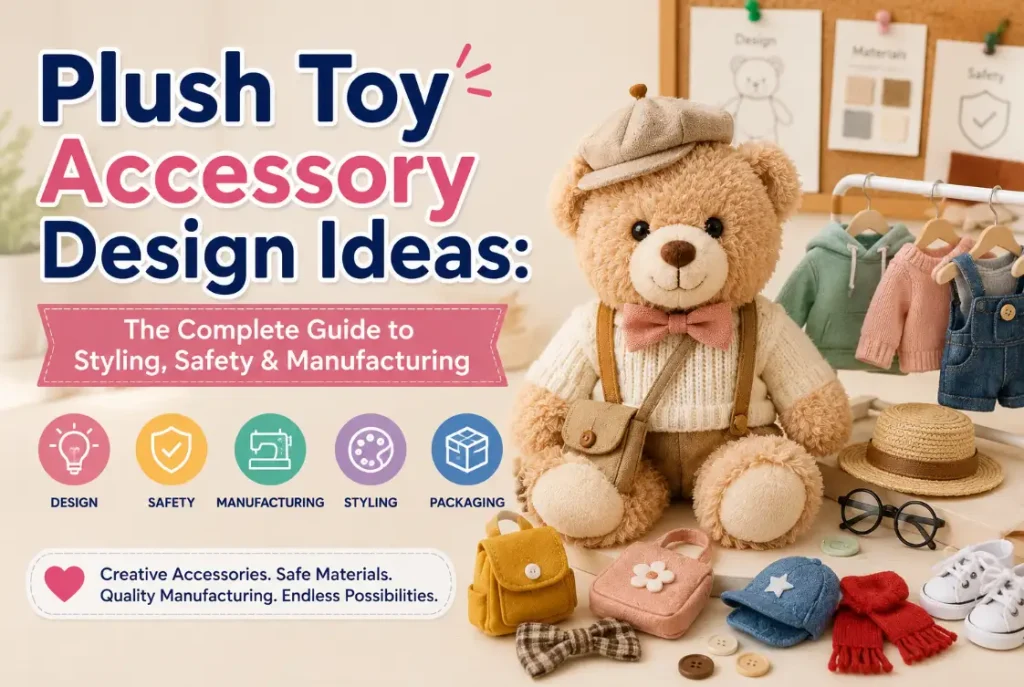
This guide walks through every major category of plush accessory — fabric-based garments, rigid trim components, attachment hardware, safety-critical design rules, and the cost and MOQ implications of each choice — with reference data that product developers can apply directly when briefing a factory or reviewing a sample.
It also matters where in the development timeline accessory decisions are made. Teams that treat accessories as an afterthought — sketched in after the plush body pattern is already locked — routinely discover late in sampling that a headband will not clear the ears, or that a garment seam bunches unnaturally over the body’s stuffing seams. Building accessory design into the same review cycle as the core plush body pattern, rather than after it, consistently shortens the number of sample rounds needed to reach approval.
Core Categories of Plush Toy Accessory Design
Before selecting materials or attachment methods, it helps to map the accessory landscape. Most commercial plush programs draw from five recurring categories, each with distinct fabrication needs and cost structures.
Plush Accessory Category Overview
| Accessory Category | Typical Examples | Primary Design Consideration |
|---|---|---|
| Wearable garments | Vests, hoodies, dresses, capes, scarves | Fit tolerance across a size run; seam bulk on small plush bodies |
| Headwear | Hats, bandanas, ear bows, crowns, beanies | Secure fit without restricting rotation of the plush head |
| Functional props | Bags, blankets, bottles, instruments, tools | Weight balance so the prop does not tip the plush over |
| Surface embellishment | Embroidered patches, appliqué, printed panels | Placement relative to seams and stuffing pressure points |
| Hardware & trim | Buttons, snaps, hook-and-loop, ribbon, bells | Compliance with small-parts and pull-force safety requirements |
Clothing and Outfit Accessories
Garment-style accessories remain the most popular category in plush toy accessory design because they are the easiest lever for seasonal refreshes — a single plush bear pattern can be relaunched as a holiday, back-to-school, or licensed-character variant purely through outfit changes. The design challenge is proportion: fabric that drapes correctly on a human body behaves very differently at plush scale, where seam allowances and closures consume a disproportionate share of the available surface area. Designers typically simplify garment patterns for plush application, reducing panel counts and replacing structural darts with gathered elastic to preserve a soft silhouette.

Headwear and Hair Accessories
Hats, bows, and bandanas sit directly over one of the highest-stress zones on a plush toy — the head-to-body seam — so headwear accessories must be engineered with enough ease to avoid distorting the plush’s face during quality inspection and repeated play. Elasticized headbands under fabric hats, rather than rigid brims, are the most common solution for maintaining fit across a range of head sizes within the same SKU.
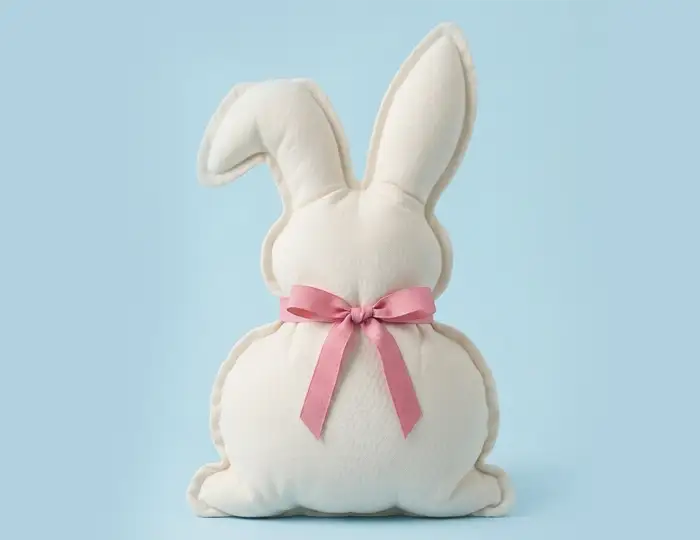
Bows and hair clips designed for plush animals deserve particular attention, since these are among the smallest accessory components in most product lines and are frequently produced in bright, high-contrast colors that catch a young child’s attention. Designers typically anchor bows through the body seam itself rather than gluing or pinning them to the surface fabric, both for durability through repeated handling and to avoid introducing an adhesive bond that can weaken with age or washing.
Tip: When briefing headwear accessories, specify the finished circumference relative to the plush head’s stuffed circumference, not the flat pattern measurement. Stuffing pressure typically adds 8–15% to the head’s effective circumference, and accessories cut to the flat pattern size alone will consistently arrive too tight.
Material Selection for Plush Accessory Design
Material choice in plush accessory design is a balance between visual richness, hand-feel consistency with the plush body, and washability. Because accessories are handled and mouthed as much as the plush itself, every material must clear the same safety testing bar as the core toy — there is no “trim-grade exemption” in most regulatory frameworks.
Fabric-Based Accessories
Minky, velboa, felt, and light broadcloth account for the bulk of garment and headwear accessories. Felt is favored for small appliqué shapes because it does not fray at cut edges, eliminating the need for hemming on tiny components like ears, patches, or bow tails. Minky and velboa are reserved for larger garment pieces where hand-feel continuity with the plush body itself matters most to the finished product’s perceived quality.
Rigid and Semi-Rigid Trim Components
Buttons, plastic buckles, sequins, and rigid brims introduce the greatest safety design burden in plush accessory work. Any rigid or semi-rigid component under a defined size threshold is treated as a potential choking hazard in most children’s product safety frameworks and must either be securely bonded using pull-force-tested methods or eliminated in favor of a printed, embroidered, or soft-sculpted substitute.
Material Comparison for Plush Accessory Components
| Material | Best Used For | Hand-Feel | Key Limitation |
|---|---|---|---|
| Minky/velboa | Garments, large panels | Soft, matches plush body | Higher fabric cost; frays if unfinished |
| Felt | Small appliqué, patches | Firm, structured | Limited stretch; not for fitted garments |
| Woven cotton/broadcloth | Bandanas, lining, aprons | Crisp, printable | Can feel stiff against plush fur |
| Grosgrain/satin ribbon | Bows, trim edges, ties | Smooth, glossy | Frays at raw edges without sealing |
| Molded soft PVC/rubber | Faux buttons, badges, props | Firm but flexible | Requires pull-force and phthalate testing |
Tip: Wherever a rigid trim item is purely decorative — a “button” eye on a jacket, a belt “buckle” — consider substituting an embroidered or printed equivalent. It removes an entire category of small-parts testing risk and, in most factory cost structures, is actually cheaper per unit than sourcing, sorting, and hand-attaching a hard component.
Attachment Methods and Safety Engineering
How an accessory is attached to the plush body is, in practical terms, more important to product safety than what the accessory is made from. Attachment method determines whether an accessory can be pulled free under the tension and torque a child applies during normal and foreseeably abusive play — the exact test condition used in third-party safety testing protocols.
Sewn vs. Removable Attachments
Permanently sewn attachments — where the accessory is stitched directly into a body seam or reinforced with a bar-tack — are the default recommendation for any plush product marketed to children under three, since removable components inherently carry higher small-parts risk. Removable accessories, secured with hook-and-loop or snap closures, are acceptable for older-child and collector-oriented plush lines where the play pattern includes intentional outfit-swapping, provided the closure itself passes pull and torque testing at the required force threshold.
A useful rule of thumb during design review is to ask whether the accessory is meant to be swapped by the end user at all. If outfit-swapping is not part of the intended play pattern, a sewn attachment is almost always the safer and cheaper choice — it removes the need for a closure component entirely, simplifies the bill of materials, and eliminates a recurring failure point that quality control teams otherwise have to inspect on every unit.
Choking Hazard Prevention in Accessory Design
Choking hazard prevention in plush accessory design follows the same core logic applied to the plush body’s own eyes, noses, and joints: any component that could separate and fit within a small-parts test cylinder must be engineered out, securely bonded past the required pull-force threshold, or scaled up beyond the hazard size range. Loose ribbon ties, long drawstrings, and dangling cords on accessories introduce a separate strangulation risk category and are typically restricted in length or eliminated entirely for products aimed at infants and toddlers.
Attachment Method Comparison for Plush Accessories
| Attachment Method | Typical Application | Safety Profile | Production Cost Impact |
|---|---|---|---|
| Sewn/bar-tacked seam | Garments, ears, permanent bows | Highest — no separable part | Low; integrated into the main sewing line |
| Embroidered/appliquéd | Patches, faux buttons, logos | High — flat, no protrusion | Moderate: digitizing cost per design |
| Hook-and-loop closure | Removable capes, vests, hats | Moderate; requires pull testing | Moderate; added component and labor |
| Snap or button closure | Removable jackets, collars | Lower; small-parts risk if detached | Higher: hardware plus reinforced stitching |
| Adhesive/heat-bond | Flat trim, temporary props | Lowest for durability; not recommended for infant lines | Low upfront, higher return-rate risk |
Tip: If a product line spans both an infant-safe SKU and an older-child collector SKU sharing the same plush body, avoid trying to make one accessory design serve both. Specify a sewn, non-removable accessory set for the infant SKU and a separate hook-and-loop or snap-based accessory set for the collector SKU — this keeps each version cleanly within its intended safety category during third-party testing.
Design Considerations by Product Category
The right accessory design strategy shifts significantly depending on the target audience and sales channel. A baby-safe plush accessory brief looks very different from a collector-grade or promotional plush accessory brief, even when the underlying plush body is identical.
Baby-Safe Accessory Design
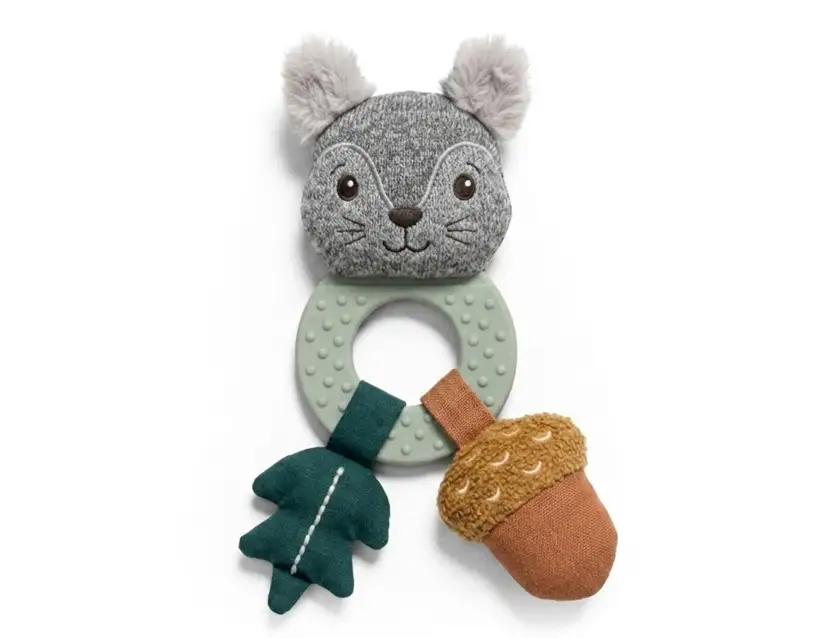
For plush aimed at infants and toddlers, accessory design should default to the simplest, most securely fixed option available: embroidered or appliquéd surface decoration over any add-on component, sewn-in garments over removable ones, and no rigid trim below the defined small-parts size threshold. Fabric choices should also favor machine-washable, colorfast materials, since infant plush is laundered far more frequently than collector or promotional plush.
Collector-Grade Detail Accessories
Collector and licensed plush lines support far more elaborate accessory design — multi-piece outfits, layered trim, metallic thread embroidery, and removable prop sets — because the target buyer is typically an adult or older child and the safety compliance bar, while still mandatory, applies different age-grading assumptions. This is where the most intricate custom mascot manufacturing work tends to concentrate, since brand-accuracy expectations for licensed or corporate mascot plush are highest in this category.
Collector-grade briefs also tend to specify accessory sets that are sold or displayed as a coordinated whole rather than as an accent detail — a full seasonal outfit, a themed prop set, or a limited-run trim package tied to a specific release. Because these products are judged heavily on shelf and unboxing presentation, factories producing collector-grade accessories generally allocate additional time for color-matching against a physical or digital brand standard before mass production begins.
Accessory Design Strategy by Product Category
| Product Category | Recommended Attachment | Accessory Complexity | Primary Testing Focus |
|---|---|---|---|
| Infant/toddler plush (0–3) | Sewn/embroidered only | Low; minimal loose parts | Small-parts, pull-force, cord length |
| General retail plush | Sewn with optional hook-and-loop | Moderate; 1–2 accessory pieces | Pull-force, flammability, colorfastness |
| Collector/licensed plush | Removable, multi-piece sets | High, layered outfits and props | Component durability, brand-color accuracy |
| Promotional/corporate mascot plush | Sewn primary logo elements | Moderate; brand-specific detailing | Logo placement accuracy, colorfastness |
Cost, MOQ, and Production Considerations for Custom Accessories
Every accessory added to a plush toy design introduces its own pattern, cutting die, stitching operation, and — in most factory costing models — its own minimum order quantity consideration. Understanding where cost accumulates helps product teams prioritize which accessory ideas deliver the most visual impact per dollar of added unit cost.
Accessory Complexity and Unit Cost
Embroidered and appliquéd accessories carry a fixed digitizing or die-cutting setup cost that amortizes favorably at higher volumes, making them efficient for large production runs but less attractive for very small sampling batches. Sewn garment accessories scale more linearly with piece count and labor minutes, since each unit requires proportionally the same cutting, sewing, and finishing time regardless of order volume. Hardware-based accessories — snaps, buckles, sequins — add the most fixed per-unit cost because each component must be individually sourced, quality-checked, and attached.
Sampling and Approval Workflow
Because accessories are frequently revised after the first physical sample — fit adjustments, colorway changes, trim substitutions — it is efficient to decouple accessory sampling from full plush body sampling wherever the accessory attaches via a removable or semi-removable method. This allows a factory to iterate on hat sizing or bow placement without re-sampling the entire plush body, shortening the overall development timeline.
It is also worth confirming, before the first sample round, whether an accessory needs its own minimum order quantity or can ride along within the plush body’s existing MOQ. Accessories sourced from a factory’s existing component library — standard ribbon widths, stock button colors, common trim types — rarely trigger a separate minimum, while custom-dyed fabric or bespoke hardware almost always does, and that difference can materially change the cost of a small first production run.
Relative Cost and Lead-Time Impact of Common Accessory Types
| Accessory Type | Relative Unit Cost Impact | Setup/Tooling Requirement | Typical Added Lead Time |
|---|---|---|---|
| Embroidered patch/logo | Low at volume | Digitizing file | 3–5 days |
| Printed panel/appliqué | Low–moderate | Print screen or transfer film | 4–6 days |
| Sewn garment (single piece) | Moderate | Pattern grading | 5–8 days |
| Multi-piece outfit set | High | Multiple patterns, cutting dies | 10–15 days |
| Hardware trim (snaps, buckles) | Moderate–high | Component sourcing, pull testing | 7–12 days |
Tip: If budget or lead time is constrained, prioritize one high-impact accessory — a distinctive hat, scarf, or embroidered emblem — rather than spreading the budget across several minor trim details. A single well-placed accessory consistently drives more retail shelf differentiation than three understated ones, and it is far easier to quality-control during mass production.
Trend-Driven Plush Accessory Design Ideas
Beyond the technical fundamentals, accessory design is where seasonal and cultural trends are translated into a plush product line. A handful of recurring idea categories consistently perform well across retail and promotional plush programs.
Seasonal and Promotional Accessories
Interchangeable seasonal accessory packs — a Halloween cape, a winter scarf-and-hat set, a summer sunglasses-and-visor combo — let a single plush body support a full-year retail calendar. Promotional plush programs frequently use a simplified accessory approach, such as a single branded bandana or vest, to keep customization cost predictable across large corporate order volumes.
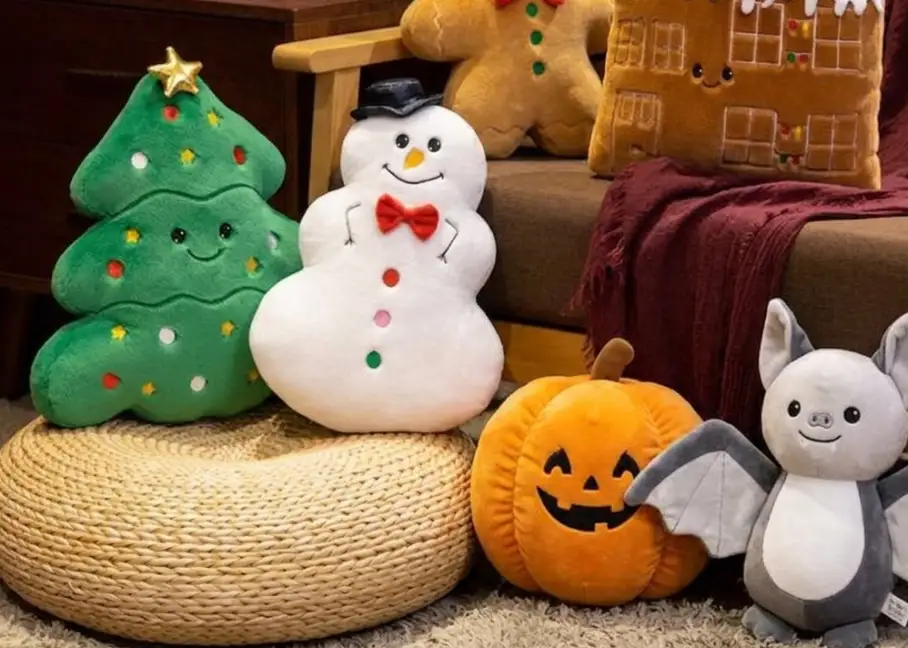
Nature- and hobby-themed accessory packs — tiny gardening tools for an animal plush, a miniature backpack for an explorer-themed character, or a scarf-and-mittens set for a winter release — have also proven effective at extending a character’s storytelling beyond the toy itself, giving retail buyers and gift shoppers a narrative reason to choose one seasonal variant over another.
Personalization and Customization Options
Name tags, birth-detail embroidery, and swappable outfit sets have become a significant growth area in both baby-gift and pet-plush accessory design, since personalization increases perceived gift value without requiring a new plush body mold or pattern. Modular accessory systems — where a family of hats, bandanas, and vests is designed to a shared attachment standard across an entire plush character line — allow a brand to expand its SKU count rapidly while keeping tooling and sampling costs contained to the accessory layer alone.
Tip: When designing a modular accessory system meant to fit multiple plush characters of slightly different sizes, standardize the attachment point dimensions (headband circumference, garment neck opening, hook-and-loop patch placement) across the whole character family before finalizing any single character’s body pattern. Retrofitting a shared accessory standard onto an already-finalized body pattern is one of the most common causes of late-stage rework in multi-character plush lines.
Frequently Asked Questions
Q1. What is the most cost-effective way to add variety to a plush toy line through accessories?
Embroidered patches, printed panels, and simple sewn accessories such as bandanas or bow ties deliver the highest visual variety per unit of added cost, since they avoid the tooling and hardware-sourcing expense associated with rigid trim or multi-piece outfit sets. These options also amortize well at higher production volumes, making them the standard entry point for expanding a single plush body into several seasonal or colorway variants.
Q2. Are removable accessories safe for plush toys marketed to young children?
Removable accessories can be safe if the closure method — typically hook-and-loop or a securely reinforced snap — is engineered and tested to withstand the pull and torque forces defined in the applicable safety standard for the target age group. For infants and toddlers, most manufacturers default to sewn, non-removable accessories instead, since eliminating the separable component removes an entire category of small-parts risk from the design.
Q3. How do I prevent a plush toy accessory from failing third-party safety testing?
The most reliable approach is to design out separable rigid components below the small-parts size threshold, use bar-tacked or reinforced stitching at every attachment point, keep any ribbon, cord, or drawstring within the length limits set for the target age group, and validate pull-force resistance on sample units before committing to mass production. Choking hazard prevention should be reviewed at the design stage, not discovered during the compliance test itself.
Q4. What fabric works best for small appliqué accessories like ears, patches, and bow tails?
Felt is the standard choice for small appliqué components because its cut edges do not fray, which eliminates the need for hemming or edge-finishing on tiny, tightly curved shapes. This makes felt both faster to produce and more dimensionally stable through repeated laundering compared with woven fabrics of similar weight.
Q5. Can the same accessory design be used across plush characters of different sizes?
Yes, but only if the attachment points — headband circumference, garment opening, or hook-and-loop patch position — are standardized across the character family before the individual body patterns are finalized. Building this standard in from the start allows a single accessory tooling investment to serve an entire character line, while retrofitting it afterward typically requires costly pattern rework.
Q6. How does accessory design differ between baby-safe plush and collector-grade plush?
Baby-safe accessory design prioritizes simplicity and permanence — sewn or embroidered elements with no removable hardware — because the compliance requirements for younger age grades are stricter and the play pattern involves less supervised handling. Collector-grade plush allows for more elaborate, multi-piece, and removable accessory sets, since the target buyer is typically older and the design brief can prioritize brand accuracy and display detail over minimal-part simplicity.
Q7. What is the typical added lead time for a plush toy with a multi-piece outfit accessory?
A multi-piece outfit set — involving several patterns, cutting dies, and assembly steps — typically adds ten to fifteen days to the standard production lead time compared with a plush body alone, largely due to the additional pattern grading, sample fitting, and quality-control checkpoints required for each garment piece.
Q8. Should decorative buttons or buckles be avoided on plush toy accessories?
Purely decorative rigid components such as faux buttons or buckles are best replaced with embroidered or printed equivalents whenever they serve no functional purpose, since this removes the associated small-parts and pull-force testing burden entirely. When a functional closure is genuinely required, the hardware should be sourced from a supplier able to provide compliance documentation and should be validated with pull testing on production samples.