Skip to content
A plush toy that survives design, sampling, and production without a single quality issue can still arrive at its destination crushed, damp, delayed, or held at customs — because shipping is where a well-made product meets an entirely different set of risks: compression, moisture, documentation errors, and the logistics of moving soft, bulky cargo across international borders. Shipping is frequently treated as an administrative afterthought in plush toy sourcing, when it is actually a technical process with its own specifications, failure points, and cost variables that deserve the same level of planning as design and manufacturing.
This guide walks through the complete plush toy shipping process — from pre-shipment packing and carton configuration to freight method selection, Incoterms, customs documentation, and transit protection — giving buyers a practical framework for planning shipments that arrive on time, intact, and compliant with destination market requirements. It also breaks down the specific documentation, cost drivers, and compliance checkpoints that most commonly cause delays, so shipping can be planned as a deliberate stage of the sourcing process rather than treated as a black box that happens after production ends.
What Does the Plush Toy Shipping Process Involve?
The plush toy shipping process is the sequence of packing, documentation, freight booking, and customs clearance steps that move finished goods from the factory floor to the buyer’s warehouse, fulfillment center, or retail distribution point. Because plush toys are lightweight but often volumetrically bulky — meaning they occupy significant shipping volume relative to their actual weight — shipping cost and planning decisions for this product category differ meaningfully from denser, more compact goods.
The plush toy shipping process involves pre-shipment packaging and carton configuration, freight method selection based on cost and timeline priorities, Incoterm negotiation that determines which party bears cost and risk at each stage, preparation of export and import documentation, and customs clearance at the destination port or airport before final delivery. Each of these stages carries its own decision points, and a gap or error at any single stage can delay the entire shipment regardless of how well the earlier stages were executed.

Plush Toy Shipping Process — Stage-by-Stage Overview
| Stage | What Happens | Primary Responsibility |
|---|---|---|
| Pre-Shipment Packing | Folding, bagging, cartoning, and palletizing finished units | Factory/production team |
| Freight Method Selection | Choosing ocean, air, or express freight based on cost and timeline | Buyer, in coordination with freight forwarder |
| Incoterm Agreement | Defining cost and risk transfer point between buyer and seller | Negotiated between buyer and supplier |
| Export Documentation | Commercial invoice, packing list, bill of lading/airway bill | Factory/exporter |
| Customs Clearance (Origin) | Export declaration and inspection at the origin port | Freight forwarder/customs broker |
| Ocean or Air Transit | Physical movement of cargo to destination | Shipping line or airline carrier |
| Customs Clearance (Destination) | Import declaration, duty payment, compliance review | Buyer/destination customs broker |
| Final Delivery | Inland transport to warehouse or fulfillment center | Trucking or last-mile carrier |
How Are Plush Toys Prepared for Shipment Before Leaving the Factory?
Pre-shipment packing is the stage where a finished plush toy is transformed from an individual production unit into cargo that can withstand handling, stacking, and international transit. Because plush toys are soft and compressible, packing decisions made at this stage directly determine whether units arrive at their destination in the same condition they left the factory in.
Plush toys are prepared for shipment by folding or shaping each unit into a consistent, compact form, sealing them in polybags with required safety warning language, grouping units into a specified pack configuration inside export cartons, and reinforcing or palletizing those cartons for the handling and stacking pressure they will experience throughout transit. This sequence is designed to protect both the product’s physical condition and its compliance status, since packaging errors can create problems at customs even when the product itself is fully compliant.
Polybagging and Safety Warning Labels
Individual polybagging protects plush toys from dust, moisture, and surface soiling during transit and warehouse storage. For markets such as the United States, polybags above a defined size threshold are required to carry specific suffocation warning language, and this requirement is frequently overlooked by buyers focused primarily on product-level compliance rather than packaging-level compliance. A shipment that is otherwise fully compliant can still be flagged during a retailer compliance review or a customs inspection if polybag warning labeling is missing or incorrectly formatted.
Carton Packing Configurations
Export cartons are packed according to a specified configuration — a defined number of units per inner pack and per master carton — that balances handling efficiency, weight limits per carton, and protection against crushing. Carton dimensions and weight should be planned with destination handling constraints in mind; oversized or overweight cartons can trigger additional handling fees or create ergonomic difficulties for warehouse staff at the receiving end, particularly for buyers using third-party fulfillment centers with strict carton specification requirements.
Tip: Request a packing specification sheet before bulk packing begins, confirming units per polybag, units per inner carton, and units per master carton, along with carton dimensions and gross weight. Reviewing this specification in advance — rather than discovering the actual pack configuration only once cartons arrive — allows time to catch mismatches with retailer or fulfillment center requirements while corrections are still inexpensive to make.
What Shipping Methods Are Used for Plush Toy Exports?
Selecting a shipping method is one of the most consequential decisions in the plush toy shipping process, because ocean freight, air freight, and express courier services differ dramatically in cost, transit time, and volume suitability. The right choice depends on order size, budget flexibility, and how time-sensitive the shipment is relative to a launch date or retail commitment.
The shipping methods used for plush toy exports are ocean freight for large-volume, cost-sensitive shipments; air freight for mid-size orders where speed matters more than minimizing per-unit shipping cost; and express courier services for small samples, urgent replenishment orders, or time-critical shipments where cost is a secondary consideration to speed. Because plush toys are volumetrically bulky relative to their weight, freight cost calculations for this product category are frequently driven by volumetric weight rather than actual weight, which buyers should account for when comparing quotations across shipping methods.

Plush Toy Shipping Methods Compared
| Shipping Method | Typical Transit Time | Best Suited For | Key Cost Driver |
|---|---|---|---|
| Ocean Freight (FCL) | 25–45 days port to port | Full container volume orders | Per-container rate; least cost-sensitive to volumetric weight |
| Ocean Freight (LCL) | 28–50 days port to port | Partial container, mid-size orders | Cubic meter (CBM) volume rate |
| Air Freight | 5–10 days | Mid-size, time-sensitive shipments | Volumetric weight (chargeable weight) |
| Express Courier | 3–7 days | Samples, small urgent orders | Volumetric weight plus premium service fee |
Tip: Always ask your freight forwarder to calculate and compare chargeable (volumetric) weight against actual weight before committing to an air freight quote. Because plush toys have low density relative to their volume, air freight charges for this category are almost always based on volumetric weight rather than actual weight, and a quote presented only in terms of actual weight can significantly understate the real shipping cost.
How Do Incoterms Affect Plush Toy Shipping Costs and Responsibilities?
Incoterms — standardized international trade terms — define exactly where cost and risk transfer from seller to buyer during the shipping process, and misunderstanding these terms is one of the most common sources of unexpected shipping cost and liability disputes in plush toy sourcing. A quoted unit price is only meaningful once the applicable Incoterm is understood, since the same unit price can represent very different total landed costs depending on how much of the shipping process it actually covers.
Incoterms affect plush toy shipping costs and responsibilities by defining a specific handoff point — ranging from the factory door under Ex Works (EXW) terms, to the destination port under Cost, Insurance, and Freight (CIF) terms, to the buyer’s own facility under Delivered Duty Paid (DDP) terms — with cost, risk, and responsibility for each stage of the journey allocated according to where that handoff point falls. Buyers comparing quotations from different suppliers should always confirm the Incoterm each quote is based on before comparing unit prices, since an EXW quote and a DDP quote for the same product are not directly comparable numbers.
Common Incoterms Used in Plush Toy Shipping
| Incoterm | Risk Transfer Point | Buyer’s Responsibility | Seller’s Responsibility |
|---|---|---|---|
| EXW (Ex Works) | Factory door | All freight, export clearance, insurance, import clearance | Making goods available at the factory |
| FOB (Free On Board) | Loaded onto vessel at origin port | Ocean/air freight, insurance, import clearance | Export clearance and delivery to port |
| CIF (Cost, Insurance, Freight) | Destination port (risk transfers earlier, cost covers to port) | Import clearance, inland delivery from port | Freight and insurance to destination port |
| DDP (Delivered Duty Paid) | Buyer’s named destination | Unloading and receiving only | All freight, duties, taxes, and clearance |
How Is Plush Toy Cargo Packed for Ocean Freight Containers?
Ocean freight remains the dominant shipping method for large-volume plush toy orders, and how cargo is loaded into the container has a direct effect on both shipping efficiency and the physical condition of the goods on arrival. Because plush toys are compressible and lightweight, container loading for this product category presents different challenges than loading dense, rigid cargo.
Plush toy cargo is packed for ocean freight containers by choosing between a Full Container Load (FCL), where the buyer’s cargo occupies an entire container exclusively, and a Less than Container Load (LCL), where cargo shares container space with other shippers’ goods — with cartons stacked according to a loading plan that accounts for carton crush strength, weight distribution, and moisture protection for the full duration of the ocean transit. LCL shipments carry a higher risk of cargo damage from other shippers’ goods shifting during transit, along with longer consolidation and deconsolidating handling time at origin and destination.
Choosing between FCL and LCL is primarily a volume decision. Orders that fill a meaningful share of a standard container — typically above roughly 15 cubic meters for a 20-foot container — usually achieve a lower effective per-unit freight cost under FCL, even when the container is not completely full, because FCL avoids the consolidation handling fees and shared-space damage risk associated with LCL. Smaller orders that would occupy only a small fraction of a container are generally more cost-effective under LCL, despite the longer consolidation timeline, since paying for an entire container’s capacity when only a portion is used rarely produces a favorable per-unit cost outcome.
Moisture Protection During Ocean Transit
Ocean transit exposes cargo to significant humidity and temperature fluctuation over several weeks inside a sealed steel container, which creates a real risk of condensation — sometimes called container rain — forming on the interior container walls and dripping onto cargo below. Plush toys, being highly absorbent fabric goods, are particularly vulnerable to moisture damage and mold growth if condensation reaches unprotected cartons. Standard protective measures include using moisture-absorbing desiccant packs distributed throughout the container and ensuring cartons are not stacked directly against container walls where condensation is most likely to form.
Tip: For ocean freight shipments, always confirm that desiccant or moisture-absorbing material is included in the container loading plan, particularly for shipments departing during humid seasons or traveling through tropical transit routes. This is a low-cost preventive measure that addresses one of the most common and most avoidable causes of plush toy cargo damage during ocean transit.
What Documentation Is Required for Plush Toy Shipping and Customs Clearance?
Export and import documentation is the paperwork infrastructure that allows customs authorities at both the origin and destination to verify what is being shipped, confirm its declared value, and assess applicable duties and compliance requirements. Missing or inaccurate documentation is one of the most common causes of shipment delays, and unlike a transit delay caused by weather or port congestion, a documentation delay is almost always avoidable with proper preparation.

The documentation required for plush toy shipping and customs clearance typically includes a commercial invoice, a detailed packing list, a bill of lading or airway bill, a certificate of origin where preferential tariff treatment applies, and safety compliance documentation such as test reports demonstrating conformity with the destination market’s toy safety standards. For markets with specific product safety regulations, customs authorities may request compliance documentation as a condition of clearance, making it necessary to have this documentation prepared and readily available before the shipment departs rather than assembled reactively after a clearance hold occurs.
Core Shipping and Customs Documents for Plush Toy Exports
| Document | Purpose | Prepared By |
|---|---|---|
| Commercial Invoice | States transaction value for customs duty assessment | Exporter/factory |
| Packing List | Details carton count, weight, dimensions, and unit quantities | Exporter/factory |
| Bill of Lading / Airway Bill | Serves as the contract of carriage and cargo receipt | Shipping line or airline (via forwarder) |
| Certificate of Origin | Confirms country of manufacture for tariff treatment | Exporter, sometimes certified by a chamber of commerce |
| Safety Test Reports | Demonstrates compliance with destination toy safety standards | Accredited third-party testing laboratory |
| Import Customs Declaration | Formal declaration for duty and compliance assessment | Buyer/destination customs broker |
Tip: Cross-check the commercial invoice, packing list, and bill of lading for consistent unit counts, weights, and product descriptions before the shipment departs. Discrepancies between these three documents — even small ones — are a common trigger for customs holds and manual inspection, which can add days or weeks to a shipment that would otherwise have cleared without incident.
How Are Plush Toys Protected From Damage and Compression During Transit?
Plush toys present a distinct transit protection challenge compared to rigid goods: their soft, compressible structure means that stacking pressure over a multi-week ocean transit, or repeated handling through several transfer points, can cause visible flattening, shape distortion, or shifting fill material if cartons are not packed and reinforced correctly.
Plush toys are protected from damage and compression during transit through a combination of adequately sized and rated export cartons, controlled stacking height limits based on carton crush strength, interior void-fill material to prevent cartons from shifting during handling, and — for certain larger plush items — vacuum compression packing that reduces shipping volume while a well-designed vacuum process avoids permanently distorting the product’s shape or pile texture.
Vacuum Packing Considerations
Vacuum compression packing is sometimes used for larger plush items to reduce shipping volume and lower freight cost, since compressed cartons occupy less cubic space than uncompressed ones. However, this technique requires careful process control: compressing certain long-pile or delicate fabric textures too aggressively, or leaving products compressed for an extended storage period before final sale, can cause the pile to remain flattened even after the vacuum seal is released, undermining the tactile quality the product was designed to deliver. Vacuum packing decisions should be made in coordination between the design and shipping teams, not treated purely as a logistics cost-reduction measure applied uniformly across every product.
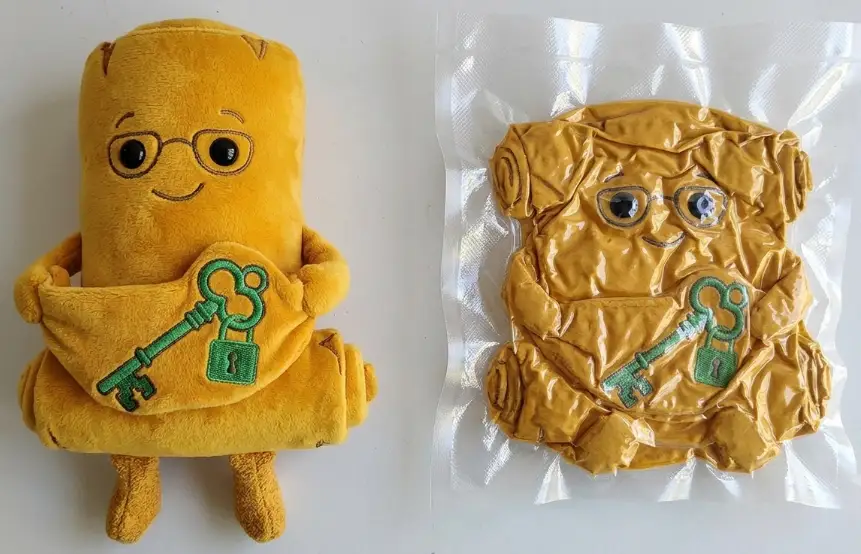
Tip: If vacuum compression packing is being considered to reduce shipping volume, request a test sample that has been compressed and stored for the expected shipping duration before approving it for the full order. This reveals whether the specific fabric texture recovers its original loft after decompression, or whether the compression process leaves a lasting flattened appearance that would not be acceptable on the finished retail product.
How Long Does Plush Toy Shipping Typically Take?
Shipping timeline is one of the most frequently underestimated variables in plush toy sourcing planning, particularly for buyers accustomed to domestic shipping timelines that bear little resemblance to international ocean freight schedules. Total shipping time includes not just vessel or flight transit time, but also origin customs clearance, port or airport handling, destination customs clearance, and final inland delivery — each of which adds days to the total timeline beyond the transit time alone.
Plush toy shipping typically takes anywhere from three to seven days for express courier shipments, five to twelve days for air freight including customs clearance, and four to eight weeks for ocean freight depending on the origin and destination ports, with additional time required during peak shipping seasons when port congestion and vessel space constraints commonly extend published transit schedules.
Typical Plush Toy Shipping Timeline by Method and Route
| Shipping Method | Typical Total Timeline (Door to Door) | Peak Season Impact |
|---|---|---|
| Express Courier | 4–8 days | Minimal; generally reliable |
| Air Freight | 7–14 days | Moderate delay risk; capacity constraints during peak season |
| Ocean Freight (FCL), major trade lanes | 30–50 days | Significant delay risk; book 2–4 weeks ahead during peak season |
| Ocean Freight (LCL) | 35–55 days | Additional delay from consolidation scheduling |
What Customs and Compliance Considerations Apply to Plush Toy Imports?
Customs clearance for plush toy imports is not solely a matter of paying applicable duties — it also involves verifying that the shipment complies with the destination market’s toy safety, labeling, and product content regulations. A shipment can be fully paid and properly declared for duty purposes and still face a compliance hold if required safety documentation or labeling is missing.
Customs and compliance considerations that apply to plush toy imports include destination-specific toy safety standards such as ASTM F963 and CPSIA requirements in the United States or EN71 requirements in the European Union, correct tariff classification under the Harmonized System (HS) code for stuffed toys, country-of-origin labeling requirements, and any applicable tariff surcharges tied to specific country-of-origin and destination pairings. Buyers importing into multiple markets should confirm compliance requirements separately for each destination rather than assuming a single compliance package satisfies every market’s regulatory framework.
Plush Toy Import Compliance Requirements by Market
| Market | Key Safety Standard | Additional Consideration |
|---|---|---|
| United States | ASTM F963, CPSIA | Tracking label requirements; polybag suffocation warnings |
| European Union | EN71 (Parts 1–3 and beyond) | CE marking; REACH chemical compliance |
| United Kingdom | UK Toys (Safety) Regulations | UKCA marking, distinct from EU CE marking post-Brexit |
| Canada | Canada Consumer Product Safety Act toy requirements | Bilingual labeling requirements (English/French) |
Tip: Confirm the correct Harmonized System (HS) code for stuffed and plush toys with your customs broker before the first shipment, and use it consistently across every future shipment to the same market. An incorrect or inconsistent HS code can trigger customs review, incorrect duty assessment, or delays — and correcting a classification error after multiple shipments have already used the wrong code can create complications with customs authorities that are far more time-consuming to resolve than getting the classification right from the start.
How Can Buyers Reduce Plush Toy Shipping Costs Without Compromising Quality?
Shipping cost is a significant component of total landed cost for plush toys, and because this product category is often volumetrically driven rather than weight-driven, cost reduction strategies that work for denser goods do not always apply directly. Reducing shipping cost effectively requires addressing the specific cost drivers that apply to bulky, lightweight cargo.
Buyers can reduce plush toy shipping costs without compromising quality by optimizing carton dimensions to maximize container or aircraft space utilization, consolidating shipments to reach full container load thresholds where ocean freight per-unit cost drops significantly, booking freight further in advance of peak shipping seasons to access standard rather than premium rush pricing, and evaluating compression packing selectively for products where it does not compromise the finished appearance. None of these strategies require compromising material quality or production standards — they address the logistics and packaging variables that sit alongside, rather than in conflict with, product quality.
Conclusion
The plush toy shipping process is a technical discipline in its own right, with its own specifications, documentation requirements, and failure points that are entirely separate from design and manufacturing quality. A beautifully made plush toy can still arrive damaged, delayed, or held at customs if pre-shipment packing, freight method selection, Incoterm negotiation, documentation, and compliance requirements are not planned with the same care given to the product itself.
Buyers who understand this process in detail are better positioned to plan realistic timelines, compare shipping quotations meaningfully, and identify the specific points in the shipping journey where their cargo is most at risk. That understanding — built stage by stage, from carton configuration through customs clearance — is what turns shipping from an unpredictable final hurdle into a planned, manageable part of the overall sourcing process.
FAQ
Q1: What is the difference between FOB and EXW terms, and which is better for a first-time plush toy buyer?
Under EXW terms, the buyer is responsible for arranging and paying for freight from the factory door onward, including export clearance — placing significant logistics responsibility on a buyer who may not have established freight relationships. Under FOB terms, the seller handles export clearance and delivery to the origin port, with the buyer taking over responsibility for ocean or air freight from that point forward. For first-time buyers without an established freight forwarder relationship, FOB terms are often more manageable because they reduce the buyer’s logistics responsibility to the freight and import stages, where a freight forwarder can be engaged to manage the process.
Q2: Why does volumetric weight matter more than actual weight for plush toy air freight shipments?
Air freight and express courier pricing is based on chargeable weight, which is the greater of a shipment’s actual weight or its volumetric weight — a calculated figure based on the cargo’s physical dimensions. Because plush toys are lightweight relative to the space they occupy, volumetric weight is almost always the higher figure and therefore the basis for the actual freight charge. Buyers who compare quotes based only on actual weight often significantly underestimate the true cost of air freight for this product category.
Q3: How far in advance should ocean freight be booked for a plush toy shipment?
Standard practice is to book ocean freight two to four weeks ahead of the planned departure date, with earlier booking strongly recommended during peak shipping seasons when container space and vessel capacity become constrained. Booking too close to the desired departure date during peak periods can result in rolled cargo — meaning the shipment is bumped to a later vessel because the booked space was not confirmed in time — which can add one to several weeks to the overall timeline.
Q4: What causes moisture damage to plush toys during ocean freight, and how is it prevented?
Moisture damage typically results from condensation forming inside a sealed ocean container as temperature fluctuates over the multi-week transit period, a phenomenon often called container rain. Because plush toys are absorbent fabric goods, this condensation can lead to staining, mold growth, or odor issues if cartons are exposed to dripping moisture. Prevention typically involves placing desiccant or moisture-absorbing material throughout the container and avoiding direct carton contact with container walls, where condensation is most likely to accumulate.
Q5: Does vacuum compression packing damage plush toys or affect their texture?
Vacuum compression packing reduces shipping volume by compressing air out of the packaging, and for many plush toys this process does not cause lasting damage, particularly for shorter-pile fabrics with strong fiber anchoring. However, certain long-pile or delicate textures can remain flattened after decompression, especially if the product is stored in a compressed state for an extended period before sale. Testing a compressed sample under realistic shipping and storage duration before applying vacuum packing across a full order is the most reliable way to confirm the technique is suitable for a specific fabric texture.
Q6: What documentation is most commonly responsible for customs clearance delays on plush toy shipments?
Inconsistencies between the commercial invoice, packing list, and bill of lading — such as mismatched unit counts, weights, or product descriptions — are among the most common triggers for customs holds and manual inspection. Missing or incomplete safety compliance documentation, particularly for markets that specifically request toy safety test reports as part of the clearance process, is another frequent cause of delay. Cross-checking these documents for consistency before a shipment departs meaningfully reduces this risk.
Q7: How does the Harmonized System (HS) code affect duty and clearance for plush toy imports?
The HS code assigned to a shipment determines the duty rate applied by customs and can also affect which specific compliance requirements are triggered during the clearance review. Using an incorrect or inconsistent HS code across shipments can result in incorrect duty assessment, customs review, or clearance delays, and correcting a classification error retroactively across multiple past shipments can create additional complications with customs authorities. Confirming the correct classification with a customs broker before the first shipment, and applying it consistently, avoids this risk.
Q8: Is DDP (Delivered Duty Paid) always the most convenient shipping term for buyers?
DDP terms shift nearly all shipping responsibility — freight, duties, taxes, and clearance — onto the seller, which can simplify the process for buyers with limited logistics experience. However, DDP pricing typically embeds a margin for the seller’s logistics management, and buyers lose direct visibility into and control over freight and customs decisions made on their behalf. For buyers with an established freight forwarder relationship, FOB or CIF terms often provide more cost transparency and control, even though they require more direct buyer involvement in the shipping process.
Q9: How much extra time should buyers build into their planning for peak season shipping?
During peak shipping seasons — typically the months leading into major retail selling periods — port congestion, vessel space constraints, and elevated freight demand commonly extend published ocean freight transit schedules by one to three weeks beyond standard timelines, with air freight also experiencing some capacity-related delay risk. Buyers planning shipments intended to arrive ahead of a seasonal retail window should build this additional buffer into their planning and book freight as early as possible, since peak season delays are a predictable, recurring pattern rather than an occasional exception.