Skip to content
A complete cost breakdown of plush toy safety testing — from ASTM F963, EN71, and CPSIA base fees to chemical testing, flammability, mechanical testing, volume effects, and the real cost of a failed test — built as a practical budgeting framework for B2B buyers.
Most buyers sourcing plush toys for the first time treat testing as a line item — a fixed fee they will pay once, somewhere near the end of the process, before the product ships. Buyers who have sourced plush toys through several product cycles know this is not how testing costs actually behave. Testing is not a single fee. It is a category of recurring, variable, and sometimes unpredictable expense that touches nearly every stage of a plush toy program, from the first sample through every retest, every new colorway, and every market a product enters.
The confusion is understandable. A single quoted number — “testing costs around $600” — sounds like a complete answer. In practice, that number describes one test, under one standard, on one sample, assuming a first-pass result. The real cost of testing a plush toy program depends on how many standards apply, how many components must be tested individually, how many colorways or SKUs are involved, whether the first test passes, and how the cost is amortized across the order volume. Two buyers launching what looks like the same product can end up with testing budgets that differ by a factor of three or more — not because one is being overcharged, but because they are budgeting for fundamentally different testing scopes.
This guide breaks down exactly what drives plush toy testing costs, what each major standard actually costs to test against, how additional tests stack on top of the base fee, how volume changes the per-unit math, what a failed test really costs once every downstream consequence is counted, and how to build a testing budget that reflects the real scope of a plush toy program rather than the optimistic number in a first conversation.

Why Do Plush Toy Testing Costs Vary So Widely Between Programs?
Plush toy testing costs vary widely between programs because testing cost is not a fixed property of the product category — it is the output of a specific combination of variables that differs from one program to the next. The same teddy bear design can generate a testing bill of $400 or a testing bill of $4,000 depending on the target market, the number of components, the number of colorways, and whether the first test passes.
The core reason unit-level testing quotes mislead buyers is the same reason unit-level production quotes mislead buyers: a single number is being asked to represent a multi-variable outcome. Testing cost is a function of at least five independent variables — applicable standards, number of distinct materials and components, number of SKUs or colorways, sample pass rate, and order volume over which the fixed cost is spread. Change any one variable and the total testing bill moves, often by a wide margin, while the underlying product barely changes at all.
What Actually Drives the Total Cost of Testing a Plush Toy Program
| Variable | Low-Cost Scenario | High-Cost Scenario | Why It Matters |
|---|---|---|---|
| Target market standards | One market, one standard (e.g., EN71 only) | Multiple markets (US, EU, UK, Australia) requiring separate reports | Each standard is a separate test battery with its own fee |
| Number of components | Single fabric, single filling, no accessories | Multiple fabrics, embroidery thread, plastic eyes, zippers, battery pack | Chemical and mechanical tests are typically billed per component |
| Number of colorways/SKUs | One colorway tested, assumed to represent all | Every colorway tested individually due to dye variation | Colorants can differ in heavy metal content between dye lots |
| First-pass result | Sample passes on first submission | Sample fails, requires material substitution and retesting | Retesting adds a full or partial fee for every failed round |
| Order volume | Large volume amortizes fixed testing cost thinly | Small volume concentrates the same fixed cost per unit | Testing cost is fixed regardless of unit count |
Testing scope, not the plush toy itself, is usually the largest driver of cost variation between programs.
Tip: Before requesting a testing quote, write down every market the product will actually be sold into — not just the first one. A quote scoped only to the initial launch market almost always undercounts the eventual testing bill once a second market is added later, and re-scoping after the fact typically costs more than scoping correctly from the start.
It is worth noting that testing cost variation is not evidence of an unreliable market or inconsistent laboratory pricing. Laboratories price consistently for a given, precisely defined scope of work — the variation buyers experience comes almost entirely from comparing quotes for different scopes while assuming they represent the same thing. A quote for “EN71 testing” from one laboratory and a quote for “full EN71 Parts 1, 2, and 3 testing across two colorways” from another are not competing quotes for the same service; they are quotes for different services that happen to share a standard name. Recognizing this distinction before comparing testing quotes prevents the same kind of misleading apples-to-oranges comparison that affects unit price comparisons between suppliers more broadly.
What Determines the Base Cost of Plush Toy Safety Testing?
The base cost of plush toy safety testing is determined primarily by which regulatory standard is being tested against, since each standard defines a specific battery of physical, mechanical, and chemical tests that a laboratory must run — and each of those individual tests carries its own fee that is summed into the total. A quote for “safety testing” that does not specify the standard is not a complete quote; it is a placeholder that could represent anywhere from a few hundred dollars to well over a thousand, depending entirely on which tests are actually included.
Independent of which standard applies, every plush toy safety test battery is built from a common set of test categories: mechanical and physical testing (small parts, sharp points, tensile and torque strength on attached components, seam strength), flammability testing, and chemical testing (heavy metals, phthalates, and other restricted substances depending on the market). The base cost is essentially the sum of the fees for each category that the applicable standard requires, plus the laboratory’s administrative and reporting fee for compiling the results into a certificate.
The Three Cost Components Inside Every Base Testing Fee
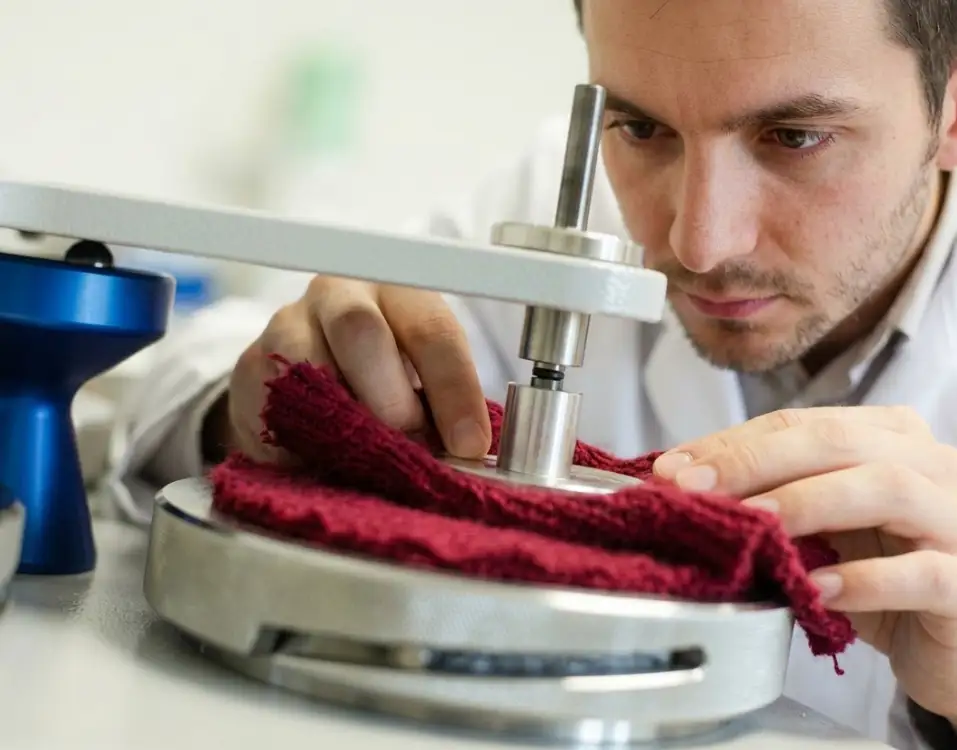
Every base testing fee, regardless of which standard it is quoted against, is built from three underlying cost components that a buyer can ask a laboratory to itemize separately. The first is the physical and mechanical testing component, which covers pull tests on eyes, noses, bows, and any other attached small part, along with drop testing, seam strength, and stuffing retention. The second is the flammability testing component, which assesses how quickly the outer fabric burns when exposed to a controlled flame. The third is the chemical testing component, which screens the fabric, filling, dyes, and any plastic or metal accessories for restricted substances such as lead, cadmium, phthalates, and formaldehyde.
Laboratories price these three components differently depending on the complexity of the specific product, but as a general pattern, chemical testing is typically the most expensive of the three because it requires laboratory equipment and reagent time that mechanical and flammability testing do not. A plush toy with more components — separate fabric panels, printed elements, multiple accessory materials — multiplies the chemical testing line item specifically, since each distinct material is usually tested as a separate sample.

Base Testing Fee Breakdown by Component Type
| Test Component | What It Covers | Typical Relative Cost Share |
|---|---|---|
| Mechanical and physical | Small parts, pull/torque, sharp points, seam and stuffing retention | 25–30% of base fee |
| Flammability | Surface flammability of outer fabric | 10–15% of base fee |
| Chemical (heavy metals, phthalates, etc.) | Restricted substance screening across materials | 45–55% of base fee |
| Reporting and administration | Certificate issuance, data compilation, lab admin time | 10–15% of base fee |
Chemical testing consistently represents the largest single cost share within a standard base testing fee.
How Do ASTM F963, EN71, and CPSIA Testing Costs Compare?
ASTM F963, EN71, and CPSIA testing costs compare differently because each standard applies to a different market, covers a different combination of mechanical and chemical requirements, and is priced by laboratories according to the specific test battery each one mandates — which means a product intended for both the US and EU markets cannot rely on a single test report and must budget for both standards independently, even though the two batteries overlap substantially.
ASTM F963 is the toy safety standard that applies to the US market and is also the reference standard used in CPSIA compliance for children’s products. EN71 is the equivalent European standard, split into several parts covering mechanical/physical properties, flammability, and chemical migration. CPSIA is US federal legislation that layers additional requirements on top of ASTM F963 — most significantly, lead content and phthalate limits, and the requirement for third-party testing by a CPSC-accepted laboratory for any product intended for children under 12.
Comparing Testing Scope and Typical Cost Range Across Major Standards
| Standard | Market | Core Coverage | Typical Base Cost Range (per SKU) |
|---|---|---|---|
| ASTM F963 | United States | Mechanical, flammability, chemical (with CPSIA overlay) | $300–$700 |
| EN71-1/2/3 | European Union / UK | Mechanical (Part 1), flammability (Part 2), chemical migration (Part 3) | $350–$800 |
| CPSIA lead & phthalate testing | United States (mandatory layer on ASTM F963) | Lead content, phthalate content, third-party lab requirement | $150–$400 (often bundled with ASTM F963) |
| AS/NZS ISO 8124 | Australia / New Zealand | Mechanical, flammability, chemical — closely aligned with EN71/ASTM | $300–$650 |
Costs shown are per SKU, per colorway where dye variation applies, and assume a single, first-pass test round.
Why Testing for Two Markets Costs More Than Twice the Single-Market Fee
A common assumption is that testing for two markets simply doubles the single-market cost. In practice, testing for both the US and EU markets typically costs somewhat more than double the single-market figure, not less, because the two standards are not fully interchangeable even where their requirements overlap conceptually. EN71-3 chemical migration testing, for example, uses different methodology and different threshold limits than CPSIA lead and phthalate testing, so a single chemical test cannot satisfy both — each standard requires its own dedicated chemical test run, even on the identical material sample.
Buyers who plan to sell into multiple regulated markets from the outset save meaningfully by scoping and ordering both test batteries in the same submission cycle, since laboratories can often run overlapping mechanical and flammability tests once and apply the results across both reports, while still running the chemical tests separately for each standard. Scoping this correctly from the first submission avoids paying two separate mobilization and reporting fees at different points in the product timeline.
Tip: Ask the testing laboratory directly which sub-tests can be shared across standards and which must be run separately. Mechanical and flammability results can frequently be applied to more than one standard’s report; chemical testing almost never can. Confirming this before submission — rather than assuming full overlap — prevents an unpleasant surprise on the invoice.
What Additional Tests Add to the Base Testing Cost?
Additional tests add to the base testing cost whenever a plush toy includes features, materials, or intended uses beyond a standard fabric-and-filling design — electronics, weighted filling, infant-intended use, scent, or specific export market add-ons all trigger supplementary test requirements that are not included in a standard mechanical-flammability-chemical battery, and each one carries its own incremental fee.
The base testing fee assumes a conventional plush toy: soft fabric exterior, PP cotton or similar filling, basic sewn or embroidered features, no batteries, and no age-restricted use case. Departures from this baseline — an electronic sound module, a weighted plush with poly pellet filling, a design intended for children under 36 months, or scented filling — each add a specific supplementary test to the battery, and buyers who do not disclose these features upfront frequently receive an artificially low initial quote that expands once the laboratory reviews the actual product.
Supplementary Tests Triggered by Common Plush Toy Features
| Product Feature | Additional Test Required | Typical Added Cost |
|---|---|---|
| Electronic/sound module | Battery compartment security, electrical safety, small parts on battery access | $150–$400 |
| Weighted filling (poly pellets) | Filling containment, choking hazard assessment on pellet size | $80–$200 |
| Intended for under-36-months | Stricter small parts cylinder testing, additional pull/torque testing | $100–$250 |
| Scented filling or fabric | Chemical composition disclosure and allergen screening | $100–$300 |
| Printed or screen-printed graphics | Additional chemical migration testing on ink/print | $80–$180 |
| Multiple fabric colorways | Per-colorway heavy metal and dye testing | $60–$150 per additional colorway |
Costs are additive on top of the applicable base standard fee, not a replacement for it.
Why Infant-Intended Products Carry the Steepest Testing Premium
Plush toys designed or marketed for children under 36 months face the strictest and most expensive testing requirements in the entire category, because both ASTM F963 and EN71 apply materially tighter small parts and mechanical strength thresholds to this age group than to general children’s products. A plush toy intended for a three-year-old and up can pass mechanical testing with attachment strength requirements that the same design, if marketed for infants, would fail outright — requiring reinforced stitching, larger safety eyes, or eliminated small accessories before it can pass.
This is also why buyers should decide the intended age range before development begins rather than after sampling — a design finalized for general use that is later re-labeled for infant use typically requires structural rework, not just retesting, because the underlying construction may not meet the stricter mechanical thresholds regardless of how the chemical and flammability results come back.
Tip: Decide and document the intended age grading of a plush toy design before sampling begins. Testing to the stricter infant-use thresholds from the start costs marginally more upfront but avoids a full construction redesign later if the target age range shifts after the sample has already been built to a looser standard.
How Does Order Volume Affect the Per-Unit Cost of Testing?
Order volume affects the per-unit cost of testing dramatically because testing fees are almost entirely fixed costs — a laboratory charges the same amount to test a sample whether the resulting order is 300 units or 30,000 units — which means the per-unit impact of the same testing bill shrinks sharply as volume increases, and buyers running smaller or trial orders carry a disproportionately heavy testing burden relative to their production cost.
This dynamic is one of the most frequently underestimated aspects of testing cost budgeting, particularly for buyers launching a new product line or testing market demand with a smaller initial order. A $900 testing bill is a rounding error at 10,000 units and a significant cost factor at 300 units — and buyers who calculate their landed unit cost without accounting for this effect are working from an incomplete number.
Per-Unit Testing Cost Impact at Different Order Volumes
| Order Volume | Total Testing Cost (fixed) | Per-Unit Testing Impact | Testing Share of a $5.00 Unit Cost |
|---|---|---|---|
| 300 units | $900 | $3.00 | 60% |
| 1,000 units | $900 | $0.90 | 18% |
| 3,000 units | $900 | $0.30 | 6% |
| 10,000 units | $900 | $0.09 | 1.8% |
The testing fee itself does not change with volume — only its distribution across the number of units produced.
Strategies for Managing Testing Cost at Lower Volumes
Buyers ordering at lower volumes — trial orders, crowdfunding launches, or new product validation runs — have several practical options for managing the disproportionate per-unit testing burden rather than simply absorbing it. Combining multiple colorways or SKU variants under a single test submission where the underlying material and construction are identical reduces the number of separate chemical test fees, since regulators generally accept that colorways sharing the same base fabric and filling can share flammability and mechanical results, even though dye-specific chemical testing typically still needs to run per colorway.
Another approach is timing testing to coincide with the first production run rather than the sample stage wherever the standard allows it, since testing production-representative units instead of hand-made pre-production samples avoids the risk of needing to retest once mass production begins, which would otherwise mean paying the fixed testing cost twice.
Tip: For orders under roughly 1,000 units, ask whether colorway variants sharing the same base fabric, filling, and construction can be grouped under a single mechanical and flammability submission, with chemical testing scoped only to the colorways with genuinely different dye formulations. This single question can meaningfully reduce the fixed testing bill on a small trial order without reducing test coverage.
What Hidden Costs Appear When a Plush Toy Fails Testing?
When a plush toy fails testing, the hidden costs that appear go well beyond the retest fee itself — they typically include the cost of identifying and sourcing a compliant replacement material, the cost of rebuilding or reworking any units already produced with the non-compliant material, the shipping delay this creates against a committed timeline, and in the most serious cases, the cost of destroying or repurposing an entire production batch that cannot legally be sold in the target market.
A failed test is rarely a single, contained expense. It is the starting point of a cost cascade whose total size depends on how far into the production process the batch had progressed when the failure was discovered — which is precisely why testing early, on production-representative materials, is one of the highest-leverage cost control decisions in the entire plush toy sourcing process.
The Cost Cascade of a Failed Plush Toy Safety Test
| Failure Discovered At | Direct Cost Added | Indirect Cost Added | Typical Total Impact |
|---|---|---|---|
| Sample stage, before production | Retest fee ($200–$500) | Development delay of 1–3 weeks | $200–$800 |
| Early production, materials already cut | Retest fee plus material replacement | Partial rework labor, schedule slip | $800–$3,000 |
| Finished goods, pre-shipment | Retest fee, material and labor rework on completed units | Missed shipping window, expedited freight | $3,000–$10,000 |
| After shipment, discovered at destination | Retest, rework or destruction, reshipment | Customs holds, platform delisting risk, customer refunds | $10,000–$30,000+ |
The same underlying chemical or mechanical failure becomes dramatically more expensive the later it is discovered in the production cycle.
Why the Root Cause of a Test Failure Determines the True Cost
Not every test failure carries the same downstream cost, because the corrective action required depends entirely on the root cause of the failure. A failure caused by an isolated dye lot with elevated heavy metal content is typically resolved by switching to a different, verified dye batch and retesting — a contained, moderate-cost fix. A failure caused by a fundamentally non-compliant material choice, such as filling that does not meet flammability requirements at all, is not resolved by switching lots — it requires a full material substitution across the entire order, which is a far more expensive and time-consuming correction.
This is why requesting the specific failure detail from the testing report — not just a pass/fail result, but which parameter failed and by how much — is essential before deciding on a corrective path. A near-miss on a threshold parameter may be resolvable through a minor process adjustment; a result that fails by a wide margin usually signals a structural material problem that requires a different fix entirely.
Tip: Always request the full quantitative test report, not just a pass/fail summary. A report showing lead content at 95 ppm against a 90 ppm limit points to a different — and usually cheaper — fix than one showing lead content at 400 ppm. The size of the gap between the result and the threshold is often more useful for planning the correction than the fact of failure itself.
How Can Buyers Reduce Testing Costs Without Cutting Corners?
Buyers can reduce testing costs without cutting corners by focusing cost reduction on the timing, sequencing, and scoping of testing rather than on the rigor of the tests themselves — since the tests that actually protect a buyer from compliance failure, recalls, and liability are not the place to economize, but the process surrounding when and how those tests are run offers substantial legitimate savings.
The distinction matters because “reducing testing cost” is sometimes conflated with “reducing testing coverage” — skipping a required chemical test, testing only one colorway when several are sold, or relying on a factory’s internal test result instead of independent third-party verification. These shortcuts do not reduce cost; they defer it, usually at a multiple of the original amount, to the point of failure discovery described in the previous section. The legitimate cost reduction strategies below preserve full test coverage while reducing the fees paid to achieve it.
Test Production-Representative Samples, Not Pre-Production Prototypes
Testing a hand-finished pre-production sample that differs from what mass production will actually produce is one of the most common sources of wasted testing spend, because any material or construction difference between the tested sample and the mass-produced unit invalidates the test result for the actual product being sold — requiring a second, full-cost retest once the discrepancy is identified, often after production has already started.
Consolidate Testing Across Compatible SKUs and Colorways
Grouping colorway and SKU variants that share identical base materials under a single test submission, with only the elements that genuinely differ — typically dye formulation — tested separately, avoids paying full duplicate mechanical and flammability fees for products that are functionally identical apart from color or minor cosmetic variation.

Choose a Laboratory With Multi-Standard Reporting Capability
Laboratories that can issue reports against multiple standards from a single, well-scoped test submission reduce the administrative and mobilization overhead that gets charged separately when a buyer submits the same product to different laboratories for each market’s standard, since shared mechanical and flammability data can often be applied across reports even where chemical testing must remain standard-specific.
Front-Load Material Verification Before the First Formal Test
Requesting supplier-side material test reports — fabric and filling chemical composition data that the material supplier already holds — before submitting a finished sample to a third-party laboratory allows a buyer to catch a likely failure at near-zero incremental cost, rather than discovering the same problem after paying full price for a formal test that was destined to fail.
Time Testing to Align With, Not Ahead of, Design Finalization
Submitting a sample for formal testing before the design, materials, and construction are genuinely finalized risks paying for a test result that becomes invalid the moment a subsequent design revision changes a material or component — testing too early is not a savings measure, it is a bet against future design stability that frequently loses.
Negotiate Annual or Multi-Order Testing Arrangements for Repeat Products
For an established product that is reordered across multiple production cycles without material changes, some laboratories offer reduced-fee retesting arrangements — sometimes called surveillance or periodic testing — that verify continued compliance at a lower cost than a full first-time test battery, reflecting the lower risk profile of a design and material combination with an established compliance history.
Tip: Request the material supplier’s own chemical test documentation for fabric, filling, and dye before committing to a formal third-party test. This is usually free or low-cost to obtain and functions as an early screen — catching a likely-to-fail material before spending the full testing fee on a sample that never had a realistic chance of passing.
Building a Testing Cost Budget: A Practical Framework
Building a realistic plush toy testing budget requires moving beyond a single base fee estimate and instead constructing a line-item forecast that accounts for the applicable standards, the product’s specific features, the number of SKUs and colorways, a reasonable allowance for at least one retest round, and the order volume over which the total will be amortized — since each of these components was shown in the sections above to move the total cost meaningfully, and a budget that ignores any one of them will consistently underestimate the real figure.
The framework below consolidates the cost drivers covered throughout this guide into a single planning structure that a buyer can populate for their own specific program, using the ranges provided as a starting estimate to be refined with an actual laboratory quote once the product specification is finalized.
Testing Cost Budget Framework for a Typical Plush Toy Program
| Budget Line | What to Include | Estimated Range |
|---|---|---|
| Base standard testing (per market) | Mechanical, flammability, chemical for one standard, one SKU | $300–$800 |
| Additional market standards | Each additional target market’s standard, chemical testing especially | $250–$650 per additional market |
| Feature-triggered supplementary tests | Electronics, weighting, infant-use, scent, print, as applicable | $80–$400 per applicable feature |
| Additional colorway testing | Chemical/dye testing for each colorway beyond the first | $60–$150 per colorway |
| Retest contingency | Budget for at least one retest round on a new design | 50–100% of base fee, held in reserve |
| Third-party inspection (recommended, separate from lab testing) | Pre-shipment inspection covering visual and basic mechanical checks | $250–$450 per inspection |
Populate each line for the specific product before finalizing a landed unit cost; treat unfilled lines as unknowns, not zeros.
Applying the Framework to a Realistic Example
Consider a new plush toy design — a single character, two colorways, sold into both the US and EU markets, with no electronics or weighting, intended for general children’s use rather than infants. Using the framework above, the budget would include base ASTM F963 testing for the US market, base EN71 testing for the EU market, one additional colorway’s chemical testing, and a retest contingency held in reserve in case the first submission does not pass outright. Combined, this produces a realistic testing budget in the range of roughly $1,100 to $2,200 for the full program before any volume amortization is applied — a materially different figure from the $400 to $600 that a single-market, single-colorway quote might have suggested at first glance.
This example illustrates why the single most valuable habit in testing cost budgeting is working from the fully scoped product — every market, every colorway, every feature — rather than from the simplest version of the product that happens to generate the lowest initial quote. The gap between the two is not a rounding error; it is frequently the difference between a budget that holds and one that requires an uncomfortable mid-program conversation about unplanned cost.
It is also worth tracking testing spend across a full product line rather than product by product, since patterns tend to emerge once several designs have gone through the process — a particular material supplier whose dye lots trigger chemical retests more often than others, a recurring feature combination that consistently adds the same supplementary fee, or a laboratory whose multi-standard bundling saves a predictable amount on every dual-market submission. This line-level history turns testing budgeting from a fresh estimate on every new product into an increasingly accurate forecast built on the buyer’s own actual data, which is considerably more reliable than applying generic industry ranges to every new design regardless of how it compares to what has been tested before.
Tip: Build the testing line item into the landed unit cost calculation before finalizing pricing to retail or wholesale customers, not after. Testing cost, unlike production cost, does not scale down with volume in the same proportion — treating it as a true fixed-cost line, amortized explicitly across the planned order volume, produces a far more accurate unit economics picture than folding it loosely into “miscellaneous costs.”
Conclusion
Plush toy testing costs are not a single number to be requested and filed away — they are a variable, multi-component budget category shaped by which markets a product will enter, how many materials and features it contains, how many colorways and SKUs are involved, whether the first test passes, and how the resulting total is spread across the planned production volume. Buyers who treat testing as a fixed, minor line item are consistently the ones surprised by a budget overrun; buyers who scope testing against the fully specified product — every market, every variant, every feature — from the earliest planning stage are the ones whose budgets hold.
The cost reduction opportunities that exist within plush toy testing are real, but they live in the timing, sequencing, and scoping of the testing process — not in reducing the coverage of the tests themselves. A cheaper testing bill achieved by skipping a required chemical screen or testing only one colorway out of several is not a saving; it is a deferred and multiplied cost waiting to surface at the least convenient point in the production or shipping timeline. The framework and cost ranges in this guide are intended to give buyers a realistic starting point for that scoping conversation — one grounded in how testing costs actually behave across a full plush toy program, not just in the number on a first, incomplete quote.
FAQ
Q1: How much should a buyer realistically budget for testing a new plush toy design from scratch?
For a single-market, single-colorway plush toy with no electronics, weighting, or infant-use requirements, a realistic base budget is roughly $300 to $800 for the core mechanical, flammability, and chemical testing battery. However, this figure should not be treated as the full program budget. A retest contingency of 50 to 100 percent of the base fee should be held in reserve for a new design, since first-submission failures are common enough on genuinely new designs and materials that budgeting as if the first test will always pass is optimistic rather than realistic. For a product entering more than one regulated market, or including additional colorways or product features, each of those additions should be budgeted separately using the incremental ranges covered earlier in this guide, since they do not disappear simply because they were not anticipated at the outset.
Q2: Is it acceptable to rely on a factory’s internal test results instead of paying for independent third-party testing?
A factory’s internal test results can be a useful early screening tool — catching an obviously non-compliant material before it reaches a formal test — but they are not a substitute for independent third-party testing for any product intended for a regulated market such as the US or EU. CPSIA specifically requires third-party testing by an accredited laboratory for children’s products sold in the United States, and most retail buyers, e-commerce platforms, and import authorities require an independent test report as a condition of doing business. Relying solely on internal factory results, even from a factory with genuinely rigorous internal quality standards, leaves a buyer without the documentation needed to demonstrate compliance if a dispute, audit, or customs inquiry arises — and without legal standing in the event that a compliance issue surfaces after the product has shipped.
Q3: Does testing cost change significantly if the plush toy is a licensed character design rather than an original design?
The core safety testing cost — mechanical, flammability, and chemical — does not change based on whether a design is licensed or original, since safety testing evaluates the physical product rather than its intellectual property status. However, licensed products frequently carry additional compliance obligations imposed by the licensor rather than by government regulation — specific material standards, additional documentation requirements, or licensor-mandated testing above the regulatory minimum — which should be clarified with the licensor directly and budgeted as a separate line item alongside the standard regulatory testing costs covered in this guide.
Q4: How often does a plush toy design need to be retested if the order is placed repeatedly over multiple years without changes?
Testing requirements for a repeat, unchanged order vary somewhat by market and by the specific retailer or platform’s own policy, but a common practice is periodic retesting — commonly annual — even when no design or material change has occurred, since regulatory standards themselves are periodically updated and material supply chains can shift in ways that affect compliance even without an intentional design change. Some laboratories offer reduced-fee surveillance or periodic testing programs for established products with a compliance history, which cost meaningfully less than a full first-time test battery. Buyers placing repeat orders should confirm the specific retesting cadence required by their target retailers or platforms, since this requirement is often set by the buyer’s downstream customer rather than by the regulation itself.
Q5: What is the most common mistake buyers make when budgeting for plush toy testing costs?
The most common mistake is scoping the testing budget to the simplest, cheapest version of the testing scenario — one market, one colorway, one test round, first-pass success — rather than the fully specified program the buyer actually intends to bring to market. This produces an initial quote that looks attractive but does not survive contact with the real product once additional markets, colorways, features, or an inevitable retest round are added. The second most common mistake, closely related, is treating testing cost as a fixed number rather than a per-unit variable that changes dramatically with order volume — leading buyers on smaller trial orders to significantly underestimate the true per-unit cost impact of testing on their landed cost calculation. Both mistakes are avoidable by working through the fully scoped budget framework before finalizing pricing, rather than after a testing invoice arrives that does not match the number originally assumed.