Skip to content

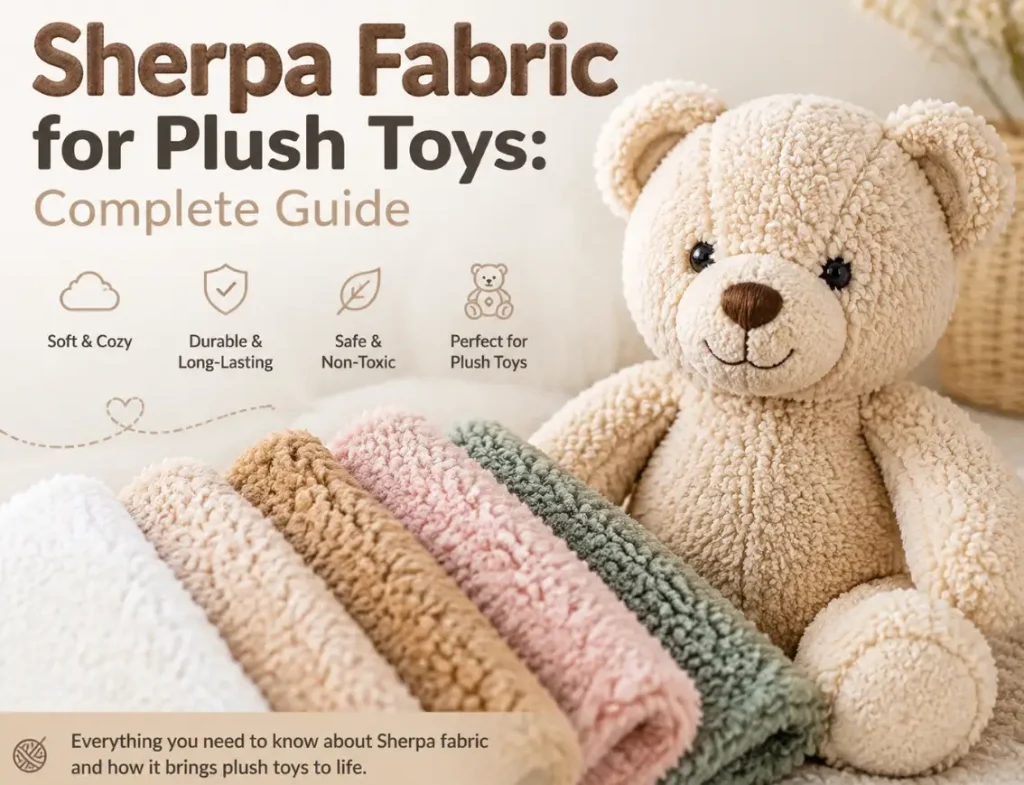
Sherpa Fabric for Plush Toys is a popular choice for creating soft, warm, and premium-quality plush products, offering a unique fluffy texture, excellent comfort, and versatile design options for toy brands and manufacturers. Everything buyers and product developers need to know about sherpa fabric construction, GSM, fiber content, durability, sewing behavior, and quality control before specifying it for a plush toy program.
Sherpa fabric has become one of the most requested plush toy materials for cozy, huggable products, from weighted comfort animals to blanket-backed characters. This guide breaks down what sherpa fabric actually is, how it is made, how it compares to other plush materials, and what buyers need to check before committing a production run to it.
What Is Sherpa Fabric?
Sherpa fabric is a knitted textile with a soft, looped or brushed pile face on one side and a smoother, flatter knit backing on the other. The pile face is designed to imitate the texture of natural shearling or sheepskin, which is where the fabric gets its warmth, loft, and characteristic curly or fluffy appearance. In plush toy manufacturing, sherpa is prized for feeling dense and cushiony without the shedding tendencies of long-pile faux fur, making it a common choice for huggable animals, cozy blankets attached to plush characters, and baby comfort items.
Origin of the Name
The term “sherpa” borrows from the Sherpa people of the Himalayas, historically associated with warm, insulated clothing suited to cold mountain climates. The fabric name became a generic industry term over the past several decades, and today it refers to a construction style rather than any single fiber or brand. This matters for sourcing, because “sherpa” on a fabric swatch card can describe a wide range of pile heights, backings, and fiber blends, and buyers should never assume two suppliers’ sherpa fabrics are equivalent without checking the technical specification sheet.
Two-Sided Construction
A defining feature of sherpa fabric is its two distinct faces. The pile side is what customers touch and see on the finished plush toy, while the backing side is typically a tighter, flatter knit that gives the fabric structural stability during cutting and sewing. This backing also determines how well the fabric holds stitches, resists stretching along seams, and takes to reinforcement techniques like taping or interfacing in high-stress areas such as limb joints and neck seams.
Tip: Always request a physical swatch rather than relying on a photo when evaluating sherpa fabric. Pile height, loop density, and backing weight vary significantly between suppliers, and these differences are difficult to judge from images alone.
How Sherpa Fabric Is Manufactured
Understanding the manufacturing process helps explain why sherpa fabric behaves the way it does during cutting, sewing, and stuffing. The process generally moves through three stages: base knitting, pile development, and finishing.
Knitting the Base
Sherpa starts as a warp-knitted or circular-knitted base fabric, most commonly built from polyester yarn. During knitting, extra loops or longer yarn floats are built into the structure on what will become the pile face. This is different from woven faux fur, which attaches pile fibers to a woven backing through a separate tufting or weaving step. The knit construction of sherpa gives it more stretch and drape than woven plush fabrics, which is one reason it is popular for soft, body-hugging plush shapes.
Napping and Brushing
After the base fabric is knitted, the pile-side loops are either left as tight curls (closer to true shearling texture) or cut and brushed to create a fluffier, more uniform nap. Brushing passes the fabric over rotating wire rollers that raise and separate individual fibers, which softens the hand feel and increases apparent loft. The number of brushing passes directly affects softness, and heavily brushed sherpa tends to feel plusher but can also shed more fiber in the early wash cycles if the brushing is overly aggressive relative to the yarn’s fiber retention.
Dyeing and Finishing
Sherpa fabric can be piece-dyed after knitting or produced from pre-dyed (solution-dyed) yarn. Piece-dyeing offers more flexibility for color matching to a specific Pantone reference, which matters for licensed characters and brand-matched plush lines, while solution-dyed sherpa generally offers better colorfastness because the color is embedded in the fiber itself rather than applied to the fabric surface. A final finishing step, such as anti-pilling treatment or a light calendering pass, is often applied before the fabric is rolled and shipped to a cut-and-sew facility.
Sherpa Fabric vs. Other Plush Materials
Sherpa is one of several plush-family fabrics used in toy production, and it is frequently confused with minky, faux fur, and standard fleece. Each material has a distinct pile structure, hand feel, and best-fit application, summarized below.
Plush Fabric Comparison for Toy Applications
| Fabric | Pile Structure | Typical Hand Feel | Best-Fit Use |
|---|---|---|---|
| Sherpa | Looped or brushed knit pile, shearling look | Dense, warm, slightly textured | Cozy animals, blanket-backed plush, baby comforters |
| Minky | Short, uniform cut pile | Ultra-smooth, silky | Baby blankets, character plush with fine facial detail |
| Faux Fur | Long, tufted or woven pile | Fluffy, voluminous | Realistic animal plush, statement pieces |
| Standard Fleece | Short, brushed, no distinct loop | Lightweight, smooth-brushed | Linings, low-cost plush bodies, apparel-adjacent items |
Sherpa’s advantage over faux fur is lower shedding and easier stitch control on automated sewing equipment, since the shorter, denser pile does not get caught in the seam the way long faux fur strands can. Compared to minky, sherpa offers more visual texture and warmth but less precision for fine embroidered or printed facial details, which is why many plush designs pair a minky face panel with a sherpa body.

Understanding Sherpa Fabric Weight and GSM
Grams per square meter (GSM) is the standard measurement used to describe fabric density and weight, and it is one of the most important specifications to confirm before approving a sherpa fabric for a plush toy run. Higher GSM generally correlates with a denser, more durable pile, but it also increases material cost and can affect how well the fabric wraps around curved or small plush components.
Sherpa Fabric GSM Ranges and Typical Applications
| GSM Range | Density Level | Common Application |
|---|---|---|
| 200–280 GSM | Light | Lining panels, small plush accessories, budget-tier toys |
| 280–350 GSM | Medium | Standard plush animals, character toys, mid-size comfort items |
| 350–450 GSM | Heavy | Premium plush animals, weighted comfort toys, blanket-backed plush |
| 450+ GSM | Extra heavy | Large-format plush, home decor plush, high-durability retail lines |
Buyers sourcing sherpa fabric should always request GSM alongside pile height, since two fabrics with the same GSM can feel very different depending on whether the weight comes from a dense short pile or a lighter but taller pile. For plush toys intended for younger children, a medium-to-heavy GSM sherpa is usually preferred because it holds its shape better after repeated hugging, washing, and handling.
Fiber Content Options for Sherpa Fabric
Fiber content affects softness, durability, flammability behavior, washability, and cost. Most commercial sherpa fabric used in plush toy production is polyester-based, but blended and recycled-content options are increasingly common as buyers look for both performance and sustainability credentials.
Common Sherpa Fabric Fiber Content Options
| Fiber Type | Softness | Durability | Notes for Plush Use |
|---|---|---|---|
| 100% Polyester | High | High | Most common choice; good pilling resistance, easy dyeing, low cost |
| Polyester/Acrylic Blend | Very High | Medium | Softer hand feel but more prone to matting under heavy handling |
| Recycled Polyester (rPET) | High | High | Performance close to virgin polyester; supports sustainability claims |
| Polyester/Cotton Blend | Medium | Medium | Breathable feel but higher shrinkage risk; less common in sherpa |
Recycled polyester sherpa has gained significant traction because it can match the tactile and performance qualities of virgin polyester sherpa closely enough that most consumers cannot tell the difference by touch, while allowing the finished plush toy to carry recycled-content labeling that increasingly matters to retail buyers.
Tip: When a sustainability claim is part of the product story, ask the fabric supplier for a recycled content percentage and any relevant certification documentation rather than accepting a general “eco-friendly” description on the swatch card.
Key Properties That Matter for Plush Toys
Softness and Hand Feel
Softness is the property most closely tied to consumer perception of quality, and it is influenced by fiber denier, brushing intensity, and finishing treatments. Finer denier yarns generally produce a softer hand feel, but overly fine yarns can also reduce pile recovery, meaning the fabric flattens more easily and takes longer to spring back after being compressed or squeezed.
Warmth and Insulation
The looped or brushed pile structure traps air, giving sherpa fabric a warmer feel than flat-woven plush materials of similar weight. This makes it a natural fit for plush toys marketed around comfort and coziness, such as bedtime companions, weighted plush, and blanket-integrated designs.

Durability and Pile Retention
Durability in sherpa fabric is largely a function of yarn twist and knit density. Tightly knitted, well-twisted yarns resist pulling and matting better over repeated handling, while loosely knitted or under-twisted sherpa can develop bald patches or matted clumps after a relatively short period of use. This is a critical consideration for plush toys aimed at younger children, who tend to handle products more roughly than adult buyers testing a sample in a showroom.
Colorfastness
Because sherpa’s pile structure has a large surface area relative to its base fabric, it can be more prone to visible color fading and crocking (color transfer from rubbing) than flatter fabrics if the dyeing process is not well controlled. Colorfastness testing is especially important for brightly colored or licensed-character sherpa plush, where a mismatch to the approved color standard is an easy and costly rejection point during quality inspection.
Tip: Request a colorfastness-to-rubbing (crocking) test result alongside the standard color approval, particularly for dark or saturated shades, since these are the most likely to show visible dye transfer onto light-colored trims or packaging.
Where Sherpa Fabric Is Used in Plush Toy Production
Sherpa’s warmth and huggable texture make it suited to a specific range of plush toy categories rather than being a universal material choice. Common applications include:
- Cozy comfort animals: bears, bunnies, and other classic plush shapes where a shearling-like texture reinforces a “comfort object” positioning.
- Blanket-backed or lovey-style plush: designs that combine a smaller plush head or body with an attached sherpa security blanket, popular in infant and toddler product lines.
- Weighted plush toys: sherpa’s density and pile recovery help it hold its shape well even when combined with internal weighted fill.
- Seasonal and holiday plush: winter-themed characters where a “cozy” texture supports the product’s seasonal marketing angle.
- Home and lifestyle plush-adjacent products: pillows, throw accessories, and plush-adjacent decor items that cross over from toy into gift categories.
Sherpa is less commonly used for full-body construction on highly detailed character plush with fine facial features, since its texture can obscure small embroidered or printed details. In those cases, designers frequently reserve sherpa for the body or limbs and pair it with a smoother fabric such as minky for the face panel.
Sherpa vs. Faux Fur: Which Should You Choose?
Sherpa and faux fur are the two materials most often compared during plush toy material selection, since both aim to deliver a warm, textured plush surface. The decision generally comes down to the desired visual realism versus manufacturing efficiency and shedding control.
Faux fur, with its longer pile and often more varied fiber lengths, tends to produce a more realistic animal-like appearance and is frequently chosen for premium or display-oriented plush pieces. However, longer pile fibers are more prone to shedding during cutting, sewing, and the early wash cycles, and they require more careful handling on automated sewing equipment to avoid trapping loose fibers in the seam line.
Sherpa’s shorter, denser, more uniform pile structure sews more predictably, produces less loose fiber during production, and generally holds up better to repeated handling, which is why it is often the preferred choice for higher-volume, cost-sensitive plush programs where consistent manufacturing output matters as much as visual texture.
Tip: If a design calls for a faux-fur look but the production volume or budget favors sherpa’s manufacturing efficiency, consider a heavily brushed, longer-pile sherpa variant. Several suppliers offer sherpa constructions engineered specifically to visually approximate short faux fur while retaining sherpa’s easier sew characteristics.
Manufacturing Considerations for Sherpa Plush Toys
Cutting and Pile Direction
Like most pile fabrics, sherpa has a directional nap, meaning the fibers lie flatter in one direction than another. Pattern pieces must be cut with consistent pile direction across all components of a single plush toy; otherwise, the finished product can show visible color or texture shading where panels meet, even when the fabric itself is a single consistent color and batch.
Sewing and Seam Allowance
Sherpa’s knit backing has more natural stretch than a woven fabric, which affects tension settings on sewing machines and the seam allowance needed to prevent puckering or seam slippage. Because the pile can get caught in the seam line during stitching, many facilities use a slightly wider seam allowance and a fiber-clearing step (such as a brush pass along the seam) before final inspection to keep pile fibers from showing through the stitch line.
Stuffing Pairing
Sherpa’s density and pile recovery generally pair well with a range of fill materials, from standard polyester fiberfill to weighted glass or plastic bead fill for comfort-oriented plush. Because sherpa already reads as a dense, substantial fabric, designers sometimes reduce fill density slightly compared to a thinner-shell plush toy to avoid an overly stiff finished feel while still achieving good shape retention.

Embroidery and Surface Decoration on Sherpa
Embroidering directly onto sherpa’s pile face is possible but requires a stabilizer backing and, in many cases, a light shave or trim of the pile in the embroidery area to keep fine stitch detail visible above the surrounding texture. For this reason, small logos, facial features, and fine branding elements are frequently placed on a smoother fabric panel rather than directly on the sherpa surface.
Quality Control and Testing for Sherpa Plush Toys
Because sherpa’s pile structure introduces specific failure modes not present in flat woven fabrics, quality control programs for sherpa plush toys typically include several fabric-specific test points in addition to standard plush toy safety testing.
Fabric-Specific Quality Tests for Sherpa Plush Toys
| Test | What It Checks | Why It Matters |
|---|---|---|
| Pilling resistance (Martindale) | How quickly the pile forms small fiber balls under abrasion | Directly affects perceived quality after handling and washing |
| Colorfastness to rubbing | Dye transfer under dry and wet rubbing conditions | Prevents color bleeding onto trims, packaging, or other fabrics |
| Pile shedding / fiber loss | Loose fiber released during handling or washing | Reduces risk of loose fiber becoming a choking hazard or nuisance |
| Seam strength (pull test) | Resistance of stitched seams to pulling force | Confirms seams will not fail under normal or rough handling |
| Flammability | Burn rate and self-extinguishing behavior | Required for regulatory compliance in most toy markets |
Pull testing is especially important on sherpa plush toys with attached components such as ribbons, tags, or blanket corners, since these attachment points experience repeated stress from young users. A well-run inspection protocol tests both the fabric itself and the finished construction points where sherpa meets trims, closures, or other fabric panels.
Common Sherpa Fabric Defects and How to Prevent Them
Most sherpa-related defects trace back to either fabric quality issues from the mill or handling issues during cut-and-sew production. The most frequent problems buyers should watch for include:
- Pilling and matting: usually caused by low-twist yarn or insufficient anti-pilling finishing; prevented by specifying a tested pilling grade in the fabric approval stage.
- Bald or thin patches: can occur from uneven knitting tension or excessive brushing during finishing; caught through incoming fabric inspection before cutting begins.
- Seam pile trapping: loose pile fibers stitched into the seam line, creating a visible ridge; addressed through wider seam allowances and a pre-inspection brush pass.
- Color shading between panels: visible tone differences caused by inconsistent pile direction during cutting; prevented through directional cutting guides and pattern layout checks.
- Excess shedding after washing: often linked to overly aggressive brushing during finishing; tested through a wash-cycle fiber loss evaluation before bulk production.
Tip: Build a pre-production wash test into the fabric approval stage, not just the finished sample stage. Running a swatch through several wash-and-dry cycles early reveals shedding, pilling, and shrinkage issues before cutting patterns are finalized.
Cost Factors in Sherpa Fabric Sourcing
Sherpa fabric pricing is driven by several interacting factors, and buyers benefit from understanding each one when comparing quotes across suppliers.
- GSM and pile density: heavier, denser sherpa costs more per meter due to higher yarn consumption.
- Fiber type: recycled polyester and specialty blends can carry a price premium over standard virgin polyester, though the gap has narrowed as recycled fiber supply has expanded.
- Dyeing method: solution-dyed sherpa often costs more upfront but reduces colorfastness-related rejects downstream.
- Finishing treatments: anti-pilling and other performance finishes add a modest per-meter cost but reduce the risk of quality complaints after sale.
- Order volume and minimums: custom colors or specialty pile heights typically require higher minimum order quantities than stock sherpa colors, which affects unit economics for smaller plush programs.
Buyers evaluating quotes should compare fabric on a cost-per-finished-toy basis rather than cost-per-meter alone, since fabric width, pattern efficiency, and waste rate all affect how far a given roll of sherpa actually goes across a production run.
A wider fabric roll can reduce waste on large pattern pieces, while a narrower roll may force less efficient nesting and drive up the effective cost per toy even if the quoted price per meter looks competitive on paper. It is also worth asking whether a quoted price includes standard finishing treatments like anti-pilling, since some suppliers quote a base fabric price and treat finishing as a separate line item that only appears later in the sourcing process.
Sustainability in Sherpa Fabric Production
As with most polyester-based plush fabrics, the sustainability conversation around sherpa centers on fiber sourcing, dye process water use, and end-of-life recyclability. Recycled polyester sherpa, made from post-consumer or post-industrial plastic feedstock, has become the most widely adopted sustainability lever because it can be integrated into existing knitting and finishing equipment without major process changes.
Beyond fiber sourcing, some suppliers have adopted lower-water dyeing processes and reduced-chemical finishing treatments, though these are less standardized across the industry than recycled fiber content and should be confirmed directly with the fabric supplier rather than assumed from general marketing language.
Tip: If recycled content is a requirement for a retail partner or certification program, confirm whether the percentage applies to the pile yarn, the backing yarn, or both, since some sherpa constructions use recycled fiber in only one layer of the fabric.
How to Choose the Right Sherpa Fabric for Your Plush Project
Selecting sherpa fabric for a plush toy program comes down to matching fabric specifications to the product’s use case, price point, and target age group. A practical selection process generally follows these steps:
- Define the product’s positioning — a premium comfort item calls for a heavier GSM and finer finishing than a budget promotional plush.
- Set a GSM and pile height range based on the desired hand feel and durability requirements.
- Decide on fiber content based on cost targets and any sustainability commitments tied to the product line.
- Request and physically test swatches, including a basic wash-and-abrasion check rather than relying on visual inspection alone.
- Confirm colorfastness and pilling grades in writing as part of the fabric approval before bulk ordering begins.
- Review pattern layout and cutting direction with the production facility to avoid shading issues on the finished toy.
Following this sequence reduces the likelihood of late-stage surprises, such as discovering during final inspection that a fabric’s pilling resistance or colorfastness does not meet the product’s quality bar after bulk cutting has already begun. It is also good practice to keep an approved physical swatch on file for the full duration of a production run, since fabric mills can shift dye lots or finishing batches between orders, and a retained reference swatch is the fastest way to catch a mismatch before an entire shipment is cut from an off-spec roll.

Frequently Asked Questions
Is sherpa fabric safe for baby plush toys?
Sherpa fabric can be safe for baby plush toys when it is sourced from a supplier that provides documentation for relevant safety testing, including flammability and chemical safety results appropriate to the target market. Because sherpa has a textured pile surface, buyers should also confirm pile shedding and fiber loss results specifically, since loose fiber is a more relevant concern for infant products than for toys aimed at older children. Fiber content, dye process, and any applied finishes should all be reviewed against the applicable toy safety standard for the country where the product will be sold before the fabric is approved for an infant-focused plush line.
What GSM is best for plush toy sherpa fabric?
Most standard plush animals and character toys use sherpa fabric in the 280 to 350 GSM range, which balances softness, durability, and material cost. Premium or weighted comfort plush items often move up to 350 to 450 GSM or higher for a denser, more substantial feel, while lighter 200 to 280 GSM sherpa is more common for lining panels, small accessories, or budget-tier products where cost efficiency is the priority. The right GSM ultimately depends on the product’s positioning, target age group, and expected handling intensity.
Does sherpa fabric shed or pill over time?
Sherpa fabric can shed or pill, though the degree varies significantly based on yarn quality, knit density, and finishing treatments. Well-constructed sherpa with tightly twisted yarn and an applied anti-pilling finish will resist matting and fiber loss far better than loosely knitted or under-finished sherpa. Buyers should request pilling resistance test results and, ideally, run their own wash-cycle evaluation on a swatch before committing to bulk production, since shedding and pilling are among the most common quality complaints associated with lower-grade sherpa fabric.
How is sherpa fabric different from faux fur?
Sherpa fabric has a shorter, denser, looped or brushed pile built through a knitting process, while faux fur typically has a longer, more varied pile attached through tufting or weaving onto a separate backing. Sherpa generally sews more predictably and sheds less during production, making it a common choice for higher-volume plush programs, while faux fur often delivers a more realistic animal-like appearance suited to premium or display-oriented plush pieces. The choice between the two usually comes down to whether visual realism or manufacturing efficiency is the higher priority for a given product.
Can sherpa fabric be washed without damaging the plush toy?
Sherpa fabric can generally withstand machine washing on a gentle cycle with cold water, followed by low-heat or air drying, though care instructions should always be confirmed against the specific fabric’s finishing treatment and the finished toy’s fill material and construction. High heat during drying can cause the pile to flatten, mat, or in some cases melt slightly if the polyester fiber content is exposed to excessive temperatures, so care labeling on the finished plush toy should reflect testing done on the actual fabric and construction used rather than generic sherpa care assumptions.
Is recycled polyester sherpa as durable as virgin polyester sherpa?
Recycled polyester (rPET) sherpa can match virgin polyester sherpa closely in durability, softness, and pilling resistance when the recycled fiber is processed to a comparable quality standard. Differences in performance are more often tied to yarn twist, knit density, and finishing quality than to whether the base fiber is virgin or recycled. Buyers should evaluate recycled polyester sherpa on its actual test results rather than assuming a durability trade-off simply because the fiber is recycled.
Why does sherpa fabric sometimes show color shading between panels on a finished plush toy?
Color shading between panels usually happens when pattern pieces are cut without consistent attention to the fabric’s pile direction, causing light to reflect differently off panels where the nap runs in opposing directions. This creates a visible tone difference even when the fabric comes from the same dye lot and roll. The issue is prevented through directional cutting guides during pattern layout and a pre-sewing check to confirm all panels for a single toy are cut with matching pile direction.