Skip to content

A practical, buyer-focused guide to the recycled fibers, natural fills, low-impact dyes, and biodegradable components reshaping plush toy production — with the certifications, cost trade-offs, and durability considerations every sourcing decision should account for.
What Are Sustainable Plush Toy Manufacturing Materials?
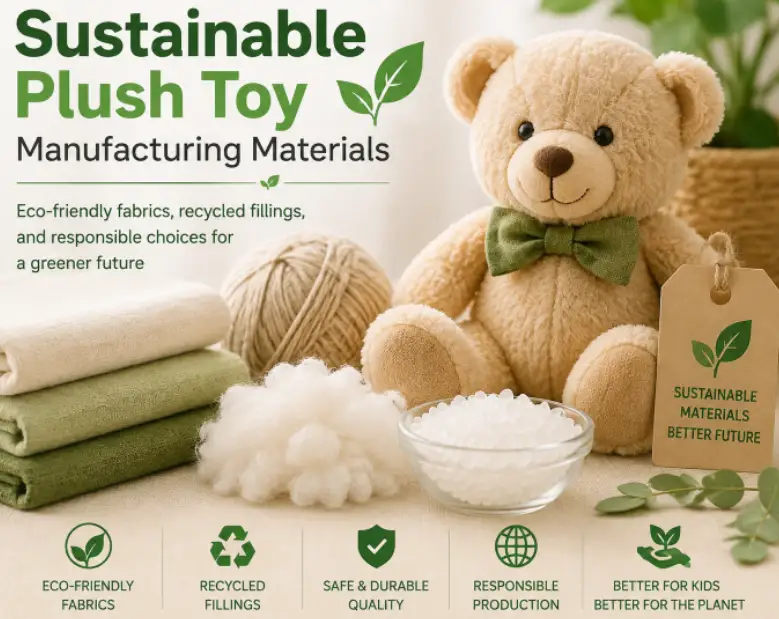
Sustainable plush toy manufacturing materials are the fabrics, fillings, dyes, and packaging components that reduce a plush toy’s environmental footprint across its production and end-of-life stages — typically through recycled content, renewable natural fibers, reduced water and chemical use in processing, or improved biodegradability compared to conventional virgin polyester and petroleum-derived alternatives. The category spans a wide range of options, from recycled polyester fiberfill made from post-consumer plastic bottles to organically grown cotton outer fabric to fillings made from natural fibers like kapok or corn-based PLA.
Sustainability in plush toy materials is not a single certification or a single fabric swap — it is a set of decisions made across every material layer of the product: the outer fabric, the internal filling, the safety components, the thread and embroidery, the dyes and finishes applied during processing, and the packaging the finished product ships in. A plush toy described as “sustainable” because its outer fabric is recycled polyester, while its filling is virgin polyester fiberfill and its packaging is non-recyclable plastic, has only partially addressed the sustainability question — a distinction that increasingly matters to retailers, platform marketplaces, and end consumers who scrutinize sustainability claims more closely than they did even a few years ago.
Understanding what genuinely qualifies as a sustainable material — as opposed to a marketing label applied loosely to a product with only one sustainable component — is the foundation for making sourcing decisions that hold up under scrutiny from buyers, certification bodies, and increasingly, regulatory frameworks in major consumer markets that are beginning to define sustainability claims more precisely.
Why Sustainable Materials Matter in Plush Toy Manufacturing Today
Sustainable materials matter in plush toy manufacturing today because retail buyers, e-commerce platforms, and end consumers increasingly factor environmental impact into purchasing decisions, and because a growing set of regulatory and platform-level requirements are beginning to formalize what qualifies as a legitimate sustainability claim rather than leaving the term open to unverified marketing use. Brands that source plush toys without a clear, verifiable sustainability position are finding it progressively harder to compete for retail shelf space and consumer attention in markets where sustainability credentials have shifted from a differentiator to an expectation.
The commercial pressure driving this shift comes from several directions simultaneously. Major retailers increasingly maintain supplier scorecards that include material sustainability criteria, and several large marketplaces have introduced sustainability badges or filters that reward products with verified recycled content or environmental certifications with better search visibility. Consumer awareness of textile industry environmental impact — water consumption, microplastic shedding, and landfill volume from synthetic fiber products — has grown substantially, and plush toys, as a textile product purchased in high volume for children who quickly outgrow them, sit squarely within this awareness.
Beyond consumer-facing pressure, there is a structural cost dimension worth noting. Recycled polyester production has matured to the point where, for many fiber and fabric applications, the cost premium over virgin polyester has narrowed considerably compared to where it stood several years ago — meaning sustainable material adoption is no longer automatically synonymous with a large cost increase, even though a premium generally still exists and needs to be planned for explicitly in sourcing budgets.
Extended producer responsibility regulations, which shift a portion of end-of-life waste management cost and accountability onto the brands and manufacturers that put products into the market, are also expanding into more product categories and jurisdictions, adding a regulatory dimension to material decisions that previously existed only as a voluntary marketing consideration.
Buyers who build sustainable material practices into their sourcing process ahead of these requirements typically face a smoother transition than those who wait until a specific regulatory deadline forces the change under time pressure. In parallel, several major toy retailers have begun requiring suppliers to disclose recycled content percentages and certification status as a condition of vendor approval, rather than treating sustainability documentation as optional supporting material — a shift that changes sustainable material adoption from a competitive differentiator into a baseline requirement for accessing certain sales channels.
Recycled Polyester (rPET) Fill and Fabric: The Most Widely Adopted Sustainable Material
Recycled polyester, most commonly derived from post-consumer PET plastic bottles and referred to as rPET, is the most widely adopted sustainable material in plush toy manufacturing because it can substitute directly for virgin polyester in both outer fabric and fiberfill applications without requiring a fundamentally different manufacturing process, while measurably reducing petroleum consumption and diverting plastic waste from landfill or ocean pathways.
The rPET production process begins with collected PET bottles, which are sorted, cleaned, shredded into flakes, and then melted and extruded into new polyester fiber. This fiber can be spun into fabric for the plush toy’s outer covering or processed into fiberfill for the internal stuffing, using largely the same downstream textile and toy-assembly processes as virgin polyester. This process compatibility is a significant practical advantage: switching a plush toy’s fabric or filling from virgin to recycled polyester generally does not require retooling manufacturing equipment or retraining production staff, which keeps the transition cost lower than switching to a fundamentally different fiber category.

Recycled Polyester (rPET) vs. Virgin Polyester in Plush Toy Applications
| Attribute | Virgin Polyester | Recycled Polyester (rPET) |
|---|---|---|
| Source material | Petroleum-derived, newly produced | Post-consumer PET bottles or post-industrial polyester waste |
| Water use in fiber production | High relative to recycled equivalent | Meaningfully lower, since the polymer already exists |
| Energy use in fiber production | Higher | Lower, though energy is still required for reprocessing |
| Feel and hand of finished fabric | Standard plush hand and pile consistency | Comparable when processed with quality controls; can vary by feedstock consistency |
| Colorfastness and dye uptake | Predictable, well-established | Generally comparable; some rPET grades require dye process adjustment |
| Typical cost premium | Baseline | Low to moderate, narrowing as recycled fiber supply matures |
| Common certification pathway | Not applicable | Global Recycled Standard (GRS) or Recycled Claim Standard (RCS) |
The quality consistency of rPET has improved substantially as recycling infrastructure and fiber processing technology have matured, but buyers should still expect some variability between suppliers depending on the quality of their feedstock sorting and the sophistication of their reprocessing equipment. Lower-quality rPET processed from poorly sorted or contaminated feedstock can produce fiber with inconsistent color, reduced tensile strength, or a rougher hand than well-processed rPET or virgin polyester — differences that matter for a product where softness and consistent appearance are core to the customer’s purchasing expectation.
Tip: When evaluating an rPET supplier, request a physical fabric or fiberfill sample rather than relying on a specification sheet alone. Recycled polyester quality varies meaningfully between processors, and a hand-feel and appearance comparison against the virgin polyester currently in use is the fastest way to confirm the recycled alternative will meet the product’s quality bar before committing to a bulk order.
Organic and Natural Fiber Options: Cotton, Bamboo, and Hemp
Organic and natural fiber options — primarily organic cotton, bamboo-derived fabric, and hemp — offer an alternative sustainability pathway to recycled synthetics, built on renewable, biodegradable raw material and, for organic cotton specifically, on reduced pesticide and water impact during cultivation compared to conventional cotton farming. These fibers occupy a different position in the plush toy material landscape than recycled polyester: they are generally used for outer fabric rather than filling, and they carry different cost, performance, and certification considerations.
Organic cotton is grown without synthetic pesticides or fertilizers and is typically certified under standards such as the Global Organic Textile Standard (GOTS), which governs both the growing practices and the processing chain from fiber to finished fabric. Organic cotton plush fabric offers a soft, natural hand that appeals particularly to buyers targeting infant and newborn product lines, where natural fiber messaging resonates strongly with parents evaluating products for direct skin contact. Its primary limitations relative to polyester plush fabric are a shorter pile achievable at comparable cost, generally lower resistance to matting with repeated washing, and a meaningfully higher raw material cost.
Bamboo-derived fabric is marketed heavily on sustainability grounds due to bamboo’s fast growth rate and low water and pesticide requirements as a crop, but buyers should understand that most commercial bamboo fabric is produced through a viscose or rayon process that involves significant chemical processing to convert the raw bamboo fiber into usable textile fiber — meaning the sustainability advantage of the raw bamboo crop is partially offset by the processing method, unless the fabric is specifically produced using a closed-loop process, such as lyocell processing, that recovers and reuses the processing chemicals.
Natural and Organic Fiber Options for Plush Toy Outer Fabric
| Fiber | Sustainability Basis | Performance Consideration | Relative Cost |
|---|---|---|---|
| Organic cotton | No synthetic pesticides/fertilizers; certified growing chain (GOTS) | Soft hand, shorter achievable pile, moderate wash durability | High |
| Conventional cotton | Renewable and biodegradable, but standard pesticide/water use | Comparable feel to organic; no certified growing chain | Moderate |
| Bamboo (viscose/rayon process) | Fast-growing, low-input crop; processing method determines net impact | Soft, drapey hand; less common in high-pile plush construction | Moderate–High |
| Bamboo (lyocell/closed-loop process) | Closed-loop chemical recovery reduces processing impact significantly | Comparable to viscose bamboo in feel | High |
| Hemp | Low water/pesticide crop, biodegradable, durable fiber | Coarser hand than cotton; limited use in high-pile plush | Moderate–High |
Hemp fiber offers strong durability and a genuinely low-impact cultivation profile, requiring less water and fewer pesticides than cotton, but its coarser natural texture makes it a poor fit for the soft, high-pile fabric that defines most plush toy applications — hemp is more commonly used in structural or accent components of a plush product, such as reinforced seams or accessory elements, than as the primary outer covering fabric.

Sustainable Filling Materials Compared
Sustainable filling materials for plush toys fall into three broad categories — recycled synthetic fiberfill, natural plant-based fillings, and biodegradable synthetic alternatives — each offering a different balance of loft, washability, cost, and end-of-life biodegradability that needs to be matched against the specific product’s requirements rather than selected on sustainability messaging alone.
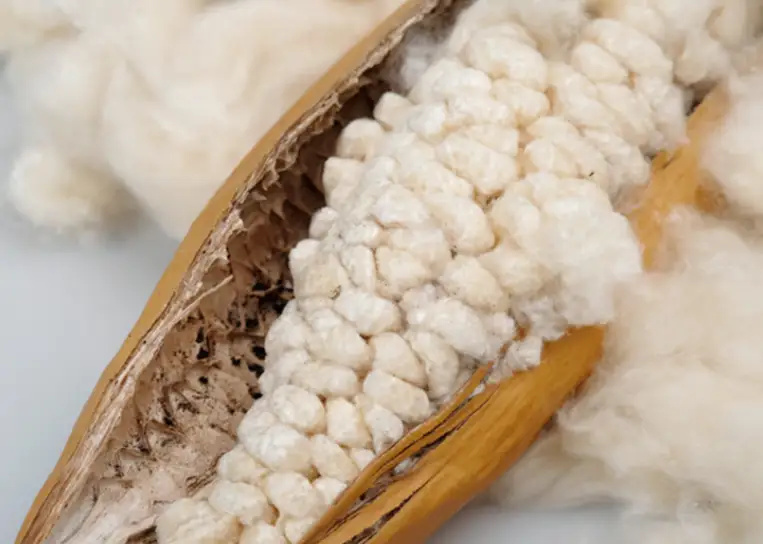
Recycled polyester fiberfill, discussed above in the context of rPET more broadly, remains the most common sustainable filling choice because it replicates the loft, resilience, and washability of virgin polyester fiberfill closely, while offering a straightforward sustainability narrative tied to plastic bottle diversion. Natural plant-based fillings — most commonly kapok, a silky fiber harvested from the seed pods of the kapok tree — offer genuine biodegradability and a soft, lightweight feel, but come with meaningfully higher cost, more limited global supply, and washability limitations that make them less suitable for plush toys intended for frequent machine washing.
Sustainable Plush Toy Filling Materials Compared
| Filling Type | Sustainability Basis | Loft & Resilience | Washability | Relative Cost |
|---|---|---|---|---|
| Recycled polyester fiberfill (rPET) | Diverts PET plastic waste from landfill | Comparable to virgin fiberfill | Good, machine washable | Low–Moderate |
| Kapok fiber | Renewable plant fiber, fully biodegradable | Very soft, lower resilience over time | Limited — not ideal for frequent washing | High |
| Organic cotton fiberfill | Renewable, biodegradable, certified growing chain | Denser, less lofty than polyester | Moderate | High |
| PLA (corn-based) fiberfill | Renewable feedstock, industrially compostable | Comparable loft to polyester | Moderate — heat sensitivity in washing/drying | Moderate–High |
| Wool fiberfill | Renewable, biodegradable (non-vegan) | Excellent resilience and loft retention | Requires careful washing; can felt | High |
PLA (polylactic acid) fiberfill, derived from fermented corn starch or other plant sugars, represents a newer category of biodegradable synthetic filling that offers loft and resilience closer to conventional polyester fiberfill than natural fibers typically achieve, while being industrially compostable under the right end-of-life conditions. Its primary limitations are a moderate cost premium over rPET, heat sensitivity that requires care in washing and drying instructions communicated to the end customer, and the important caveat that industrial compostability does not mean the material breaks down readily in a typical home environment or standard landfill — a distinction that matters significantly for accurate sustainability messaging, discussed further later in this guide.
Tip: Match the filling material to the product’s actual use case rather than defaulting to the most novel sustainable option. A plush toy marketed for infants who will have it washed weekly is generally better served by recycled polyester fiberfill’s washability than by kapok’s superior biodegradability; a premium, lower-wash-frequency collectible product is a better fit for a natural fiber filling where its performance limitations matter less.
Low-Impact and Water-Saving Dyeing Processes
Low-impact and water-saving dyeing processes reduce the water consumption, chemical discharge, and energy use associated with coloring plush toy fabric and thread — a stage of production that is frequently overlooked in sustainability discussions focused primarily on fiber source, despite dyeing and finishing being among the most water- and chemical-intensive stages of textile manufacturing generally.
Conventional reactive dyeing processes for polyester and cotton fabrics typically require substantial water volumes for the dye bath, rinse cycles, and fixation steps, along with dye chemicals and fixing agents that generate wastewater requiring treatment before discharge. Low-impact dyeing approaches reduce this footprint through several mechanisms: dyes formulated for higher fixation rates that leave less unfixed dye to rinse out, closed-loop water recycling systems that treat and reuse dye-bath water rather than discharging and replacing it, and, for polyester specifically, dope-dyeing (also called solution-dyeing) processes that add color to the polymer before it is extruded into fiber, eliminating the separate wet dyeing stage entirely.
Dope-dyeing deserves particular attention because it represents one of the most significant water-reduction opportunities available for polyester-based plush fabric specifically. Because color is incorporated during fiber extrusion rather than applied afterward in a water-based dye bath, dope-dyed polyester can reduce water consumption for the coloring stage by a substantial margin compared to conventional piece-dyeing, while also producing fiber with strong colorfastness since the pigment is embedded throughout the fiber rather than sitting on its surface. Its primary limitation is reduced color flexibility for small production runs, since dope-dyeing is generally more economical at larger fiber production volumes where a color can be run through the extrusion process in meaningful quantity.
Tip: For plush toy programs with a stable, repeated color palette across seasons, evaluate dope-dyed polyester fabric as a water-reduction lever independent of the fiber source decision — it can be paired with either virgin or recycled polyester and delivers a meaningful sustainability improvement at the dyeing stage that is easy to overlook when sustainability discussions focus only on whether the fiber itself is recycled.
Biodegradable and Compostable Components
Biodegradable and compostable components extend the sustainability consideration beyond fabric and filling to the smaller elements of a plush toy — safety eyes, joint discs, hang tags, and internal reinforcement components — that are often overlooked because they represent a small fraction of the product’s total material weight but can meaningfully affect the product’s true end-of-life environmental impact if left unaddressed while the primary fabric and filling are upgraded.
Traditional plastic safety eyes, joint discs, and internal weighting beads are typically made from conventional, non-biodegradable plastic, and no widely available, safety-certified biodegradable alternative currently matches their combined durability, pull-test performance, and cost at scale — meaning these components represent a genuine current limitation in fully biodegradable plush toy construction rather than an easily solved gap. Buyers pursuing a comprehensive sustainability position should be transparent about this limitation rather than implying full product biodegradability when small but material safety components remain conventional plastic.
Component-Level Biodegradability Status in Plush Toy Construction
| Component | Conventional Material | Biodegradable/Sustainable Alternative Status |
|---|---|---|
| Outer fabric | Virgin polyester | Mature — rPET, organic cotton, bamboo widely available |
| Filling | Virgin polyester fiberfill | Mature — rPET fiberfill, PLA fiberfill, natural fiber options |
| Safety eyes/noses | Injection-molded plastic | Limited — few certified biodegradable options meet pull-test safety standards at scale |
| Joint discs (jointed plush) | Plastic or cardboard/plastic composite | Emerging — some cardboard-based alternatives available for lower-stress applications |
| Weighted filling beads | Plastic pellets | Emerging — glass bead and natural grain alternatives available, with cost and processing trade-offs |
| Thread | Polyester thread | Available — recycled polyester and organic cotton thread options exist |
| Hang tags and labels | Virgin paper or synthetic tag material | Mature — recycled paper, plantable seed paper, and FSC-certified options widely available |
Weighted plush products deserve a specific note, since weighted filling is one of the categories where sustainable substitution is least mature. Conventional weighted filling uses plastic pellets, and while glass bead alternatives and certain natural grain fillings exist as substitutes, both introduce trade-offs — glass beads add cost and require careful containment engineering to prevent breakage risk, while natural grain fillings raise moisture and pest-resistance considerations that plastic pellets do not have. Buyers developing weighted plush products with sustainability requirements should treat this component as an area requiring dedicated engineering and testing time rather than assuming a straightforward substitution is available.
Sustainable Packaging Materials and Waste Reduction Strategies
Sustainable packaging materials and waste reduction strategies address the portion of a plush toy’s total environmental footprint that occurs after production is complete but before the product reaches the end customer — an area that is frequently easier and less expensive to improve than the core fabric and filling materials, making it a practical starting point for buyers beginning a sustainability transition.
Packaging waste reduction for plush toys typically follows several parallel strategies: reducing overall packaging material volume through simplified, right-sized packaging rather than oversized boxes with excess void space; replacing plastic polybags with recycled or biodegradable alternatives, or eliminating the polybag entirely where safety regulations permit; switching hang tags, inserts, and printed materials to recycled or FSC-certified paper stock; and using soy-based or water-based inks for printing rather than conventional petroleum-based inks.
Sustainable Packaging Substitution Options
| Conventional Packaging Element | Sustainable Alternative | Consideration |
|---|---|---|
| Virgin plastic polybag | Recycled-content or compostable polybag | Must still meet suffocation-warning labeling and safety regulations |
| Standard cardboard box (virgin fiber) | Recycled-content or FSC-certified cardboard | Comparable cost when sourced at volume |
| Oversized box with void fill | Right-sized packaging matched to product dimensions | Reduces material use and shipping volume/cost simultaneously |
| Plastic-coated hang tags | Recycled or seed paper hang tags | Seed paper adds a differentiated unboxing/marketing element |
| Petroleum-based printing ink | Soy-based or water-based ink | Comparable print quality for most packaging applications |
| Foam or plastic void fill | Recycled paper void fill or right-sizing to eliminate need | Right-sizing is generally the lower-cost solution |
Right-sizing packaging deserves particular emphasis because it is one of the few sustainability measures that reduces both environmental impact and cost simultaneously — smaller, better-fitted packaging uses less material and occupies less volume during shipping, directly reducing freight cost per unit alongside the packaging material savings. This makes it a natural starting point for buyers looking to build sustainability improvements into a program without a corresponding cost increase, before moving to substitutions that carry a more direct cost premium such as recycled fiber content.
Tip: Start a sustainability transition with packaging right-sizing and material substitution before moving to fabric and filling changes. Packaging improvements typically carry a smaller cost impact — and in the case of right-sizing, can reduce cost — making them a practical way to build sustainability credentials into a product line while a more considered evaluation of fabric and filling alternatives is underway.
Certifications and Standards for Sustainable Plush Toy Materials
Certifications and standards for sustainable plush toy materials provide the third-party verification that separates a genuine sustainability claim from an unverified marketing statement, and understanding which certification applies to which material claim is essential for buyers who need their sustainability positioning to withstand scrutiny from retail partners, marketplace sustainability programs, or increasingly informed end consumers.
Common Sustainability Certifications Relevant to Plush Toy Materials
| Certification | What It Verifies | Applies To |
|---|---|---|
| Global Recycled Standard (GRS) | Recycled content percentage and chain-of-custody tracking, plus social/environmental processing criteria | Recycled polyester fabric and fiberfill |
| Recycled Claim Standard (RCS) | Recycled content percentage and chain-of-custody tracking (without the broader social/environmental criteria of GRS) | Recycled polyester fabric and fiberfill |
| Global Organic Textile Standard (GOTS) | Organic fiber content and environmentally/socially responsible processing chain | Organic cotton fabric |
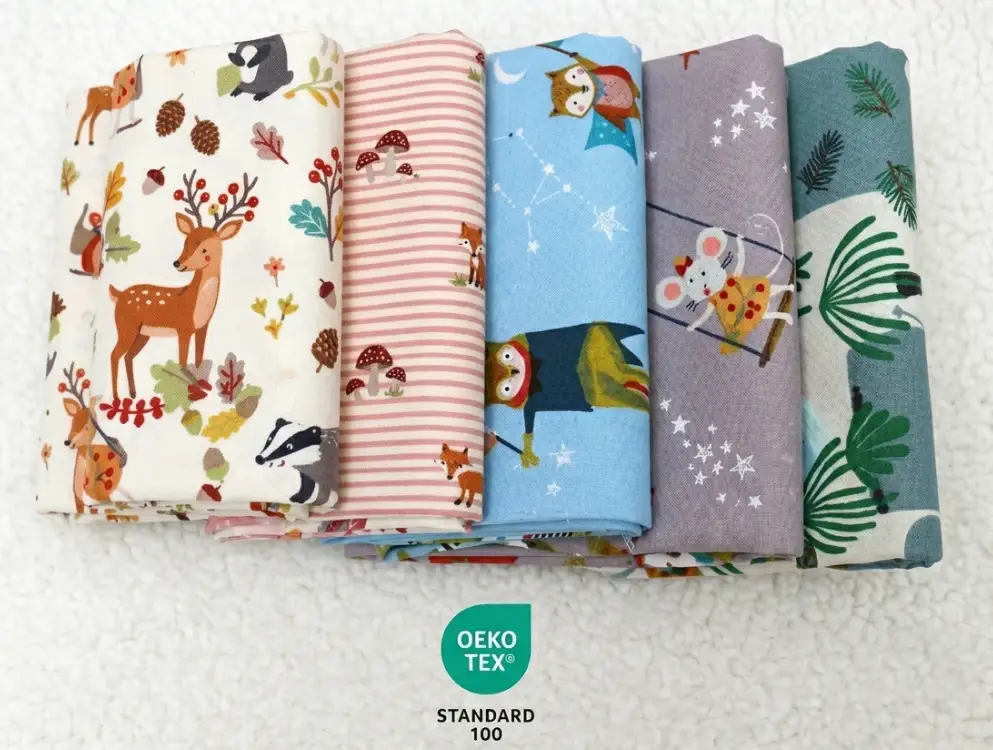
| OEKO-TEX Standard 100 | Absence of harmful substances in the finished textile product | Fabric, thread, and finished plush products broadly |
| Forest Stewardship Council (FSC) | Responsibly sourced paper and wood-fiber packaging materials | Hang tags, cardboard packaging, printed inserts |
| Cradle to Cradle Certified | Material health, circularity, and end-of-life recoverability across multiple criteria | Comprehensive product-level assessment |
Buyers frequently conflate these certifications or assume a single certification covers claims it does not actually verify. OEKO-TEX Standard 100, for example, verifies the absence of harmful substances in a textile product but says nothing about recycled content — a product can be OEKO-TEX certified while using entirely virgin, non-recycled fiber. GRS and RCS both verify recycled content specifically, but GRS additionally covers social and environmental processing criteria that RCS does not, making GRS the more rigorous — and generally more expensive to obtain — of the two for suppliers seeking certification. Understanding these distinctions precisely, rather than treating “certified sustainable” as a single undifferentiated claim, is necessary for accurate product marketing and for satisfying retail partners who increasingly ask for the specific certification standard behind a sustainability claim rather than accepting the claim at face value.
Certification is also not a one-time achievement — most of these standards require annual or periodic re-audit to remain valid, and a supplier’s certification status can lapse between audit cycles without the supplier necessarily updating buyers who hold outdated certificate copies. This is a further reason to verify certification status directly against the certifying body’s current registry rather than relying on a certificate document that may have been issued a year or more earlier. For buyers working with multiple suppliers across a product line, maintaining a simple internal log of certification expiry dates and re-verification schedules is a low-effort practice that avoids the risk of a sustainability claim quietly becoming inaccurate as a supplier’s certification lapses without notice.
Cost Implications of Switching to Sustainable Plush Toy Materials
Cost implications of switching to sustainable plush toy materials vary substantially by material category, and building an accurate cost picture requires evaluating each material swap individually rather than assuming a uniform sustainability premium applies across fabric, filling, dyeing, and packaging decisions collectively.
Typical Cost Premium by Sustainable Material Category
| Material Category | Typical Cost Premium vs. Conventional | Cost Trend |
|---|---|---|
| Recycled polyester fabric/fiberfill (rPET) | Low to moderate | Narrowing as recycled fiber supply and processing infrastructure mature |
| Organic cotton fabric | Moderate to high | Relatively stable; tied to organic cotton crop supply and certification cost |
| Kapok or natural plant fiber filling | High | Limited by natural supply constraints; unlikely to narrow significantly |
| PLA (corn-based) fiberfill | Moderate | Gradually narrowing as bio-based polymer production scales |
| Dope-dyed polyester (water-reduction) | Low, or cost-neutral at volume | Favorable — larger production runs reduce the relative cost impact |
| Right-sized/recycled packaging | Neutral to cost-reducing | Frequently reduces total landed cost through material and freight savings |
The cost trend direction matters as much as the current premium figure for buyers planning a multi-year sourcing strategy. Recycled polyester’s cost premium has narrowed meaningfully as global recycling infrastructure and fiber processing capacity have expanded, a trend expected to continue as demand for recycled fiber grows across the broader textile and apparel industry, not just toy manufacturing specifically. Natural fiber fillings like kapok, by contrast, are constrained by genuinely limited agricultural supply, meaning their cost premium is less likely to narrow significantly regardless of demand growth — a distinction worth factoring into long-term material strategy rather than assuming all sustainable materials will become more cost-competitive over time.
Tip: Build a phased sustainability roadmap rather than attempting every material substitution simultaneously. Sequencing lower-cost, higher-maturity swaps first — recycled polyester, packaging right-sizing, dope-dyed fabric — builds sustainability credentials and cost experience before committing to higher-premium categories like natural fiber fillings, where the cost impact is larger and less likely to decrease over time.
Durability and Performance Trade-offs of Sustainable Materials
Durability and performance trade-offs are a genuine consideration in sustainable material selection, not a myth to be dismissed — some sustainable alternatives perform comparably to their conventional counterparts, while others carry real limitations that must be weighed against the product’s specific use case, wash frequency, and target age group before a substitution is finalized.
Durability and Performance Comparison: Sustainable vs. Conventional Materials
| Material Swap | Performance vs. Conventional | Where the Trade-off Matters Most |
|---|---|---|
| rPET fabric/fiberfill vs. virgin polyester | Comparable when well-processed | Minimal risk if supplier quality is verified with sampling |
| Organic cotton vs. polyester plush fabric | Lower pile height, more matting with repeated washing | Frequently washed, high-pile products |
| Kapok filling vs. polyester fiberfill | Lower shape retention over repeated washing | Products intended for weekly or frequent washing |
| PLA fiberfill vs. polyester fiberfill | Comparable loft; heat sensitivity in drying | Products with tumble-dry care instructions |
| Glass bead weighting vs. plastic pellets | Comparable weighting function; added breakage engineering need | Weighted products for young children requiring robust containment |
The most consequential performance trade-off in practice tends to be washability, since plush toys — particularly those marketed for infants and young children — are frequently subject to repeated machine washing, and several sustainable natural fiber options were not originally developed with this use pattern in mind. A kapok-filled plush toy that performs beautifully in initial quality inspection can develop noticeable lumping and shape loss after a dozen wash cycles in a way that recycled polyester fiberfill generally does not, which is a legitimate reason to reserve certain natural fiber fillings for lower-wash-frequency product categories — decorative or collectible plush, for example — rather than applying them universally across an entire product line regardless of intended use.
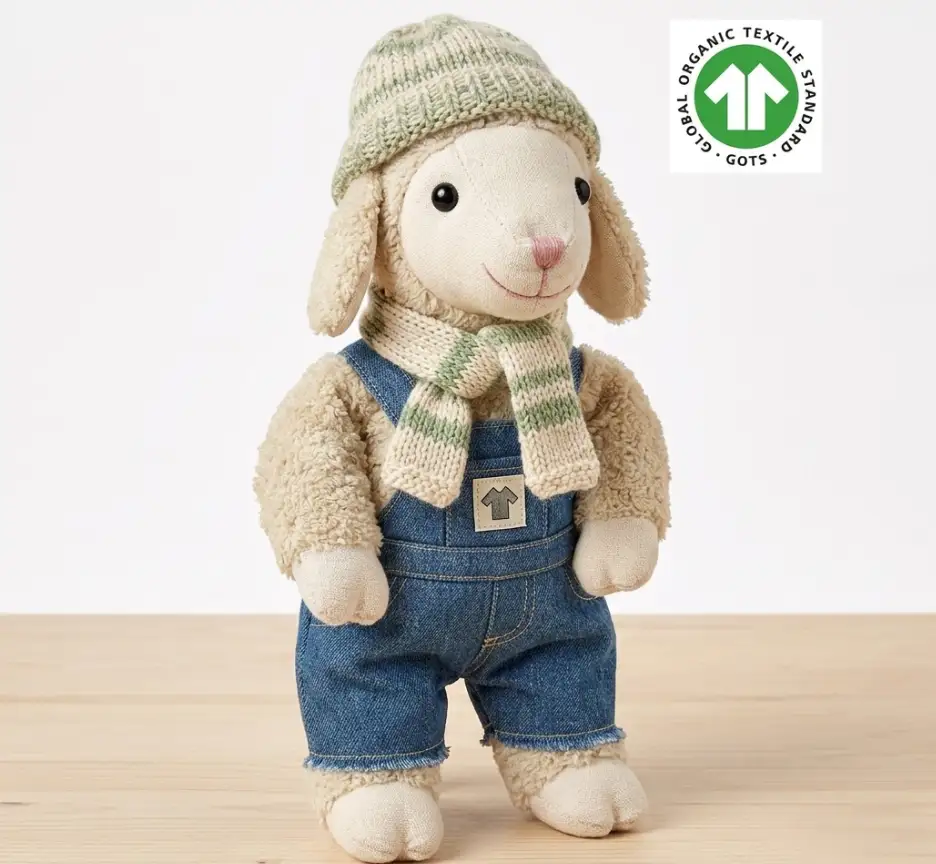
Product care labeling should be adjusted to reflect the actual performance of a sustainable material substitution rather than reusing the care instructions written for the conventional material it replaces. A plush toy filled with PLA fiberfill, for instance, generally requires a lower tumble-dry temperature setting than one filled with conventional polyester fiberfill, and passing along the previous product’s care label without adjustment increases the likelihood of a customer damaging the product through a drying process the new filling was not designed to withstand. Reviewing and updating care labeling as part of every material substitution, rather than treating it as a formality carried over automatically, closes a gap that otherwise undermines the durability benefits a well-chosen sustainable material can actually deliver.
Tip: Run the same wash-cycle durability testing protocol used for conventional plush materials against every sustainable material candidate before finalizing a substitution, rather than assuming sustainability credentials imply comparable performance. A material that performs well in a single pre-production sample can behave differently after the repeated washing a real product will experience over its service life.
How to Communicate Sustainability Claims Accurately and Avoid Greenwashing
Communicating sustainability claims accurately means describing precisely which components of a product are sustainable, by which measure, and to what degree — rather than using broad, undifferentiated language like “eco-friendly” or “sustainable” that implies a comprehensive environmental improvement the product may not actually deliver across all of its materials. This precision is not just an ethical consideration; it is increasingly a legal and platform-compliance one, as regulatory bodies and marketplace policies in several major markets have begun scrutinizing vague environmental marketing claims more actively.
The most common greenwashing pattern in plush toy sustainability marketing is generalizing a single sustainable component — recycled outer fabric, for instance — into a claim implying the entire product is sustainable, without disclosing that the filling, safety components, or packaging remain conventional. A more defensible and increasingly expected approach is component-specific claims: stating precisely that the outer fabric is made from a specified percentage of recycled polyester, verified under a named certification, while being equally clear about which components have not yet been converted to a sustainable alternative.
Compostability and biodegradability claims deserve particular care, since these terms have specific technical meanings that differ from casual usage. A material described as “compostable” without qualification may only break down under industrial composting conditions — controlled temperature, humidity, and microbial activity not present in a typical home compost bin or municipal landfill — meaning an unqualified compostability claim can materially mislead a consumer who reasonably assumes the product will break down in their backyard compost or standard waste stream. Specifying “industrially compostable” rather than “compostable” without qualification, and being explicit about what disposal infrastructure the claim depends on, is the more accurate and defensible approach.
Common Mistakes When Transitioning to Sustainable Plush Toy Materials
The most common mistakes in transitioning to sustainable plush toy materials share a pattern similar to material selection mistakes generally — moving quickly on a single visible metric, most often recycled content percentage or cost, without evaluating the full set of performance, certification, and messaging considerations that determine whether the transition actually succeeds commercially.
Frequent Mistakes in Sustainable Material Transitions
| Mistake | Why It Happens | Typical Consequence |
|---|---|---|
| Converting fabric to recycled content without converting filling | Fabric conversion is the most visible, easiest first step | Sustainability claim vulnerable to accusations of partial greenwashing |
| Skipping wash-durability testing on new fiber fillings | Initial sample quality looks acceptable | Field complaints about lumping or shape loss after repeated washing |
| Using unqualified “biodegradable” or “compostable” language | Simplified marketing language feels more consumer-friendly | Regulatory or platform compliance risk; consumer trust damage if challenged |
| Assuming all sustainable materials carry a large cost premium | Outdated pricing assumptions from early recycled-fiber market conditions | Missed opportunity on now cost-competitive options like rPET and dope-dyeing |
| Not verifying supplier certification claims directly | Certification logos are easy to display without verification | Exposure if a retail partner or auditor requests certificate verification |
Certification verification deserves specific emphasis, since it is one of the mistakes with the most direct commercial consequence if discovered. A supplier claiming GRS or GOTS certification should be able to provide a valid certificate number and scope document that can be independently checked against the certifying body’s public database — a straightforward verification step that is frequently skipped under time pressure, but that protects the buyer from the reputational and contractual risk of building marketing claims on an unverified or lapsed certification.

Tip: Before publishing any sustainability claim tied to a supplier certification, request the certificate number and independently verify it against the certifying body’s public registry. This single verification step takes minutes but closes off the single most damaging category of sustainability marketing risk — a claim built on a certification that turns out to be lapsed, misapplied, or entirely unverifiable.
A Step-by-Step Framework for Transitioning to Sustainable Plush Toy Materials
A structured, phased framework for transitioning to sustainable plush toy materials reduces the risk of the common mistakes outlined above by sequencing material changes according to cost impact, performance risk, and certification maturity — rather than attempting a comprehensive material overhaul in a single step that concentrates risk and cost impact into one production cycle.
Sustainable Material Transition Workflow
| Phase | Key Activities | Primary Output |
|---|---|---|
| 1. Audit current materials | Map every material component — fabric, filling, thread, safety parts, packaging | Baseline material inventory |
| 2. Prioritize by impact and feasibility | Rank components by environmental impact and substitution difficulty | Prioritized transition sequence |
| 3. Start with low-risk, high-maturity swaps | Convert to rPET fabric/fill, right-size packaging, adopt dope-dyeing where applicable | First-phase sustainable product version |
| 4. Test performance against use case | Run wash-durability and quality testing on every new material | Validated performance data by material |
| 5. Secure and verify certifications | Confirm GRS, GOTS, OEKO-TEX, or FSC status directly with certifying bodies | Verified certification documentation |
| 6. Build accurate, component-specific claims | Draft marketing language specific to which components are sustainable and how | Compliant sustainability messaging |
| 7. Expand to higher-cost categories over time | Introduce natural fiber fillings or biodegradable components where use case fits | Progressively broader sustainable product line |
The sequencing in this framework reflects a consistent principle: the transition should be built on verified performance and verified certification at each phase before expanding to the next, rather than moving quickly toward a comprehensive sustainability position and discovering performance or verification gaps after the product has already shipped and been marketed. A phased approach also distributes the cost impact of the transition across multiple production cycles rather than concentrating it into a single, larger cost increase — making the transition more manageable from both an operational and a pricing perspective.
Frequently Asked Questions
Q1. Is recycled polyester actually more sustainable than virgin polyester, or is this mostly a marketing distinction?
Recycled polyester offers a genuine, measurable sustainability advantage over virgin polyester — primarily through reduced petroleum consumption, lower water and energy use in fiber production, and diversion of PET plastic waste from landfill or ocean pathways. It is not a marketing-only distinction, though the degree of improvement depends on the specific supplier’s processing quality and the certification standard behind the recycled content claim. Buyers should still verify recycled content through a recognized certification such as GRS or RCS rather than accepting an unverified recycled claim, since the environmental benefit is only as credible as the chain-of-custody tracking behind it.
Q2. How much of a cost increase should I expect when switching an existing plush toy product line to sustainable materials?
The cost increase varies significantly by which materials are converted. Switching outer fabric and filling to recycled polyester typically carries a low to moderate premium that has been narrowing as recycled fiber supply matures. Switching to organic cotton or natural fiber fillings like kapok carries a substantially higher premium due to limited agricultural supply and higher processing costs. Packaging improvements, particularly right-sizing, can be cost-neutral or even cost-reducing. A phased transition starting with the lower-premium categories allows a buyer to build sustainability credentials while managing the cumulative cost impact deliberately rather than absorbing a large increase all at once.
Q3. Can a plush toy be fully biodegradable given current material and safety component technology?
A fully biodegradable plush toy is difficult to achieve with current material and safety component technology, primarily because safety eyes, joint discs, and certain internal components typically rely on conventional plastic to meet pull-test and durability safety standards at commercially viable cost, and few certified biodegradable alternatives currently match this performance at scale. Fabric and filling can be made substantially biodegradable using natural fibers, but claiming full-product biodegradability while these smaller components remain conventional plastic would be an inaccurate and potentially non-compliant sustainability claim. Accurate, component-specific messaging is the more defensible approach until biodegradable alternatives for safety components mature further.
Q4. What is the difference between GRS and RCS certification for recycled content, and does it matter which one a supplier holds?
Both GRS (Global Recycled Standard) and RCS (Recycled Claim Standard) verify recycled content percentage and chain-of-custody tracking from raw material to finished product, but GRS additionally includes social and environmental processing criteria — covering chemical use, wastewater treatment, and labor practices at the processing facility — that RCS does not require. This makes GRS the more comprehensive and generally more difficult and costly certification for a supplier to obtain. Whether the distinction matters for a specific sourcing decision depends on how comprehensive the buyer’s own sustainability commitments are — a buyer with broader environmental and social sourcing requirements should generally prefer GRS-certified suppliers, while RCS provides sufficient verification for a narrower recycled-content claim alone.
Q5. Do sustainable plush toy materials require different safety testing than conventional materials?
Sustainable materials generally require the same core safety testing framework as conventional materials — flammability, small parts and choking hazard testing, chemical safety testing for restricted substances, and mechanical testing such as pull tests for attached components — since safety regulations apply based on the finished product’s risk profile rather than its material sustainability credentials. However, some sustainable materials introduce testing considerations that warrant specific attention: natural fiber fillings should be evaluated for mold and moisture resistance given their organic composition, and any new component substitution, such as alternative weighting materials, requires the same mechanical and safety validation as a conventional material change would.
Q6. How should a smaller brand with limited budget prioritize sustainability investment if it cannot convert every material at once?
A smaller brand with limited budget is generally best served by prioritizing the lowest-cost, highest-visibility improvements first — converting outer fabric to recycled polyester, right-sizing and converting packaging to recycled or FSC-certified materials, and adopting dope-dyed fabric where the color palette allows — before committing to higher-cost categories like natural fiber fillings. This sequencing builds genuine, verifiable sustainability credentials and consumer-facing improvements at a manageable cost, while establishing the certification verification and messaging discipline needed to expand the program further as budget allows.
Q7. Does using sustainable materials affect the softness and quality feel that plush toy buyers expect?
Well-processed sustainable materials, particularly recycled polyester fabric and fiberfill, can match the softness and quality feel of conventional materials closely, though quality varies meaningfully between suppliers depending on their processing sophistication and feedstock consistency. Natural fiber alternatives introduce more noticeable differences — organic cotton and hemp generally produce a different hand and pile characteristic than polyester plush fabric, which may be a desirable differentiator for some product positioning and a limitation for others. Requesting physical samples and conducting a direct hand-feel comparison against the current conventional material, rather than relying on specification data alone, is the most reliable way to confirm a sustainable material candidate meets the product’s quality expectations before committing to a bulk order.