Skip to content
A practical, production-level guide to how plush backpacks are designed, engineered, and manufactured — covering materials, structural reinforcement, stitching methods, safety compliance, and quality control.
Plush backpacks sit at the intersection of two very different manufacturing disciplines — soft plush toy construction and functional bag-making. A plush backpack has to look and feel like a huggable character while also carrying real weight, surviving daily zipper use, and holding its shape on small shoulders for months or years.
Getting this combination right requires deliberate choices at every stage: fabric selection, internal structure, seam reinforcement, hardware attachment, and safety testing all have to work together, not just look good in a sample photo.
What Makes Plush Backpack Manufacturing Different
Plush backpack manufacturing differs from standard plush toy production because the product must function as a load-bearing bag, not just a soft display item. A plain plush toy only needs to hold its shape when sitting on a shelf. A plush backpack needs reinforced stress points at the strap attachments, a structured base that resists sagging under the weight of books or supplies, and stitching dense enough to survive repeated zipper pulls and daily handling — all without losing the soft, huggable character silhouette that makes it appealing in the first place.
This dual requirement means plush backpack factories typically combine plush sewing teams (skilled in fur fabric handling, embroidery, and character shaping) with bag-construction specialists (skilled in webbing attachment, zipper installation, and load-bearing seam work). Facilities that only produce standard plush toys, without bag-making capability, often struggle with strap durability and structural sagging over time.
Core Components of a Plush Backpack
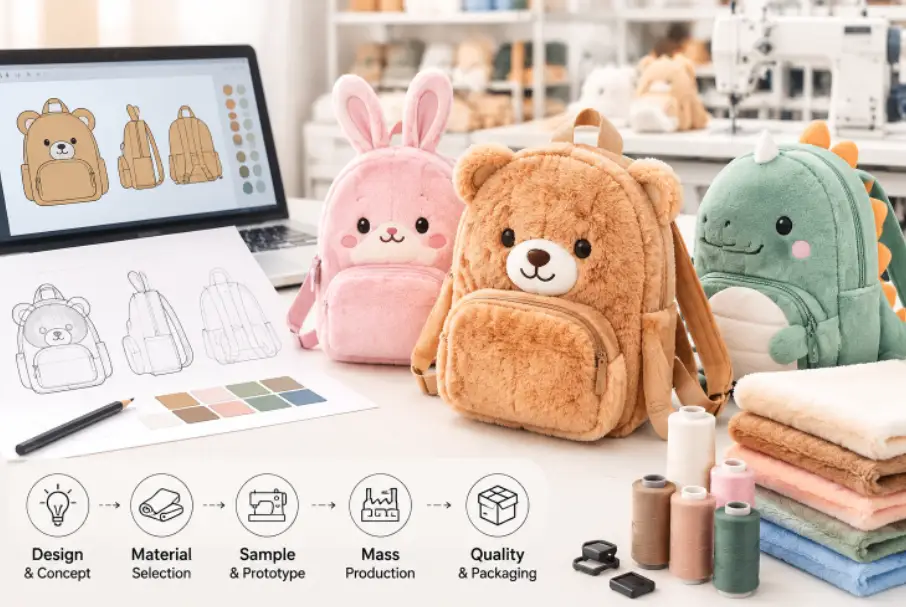
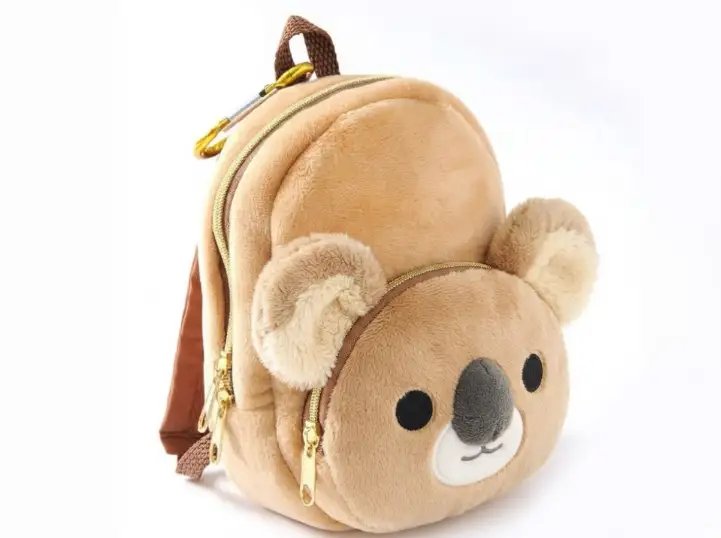
A typical plush backpack breaks down into several functional zones, each with its own material and construction requirements: the plush exterior shell (the character’s face, body, or shape), the internal structural lining, the storage compartment with its closure system, the strap and handle assembly, and any hard-wearing base panel that contacts the ground or a child’s back.
Tip: When evaluating a manufacturing partner for a plush backpack program, ask specifically to see samples of their strap attachment and base reinforcement work, not just plush character samples — these structural details are where quality differences show up first, and they are much harder to correct after tooling and patterns are finalized.
Fabric and Material Selection
Material selection for a plush backpack has to balance softness, durability, and washability, since these products are handled daily and frequently machine washed by parents.
Plush Fabric Options
Short-pile plush fabrics, typically in the 3–5mm range, are the most common choice for backpack exteriors because they resist matting and hold embroidered or appliqued details more cleanly than longer pile fabrics. Long-pile or “shaggy” plush is sometimes used for accent areas such as manes or tails but is generally avoided across high-wear surfaces like the base or strap contact points, where friction quickly flattens and mats longer fibers.
Fabric Weight and GSM Considerations
Fabric weight, measured in grams per square meter (GSM), directly affects both the backpack’s durability and its final cost. Heavier GSM plush fabrics generally offer better abrasion resistance and a richer hand-feel but add weight and material cost. Lighter GSM fabrics reduce cost and overall product weight but may show wear more quickly at friction points such as the base and strap junctions.
Base and High-Wear Panel Materials
Because the base of a plush backpack is in near-constant contact with floors, chairs, and other surfaces, many manufacturers substitute a more durable woven or non-woven fabric, sometimes with a water-resistant coating, for this panel instead of using plush fabric throughout. This single substitution meaningfully extends the product’s practical lifespan without compromising the plush character look on the visible front and side panels.
Common Plush Backpack Fabric Options and Best Use Zones
| Fabric Type | Typical GSM Range | Best Use Zone |
|---|---|---|
| Short-pile plush (3–5mm) | 280–360 GSM | Main exterior body, face, and character shaping |
| Long-pile plush (“shaggy”) | 320–420 GSM | Accent details only (manes, tails, ears) |
| Woven polyester (base panel) | 200–280 GSM | Base panel, high-friction contact areas |
| Oxford / ripstop nylon (reinforced zones) | 210D–420D | Strap backing, interior lining, wear panels |
Structural Reinforcement and Load-Bearing Design
The single most common failure point in poorly manufactured plush backpacks is strap separation — the point where the strap webbing meets the bag body. This is a pure structural engineering problem hidden inside a soft, character-driven product, and it needs to be treated as such during pattern development.
Strap Attachment Methods
Straps should never be attached with a single line of stitching directly through plush fabric alone. Reliable construction typically anchors the strap webbing to an internal woven reinforcement patch, sewn with a box-and-cross or bar-tack stitch pattern, which is then integrated into the backpack’s internal structure before the plush exterior is finished over it. This distributes pulling force across a wider area of stitching and a stronger backing material rather than concentrating it on the plush fabric’s own fibers.
Internal Frame and Base Structure
Many plush backpacks incorporate a semi-rigid internal base board or a stiffened foam panel to prevent the bottom from collapsing or bulging asymmetrically when loaded. This base structure also gives the backpack a more consistent silhouette when standing upright, which matters significantly for retail presentation and shelf appeal.
Compartment and Zipper Design
Zippers on plush backpacks require slightly different handling than on standard fabric bags because the plush pile can catch in the zipper teeth if the seam allowance and trim are not carefully controlled. A common solution is a bound or piped zipper edge using a smooth woven tape rather than exposing raw plush pile directly at the zipper opening, which both improves durability and prevents fur from catching during use.
Tip: Request a pull-test report on strap attachment points before approving a plush backpack for mass production — a straightforward static load test, pulling each strap to a specified force for a set duration, will reveal weak attachment points far more reliably than visual inspection of a sample alone.
Common Structural Failure Points and Recommended Reinforcement
| Failure Point | Common Cause | Recommended Reinforcement |
|---|---|---|
| Strap separation | Single-line stitching directly into plush fabric | Woven reinforcement patch with box-and-cross stitch |
| Base sagging | No internal structure to resist the load weight | Semi-rigid baseboard or stiffened foam insert |
| Zipper fur catching | Raw plush pile exposed at zipper opening | Bound or piped zipper edge with woven tape |
| Seam splitting at stress points | Standard straight-stitch seams under repeated load | Bar-tack or box stitch at all load-bearing junctions |
Stuffing, Filling, and Shape Retention
Unlike a standard plush toy, which can be loosely filled for a soft, floppy feel, a plush backpack character shape needs to hold a more defined silhouette so that the storage compartment inside functions properly and the exterior does not distort under load.
Filling Material Selection
Polyester fiberfill remains the standard filling material for the plush portions of a backpack that are not part of the storage compartment, chosen for its washability, resilience, and low cost relative to alternatives. Density needs to be higher and more evenly distributed than in a typical plush toy to prevent the character shape from collapsing or shifting once the backpack is loaded and worn.
Shape-Holding Techniques
Many plush backpack designs use localized structural inserts — light plastic or dense foam shapes sewn into specific areas such as ears, head panels, or limbs — to maintain a consistent silhouette that would otherwise sag under the fiberfill’s own weight combined with the bag’s contents. These inserts are typically placed only where visual shape definition matters most, keeping the rest of the product soft and huggable.
Tip: If the character design includes prominent features like large ears, a tall head shape, or long limbs, plan for localized structural inserts from the earliest design stage — retrofitting shape support into an already-finalized pattern is significantly more disruptive than building it in from the start.
Safety Compliance and Testing Requirements
Plush backpacks intended for children fall under both plush toy safety regulations and general product safety requirements applicable to bags, and manufacturers need to test against both frameworks rather than treating the product as a pure toy or a pure bag.
Mechanical and Physical Safety Testing
Standard plush toy safety testing evaluates small parts, sharp points, and pull-force resistance on attached components such as eyes, noses, and any decorative hardware. For a plush backpack, this testing also needs to extend to strap attachment points, zipper pulls, and any buckles or clips, since these are handled with more repeated mechanical stress than a typical toy’s features.
Drawstring and Cord Safety
Products marketed toward young children need particular attention to drawstring length and placement, since regulatory guidance in many markets restricts or prohibits functional drawstrings around the neck or hood area of children’s products, a consideration that extends to some plush backpack designs with hood-style or drawstring closures.
Flammability and Chemical Compliance
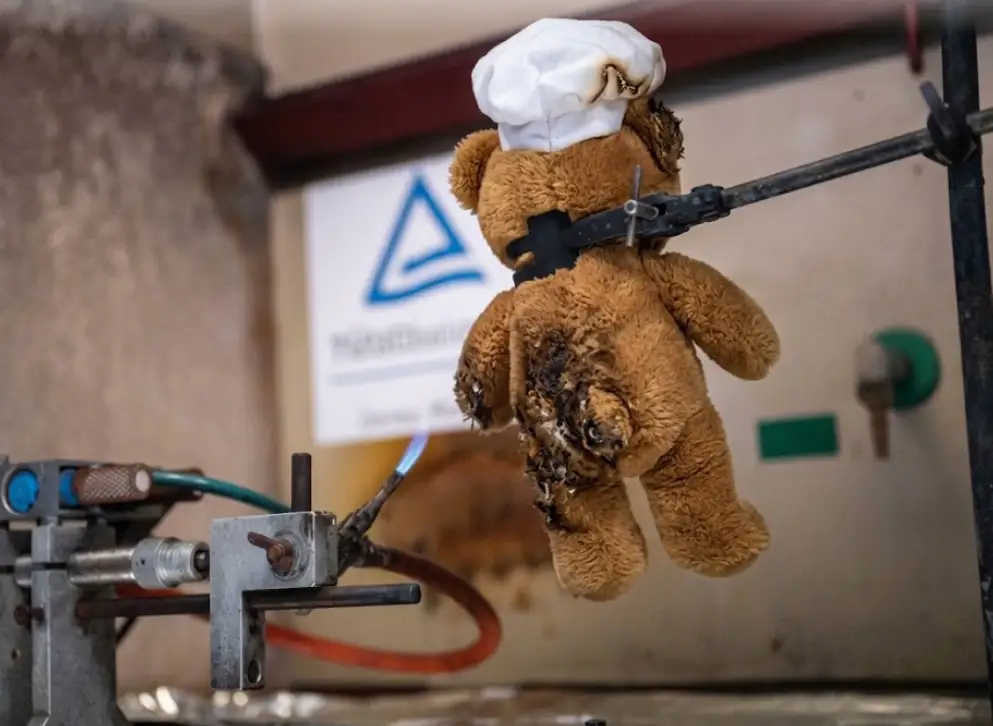
Both the plush exterior fabric and any internal filling materials typically need to meet flammability standards applicable in the destination market, along with restrictions on substances such as lead, phthalates, and other regulated chemicals in coatings, prints, and trims. Chemical compliance testing should cover every component separately, including zippers, buckles, and printed graphics, since these smaller components are sometimes overlooked when only the main plush body is tested.
Key Testing Categories for Children’s Plush Backpacks
| Testing Category | What It Evaluates |
|---|---|
| Mechanical/physical safety | Small parts, sharp points, and pull-force on attached components |
| Strap and hardware pull testing | Load resistance at strap attachment points and buckles |
| Flammability | Burn rate of plush fabric and filling materials |
| Chemical compliance | Lead, phthalates, and restricted substances in fabric, trims, and prints |
| Drawstring/cord safety | Length and placement restrictions on functional cords |
Quality Control Through Production
Quality control for plush backpacks needs checkpoints at multiple stages, since problems caught only at final inspection are far more expensive to correct than those caught during cutting, sewing, or pre-production sampling.
Pre-Production Sample Approval
A pre-production sample should be evaluated not just for visual character accuracy but for functional performance — zipper operation, strap load behavior, and base stability when the compartment is loaded to its intended capacity. Approving a sample based on appearance alone, without functional testing, is one of the most common causes of downstream quality issues in plush backpack programs.
In-Line Inspection During Sewing
In-line inspection during the sewing process focuses on stitch density at load-bearing seams, correct placement of reinforcement patches before the plush exterior is closed over them, and consistent filling density across units, since these structural elements become invisible and difficult to verify once the product is fully assembled.
Final Random Inspection
Final inspection prior to shipment typically applies an accepted quality limit (AQL) sampling plan across the finished goods, checking for consistent stitching, correct hardware attachment, absence of loose threads or foreign objects, and functional zipper and strap performance on a statistically representative sample of the full order.
Tip: Insist on an in-line inspection during sewing, not just a final random inspection before shipment — reinforcement patches and internal base structures are sewn into the product early in the process and become impossible to verify by external inspection once the plush exterior is closed over them.
Bringing It All Together
A well-manufactured plush backpack succeeds by treating the product as a functional bag first and a plush character second, even though the character design is what drives the purchase decision. Fabric selection, strap reinforcement, base structure, filling density, and safety testing all need to work together from the earliest design stage, since retrofitting structural fixes after patterns and tooling are finalized is costly and often incomplete.
Manufacturers who combine genuine plush sewing expertise with bag-construction discipline consistently produce a more durable, longer-lasting product than those who treat a backpack as simply an oversized plush toy with straps attached.
Frequently Asked Questions
What fabric is best for a plush backpack exterior?
Short-pile plush fabric in the 3–5mm range is generally the best choice for the main exterior body because it resists matting and holds embroidered or appliqued detail more cleanly than longer-pile fabric. Long-pile plush works well for accent details like manes or tails but is best avoided on high-friction areas such as the base and strap contact points.
Why do plush backpack straps fail at the attachment point?
Strap separation typically happens when the strap webbing is stitched directly into the plush fabric alone, without a woven reinforcement patch distributing the load. Reliable construction anchors the strap to an internal reinforcement patch using a box-and-cross or bar-tack stitch, which spreads pulling force across a stronger material and a wider stitching area.
Do plush backpacks need a rigid internal structure?
Most plush backpacks benefit from a semi-rigid base board or stiffened foam panel to prevent the bottom from sagging or bulging asymmetrically once loaded with books or supplies. This internal structure also helps the backpack maintain a consistent, appealing silhouette when standing upright on a shelf.
How is filling different in a plush backpack compared to a regular plush toy?
Plush backpacks generally require higher and more evenly distributed filling density than standard plush toys because the character shape needs to hold its form under the added weight of the storage compartment’s contents. Some designs also add localized structural inserts in areas like ears or limbs to maintain shape without over-stuffing the entire body.
What safety testing applies to plush backpacks for children?
Plush backpacks typically require mechanical and physical safety testing for small parts and sharp points, pull-force testing on straps and hardware, flammability testing on fabric and filling, and chemical compliance testing on components such as zippers, buckles, and printed graphics. Products with hood-style or drawstring closures also need to meet drawstring length and placement safety guidance.
How can zippers be prevented from catching plush fur?
A bound or piped zipper edge using smooth woven tape, rather than exposing raw plush pile directly at the zipper opening, is the standard solution. This construction detail both improves durability at the zipper seam and prevents loose fur fibers from catching in the zipper teeth during regular use.
What quality control checkpoints matter most in plush backpack production?
In-line inspection during sewing is particularly important because reinforcement patches and internal base structures become invisible once the plush exterior is closed over them. Functional pre-production sample testing, covering zipper operation, strap load behavior, and base stability under load, is equally important and should not be skipped in favor of appearance-only sample approval.
How is strap durability actually tested before mass production?
A pull test, applying a specified static load to each strap attachment point for a set duration, is the standard way to verify strap durability before approving a design for mass production. This kind of structural testing reveals weak attachment points far more reliably than visual inspection of a sample alone.