Skip to content
A decade ago, sustainability in plush toy manufacturing was largely a labeling exercise — a recycled-content claim printed on a hang tag, disconnected from how the product was actually made. That is no longer the case. Retail buyers now request supplier sustainability documentation as a standard part of vendor qualification. Regulatory frameworks in the EU and increasingly in North America are tightening requirements around recycled content verification, chemical restrictions, and extended producer responsibility. And consumers, particularly in the gift and premium plush segments, are treating material sourcing as a purchase-decision factor rather than a bonus feature.
This shift has moved sustainability from a marketing layer applied after production into a set of decisions made at the material sourcing, dyeing, cutting, filling, and packaging stages — decisions that materially change cost structure, lead time, and quality control requirements. This guide walks through the material, process, certification, and supply chain trends currently reshaping sustainable plush toy manufacturing and explains the practical trade-offs buyers need to understand before specifying sustainable requirements in a production order.
Why Is Sustainability Becoming a Core Requirement in Plush Toy Manufacturing, Not Just a Marketing Feature?
Sustainability requirements in plush toy manufacturing are no longer optional add-ons layered onto an otherwise conventional production process. They are increasingly embedded into the compliance documentation, material sourcing criteria, and factory qualification standards that determine whether a product can be sold into a given market at all, independent of whether the brand chooses to market the product as “sustainable.”
Sustainability is becoming a core requirement in plush toy manufacturing because three converging pressures — regulatory, retail, and consumer — have each independently raised the baseline expectation for documented, verifiable environmental practice. Regulatory pressure comes primarily from extended producer responsibility frameworks and recycled-content verification requirements taking effect across the EU and expanding in other markets, which increasingly require documented proof of material origin rather than accepting unverified claims.
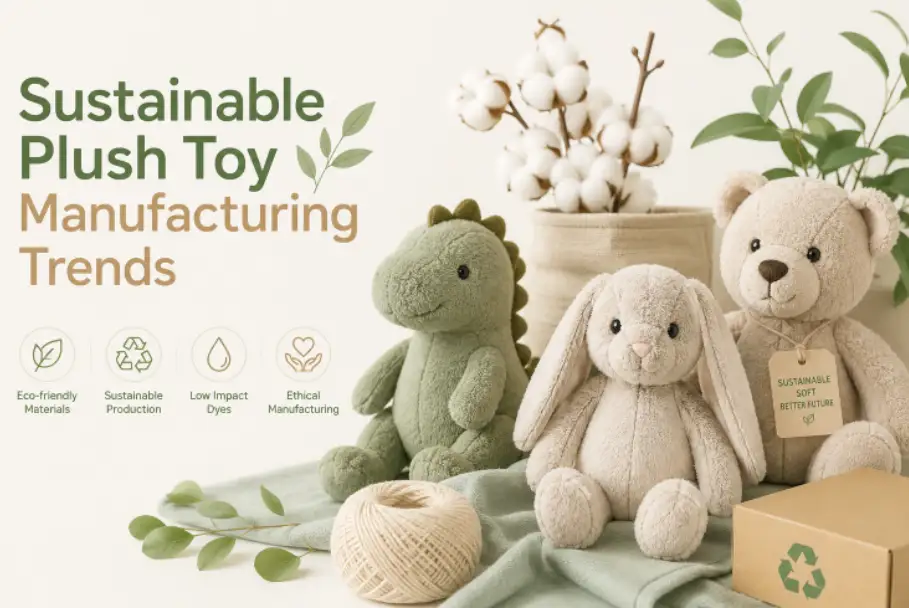
Retail pressure comes from major retailers and marketplaces adding supplier sustainability scorecards and material disclosure requirements to their vendor onboarding process, independent of what any individual brand requests. Consumer pressure comes from a growing segment of buyers, particularly in gift, licensed IP, and premium plush categories, who actively factor material sourcing into purchase decisions and who are quick to identify unsubstantiated sustainability claims.
The practical consequence for manufacturers is that sustainability documentation — verified recycled content percentages, chemical compliance test reports specific to sustainable material inputs, and supply chain traceability records — has become as much a part of standard order documentation as tech packs and AQL inspection criteria, rather than a specialized request reserved for eco-branded product lines.
What Is Driving Sustainability Requirements in Plush Toy Manufacturing
| Pressure Source | Specific Requirement | Practical Impact on Manufacturing |
|---|---|---|
| Regulatory (EU and expanding markets) | Recycled content verification, extended producer responsibility fees | Requires documented, auditable material origin records |
| Retail and marketplace vendor standards | Supplier sustainability scorecards, material disclosure forms | Requires standardized sustainability data as part of vendor onboarding |
| Consumer purchase behavior | Preference for verifiable, third-party certified sustainability claims | Increases scrutiny on greenwashing and unverified claims |
| Licensing and IP brand requirements | Brand-specific sustainability commitments passed down to manufacturers | Requires alignment with brand-level sustainability policy, not just factory practice |
What Are the Leading Sustainable Material Trends in Plush Toy Production?
Material selection is the single highest-impact decision point for sustainability in plush toy manufacturing, since the outer fabric and internal filling together represent the large majority of a plush toy’s total material mass and environmental footprint. Three material categories currently represent the leading edge of sustainable material adoption in the plush sector.
Recycled PET (rPET) Fabrics
Recycled PET fabric — plush fabric woven or knitted from fiber reclaimed from post-consumer plastic bottles rather than virgin petroleum-based feedstock — has become the most widely adopted sustainable material trend in plush manufacturing, largely because it can replace conventional polyester-based plush fabrics like minky and velboa without requiring a change in construction technique, hand feel, or production equipment. The fiber itself is chemically similar enough to virgin polyester that existing knitting, cutting, and sewing processes require minimal adaptation.
The environmental case for rPET fabric centers on diverting plastic waste from landfill or ocean pathways and reducing the demand for virgin petroleum feedstock, though the actual environmental benefit depends heavily on the verified recycled content percentage and the energy source used in the reclamation and re-spinning process — both of which vary significantly between suppliers and are the reason recycled content verification has become such a scrutinized area of compliance documentation.
Organic and Natural Fiber Fabrics
Organic cotton and other natural fiber fabrics represent a smaller but growing segment of sustainable plush material adoption, used primarily in premium and infant-targeted plush segments where natural fiber hand feel and chemical-free processing claims carry particular market value. Organic cotton plush requires certified organic fiber sourcing, verified through chain-of-custody documentation from farm to finished fabric, and typically commands a meaningfully higher material cost than either conventional cotton or rPET alternatives.
Recycled and Bio-Based Filling Materials
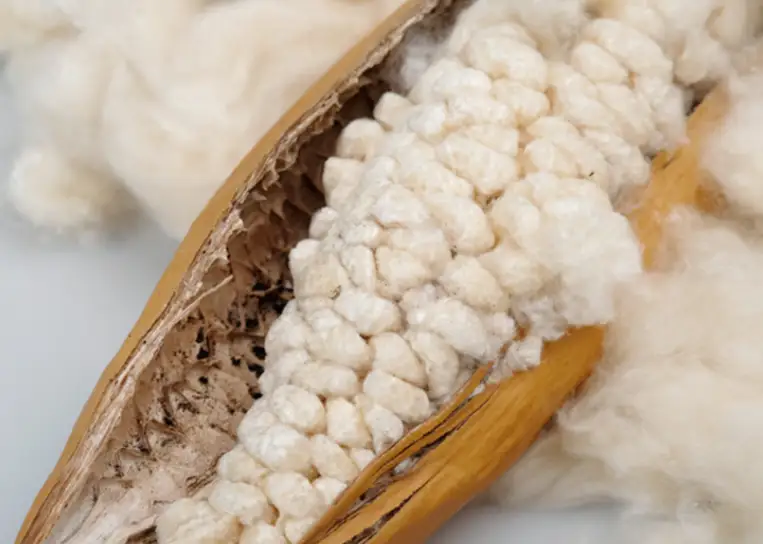
Filling material sustainability trends center on two distinct approaches: recycled PET fiberfill, produced through the same reclamation process as rPET fabric but processed into loose fiber rather than woven fabric, and bio-based filling alternatives derived from renewable plant sources rather than petroleum feedstock. Recycled PET fiberfill has achieved broader commercial adoption because its performance characteristics — loft, compression recovery, washability — closely match conventional PP cotton filling, while bio-based alternatives remain a smaller, more specialized segment due to higher cost and more limited supply chain maturity.
Sustainable Material Options Compared to Conventional Equivalents
| Material Category | Sustainable Alternative | Performance vs. Conventional | Typical Cost Premium |
|---|---|---|---|
| Outer fabric (minky/velboa style) | Recycled PET (rPET) plush fabric | Comparable hand feel and durability | 5–15% |
| Outer fabric (natural fiber) | Certified organic cotton | Different hand feel; lower pile density options | 25–50% |
| Filling material | Recycled PET fiberfill | Comparable loft and compression recovery | 5–20% |
| Filling material (specialized) | Bio-based plant fiber filling | Variable loft consistency; less production maturity | 20–40% |
| Thread and embroidery yarn | Recycled polyester thread | Comparable strength and colorfastness | 3–10% |
Tip: Verify recycled content percentage with third-party certification, not supplier declaration alone. Recycled content claims for rPET fabric and filling vary widely in how they are calculated and verified. A fabric described as “recycled” without a specified percentage or third-party certification such as the Global Recycled Standard may contain anywhere from a small blended percentage to fully recycled fiber. Requesting the certification document itself, rather than accepting a general recycled-content claim on a fabric specification sheet, is the most reliable way to confirm the actual material composition before it is written into a purchase agreement.
How Is Sustainable Dyeing and Finishing Changing Plush Fabric Production?
Dyeing and finishing represent one of the most water- and chemical-intensive stages of textile production, and this stage has become a significant focus of sustainable manufacturing innovation in the plush fabric supply chain, independent of the fiber source used.
Sustainable dyeing and finishing is changing plush fabric production through three parallel developments: reduced water consumption dyeing techniques that use significantly less water per unit of fabric than conventional dyeing baths, low-impact and OEKO-TEX-compliant dye formulations that eliminate restricted azo compounds and reduce heavy metal content in wastewater discharge, and waterless or low-liquor dyeing technologies that are beginning to see commercial adoption in higher-volume textile production, though their adoption within the plush-specific fabric supply chain remains more limited than in broader apparel textile manufacturing.
Dyeing and Finishing Method Comparison
| Dyeing/Finishing Method | Relative Water Use | Relative Chemical Load | Current Adoption in Plush Fabric Supply Chain |
|---|---|---|---|
| Conventional reactive dyeing | High | Moderate to high | Dominant, industry standard |
| OEKO-TEX-compliant low-impact dyeing | Moderate to high | Low (restricted substance compliant) | Growing, increasingly standard for export-compliant fabric |
| Reduced-liquor-ratio dyeing | Reduced (20–40% less) | Moderate | Emerging, adopted by larger textile mills |
| Waterless/air dyeing technology | Minimal | Low | Limited, early-stage adoption |
For buyers, the most actionable near-term sustainable dyeing requirement is not waiting for waterless technology to reach broad commercial availability, but specifying OEKO-TEX Standard 100 or equivalent low-impact dye compliance as a baseline requirement — a standard that is already commercially mature, verifiable through existing certification infrastructure, and directly reduces the chemical compliance risk that affects market access regardless of any broader sustainability positioning.
What Packaging Trends Are Reducing the Environmental Footprint of Plush Toys?
Packaging has become a highly visible sustainability battleground in plush toy manufacturing because, unlike fabric and filling composition, packaging changes are immediately apparent to the end customer at the point of purchase and unboxing, making packaging sustainability both a genuine environmental lever and a consumer-facing differentiator.
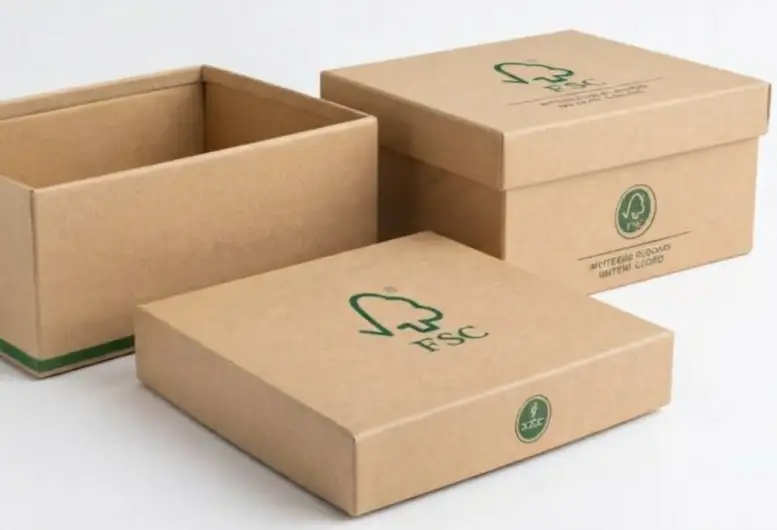
Packaging trends are reducing the environmental footprint of plush toys through material substitution — replacing conventional plastic polybags with recyclable paper or compostable alternatives — and through structural reduction, minimizing the total packaging material used per unit through simplified design rather than substituting one material for another.
Sustainable Packaging Options for Plush Toys
| Packaging Element | Conventional Approach | Sustainable Alternative | Key Consideration |
|---|---|---|---|
| Individual unit protection | Plastic polybag | Recyclable kraft paper bag or compostable film | Compostable film requires humidity-controlled storage to prevent premature degradation |
| Retail packaging/hang tags | Virgin paperboard, laminated tags | FSC-certified recycled paperboard, uncoated tags | Uncoated tags require ink and print process adjustment |
| Master carton materials | Standard corrugated cardboard | Recycled-content corrugated cardboard | Minimal performance trade-off; widely available |
| Void fill and cushioning | Plastic air pillows, foam inserts | Recycled paper void fill, molded pulp inserts | Molded pulp requires a tooling investment for custom shapes |
| Printed graphics | Full-color plastic-laminated printing | Soy or water-based ink printing on uncoated stock | Slightly reduced print vibrancy and moisture resistance |
Tip: Test compostable packaging film under actual shipping and storage humidity conditions. Compostable packaging films are formulated to break down under specific composting conditions, but some formulations are also sensitive to the humidity levels encountered during ocean freight or long-term warehouse storage, potentially degrading before the product reaches the end customer. Requesting a humidity and shelf-life test specific to the shipping lane and storage duration involved — rather than relying on a general compostability certification alone — prevents a packaging sustainability upgrade from becoming a product protection failure.
How Are Factories Reducing Waste and Improving Resource Efficiency in Production?
Beyond material selection, a parallel set of sustainability trends focuses on reducing waste and improving resource efficiency within the production process itself — changes that reduce environmental impact regardless of which specific materials are used.
Fabric Utilization and Cutting Optimization
Fabric utilization — the percentage of a fabric roll actually converted into finished product panels rather than discarded as cutting waste — has become a specific sustainability and cost metric that factories increasingly track and optimize through computerized nesting software, which arranges pattern pieces across a fabric roll to minimize unused space between cut panels. Improvements in fabric utilization reduce both material cost and the volume of textile waste generated per unit produced, making it one of the few sustainability improvements that deliver a direct cost benefit alongside their environmental benefit.
Fabric and Filling Scrap Reuse
Cutting scrap and filling material scrap that cannot be avoided through optimized nesting is increasingly being diverted into secondary uses rather than sent to landfill — fabric scrap reprocessed into recycled fiberfill, and filling material offcuts consolidated and reused in lower-precision filling applications such as packaging cushioning rather than being discarded as production waste.
Water and Energy Efficiency in Production Facilities
Water and energy efficiency improvements — including water recycling systems in wet processing stages, energy-efficient lighting and machinery, and solar power adoption at larger production facilities — represent a facility-level sustainability trend that affects the environmental footprint of every product manufactured at that facility, independent of the specific materials used in any individual order.
Production-Stage Waste Reduction Techniques
| Technique | Production Stage | Primary Benefit |
|---|---|---|
| Computerized fabric nesting | Cutting | Reduced fabric waste, improved material cost efficiency |
| Fabric scrap-to-fiberfill reprocessing | Post-cutting waste management | Diverts textile waste from landfill |
| Water recycling in wet processing | Dyeing and finishing | Reduced freshwater consumption per unit of fabric |
| Energy-efficient machinery and lighting | Facility-wide | Reduced energy consumption per unit produced |
| Solar power adoption | Facility-wide | Reduced reliance on grid electricity from non-renewable sources |
What Certifications and Compliance Standards Are Shaping Sustainable Plush Manufacturing?
Certifications provide the verification infrastructure that turns sustainability claims from marketing statements into auditable facts, and a specific set of certifications has become the practical standard against which sustainable plush manufacturing claims are now evaluated by retailers, regulators, and sophisticated buyers.
Key Sustainability Certifications Relevant to Plush Toy Manufacturing
| Certification | What It Verifies | Relevance to Plush Manufacturing |
|---|---|---|
| Global Recycled Standard (GRS) | Verified recycled content percentage and chain of custody | Applies to rPET fabric and filling material claims |
| OEKO-TEX Standard 100 | Absence of harmful substances in finished textile products | Applies to fabric, thread, and finished plush products |
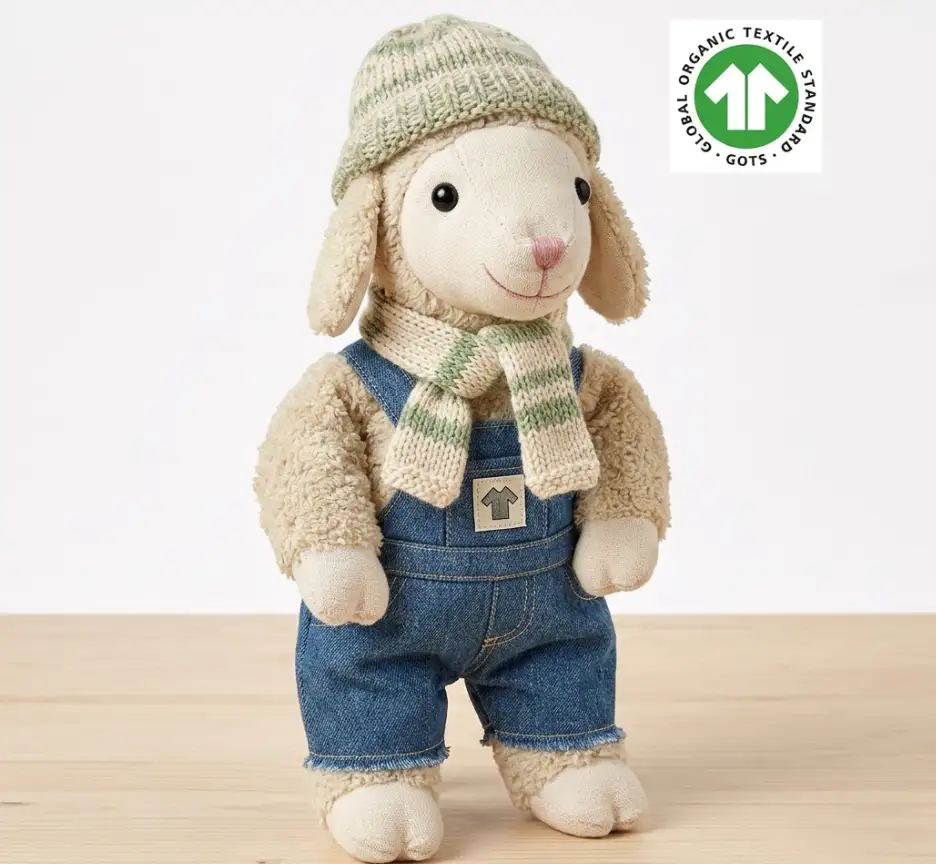
| Global Organic Textile Standard (GOTS) | Organic fiber content and environmentally responsible processing | Applies to organic cotton and natural fiber plush fabric |
| Forest Stewardship Council (FSC) | Responsibly sourced paper and cardboard packaging materials | Applies to hang tags, retail packaging, and cartons |
| ISO 14001 | Facility-level environmental management system | Applies to overall factory environmental management practice |
Tip: Request the certification scope, not just the certificate name. Many sustainability certifications apply to specific materials, product lines, or facility locations rather than to an entire company across all of its operations. A GRS certificate, for example, verifies the chain of custody for the specific certified material lots, not automatically every recycled-content claim a supplier makes. Requesting the specific scope document attached to a certification — which materials, which facility, which time period — prevents the common misunderstanding where a certification earned for one product line is assumed to apply across an entire supplier relationship.
What Role Does Product Design Play in Sustainable Plush Manufacturing?
Material substitution and process efficiency address a large share of the sustainability equation, but the design of the plush toy itself — before a single material is sourced or a single cut is made — determines how much of that sustainability potential can actually be realized. A product designed without sustainability in mind can partially offset even excellent material choices through excessive complexity, poor material utilization, or construction methods that make end-of-life recycling impossible.
Product design plays a role in sustainable plush manufacturing through three specific mechanisms: reducing overall material volume through efficient silhouette and panel design, simplifying construction to improve fabric utilization during cutting, and, in a smaller but growing segment, designing for mono-material construction that supports easier end-of-life recycling.
Mono-Material Design for Recyclability
Conventional plush toys combine multiple material types — polyester fabric, PP cotton filling, plastic safety eyes, metal joints or weights — that are extremely difficult to separate and recycle at the end of life, effectively making most plush toys landfill-bound regardless of any individual recycled-content claim in their construction. Mono-material design addresses this by minimizing the number of distinct material types in a single product, most commonly by pairing polyester-based fabric with polyester-based filling, so that a far greater share of the product’s mass could theoretically be reprocessed together rather than requiring separation into incompatible material streams.
Full mono-material plush construction remains a relatively early-stage design trend, constrained by the practical need for safety components such as eyes, noses, and joints that are rarely available in matching polymer families, and by the absence of established plush-specific recycling infrastructure even where mono-material construction is achieved. Its current commercial value lies primarily in forward-positioning for brands anticipating tighter end-of-life regulation, rather than in an already-mature recycling pathway.
Panel Efficiency and Silhouette Simplification
Panel efficiency — designing a plush toy’s pattern pieces to minimize the number of panels and the amount of fabric waste generated when those panels are cut from a roll — is a more immediately actionable design lever than mono-material construction, and one that most directly interacts with the cutting optimization techniques covered earlier in this guide. A character design with fewer, larger, more geometrically simple panels not only reduces fabric waste during nesting but also reduces sewing time and seam count, compounding a sustainability benefit with a manufacturing efficiency benefit.

Design-Stage Sustainability Levers
| Design Lever | Sustainability Mechanism | Practical Constraint |
|---|---|---|
| Mono-material construction | Improves theoretical end-of-life recyclability | Limited by safety component material availability and recycling infrastructure |
| Panel count reduction | Reduces fabric waste and cutting complexity | May limit character detail or silhouette complexity |
| Right-sized proportions | Reduces total filling and fabric volume per unit | Must balance against market size expectations for the product category |
| Reduced hardware components | Fewer distinct material types requiring separation at the end of life | May limit interactive or functional product features |
Tip: Evaluate panel efficiency during the design review stage, not after tooling or pattern-making is finalized. Panel efficiency is dramatically easier and less costly to influence during the initial design and pattern development stage than after patterns have been finalized and sample approval has occurred. Requesting a fabric utilization estimate as part of the design review — before patterns are locked — allows adjustments to panel count or silhouette to be made while they remain essentially free, rather than after the cost of re-patterning an approved design has already been incurred.
Sustainable material claims and process improvements only carry commercial and regulatory value if they can be traced and verified through the supply chain, which has made supply chain transparency an increasingly central sustainability trend in its own right, distinct from any specific material or process innovation.
Supply chain transparency is becoming part of sustainable plush manufacturing through chain-of-custody documentation that tracks material lots from raw fiber source through spinning, weaving or knitting, and finished fabric production, digital traceability systems that in more advanced supply chains use batch-level tracking codes to link a finished product back to specific material lots and processing facilities, and increased willingness among manufacturers to share supplier-of-supplier information — the identity and certification status of fiber and fabric mills — rather than treating that information as proprietary.
This transparency trend matters practically because sustainability claims that cannot be traced through a documented chain of custody are increasingly treated with skepticism by retailers and regulators alike, regardless of whether the underlying material or process improvement is genuine. A recycled content claim without traceable chain-of-custody documentation carries meaningfully less commercial and compliance value than the identical material claim backed by lot-level traceability records.
Digital Batch Tracking and Lot-Level Traceability
The more advanced end of supply chain transparency in plush manufacturing involves digital batch tracking systems that assign a unique identifier to each material lot at the point of fiber sourcing and carry that identifier through spinning, fabric production, cutting, and final assembly, so that any finished unit can, in principle, be traced back to the specific raw material batch used to produce it. This level of traceability is more commonly seen in larger, more sophisticated textile supply chains than in the plush toy sector specifically, but adoption is growing as retail sustainability scorecards increasingly ask not just whether a recycled material was used, but whether its origin can be independently verified down to a specific, auditable batch record.
For most plush manufacturers, the practical entry point into this level of traceability is not a full digital tracking platform, but a disciplined internal record-keeping practice — logging which fabric roll, filling batch, and dye lot was used for each production run, and retaining the corresponding supplier certification documents for each of those inputs. This record-keeping discipline is what allows a manufacturer to respond credibly and quickly when a retailer or regulator requests verification for a specific batch of finished goods, rather than needing to reconstruct sourcing history after the fact.
Sub-Tier Supplier Visibility
A related and increasingly important dimension of transparency is sub-tier supplier visibility — knowledge of and, where possible, verified certification status for the suppliers that provide raw fiber and yarn to the fabric mills a plush manufacturer works with directly, rather than only the fabric mill itself. Historically, many manufacturers have had limited visibility beyond their immediate, first-tier fabric and filling suppliers, treating the sourcing practices of those suppliers’ own upstream vendors as outside their direct concern.
This limited visibility is becoming less acceptable as retailers and regulators extend sustainability and compliance expectations further up the supply chain. A GRS certification for recycled fabric, for example, is only as credible as the verified chain of custody extending back to the original recycled fiber source — meaning that sub-tier visibility is not a peripheral concern but a direct requirement of the certification itself remaining valid. Manufacturers building genuinely durable sustainability credentials are increasingly expected to be able to answer questions about their suppliers’ suppliers, not only their own immediate production practices.
What Trade-offs Should Buyers Understand Between Sustainability, Cost, Durability, and Safety?
Sustainable material and process choices are not free of trade-offs, and understanding these trade-offs accurately allows buyers to make informed decisions rather than assuming that every sustainable substitution is a straightforward improvement with no offsetting consideration.
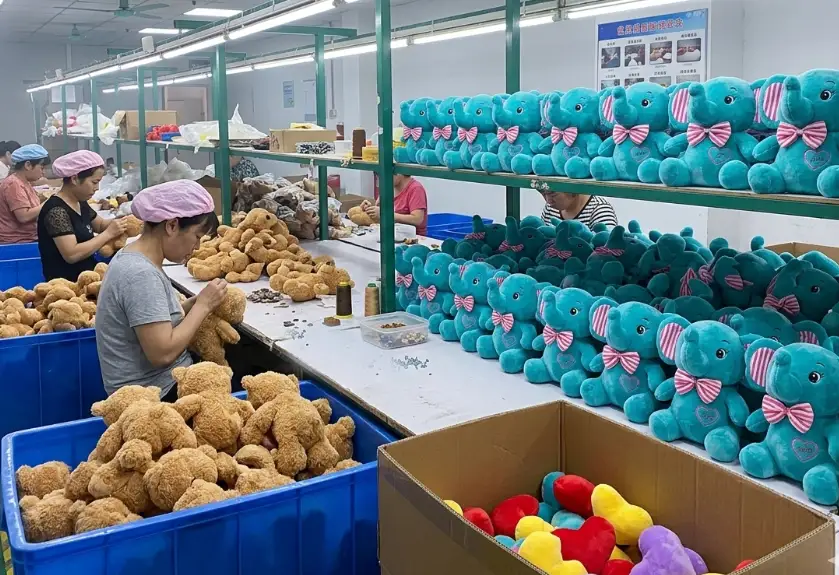
Common Sustainability Trade-offs in Plush Toy Manufacturing
| Sustainable Choice | Potential Trade-off | How to Manage It |
|---|---|---|
| rPET fabric and filling | Slightly higher material cost, potential fiber quality variation between recycling batches | Verify the certified content percentage and request consistency testing across batches |
| Compostable packaging film | Reduced moisture and puncture resistance during shipping | Test under actual shipping and storage conditions before full adoption |
| Organic natural fiber fabric | Higher cost, different hand feel, and pile characteristics than synthetic plush | Position for premium segments where natural fiber feel is a selling point, not a like-for-like substitute |
| Reduced-liquor dyeing | May limit available color range or require longer processing time | Confirm color-matching capability against approved standards before bulk production |
| Simplified/reduced packaging | Reduced shelf visual impact in retail environments | Balance environmental reduction against retail merchandising requirements for the specific sales channel |
Tip: Pilot sustainable substitutions on a limited production run before full-scale adoption. Any sustainable material or packaging substitution — recycled fabric, compostable film, reduced-liquor dyeing — carries some risk of a performance characteristic shifting in a way that is not apparent until production and shipping conditions are tested at scale. Running a smaller pilot production batch through the full production, packaging, and shipping cycle before committing an entire product line to a sustainable substitution allows any performance trade-off to be identified and addressed while the affected volume and the cost of correcting any issue remain limited.
Conclusion
Sustainable plush toy manufacturing has moved well beyond recycled-content hang tags into a set of material, process, certification, and supply chain decisions that touch every stage of production. Recycled and natural fiber materials are reshaping fabric and filling sourcing. Low-impact dyeing and reduced-liquor processing are addressing the water and chemical intensity of textile finishing. Packaging redesign is reducing plastic use at the point of customer contact. Waste reduction and resource efficiency improvements are lowering the environmental footprint of the production process itself. Certification and traceability systems are providing the verification infrastructure that makes all of these claims commercially and regulatorily credible.
None of these trends is free of trade-offs, and understanding those trade-offs — cost premiums, performance characteristics, verification requirements — is what separates buyers who successfully integrate sustainability into their sourcing programs from those who adopt sustainability claims without the documentation or testing needed to support them. The manufacturers and buyers who treat sustainability as a documented, verifiable production standard rather than a marketing layer are the ones positioned to meet the regulatory, retail, and consumer expectations that are only continuing to tighten across the plush toy sector.
FAQ
Q1: Is recycled PET (rPET) fabric as durable as conventional polyester plush fabric?
In most commercial applications, properly manufactured rPET fabric performs comparably to conventional virgin polyester plush fabric in terms of durability, pile retention, and washability, since the recycled fiber is chemically very similar to virgin polyester once processed into yarn. The primary variable affecting durability is not the recycled origin of the fiber itself, but the consistency of the reclamation and re-spinning process — fabric from a supplier with mature, well-controlled rPET processing shows minimal performance difference from virgin material, while fabric from a less consistent process may show more batch-to-batch variation in fiber strength and pile density. This is why requesting batch consistency testing, rather than assuming all rPET fabric performs identically, is a reasonable quality control step when incorporating recycled fabric into a production order for the first time.
Q2: Does using sustainable materials significantly increase the cost of plush toy production?
The cost impact varies considerably by material category rather than being a single fixed premium. Recycled PET fabric and filling typically carry a moderate cost premium in the range of 5 to 20 percent above conventional equivalents, which is often manageable within existing margin structures, particularly as recycled material supply chains mature and achieve greater economies of scale. Certified organic natural fiber materials carry a substantially higher premium, often 25 to 50 percent above conventional equivalents, reflecting both the higher cost of organic fiber cultivation and the more limited supply chain scale for organic plush-specific fabric. Packaging sustainability improvements, particularly structural reduction rather than material substitution, can in some cases reduce total packaging cost by using less material overall, even when the specific substitute material carries a per-unit premium.
Q3: What is the difference between a product described as “eco-friendly” and one with a verified sustainability certification?
“Eco-friendly” is a general marketing term with no standardized definition, verification requirement, or accountability mechanism behind it — a manufacturer or brand can apply the term to a product based on any criteria they choose, without external verification. A verified sustainability certification, by contrast, requires the manufacturer to meet specific, published criteria — defined recycled content percentages, restricted substance limits, or environmental management practices — that are independently audited by a certification body, with documentation available for verification by any party in the supply chain. For buyers and brands seeking to make defensible sustainability claims, particularly in markets with increasing scrutiny of greenwashing, working from verified certifications rather than general eco-friendly language provides a materially stronger basis for any sustainability claim made to retailers or consumers.
Q4: Can compostable packaging be used for products shipped internationally by ocean freight over several weeks?
It can, but only if the specific compostable film formulation has been tested and confirmed suitable for the humidity, temperature, and duration conditions of that particular shipping lane, since some compostable formulations begin to degrade under high humidity or extended exposure well before reaching the point of intended composting. Buyers considering compostable packaging for internationally shipped products should request or conduct a shelf-life and humidity resistance test that specifically matches their shipping route and typical transit time, rather than relying on a general compostability certification, which typically describes end-of-life composting conditions rather than in-transit shipping and storage stability.
Q5: How can a buyer verify that a supplier’s recycled content claims are accurate rather than exaggerated?
The most reliable verification method is requesting the specific third-party certification document — such as a Global Recycled Standard transaction certificate — associated with the exact material lot being used in production, rather than accepting a general recycled-content statement on a specification sheet or marketing material. This document specifies the certified recycled content percentage, the certification body, and the validity period and can typically be verified against the certification body’s own database. Buyers who receive only a verbal or written claim without an accompanying certificate should treat the claim as unverified and request supporting documentation before including specific recycled-content percentages in their own product marketing or compliance filings, since inaccurate downstream claims can create the buyer’s own regulatory or reputational exposure.
Q6: Do sustainable materials require different quality control procedures than conventional plush materials?
In most cases, the core quality control procedures — incoming material inspection, dimensional verification, in-process monitoring, and final inspection — remain fundamentally the same regardless of whether conventional or sustainable materials are used. What typically changes is the addition of specific verification steps related to the sustainability claim itself: checking that certification documentation matches the material lot in use, in some cases testing for batch-to-batch consistency in recycled fiber properties more closely than might be standard for virgin material, and verifying that any packaging sustainability substitution performs adequately under actual shipping conditions. These additions supplement rather than replace the standard quality control framework already applied to conventional plush production.
Q7: Is it possible to make a fully compliant, safety-tested plush toy using entirely sustainable materials?
Yes. Sustainable material choices — recycled fiber, organic natural fiber, low-impact dyeing — do not inherently conflict with the safety and compliance testing requirements applicable to plush toys, including mechanical safety testing, flammability testing, and chemical restriction compliance under frameworks such as CPSIA or EN71. In fact, many sustainable material certifications, including OEKO-TEX Standard 100, specifically verify the absence of restricted substances, which complements rather than complicates standard toy safety compliance. The practical requirement is ensuring that any new sustainable material introduced into a product undergoes the same full safety and compliance testing protocol applied to conventional materials, rather than assuming that a sustainability certification substitutes for toy safety certification, since the two verify different things.
Q8: How quickly is the plush toy industry expected to shift toward sustainable materials as the default rather than the premium option?
The pace of this shift varies by material category and market. Recycled PET fabric and filling are on a trajectory toward becoming a standard default option in many market segments over the coming several years, driven by improving cost parity with virgin materials, expanding recycled fiber supply chains, and tightening regulatory requirements in key export markets. Certified organic natural fiber materials are likely to remain a premium, specialized option for longer, given the more fundamental cost structure difference tied to agricultural production rather than industrial process efficiency.
Packaging sustainability changes are advancing relatively quickly given their direct visibility to consumers and generally more limited cost trade-offs. Buyers planning multi-year sourcing strategies should expect the baseline sustainability expectation to continue rising, making early investment in verified sustainable material relationships and documentation systems a durable advantage rather than a temporary marketing position.
Q9: Are some plush fabric types — such as minky, velboa, or faux fur — easier to produce sustainably than others?
Yes, and the difference comes down to fiber structure and dyeing requirements rather than the fabric category name itself. Minky and velboa, both typically produced from polyester fiber, are generally the most straightforward fabric types to convert to recycled content, since rPET fiber can be spun and knitted using largely the same equipment and finishing processes as virgin polyester, with minimal change to the fabric’s characteristic softness or pile structure.
Faux fur, particularly long-pile or high-density faux fur used in premium or realistic plush applications, presents a somewhat greater sustainability challenge because the longer, denser pile requires more fiber per unit of fabric area and, in some constructions, a heavier backing material, both of which increase the total material footprint per finished part relative to short-pile fabrics like minky. This does not make faux fur unsuitable for sustainable production, but it does mean that fiber content verification and backing material composition deserve particular attention when specifying sustainability requirements for faux fur-based plush products, since the backing layer is sometimes overlooked in recycled-content claims that focus primarily on the visible pile fiber.