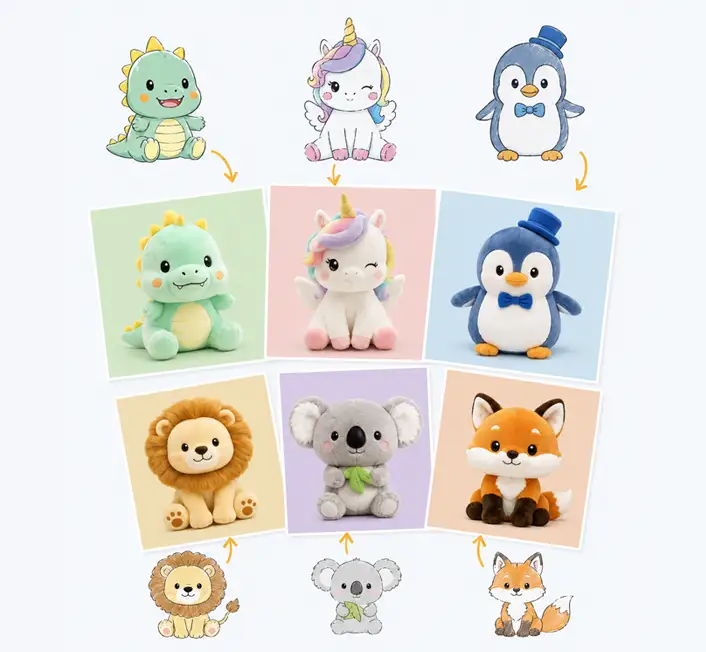
How Plush Toy Factories Handle Mass Production is a question many brands ask when scaling their business, and understanding the process can help ensure quality, efficiency, and timely delivery. Most buyers understand the sample stage reasonably well.
Design briefs, revision rounds, counter samples — the development workflow is visible because the buyer is actively involved in it. Mass production is different. Once the counter sample is approved and the purchase order is confirmed, the work moves entirely inside the factory. For weeks, sometimes months, the only updates a buyer receives are a mid-production photo and a shipment notification.
What happens in between those two moments determines almost everything: the consistency of the finished goods, whether the defect rate falls within acceptable limits, whether the production timeline holds, and whether the product that arrives matches the standard the buyer approved in sampling. Understanding how professional plush toy factories manage mass production is not merely an academic exercise — it is the analytical foundation for evaluating factory capability, asking the right questions before placing an order, and structuring a supplier relationship that produces reliable outcomes at scale.
This guide walks through every stage of the mass production process in detail — what a well-run factory does, why each stage exists, what distinguishes factories that manage it well from those that do not, and what buyers can do to actively improve the outcome from the outside.
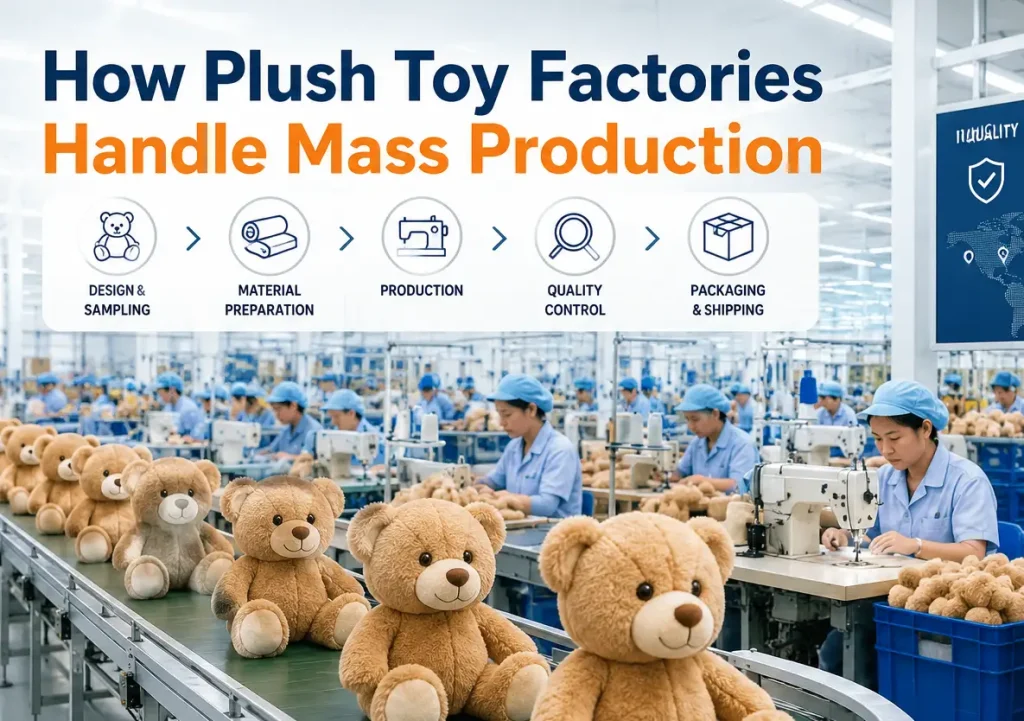
Why the Transition from Sampling to Mass Production Is the Highest-Risk Phase
The transition from an approved sample to bulk production is the single most consequential handoff in custom plush toy manufacturing. The approved sample was produced by a small number of experienced workers under close supervision, using carefully sourced materials and a tightly controlled process. Mass production involves dozens of operators, bulk material batches sourced from the same suppliers but in much larger quantities, and a production line optimized for throughput rather than individual care.
This transition from sampling to mass production is the highest-risk phase because it is where the gap between sample quality and bulk quality is established. A factory with a strong pre-production process deliberately manages this transition — using pre-production protocols to verify that bulk materials match sample materials, that production line setups produce results that match the approved standard, and that every operator understands exactly what the quality target looks like before a single billable unit is produced. Factories that lack this transition management allow the gap between sample and bulk to emerge by default — and discover its extent only in final inspection.
Table 1 — Sample-to-production risk factors and how professional factories manage them
| Risk Factor | Why It Creates a Sample-to-Bulk Gap | How Professional Factories Manage It |
|---|---|---|
| Bulk fabric batch variation | Bulk fabric comes from a different dye lot than the sample; color or pile height may differ subtly | Bulk fabric swatch verified against approved reference before cutting begins |
| Machine stuffing vs hand stuffing | Samples are often hand-stuffed; machines produce different density distribution | Stuffing machine calibrated to target weight; first-off units weighed and compared |
| Embroidery machine transfer | Embroidery coordinates programmed for sampling machine may shift on production machines | Coordinate positions re-verified on production machine before full run begins |
| Operator skill variation | Sample made by senior pattern makers; production line includes varied skill levels | Work instructions distributed; first-off inspection conducted before line commitment |
| Accessory source substitution | Sample accessories may come from a different supplier than bulk accessories | Bulk accessories matched to sample specification and pull-tested before production |
Buyers who understand this transition risk are better positioned to ask the right questions when evaluating a factory’s mass production capability. The relevant question is not “can you make a product that looks like my sample?” — any factory can demonstrate sample accuracy. The relevant question is “what specific process do you use to ensure that bulk production matches the approved sample consistently across the full order quantity?”
How Factories Schedule and Plan a Mass Production Run Before Cutting Begins
Professional plush toy factories do not begin cutting fabric on the day the order is confirmed. They begin a structured pre-production planning phase that allocates resources, confirms material readiness, and schedules every production stage before any irreversible production activity takes place. This planning phase is invisible to most buyers but is among the most consequential determinants of production reliability.
Production scheduling in plush toy manufacturing involves three parallel planning streams that must be synchronized before cutting can begin: material readiness confirmation, line capacity allocation, and work instruction preparation. A delay in any one of these streams delays the entire production start — which is why professionally managed factories begin this planning process immediately after order confirmation, not after the deposit clears.
Line Scheduling and Capacity Allocation
A factory’s production lines are finite shared resources. Each line has a defined daily output capacity that depends on the number of operators, the complexity of the product being sewn, and the machine configuration for that product type. Scheduling a new order means allocating a specific set of production days on specific lines — which requires knowing exactly how long the order will take at the line’s rated output speed.
The calculation is more complex than dividing total units by daily output, because the daily output rate itself varies by product complexity. A simple round bear with eight pattern pieces and embroidered features may run at 350 to 500 units per day on a standard sewing line. A multi-panel character design with 24 pattern pieces, layered fabrics, and multiple accessory attachment points may run at 80 to 150 units per day. Factories that do not account for this complexity adjustment when scheduling will systematically under-deliver on the timelines they quote.
Production line output rates by product complexity tier
| Complexity Tier | Typical Characteristics | Pattern Pieces | Daily Line Output | Scheduling Buffer Recommended |
|---|---|---|---|---|
| Basic | Single body, embroidered face, 1–2 fabric types | 4–8 | 400–550 units | 5–8% |
| Standard | Multi-part body, simple accessories, 2–3 fabrics | 9–16 | 200–380 units | 8–12% |
| Complex | Articulated limbs, layered textures, printed panels | 17–28 | 90–180 units | 12–18% |
| High-End / IP | Licensed character accuracy, sound/light modules, removable parts | 28+ | 40–90 units | 18–25% |
Tip: When requesting a production timeline from a factory, ask specifically what daily output rate they are using to calculate the duration. A factory quoting 30 days for a 5,000-unit order of a complex character design — which implies 167 units per day — is either planning to run multiple lines in parallel or is providing an optimistic estimate that does not account for setup time, QC holds, and normal yield losses. Both scenarios require clarification before the timeline commitment is binding.
Material Readiness Confirmation
Production cannot begin until all materials are physically present in the factory, inspected, and cleared for production use. This sounds obvious, but it is a surprisingly common source of production delay. Factories that begin scheduling production dates before confirming material delivery dates create commitments they cannot keep — and buyers discover the gap when a promised mid-production update reveals that cutting has not yet started.
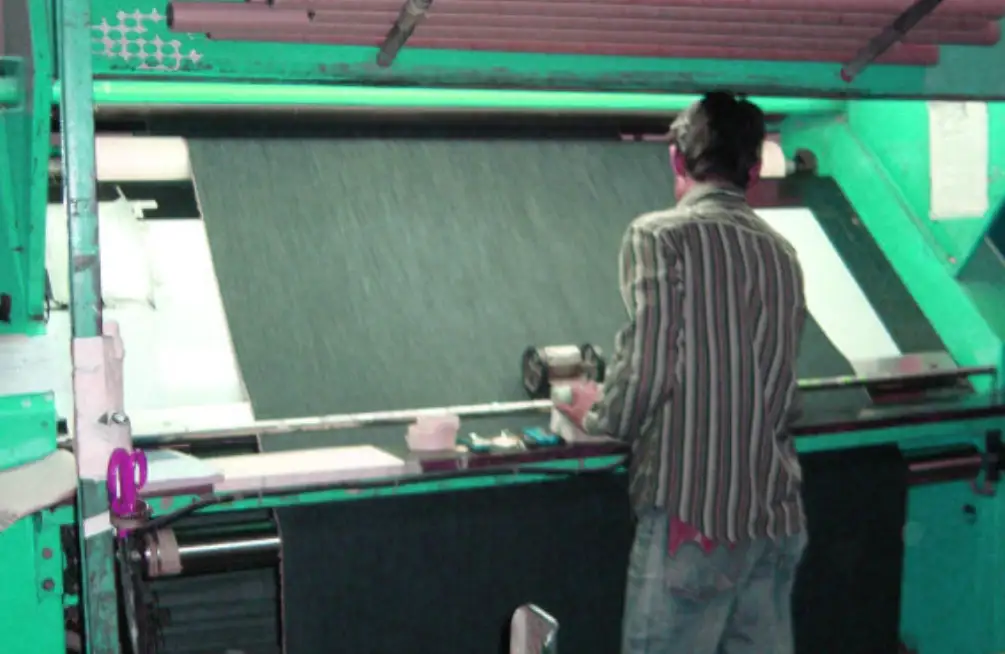
A professional factory’s pre-production material checklist tracks the delivery status of every material component against the planned cutting start date, and adjusts the production schedule proactively if any component is delayed. The materials that most commonly cause delays are: custom-dyed or special-order fabrics with 15–25 day lead times; gradient pile fabrics sourced from specialist mills; custom accessory molds for plastic components not available in standard form; and printed labels or hangtags requiring print production lead time.
What Happens in the Cutting Room — and Why Panel Accuracy Determines Everything Downstream
The cutting room is where mass production physically begins, and the accuracy of what happens here sets the tolerance baseline for every subsequent production stage. Dimensional defects, silhouette distortion, and proportion imbalance in finished plush toys almost always originate in the cutting stage — not the sewing stage — because every downstream operation works from the cut panels it receives.
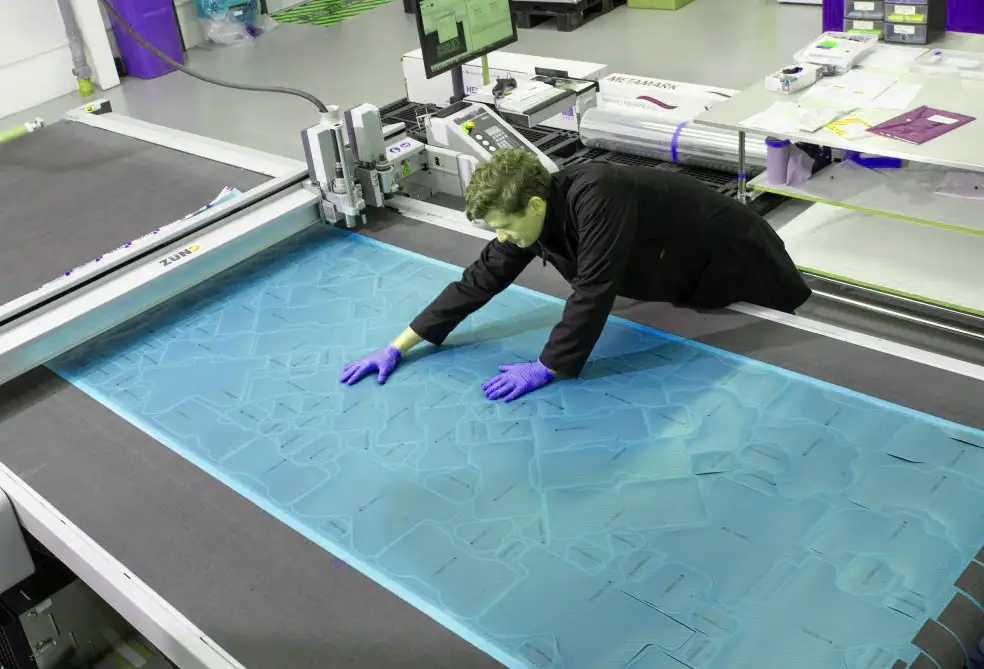
Plush fabric cutting in mass production is performed using one of two methods depending on factory investment level and order volume: manual die cutting using steel-rule dies pressed through layered fabric stacks, or automated cutting using computer-controlled cutting machines that follow digitized pattern files. Both methods require the same pre-cutting verification: confirming that the cutting template or pattern file matches the approved dimensions from the counter sample, accounting for fabric grain direction, and managing the pile direction of the outer fabric so that the finished product has consistent surface texture across all panels.
The Grain Direction and Pile Direction Challenge
Plush fabrics have both a grain direction — the structural direction of the knit or woven backing — and a pile direction — the direction in which the surface fibers lie. Both must be correctly oriented in every cut panel. A panel cut against the grain direction will distort during sewing. A panel cut against the pile direction will show a color-difference artifact on the finished surface, because the same fiber looks different when the pile is stroked toward versus away from the viewer.
Managing grain and pile direction in mass production requires that the cutting template be laid on every new fabric roll with the same orientation, and that this orientation be verified at the start of each cutting shift and whenever a new fabric roll is started. Factories that do not enforce this control produce finished products with inconsistent surface appearance across units — a defect that is invisible in the cutting room but immediately apparent in final inspection and in customers’ hands.
Cutting stage quality controls and the defects they prevent
| Cutting Control | What It Verifies | Defect Category Prevented |
|---|---|---|
| Pattern dimension verification | Cut panel matches approved counter sample dimensions ± tolerance | Dimensional defects, proportion imbalance |
| Grain direction check | All panels aligned with fabric grain before cutting | Panel distortion during sewing, seam puckering |
| Pile direction check | Pile direction consistent across all panels of same component | Surface color variation, shading artifacts |
| Fabric roll transition check | New fabric roll matches color and pile height of previous roll | Between-unit color variation from batch differences |
| Cut stack depth management | Stack height does not exceed blade accuracy limit for fabric type | Lower-layer dimensional deviation, ragged edges |
| Panel sorting and bundling | Panels sorted and bundled by product unit before moving to sewing | Within-unit fabric variation from mixed fabric rolls |
How the Sewing Line Operates and What Controls Output Consistency at Scale
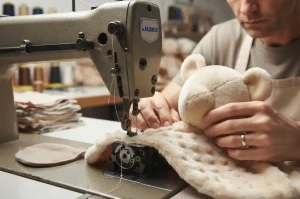
The sewing stage is where the cut panels become a three-dimensional product, and it is the longest and most labor-intensive phase of plush toy mass production. A typical plush toy sewing line operates as an assembly sequence — different operators or operator groups perform specific sewing operations in a defined order, passing partially assembled units down the line until all panels are joined, leaving only the stuffing opening.
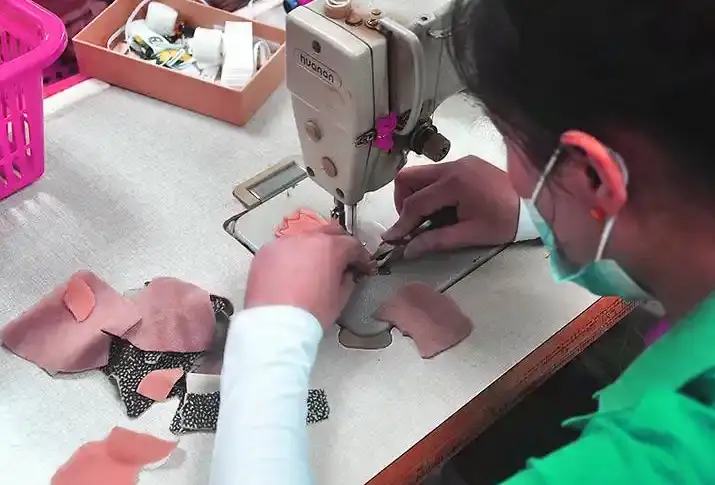
The challenge in managing a sewing line at scale is that quality consistency is a human performance variable. Every operator brings different levels of skill, fatigue, and attention. Every shift brings different temperature and lighting conditions. Every new day begins with machines at a slightly different operating temperature than they reached by mid-shift. These variables produce gradual drift in sewing quality across a production run — drift that accumulates invisibly unless it is monitored at sufficiently short intervals to catch it before it exceeds the acceptable tolerance.
First-Off Inspection — the Highest-Value Quality Investment in Mass Production
The first-off inspection is the quality check conducted on the first three to five fully completed sewn units from the production run. It compares these early units against the approved counter sample across all measurable dimensions and visual quality criteria, before any further production volume is committed to the configuration that produced them. This makes it the single most cost-effective quality investment available in mass production — because a process configuration error caught at five units costs almost nothing to correct, while the same error discovered at 5,000 units is a production crisis.
The specific problems that first-off inspection is most valuable for catching are: seam width deviations from the line operator’s initial machine setup; panel alignment errors that result from the first handling of a new pattern at scale; embroidery positioning shifts that occur when the embroidery program is first loaded onto the production machine; and accessory attachment position errors that reflect the initial operator understanding of the work instruction placement specification.
Tip: Before confirming a factory for a first order, ask specifically whether they conduct a formal first-off inspection on new product runs — and whether they document it in writing with photographs. Factories that conduct first-off inspection as a standard procedure will answer this question immediately and specifically. Factories that treat it as an ad hoc check or that conflate it with general line supervision are demonstrating a gap in their pre-production process that will show up in the bulk defect rate.
In-Process Quality Control During the Sewing Run
Beyond the first-off inspection, maintaining sewing quality across a multi-week production run requires structured in-process quality control (IPQC) at defined intervals. IPQC in the sewing stage involves quality personnel sampling a small number of completed sewn units at regular intervals — typically every 60 to 90 minutes or every 150 to 200 units — checking them against the quality standard, and triggering corrective action if the sample reveals a deviation that has developed since the last check.
IPQC checkpoint framework for the plush toy sewing stage
| IPQC Checkpoint | Frequency | Sample Size | What Is Checked |
|---|---|---|---|
| Seam alignment check | Every 90 min | 3–5 units | Panel join accuracy, seam allowance consistency, corner quality |
| Stitch density and tension | Every 2 hours | 3 units | Stitches per cm, thread tension, surface appearance |
| Embroidery position check | Every 50 units | 3 units | Coordinate measurement against standard, thread tension, color match |
| Fabric roll transition | Every new roll | 2 units | Color consistency, pile height, surface texture against approved reference |
| Accessory attachment check | Every 2 hours | 5 units | Manual pull force on all attached accessories; position against standard |
| Dimension spot-check | Every 200 units | 3 units | Key dimensions against counter sample measurement sheet |
How Stuffing Is Managed in Mass Production and Why Density Control Matters
Stuffing is the stage of plush toy mass production where the product transitions from a flat, limp sewn shell into a three-dimensional object with its intended shape and character. It is also one of the most consequential quality control points in the production process — because stuffing density determines the product’s shape, its proportions, the expression of any character features embedded in the silhouette, and its perceived value in the hands of the end customer.
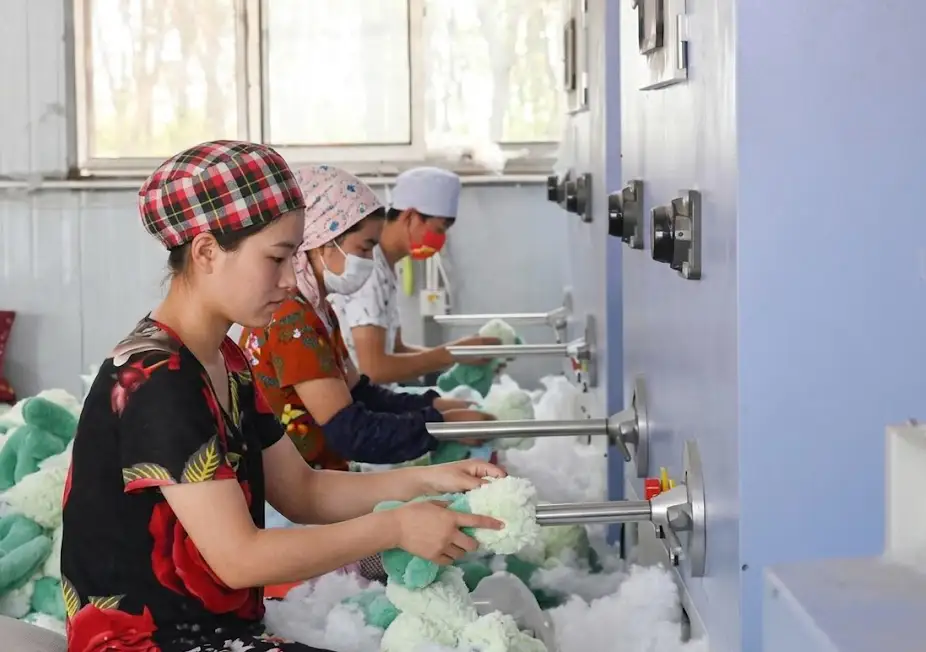
In mass production, stuffing is performed using compressed-air stuffing machines that blow PP cotton filling into the sewn shell through the stuffing opening. The machine’s output density depends on a combination of nozzle size, air pressure, and the operator’s technique — specifically, how they position the nozzle within the shell and how long they hold the nozzle at each position before moving it. Achieving consistent density across thousands of units requires calibration of the machine settings and standardization of the operator technique — both of which must be verified at the start of production and monitored throughout the run.
The Weight-Based Density Standard
Professional plush toy factories manage stuffing density through a weight-based standard derived from the approved counter sample. The counter sample is weighed at the point of approval, and the resulting target weight — with an acceptable tolerance range of typically ±5 to ±8 percent of the target — becomes the production standard. Every few hundred units, quality personnel pull units from the stuffing station and weigh them against this standard, confirming that the machine calibration has not drifted outside the acceptable range.
This weight-based approach is more reliable than visual or tactile density assessment alone because it produces a measurable, documented standard that is independent of individual inspector judgment. A unit that weighs within the target range will consistently have the correct density, shape, and firmness — because the relationship between stuffing weight and finished density is stable for a given shell size and shape.
Tip: When reviewing a factory’s quality documentation for a bulk order, ask to see their stuffing density control records — specifically, the target weight for your product, the acceptable tolerance range, and the frequency of weight checks during the production run. A factory that manages density by feel alone rather than by documented weight standard is not managing it at all — they are producing to whatever density the operator happens to achieve, and hoping it is close enough to the sample.
Table 5 — Stuffing density variables and their effect on finished product quality
| Variable | Effect on Density | Quality Impact if Unmanaged |
|---|---|---|
| Air pressure setting | Higher pressure → denser fill; lower pressure → softer, less structured fill | Inconsistent firmness and shape across units; visible at final inspection |
| Nozzle dwell time per zone | Longer dwell → local over-density; short dwell → under-filled areas | Lumpy appearance, asymmetric limbs, collapsed facial areas |
| PP cotton filling grade | Higher loft filling fills volume with less weight; lower loft requires more mass | Batch-to-batch density variation if filling grade changes between material lots |
| Shell seam tension | Tighter sewing produces a more constrained shell that resists over-stuffing | Seam stress concentration if over-stuffed; shape inconsistency if under-tension |
| Operator technique | Nozzle position and movement pattern directly affect density distribution | Within-unit density variation if technique is not standardized through work instructions |
What Finishing, Needle Detection, and Pre-Shipment QC Involve — and Why All Three Are Non-Negotiable
After stuffing is complete, the production unit moves through three final stages before it can be considered shipment-ready: finishing, needle detection, and final quality control inspection. Each stage serves a distinct purpose, and none can be meaningfully substituted or abbreviated without creating specific, documentable risks for the buyer.
Finishing — the Last Handcraft Stage in Industrial Production
Finishing covers all the hand operations performed on a stuffed unit after the stuffing opening is hand-sewn closed: thread trimming, surface cleaning to remove any lint, thread ends, or material fragments; pile restoration using soft brushes or a low-speed steamer to raise the pile in any areas compressed during production; and final accessory attachment for any components — hangtags, ribbons, clothing items — that cannot be attached before stuffing.
The quality of finishing is one of the most commercially visible elements of plush toy production because it determines the product’s presentation in packaging and at retail. A product with exposed thread ends, compressed pile areas, or surface contamination signals low-quality manufacturing regardless of the accuracy of the underlying construction. Buyers targeting premium retail channels or IP-licensed product lines should explicitly specify finishing standards in the tech pack — not assuming that what was achieved in the sample will be replicated at scale without documented guidance.
Needle Detection — the Safety Requirement That Cannot Be Skipped
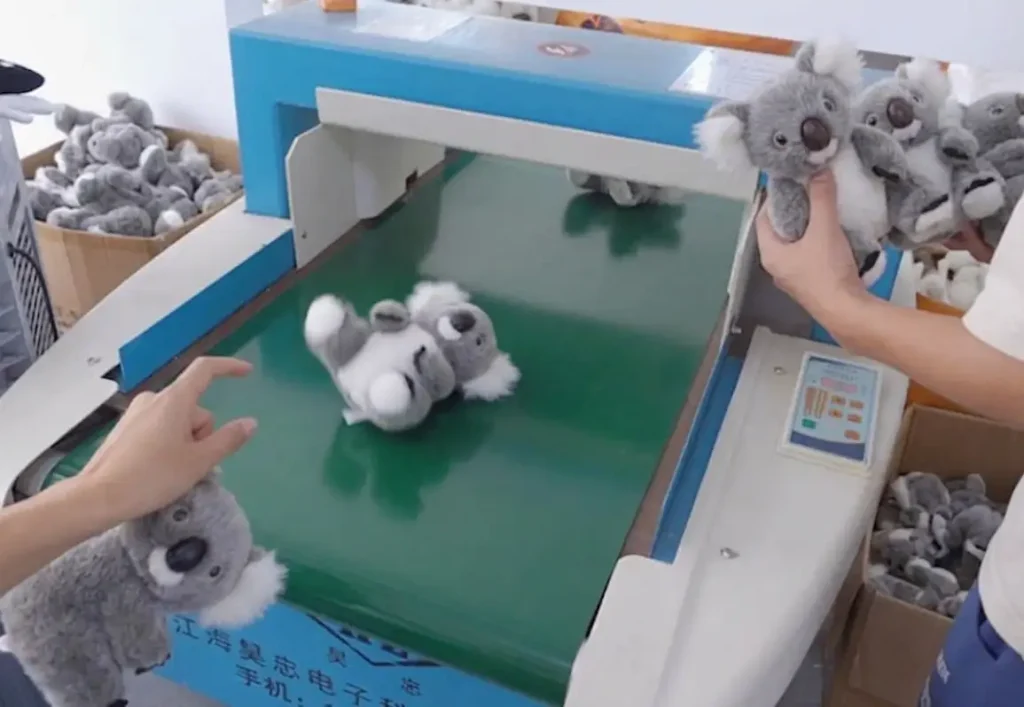
Needle detection is the process by which every finished stuffed unit is passed through a magnetic detection machine that identifies any broken needle fragments or metal contamination inside the product. It is a mandatory safety requirement for plush toys destined for virtually any regulated consumer market — not optional for children’s products, and not a cost that can be eliminated to reduce unit price.
The needle detection requirement exists because broken sewing machine needles are a routine occurrence in garment and textile manufacturing. When a needle breaks during sewing, the fragments may be so small that they are not visible on the sewing station or on the surface of the product — but if they are inside a stuffed toy, they represent a serious physical injury hazard. Detection machines operate at a sensitivity level sufficient to identify fragments of 1.2 mm or smaller — the minimum standard required by most major toy safety programs and retailer compliance frameworks.
Final production stage controls and shipment-readiness verification
| Final Stage | Key Activities | Documentation Produced | Consequence of Omission |
|---|---|---|---|
| Finishing | Thread trimming, pile restoration, surface cleaning, final attachment | Finishing checklist per production batch | Poor retail presentation; customer perception of low quality |
| Needle detection | 100% unit pass-through on calibrated detection machine; re-inspection of any alert units | Needle detection record with machine calibration log | Physical safety hazard; retail program non-compliance; liability exposure |
| Final QC inspection (FQC) | AQL-based sampling inspection covering all quality criteria | Full FQC report with defect classification and pass/fail result | Unknown defect rate; no documented quality assurance basis for shipment |
| Packing and labelling | Unit packaging, carton packing, barcode and label verification | Packing list, carton marks, export documentation | Incorrect SKU, missing compliance labels, customs documentation errors |
| Pre-shipment inspection | Third-party or buyer-appointed inspector reviews packed goods against AQL | Independent inspection report | No independent quality verification; factory FQC results unvalidated |
Final QC Inspection — Confirmation, Not Discovery
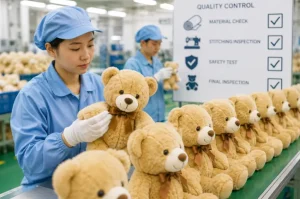
Final quality control inspection — FQC — is the AQL-based statistical sampling process applied to the completed, packed production batch before shipment is approved. It is important to understand what FQC is and what it is not. In a factory with strong upstream controls — tight incoming inspection, rigorous IPQC, effective stuffing density management — FQC should be a confirmation exercise that the production system worked correctly. It should find a defect rate well inside the AQL acceptance threshold and produce a clean pass result efficiently.
FQC becomes a discovery exercise only when upstream controls have failed — when a production run with inadequate in-process monitoring reaches the end of production with an unknown defect accumulation that final inspection must now quantify. Factories whose quality systems rely primarily on final inspection are operating in a fundamentally less efficient and less reliable mode than those that build prevention upstream. The defect rate that FQC finds cannot be prevented by FQC — it can only be documented and responded to. Prevention happens earlier.
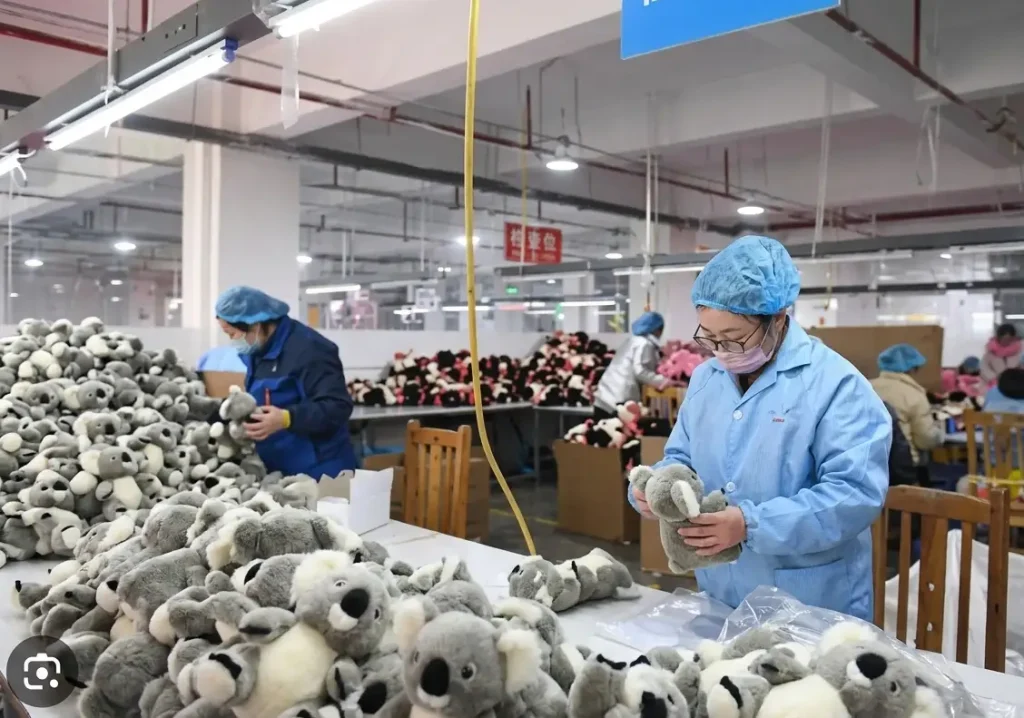
Tip: For first orders with a new factory, or any order with a total value above the threshold where a shipment-hold would cause meaningful commercial disruption, commission an independent third-party pre-shipment inspection from an accredited inspection organization. The cost — typically $250 to $400 per inspection day — is a fixed, predictable expense that provides documented independent quality assurance. It is always cheaper than the cost of resolving a quality dispute after goods have cleared customs and are in a destination warehouse.
How Communication and Production Transparency Affect the Buyer’s Ability to Manage Risk
From the buyer’s perspective, mass production is a period of managed uncertainty. The factory has the order, the materials, and the production plan. The buyer has a timeline commitment, a quality standard defined by the counter sample, and limited visibility into what is happening between those reference points. How the factory communicates during production — what information it proactively provides, how quickly it escalates problems, and how accurately its updates reflect actual production status — determines how much of that uncertainty the buyer can actively manage versus how much they must absorb as a surprise at shipment.
Factories that communicate proactively during mass production share specific, documented updates at defined milestones: a cutting start confirmation with fabric verification photos, a first-off inspection report with images of the approved first units, a mid-production progress update at approximately 40–50 percent completion with defect rate data from IPQC, and a pre-shipment FQC summary with the full inspection result before goods are loaded. Buyers who receive these updates are managing production with information. Buyers who receive only a “production is going well” message are not.
Production milestone communications a professionally managed factory provides
| Communication Milestone | What It Should Include | Why the Buyer Needs It |
|---|---|---|
| Cutting start confirmation | Date cutting began, fabric verification photos against approved swatch, any material notes | Confirms production is actually underway and bulk fabric matches sample |
| First-off inspection report | Photos of first units against counter sample, dimensional measurements, any deviations noted and resolved | Confirms production configuration matches approved standard before volume commitment |
| Mid-production update | Units completed, current defect rate from IPQC, any production event notes | Provides early warning of timeline or quality issues while correction is still possible |
| FQC completion report | Inspection result, defect classification summary, AQL pass/fail, needle detection confirmation | Documents production quality basis before shipment is authorized |
| Shipment confirmation | Carton count, packing list, carrier details, estimated departure date | Enables import planning, customs preparation, and inventory scheduling |
Frequently Asked Questions
What is the minimum order quantity needed for a factory to run a dedicated production line?
Most mid-sized plush toy factories begin scheduling a dedicated production line setup at quantities of 500 to 1,000 units per design. Below this threshold, orders are typically batched with similar products on a shared line, which introduces scheduling variability and extends effective lead times. At 500 units and above, the factory has sufficient volume to justify the line setup time, work instruction preparation, and first-off inspection investment as a proportion of order value. Orders above 2,000 units receive priority scheduling and the most predictable production timelines.
How does a factory manage material shortfalls discovered after bulk production has started?
When a material shortfall is identified mid-production — typically due to a fabric roll with more defects than anticipated, a filling bale with sub-standard loft, or an accessory batch with a higher-than-expected rejection rate at IQC — a professional factory has two options: hold production while replacement material is sourced, or source a substitute material that matches the approved specification closely enough to use without re-approval. The first option adds lead time; the second requires buyer notification and approval if the substitution affects any quality characteristic visible in the finished product. Buyers should establish a clear policy on this with their factory before production begins, not after a substitution has already been used.
Can buyers visit the factory during mass production, and what should they look for?
Factory visits during production are entirely reasonable to request and are actively welcomed by professionally managed factories. The most valuable things to observe during a production visit are: whether the approved counter sample is physically present on the production floor for operator reference; whether quality personnel are conducting active IPQC checks rather than passive end-of-line sorting; whether stuffing density is being managed by weight measurement or by operator feel; and whether needle detection is being conducted unit-by-unit on a calibrated machine. These observations provide more insight into a factory’s quality management maturity than any documentation or factory presentation.
What happens if the FQC result shows a defect rate above the agreed AQL threshold?
A batch that fails FQC against the agreed AQL threshold should not be shipped until the situation is resolved. The standard resolution path involves the factory identifying the defect category driving the failure, sorting the entire batch to segregate defective units, reworking reworkable defects and replacing non-reworkable units from existing production capacity, and re-conducting the inspection on the reworked batch before shipment is authorized.
In cases where rework is not possible — compliance-related material defects, for example — replacement production may be required. The timeline and cost implications should be negotiated against the terms of the purchase agreement rather than treated as a matter of goodwill.
Conclusion
Mass production in plush toy manufacturing is not a passive process that happens automatically once the deposit is paid. It is a structured, multi-stage system — from pre-production planning and cutting through sewing, stuffing, finishing, needle detection, and final QC — where the quality and reliability of the output depend entirely on how rigorously that system is managed at each stage.
The buyers who consistently receive production results that match their approved samples and hold their timelines are not the ones who found the cheapest factory or the factory with the most impressive showroom. They are the ones who understood what good mass production management looks like, asked the right questions to verify that their factory actually does it, and maintained active communication throughout the production run rather than waiting for the shipment notification.
The framework in this guide — transition management, line scheduling, cutting controls, first-off inspection, IPQC, stuffing density management, finishing, needle detection, FQC, and production communication — represents the complete system that professional plush toy factories implement and that informed buyers have the right to expect and verify. Building this understanding into every supplier evaluation is the most reliable path to mass production outcomes that hold up across the first order, the fifth order, and every one after that.