Skip to content
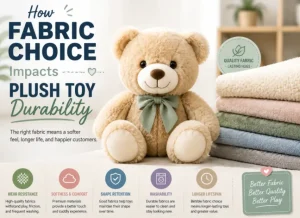
Best Fabrics for Plush Toy Manufacturing is all about selecting materials that balance softness, durability, and safety to create plush toys that feel great and last long. Fabric is the single decision that has the greatest influence on how a plush toy actually feels in someone’s hands — and it is also the decision buyers most often get wrong.
A design can have a perfect pattern, a flawless embroidery, and an accurate silhouette, and still feel disappointing on arrival simply because the wrong fabric was chosen for the character, the price point, or the age group it was made for.
Part of the difficulty is that plush fabric terminology is used loosely across the industry. “Soft plush,” “premium minky,” and “high-pile fur” are marketing terms, not technical specifications, and the same phrase can describe dozens of materially different fabrics depending on which supplier is using it. Buyers who rely on these general terms without understanding the underlying fabric categories, pile heights, and fiber types are essentially delegating one of the most important design decisions to whoever happens to be sourcing the material.
This guide breaks fabric selection down into its component parts — fabric categories, pile height, fiber content, safety compliance, and cost — so that a buyer can walk into a sourcing conversation with a precise specification rather than a vague description, and come out the other side with a plush toy that actually feels the way it was meant to feel.
What Makes a Fabric “Good” for Plush Toy Manufacturing?
A fabric is “good” for plush toy manufacturing when its pile structure, fiber content, and finish match the specific combination of texture, durability, safety requirements, and cost target that a given design calls for — there is no single best plush fabric, only the best fabric for a specific design brief. A fabric that is excellent for a premium collectible teddy bear can be entirely wrong for a budget promotional giveaway, and a fabric that is ideal for a toddler-safe comfort toy can be unsuitable for a large mascot costume, even though all three might be described casually as “plush.”
Evaluating a plush fabric properly means assessing it across five independent dimensions rather than judging it on texture alone: hand-feel (how it feels to touch), pile height and density (how the fabric surface is structured), fiber content (what the fabric is made from), durability (how it performs under repeated handling, washing, and time), and compliance (whether it meets the safety standards required for its target market and age group). A fabric can score well on one dimension and poorly on another — long-pile faux fur, for example, has an exceptional hand-feel but poor durability under heavy play and is generally unsuitable for very young children because loose fibers present an ingestion risk.
The Five Evaluation Dimensions of Plush Fabric
| Dimension | What It Measures | Why It Matters |
|---|---|---|
| Hand-feel | Subjective softness and texture on contact | Directly drives the emotional response to the toy |
| Pile height and density | Length and thickness of the fabric surface fibers | Determines visual character and how detail reads |
| Fiber content | Material composition — polyester, cotton blend, specialty fiber | Affects cost, durability, and hypoallergenic properties |
| Durability | Resistance to pilling, matting, and wear over time | Determines product lifespan under real-world use |
| Compliance | Whether the fabric meets flammability and safety standards | A hard requirement for the intended market and age grade |
Why the Same Fabric Name Means Different Things at Different Suppliers
One of the most persistent sources of confusion in plush fabric sourcing is that fabric naming is not standardized across the industry. Two different fabric mills can both label a product “premium minky” while producing materials with different pile heights, different densities, and different fiber blends — because “premium” and “minky” are descriptive terms rather than regulated technical specifications. A buyer who sources fabric based on a name alone is trusting that the supplier’s internal naming convention happens to match their expectation, which is a fragile assumption to build a product specification on.
This naming inconsistency is precisely why pairing every fabric category name with an objective measurement — pile height in millimeters, fiber content by percentage, and a physical swatch reference — matters so much more in plush fabric sourcing than it might in other textile categories. A specification built entirely on names is essentially unenforceable, because there is no shared standard to enforce it against; a specification built on measurable properties and a physical reference sample gives both the buyer and the factory an objective basis for agreement.
What Are the Main Types of Plush Fabric Used in Manufacturing?
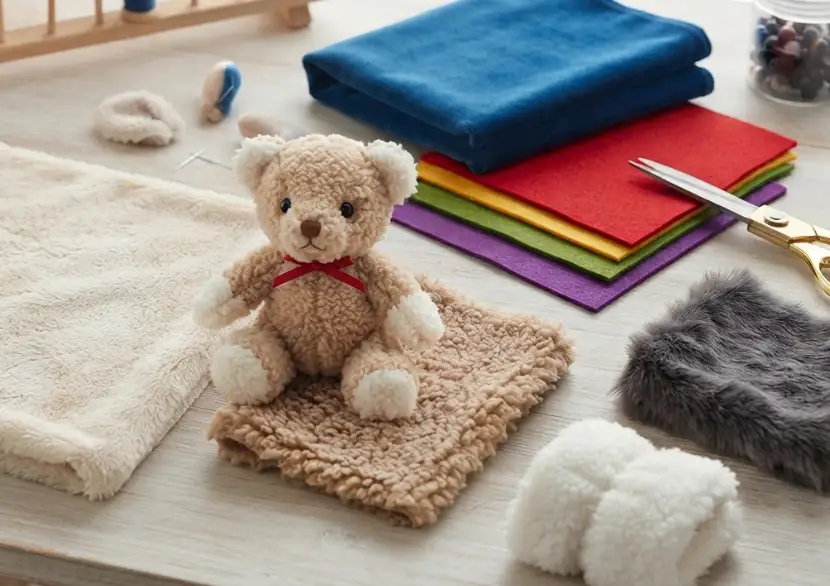
The main categories of plush fabric used in manufacturing are minky, faux fur, sherpa fleece, bouclé, and velboa — each defined by a distinct pile structure and knitting or weaving technique that produces a characteristic look and feel. Understanding these categories is the starting point for any fabric conversation, because most sourcing miscommunication happens when a buyer and a factory are using the same general word — “plush,” “fur,” “fleece” — to describe fabrics that fall into different technical categories entirely.
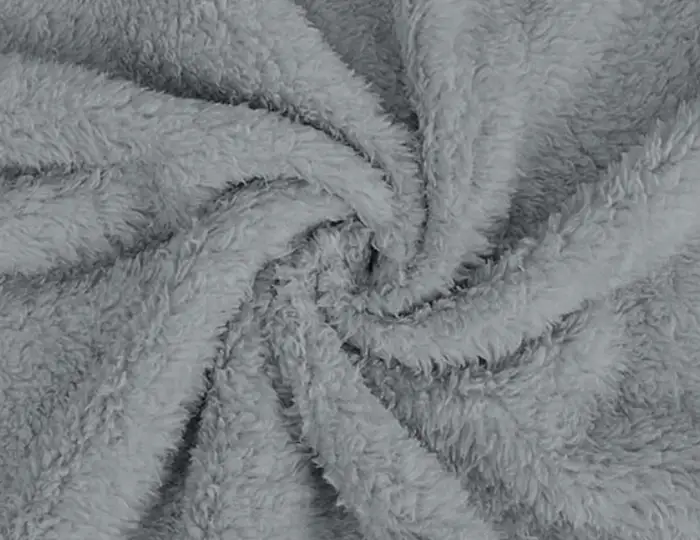
Main Plush Fabric Categories at a Glance
| Fabric Type | Typical Pile Height | Characteristic Look | Common Use Case |
|---|---|---|---|
| Minky | 3–10mm | Smooth, dense, slightly plush surface | Baby comforters, standard stuffed animals |
| Faux fur | 15–50mm | Long, flowing, realistic fur texture | Premium collectibles, realistic animal replicas |
| Sherpa fleece | 5–15mm | Curly, wool-like texture | Sheep and farm-animal designs, cozy blankets |
| Bouclé | N/A (looped, not piled) | Nubby, looped, textured surface | Novelty designs, textured accents |
| Velboa / short-pile plush | 1–3mm | Smooth, velvet-like, low-profile | Sleek characters, licensed apparel-style plush |
Minky Fabric
Minky is the most widely used fabric in plush toy manufacturing, and for most standard stuffed animal designs, it is the default starting point. It is a knitted polyester fabric with a short, dense pile that produces a smooth, soft hand-feel without the bulk or shedding tendency of longer-pile fabrics. Minky takes embroidery and screen printing well, holds its shape reliably after repeated washing, and is available in an enormous range of colors and finishes — from flat, matte minky to dimpled or “rose” textures.
Because minky is dense and structurally stable, it is also one of the easier fabrics to sew accurately, which makes it a practical choice for designs with fine facial detail or intricate seaming. Its main limitation is that it reads as smooth and clean rather than shaggy or textured — a minky fabric will not replicate the look of a realistic long-haired animal, and designs that call for that look need to move into faux fur instead.
Faux Fur
Faux fur is defined by a long pile — typically 15mm to 50mm — that mimics the appearance of real animal fur. It is the fabric of choice for premium plush products, realistic animal replicas, and any design where visual richness and a luxurious hand-feel are primary selling points. Faux fur pile length, density, and fiber blend vary enormously across suppliers, and this is one of the fabric categories where sending a physical swatch is most important, because “faux fur” alone communicates almost nothing about the actual product.
Faux fur brings real trade-offs alongside its visual appeal. Long-pile fabrics shed more than short-pile fabrics, particularly in the first several wash and use cycles, and this shedding presents a small-parts and ingestion consideration that generally makes faux fur unsuitable for plush toys intended for children under three. Faux fur also requires more careful cutting and sewing — pile direction has to be considered during pattern layout so that the fur lies naturally across every seam, and construction generally takes longer and costs more than an equivalent minky design.
Sherpa Fleece
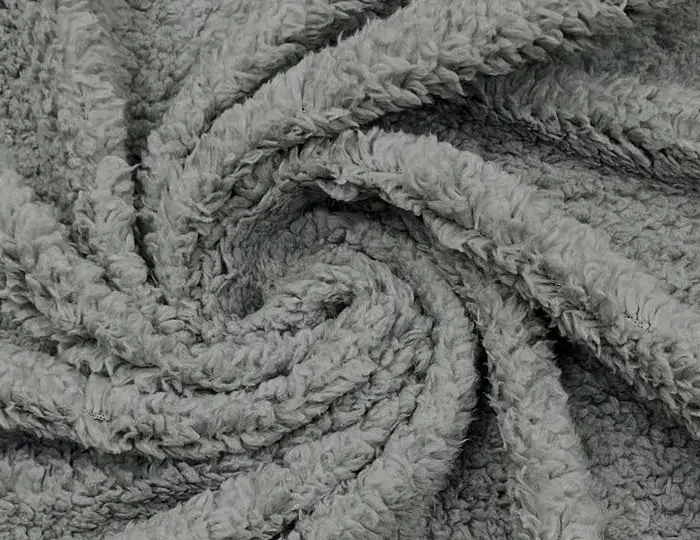
Sherpa fleece has a curly, looped texture that visually resembles sheep’s wool, making it the natural choice for lamb and sheep character designs, as well as for cozy, blanket-style plush products. Sherpa is typically made from polyester and has a lower pile density than minky, giving it a lofted, airy texture rather than a dense, compact one.
Sherpa’s texture is distinctive enough that it does not substitute well for other fabric types — it is chosen specifically when a curly, wool-like appearance is part of the design intent, rather than as a general-purpose plush fabric.
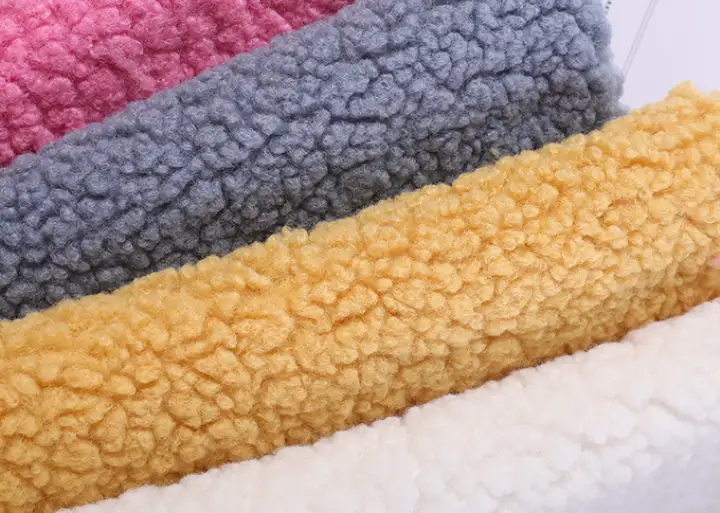
Bouclé and Nubby Textures
Bouclé is a looped rather than piled fabric, producing a nubby, textured surface that reads as tactile and novel rather than smooth. It is used less frequently than minky or faux fur in mainstream plush manufacturing, but appears regularly in novelty designs, textured accent panels, and products aiming for a distinctive, non-standard surface feel that differentiates them from typical smooth plush.
Velboa and Short-Pile Plush
Velboa is a very short-pile, smooth fabric with a velvet-like finish, generally under 3mm in pile height. It is used for designs that need a sleek, low-profile surface — licensed-style character plush, apparel-adjacent plush products, and designs where fine detail and a close-fitting silhouette matter more than a soft, fluffy texture. Velboa’s tight, low pile also makes it one of the more durable fabric choices, since there is minimal fiber length to mat, shed, or flatten unevenly over time.
Two-Tone, Tipped, and Printed Fabric Finishes
Beyond the base fabric category, many plush designs call for a finishing treatment applied to the fabric surface — two-tone coloring, tipped fur effects, or all-over printed patterns. Two-tone fabric blends two fiber colors within the same pile, producing a natural, variegated look that is common in realistic animal designs where a single flat color would look artificial. Tipped fur takes this a step further by coloring only the tip of each fiber differently from its base, replicating the frosted or shaded appearance seen in many real animal coats.
Printed plush fabric applies a pattern or graphic directly onto a short-pile base fabric, which is the technique used for licensed-character plush with detailed surface graphics, novelty prints, or branded patterns that would be impractical to achieve through piecing or embroidery alone. Printed fabric works best on short-pile materials, since longer pile obscures fine print detail, and it is generally more cost-effective than piecing together the same visual effect from multiple fabric colors and panels.
Each of these finishing techniques adds a processing step before the fabric reaches the cutting table, which adds both cost and lead time relative to a plain, single-color base fabric. Buyers should factor finishing techniques into both budget and timeline expectations from the earliest planning stage, rather than treating them as a late-stage cosmetic add-on.
Tip: When briefing a fabric type, always pair the category name with a pile height range and a physical swatch, rather than relying on the category name alone. “Minky, 6mm pile, swatch attached” gives a factory an objective target; “soft minky fabric” leaves room for five different suppliers to interpret the request five different ways.
How Does Pile Height Affect a Plush Toy’s Look, Feel, and Cost?
Pile height — the length of the fabric’s surface fibers — is one of the most influential and most underappreciated variables in plush fabric selection, because it affects appearance, tactile feel, durability, and manufacturing cost simultaneously. A design brief that specifies fabric type without specifying pile height leaves one of the most consequential decisions in the entire fabric selection process unresolved.
Pile height affects a plush toy’s character in a direct, almost linear way: shorter pile produces a cleaner, more defined silhouette with crisp facial features and fine detail, while longer pile produces a softer, more textured, more luxurious surface at the cost of definition and precision. A character with intricate embroidered facial features generally needs a shorter pile so that the embroidery reads clearly against the fabric surface; a character designed to feel maximally huggable and soft benefits from a longer pile, provided the design does not depend on fine surface detail.
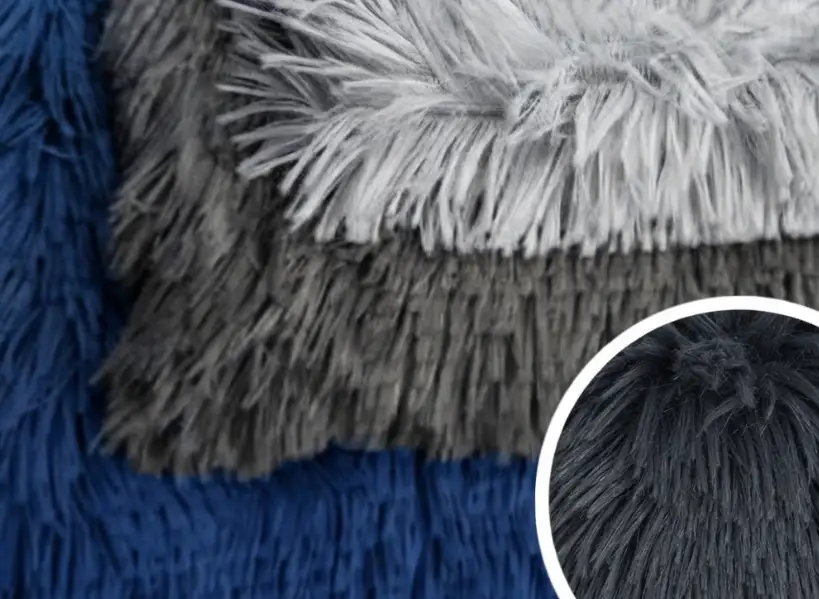
How Pile Height Shapes Design Outcomes
| Pile Height Range | Visual Effect | Best Suited For | Relative Cost Impact |
|---|---|---|---|
| 1–3mm (short) | Sleek, defined, close-fitting look | Licensed-style characters, fine embroidery detail | Baseline cost |
| 3–10mm (medium) | Balanced softness with reasonable definition | Standard stuffed animals, mascot plush | Slightly above baseline |
| 10–25mm (long) | Soft, textured, visually rich surface | Premium plush, huggable comfort toys | Moderate increase |
| 25–50mm (extra-long) | Shaggy, luxurious, realistic-fur look | Realistic animal replicas, high-end collectibles | Significant increase |
Cost increases with pile height for a straightforward reason: longer-pile fabrics use more raw fiber per square meter, are more expensive to knit or weave, and require slower, more careful cutting and sewing to avoid trapping pile in seams or leaving visible bald lines along stitch paths. A design that moves from a 6mm pile to a 30mm pile fabric is not making a cosmetic upgrade — it is materially changing both the manufacturing process and the unit cost.
Tip: If a design includes both a body (which benefits from softness) and a face (which needs definition for embroidery or appliqué), consider specifying two different pile heights within the same product — a longer pile for the body and a shorter pile for the face panel. This hybrid approach is common in premium plush development and delivers both softness and facial clarity in a single design.
What Fiber Content Should You Choose for Plush Toy Fabric?
Fiber content refers to what a plush fabric is actually made from — and it is a separate decision from fabric category and pile height, since the same category of fabric (minky, for example) can be produced from different fiber blends with meaningfully different properties. The overwhelming majority of plush toy fabric is polyester-based, but the specific polyester grade, blend ratio, and any specialty fiber content still meaningfully affect hand-feel, durability, and cost.
Fiber content should be chosen based on three factors: the durability and washability the end product needs, any hypoallergenic or organic positioning the product is marketed with, and the budget available per unit. 100% polyester is the default choice for the vast majority of plush toys because it offers the best combination of softness, colorfastness, washability, and cost — but buyers targeting eco-conscious or organic-positioned product lines increasingly specify cotton-blend or recycled-fiber fabrics, which carry a cost premium but support a specific marketing claim that pure polyester cannot support.
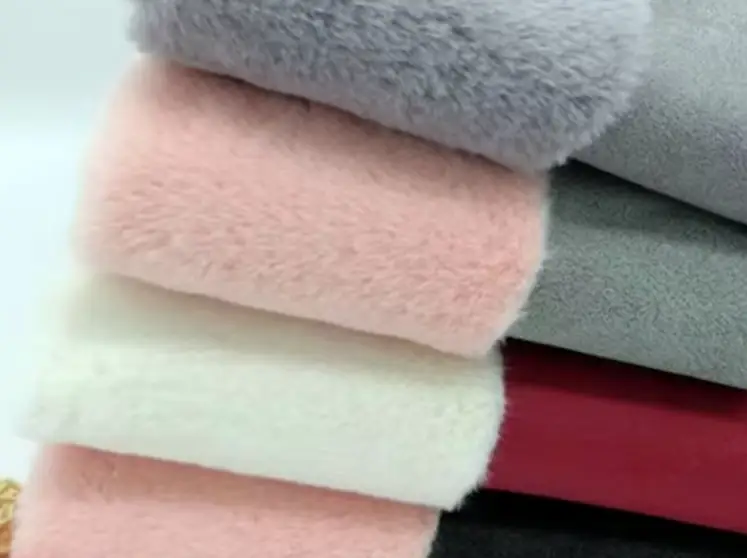
Common Fiber Content Options for Plush Fabric
| Fiber Type | Key Properties | Typical Application | Relative Cost |
|---|---|---|---|
| 100% polyester | Soft, colorfast, washable, cost-efficient | Standard plush toys across all categories | Lowest |
| Polyester/cotton blend | Slightly more breathable, softer natural hand-feel | Baby comfort items, premium positioning | Moderate |
| Organic cotton blend | Natural fiber content, eco-marketing appeal | Organic or eco-branded baby lines | Higher |
| Recycled polyester (rPET) | Made from recycled plastic, sustainability positioning | Sustainability-branded product lines | Moderate to higher |
| Bamboo/viscose blend | Very soft hand-feel, less common in mass production | Niche premium or specialty products | Highest |
Why Polyester Dominates Plush Manufacturing
Polyester’s dominance in plush manufacturing is not incidental — it reflects genuine performance advantages for this specific application. Polyester fiber can be engineered to a wide range of pile heights and densities, holds dye color consistently and resists fading, resists matting and shape distortion through repeated compression, and tolerates machine washing far better than most natural fiber alternatives. For a product category where softness, colorfastness, and durability under child handling are all critical, polyester consistently outperforms natural fibers on the properties that matter most, which is why even premium plush products are very often built on a polyester base rather than a natural-fiber one.
Knitted Backing Versus Woven Backing
Beneath the pile surface, plush fabric is constructed on either a knitted or a woven backing, and this structural choice affects stretch, drape, and sewing behavior independently of pile height or fiber content. Knitted-backing fabrics have natural stretch in at least one direction, which allows them to conform smoothly around curved plush shapes — heads, paws, rounded bellies — without puckering or requiring excessive easing during sewing. Woven-backing fabrics have little to no stretch, which makes them more dimensionally stable but harder to fit around complex curved panels without visible tension lines.
Most standard plush toy fabric, including minky, is knitted specifically because the stretch it provides makes construction around rounded plush forms significantly easier and produces a smoother finished surface. Woven-backing fabrics appear more often in flat accessory pieces — bandanas, small flat appliqués, certain accent panels — where stretch is not needed and dimensional stability is preferred. Understanding this distinction helps explain why swapping a fabric for a similar-looking alternative without checking its backing construction can unexpectedly change how well a pattern fits once it is cut and sewn.
How Do You Match Fabric to Age Grade and Safety Requirements?
Fabric selection is not purely an aesthetic decision — it is directly constrained by the safety requirements attached to the intended age grade of the end user, and matching fabric to age grade correctly is one of the most consequential steps in the entire development process. A fabric that is entirely appropriate for an adult collectible or an all-ages mascot can be non-compliant or unsafe for a toddler-facing product, independent of how it looks or feels.
Fabric-related safety considerations for young children center on three risks: loose fiber shedding that presents an ingestion or choking hazard, flammability performance that must meet the applicable standard for the target market, and surface treatments or dyes that must be free of restricted chemical substances. Fabrics are matched to age grade by first confirming the applicable safety standard for the target market — such as ASTM F963 in the United States or EN71 in the European Union — and then selecting only fabric options that have documented compliance with that standard’s flammability and chemical requirements.
Fabric Considerations by Age Grade
| Age Grade | Fabric Risk Focus | Recommended Fabric Approach |
|---|---|---|
| Under 3 years | Fiber shedding, flammability, chemical residue | Short-pile, low-shed fabric with full compliance documentation |
| 3–6 years | Flammability, moderate shedding tolerance | Minky or medium-pile fabric, verified compliance |
| 6+ years / all ages | Flammability standards still apply, shedding less critical | Broader fabric range including longer-pile faux fur |
| Adult collectible / display | Compliance requirements vary by market, generally less restrictive | Full fabric range, including delicate or high-shed textures |
Tip: Confirm the target age grade in writing before fabric selection begins, not after. Age grade determines which fabrics are even eligible for consideration, and discovering a chosen fabric does not meet the required standard after sampling has started almost always forces a fabric change and a new round of compliance testing.
Which Fabrics Work Best for Specific Plush Toy Categories?
Different plush toy categories have different functional and commercial priorities, and the right fabric choice shifts accordingly — a fabric that is ideal for a baby comfort item is rarely the right choice for a large mascot costume, and a fabric that works well for a promotional giveaway is rarely appropriate for a premium retail collectible. Matching fabric to product category means weighing durability, washability, cost, and visual impact against the specific demands of how that category of product will actually be used.
Recommended Fabric Approach by Plush Toy Category
| Product Category | Primary Requirement | Recommended Fabric |
|---|---|---|
| Baby/toddler comfort items | Safety, washability, low shedding | Short-pile minky, polyester or cotton-blend, machine washable |
| Standard retail stuffed animals | Balanced softness and cost efficiency | Medium-pile minky, 100% polyester |
| Premium collectibles | Visual richness, luxurious hand-feel | Long-pile faux fur, higher-density fill |
| Mascot and costume plush | Durability under heavy repeated handling | Dense medium-pile fabric, reinforced seams |
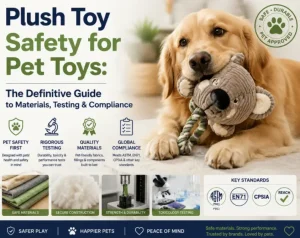
| Pet plush toys | Durability, resistance to tearing and chewing | Tightly woven, low-shed, reinforced fabric |
| Promotional / giveaway plush | Cost efficiency at scale | Short-pile minky or velboa, standard polyester |
Tip: For pet plush products specifically, request fabric with a tighter weave and higher tensile strength than a standard human-facing plush toy, and consider double-layer construction at stress points. Pet plush is subjected to significantly more aggressive handling than a typical child’s toy, and a fabric that performs well for a toddler product often fails prematurely under a dog’s bite force.
How Does Fabric Choice Affect Manufacturing Cost?
Fabric is typically one of the largest single cost components in plush toy manufacturing, and understanding how specific fabric decisions move unit cost is essential for buyers trying to hit a target price point without unknowingly compromising the design. Fabric cost is driven primarily by pile height, fiber content, and any special finishing — printing, dimpling, or two-tone effects — applied to the base fabric.
Fabric Decisions and Their Relative Cost Impact
| Fabric Decision | Cost Direction | Reason |
|---|---|---|
| Increasing pile height | Increases cost | More raw fiber per unit area, slower cutting and sewing |
| Switching to faux fur from minky | Increases cost | Higher raw material cost, more labor-intensive construction |
| Adding organic or recycled fiber content | Increases cost | Higher raw material sourcing cost |
| Adding a printed or dimpled finish | Increases cost | Additional processing step before cutting |
| Using a single fabric color/type throughout | Decreases cost | Simplifies cutting layout and reduces fabric waste |
| Standardizing on common stock fabric colors | Decreases cost | Avoids custom dye lot minimums and lead times |
One of the most practical cost-control levers available to buyers is fabric standardization — using a small, consistent set of fabric types and colors across an entire product line rather than specifying a unique fabric for every individual design. This reduces the number of dye lots and minimum order quantities a factory has to manage, and it is one of the most effective ways to control cost without visibly compromising the finished product, since the buyer retains full control over which fabrics go into the standardized set.
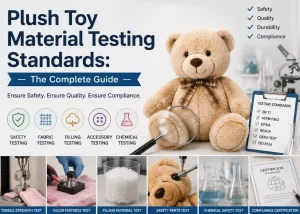
What Fabric Testing Should Be Done Before Bulk Production?
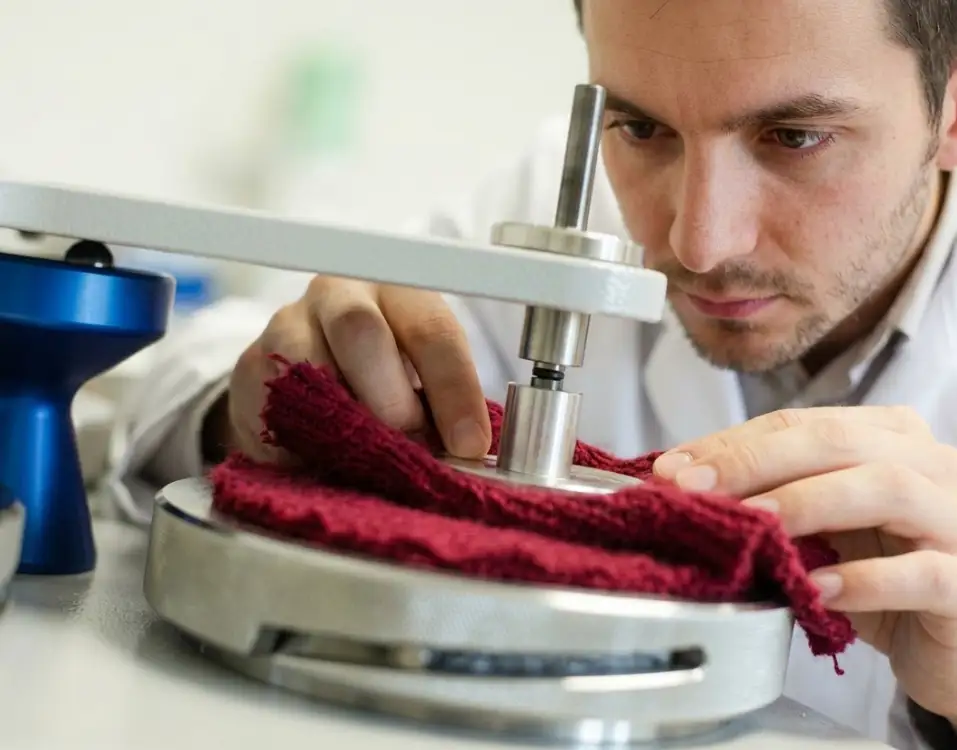
Fabric testing is the set of physical and laboratory checks applied to a chosen fabric before it is approved for bulk production, confirming that it performs as expected under real-world conditions and meets the compliance requirements of its target market. Skipping fabric testing is one of the most common — and most expensive — mistakes in plush toy development, because fabric-related failures discovered after bulk production has begun are far more costly to correct than the same failures caught during sampling.
Core Fabric Tests Before Bulk Approval
| Test Type | What It Verifies | Why It Matters |
|---|---|---|
| Colorfastness testing | Fabric color does not bleed or fade under washing/rubbing | Prevents color transfer and premature fading |
| Pilling and abrasion testing | Fabric surface resists pilling under repeated friction | Predicts long-term appearance after regular use |
| Flammability testing | Fabric meets the flammability standard for the target market | A mandatory compliance requirement, not optional |
| Shedding/fiber loss testing | Fabric does not release excessive loose fiber | Directly relevant to choking-hazard risk for young children |
| Chemical residue testing | Fabric is free of restricted dyes and chemical substances | Required for compliance in most major markets |
| Wash durability testing | Fabric retains pile, shape, and color after repeated washing | Confirms the product performs over its expected lifespan |
Tip: Request fabric test reports at the swatch or sample stage — before bulk fabric is purchased — rather than waiting until finished goods are ready to ship. A fabric that fails colorfastness or flammability testing after bulk production has already consumed the fabric is a far more expensive problem than the same failure caught before a single bulk unit is cut.
How Should Fabric Be Managed Across Multiple Production Runs and Reorders?
Fabric consistency across production runs is a distinct challenge from fabric selection itself, and it becomes increasingly important for buyers placing repeat orders or managing a multi-SKU product line over time. A fabric that was correctly specified, tested, and approved for an initial order can still produce visible inconsistency on a reorder if the fabric batch, dye lot, or even the supplying mill changes between runs — a risk that grows the longer the gap between orders and the more suppliers are involved in sourcing the same nominal fabric type.
Managing fabric consistency across multiple runs is best handled through three practices: retaining a physical archive of approved fabric swatches labeled by product and order date, requesting dye-lot or batch information from the factory at the time of each bulk fabric purchase, and comparing new bulk fabric against the archived swatch under consistent lighting before production begins on a reorder. These practices shift fabric consistency verification from relying on memory or general impression to relying on a direct physical comparison, which is far more reliable across the months or years that can separate an original order from a reorder.
Fabric Consistency Practices for Repeat Production
| Practice | What It Prevents | How to Implement |
|---|---|---|
| Swatch archiving | Reliance on memory for fabric matching | Store labeled physical swatches from every approved order |
| Dye-lot tracking | Undetected color drift across production batches | Request dye-lot references with each bulk fabric purchase |
| Pre-reorder swatch comparison | Visible fabric mismatch discovered only after bulk shipment | Compare the new fabric against the archive before production starts |
| Supplier consistency | Fabric variation introduced by switching mills | Where possible, source repeat fabric from the same mill |
This kind of fabric management becomes particularly important for buyers building a product line with a signature fabric identity — a specific fabric feel that customers come to associate with the brand. In these cases, fabric consistency is not just a quality control matter but a brand consistency matter, and the cost of maintaining a swatch archive and dye-lot tracking system is small relative to the cost of customers noticing a shift in product feel between purchases.
What Are the Most Common Fabric Selection Mistakes?
Certain fabric selection mistakes recur predictably across plush toy development projects, regardless of buyer experience level, because they stem from the same underlying gap: treating fabric as a simple, interchangeable material rather than a technical specification with real performance and compliance consequences.
Common Fabric Selection Mistakes and How to Avoid Them
| Mistake | Consequence | Prevention |
|---|---|---|
| Specifying fabric by vague name only (“soft plush”) | Wrong fabric sourced; sample does not match expectations | Always specify pile height and provide a physical swatch |
| Choosing fabric before confirming age grade | Chosen fabric fails compliance, forcing a late-stage change | Confirm age grade and compliance standard before fabric selection |
| Prioritizing looks over durability for heavy-use products | Premature wear, customer complaints, returns | Match fabric durability to the actual expected use pattern |
| Skipping fabric testing to save time | Compliance or quality failures discovered after production | Complete fabric testing before bulk fabric purchase |
| Using too many different fabrics across a product line | Higher cost, longer lead times, complex minimum order quantities | Standardize on a core fabric palette where possible |
Conclusion
Fabric is not a finishing touch applied at the end of plush toy development — it is a foundational design decision that shapes how a product looks, feels, performs, and complies with safety requirements throughout its entire lifecycle. Buyers who treat fabric selection with the same technical precision they apply to pattern development and safety compliance consistently get samples that match their vision on the first or second attempt, rather than cycling through revision rounds trying to correct a fabric choice that was never quite right.
The most reliable path to the right fabric is specificity: naming the fabric category, defining the pile height, confirming the fiber content, matching the choice to age grade and use case, and testing before committing to bulk production. Fabric decisions made this way rarely need to be revisited — and that consistency is exactly what a well-run plush toy development process is built to deliver.
FAQ
Q1: What is the most versatile, all-purpose fabric for a new plush toy line?
Short-to-medium pile minky, in 100% polyester, is the closest thing to an all-purpose default for plush toy manufacturing. It works across nearly every age grade with appropriate safety verification, takes embroidery and printing well, is relatively cost-efficient, and holds up reliably to repeated handling and washing. Buyers developing a first plush product line and unsure where to start are generally well served by beginning with a minky-based design and reserving faux fur, sherpa, or specialty fibers for specific characters where those textures are part of the core design intent.
Q2: Can the same plush toy design use more than one fabric type?
Yes, and combining fabric types within a single design is common practice, particularly for characters with distinct visual elements — a short-pile face for embroidery clarity paired with a longer-pile body for softness, or a smooth velboa belly panel contrasted against a textured faux fur back. Combining fabrics does add complexity to pattern making and cutting, since pile direction and seam allowances differ between fabric types, but it is a well-established technique for balancing softness, definition, and cost within one product.
Q3: How can a buyer tell if a fabric will shed excessively before receiving a physical sample?
Shedding tendency correlates strongly with pile height and fiber quality — longer-pile fabrics and lower-grade fiber blends shed more, almost without exception. Before a physical sample arrives, asking the fabric supplier directly for shedding or fiber-loss test data, and specifically requesting a lower-shed fiber grade for any product intended for young children, are the most reliable ways to manage this risk in advance. Once a physical swatch or sample is available, a simple rub test — rubbing the fabric surface firmly with a dark cloth and checking for loose fiber transfer — gives a fast, practical indication of shedding behavior before committing to bulk fabric purchase.
Q4: Is it worth paying more for organic cotton or recycled polyester fabric?
The decision depends primarily on whether the product’s marketing and target customer value sustainability or organic positioning enough to justify the cost premium, since the functional performance difference for most buyers is secondary to the marketing claim. Organic cotton blends and recycled polyester fabrics generally cost more than standard polyester and, in the case of cotton blends, can perform somewhat differently in terms of colorfastness and wash durability. For product lines explicitly positioned around sustainability or organic values, the fabric choice supports a marketing claim that standard polyester cannot make; for general-purpose product lines without that specific positioning, standard polyester typically remains the more cost-efficient choice without a meaningful loss in perceived quality.
Q5: How much does fabric typically account for in the total cost of a plush toy?
Fabric is consistently one of the largest single cost components in plush toy manufacturing, though the exact share varies significantly by design — a simple, short-pile, small-format toy will have a lower fabric cost share than a large, long-pile faux fur design with high fabric consumption per unit. Because fabric cost scales with both surface area and pile height, two designs of similar overall complexity can have meaningfully different fabric costs purely based on size and pile choice. This is why fabric decisions deserve early, deliberate attention in any project working toward a specific target price point, rather than being finalized late in the design process.
Q6: What should be included in a fabric specification to avoid miscommunication with a factory?
A complete fabric specification should include the fabric category (minky, faux fur, sherpa, etc.), a precise pile height in millimeters, fiber content, a Pantone or physical color reference, and a physical swatch whenever possible. Specifications that rely only on a fabric category name and a general adjective like “soft” or “premium” leave too much room for interpretation, and interpretation is exactly what produces samples that do not match a buyer’s original expectation. The more of these five elements a specification includes, the less likely fabric-related revision rounds become.
Q7: What is the difference between a two-tone fabric and a printed fabric, and when should each be used?
A two-tone fabric blends two fiber colors within the pile itself during the knitting process, producing a soft, naturally variegated look that reads well at close range and holds up under the same wear conditions as a standard single-color plush fabric. A printed fabric applies a graphic or pattern onto the surface of a short-pile base fabric after it is manufactured, which allows for far more detailed and precise imagery — logos, fine patterns, licensed character graphics — than a two-tone blend could achieve, but is generally limited to shorter pile heights where the printed detail remains visible. Two-tone fabric is the better choice for naturalistic animal coloring and soft blended effects; printed fabric is the better choice when a design requires sharp, detailed, or branded surface graphics.