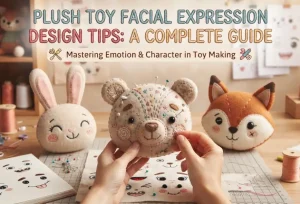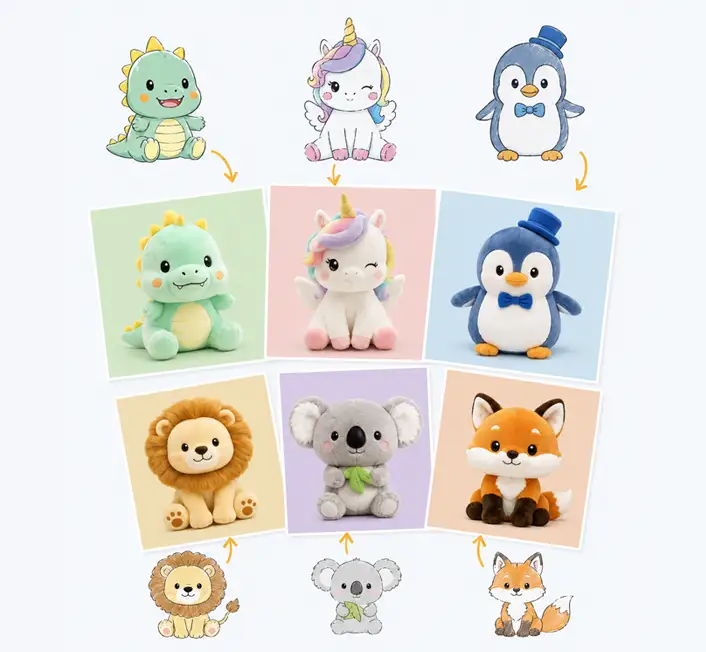
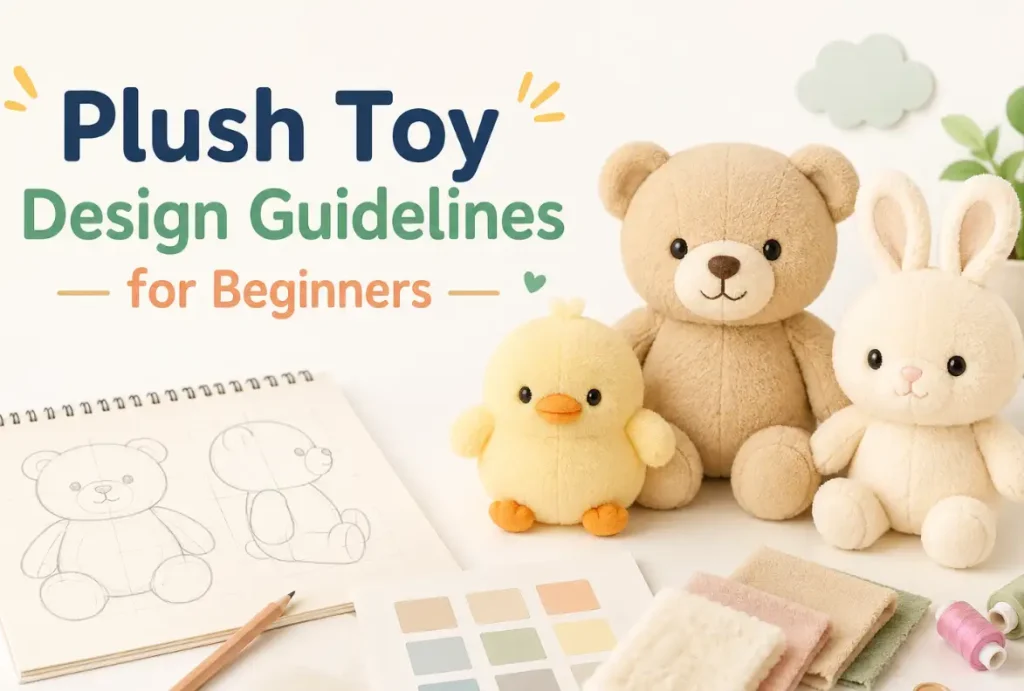
These Plush Toy Design Guidelines provide a practical introduction to creating plush toys that are visually appealing, safe, and production-ready. Whether you’re a beginner or exploring custom toy development, these tips will help you build a strong foundation for successful plush toy design.
Designing a plush toy from scratch is far more structured than it looks. Behind every soft, squeezable character lies a carefully engineered combination of fabric weights, seam tolerances, fill ratios, and embellishment rules—each governed by international safety standards that differ by destination market. Whether you are an independent designer pitching a character concept or a brand buyer working with an overseas production partner, understanding the technical foundations of plush toy design will save you from costly revisions, regulatory hold-ups, and missed launch windows.
This guide walks through every core pillar of plush toy design: material selection, construction methods, sizing conventions, safety compliance, pattern engineering, fill specification, and the factory workflow from concept sketch to finished sample. It is written for beginners but structured for production—so the information here can serve as a genuine reference during the development process.
What Makes a Plush Toy Design Production-Ready?
A design is only production-ready when it has been translated from an artistic concept into a complete technical package. This package—often called a tech pack or design specification sheet—tells the factory exactly what to cut, sew, stuff, and finish. Without it, factories default to their own interpretations, which rarely match the original creative intent.
The key components of a production-ready plush design include a precise pattern set with seam allowances, a full materials list with weights and grades, a fill specification with target finished firmness, an embellishment map detailing eye types, nose placement, and accessory attachment points, and a safety compliance checklist matched to the target market.
Understanding the Core Design Vocabulary
Before diving into materials and construction, it helps to understand the terminology that factories, pattern makers, and compliance auditors use daily. Misusing even a few terms in supplier communications can lead to misquotes and misbuilt samples.
Core Plush Toy Design Terms & Definitions
| Term | Definition | Why It Matters |
|---|---|---|
| GSM (g/m²) | Grams per square metre; measures fabric weight and density | Determines texture, durability, and cost of outer shell fabric |
| Pile height | Length of the fibre strands on a plush or minky fabric | Affects softness perception, detailing precision, and shedding risk |
| Seam allowance | Extra fabric margin added around a pattern piece for sewing | Standard is 6–8 mm; too small causes seam failure under stress |
| Turning hole | A gap left in one seam to turn the toy right-side-out after sewing | Must be large enough to turn without distorting the shape |
| Fill ratio | Weight of stuffing relative to finished toy volume | Controls firmness; too low = floppy, too high = rigid and uncomfortable |
| Needle detection | QC process using a metal detector to find broken needle fragments | Mandatory for most export markets; 1.2 mm sensitivity is the standard |
| Appliqué | Fabric shape stitched onto the surface for facial features or patches | Safer than plastic eyes for toys targeting children under 3 |
| Embroidery | Thread-based design sewn directly into the fabric surface | Durable, non-detachable alternative to printed or glued features |
How Do You Choose the Right Fabric for a Plush Toy?
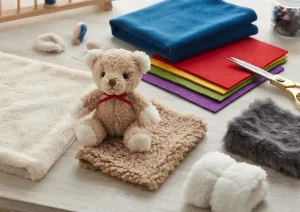
Fabric selection is the single most consequential decision in plush toy design. It determines the visual character, tactile appeal, durability, washing performance, and a significant share of the unit cost. Most plush toys use one of four primary fabric families: minky, short pile plush, long pile plush, or cotton velvet. Each has different GSM ranges, pile heights, stretch behaviours, and suitability for different character types and age groups.
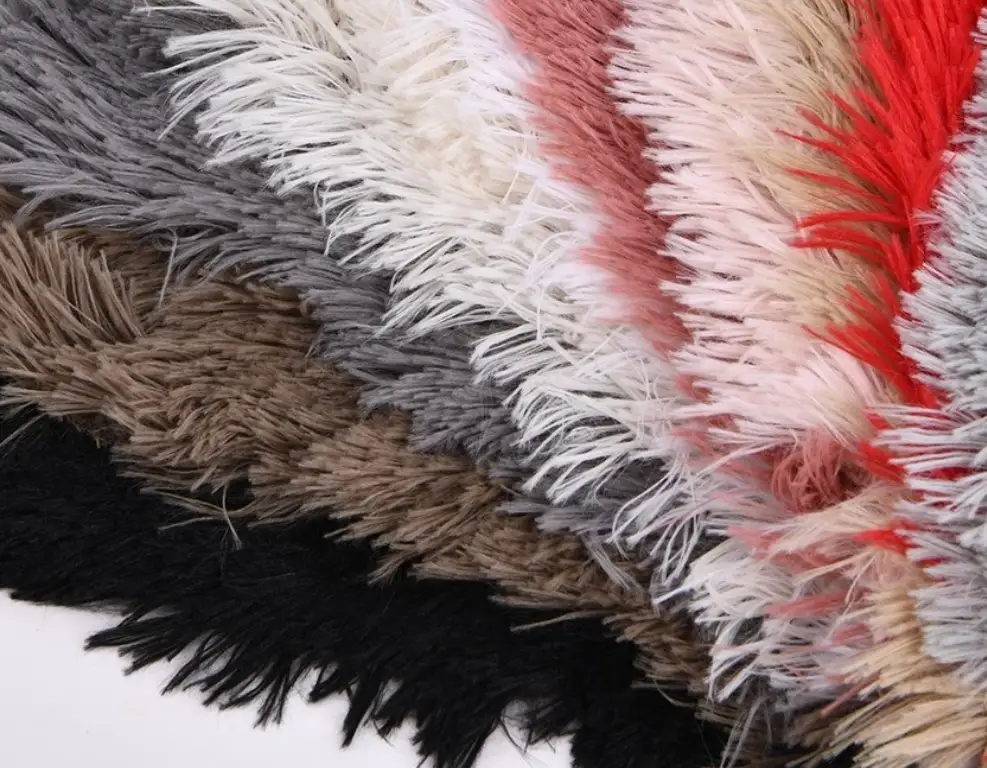
Tip: For toys targeting children under 36 months, choose fabrics with a pile height under 6 mm and a GSM above 280. Short pile reduces small fibre ingestion risk and holds embroidered facial features more cleanly than long pile alternatives.
Plush Fabric Types: Technical Specifications & Applications
| Fabric Type | Typical GSM | Pile Height | Stretch | Best For | Avg. Cost Range (USD/m) |
|---|---|---|---|---|---|
| Minky / Minkee | 280–350 | 1–2 mm | 4-way | Baby toys, character blankets, smooth-surface designs | $2.50–$5.00 |
| Short pile plush | 300–400 | 3–6 mm | 2-way | Animals, most commercial character plush, mascots | $1.80–$4.20 |
| Long pile / shaggy plush | 400–600+ | 12–30 mm | 2-way | Novelty animals, premium lifestyle plush, collector items | $3.50–$8.00 |
| Cotton velvet / velboa | 200–280 | 0.5–1.5 mm | Low | Vintage-style toys, detailed embroidery work | $2.00–$4.50 |
| Faux fur | 450–700 | 20–50 mm | Limited | Display pieces, fursuit elements, premium collector plush | $5.00–$15.00 |
| Organic cotton plush | 260–320 | 2–4 mm | Minimal | Eco-certified toys, GOTS-compliant product lines | $4.50–$9.00 |
Selecting Fill Materials: Polyester, Cotton, and Specialty Options
The fill material determines how the finished toy feels in the hand, how it recovers after compression, how it performs through wash cycles, and what certifications it can carry. Polyester fiberfill (PP cotton) is the global industry default, accounting for the overwhelming majority of plush toy fill worldwide. It is hypoallergenic, lightweight, fast-drying, and available in multiple grades from standard to ultra-premium silicone-coated variants that dramatically improve loft recovery.
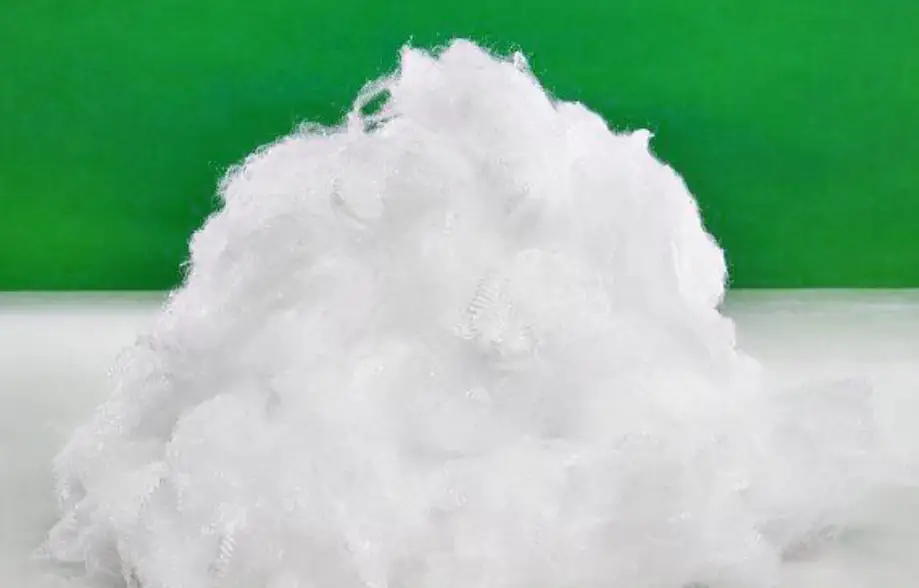
For brands targeting sustainability-conscious consumers or eco-certification requirements, recycled PET fill (made from post-consumer plastic bottles) is increasingly common and carries GRS (Global Recycled Standard) certification. Natural alternatives such as organic cotton fill or buckwheat hull beads serve niche applications but come with higher cost and more complex care requirements.
What Safety Standards Apply to Plush Toy Design?
Safety compliance is non-negotiable in plush toy manufacturing. Every major consumer market has its own mandatory standard, and some categories of plush—particularly those marketed for children under 36 months—carry the strictest requirements. A design that passes US standards may still require additional testing for EU or UK market entry, and vice versa.
The most common failure points in plush toy compliance are small detachable parts (eyes, noses, buttons), flammability of outer fabrics, excessive formaldehyde or azo dye content in dyed textiles, and inadequate seam strength under pull-force testing. Understanding these failure modes before the design is finalised is far cheaper than discovering them at the pre-shipment inspection stage.
International Plush Toy Safety Standards by Market
| Market | Standard | Key Requirements | Age-Group Focus | Certification Body |
|---|---|---|---|---|
| United States | ASTM F963 | Small parts, flammability, heavy metals, mechanical strength | 0–14 years | CPSC / accredited labs |
| European Union | EN71 Parts 1–3 | Mechanical/physical properties, flammability, chemical migration | 0–14 years | CE mark / notified bodies |
| United Kingdom | BS EN71 | Same as EN71 post-Brexit; UKCA mark required | 0–14 years | UKCA / accredited labs |
| Australia / NZ | AS/NZS 8124 | Mechanical safety, chemical content, flammability, noise limits | 0–14 years | ACCC / SAI Global |
| Canada | CCPSA / SOR/2011-17 | Toys regulations mirroring ASTM F963 with bilingual labelling | 0–14 years | Health Canada |
| Japan | ST Mark / Food Sanitation Act | Chemical safety, formaldehyde limits stricter than EN71 | 0–14 years | JPMA / JST |
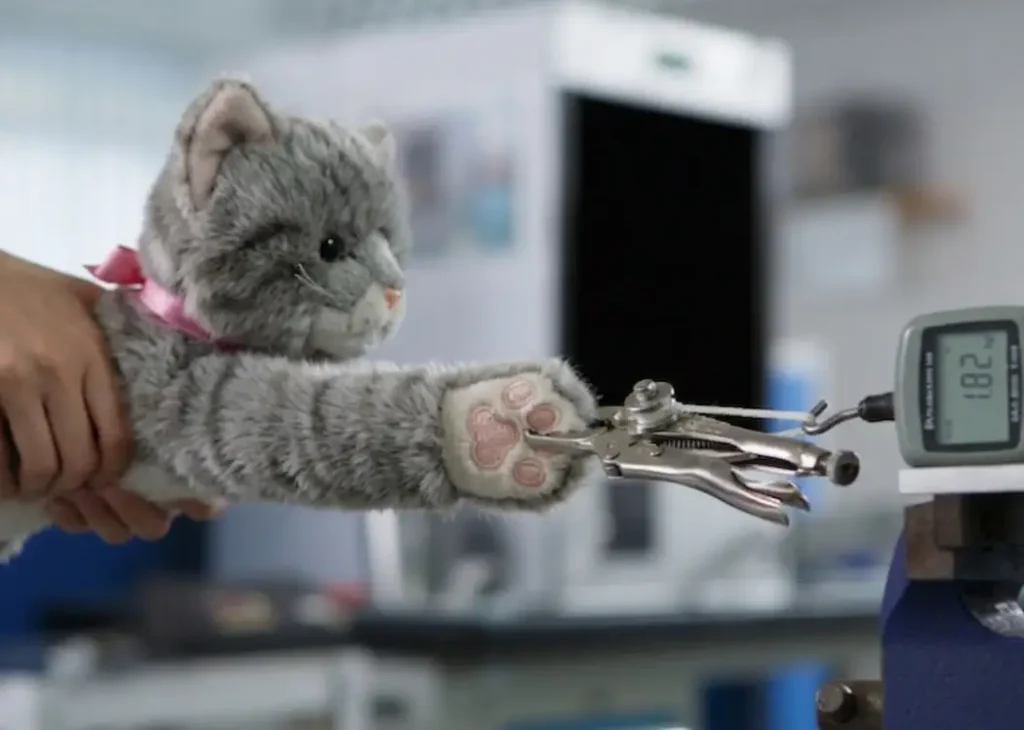
According to EN71 mechanical testing protocol, eye and nose attachments on plush toys must withstand a sustained pull force of 90 N for 10 seconds without detaching—a threshold that eliminates most clip-on and glue-attached plastic eyes from compliant designs for children under 36 months.
How Is a Plush Toy Pattern Engineered for Production?
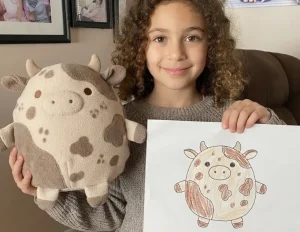
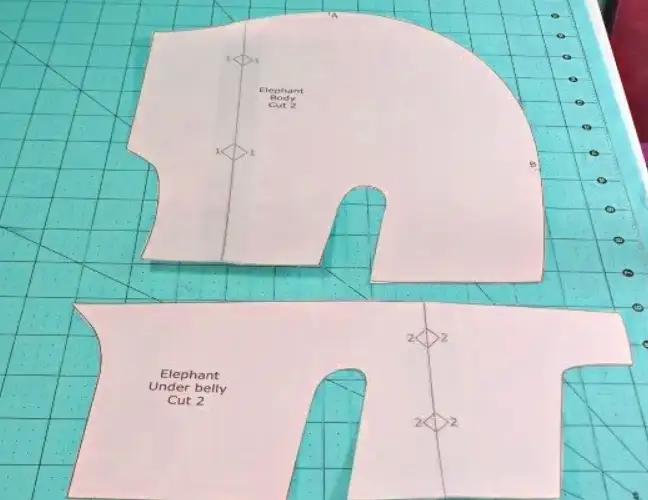
Pattern engineering is the bridge between concept art and factory production. A great character sketch becomes an unusable design file unless it has been translated into a flat pattern set that accounts for fabric stretch, seam allowance, three-dimensional volume, and consistent sizing across production runs. Most professional plush pattern makers work from a reference silhouette, then construct each panel as a separate flat piece that, when sewn together, produces the target three-dimensional shape.
Pattern Grading and Size Standardisation
Plush toys are generally produced in a defined set of standard sizes, which simplifies tooling, packaging design, and pricing. While custom sizes are possible, they typically add 10–20% to unit cost due to non-standard cutting dies and irregular carton utilisation. The table below shows the most commonly used size categories in the commercial plush toy industry.
Standard Plush Toy Size Classifications
| Size Category | Typical Height (cm) | Typical Fill Weight (g) | Common Application | MOQ Range (units) |
|---|---|---|---|---|
| Mini / Keychain | 8–12 | 15–40 | Blind bags, gashapon, stationery premiums | 500–1,000 |
| Small | 15–25 | 60–120 | Retail shelf SKUs, gift-with-purchase | 300–500 |
| Medium (standard) | 25–40 | 150–300 | Core retail, character merchandise, plush figures | 200–500 |
| Large | 40–60 | 350–600 | Display plush, prize plush, premium retail | 100–300 |
| Jumbo / Life-size | 60–150+ | 800–3,000+ | Promotional, flagship store display, limited edition | 50–200 |
Tip: When designing a character across multiple sizes, always prototype the smallest size first. If a design holds its detail and proportion at 15 cm, it will almost always scale up cleanly. The reverse is rarely true—large-size prototypes can hide structural issues that collapse at small scale.
Embellishment Placement and Facial Feature Engineering
Facial features define the character and personality of any plush toy, and their engineering choices have direct safety and quality implications. The three main options—embroidery, safety eyes, and printed/embossed features—have distinct trade-offs in terms of cost, compliance, and aesthetic outcome.
Embroidery is the most durable and universally compliant option. Thread-based facial features cannot be detached, cannot be swallowed, and perform consistently across washing cycles. They are, however, limited in the level of visual complexity they can achieve without significantly increasing embroidery cost.
Safety eyes—plastic eyes with a locking washer mechanism—are common in commercial plush and, when correctly installed, can pass pull-force testing for children 3 years and above. They provide a high-quality, expressive finish but require careful sourcing from certified suppliers, as non-compliant safety eyes are one of the most common causes of failed toy inspections.
What Does the Plush Toy Production Workflow Look Like?
Understanding the production workflow helps beginners set realistic development timelines and avoid the most common delays. From the first character sketch to a finished, packaged toy ready for shipment, a standard new-style plush toy development takes between 10 and 18 weeks, depending on complexity, the number of revision rounds, and whether tooling for custom accessories is required.
Plush Toy Development Timeline: Phases, Tasks & Typical Durations
| Phase | Key Tasks | Duration | Decision Points |
|---|---|---|---|
| Concept & brief | Character design, reference art, tech pack draft, fabric direction | 1–2 weeks | Character approval, size confirmation, market/compliance target |
| Pattern development | Flat pattern set creation, seam planning, embellishment mapping | 1–2 weeks | Pattern sign-off before sampling begins |
| First sample (PP sample) | Prototype sewn by hand/small machine, fabric and fill sourced | 2–3 weeks | Shape, proportion, fill firmness, embellishment review |
| Revision rounds | Corrections to pattern, fabric swaps, fill adjustment, feature revision | 1–2 weeks per round | Typically 1–3 rounds before pre-production approval |
| Pre-production sample | Production-method sample using final materials on factory line | 1–2 weeks | Final approval; triggers production start |
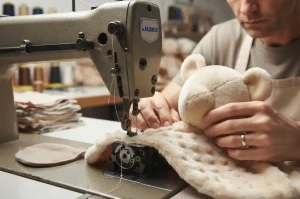
| Mass production | Cutting, sewing, stuffing, embellishing, QC, needle detection | 3–6 weeks | Mid-production inspection (IPI) recommended at 30–40% completion |
| Pre-shipment inspection | Third-party AQL inspection, lab testing if required, packing check | 1 week | Pass/fail decision before goods are released for shipment |
Quality Control Checkpoints Every Designer Should Know
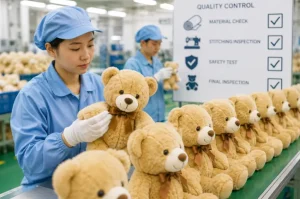
Quality control in plush toy production operates across multiple stages rather than at a single end-of-line inspection. The most effective QC programmes embed checks at the incoming material stage (fabric and fill inspection before cutting begins), during production (in-line QC on stitching tension, fill weight, and embellishment attachment), and at the pre-shipment stage (third-party inspection against an approved AQL level).
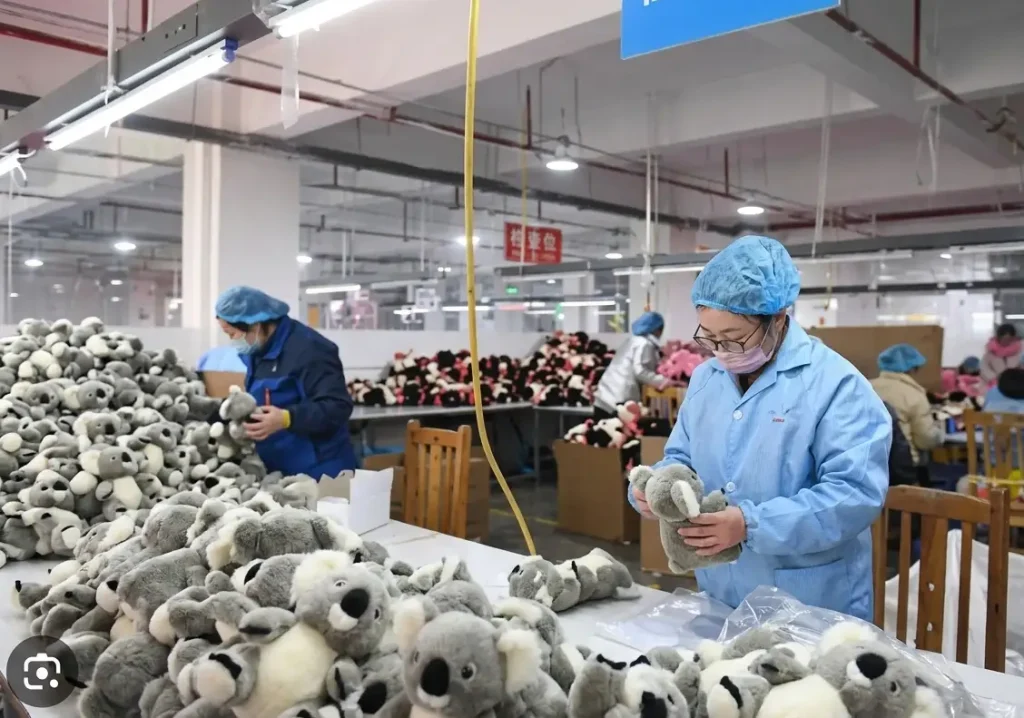
The most universally recognised QC standard for consumer goods is AQL 2.5 for major defects and AQL 4.0 for minor defects, based on ISO 2859-1 sampling tables. For toys destined for children under 36 months, many buyers tighten this to AQL 1.5 for major defects given the elevated safety implications.
Tip: Always request a needle detection certificate alongside your pre-shipment inspection report. A factory claiming to needle-detect all units but unable to provide dated detection logs should be treated as a compliance risk. Detection logs should show unit count, machine calibration date, and operator sign-off.
How Does Costing Work in Plush Toy Manufacturing?
Unit cost in plush toy manufacturing is driven by four variables: material cost (fabric, fill, embellishments, trims), labour cost (cutting, sewing, stuffing, finishing), overhead allocation (factory utility, line supervision, QC), and margin. For beginners, the most useful model is to understand how changes in design complexity, order quantity, and size specification each independently affect the final FOB price.
The most overlooked cost driver for first-time buyers is embellishment complexity. A plush toy with ten embroidery positions, two fabric colours, one printed fabric panel, a sewn-in care label, an accessory (such as a removable hat), and a hang tag will cost substantially more than a two-colour, embroidery-only design of the same physical size—even at identical quantities. Each additional operation is a separate production step, and each step adds time, increases rejection risk, and requires dedicated quality checking.
Understanding the cost structure before finalising the design allows beginners to make deliberate trade-offs: choosing embroidered eyes over safety eyes for infant-line toys is both a compliance decision and a cost variable, since embroidery avoids the need to source and quality-check a separate component.
Frequently Asked Questions
What is the minimum order quantity for custom plush toys?
Most factories set MOQs between 200 and 500 units per style for standard sizes (25–40 cm). Smaller runs of 50–200 units are available from boutique sampling factories but come at 30–60% higher unit cost due to reduced line efficiency. MOQs vary by complexity: simple two-piece designs may accept lower quantities than multi-part character builds.
Do plush toys need to be tested even if they are for adults?
Yes, but the requirements differ. Toys clearly marketed and packaged for consumers 14 years and above are exempt from children’s toy safety standards in most markets, but they still fall under general product safety regulations. If there is any ambiguity about the intended age group—for example, a character plush sold at a convention without explicit age labelling—buyers should apply standard toy testing to avoid liability.
How do I prevent fabric colour bleeding during washing?
Request a colorfastness test (ISO 105-C06 or AATCC 61) from your fabric supplier before bulk purchase. Specify a minimum rating of Grade 4 for wet rubbing and Grade 4–5 for dry rubbing. Avoid pairing dark and light fabrics in the same toy body without a colorfastness test result confirming no migration between the two at the wash temperature stated on the care label.
What is the difference between a PP sample and a pre-production sample?
A PP sample (pre-production prototype or pilot sample) is typically handmade or assembled with production-approximate methods to evaluate shape, proportion, and material choices before tooling is committed. A pre-production sample is made on the actual production line using final materials and production methods, and it serves as the confirmed reference standard against which all mass production units are inspected. Approval of the pre-production sample triggers production start.