Plush toys have long occupied a unique position in educational settings — simultaneously tools, companions, and teaching props. Across preschool classrooms, university psychology labs, museum gift shops, and hospital learning wards, soft stuffed toys serve as bridges between abstract concepts and tangible experience. As procurement priorities evolve and educators demand higher standards of both safety and pedagogical function, the market for plush toys for educational institutions has matured considerably.
This guide covers everything a school buyer, curriculum director, or institutional procurement officer needs to know: from developmental science and safety compliance to fabric specifications, sourcing timelines, and the role of custom plush in reinforcing institutional identity.
Why Do Educational Institutions Use Plush Toys, and What Makes Them Effective?
The use of stuffed animals and soft plush figures in educational contexts is not a sentimental choice — it is grounded in developmental psychology and evidence-based pedagogy. For young learners, especially, tactile engagement is a primary mode of cognition. Children process and retain information more effectively when abstract learning is anchored in physical interaction.
Plush toys function as manipulatives — objects that learners can hold, position, and interact with to explore ideas. In early childhood settings, a soft animal character can represent a letter, a number concept, an animal habitat, or a social scenario. In special education classrooms, weighted or textured plush toys serve as sensory regulation tools that help learners with autism spectrum conditions or sensory processing differences stay grounded during structured activities.
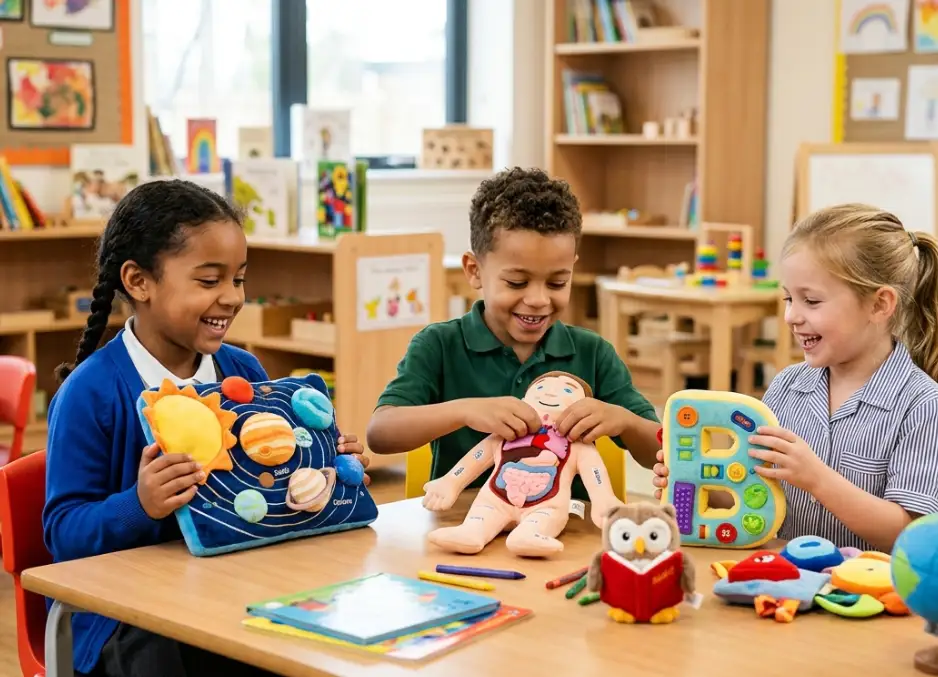
Beyond early childhood, plush has a role in higher education as well. University campus bookstores and student well-being programs have increasingly adopted plush as a form of stress-reduction merchandise, particularly around examination periods. Science-themed plush — such as soft microbe replicas, anatomical organ figures, or plush representations of chemical elements — support curriculum reinforcement in biology, chemistry, and medicine departments.
Tip for Educators: When integrating plush into curriculum activities, assign each toy a named role in a lesson plan — a specific “character” who travels through a story, poses questions, or models a behavior. Children respond more deeply to plush figures that have narrative identity rather than generic props.
Developmental Applications of Plush Toys by Age Group & Setting
| Age Group | Educational Setting | Primary Plush Application | Developmental Benefit |
|---|---|---|---|
| 0–2 years | Nursery / Infant Room | Soft sensory companions, high-contrast textures | Tactile development, object permanence, and emotional bonding |
| 3–5 years | Preschool / Kindergarten | Character-based storytelling figures, alphabet animals | Language acquisition, narrative thinking, and social play |
| 6–11 years | Primary School | Science and geography plush (animals, biomes, habitats) | Content retention, classification skills, and empathy building |
| 12–18 years | Secondary School | Institutional mascots, themed STEM plush | School identity, peer community, stress relief |
| 18+ years | University / College | Department mascots, well-being plush, science novelty figures | Stress management, alumni connection, brand engagement |
What Safety and Compliance Standards Apply to Plush Toys Used in Schools?
Institutional procurement of plush toys carries a higher duty of care than consumer retail. Schools and universities are responsible for the safety of minors (and in some contexts, adults with care needs), which means every plush product entering an educational environment must meet rigorous international toy safety standards.
Core Regulatory Frameworks
In the United States, the primary framework is ASTM F963, the Standard Consumer Safety Specification for Toy Safety. For institutions purchasing plush intended for children under 12, ASTM F963 compliance is mandatory and requires third-party testing by a CPSC-accepted laboratory. Alongside this, CPSIA (Consumer Product Safety Improvement Act) limits total lead content in surface coatings to 90 ppm and requires tracking labels on products designed for children under 12.
In Europe, the applicable standard is EN 71, covering mechanical and physical safety (Part 1), flammability (Part 2), and chemical properties, including migration of certain elements (Part 3). The CE mark confirms that a product has been assessed against all relevant EN standards. For plush sold into the EU market, the REACH regulation restricts the use of hazardous substances, including phthalates and certain azo dyes, in textiles.
For plush toys used specifically with children under three — common in nurseries and early childhood centres — additional small-parts regulations apply. Any component that can be detached (safety eyes, buttons, embroidered elements with raised texture) must withstand bite force and pull-force testing defined in both ASTM F963 and EN 71-1. Embroidered facial features rather than plastic safety eyes are increasingly preferred by institutional buyers for under-36-month environments.
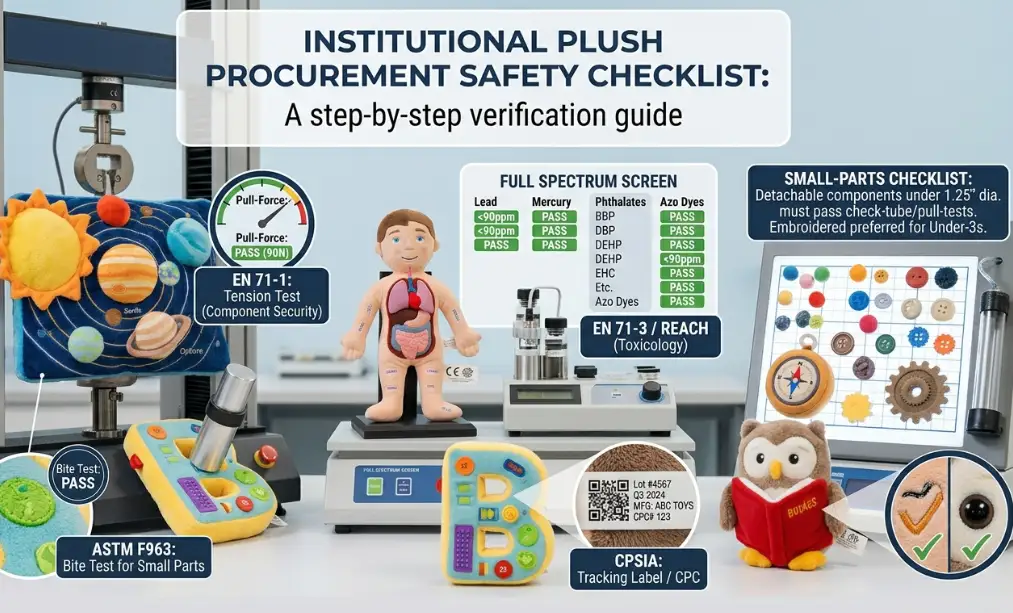
Procurement Tip: When requesting a product quotation for institutional plush, always ask for the specific test reports rather than just a declaration of conformity. Valid test reports will name the accredited laboratory, the standard tested against (e.g., EN 71-1:2014+A1:2018), and the batch or production date range covered.
Key Safety Standards for Educational Institution Plush Procurement
| Standard / Regulation | Region | Key Requirement | Critical for Institutions |
|---|---|---|---|
| ASTM F963 | USA | Mechanical safety, flammability, and chemical limits for children’s toys | Mandatory for K–12 procurement |
| CPSIA | USA | Lead ≤90 ppm in surface coatings; tracking labels required | Applies to all plush for children under 12 |
| EN 71 (Parts 1–3) | European Union | Physical safety, flammability, and chemical migration limits | Required for CE marking in EU schools |
| REACH Regulation | European Union | Restricts hazardous substances in textiles and materials | Applies to all plush fabric and stuffing |
| ISO 8124 | International | International baseline for toy safety aligned with EN 71 | Relevant for multi-region institutional purchasing |
| AS/NZS 8124 | Australia / NZ | Aligns broadly with ISO 8124; mandatory for ACCC compliance | Required for Australian school procurement |
How Should Educational Institutions Specify Plush Toy Materials and Construction?
For institutional buyers, the physical specification of a plush toy is as important as its pedagogical function. Unlike retail consumer plush, educational plush must withstand high-frequency handling, repeated machine washing, institutional hygiene protocols, and sometimes shared use across multiple student cohorts over several years.
Fabric Selection for High-Use Environments
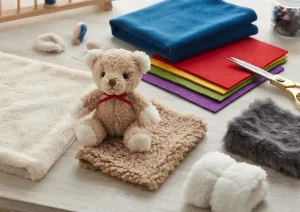
The outer fabric of an educational plush toy is the first point of contact and the primary determinant of durability and hygiene. Standard plush fabrics used in institutional settings include short-pile minky (minky dot or solid), ultra-soft velboa, and sherpa fleece. For environments where frequent laundering is required — such as nurseries and special education classrooms — fabrics should be specified at a minimum pile height of 3–5mm to resist matting while maintaining washability.
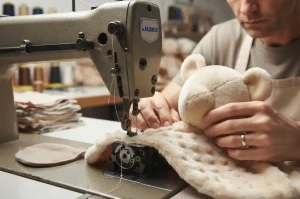
GSM (grams per square metre) is a key performance metric. Educational plush typically requires outer fabric at 180–280 GSM to balance softness with structural integrity. Fabric below 160 GSM tends to thin and pill rapidly under institutional use cycles. Seam reinforcement with double-stitched or overlocked construction at stress points — limbs, ears, attachment points — is a minimum standard for long-life institutional products.

Fill Material and Allergen Considerations
Polyester fiberfill (HCS — hollow conjugate silicone) is the dominant fill material across educational plush. It offers hypoallergenic properties, resilience under compression, and washability. However, institutional buyers should specify Oeko-Tex Standard 100 certification for fill material, confirming that no harmful substances are present at levels detrimental to human health. This is especially important in settings with children who have known sensitivities.
Weighted plush — used in occupational therapy and sensory integration programs — typically incorporates poly pellets or glass beads in internal weighted pouches. These require separate safety evaluation, and any removable weighted component should have locking closures that pass institutional pull-force testing.
Specification Tip: Build a “wash cycle test” into your purchase agreement for educational plush: request that pre-production samples survive 50 machine wash cycles at 40°C without seam failure, significant color loss, or fabric degradation. This single test will eliminate the majority of substandard products from your shortlist.
Fabric and Construction Specifications for Institutional Plush by Use Context
| Use Context | Recommended Fabric | Minimum GSM | Seam Standard | Wash Requirement |
|---|---|---|---|---|
| Nursery / Under 3s | Solid minky, short pile ≤5mm | 200 GSM | Double-stitched, no loose trims | 60°C machine washable |
| Preschool / Kindergarten | Velboa or short sherpa | 180 GSM | Double-stitched, embroidered features only | 40°C machine washable |
| Primary Classroom | Standard minky or velboa | 160 GSM | Overlocked seams at stress points | 40°C machine washable |
| Special Education / OT | Weighted minky with internal pouch | 220+ GSM outer | Locking closures, reinforced seams | Spot clean; removable weighted insert |
| University / Display | Standard minky or velboa, longer pile acceptable | 160 GSM | Standard seaming acceptable | Dry clean or gentle machine wash |
What Are the Best Custom Plush Toy Options for Schools, Museums, and Universities?
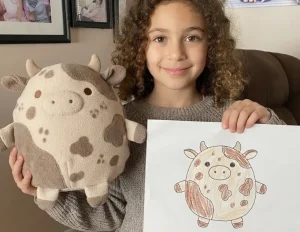
Custom plush toys have become a significant part of the educational institution offering, going well beyond simple mascot merchandise. When thoughtfully designed, a custom educational plush can serve as a curriculum anchor, a fundraising product, a brand ambassador, and a memorable keepsake — simultaneously delivering pedagogical and commercial value.
Institutional Mascot Plush
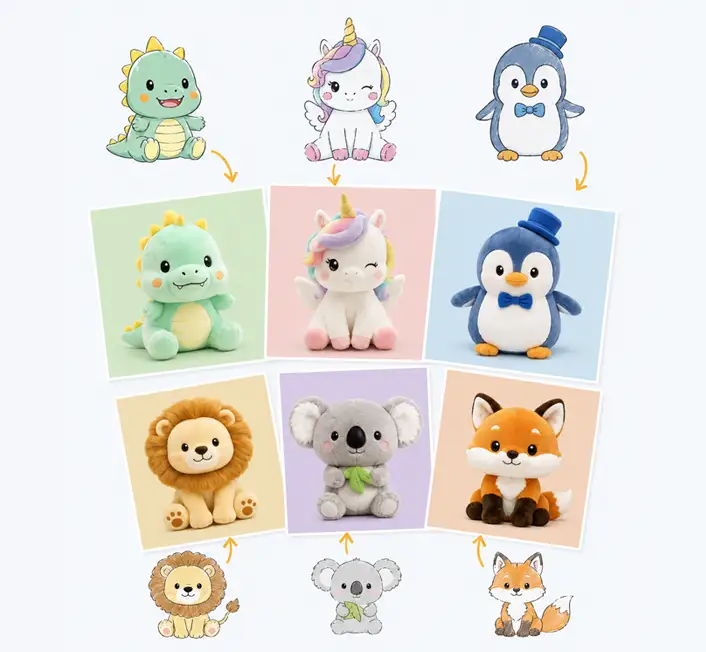
School and university mascots represent one of the highest-volume custom plush categories for educational procurement. A well-executed mascot plush reinforces institutional identity and school pride across all year levels. The design process typically begins with vector artwork of the official mascot, which is then adapted for three-dimensional plush construction. Important considerations include expression fidelity (how closely the plush face matches the flat mascot artwork), size range (keychain miniature, standard 20–30cm, and large display sizes typically cover most institutional needs), and detailing such as embroidered logos, printed hang tags, and institution-specific colourways.
Science and STEM Plush
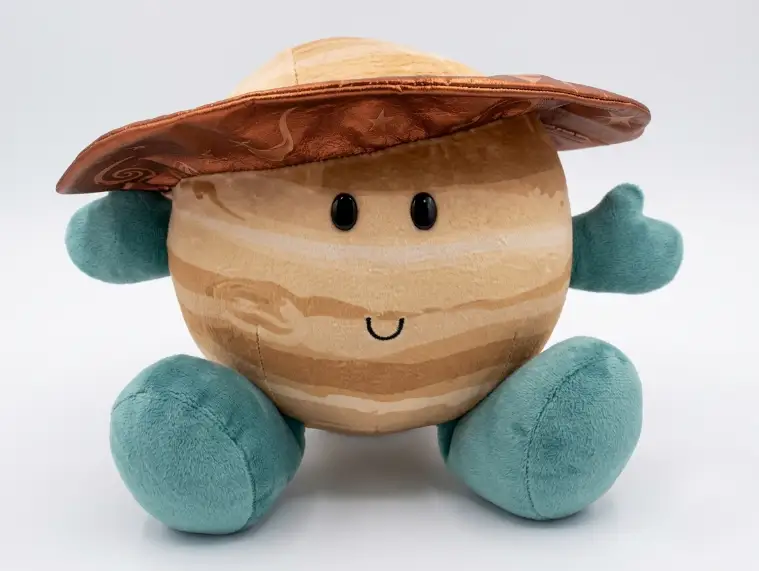
Educational plush representing biological organisms, chemical structures, geological formations, and astronomical objects has grown into a specialist product category. Institutions, including natural history museums, science centres, zoological societies, and university biology departments, commission plush that doubles as an educational reference object. A plush mitochondria figure for a cell biology course, a plush cross-section of the human brain for a psychology department, or a set of plush endangered species for a conservation education program — these products sit at the intersection of learning material and collectible.
Library and Literacy Program Plush
Libraries and reading programs have adopted plush as a literacy engagement tool, with “reading companion” plush toys designed to accompany specific books, reading milestones, or author events. In some implementations, the plush figure represents a book character; in others, it is a neutral companion whose “job” is to listen while children read aloud — a technique supported by research on oral reading fluency in early literacy.
Design Tip: For custom institutional plush, always request a physical pre-production sample (PP sample) before approving mass production. Digital renders and flat design files rarely capture how fabric colour, pile texture, and feature embroidery will look in the final three-dimensional product. Budget an additional 3–4 weeks in your timeline for PP sample review and revisions.
Custom Plush Product Types for Educational Institutions: MOQ, Lead Time & Use Case
| Custom Plush Type | Typical MOQ | Production Lead Time | Primary Use Case | Common Size Range |
|---|---|---|---|---|
| School / University Mascot | 300–500 units | 75–100 days | Bookstore retail, events, and alumni gifts | 20–35 cm standard |
| STEM / Science Plush | 200–500 units | 70–90 days | Curriculum props, museum gift shops, department merchandise | 15–25 cm |
| Museum Animal / Conservation Plush | 300–1,000 units | 80–105 days | Gift shop, educational program kits | 20–40 cm |
| Literacy / Reading Companion | 200–300 units | 60–80 days | Library programs, reading events, prize incentives | 20–28 cm |
| Keychain / Mini Plush | 500–1,000 units | 55–75 days | Student orientation, fundraising, events | 8–12 cm |
How Should Educational Institutions Manage the Plush Procurement Process?
Institutional procurement of plush toys differs significantly from retail purchasing. The process typically involves formal purchase requisitions, vendor qualification, sample approval workflows, compliance verification, and delivery scheduling aligned to academic calendars. Understanding the end-to-end procurement timeline is essential for avoiding the most common failure mode: placing an order too late to receive a compliant product by the required date.
Building a Realistic Procurement Timeline
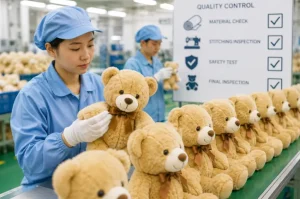
For custom plush procurement, the total calendar time from initial brief to goods received in-warehouse typically ranges from 90 to 130 days, depending on design complexity, revision cycles, and shipping method. This timeline breaks down roughly as: design finalization (1–2 weeks), pre-production sampling (3–4 weeks, including international shipping), sample review and approval (1–2 weeks), bulk production (5–8 weeks), quality inspection (1 week), and sea freight to destination (3–5 weeks). Institutions ordering for a specific event — an orientation week, an anniversary, or an exhibition opening — should work backward from the required arrival date when placing the initial order.
Vendor Qualification for Educational Plush
Not all plush manufacturers are equipped or certified to supply educational institutions. Key qualifications to verify include: current audit certificates from ICTI CARE or BSCI (confirming ethical factory practices), relevant product liability insurance, experience with the applicable safety standards for the destination market, and the ability to provide third-party test reports from accredited laboratories. A factory that regularly supplies plush to the museum and zoo gift shop sector will generally be better positioned to meet institutional compliance requirements than one focused primarily on promotional or fashion plush.
Frequently Asked Questions About Plush Toys for Educational Institutions
What is the minimum order quantity for custom plush toys for a school or university?
Minimum order quantities (MOQ) for custom educational plush typically range from 200 to 500 units per design, depending on the complexity of the product and the capabilities of the manufacturer. Simpler designs — such as basic animal shapes with embroidered features — often have lower MOQs in the 200–300 unit range. More complex custom mascots with intricate embroidery, printed fabrics, or multiple colourways may require 500 units or more to achieve cost-effective production. For institutions with modest budgets, ordering a single design at the lowest viable MOQ, rather than splitting quantity across multiple designs, typically delivers the best unit economics.
Are plush toys used in classrooms required to meet the same safety standards as retail toys?
Yes. In most jurisdictions, plush toys used in schools and educational childcare settings are subject to the same mandatory toy safety standards as retail consumer products — and in some cases, stricter institutional hygiene and flammability requirements apply. In the United States, toys used with children under 12 in any institutional setting must comply with ASTM F963 and CPSIA, regardless of whether they are sold commercially or procured directly. In the European Union, EN 71 and CE marking requirements apply to any toy supplied to children, regardless of the distribution channel. Educational institutions that use non-compliant plush carry legal liability, which makes verified compliance documentation a non-negotiable element of procurement.
How can schools and universities use plush toys to support students with special educational needs?
Plush toys serve several therapeutic and pedagogical functions in special education settings. For students with autism spectrum conditions, a familiar plush companion can reduce transition anxiety, support self-regulation, and serve as a social story prop. Weighted plush — typically filled with poly pellets and designed to sit in the lap or be held — provides deep pressure input that many occupational therapists use as part of sensory integration programs. For students with communication disorders, plush figures can serve as low-tech augmentative communication supports, representing characters or concepts in structured communication activities. In each case, the specific plush should be selected in collaboration with the relevant specialist — occupational therapist, speech pathologist, or SEND coordinator — rather than as a general-purpose choice.
What is the typical lead time for ordering custom plush toys for an academic event or exhibition opening?
The total lead time from placing an order to receiving custom plush at your institution typically ranges from 90 to 130 days, depending on the design complexity and shipping method chosen. The timeline includes design approval (1–2 weeks), pre-production sample production and international delivery (3–4 weeks), sample approval and any revision cycle (1–2 weeks), bulk production (5–8 weeks), quality control inspection (approximately 1 week), and sea freight plus customs clearance at the destination port (3–5 weeks). Institutions that need plush for a specific event should work backwards from the required delivery date and add a minimum 2-week buffer to account for unforeseen delays. Air freight can compress the shipping phase to 5–7 days at significantly higher cost if timelines are tight.
Can plush toys ordered for educational institutions be laundered, and how often should they be washed?
Most quality educational plush can be machine-washed, but this must be confirmed at the specification and procurement stage — it should not be assumed. For plush used in high-contact settings such as nurseries, preschools, and special education classrooms, fabrics should be specified as machine washable at 40°C minimum, with 60°C capability preferred for settings where infection control is a priority. Washing frequency guidance varies by context: infection control guidelines in early childhood settings typically recommend washing shared plush toys at least weekly, or immediately following illness incidents. Plush used in supervised, individual-use contexts — such as a reading companion held by a single student — may require washing less frequently. Always follow the care label on individual products and the institutional hygiene policy of your setting.