Everything Amazon sellers need to know about sourcing plush toys, from factory selection and safety compliance to sampling, lead times, packaging, and listing-ready product specifications.
Plush toy manufacturing for Amazon sellers comes with a distinct set of requirements that differ meaningfully from sourcing for other product categories. Beyond fabric quality and design, sellers must navigate strict safety testing, age grading rules, packaging compliance, and Amazon-specific listing requirements before a single unit ever reaches a fulfillment center.
A seller who treats plush sourcing like sourcing a generic accessory often discovers too late that a shipment is held at customs, flagged during an Amazon safety review, or returned at a rate high enough to trigger account-level scrutiny. This guide walks through every stage of the plush toy sourcing process, from initial concept to FBA-ready inventory, with the compliance checkpoints and sourcing decisions that determine whether a plush product succeeds on Amazon.
Why Plush Toys Require a Different Sourcing Approach
Plush toys sit in a uniquely regulated product category because they are almost always intended for children, infants, or pets, and because their construction includes small parts, fillings, and surface materials that carry inherent safety risk if manufactured incorrectly. Unlike a hard-goods accessory, a plush toy’s safety profile depends on dozens of interacting variables: seam strength, eye and nose attachment method, filling material, fabric flammability, and choking hazard potential from any decorative element smaller than the required size threshold.
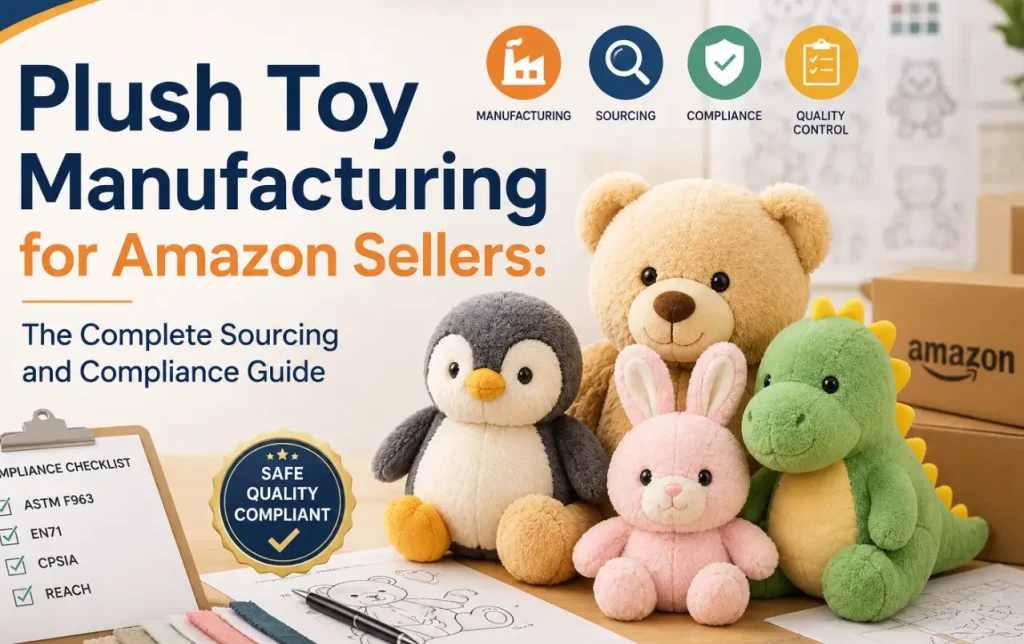
Amazon sellers face an additional layer of scrutiny beyond government regulation, since Amazon’s own product safety team can suspend a listing or an entire account if a plush product receives safety complaints, regardless of whether the item technically passed government-mandated testing. This makes manufacturing partner selection and documentation rigor far more consequential for plush sellers than for many other product categories.
Tip: Request a factory’s existing test reports and audit documentation before any sampling begins, rather than waiting until after a sample is approved. A factory unable to produce recent test history for similar products is a meaningful red flag, regardless of how attractive its pricing appears.
Core Differences Between Plush and General Soft Goods Manufacturing
| Factor | General Soft Goods | Plush Toys |
|---|---|---|
| Primary regulatory framework | General consumer product rules | CPSIA, ASTM F963, EN71, or equivalent regional toy safety standards |
| Small parts risk | Usually low | High, especially for items under 3 years |
| Required third-party testing | Often optional | Mandatory for toy classification in most major markets |
| Filling material scrutiny | Not typically applicable | Required, including flammability and cleanliness standards |
| Labeling requirements | Basic | Age grading, choking hazard warnings, care labels, tracking labels |
Choosing a Plush Toy Manufacturing Partner
Selecting a manufacturing partner is the single decision that most determines downstream quality, compliance, and timeline reliability. Sellers should evaluate potential partners on production capability, compliance track record, communication responsiveness, and willingness to support iterative sample development rather than pushing toward a single fixed design too early.
Key Evaluation Criteria for a Plush Manufacturing Partner
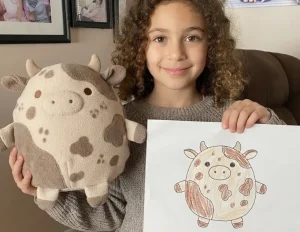
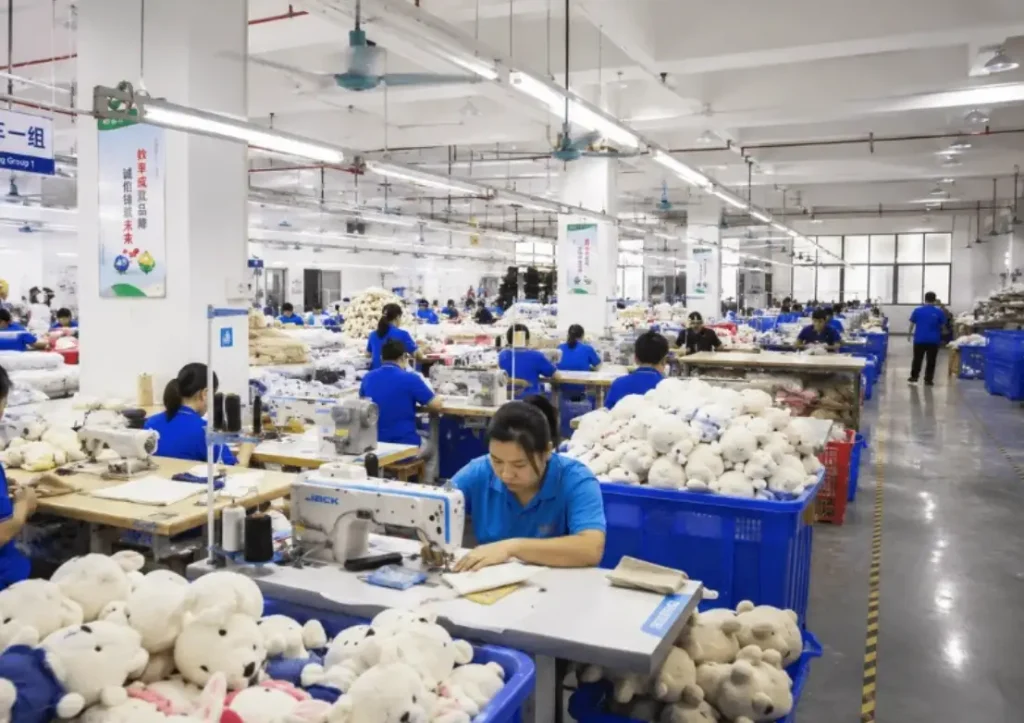
A capable plush manufacturer should be able to demonstrate experience with the specific plush category being developed, whether that is licensed-style character plush, weighted plush, personalized plush from artwork, or pet plush with reinforced seams. Experience in one plush subcategory does not always translate cleanly to another, since weighted plush requires different filling handling than standard plush, and pet plush requires different durability testing than plush intended for toddlers.
Sellers should also confirm whether a factory handles in-house cutting, sewing, and stuffing, or whether any stage is subcontracted, since subcontracted stages introduce additional quality control checkpoints and potential delays that are harder to monitor directly.
Sampling and Prototype Development
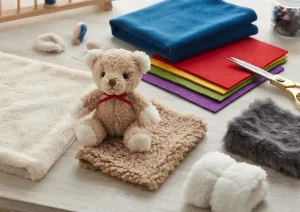
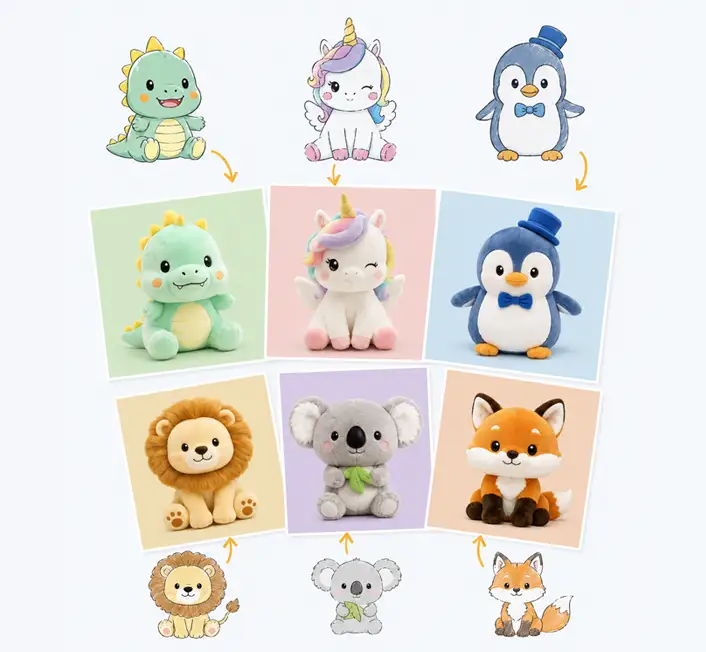
Sample development typically proceeds through several rounds before a design is locked for mass production. An initial proof-of-concept sample confirms general silhouette and proportions, a second-round sample refines fabric selection, stitching detail, and color matching, and a pre-production sample confirms that the approved design can be replicated consistently at production scale using the actual materials and tooling intended for the full run.
Tip: Approve fabric and color against a physical swatch under consistent lighting conditions rather than relying solely on photos sent by the factory, since screen color rendering frequently shifts hue and saturation in ways that cause mismatches between sample approval and bulk production.
Sampling Cost and Timeline Reference
| Sample Stage | Typical Turnaround | Common Cost Range | Purpose |
|---|---|---|---|
| Initial concept sample | 7–14 days | Often charged, sometimes credited toward the order | Confirm silhouette and proportions |
| Refined sample (round 2) | 5–10 days | Lower cost than initial, or included | Confirm fabric, color, and stitch detail |
| Pre-production sample | 7–12 days | Usually included in the development cost | Validate mass-production replicability |
| Random inspection sample | During production | Included in the inspection service fee | Confirm in-line quality consistency |
Safety Testing and Compliance Requirements
Safety compliance is the most heavily scrutinized aspect of plush toy manufacturing, and requirements vary by destination market. Sellers shipping into the United States must address CPSIA requirements, including lead content limits, phthalate restrictions, and third-party testing through a CPSC-accepted laboratory for any product intended for children twelve and under. ASTM F963 governs mechanical and physical safety requirements, including small parts testing, tension and torque testing on attached components like eyes and noses, and flammability testing of surface materials.
Sellers shipping into the European Union must instead address EN71 standards, which cover similar categories but with different specific thresholds and testing protocols. A product compliant for the US market is not automatically compliant for EU sale, and sellers operating in both markets typically need separate test reports referencing the applicable standard for each destination.
Mechanical Safety and Small Parts Considerations
Eyes, noses, bows, and any decorative attachment must pass tension and torque testing to confirm they cannot be pulled free with the force a child might realistically apply. For plush intended for children under three, embroidered or printed features are generally required instead of attached small parts, since any attachable component below the small parts cylinder threshold creates a choking hazard regardless of how securely it is affixed.
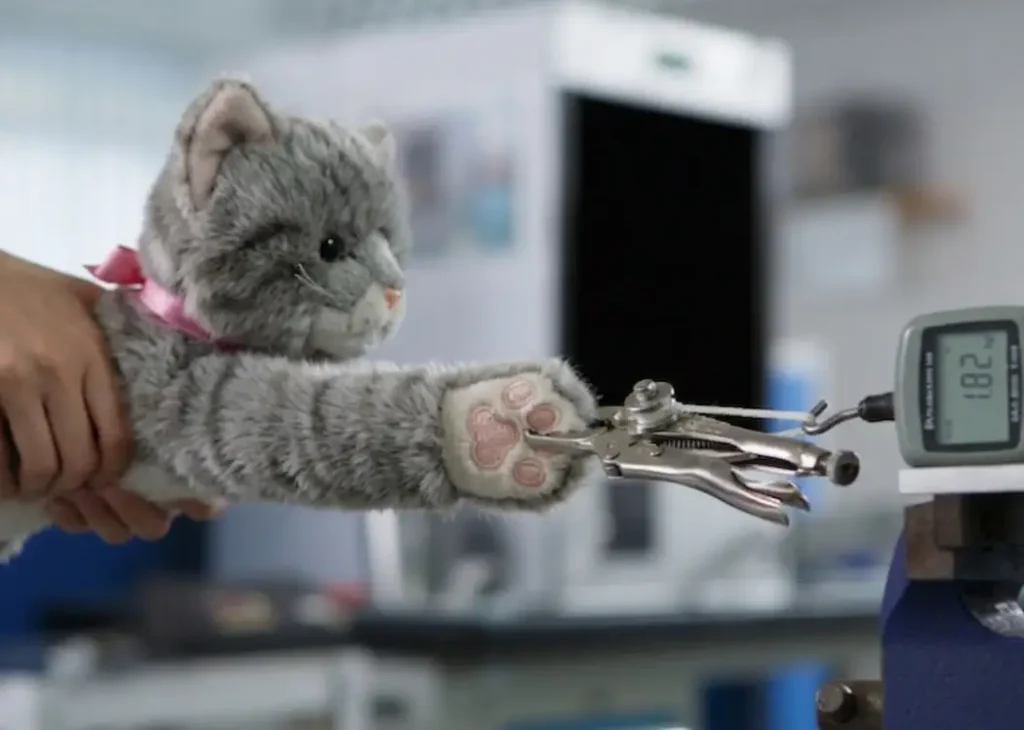
Tip: Specify embroidered or fully heat-sealed safety eyes for any plush product targeting the under-three age category from the earliest design stage, rather than discovering during testing that an attached eye component fails tension testing and forces a costly design revision.
Common Plush Toy Safety Testing Categories by Standard
| Testing Category | CPSIA / ASTM F963 (US) | EN71 (EU) |
|---|---|---|
| Lead content | Required | Required |
| Phthalates | Required for accessible plasticized components | Required, with regional variation |
| Small parts / choking hazard | Required for under-3 products | Required for under-3 products |
| Tension and torque on attachments | Required | Required |
| Flammability | Required | Required |
| Filling material cleanliness | Required | Required |
Filling Materials, Fabric Types, and Construction Quality
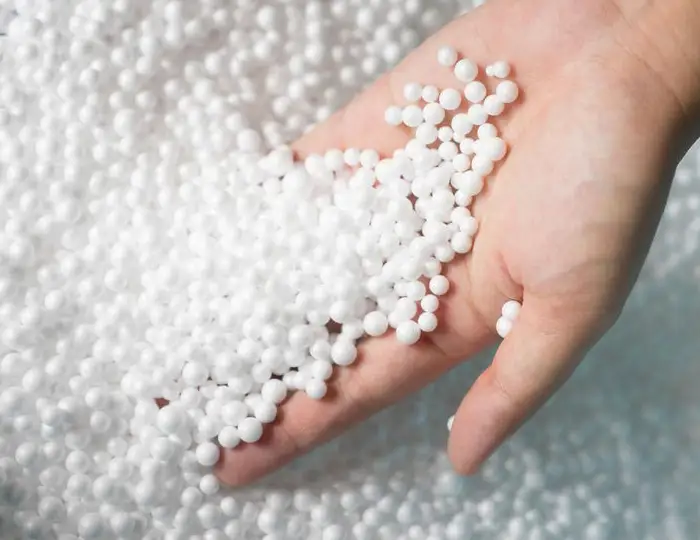
Filling material choice affects safety classification, weight, washability, and overall hand-feel of the finished plush. Polyester fiberfill remains the most common standard filling due to its low cost, washability, and consistent loft. Weighted plush products use additional materials such as plastic pellets or glass beads sewn into separately stitched internal pouches to prevent shifting and to keep weighted material isolated from any seam failure point.
Fabric selection similarly affects both feel and durability. Minky and velboa fabrics are common for premium plush due to their soft hand-feel and good color saturation, while shorter pile fabrics are often selected for products that will undergo frequent washing, since longer pile fabrics tend to mat and shed more over repeated wash cycles. Organic cotton and other natural-fiber fabrics are increasingly requested for infant-targeted plush lines, often paired with additional certifications beyond standard toy safety testing.
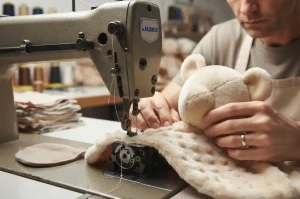
Seam construction quality directly affects product lifespan and safety, since a failed seam exposes filling material and creates both a choking hazard and a quality complaint. Double-stitched seams and bar-tacked stress points at high-tension areas, such as limb attachments on jointed plush, meaningfully reduce seam failure rates compared to single-pass stitching.
Lead Times, MOQs, and Production Scheduling
Lead times for plush toy production vary based on order complexity, fabric sourcing, and factory capacity at the time of order placement. A relatively simple plush design using in-stock fabric can move from approved sample to shipped goods faster than a design requiring custom-dyed fabric, custom packaging, or licensed artwork approval processes.
Minimum order quantities for plush products are often higher than for some other product categories due to fabric roll minimums and cutting efficiency considerations, though MOQs vary considerably between factories and can sometimes be negotiated lower for sellers willing to accept standard fabric colors or simplified packaging in early orders.
Typical Production Timeline by Order Complexity
| Order Type | Sample-to-Approval | Production Time | Total Lead Time (approx.) |
|---|---|---|---|
| Standard design, in-stock fabric | 2–3 weeks | 25–35 days | 6–8 weeks |
| Custom design, standard fabric | 3–4 weeks | 30–40 days | 8–10 weeks |
| Custom design, custom-dyed fabric | 4–6 weeks | 35–45 days | 10–13 weeks |
| Licensed or character-based design | 5–8 weeks | 35–50 days | 12–16 weeks |
Seasonal demand spikes, particularly ahead of major gifting periods, compress factory availability and can extend these timelines further if orders are not placed with sufficient lead time. Sellers planning for a peak-season launch should account for both production lead time and ocean or air freight transit time, plus FBA inbound processing time, when working backward from a target listing live date.
Packaging Requirements for Amazon FBA
Packaging for plush toys sold through Amazon must satisfy both general FBA prep requirements and toy-specific labeling rules. Polybag packaging used for plush items typically requires a suffocation warning label when the bag opening exceeds the threshold specified in Amazon’s prep guidelines, and any polybag used for a product intended for children requires additional safety considerations given heightened scrutiny on children’s product packaging.
Retail packaging, if used, should include required age grading, any applicable safety warnings, care instructions, and country of origin labeling. Barcode placement must follow Amazon’s scanability requirements, and any FNSKU labeling for FBA must be applied correctly to avoid receiving delays at the fulfillment center.

Tip: Request a physical pre-production packaging sample, not just a digital mockup, to confirm that polybag thickness, label adhesion, and barcode scanability all meet Amazon’s prep requirements before a full production run is packaged, since correcting packaging issues after units have already shipped to a fulfillment center is far more costly than catching them beforehand.
Quality Control and Pre-Shipment Inspection
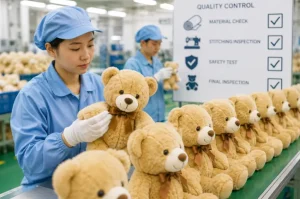
Third-party quality inspection during and after production provides an independent check on whether goods match the approved sample and meet the agreed AQL, or acceptable quality limit, before goods are released for shipment. A typical pre-shipment inspection checks workmanship, measurements, color matching, packaging accuracy, and randomly samples units for basic safety checks such as seam strength and attachment security.
For plush products specifically, inspectors often pay close attention to fill consistency across units, since underfilled or overfilled units create both a quality perception issue and, in underfilled cases, a potential structural weak point. Inspectors also verify that safety labeling matches the destination market’s requirements, since a shipment correctly labeled for one market can fail compliance review if mistakenly routed to a different destination.
Common Mistakes Amazon Plush Sellers Make
A frequent and costly mistake is finalizing packaging and labeling artwork before safety test reports are complete, which can force a costly reprint if the test lab requires a labeling change. Another common error is underestimating the cost and timeline impact of custom-dyed fabric, since color-matching a custom shade to a brand palette often requires multiple dye lot approval rounds that extend the overall production timeline well beyond what a standard in-stock fabric color would require.
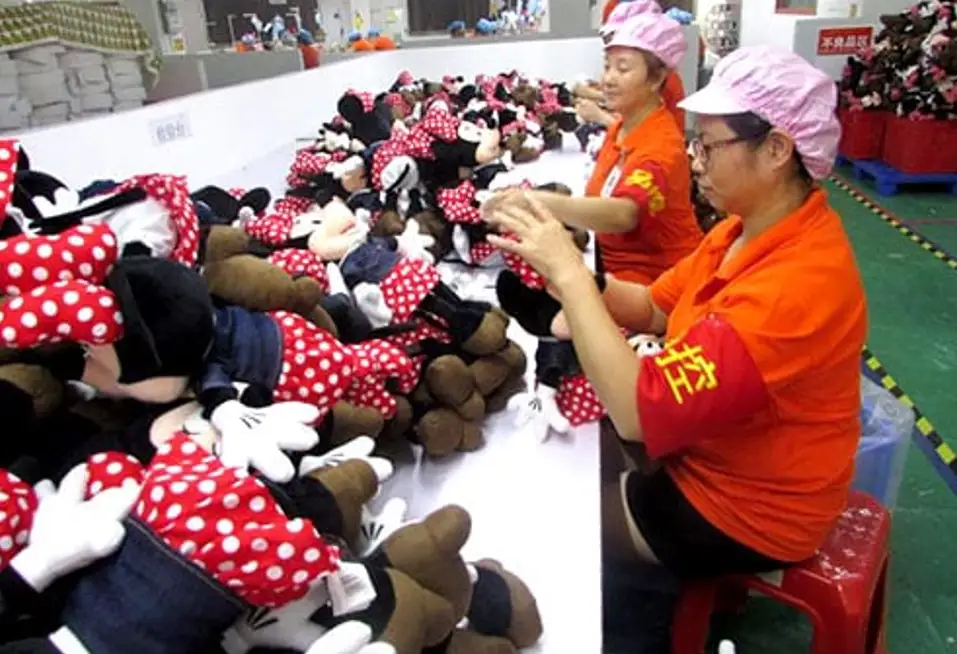
Sellers also sometimes skip third-party inspection to save cost on early orders, only to discover quality inconsistencies after units have already been shipped to Amazon, at which point returns and negative reviews are far more expensive to resolve than an inspection would have been. Finally, sellers occasionally assume that a factory’s general toy manufacturing experience automatically covers plush-specific construction nuances, when in practice plush requires distinct expertise in filling consistency, seam reinforcement, and fabric handling that not every toy factory possesses equally.
Conclusion
Plush toy manufacturing for Amazon sellers requires careful attention to manufacturing partner selection, safety compliance documentation, sampling rigor, and packaging accuracy at every stage from initial concept through FBA-ready inventory. Sellers who build compliance verification and quality inspection into their sourcing timeline from the outset, rather than treating them as final-stage formalities, are far better positioned to launch successfully and sustain a healthy listing performance without the disruption of safety holds, customs delays, or elevated return rates.
Frequently Asked Questions
Q1. What safety certifications does a plush toy need before it can be sold on Amazon?
Plush toys sold to US customers generally require compliance with CPSIA and ASTM F963 standards, including third-party testing for lead content, phthalates, small parts, mechanical safety, and flammability when the product is intended for children. Products sold into the European Union require EN71 compliance instead, which covers similar safety categories under different specific thresholds and testing methods. Amazon may also request documentation such as a Children’s Product Certificate or equivalent test report during account review or in response to a safety complaint, so sellers should retain current test reports for every active SKU rather than relying on documentation from an earlier production run.
Q2. How long does plush toy sampling typically take before mass production can begin?
Sampling timelines vary based on design complexity, but a standard plush design using in-stock fabric typically requires two to four weeks across an initial concept sample, a refined sample addressing fabric and color, and a pre-production sample confirming mass-production replicability. Designs requiring custom-dyed fabric or licensed artwork approval often extend sampling to four to eight weeks due to additional dye-matching rounds and approval cycles. Sellers should build sample timelines into their overall launch schedule rather than assuming sampling and bulk production can be compressed into a single combined timeline.
Q3. What is the difference between standard fiberfill and weighted plush filling?
Standard fiberfill, typically polyester-based, is the most common filling material used for general plush toys due to its low cost, washability, and consistent loft over repeated use. Weighted plush uses additional materials, such as plastic pellets or glass beads, sewn into separately stitched internal pouches to add calming or sensory weight while preventing the weighted material from shifting or escaping if an outer seam is compromised. Weighted plush products typically require additional safety testing and construction reinforcement compared to standard fiberfill plush, since any failure of the internal pouch seam introduces a more serious choking and ingestion hazard than fiberfill alone.
Q4. Why do plush toy minimum order quantities tend to be higher than other product categories?
Plush toy MOQs are often influenced by fabric roll minimums, since fabric mills typically require a minimum yardage purchase per color or pattern, and cutting efficiency considerations that make very small production runs less cost-effective relative to the setup time involved. MOQs vary considerably between manufacturers, and sellers willing to accept standard, already-stocked fabric colors or simplified packaging can sometimes negotiate lower minimums for an initial test order before committing to a larger custom-fabric production run. Sellers planning a phased launch strategy should clarify MOQ flexibility with a manufacturing partner early in the sourcing conversation rather than after a custom fabric color has already been selected.
Q5. What packaging considerations are unique to plush toys sold through Amazon FBA?
Plush toys packaged in polybags often require a suffocation warning label once the bag opening exceeds Amazon’s specified threshold, and products intended for children carry additional scrutiny given Amazon’s heightened safety review standards for children’s items. Retail packaging, where used, must include required age grading, applicable safety warnings, care instructions, and country of origin labeling, in addition to correctly applied FNSKU labeling for FBA scanability. Sellers should request a physical pre-production packaging sample rather than relying solely on a digital mockup, since real-world label adhesion and barcode scanability can differ from how a digital proof appears.
Q6. How does fabric type affect plush toy durability and washability?
Fabric pile height and fiber type both influence how a plush product holds up to repeated handling and washing. Shorter pile fabrics generally resist matting and shedding better over multiple wash cycles compared to longer pile fabrics, making them a common choice for products expected to be laundered frequently, such as infant comfort items. Premium fabrics like minky and velboa offer strong color saturation and a soft hand-feel favored for higher-end plush lines, while organic cotton and other natural-fiber options are increasingly requested for infant-targeted products, often in combination with additional certifications beyond standard toy safety testing.
Q7. What is the most common cause of plush toy quality complaints after a product launches on Amazon?
Seam failure and inconsistent filling are among the most frequently reported quality issues for plush toys post-launch, often traced back to single-pass stitching at high-stress points such as limb attachments or inconsistent fill levels across production units that were not caught during pre-shipment inspection. Third-party inspection during production, including spot checks on fill consistency and seam strength on randomly sampled units, significantly reduces the likelihood of these issues reaching customers at scale. Sellers who skip inspection on early production runs to reduce upfront cost often face a higher long-term cost in returns, negative reviews, and potential listing-level safety review once quality issues surface after units have already shipped to customers.