Skip to content
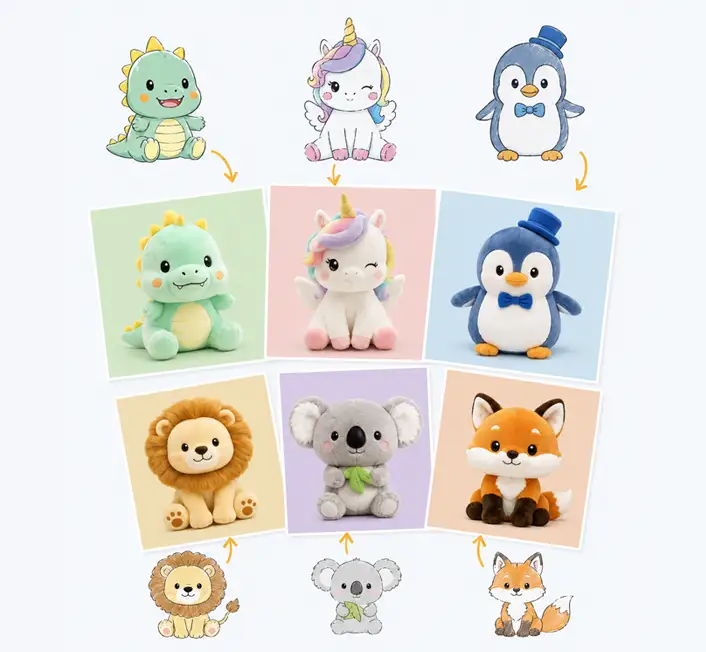
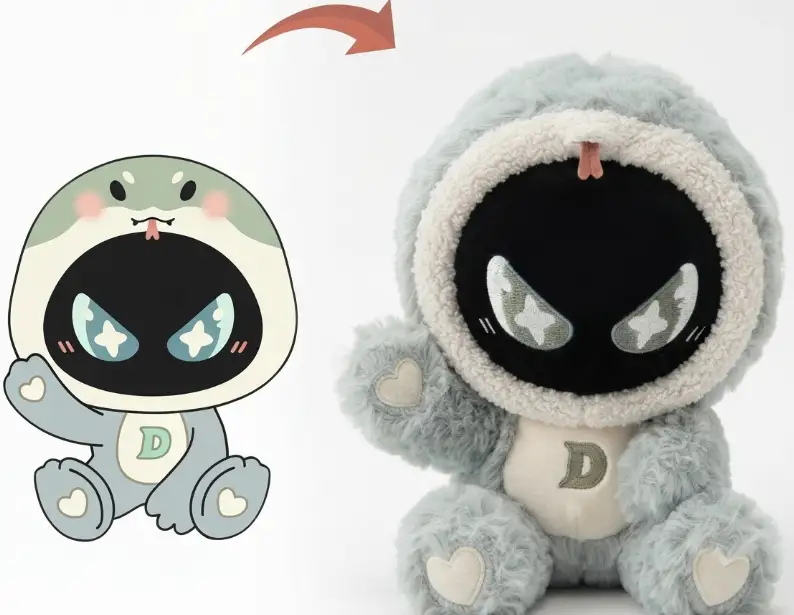
Turning a mascot into a plush toy looks simple from the outside. A brand has a character — a logo mark, an illustrated animal, a 3D-rendered spokes-creature — and the assumption is that a factory simply needs to “make it in fabric.” In practice, mascot plush development is one of the more technically demanding categories of soft toy manufacturing, precisely because the end product is judged against a standard that flat or digital artwork never has to meet: does it still look unmistakably like the character once it exists as a three-dimensional, huggable, fabric object?
Buyers who have commissioned a mascot plush before — for a sports team, a mobile game, a corporate brand activation, a nonprofit, or a theme park property — have often discovered that the gap between “approved artwork” and “approved sample” is where most of the risk, cost, and delay in the project actually lives. A proportion that looks correct on screen can look subtly wrong once it is built from cut fabric panels and stuffed by hand.
A color that matches a Pantone reference on a swatch card can shift once it is dyed into a long-pile plush fabric. An expression that reads clearly in a 2D illustration can flatten into something unrecognizable once it is translated into stitched or embroidered facial features.
This guide walks through what custom mascot plush toy manufacturing actually involves at each stage — character-to-pattern translation, material selection, sampling and revision, quality and safety compliance, cost structure, and manufacturer verification — so that brands and organizations commissioning a mascot know what a properly managed development process looks like and where to focus their attention.
What Does Custom Mascot Plush Toy Manufacturing Actually Involve?
Custom mascot plush manufacturing is fundamentally a translation process — converting a two-dimensional or digitally rendered character into a physical, sewable, three-dimensional object that still reads as that character from every angle a person is likely to view or hold it. This is a meaningfully different discipline from standard stuffed animal production, where the designer is creating an original plush shape from the outset rather than reverse-engineering an existing visual identity that already has fixed proportions, colors, and expression in the client’s mind.
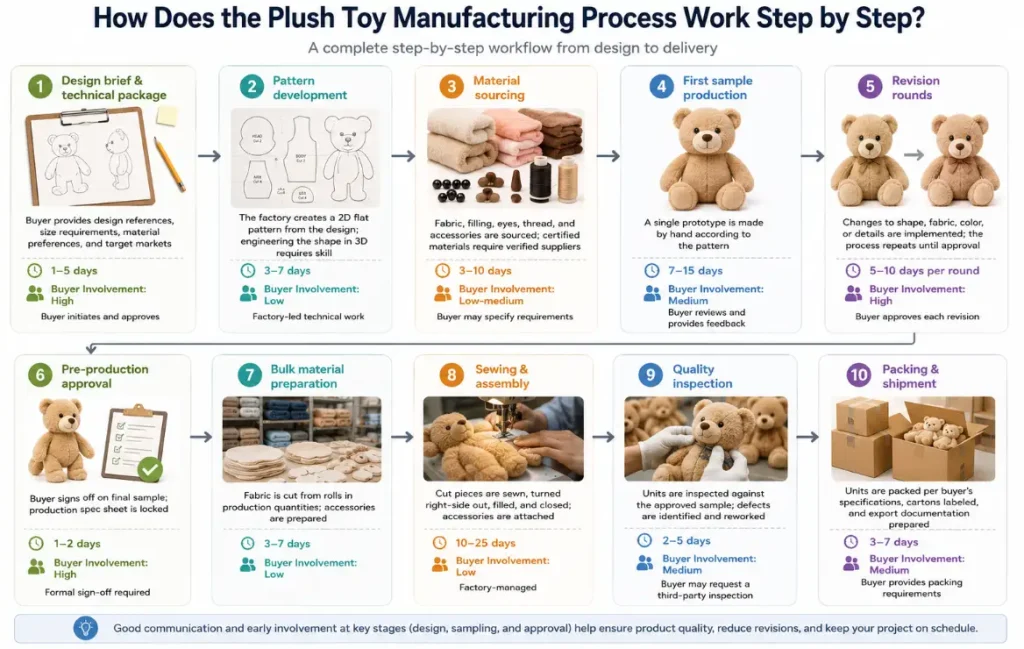
The process moves through a defined sequence of stages, each of which introduces its own technical constraints and potential points of divergence from the original artwork. Skipping or rushing any one of these stages is the most common cause of a mascot sample that “doesn’t look right” despite the factory technically following the brief.
Standard Stage Sequence in Custom Mascot Plush Development
| Stage | What Happens | Primary Risk if Rushed |
|---|---|---|
| Character review and reference pack | Collecting all existing artwork, color codes, and turnaround views of the character | Missing angles force the pattern maker to guess at unseen proportions |
| Pattern development | Flattening the 3D concept into 2D fabric panels that will be cut and sewn | Silhouette and proportion drift from the original design |
| Material and color matching | Selecting fabric, filling, and accessories, and matching them to brand colors | Visible color shift once dyed into plush pile fabric |
| First sample production | Hand-sewing a prototype from the finalized pattern and materials | Reveals shape and proportion issues invisible on paper |
| Revision rounds | Iterating on the sample until it is approved as brand-accurate | Under-budgeting the revision time delays the entire program |
| Bulk production and QC | Manufacturing at volume with in-process and final inspection | Drift between the approved sample and the bulk output |
Why Mascot Plush Differs From Standard Stuffed Animal Production
Standard plush stuffed animal development typically starts from a blank page — a designer sketches a bear, a rabbit, or a generic creature with no pre-existing visual standard to match. Mascot plush development starts from the opposite position: the character already exists, has an established visual identity, and often has a brand guideline or style guide that defines exact proportions, colors, and expression. The pattern maker’s job is not to create a design but to faithfully reproduce one within the physical constraints of fabric, seams, and stuffing — constraints that a flat illustration was never designed to accommodate.
This reproduction constraint is what makes a mascot plush inherently more likely to require multiple sampling rounds than an original plush design. A generic teddy bear sample that comes back “close enough” to the concept sketch is often acceptable, because there is no external, fixed reference it must match precisely. A mascot sample that comes back close but not exact will almost always be rejected, because brand guardians — marketing teams, IP licensors, sports organizations — are evaluating it against a reference the audience already recognizes.
How Is a 2D or 3D Character Design Translated Into a Sewable Plush Pattern?
Pattern development is the technical core of mascot plush manufacturing, and it is the stage most invisible to buyers who have not worked with a soft toy factory before. An experienced pattern maker takes the character’s silhouette, proportions, and key features and works out how to divide that three-dimensional form into a set of flat fabric panels that can be cut, sewn together, turned right-side out, and stuffed to reproduce the intended shape.
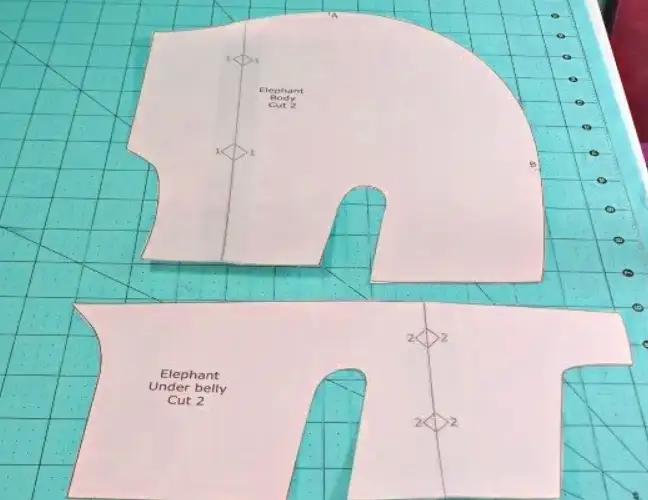
The core challenge is that fabric does not behave like a rendered 3D model or a flexible illustration. Seams create visible lines. Stuffing settles and shifts. Certain shapes — sharp points, thin protrusions, complex overlapping forms — are structurally difficult or impossible to stuff and stand upright without reinforcement. A skilled pattern maker anticipates these constraints during the design phase, proposing small adaptations that preserve the character’s recognizability while making the shape physically manufacturable and durable.
Common Character Design Elements and Their Pattern-Making Challenges
| Design Element | Pattern-Making Challenge | Typical Solution |
|---|---|---|
| Thin limbs or tails | Difficult to stuff evenly, prone to floppiness or seam strain | Slight proportional thickening or internal wire/support |
| Sharp angular features (spikes, ears, horns) | Fabric and stuffing round off sharp points naturally | Reinforced tips, buckram inserts, or controlled rounding |
| Complex facial expressions | Embroidered or appliqued features can flatten or distort | 3D embroidery, sculpted stuffing beneath the face panel |
| Asymmetrical designs | Harder to achieve consistent left/right balance at volume | Precision pattern grading and cutting templates |
| Multiple small color blocks | Requires many small fabric pieces and precise seam alignment | Sublimation printing or panel piecing with tight tolerances |
| Standing/upright posture | Soft plush naturally wants to sit or slump | Weighted base, internal armature, or bean-bag foot panel |
Tip: Before pattern development begins, provide the factory with a full turnaround reference — front, back, both side profiles, and a three-quarter view — even if only a front-facing logo or illustration currently exists. Commissioning a simple concept sketch of the unseen angles before pattern work starts is far cheaper than discovering during sampling that the character’s back or profile was never actually defined.
Flattening Complex Shapes Without Losing Likeness
The single most important skill in mascot pattern development is judgment about which proportions are essential to the character’s recognizability and which can be adjusted slightly for manufacturability without the audience noticing. Head-to-body ratio, eye size and placement, and any single defining feature — a signature hat, a distinctive color block, an iconic accessory — are almost always non-negotiable and must be preserved precisely. Secondary details, such as exact limb thickness or minor textural elements, often have more flexibility to be adjusted for structural soundness.
Common Design Elements That Increase Pattern Complexity
Characters with a high number of individual color zones, layered clothing elements, or accessories that must be separately attached (hats, capes, props, removable items) all add pattern pieces, sewing operations, and potential failure points compared to a simpler single-silhouette design. This complexity should be factored into both cost expectations and sampling timeline expectations from the outset, since more complex patterns generally require more revision rounds to get right.
What Materials Should Be Used for a Custom Mascot Plush Toy?
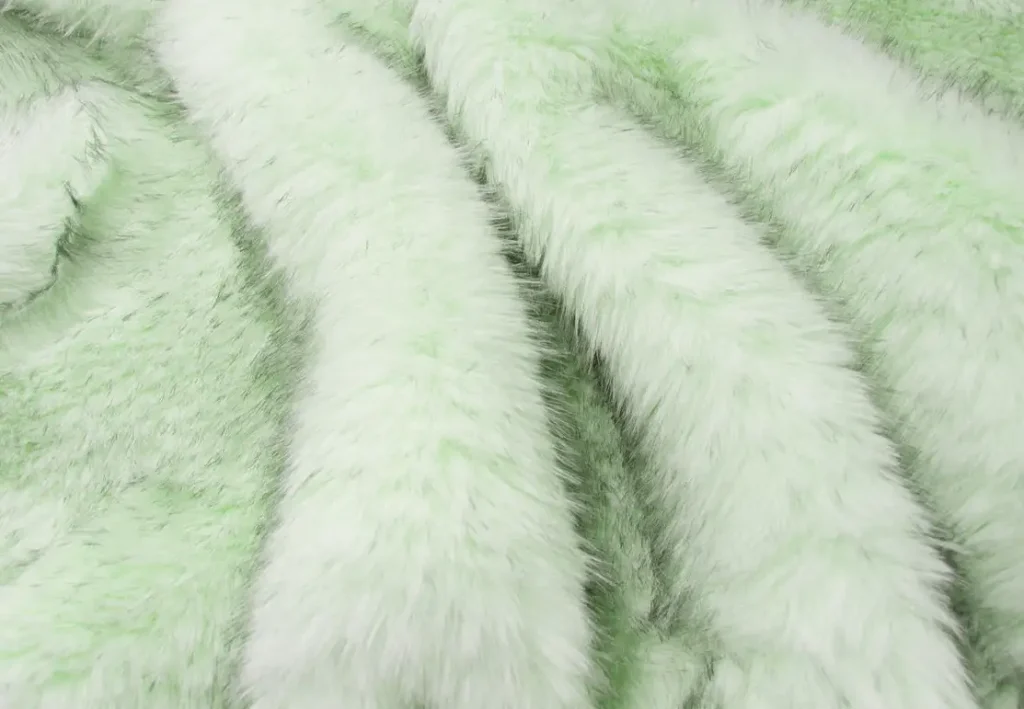
Material selection for mascot plush toys is driven by two simultaneous priorities that sometimes pull in different directions: brand color and texture accuracy on one hand, and durability, safety compliance, and cost on the other. Because a mascot’s colors are typically fixed by brand guidelines rather than left to creative interpretation, fabric sourcing for mascot plush places unusually heavy emphasis on color matching precision compared to general plush toy development.
Material Selection Considerations by Mascot Plush Use Case
| Use Case | Recommended Fabric Approach | Filling Consideration |
|---|---|---|
| Retail/consumer product mascot | Standard minky or short-pile plush, precise Pantone matching | Standard PP cotton, CPSIA/ASTM-compliant |
| Corporate gift/promotional mascot | Mid-pile plush, moderate color tolerance acceptable | Standard PP cotton, cost-optimized |
| Sports team/licensed mascot | High color-accuracy plush or sublimated fabric for team colors | Standard or weighted base for tabletop display |
| Event/costume-adjacent mascot (large format) | Durable, heavier-weight plush or faux fur for repeated handling | Higher-density fill for shape retention under frequent use |
| Collector/premium mascot edition | Higher pile density, embroidered detail over printed detail | Weighted or articulated fill for posability |
Tip: Request physical fabric swatches dyed to your specific brand colors before bulk fabric is committed, rather than approving color based on a digital rendering or a generic color chart. Plush pile fabric absorbs and reflects light very differently from a flat printed swatch or a screen display, and the only reliable way to confirm a color match is to view the actual dyed fabric in person or in a color-calibrated photograph under neutral lighting.
Matching Fabric to Brand Color Accuracy
Brand color matching for mascot plush is typically done against a Pantone reference, but converting a Pantone color into a dyed plush fabric involves inherent variability that buyers should anticipate rather than be surprised by. Pile height, fiber content, and dye process all affect how a given color renders on plush fabric compared to how it appears on paper or screen. For brand-critical colors, requesting a dedicated lab dip — a small custom-dyed fabric sample matched specifically to the brand’s Pantone code — before committing to bulk fabric production is the most reliable way to control this variable, though it typically adds cost and lead time that should be planned for on programs where exact color accuracy is a hard requirement.
Selecting Fill Type for Standing vs. Huggable Mascots
Fill selection depends heavily on how the mascot plush will actually be used. A mascot intended primarily as a huggable retail or gift item benefits from soft, evenly distributed PP cotton fill that prioritizes comfort and softness. A mascot intended to stand upright on a desk, shelf, or display — a common requirement for corporate and sports mascots — typically requires a weighted base, often using plastic or glass pellets in the foot or base panel, combined with lighter fill in the upper body to achieve a stable center of gravity without sacrificing huggability in the areas meant to be touched.
How Does the Sampling and Prototype Process Work for Mascot Plush Toys?
Sampling is where the character design is tested against physical reality for the first time, and it is consistently the stage that determines whether a mascot plush program stays on schedule and on budget. Because mascot plush is judged against a fixed external reference rather than an open creative brief, sampling for mascot programs generally requires more structured revision management than sampling for original plush designs.
Typical Mascot Plush Sampling Stage Progression
| Sample Stage | Purpose | Typical Turnaround |
|---|---|---|
| Concept/proto sample | Confirms basic shape, proportion, and pattern feasibility | 7–14 days |
| First revised sample | Addresses proportion, color, or expression feedback | 7–10 days per round |
| Pre-production sample | Final approval sample using confirmed bulk materials | 7–10 days |
| Golden sample | Reference standard retained for bulk production QC comparison | Confirmed alongside pre-production approval |
Tip: Designate a single decision-maker with final sign-off authority on sample approval before the sampling process begins. Mascot plush revisions frequently stall not because the factory cannot execute feedback, but because multiple internal stakeholders — brand, marketing, legal/IP — provide conflicting or sequential feedback across separate rounds, effectively doubling the revision cycles needed to reach approval.
Why First Samples Rarely Match Perfectly
It is normal, not exceptional, for a first mascot plush sample to require at least one round of revision, even when working with an experienced factory and a well-prepared design brief. Small proportion adjustments, color corrections after seeing the fabric in person, and expression refinements are a standard part of the development process rather than a sign that something has gone wrong. Buyers who treat the first sample as the final product — rather than as a working draft meant to surface exactly these issues — are more likely to feel frustrated by a process that is, in fact, proceeding normally.
How Many Revision Rounds Should Be Expected
For a moderately complex mascot design, budgeting for two to three sample rounds before final approval is a realistic planning assumption. Simpler, single-color-block mascots with straightforward proportions may achieve approval in one or two rounds. Highly detailed characters with multiple accessories, complex color patterns, or strict brand-guideline enforcement should budget for three or more rounds. Asking a prospective factory specifically how many revision rounds their recent mascot programs have required — rather than accepting a generic “we get it right the first time” assurance — provides a more realistic planning baseline.
What Quality Control and Safety Standards Apply to Custom Mascot Plush Toys?
Compliance requirements for mascot plush toys depend heavily on the intended audience and distribution channel, and this is a dimension that is sometimes overlooked by brand and marketing teams who are focused primarily on the character’s appearance rather than its regulatory classification. A mascot plush sold at retail as a children’s toy is subject to a materially different — and stricter — compliance regime than the same mascot produced as an adult collector’s item or an internal corporate gift.
Compliance Standards Relevant to Custom Mascot Plush Toys
| Standard | Applies To | Key Requirement |
|---|---|---|
| ASTM F963 (US) | Toys intended for or marketed to children | Mechanical, flammability, and chemical safety testing |
| CPSIA (US) | Children’s products sold in the US | Lead and phthalate content limits, tracking labels |
| EN71 (EU) | Toys intended for or marketed to children in the EU | Physical, mechanical, and chemical safety requirements |
| ASTM F1717 / general product safety | Adult-market or promotional plush not marketed as a toy | Basic product safety and material honesty requirements |
| OEKO-TEX Standard 100 | Fabric and material chemical safety certification | Verification that materials are free of harmful substances |
Testing Requirements for Mascots Intended for Children vs Adult/Promotional Use
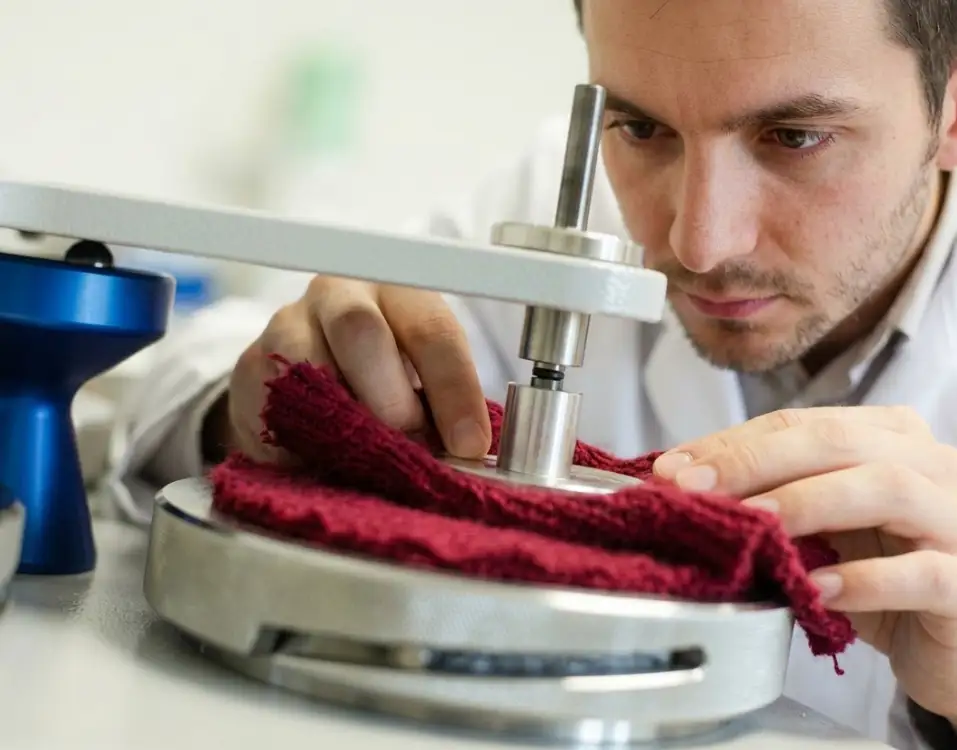
A mascot plush marketed, packaged, or reasonably likely to be perceived as intended for children — regardless of the brand’s original intent — is generally classified as a children’s toy for regulatory purposes and must meet the full applicable toy safety testing regime, including small parts, choking hazard, and sharp point testing along with chemical content limits.
A mascot produced strictly for adult collectors, corporate gifting, or trade show giveaways with clear age-appropriate marketing may fall under a lighter general consumer product safety framework, but this classification should be confirmed with a compliance professional rather than assumed, since incorrect classification is a common and costly compliance failure. Eye and accessory attachment strength (pull testing) remains a critical safety checkpoint for any mascot plush that could plausibly reach a child, regardless of the product’s intended primary market.
How Do Production Volume and Cost Factors Affect Mascot Plush Manufacturing?
Cost structure for custom mascot plush toys is shaped by the same fundamental drivers as any custom soft toy program — materials, labor complexity, tooling/development, and volume — but mascot programs carry some cost factors that are more pronounced than in standard plush development, largely because of the higher sampling investment and tighter color/detail tolerances discussed earlier in this guide.
Primary Cost Drivers in Custom Mascot Plush Development
| Cost Driver | What Increases It | Typical Mitigation |
|---|---|---|
| Pattern development | Complex silhouette, multiple accessories, asymmetry | Simplify secondary details while preserving key identifiers |
| Sampling investment | Multiple revision rounds, custom color lab dips | Thorough reference pack and single-approver workflow upfront |
| Fabric/color matching | Custom dyed fabric vs. stock color selection | Use the closest stock color where brand tolerance allows |
| Embroidery/applique detail | Dense, multi-color embroidered facial or logo detail | Balance embroidery detail against sublimation/printing options |
| Order volume | Low volume relative to tooling and development investment | Plan realistic MOQ expectations against development cost |
Tip: Separate the one-time development cost (pattern making, sampling, color matching) from the per-unit production cost when budgeting a mascot plush program, and treat the development cost as a fixed investment that should be amortized across the full expected multi-year use of the mascot design — not just the first production order. This framing makes it easier to justify the sampling investment needed to get a brand-critical character right the first time.
MOQ Considerations for One-Off vs Ongoing Mascot Programs
Buyers commissioning a mascot for a single event or limited promotional run face a different cost calculus than those developing a mascot intended for ongoing, multi-year retail or gifting use. For a one-off, low-volume need, it is worth explicitly asking whether a factory can produce a smaller production run economically given the fixed development cost already invested, since some factories offer more flexible low-volume pricing once the pattern and sampling work is complete. For an ongoing mascot program, the upfront investment in pattern refinement, color-matched materials, and a well-documented golden sample pays dividends across every future reorder, making the initial development phase worth a proportionally larger share of the total program budget.
How Can Brands and Organizations Verify a Mascot Plush Manufacturer’s Capability?
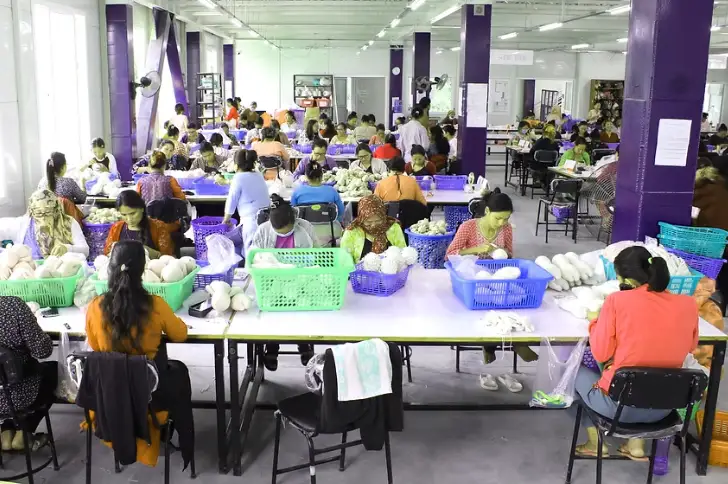
Because mascot plush development depends so heavily on pattern-making skill and sampling discipline, verifying a prospective manufacturer’s specific mascot/character plush experience — rather than their general plush toy manufacturing capability — is one of the most important steps a buyer can take before committing to a development program.
Manufacturer Verification Checklist for Mascot Plush Programs
| Verification Area | What to Request | Why It Matters |
|---|---|---|
| Character plush portfolio | Examples of previous mascot/licensed character work | Confirms genuine pattern-making experience with character IP |
| Sampling process description | Typical number of revision rounds and turnaround time | Sets realistic timeline and budget expectations |
| Color matching capability | Lab dip process and Pantone matching accuracy track record | Directly affects the brand color accuracy of the finished product |
| Compliance documentation | Relevant certifications for your target market and audience | Prevents regulatory misclassification and testing gaps |
| Reference clients | Contact information for previous mascot program clients | Reveals real sampling accuracy and communication experience |
Portfolio Review and Reference Checks
A factory’s general plush toy portfolio is not a reliable proxy for mascot-specific capability. Reviewing examples of prior character or mascot work specifically — ideally including side-by-side comparisons of the original character artwork against the finished plush — provides much more relevant evidence of a factory’s pattern-making and likeness-preservation skill than a broad catalog of generic stuffed animal designs. Speaking directly with a reference client who has completed a mascot program of comparable complexity is the single most informative verification step available, since it reveals the real sampling round count and communication experience rather than a sales presentation’s version of it.
Red Flags in Mascot Plush Sourcing
A prospective factory that cannot show any prior character or mascot-specific work, that quotes a single sampling round as standard without qualification, or that is vague about color-matching methodology is signaling a gap in the specific capability that mascot plush development requires — even if their general plush manufacturing credentials otherwise appear solid. Buyers should treat these signals as a prompt for deeper questioning rather than a disqualifier on their own, but a factory that cannot answer mascot-specific questions with the same specificity it applies to general plush capability warrants additional scrutiny before a development program begins.
Frequently Asked Questions
1. How long does it typically take to develop a custom mascot plush toy from concept to final approved sample?
A complete mascot plush development timeline, from initial reference pack submission through final pre-production sample approval, typically runs six to twelve weeks depending on design complexity and the number of revision rounds required. Simple, single-color-block designs with clear existing reference art can move faster, while highly detailed characters with multiple accessories or strict brand-guideline enforcement often require the longer end of this range. Bulk production timelines run separately after sample approval and should be planned as an additional four to eight weeks, depending on order volume.
2. Can a mascot plush toy be made from just a 2D logo or illustration without any 3D reference?
Yes, but it requires the pattern maker to make interpretive decisions about proportions and angles that are not visible in a flat illustration, which increases the likelihood of needing additional revision rounds. Providing even a simple concept sketch of the character’s back and side profiles before pattern development begins significantly reduces this risk and is far less costly than resolving proportion disagreements after a physical sample has already been produced.
3. How is the exact brand color matched in plush fabric, and how accurate can it realistically be?
Brand color matching is typically done by requesting a custom lab dip — a small fabric sample dyed specifically to the brand’s Pantone reference — which is then reviewed and approved before bulk fabric is produced. Because pile height, fiber type, and lighting all affect how a color reads on plush fabric compared to a flat swatch or screen display, a small degree of color interpretation is normal, and most brand-critical programs iterate through at least one lab dip revision before final approval. Exact digital-to-fabric color matching is rarely perfect, but a well-managed lab dip process typically achieves a result that is visually indistinguishable from the brand standard under normal viewing conditions.
4. Do mascot plush toys need to pass the same safety testing as regular children’s stuffed animals?
If the mascot plush is marketed, packaged, or reasonably likely to be used by children, it must meet the same toy safety testing requirements as any other children’s stuffed animal, including applicable standards such as ASTM F963 in the US or EN71 in the EU, along with chemical content limits and accessory pull testing. Mascot plush produced exclusively for adult collectors or corporate use with clear age-appropriate marketing may fall under a different, generally lighter compliance framework, but this classification should always be confirmed with a compliance professional rather than assumed based on the brand’s original intent.
5. Why does a mascot plush sample sometimes look “off” even when the factory followed the design brief closely?
This most commonly happens when a proportion or angle that was never explicitly defined in the original 2D artwork is interpreted differently by the pattern maker than the brand had implicitly assumed, or when a color that looked correct in a digital rendering shifts once it is dyed into plush pile fabric. It can also occur when small design elements that read clearly in a flat illustration — a particular expression, a thin limb, a specific accessory shape — become physically difficult to preserve exactly once translated into stuffed fabric. Addressing this through revision rounds, rather than treating it as a fundamental failure, is a normal and expected part of the mascot plush development process.
6. What is a “golden sample” and why does it matter for ongoing mascot plush production?
A golden sample is the final, fully approved sample that is retained by both the buyer and the factory as the definitive quality and appearance reference for all future bulk production. Every subsequent production run is checked against the golden sample during quality control rather than against the original artwork or brief, which is why its accuracy and preservation matter significantly for any mascot program expected to reorder over time. Buyers commissioning an ongoing mascot program should confirm that a physical golden sample is retained, properly stored, and referenced in every future production QC process to prevent gradual quality or color drift across reorders.