Skip to content
How eye placement, embroidery technique, and proportion decisions shape the personality, emotional appeal, and manufacturability of a plush toy’s face.
Plush toy facial expression design is the single element most responsible for whether a soft toy feels warm and appealing or falls flat despite good fabric, color, and overall shape. A face that is even a few millimeters off in eye spacing, mouth curve, or brow angle can shift a character from friendly to unsettling, and small design decisions made on paper often behave very differently once translated into stitched, embroidered, or applied fabric features. Because the face carries most of a plush toy’s emotional communication, it deserves more deliberate design attention than almost any other part of the product.
Designers who are new to plush development sometimes assume that facial expression is primarily an artistic choice, refined through sketching alone before handing the finished linework to a factory for reproduction. In practice, expression design in plush is closer to an engineering discipline layered on top of an artistic one: every proportion decision interacts with fabric behavior, stuffing volume, embroidery limitations, and safety classification in ways that a flat illustration never has to account for. Treating facial design as a collaborative process between designer and manufacturer from the earliest sketches, rather than a finished asset simply handed off for production, consistently produces stronger and more reliable results.
This guide walks through the core principles of plush facial expression design — proportion and placement rules, the tradeoffs between embroidery, appliqué, and safety eyes, age-appropriate design considerations, and the manufacturability constraints that determine whether a face design translates cleanly from sketch to finished sample.
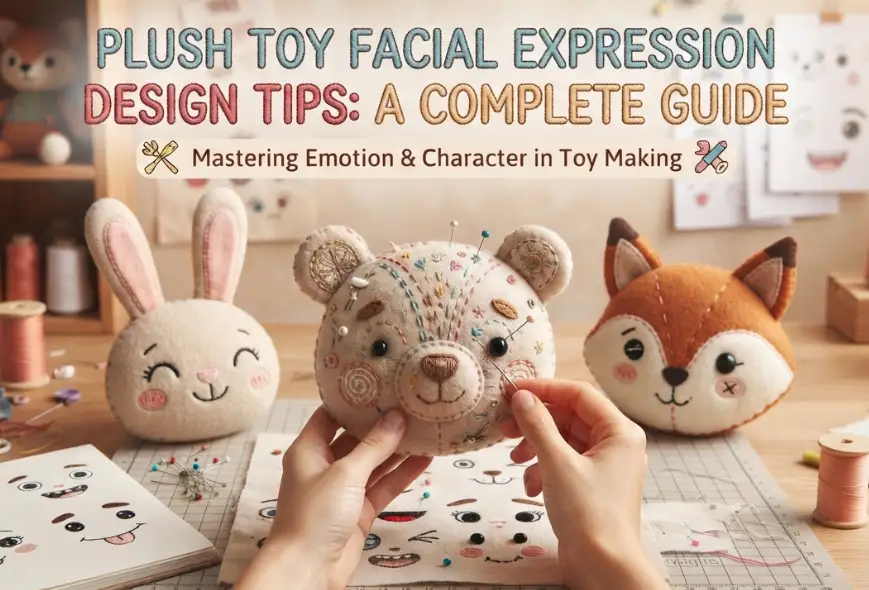
Why Facial Expression Design Matters So Much in Plush Toys
Unlike printed characters or animated figures, plush toys communicate emotion primarily through a small, fixed set of physical features — eyes, brows, mouth, and sometimes cheeks or nose — built from fabric, thread, and stuffing rather than infinitely adjustable digital linework. This constraint means that plush facial design carries a heavier communicative burden per feature than illustration does, since a single eye shape or mouth curve has to do the work that several adjustable linework elements might do in a 2D character design. Small proportions or placement errors are also far more noticeable on a face than anywhere else on a plush toy, because human perception is unusually sensitive to asymmetry and misalignment in facial features, even in a simplified, non-human form.
Emotional read is also highly dependent on viewing angle and lighting in a way that flat artwork is not. A face that reads as gently smiling in a straight-on studio photograph can look neutral or even slightly stern when viewed from a slight downward angle, which is how most plush toys are actually seen and held by children and adults alike. Designing with this real-world viewing angle in mind, rather than only the flat reference photo used for sign-off, produces a more consistently appealing result once the toy is in a person’s hands.
Common Emotional Read Mistakes in Plush Face Design
| Design Mistake | Resulting Emotional Read | Typical Fix |
|---|---|---|
| Eyes placed too high on the face | Surprised or startled expression | Lower eye placement toward the lower-middle third of the face |
| Eyes placed too close together | Suspicious or unfriendly expression | Widen spacing relative to head width, guided by reference proportion |
| Straight, flat mouth line | Neutral to slightly sad expression | Introduce a gentle upward curve, even a subtle one |
| Overly large, uniform pupils | Vacant or generic expression, lacking personality | Add slight asymmetry or a highlight stitch for warmth |
Eye Design: Placement, Size, and Proportion Rules
Eyes are the single most influential feature in a plush toy’s emotional expression, and their size, spacing, and vertical placement determine most of a character’s perceived personality before any other feature is even considered. As a general guideline, eyes placed in the lower half of the face read as younger, friendlier, and more approachable, following the same “baby schema” proportion principle that makes human and animal infants appear appealing — larger eyes set lower and wider relative to head size trigger a warmer emotional response than smaller, higher-set eyes.
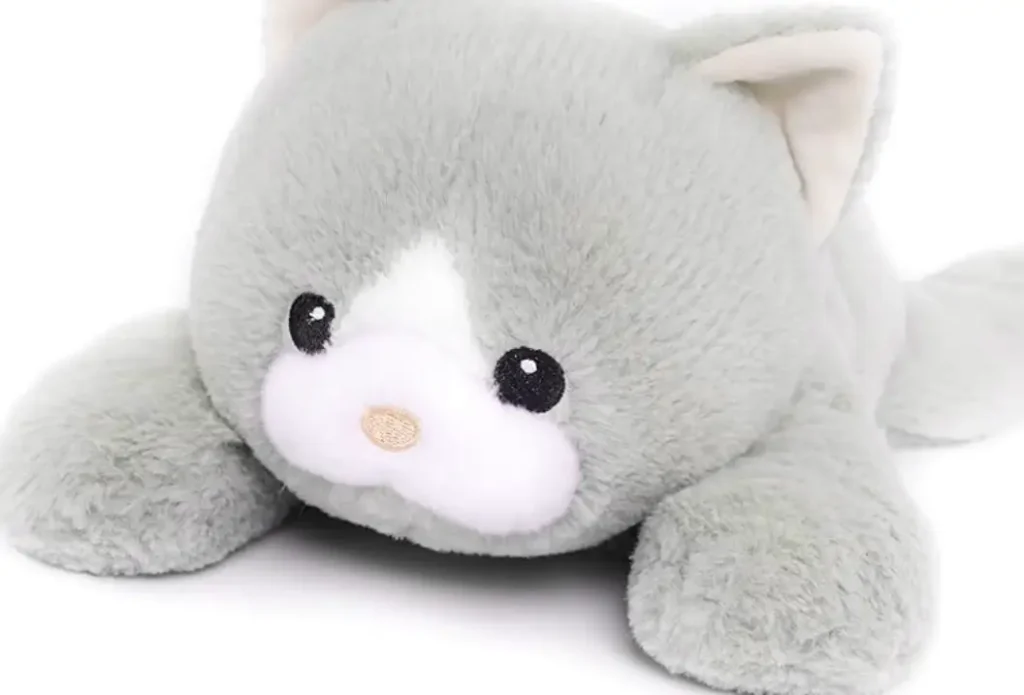
Eye spacing relative to head width also strongly influences perceived personality. Eyes spaced closer to the outer edges of the face tend to read as more alert or expressive, while eyes spaced closer together toward the center tend to read as more focused or, if taken too far, mildly unsettling. There is no universally correct spacing, but consistency with the overall brand or character personality the design is trying to achieve should guide the decision, tested against physical samples rather than finalized on a flat sketch alone.
Tip: Prototype eye placement using temporary pin-on or adhesive eyes on an early blank-face sample before committing to permanent embroidery or safety eye installation. This allows the design team to physically move the eyes to several candidate positions and photograph the result under normal lighting, which reveals emotional read issues far more reliably than evaluating a flat digital mockup.
Safety Eyes vs. Embroidered Eyes vs. Printed Eyes
The method used to construct the eyes has a significant effect on both cost and safety classification, and the right choice depends heavily on the toy’s intended age range. Plastic or glass safety eyes, secured with a locking washer on the inside of the fabric, are widely used for their crisp, glossy appearance and relatively low cost, but they are classified as a small part and pull-tested accordingly, making them unsuitable for plush toys intended for children under three years old under most safety standards.
Embroidered eyes eliminate the small-parts risk entirely, since they are stitched directly into the fabric with no separate attached component, making them the standard choice for infant- and toddler-safe plush design despite requiring more skilled labor and machine setup than safety eyes. Printed or sublimated eyes offer the most design flexibility for complex, multi-color eye designs but can appear flatter and less dimensional than embroidered or safety eyes, particularly under angled lighting.
Eye Construction Method Comparison
| Method | Age Suitability | Visual Characteristic |
|---|---|---|
| Plastic/glass safety eyes | Generally, 3+ years (small parts classification) | Glossy, dimensional, crisp definition |
| Embroidered eyes | Suitable for all ages, including infants | Soft, matte, fully integrated into fabric |
| Printed/sublimated eyes | Suitable for all ages, no attachment risk | Flat, highly flexible in color and detail complexity |
| Appliqued fabric eyes | Age-dependent on stitching security and edge finishing | Textured, layered, dimensional appearance |
Mouth and Brow Design: Shaping Personality and Emotion
While eyes carry most of the emotional weight in plush facial design, mouth and brow shape refine and specify the exact emotion being communicated. A simple upward-curved line reads as a smile, but the degree of curve, its width relative to the face, and whether it is symmetrical all shift the specific character of that smile from subtle and content to broad and energetic. Brows, when present, are one of the most powerful tools for adding perceived intelligence or expressiveness to a plush face, since even a slightly angled stitch above the eye can suggest curiosity, mischief, or calm depending on its angle and position.
The mouth construction method also affects both appearance and manufacturability. Embroidered mouths are stitched directly and offer clean, consistent results, but are limited in color complexity without adding separate thread colors and additional machine passes. Appliqued mouths, where a separate fabric or felt piece is sewn onto the face panel, allow for more dimensional, layered mouth designs, such as an open smile revealing a contrasting inner color, but require careful edge-finishing to prevent fraying or loose threads over the product’s lifespan.
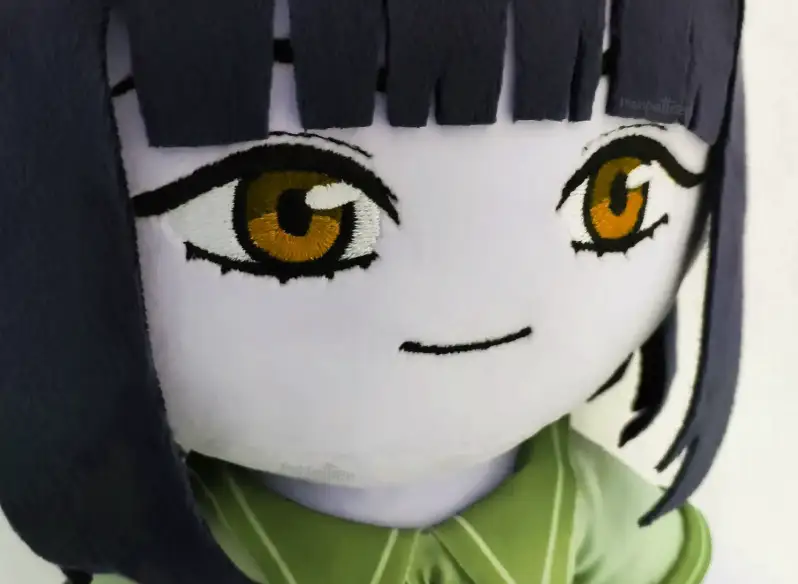
Tip: When designing a smiling mouth for a plush character, test the curve against the face at roughly 60% of the full potential curve intensity first, since embroidery and appliqué tend to visually intensify a mouth curve slightly compared to how it appears in a flat vector sketch. A mouth that looks subtly understated on screen frequently reads as an appropriately warm, natural smile once stitched.
Age-Appropriate Facial Design Considerations
The intended age range of the plush toy’s audience should directly inform several facial design decisions beyond just the eye construction method already discussed. Infant- and toddler-focused plush generally benefits from simplified, high-contrast facial features — larger, clearly defined eyes and a simple mouth shape — since very young children respond more strongly to clear, exaggerated facial cues than to subtle or highly detailed expressions. Products aimed at older children and adult collectors can support significantly more facial detail and nuance, including multi-tone shading, secondary expression elements like blush marks or eyelash details, and more restrained, sophisticated expressions.
Cultural and regional preferences also play a meaningful role in facial expression design and should not be assumed universal. Eye size proportion, preferred mouth shapes, and even color choices for features like blush or eyebrow markings can carry different associations across different markets, making it worthwhile to review reference examples from the target market specifically rather than relying solely on a single regional design standard.
Facial Design Guidelines by Target Age Range
| Target Age Range | Eye Construction | Recommended Facial Complexity |
|---|---|---|
| 0–3 years (infant/toddler) | Embroidered only, no attached small parts | Simple, high-contrast, large clear features |
| 3–8 years | Safety eyes or embroidered, per product safety review | Moderate detail, clear single-emotion expression |
| 8+ years / general audience | Safety eyes, embroidery, or printed detail | Higher detail, nuanced or stylized expressions supported |
| Adult collector market | Any method, often premium embroidery or sculpted detail | High detail, sophisticated or characterful expressions |
Manufacturability: Making Sure a Face Design Translates to Production
A facial design that looks compelling on paper does not automatically translate cleanly into a mass-produced plush toy, and manufacturability review should happen before a design is finalized rather than after a sample reveals a problem. Fine linework, very small text or detail elements, and closely spaced multi-color embroidery all carry a higher risk of shifting, blurring, or breaking down in either the embroidery machine setup or the physical stitching itself once produced at volume. Designs with excessive detail crammed into a small facial area are also more prone to inconsistency between individual units in a production run, since fine embroidery tolerances are harder to maintain at scale than they are on a single hand-finished prototype.
Symmetry is another manufacturability consideration that is easy to overlook during the design phase. A face that relies on precise bilateral symmetry to look correct is more vulnerable to visible flaws when even small manufacturing variation causes one side to sit slightly differently than the other, whereas a design with a small amount of intentional asymmetry built in can actually appear more consistent and forgiving across a production run, since minor natural variation blends into the design rather than standing out against a perfectly symmetrical reference.
Tip: Request a small pilot batch of five to ten finished face samples, not just a single approved prototype, before committing to full bulk production. Reviewing several units side by side reveals whether the facial design holds up consistently across normal production variation or whether it is overly dependent on the precision of a single hand-finished sample that bulk production will not reliably replicate.
Using Color Accents to Reinforce Expression
Secondary color accents such as blush marks, nose color, or subtle shading around the eyes can meaningfully reinforce the emotional intent of a facial design without adding structural complexity. A soft pink or peach blush placed just below the eyes tends to enhance warmth and approachability, echoing a natural human cue for gentleness, while its absence can make an otherwise well-proportioned face read as slightly more neutral or clinical.
These accents are typically applied through airbrushing, sublimation printing, or subtle fabric-dyeing techniques rather than embroidery, and should be tested on an actual sample under normal lighting, since color intensity that looks appropriately subtle on screen can appear either too faint to register or unexpectedly strong once applied to textured plush fabric.

Testing Facial Expressions Before Finalizing a Design
Before locking a facial design for production, it is worth testing the finished or near-finished sample’s emotional read against people who were not involved in the design process, since designers and brand teams who have spent weeks looking at a character’s face often lose the ability to judge its first impression objectively. A brief, informal reaction test — simply asking a handful of people what emotion or personality they perceive from the finished sample — frequently surfaces expression issues, such as an unintended sternness or blankness, that were not apparent to the design team during development.
Photographing the sample under multiple lighting conditions and from several realistic viewing angles, rather than only the flat, evenly lit angle typically used for official product photography, also helps confirm that the expression holds up the way an actual customer or child will encounter it — held at arm’s length, viewed from above, or seen in typical indoor lighting rather than a studio setup.
Frequently Asked Questions
1. What is the most important factor in making a plush toy’s face look friendly and appealing?
Eye placement is generally the single most influential factor in a plush toy’s perceived friendliness. Positioning the eyes in the lower half of the face, spaced moderately wide relative to head width, follows the same proportion principle that makes infant faces appear appealing to humans and reliably produces a warmer, friendlier emotional read than eyes placed high or narrowly spaced on the face.
2. Are safety eyes or embroidered eyes better for a plush toy design?
The right choice depends primarily on the intended age range rather than aesthetic preference alone. Embroidered eyes are the safer choice for infant and toddler products because they eliminate any small-parts attachment risk, while safety eyes offer a glossier, more dimensional look and are commonly used on plush toys intended for children three years and older or general audiences, where small-parts pull testing requirements can be met.
3. How much does facial expression design affect plush toy manufacturing cost?
Facial design complexity has a direct impact on cost primarily through embroidery machine setup, number of thread colors, and stitching time. A simple single-color embroidered face with basic eye and mouth shapes adds relatively little cost, while multi-color, densely detailed facial embroidery or layered appliqué designs increase both setup cost and per-unit production time, which should be factored into budget planning during the design phase rather than discovered later in the quoting process.
4. Why does a plush toy’s expression sometimes look different in person than it did in the design sketch?
This typically happens because embroidery, appliqué, and stuffing all interact with light, shadow, and dimensional curvature in ways that a flat digital sketch cannot fully predict. A mouth curve or eye shape that looks correct on a two-dimensional reference can appear subtly different once it is stitched onto a rounded, stuffed fabric surface and viewed under real lighting from a natural angle, which is why physical sampling and in-person review remain an essential step in finalizing any facial design.
5. Should facial expression design differ for adult collector plush versus children’s plush toys?
Yes, facial design should generally differ meaningfully between these two audiences. Children’s plush, especially for younger age ranges, benefits from simplified, high-contrast, clearly readable expressions, while adult collector-oriented plush can support more nuanced, detailed, and sophisticated facial design, including subtler expressions and additional detail elements that would be lost on or unnecessary for very young children.
6. How can I tell if a facial design will hold up consistently across a full production run?
The most reliable way to evaluate production consistency is to request a small pilot batch of multiple finished samples, rather than relying on a single hand-finished prototype, and compare them side by side for consistency in eye placement, embroidery quality, and overall symmetry. Designs that depend on very fine detail or precise bilateral symmetry are generally more vulnerable to visible inconsistency at scale than designs with slightly bolder features or intentional minor asymmetry built into the original design.