How to Audit a Plush Toy Factory is an essential step for brands and importers to evaluate production quality, safety compliance, manufacturing processes, and supplier reliability before placing orders. Auditing a plush toy factory is one of the most consequential steps a buyer can take before committing to a manufacturing partnership.
Whether you are sourcing stuffed animals, seasonal plush collections, character merchandise, or licensed plush products, a structured factory audit helps verify that a supplier can consistently deliver products that meet your quality standards, safety requirements, and ethical sourcing obligations. An unaudited factory introduces risk at every level — from regulatory non-compliance and product recalls to reputational damage if labor violations surface after orders are placed.
This guide walks through the complete factory audit process for plush toy manufacturing, covering the types of audits available, how to prepare, what to evaluate on-site, and how to interpret results to make informed sourcing decisions.
Why Factory Auditing Matters in Plush Toy Sourcing
The plush toy category sits at the intersection of two demanding compliance environments: children’s product safety regulations and ethical manufacturing standards. Plush toys for children under 14 are subject to mandatory third-party testing and certification requirements in every major market, including CPSIA in the United States, EN 71 in the European Union, and AS/NZS 8124 in Australia and New Zealand. At the same time, global retail buyers and direct-to-consumer brands increasingly require their supply chains to meet social compliance benchmarks covering worker welfare, working hours, wage practices, and environmental management.
A factory audit is the primary tool for verifying both dimensions before production begins. Audits also serve as a baseline for ongoing supplier performance management, providing documented evidence that a factory met a defined standard at a point in time and enabling year-over-year tracking of improvements or deteriorations in factory conditions.
Overview of Factory Audit Types Used in Plush Toy Sourcing
| Audit Type | Primary Focus | Conducted By | Typical Duration | Output |
|---|---|---|---|---|
| Social compliance audit (BSCI / SMETA / SEDEX) | Labor rights, wages, working hours, child labor, HSE | Third-party agency | 1–2 days | Scored report with corrective action plan |
| Quality management system audit | ISO 9001, in-process QC, documentation, traceability | Buyer or third party | 1 day | Capability assessment report |
| Production capability audit | Equipment, capacity, workforce skills, lead times | Buyer team | 0.5–1 day | Internal qualification report |
| Chemical compliance audit | REACH, AZO dyes, formaldehyde, phthalates, heavy metals | Third-party laboratory | 1 day + lab testing | Test certificate and compliance statement |
| Ethical trade audit (ETI / SA8000) | Freedom of association, forced labor, discrimination | Accredited third party | 1–2 days | Certification or audit report |
Preparing for a Plush Toy Factory Audit
What documents should a buyer collect before auditing a plush toy factory?
Effective audit preparation begins weeks before the on-site visit. Requesting and reviewing factory documentation in advance allows auditors to focus on-site time on verification and observation rather than administrative data collection. The document package you request should cover legal registration, workforce demographics, compliance certifications, previous audit reports, and quality management records.
Factories that are experienced with international buyers will typically have most of these documents readily available in a supplier qualification pack. Reluctance to share basic legal documents — business license, fire safety certificate, environmental discharge permits — is itself an early risk signal that warrants caution before proceeding.
Pre-Audit Document Checklist for Plush Toy Factory Qualification
| Document Category | Specific Documents Required | Purpose |
|---|---|---|
| Legal and registration | Business license, export license, VAT registration | Confirms legal operating status and export authorization |
| Workforce and HR | Employee headcount by department, worker age verification records, and payroll samples | Screens for underage labor and wage compliance |
| Health, safety, and environment | Fire safety inspection certificate, chemical storage log, wastewater discharge permit | Verifies regulatory compliance for facility operations |
| Quality and compliance | ISO 9001 certificate (if held), previous third-party audit reports, and corrective action closure records | Establishes quality system baseline and audit history |
| Product testing | Recent third-party test reports (EN 71, CPSIA, REACH), test lab accreditation (CNAS/A2LA) | Confirms product safety compliance capability |
| Social compliance | BSCI / SMETA / SEDEX reports from the past 24 months, if available | Provides prior labor standards assessment context |
| Subcontracting | List of approved subcontractors, any outsourcing agreements | Maps the scope of production and compliance exposure |
Tip: Always request the two most recent third-party audit reports before scheduling your on-site visit. A factory with a clean recent SMETA or BSCI audit is not automatically qualified — audit age, issuing agency credibility, and corrective action closure rates all matter. A 24-month-old audit with unresolved major findings is a more significant concern than a recent audit with minor open items.
On-Site Production Capability Assessment
What should buyers evaluate when touring a plush toy manufacturing facility?
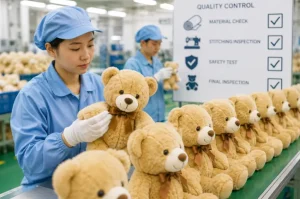
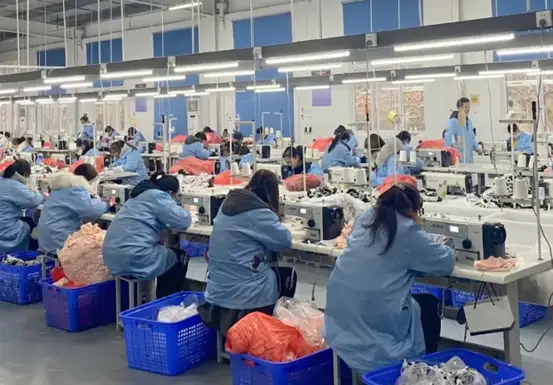
The production floor walkthrough is the core of any capability audit for a plush toy factory. A structured walk-through covers four primary zones: the cutting room, the sewing and assembly floor, the stuffing and finishing area, and the packing and warehouse space. Each zone has distinct quality and capacity indicators that an experienced auditor will evaluate through direct observation, measurement, and worker interviews.
In the cutting room, auditors assess whether fabric is being laid correctly — checking for consistent grain alignment, appropriate lay height to prevent distortion, and evidence of marker planning that minimizes material waste. Cutting precision directly impacts the symmetry and dimensional consistency of finished plush products, particularly for character designs where proportional accuracy is critical.
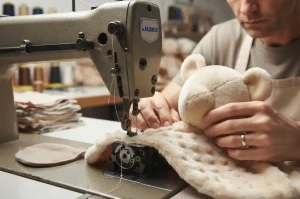
On the sewing floor, the key indicators are stitch density (typically 8 to 12 stitches per centimeter for structural seams on plush), seam allowance consistency, thread tension uniformity, and the presence of in-line quality checkpoints. Factories with mature quality systems will have documented inspection stations at defined intervals in the production flow, with records of defect counts by type and operator.
How do you assess factory capacity during an audit?
Capacity assessment during an audit involves cross-referencing the factory’s stated production output against observable physical evidence: number of active sewing stations, average units per operator per shift, shift structure, and current order loading. Factories frequently overstate capacity to secure orders, so auditors should verify the stated output against machine counts, operator headcounts, and the production records they are permitted to review.
Tip: During the sewing floor walkthrough, count the actual number of machines running versus the total number of machines installed. A factory claiming 10,000 units per week with 60 percent machine utilization is a different risk profile than one running at 95 percent capacity. High utilization with no visible buffer can signal scheduling risk for your orders, particularly during peak seasonal periods.
Social Compliance and Ethical Labor Standards Evaluation
What labor standards apply to plush toy factory audits?
Social compliance in plush toy manufacturing is assessed against internationally recognized labor standards frameworks. The most widely used in global plush toy supply chains are the Business Social Compliance Initiative (BSCI), Sedex Members Ethical Trade Audit (SMETA 4-pillar), and SA8000. These frameworks cover common core principles: prohibition of child and forced labor, freedom of association, non-discrimination, safe and healthy working conditions, fair wages, and limits on working hours.
In Chinese plush toy manufacturing — where the majority of global production is concentrated in provinces such as Guangdong, Zhejiang, and Jiangsu — working hours compliance is among the most frequently cited non-conformance areas. Chinese labor law limits regular working hours to 40 per week and overtime to a maximum of 36 hours per month, though actual practice in peak production periods often exceeds these limits. Auditors pay particular attention to whether overtime is voluntary and whether compensation rates comply with local regulations (typically 150 percent of regular pay for weekday overtime, 200 percent for rest days, and 300 percent for statutory holidays).
Social Compliance Audit Criteria and Common Non-Conformances in Plush Toy Factories
| Audit Criterion | Standard Requirement | Common Non-Conformance | Severity |
|---|---|---|---|
| Child labor | No workers under 15 (or local legal minimum if higher); no hazardous work under 18 | Age verification records incomplete or missing | Critical |
| Working hours | Max 48 regular hours/week; overtime voluntary and capped at 12 hours/week | Overtime exceeds 36 hours/month during peak season | Major |
| Wages and benefits | At or above minimum wage; legally mandated benefits paid | Social insurance contributions underpaid or absent | Major |
| Health and safety | Fire exits clear, first aid available, PPE provided, chemical storage labeled | Blocked fire exits, unlabeled chemical containers | Major / Critical |
| Forced labor | No deposit withholding, no document retention, freedom to resign | Worker deposits held by management (rare but serious) | Critical |
| Discrimination | Equal treatment in hiring, promotion, and pay regardless of gender or ethnicity | Documented pay gap without justification | Major |
| Freedom of association | Workers permitted to form or join worker representative bodies | No worker committee or grievance mechanism in place | Minor / Major |
Quality Management Systems Evaluation
How do you assess a plush toy factory’s quality management system during an audit?
A quality management system (QMS) audit for a plush toy factory examines whether the factory has documented procedures, trained personnel, calibrated equipment, and data-driven defect control — and whether these elements operate as a genuine system rather than paper compliance. ISO 9001 certification provides a useful baseline but should not be treated as a substitute for direct observation: some certified factories maintain certification through documentation disciplines that do not reflect actual shop-floor practice.
The key quality system indicators auditors evaluate in plush toy facilities include: incoming material inspection protocols (checking fabric for color, construction, and flammability compliance before cutting), in-process defect tracking by station, final inspection procedures using AQL sampling tables, and calibration records for test equipment such as pull-force testers and tensile gauges. Factories with strong QMS documentation and clean equipment calibration logs typically perform more consistently across production runs, particularly for complex character plush, where dimensional tolerances are tighter.
What equipment should a plush toy factory have for internal quality testing?
A well-equipped plush toy factory will maintain in-house test equipment for the most commonly required safety checks, enabling pre-shipment screening before third-party laboratory submission. The presence and calibration status of this equipment are reliable indicators of quality system maturity. Factories that rely entirely on third-party laboratories for every test — without any internal screening capability — create bottlenecks in the production-to-approval cycle that can compress lead times under pressure.
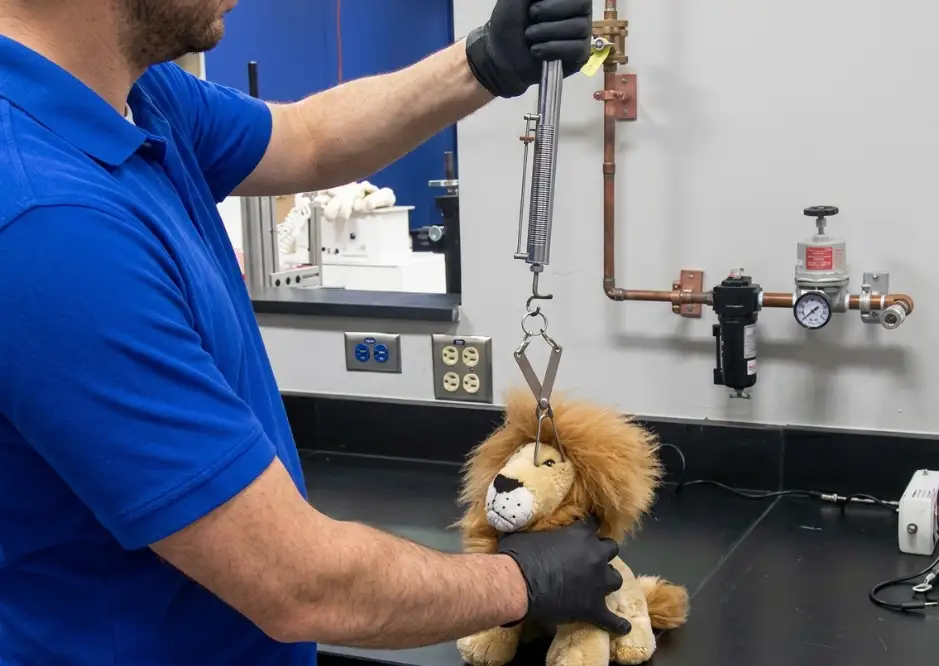
In-House Quality Test Equipment Expected in a Qualified Plush Toy Factory
| Equipment | Test Function | Relevant Standard | Calibration Frequency |
|---|---|---|---|
| Pull-force tester (spring or digital) | Eye, nose, button, and accessory pull strength | ASTM F963 / EN 71 Part 1 | Annual (minimum) |
| Tensile strength tester | Seam strength, fabric tear resistance | ISO 13935 / ASTM D5034 | Annual |
| Small parts cylinder | Choking hazard assessment | ASTM F963 / EN 71 Part 1 | Inspect before each use |
| Flammability tester (45° or horizontal) | Fabric burn rate assessment | FHSA / EN 71 Part 2 | Annual |
| Light box/color assessment cabinet | Color consistency and shade matching under standardized illumination | Buyer color standard | Lamp replacement per spec |
| Crockmeter (rubbing fastness tester) | Color transfer under wet and dry rubbing | ISO 105-X12 | Annual |
| Precision scale (0.1g resolution) | Fill weight verification per specification | Buyer BOM spec | Semi-annual calibration |
Tip: Ask the factory to demonstrate a live pull-force test on a sample plush toy during the audit. This verifies both that the equipment exists and is operational, and that the operator understands the test methodology. A factory that cannot demonstrate this test in-house creates additional risk for shipments where product safety sign-off depends entirely on external lab results that may arrive too late to allow production corrections.
Chemical and Safety Compliance Checks
How is chemical compliance assessed during a plush toy factory audit?
Chemical compliance in plush toy manufacturing covers three primary risk areas: restricted substances in raw materials (dyes, finishing chemicals, flame retardants, plasticizers used in PVC accessories), heavy metals in surface coatings and decorative elements, and formaldehyde in fabric treatments. REACH regulation in the EU, CPSIA in the US, and Oeko-Tex Standard 100 certification all address these categories through defined limit values and mandatory testing protocols.
During an audit, chemical compliance is assessed through a combination of document review and physical inspection. Auditors examine incoming material test certificates from fabric and accessory suppliers, verify that accepted materials align with the bill of materials (BOM) for current production orders, and check chemical storage areas for proper labeling, segregation, and safety data sheet (SDS) availability. Factories that operate a restricted substances list (RSL) aligned with a major retailer’s or industry standard — and that have supplier agreements requiring RSL compliance from their own material suppliers — demonstrate a more systematic approach to chemical risk management.
Audit Scoring, Corrective Actions, and Re-Auditing
How are factory audit results scored and used in sourcing decisions?
Most third-party social compliance audits produce a scored result that classifies the factory into a performance tier. BSCI audits use a five-level rating from A (outstanding) to E (unacceptable), while SMETA reports classify findings as critical non-conformances, major non-conformances, and minor non-conformances. A critical finding — such as evidence of child labor, forced labor, or an immediate physical danger — typically results in a suspended or failed audit status and requires immediate corrective action and re-audit before production can proceed.
Buyer-conducted capability audits use internal scoring frameworks that vary by organization, but typically weight quality system maturity, production capacity, compliance documentation, and on-site observation scores. A common approach is a percentage-based overall score with a minimum threshold for approved supplier status — for example, 70 percent overall with no critical failures — and conditional approval status for factories scoring between 50 and 70 percent, subject to corrective action completion.
Audit Finding Classification and Buyer Response Framework for Plush Toy Factories
| Finding Level | Definition | Example in Plush Toy Context | Required Buyer Response | Corrective Action Timeline |
|---|---|---|---|---|
| Critical | Immediate risk to worker safety, rights, or product safety | Child labor identified; fire exits permanently blocked; falsified test reports | Suspend sourcing decision; escalate to the compliance team | Immediate — re-audit before any order placement |
| Major | Significant non-compliance with legal or standard requirements | Overtime exceeds legal limit; social insurance not paid; pull-force test equipment absent | Issue corrective action request (CAR); set closure deadline | 30–90 days with documented closure evidence |
| Minor | Partial or procedural non-compliance with limited immediate impact | Calibration records incomplete; signage missing from storage area; SDS not in the local language | Note in audit report; request closure at next audit cycle | 90–180 days or next scheduled audit |
| Observation | Best practice gap without regulatory breach | No documented supplier RSL agreement; the worker committee meets infrequently | Share guidance and best practice reference | Next audit cycle — voluntary improvement |
Tip: Build corrective action follow-up into your supplier management calendar, not just your audit schedule. A factory that receives a major CAR and submits closure documentation deserves a verification call or document review — not just a file note. Closing findings on paper without confirming operational change is one of the most common failure modes in supplier audit programs. Schedule a follow-up check at 60 days for all major findings and document the outcome in your supplier record.
Frequently Asked Questions About Auditing a Plush Toy Factory
1. How much does it cost to audit a plush toy factory?
The cost of a factory audit depends on the audit type, the conducting organization, and the factory location. Third-party social compliance audits (BSCI, SMETA) conducted by accredited agencies typically range from USD 600 to USD 1,500 per factory per audit, with the cost usually borne by the factory as part of their compliance program. Buyer-conducted production capability audits, where a buyer sends their own QC or sourcing team, involve staff time and travel costs rather than a direct audit fee.
For combined social compliance and quality management audits conducted by a third-party agency in South China, all-in costs, including travel, auditor fees, and report issuance, typically fall between USD 900 and USD 2,200. Some audit frameworks — particularly SEDEX / SMETA — allow audit cost-sharing among multiple buyers sourcing from the same factory, which can significantly reduce individual buyer expenditure.
2. How often should a plush toy factory be re-audited?
Re-audit frequency depends on the factory’s audit performance history, the audit framework being used, and the buyer’s internal supplier risk rating. Most major social compliance frameworks (BSCI, SMETA) recommend a 12-month re-audit cycle for factories with satisfactory scores, and a 6-month cycle for factories with major findings or conditional approval status.
Buyers with a larger supplier base often implement a risk-tiered audit schedule: higher-risk factories (those with recent major findings, high worker turnover, or operating in sectors prone to overtime violations) are audited annually or more frequently, while consistently strong performers may qualify for an 18- to 24-month cycle. In addition to scheduled re-audits, an unannounced audit or spot check is a common best practice for high-volume or long-term supply partnerships, providing a more accurate picture of factory conditions than announced visits alone.
3. Can a plush toy factory be audited without prior notice?
Unannounced audits are permitted and, in some cases, required by advanced ethical sourcing programs. They provide a more accurate view of day-to-day factory conditions because they eliminate the preparation period that factories use to correct temporarily visible issues before an announced visit. In practice, most first-time audits of new supplier relationships are announced — giving the factory time to prepare documentation — while follow-up or verification audits after major non-conformances are more commonly conducted unannounced. Some retailers and brands operating mature supplier programs require that a portion of their annual audit volume be conducted without advance notice. Factories that accept unannounced audits as a contractual condition signal a higher level of confidence in their ongoing compliance posture.
4. What is the difference between a BSCI audit and an SMETA audit for a plush toy factory?
BSCI (Business Social Compliance Initiative) and SMETA (Sedex Members Ethical Trade Audit) are both social compliance audit frameworks widely used in global consumer goods supply chains, including plush toy manufacturing. The key differences relate to structure, data sharing, and audit scope. BSCI audits are conducted by accredited audit firms, and reports are uploaded to the amfori BSCI platform, accessible to all BSCI member buyers.
Results are scored on a five-point grade scale. SMETA is administered through the Sedex platform and follows an audit methodology developed by the Ethical Trading Initiative; the 4-pillar SMETA covers labor, health and safety, environment, and business ethics. SMETA reports are shared via Sedex and are accessible to any Sedex member buyer that the factory connects with, enabling cost and report sharing across multiple customers. For plush toy buyers, both frameworks are broadly accepted by major retail channels; the choice often comes down to which platform your key retail customers require.
5. What are the most common reasons a plush toy factory fails an audit?
The most common reasons plush toy factories receive failed or conditional audit results relate to four recurring areas: working hours violations (overtime exceeding legal limits, particularly during peak seasonal production), health and safety deficiencies (blocked emergency exits, missing first aid provisions, inadequate chemical storage practices), wage and social insurance non-compliance (social security contributions not fully paid, or wages calculated on an incorrect base), and documentation gaps (incomplete personnel files, absence of age verification records for all workers, or uncalibrated test equipment).
Critical failures — which result in an immediate suspended or failed audit status — are less common but most frequently involve child labor findings, evidence of document falsification, or physical safety conditions that present an immediate risk of serious injury or death. Factories with a strong track record of social compliance investment, worker grievance mechanisms, and transparent record-keeping consistently perform better across all of these dimensions.
6. Should buyers audit subcontractors and homeworkers used by a plush toy factory?
Yes — subcontracting and homework practices represent one of the most significant audit blind spots in plush toy supply chains. Many plush toy factories subcontract specific operations (hand embroidery, accessory attachment, specialty stuffing, or overflow cutting) to smaller workshops or individual homeworkers, particularly during peak production periods. These arrangements fall outside the scope of a standard factory-level social audit unless explicitly included.
Buyers who do not address subcontracting in their supplier agreements risk having their compliance requirements effectively bypassed at the point where the most vulnerable workers are often engaged. Best practice is to require full disclosure of all subcontractors in the supplier qualification process, extend RSL and basic labor standard requirements contractually to approved subcontractors, and include subcontractor facilities in the audit scope, at a minimum for any subcontractors engaged in plush toy assembly or finishing operations.
7. How do I evaluate a plush toy factory’s fire safety during an audit?
Fire safety is one of the most directly observable and consequential dimensions of a factory health and safety audit, and plush toy facilities carry elevated fire risk due to the presence of polyester fiberfill, fabric bolts, flammable thread, and, in some cases, chemical finishing agents.
During the on-site walkthrough, auditors assess whether fire exits are clearly marked, unobstructed, and lead to a safe external area; whether the factory holds a valid fire safety inspection certificate issued by the local fire authority; whether the required number of functioning fire extinguishers are mounted at accessible locations and have been inspected within the past 12 months; whether sprinkler systems or fire suppression equipment are present and operational; whether workers have received fire evacuation training and whether evacuation drills have been conducted within the past 12 months (with drill records available); and whether the storage of flammable materials (chemicals, foam, stuffing) is physically segregated and properly labeled.
A factory that cannot produce its fire safety certificate or has visibly blocked exit routes should be recorded as a major or critical finding, depending on the severity and scale of the obstruction.