Skip to content
Plush Toys for Museums and Zoos bring educational exhibits and wildlife experiences to life through engaging, soft, and memorable souvenirs that visitors of all ages love. Custom plush toys are the highest-performing soft merchandise category in museum and zoo gift shops worldwide.
They connect visitors emotionally to the animals and exhibits they have just experienced, generate strong repeat purchases, and carry retail margins that consistently outperform most other souvenir categories. This guide covers everything institutional buyers need to know — from species accuracy and safety compliance to minimum order quantities, pricing benchmarks, and long-term retail strategy.
Why Are Plush Toys the Most Valuable Soft Merchandise Category for Zoo and Museum Gift Shops?
Walk through any successful zoo or natural history museum gift shop and the pattern is unmistakable: plush toys command the most floor space, generate the longest dwell time from visitors, and account for a disproportionate share of total gift shop revenue. This is not a coincidence — it reflects a well-documented consumer behavior dynamic in which the emotional peak of a live animal encounter or immersive exhibit translates directly into purchase intent, and a tactile, huggable stuffed animal is the most intuitive physical extension of that emotional moment.
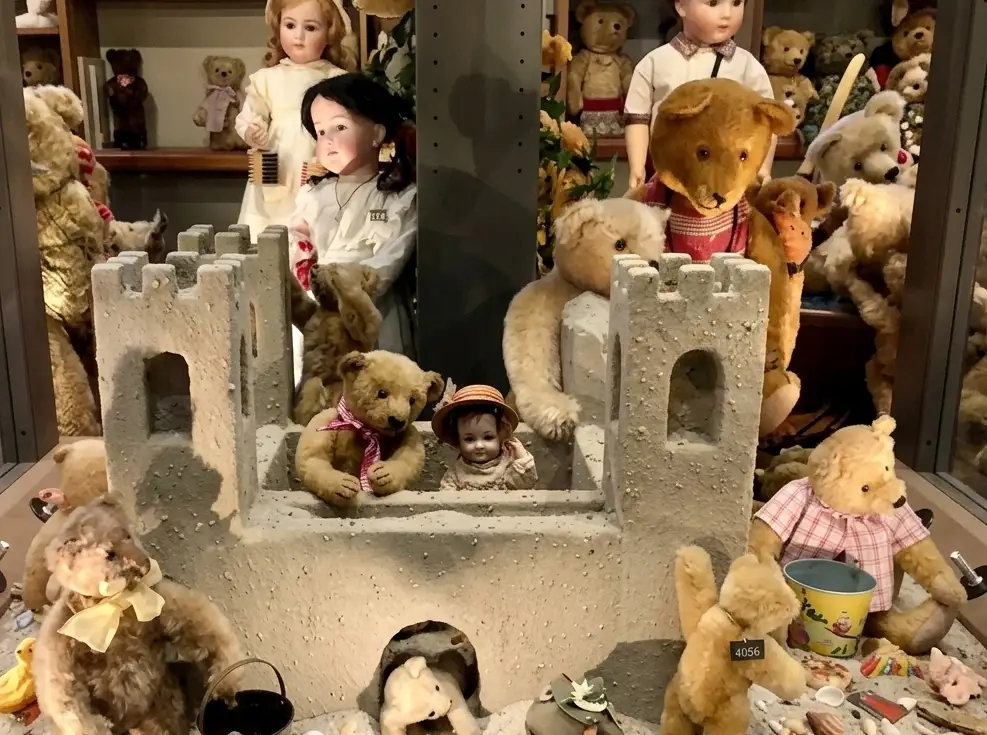
Unlike printed souvenirs, keychains, or even books, a custom zoo plush toy or museum stuffed animal has a functional second life in the home: children play with it, display it, and sleep with it. This means the product continues to serve as a brand ambassador long after the visit ends — generating organic word-of-mouth and reinforcing brand recall for future visits or memberships.
For institutions with conservation or education missions, the plush toy also carries narrative weight: it can represent an endangered species the institution actively protects, making each sale a tangible connection between visitor engagement and conservation funding.
What Revenue Contribution Can a Well-Curated Plush Program Generate?
Plush toys in institutional gift shops typically achieve retail margins of 50–65% when sourced through direct factory relationships at appropriate minimum order quantities. In high-footfall institutions — major aquariums, national zoo flagship shops, large natural history museums — the plush category alone can represent 25–40% of total gift shop revenue. Seasonal peaks (school holiday periods, spring break, summer vacation) can push plush sales to 50%+ of monthly revenue, making inventory planning for this category one of the most commercially important decisions a gift shop buyer makes each year.
Plush Toy Retail Performance Benchmarks in Institutional Gift Shops
| Metric | Typical Range | Best-Practice Target |
|---|---|---|
| Gross retail margin | 45–65% | 55–65% |
| Plush share of total gift shop revenue | 20–40% | 30–40% |
| Average retail price per unit | $12 – $45 | $18 – $32 (best velocity) |
| Average units sold per visitor (high footfall) | 0.08 – 0.18 | 0.15+ |
| Inventory turnover (annual) | 3 – 6× | 4 – 5× (balanced stock depth) |
| Peak seasonal sales uplift vs baseline | 2.5× – 4.5× | Plan for 3× minimum at peak |
| Repurchase rate (online / return visit) | 12 – 22% | 18%+ with good online listing |
How Should Institutions Approach Species Accuracy and Character Design for Zoo and Museum Plush?
The single most common mistake in zoo and museum plush procurement is prioritizing cost over species accuracy. Visitors who have just spent an hour watching a living giant panda, komodo dragon, or snow leopard will immediately notice — and reject — a plush that misrepresents the animal’s color pattern, facial structure, or proportions. Species accuracy is not an aesthetic preference; it is a commercial requirement for institutional plush, and it directly affects sell-through rates.
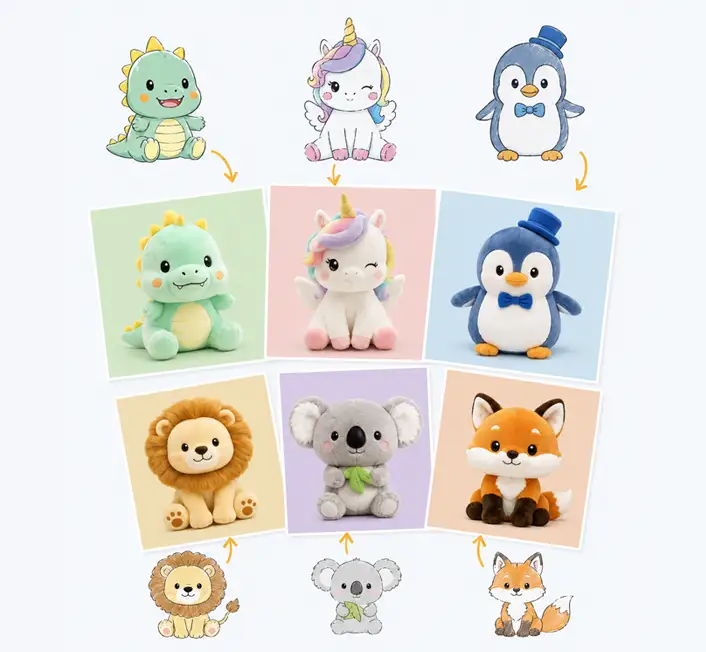
Effective character design for wildlife plush begins with reference photography from the institution’s own animal collection, wherever possible. Sharing high-resolution reference images of the specific animals in the collection — not generic stock photography — allows the design team to capture the exact coat pattern, eye color, and characteristic posture of the resident animals. This approach also creates a storytelling opportunity: a stuffed animal that represents a named resident animal (“adopt a plush Mei Xiang”) generates significantly higher emotional engagement and purchase intent than a generic species representation.
What Design Elements Define a High-Quality Wildlife Plush Toy?
High-quality wildlife plush toys for institutional retail are distinguished by several design and material decisions. Airbrushed or printed fabric panels reproduce markings more accurately than woven patterns alone — critical for spotted, striped, or patterned species such as cheetahs, zebras, and tiger salamanders.
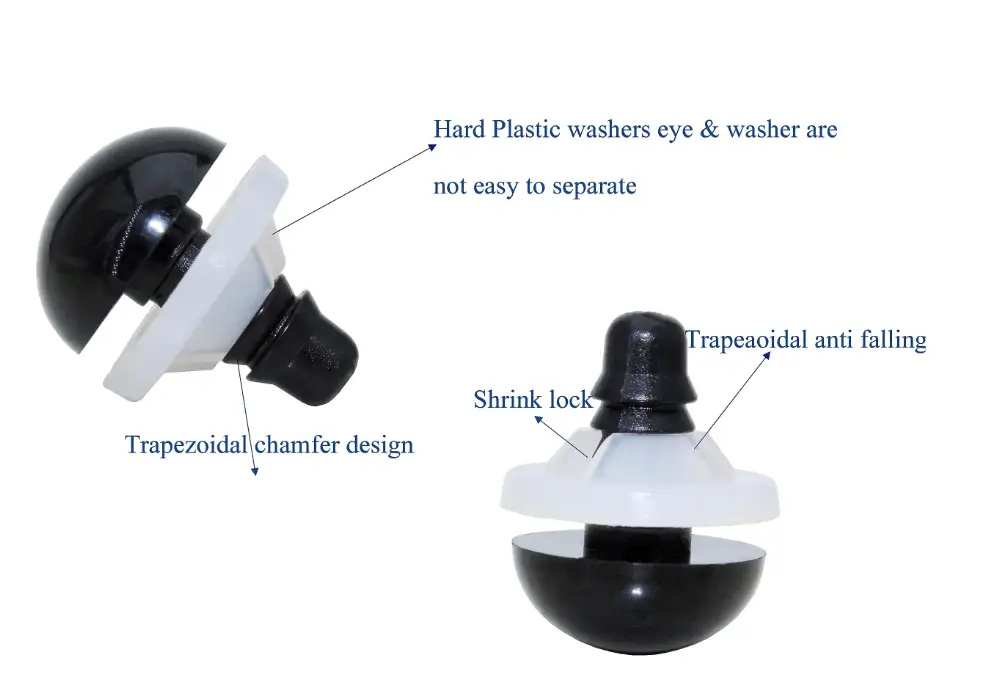
Safety eyes in species-accurate colors (amber, green, bicolored) replace the generic black plastic eyes common in mass-market stuffed animals. Weighted filling in larger sizes (30cm+) creates the satisfying heft that communicates quality at point of sale. Embroidered facial features outlast printed features under repeated washing — an important durability consideration for children’s play use.
Tip: Always request a pre-production physical sample before approving mass production, and evaluate it under the same lighting conditions as your gift shop floor. Colors rendered accurately in factory photography frequently shift under warm retail lighting. Reviewing the physical sample in situ prevents costly surprises when the full production run arrives.
Design Specifications for Institutional-Grade Wildlife Plush Toys
| Design Element | Standard Option | Institutional-Grade Specification | Impact on Quality |
|---|---|---|---|
| Fabric surface | Plain plush pile | Airbrushed or multi-tone printed plush | Species marking accuracy |
| Eyes | Generic black safety eyes | Species-accurate color safety eyes or embroidered | Realism and character |
| Fill material | Standard PP cotton | High-loft PP cotton, weighted bead fill in limbs | Heft, huggability, posture |
| Facial features | Screen-printed | Machine embroidered | Durability over wash cycles |
| Size range | Single size (20–25cm) | 3-size range (15cm, 25cm, 40cm) | Price ladder, gifting range |
| Branding placement | Swing tag only | Embroidered logo + branded hang tag + foot label | Brand recall, secondary market |
| Inner structure | None | Wire armature in poseable species | Display appeal, differentiation |
What Safety and Compliance Standards Apply to Zoo and Museum Plush Toys?
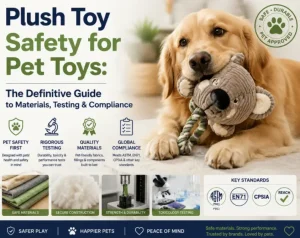
Institutional gift shops carry legal and reputational obligations that mass-market retailers share — but with higher visibility risk. A recall or safety incident involving a plush toy sold under an institution’s brand has consequences that extend beyond the commercial to the reputational, particularly for children’s museums, science centers, and zoos that position themselves as trusted educational environments. Understanding and enforcing the correct compliance standards at the point of procurement — not after delivery — is essential.
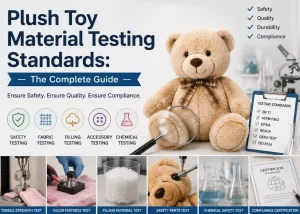
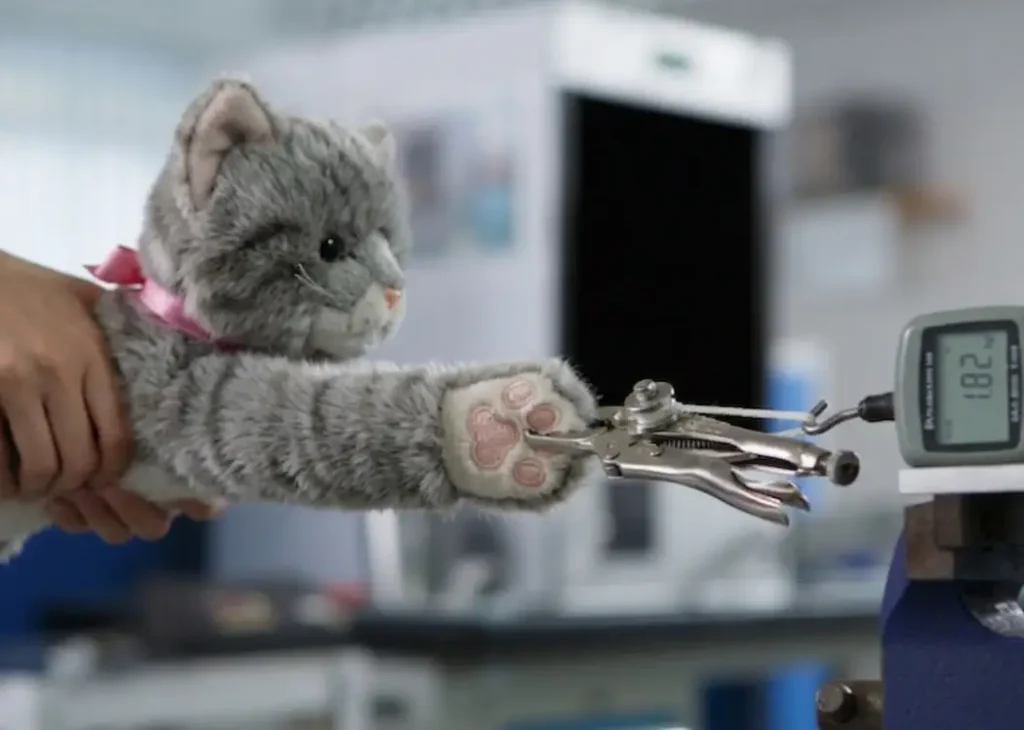
The two dominant international frameworks are ASTM F963 (United States Consumer Product Safety standard for toy safety) and EN71 (European toy safety directive, required for CE marking). Both address mechanical and physical hazards (small parts, sharp edges, pull-force requirements for eyes and noses), flammability, and chemical content. For institutions selling to a US audience, ASTM F963 compliance with a third-party test report from a CPSC-recognized laboratory is the minimum requirement. For EU distribution, CE marking under EN71 Parts 1, 2, and 3 is mandatory.
What Documentation Should Be Required from Every Plush Supplier?
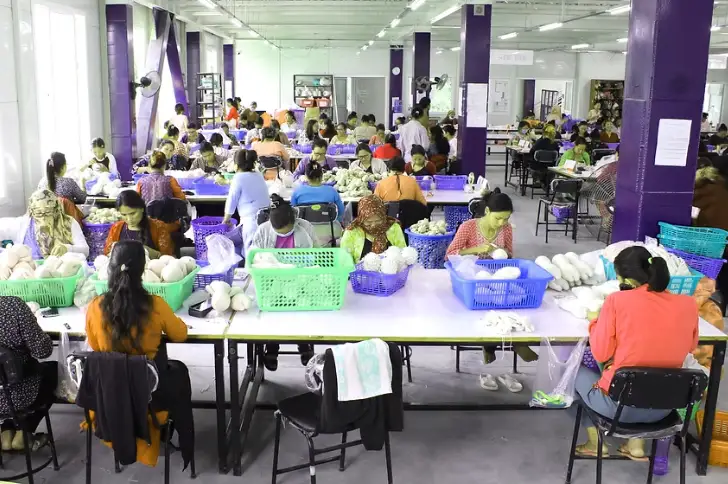
Every plush toy order for institutional retail should be accompanied by a full compliance documentation package before goods are accepted. At minimum, this includes: a valid third-party laboratory test report (ASTM F963 and/or EN71 as applicable, dated within 12 months), a General Conformity Certificate (GCC) for US market sales, a material safety data sheet covering fabric dyes and fill materials, and a supplier audit certificate from a recognized social compliance framework (BSCI, SEDEX, or equivalent). Needle detection certification — confirming that no broken needle fragments remain in the finished toy — is standard for all factories serving institutional buyers and should always be included.
Compliance Documentation Checklist for Institutional Plush Toy Procurement
| Document | Market Applicability | Issuing Body | Validity Period |
|---|---|---|---|
| ASTM F963 test report | United States | CPSC-recognized 3rd-party lab (e.g., SGS, Bureau Veritas, Intertek) | 12 months |
| EN71 Parts 1, 2, 3 test report | European Union / UK | Notified body or accredited lab | 12 months per formulation |
| CE Declaration of Conformity | EU / UK | Manufacturer/importer | Per product |
| General Conformity Certificate (GCC) | United States | Manufacturer | Per product/batch |
| Prop 65 compliance statement | California, USA | Supplier/lab | Per material change |
| Needle detection certificate | All markets | Factory QC department | Per production lot |
| Social audit certificate (BSCI / SEDEX) | All markets | Accredited auditing body | 12–24 months |
Tip: Request that all test reports name your institution or your import entity as the certificate holder, not just the factory. Test reports naming only the factory do not provide you with legal protection under CPSC enforcement in the United States. If a supplier resists this, treat it as a significant red flag.
What Minimum Order Quantities, Lead Times, and Pricing Should Institutions Expect?
One of the most common points of confusion for first-time institutional plush buyers is the relationship between minimum order quantity (MOQ), unit cost, and design customization level. These three variables are tightly interdependent: lower MOQs require higher unit prices to cover the fixed costs of tooling, pattern making, sample production, and compliance testing. Higher customization (unique species design, embroidered branding, custom swing tags) adds both cost and complexity at any MOQ level.
For fully custom plush designs — new animal patterns developed specifically for an institution from reference photography — MOQs typically start at 300–500 units per design at the entry level, with unit costs at that scale ranging from $4.50 to $12.00 FOB depending on size, complexity, and material specification. At 1,000 units per design, unit costs fall meaningfully. At 3,000+ units, large-volume pricing tiers become accessible and the per-unit economics begin to enable retail prices in the $18–$25 range at 55%+ margin. For institutions with limited initial budgets, starting with a smaller range of 2–3 species at higher quantities per SKU is almost always more commercially effective than spreading the budget across 10 species at low quantities each.
How Long Does It Take to Develop and Deliver a Custom Plush Program from Scratch?
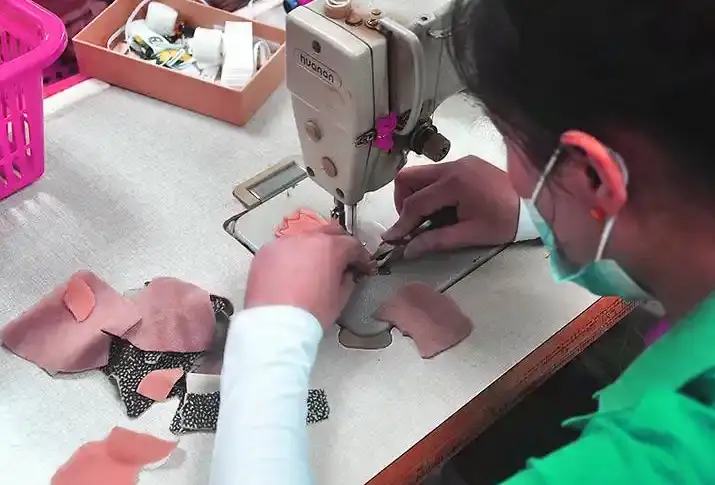
A typical custom plush development and production timeline runs 90 to 140 days from design brief to warehouse delivery. The timeline breaks down into three phases: design and sampling (4–6 weeks), pre-production approval and compliance testing (2–4 weeks), and mass production plus ocean freight (6–8 weeks). Institutions that require air freight can compress the delivery phase, but at a significant cost premium — generally 3–5× the freight cost of sea shipping. Planning seasonal inventory arrivals (particularly for summer peak) requires placing orders by late January or early February at the latest to avoid air freight dependency.
Custom Plush Toy MOQ, Pricing, and Lead Time Reference Guide
| Order Scale | MOQ per Design | Typical FOB Unit Cost | Suggested Retail Price | Indicative Margin | Lead Time (sea freight) |
|---|---|---|---|---|---|
| Entry level | 300 – 500 units | $7.00 – $12.00 | $19.99 – $29.99 | 45 – 55% | 110 – 140 days |
| Mid volume | 500 – 1,000 units | $5.50 – $8.50 | $17.99 – $24.99 | 52 – 60% | 100 – 130 days |
| Standard volume | 1,000 – 3,000 units | $4.00 – $6.50 | $14.99 – $22.99 | 55 – 65% | 90 – 120 days |
| High volume | 3,000+ units | $2.80 – $5.00 | $12.99 – $19.99 | 60 – 70% | 90 – 110 days |
FOB pricing excludes ocean freight, customs duties, and destination handling. Landed cost in the United States from China-based factories typically adds $0.80–$2.50 per unit, depending on shipment consolidation and current freight rates. All margin calculations should use landed cost, not FOB cost, as the denominator.
How Can Museums and Zoos Use Plush Toys to Advance Conservation and Education Missions?
The most strategically sophisticated institutions treat their plush toy programs not merely as retail revenue generators but as mission delivery tools. A well-designed plush program can communicate conservation messaging, drive adoption program participation, support fundraising campaigns, and extend the educational impact of exhibits into the home environment — all while generating the retail margin that funds institutional operations.
Species conservation tie-ins are among the most effective mechanisms. A plush representing an IUCN Red List threatened or endangered species — labeled with the species’ conservation status on the swing tag — converts a purchase into an educational moment. When paired with a symbolic adoption program (in which a portion of each plush sale is directed to a specific conservation project), the product’s narrative deepens significantly. Research on conservation-focused retail consistently shows that purchase intent increases when consumers understand that their spending has a direct connection to a conservation outcome, even when the product itself is identical to a non-conservation-branded alternative.
What Role Do Plush Toys Play in Driving Repeat Visitation and Membership Conversion?
Plush toys serve as tangible anchors for the post-visit emotional connection that drives membership conversion and repeat visitation. Institutions that include a named animal’s backstory card inside the packaging — explaining where the animal lives, what it eats, and what threatens its survival — create a narrative thread that motivates children to return and “check on” their animal. This mechanism is well understood in zoological institution retail and is a standard technique in high-performing gift shop programs. Member-exclusive plush designs or colorways (available only to members or through membership renewal mailings) further leverage the plush category as a membership incentive.
Tip: Commission a size range of at least three price points for each hero species — a small impulse-price version (~15cm, retail $12–$16), a mid-size primary purchase (~25cm, retail $22–$28), and a large premium version (~40cm, retail $38–$48). This price ladder dramatically increases average transaction value by giving gift-buyers a clear upgrade path, and it ensures every visitor budget segment has an accessible entry point.
Conservation and Education Integration Strategies for Institutional Plush Programs
| Strategy | Implementation | Mission Benefit | Commercial Benefit |
|---|---|---|---|
| IUCN status labeling | Conservation status printed on swing tag | Visitor education on species threats | Increases perceived value and purchase intent |
| Symbolic adoption tie-in | % of sales directed to the named conservation project | Direct funding link to fieldwork | Justifies 15–25% retail price premium |
| Named the resident animal | Plush represents a specific named animal with a biography card | Emotional bond to a real animal | Drives repeat purchase (“collect the herd”) |
| Member-exclusive colorways | Special edition plush for members only | Reinforces membership value perception | Membership conversion and renewal driver |
| Exhibit-specific launch | New plush timed to new exhibit or species arrival | Extends exhibit reach into retail | Creates urgency and press moment |
| Educational fact booklet insert | Small species fact booklet inside packaging | Extends learning beyond the visit | Increases packaging perceived value |
How Should Institutions Structure Their Plush Range to Maximize Both Revenue and Mission Impact?
The most effective institutional plush ranges balance flagship species (the animals visitors most associate with the institution), conservation priority species (threatened or endangered animals the institution champions), and accessible gateway species (broadly appealing animals such as penguins, otters, and red pandas that drive impulse purchase even among visitors who did not specifically visit that exhibit). A range of 8–15 SKUs typically provides the depth needed to satisfy both dedicated collectors and casual gift-buyers without creating the inventory management complexity that comes with overly broad assortments.
Frequently Asked Questions
What is the minimum order quantity for custom plush toys designed specifically for a zoo or museum gift shop?
Minimum order quantities for fully custom plush designs — where a new pattern is developed from scratch based on a specific animal species or exhibit character — typically start at 300 to 500 units per design at the entry level. This threshold reflects the fixed costs of pattern development, sample production, tooling for embroidered elements, and compliance testing, which must be amortized across the production run. Some factories accept lower minimums of 100 to 200 units for designs based on existing base patterns with simple customization (different fabric color, embroidered logo), but at significantly higher unit costs.
For institutions placing their first plush order, the most economically sound approach is to identify two or three priority species with the broadest visitor appeal, concentrate the initial budget on those SKUs at a volume that unlocks mid-tier pricing, and expand the range in subsequent seasons once sell-through data is available.
Which safety certifications are required for plush toys sold in zoo and museum gift shops in the United States?
In the United States, plush toys sold to children under 12 are regulated as children’s products under the Consumer Product Safety Improvement Act (CPSIA). The mandatory requirements include compliance with ASTM F963 (the Standard Consumer Safety Specification for Toy Safety), which covers mechanical and physical hazards, flammability, and chemical content. A General Conformity Certificate (GCC) must accompany each product. For products containing surface coatings or accessible substrate materials, compliance with the federal lead content limit (100 ppm total lead by weight) is required.
Third-party testing at a CPSC-recognized laboratory is mandatory — supplier self-declaration alone is not sufficient. California retailers additionally need to address Proposition 65 requirements for any materials containing listed chemicals. Institutions should always request the complete test report package from suppliers before accepting delivery, and should verify that the test reports name the correct certificate holder entity.
How do institutions ensure species accuracy in custom plush designs when working with overseas manufacturers?
Species accuracy in overseas-manufactured plush begins with the quality of the design brief provided to the factory. High-resolution reference photography — ideally from the institution’s own animal collection, showing multiple angles including face, dorsal, and lateral views — is the most important input. Institutions should supplement photography with written specifications covering key accuracy markers: coat color (Pantone or physical fabric swatch references), marking patterns, eye color, characteristic posture, and any anatomically distinctive features such as dewlap size, horn shape, or tail length.
The development process should include, at a minimum, two sample review rounds: an initial concept sample for approval of overall design direction, and a pre-production sample that reflects final materials, embroidery, and fill. Both samples should be physically shipped and reviewed before production approval is granted — digital photographs of samples are insufficient for evaluating color accuracy, fabric texture, or fill firmness.
Can plush toys for zoo and museum gift shops be sold online as well as in-store, and how does this affect sourcing decisions?
Yes, and expanding plush sales to an online channel is one of the most effective ways for institutions to grow gift shop revenue beyond the physical visitor base. Members, past visitors, and wildlife enthusiasts who have never visited represent a meaningful secondary market for well-photographed, compellingly described plush products. Sourcing decisions for online-extended programs differ from pure in-store programs in several ways. Photography and packaging become more important: online buyers cannot touch the product before purchasing, so the quality perception conveyed by product imagery and packaging design directly influences conversion rate.
Size range strategy also shifts: online buyers tend to skew toward larger, higher-value purchases (40cm+ plush), while in-store impulse purchases cluster in the 20–25cm range. Packaging that photographs well and arrives in good condition after shipping — avoiding excessive loose fill and using self-locking boxes rather than polybags — is a meaningful investment for online-focused SKUs.
How should a zoo or museum evaluate whether a plush design is performing well enough to reorder, and when should it be retired?
The primary performance metric for institutional plush is sell-through rate — the percentage of inventory received that is sold within a defined period (typically 90 days for seasonal stock, 180 days for evergreen lines). A healthy sell-through rate for zoo and museum plush in the first 90 days of availability is 60–75% of the opening inventory. SKUs that exceed 80% sell-through in the first 60 days should be reordered immediately, as stockouts in the peak season are far more costly than carrying a modest overstock.
SKUs that reach only 30–40% sell-through after 180 days signal a merchandising problem (placement, pricing, or display) rather than necessarily a design problem — repositioning the product to a higher-visibility location or slightly adjusting the price point often reverses underperformance before committing to a retirement decision. True retirement is warranted when a SKU has been repositioned, price-corrected, and promoted, and still achieves less than 50% sell-through over a full 12-month period. At that point, any remaining inventory should be cleared through markdown or bundling rather than carried into the following season.