Skip to content
Promotional Plush Toys for Marketing are a powerful way for brands to increase visibility, engage customers, and create lasting emotional connections through custom soft toy giveaways. How custom stuffed animals and branded plush merchandise drive brand recall, customer loyalty, and multi-channel marketing campaigns
Promotional plush toys occupy a unique position in the branded merchandise landscape. Unlike pens, tote bags, or USB drives — items that serve a utility function and are often discarded once that function is no longer needed — custom stuffed animals and plush characters generate an emotional connection that keeps them in use, on display, and in sight for months or years after they are received.
For brands targeting consumers with young children, for nonprofits building donor relationships, for sports franchises developing fan loyalty, and for event marketers seeking giveaways with lasting impressions, promotional plush toys deliver a return on investment that few other marketing products can match.
This guide covers everything marketing managers, brand strategists, and procurement teams need to know about developing a custom plush toy campaign: design considerations, material and safety standards, minimum order quantities, lead times, budget structures, and how to integrate plush merchandise into a broader omnichannel marketing strategy.
Why do promotional plush toys work as a marketing tool?
The effectiveness of plush toys as promotional merchandise is rooted in behavioral psychology. Physical objects that trigger positive emotional responses — the softness of plush fabric, the familiar form of an animal or character — activate the brain’s reward circuitry in ways that digital touchpoints cannot replicate. Psychologists refer to this as the “endowment effect”: people assign higher value to objects they can touch and hold than to functionally equivalent digital assets, and they are more likely to retain and display physical items that carry positive emotional associations.
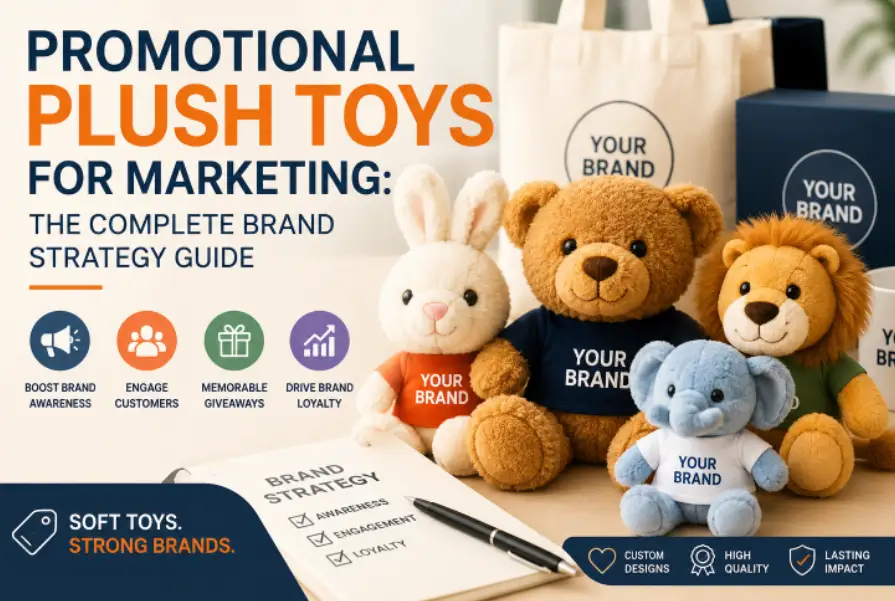
For marketing purposes, this translates directly into brand recall. Every time a child plays with a branded plush mascot or a collector displays a limited-edition brand character on a shelf, the brand logo, color scheme, and character design receive an unpaid impression. Unlike a digital ad impression that lasts a fraction of a second, a plush toy impression may last minutes, hours, or years — and it occurs in the home environment where purchasing decisions are made, not in a scrolling social media feed where attention is divided.
Research on promotional product effectiveness consistently shows that recipients of quality branded merchandise report higher brand favorability and purchase intent than recipients of no promotional product. Within the promotional products category, soft goods, including plush and stuffed animals, tend to score highest on emotional engagement metrics, particularly among households with children aged two to twelve.
Table 1 — Promotional Plush Toys vs. Other Branded Merchandise: Key Metrics
| Merchandise Category | Avg. Retention Period | Emotional Engagement | Brand Impression Frequency | Best Audience Fit |
|---|---|---|---|---|
| Custom plush/stuffed animals | 2–5+ years | Very high | Daily (in-home display or play) | Families, collectors, fans |
| Branded apparel (T-shirt, hat) | 1–3 years | Medium–high | Weekly (when worn) | General consumer, lifestyle brands |
| Writing instruments/pens | 3–6 months | Low | Daily (office/school use) | B2B, trade shows |
| Tote bags | 6–18 months | Low–medium | Weekly (commute, errands) | Eco-conscious consumers, events |
| USB drives/tech accessories | 1–2 years | Low | Occasional (when needed) | Tech audiences, B2B |
| Drinkware (mugs, bottles) | 1–3 years | Medium | Daily (home or office) | Broad consumer base |
What types of promotional plush toys are most commonly used in brand campaigns?
The category of promotional plush covers a wide range of product formats, from simple logoed teddy bears to fully custom-sculpted mascot characters. Choosing the right product type depends on the campaign objective, the target audience, the distribution method, and the budget available per unit.
Custom mascot plush toys
A custom mascot plush is a three-dimensional stuffed representation of a brand’s official mascot character. It requires a new pattern to be developed from scratch — usually starting from two-dimensional brand artwork — and involves a prototype sampling process before production begins. Mascot plush toys are the highest-investment option within the promotional plush category but also deliver the strongest brand identity reinforcement, because the toy is unique to the brand and cannot be confused with any other product. They are frequently used as sports team merchandise, fast food kids’ meal premiums, and charity fundraising collectibles.
Branded standard plush with logo embroidery or printing
Off-the-shelf plush animals with added branding — typically an embroidered logo on the chest or foot, a custom sewn-in label, or a printed bandana or T-shirt accessory — offer a significantly lower per-unit cost and shorter lead time than fully custom mascots. Stock plush forms (bears, dogs, elephants, bunnies) are available from established plush manufacturers in standard size ranges, and branding is applied in a secondary step. This format is well-suited to trade show giveaways, employee recognition gifts, hospital programs, and school fundraising campaigns where the budget per unit is constrained and the timeline is tight.
Plush keychains and mini plush
Mini plush toys in the 4–6 inch range and plush keychains serve a different distribution role than full-size stuffed animals. Their small size and low unit cost make them practical for mass-distribution campaigns: conference lanyards, retail checkout impulse purchases, magazine subscription premiums, and loyalty program reward tiers. Despite their small scale, they carry brand markings effectively through embroidered logos and custom hangtags, and their portability means they move outside the home environment — appearing on backpacks, keys, and desk accessories — generating public brand impressions.
Plush with interactive features
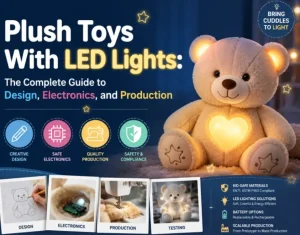
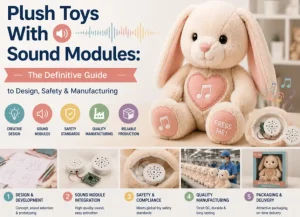
Promotional plush with embedded sound modules, LED lighting, heat-sensitive color-changing fabric, or QR code integration on the hangtag represents the premium tier of branded plush merchandise. These products are designed for campaigns where brand experience differentiation is the primary goal: product launches, brand anniversary events, premium retail collaborations, and high-value loyalty rewards. The interactive element gives recipients a reason to share the product on social media, extending the campaign’s organic reach beyond the initial distribution event.
Tip — Build your plush format decision around distribution method first: If the plush will be mailed individually to customers or subscribers, keep finished dimensions under 25 cm and weight under 200 g to avoid significant shipping cost increases. If it will be distributed at a physical event, size and weight are less constraining, but hangtag and packaging design become important because recipients carry the toy away in branded packaging that serves as an additional impression vehicle.
How are custom promotional plush toys designed and manufactured?
Understanding the production workflow for custom promotional plush is essential for accurate planning. The process from initial brief to finished goods in a warehouse involves multiple sequential stages, each with its own timeline and approval requirements.
Artwork and character development
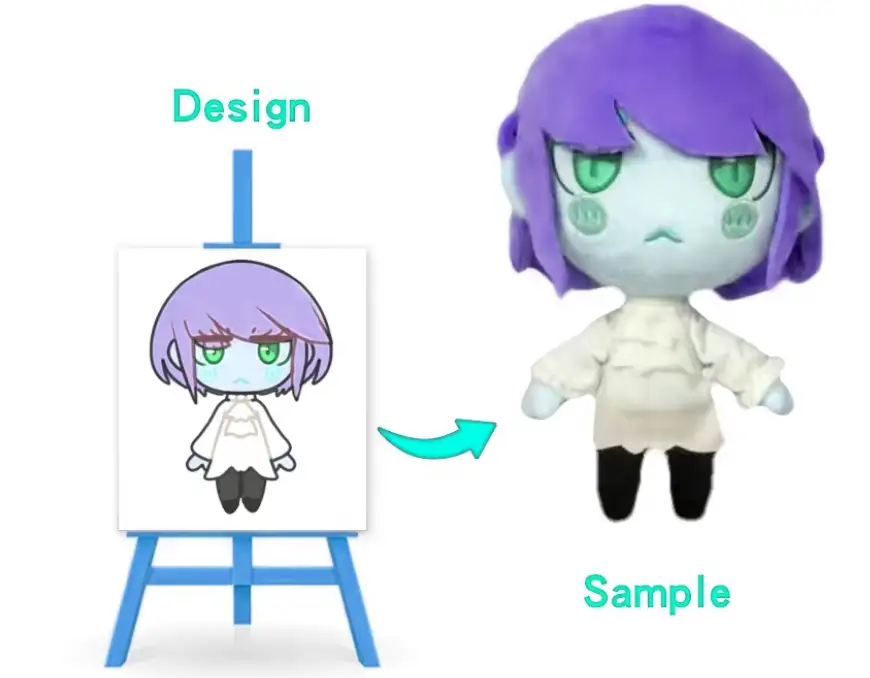
The design process begins with two-dimensional character artwork — typically supplied by the brand’s creative team or developed by the plush manufacturer’s in-house design studio. For existing brand mascots, the manufacturer will work from existing brand guidelines to create a construction diagram that translates the flat character into a three-dimensional plush form, making engineering decisions about panel shapes, seam placement, and feature construction (eyes, nose, limb attachment) that preserve the character’s recognizable proportions in three dimensions. For new character concepts, an initial sketch approval round is completed before the 3D construction diagram is developed.
Prototype and pre-production sample
A physical prototype — typically called a pre-production sample (PPS) or a counter sample — is produced by a skilled sample maker using the construction diagram and specified materials. The first prototype is rarely production-perfect; one to three revision rounds are normal. Common prototype revisions involve facial feature placement (eye spacing, nose size), fabric color matching against a Pantone reference, limb proportions, and fill density. Written approval of the final pre-production sample is the trigger for bulk production and should include sign-off on dimensions, materials, colors, embroidery quality, and safety labels.
Bulk production and quality control
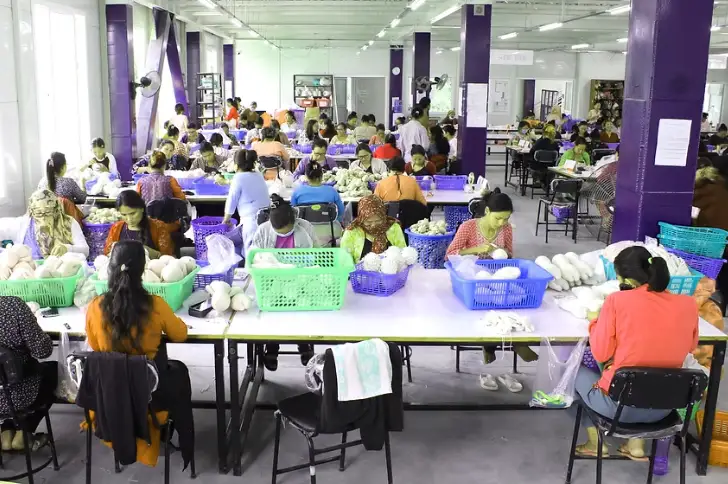
Bulk production begins after pre-production sample approval and runs through fabric cutting, sewing, stuffing, closing, feature attachment, and final inspection. An AQL (Acceptable Quality Level) inspection — typically AQL 2.5 for general merchandise or AQL 1.0 for children’s toys — is conducted either by the factory’s internal QC team or by a third-party inspection agency before shipment. For promotional plush intended for children, safety testing is a mandatory parallel process that must be completed before goods ship (see the safety and compliance section below).
Custom Promotional Plush Production Timeline by Phase
| Phase | Key Activities | Typical Duration | Client Action Required |
|---|---|---|---|
| Design and artwork | Character brief, construction diagram | 3–7 business days | Approve the construction diagram |
| First prototype | Sample maker produces initial plush | 10–15 business days | Review and provide revision notes |
| Prototype revisions | 1–3 revision rounds | 5–10 business days per round | Written approval of the final sample |
| Bulk production | Cutting, sewing, stuffing, and inspection | 30–45 business days | Monitor production milestones |
| Safety testing | Third-party lab testing (parallel to production) | 10–20 business days | Receive and file test reports |
| Shipping (sea freight) | Port-to-port plus customs clearance | 20–35 days | Arrange import customs documentation |
The total timeline from initial brief to goods-in-warehouse for a fully custom promotional plush order is typically 90 to 140 days when sea freight is used. Air freight can reduce the shipping phase to five to seven days at a significantly higher per-unit transport cost. Marketing teams should factor this lead time into campaign planning and place orders at a minimum of four months before the required in-hand date for complex custom characters, or two to three months for simpler branded stock plush orders.
What safety standards apply to promotional plush toys?
Safety compliance is one of the most important and frequently overlooked aspects of promotional plush procurement. When a plush toy is distributed to end users — particularly at events or through retail channels where children may receive it — the product is subject to mandatory safety regulations that carry legal liability for the brand and the distributor, not only the manufacturer.
CPSIA (United States)
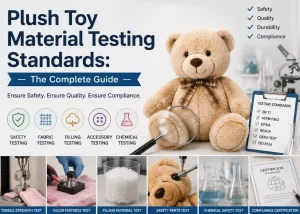
The Consumer Product Safety Improvement Act requires that all children’s products sold or distributed in the United States and intended for use by children under twelve years of age comply with lead content limits (100 ppm total lead in substrate materials), phthalate limits in soft PVC components, flammability requirements, and mechanical and physical safety tests under ASTM F963. A General Conformity Certificate (GCC) or Children’s Product Certificate (CPC) must be issued based on third-party testing by a CPSC-accepted laboratory before distribution.
EN 71 (European Union)
EN 71 is the European toy safety standard, comprising multiple parts covering mechanical and physical properties (Part 1), flammability (Part 2), and chemical properties, including migration of heavy metals from surface coatings and fabric dyes (Part 3). Plush toys sold or distributed in the EU, UK (where UKCA marking now applies post-Brexit), and many other markets that adopt EU-equivalent standards must carry CE marking backed by EN 71 test reports.
Age grading and labeling
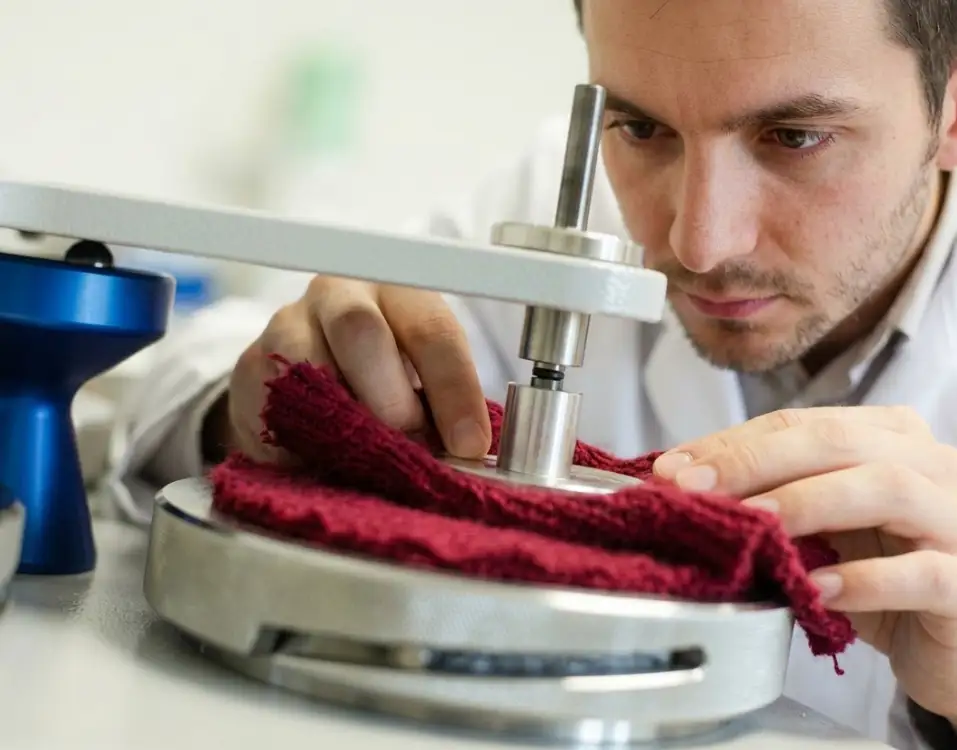
Plush toys intended for children under three years of age face the most stringent requirements, particularly regarding small parts. Eyes, noses, buttons, and decorative elements must pass pull-force tests to ensure they cannot be detached and swallowed. Many promotional plush programs avoid this constraint by age-grading the toy for children three years and above — clearly indicated on the sewn-in label and hangtag — which allows the use of standard safety eyes and reduces testing scope.
Tip — Start safety testing at the prototype stage, not after bulk production: Third-party safety testing on production samples takes two to four weeks. If a test failure is discovered post-production — for example, a fabric dye that exceeds EN 71 Part 3 heavy metal migration limits — the entire batch may be rejected. Submitting prototype samples for preliminary testing while bulk production is ongoing allows time to identify and correct material issues before the full production run is completed.
Key Safety Standards for Promotional Plush Toys by Market
| Market | Primary Standard | Key Requirements | Certification / Marking | Age Scope |
|---|---|---|---|---|
| United States | CPSIA + ASTM F963 | Lead, phthalates, mechanical safety, flammability | Children’s Product Certificate (CPC) | Under 12 years |
| European Union | EN 71 Parts 1–3 | Mechanical, flammability, and chemical migration | CE marking | Under 14 years |
| United Kingdom | EN 71 (UKCA) | Same as EU EN 71 | UKCA marking | Under 14 years |
| Australia / NZ | AS/NZS 8124 | Mechanical, flammability, chemical | Mandatory compliance declaration | Under 14 years |
| Canada | CCPSA + SOR/2011-17 | Lead, phthalates, flammability | Importer compliance declaration | Under 14 years |
| Japan | ST Mark (voluntary) + PSC | Mechanical safety, chemical safety | ST Mark (voluntary certification) | Under 14 years |
How do you plan a promotional plush toy campaign effectively?
A well-executed promotional plush campaign integrates the product into a broader marketing strategy rather than treating it as a standalone giveaway. The most effective campaigns define a clear campaign objective, identify the right distribution channel and target audience, and design the plush product to reinforce the campaign’s core message.
Defining the campaign objective
Promotional plush campaigns typically serve one of four objectives: brand awareness building (introducing or reinforcing a brand character across a new audience segment), customer acquisition (using plush as an incentive for trial purchase, sign-up, or event attendance), customer retention (rewarding loyalty program members or long-term customers with exclusive plush collectibles), or earned media generation (creating a product compelling enough to be photographed, shared, and featured in organic social content). Each objective implies a different product specification, distribution mechanism, and measurement framework.
Setting unit budget and minimum order quantity
Custom promotional plush is subject to economies of scale that are more pronounced than most other promotional merchandise categories. The tooling, pattern development, and sampling costs are largely fixed regardless of order quantity, which means the per-unit cost falls significantly as order quantity increases. Standard minimum order quantities (MOQs) for fully custom plush range from 500 to 1,000 units for simple designs at 20–30 cm; complex multi-component characters may require 1,000 to 2,000 units to achieve economically viable per-unit pricing. For branded stock plush with logo embroidery only, MOQs can be as low as 100–200 units.
Distribution channel strategy
Distribution determines many of the product’s physical specifications. Direct mail programs require compact dimensions and lightweight construction; retail point-of-sale programs require shelf-ready packaging with hang holes or display-ready boxes; event giveaway programs require hangtag design that communicates the campaign message without requiring staff explanation; e-commerce fulfillment programs require polybag or inner box packaging that protects the plush during individual parcel shipping. Planning the distribution channel before finalizing the product specification prevents costly redesigns after sampling is complete.
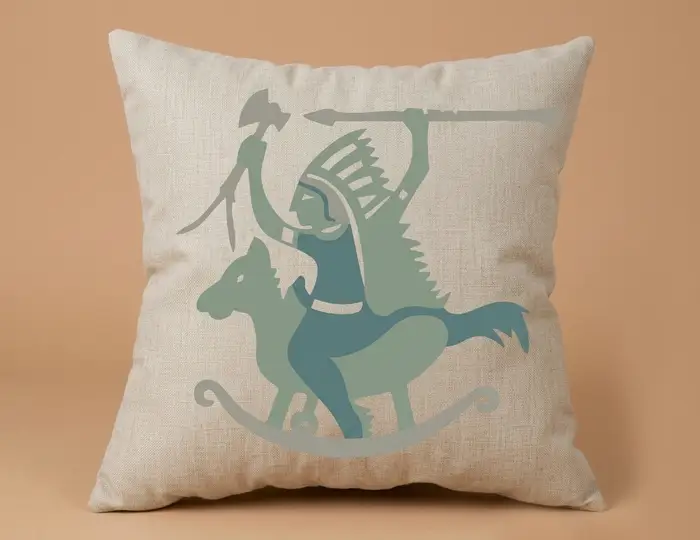
Tip — Design the hangtag as a second marketing asset: The hangtag attached to a promotional plush toy is a small but high-attention marketing surface. Recipients typically read hangtags before engaging with the product, making it valuable real estate for campaign messaging, QR codes linking to landing pages, contest entry mechanisms, social media hashtag prompts, or product story content. A well-designed hangtag can convert a passive plush recipient into an active campaign participant.
What materials are used in promotional plush toys, and how do they affect brand perception?
Material selection communicates brand values at the tactile level — the feel of the fabric against a recipient’s hand is often the first and most lasting impression a promotional plush makes. Premium materials signal investment and care; low-quality materials signal the opposite, potentially damaging brand perception more than distributing no gift at all.
Exterior fabrics
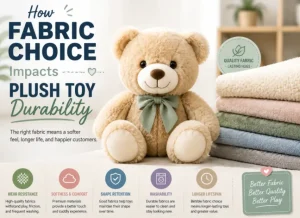
The most widely used exterior fabric for promotional plush is minky plush, a polyester knit with a short, dense pile (typically 2–3 mm) that is soft, colorfast, and durable across a wide range of production weights. For premium promotional plush, longer-pile faux fur (8–20 mm pile height) gives a more luxurious, realistic animal appearance. Cotton and organic cotton exteriors are chosen by brands with sustainability commitments; they offer a distinctly different texture profile — slightly coarser than synthetic minky — and are often paired with GOTS (Global Organic Textile Standard) certification documentation for B-corp and sustainability-positioned brands.
Fill materials
Standard promotional plush uses virgin polyester fiber fill, which is hypoallergenic, lightweight, washable, and consistent in loft. Recycled polyester fill — manufactured from post-consumer PET bottles — is an increasingly popular alternative for brands communicating environmental responsibility; it carries the same performance characteristics as virgin fill and can be supported with GRS (Global Recycled Standard) certification. Weighted fills (plastic pellets or glass beads in the base or limbs) are occasionally used for premium collectible plush to add tactile substance and stability for display posing.
Eyes, noses, and feature components
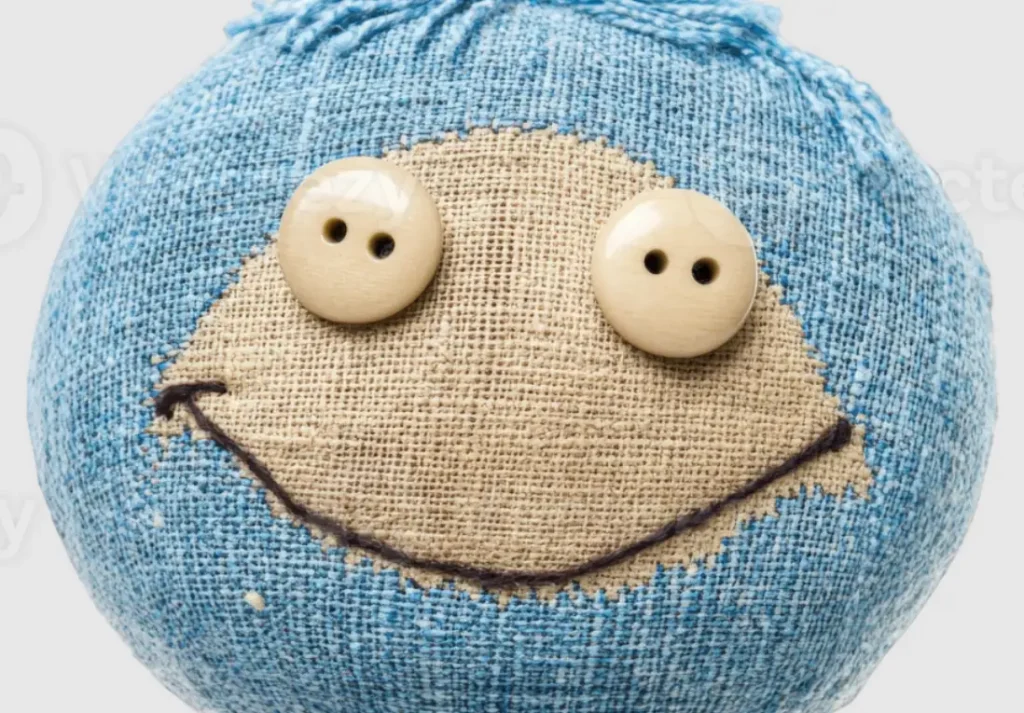
Safety eyes (plastic or glass eyes with washers that lock onto the fabric from inside) are the standard for most promotional plush. For products distributed to children under three, embroidered eyes — stitched directly onto the fabric — are required because they cannot be detached. For premium adult collectibles, glass-blown or hand-painted resin eyes give a significantly higher-quality appearance. Nose features follow similar logic: molded plastic noses for standard production, embroidered noses for infant-safe products, and hand-stitched leather or suede noses for artisan-grade premium plush.
Plush Material Options and Brand Positioning Alignment
| Material Category | Fabric / Fill Type | Unit Cost Impact | Brand Positioning Fit | Key Certifications |
|---|---|---|---|---|
| Standard | Polyester minky + virgin fiber fill | Baseline | Mass market, value-conscious giveaways | OEKO-TEX Standard 100 |
| Premium softness | Long-pile faux fur + premium fill | +20–40% | Luxury brands, premium retail | OEKO-TEX Standard 100 |
| Sustainable | Organic cotton + recycled fill | +30–60% | Eco brands, B-corp, sustainability campaigns | GOTS, GRS |
| Recycled synthetic | rPET minky + recycled fiber fill | +10–25% | Environmental campaigns, CSR programs | GRS, OEKO-TEX |
| Infant-safe | Cotton velour + hypoallergenic fill | +15–30% | Baby brands, healthcare, pediatric programs | GOTS, EN 71 Part 1 & 2 |
How do you measure the ROI of a promotional plush toy campaign?
Measuring return on investment for promotional merchandise requires a different framework than digital advertising ROI, because the primary value mechanism — repeated impression delivery over an extended product lifespan — does not generate click-through data or conversion pixel events. However, several measurement approaches can provide meaningful campaign performance data.
Cost per impression modeling
The most widely used framework for evaluating promotional product ROI is cost per impression (CPI), estimated by dividing the total campaign cost (product unit cost plus shipping, design, and distribution costs) by the estimated total impressions generated over the product’s retention period. A plush toy retained for two years in a household with three family members generates an estimated impression frequency significantly higher than a disposable giveaway retained for a week. Industry research suggests promotional products generate an average of 344 impressions over their lifespan, placing quality promotional merchandise among the lowest-CPI media in the marketing mix.
Attribution through campaign mechanics
QR codes on hangtags or embroidered patches, unique promo codes printed on packaging inserts, and custom landing pages linked to specific distribution events all enable direct attribution tracking for promotional plush campaigns. Scanning a QR code on a plush hangtag can trigger a registration flow, a contest entry, a product trial offer, or a social share prompt — each of which provides a measurable data point tied to the original plush distribution event. Social listening tools can track organic mentions and image posts featuring the plush toy or its campaign hashtag, providing earned media valuation data.
Brand recall surveys
For large-scale promotional plush programs, post-campaign brand recall surveys conducted among both recipients and non-recipients provide statistically valid data on brand awareness lift attributable to the campaign. Surveys conducted three to six months after distribution — when the novelty effect has normalized — are more indicative of durable brand recall impact than surveys conducted immediately after a giveaway event.
Tip — Create scarcity to amplify perceived value: Promotional plush toys released as limited editions — numbered collectibles, seasonal variants, or event-exclusive colorways — generate significantly higher social media sharing rates and stronger emotional attachment than unlimited-distribution items. Even a modest production ceiling, such as 500 units numbered on the sewn-in label, creates a collectible dynamic that motivates recipients to photograph and share the product, extending the campaign’s organic reach without additional media spend.
Promotional Plush Campaign ROI Measurement Framework
| Measurement Method | What It Captures | Tools / Mechanism | Best Campaign Type |
|---|---|---|---|
| Cost per impression (CPI) | Media efficiency vs. other channels | Retention survey + industry benchmark | All campaigns (benchmark baseline) |
| QR code scan tracking | Engagement rate, attributed actions | UTM-tagged landing page, QR analytics | Event giveaways, direct mail |
| Promo code redemption | Conversion rate from plush to purchase | E-commerce platform coupon tracking | Retail trial, loyalty rewards |
| Social listening | Earned media value, sentiment | Sprout Social, Brandwatch, manual hashtag | Limited edition, fan campaigns |
| Brand recall survey | Awareness lift, brand favorability | Panel survey (recipients vs. control) | Large-scale awareness campaigns |
| Repeat purchase correlation | Loyalty program uplift | CRM purchase history analysis | Customer retention programs |
Frequently asked questions about promotional plush toys for marketing
1. What is the minimum order quantity for custom promotional plush toys?
Minimum order quantities for custom promotional plush depend significantly on the complexity of the design and the type of customization involved. Fully custom mascot plush toys — requiring new pattern development and prototype sampling — typically have a minimum order quantity of 500 to 1,000 units for simple single-panel characters in the 20–30 cm size range. More complex characters with multiple fabric types, embroidered details, accessory clothing, or interactive features generally require 1,000 to 2,000 units minimum to absorb the fixed tooling and sampling costs economically.
Branded stock plush programs — where a standard plush animal form receives logo embroidery, a custom sewn-in label, and a branded hangtag — can be produced at minimum quantities as low as 100 to 200 units, making them accessible to smaller marketing budgets and pilot campaign runs. For budget planning purposes, requesting quotes at multiple order tiers (500, 1,000, 2,500, and 5,000 units) will reveal the per-unit cost curve and help identify the quantity at which the cost per piece becomes commercially efficient for the campaign objective.
2. How long does it take to produce a custom promotional plush toy order?
The full production timeline for a custom promotional plush order — from initial design brief to goods delivered to a domestic warehouse — typically ranges from 90 to 140 calendar days when sea freight is used. This breaks down roughly as follows: artwork and construction diagram development takes one to two weeks; first prototype production takes two to three weeks; prototype revision rounds (typically one to three rounds) add one to two weeks per round; bulk production runs thirty to forty-five business days after final sample approval; safety testing (conducted in parallel with bulk production) takes two to four weeks; and sea freight from Asia to North America or Europe takes twenty to thirty-five days including customs clearance.
Air freight can reduce the shipping phase to five to seven days but adds substantial per-kilogram transport cost. For time-sensitive campaigns, it is possible to compress some phases — for example, by approving construction diagrams digitally before physical samples are produced — but a realistic minimum timeline for a new custom character from brief to warehouse is fourteen weeks. Marketing teams should add a buffer of two to four weeks for unexpected revision rounds or testing delays when anchoring campaign in-hand dates.
3. Do promotional plush toys need to meet toy safety standards if they are given to adults?
In most regulatory markets, mandatory toy safety standards apply to products that are “intended for use in play by children under a specified age” — the age threshold varies by regulation (under 12 in the US under CPSIA, under 14 in the EU under EN 71). If a promotional plush toy is genuinely intended for adults only — for example, a collectible mascot giveaway at a professional conference or a corporate loyalty reward — and is labeled accordingly with a clear “not suitable for children under 3 years” or “adult collectible” designation, it may fall outside the mandatory scope of toy safety regulations in some markets.
However, this determination depends on the product’s “intended audience” as interpreted by regulators, and courts in multiple jurisdictions have held that products reasonably likely to be transferred to children — for example, a giveaway collected by a parent at a trade show who brings it home to a child — may be subject to children’s product standards regardless of the stated intended recipient. The safest and most defensible approach for any promotional plush intended for broad consumer distribution is to comply with relevant toy safety standards regardless of the intended age of the primary recipient, and to obtain and retain the relevant test reports and certificates. This eliminates regulatory risk and allows the product to be distributed freely without age restrictions.
4. How can promotional plush toys be integrated into a social media marketing strategy?
Promotional plush toys are naturally photogenic products that align well with social media content formats, particularly Instagram, TikTok, and Pinterest. The most effective social media integration strategies build the shareability of the plush into the product design from the outset rather than treating social amplification as an afterthought. Design elements that drive social sharing include distinctive character personality (plush characters with expressive faces and recognizable brand colors are more likely to be photographed than generic shapes), limited edition status (numbered collectibles or event-exclusive colorways motivate recipients to document their acquisition), interactive product features (sound, light, or color-change elements that can be demonstrated in short-form video), and staged photography potential (plush characters designed at a scale that allows natural-environment photography in settings like desks, bookshelves, or outdoor scenes).
Campaign mechanics that integrate the product directly with social channels include QR codes on hangtags linking to UGC (user-generated content) submission pages, hashtag prompts on packaging requesting that recipients share photos with the brand tag, geotagged check-in requirements at event distribution points, and ambassador programs where initial recipients are selected for high follower counts and strong engagement in the brand’s target demographic. Tracking campaign hashtags through social listening platforms allows the brand to calculate earned media value from organic shares — a meaningful ROI metric that is often significantly larger than the cost of the product itself for well-executed plush campaigns.
5. What is the difference between a pre-production sample and a counter sample in plush manufacturing?
A pre-production sample (PPS) is a plush toy produced by the manufacturing facility using production-equivalent materials, patterns, and construction techniques to confirm that the product meets all design and quality specifications before bulk production begins. It is the primary approval document in the plush manufacturing process and serves as the physical standard against which production units are inspected during and after the manufacturing run. A counter sample — sometimes called a “golden sample” or “reference sample” — is a retained copy of the approved pre-production sample that is kept by the brand or buyer as the definitive quality benchmark throughout the production relationship.
While the PPS is sent to the buyer for approval and may be handled, measured, and marked up during the review process, the counter sample is preserved in pristine condition and used by the factory’s quality control team and the buyer’s inspection agency when conducting AQL inspections on bulk production lots. In practice, two identical samples are produced simultaneously at the PPS stage so that one can be submitted for buyer approval and one retained as the counter sample, ensuring both parties reference an identical physical standard throughout the production relationship.
6. What sustainable options are available for eco-conscious promotional plush campaigns?
Sustainability in promotional plush manufacturing has advanced considerably in recent years, providing brands with credible options across fabric, fill, and packaging. For exterior fabrics, organic cotton (certified under GOTS — Global Organic Textile Standard) eliminates synthetic pesticide and fertilizer use in fiber production and restricts the use of harmful dyes and chemicals in fabric processing. Recycled polyester fabric (rPET minky) is manufactured from post-consumer PET plastic bottles and carries the Global Recycled Standard (GRS) certification when the supply chain is verified, reducing dependence on virgin petrochemicals while maintaining the performance characteristics of standard plush fabric. For fill material, recycled polyester fiber fill certified under GRS provides the same loft, washability, and hypoallergenic properties as virgin fiber fill at a modest cost premium.
Packaging sustainability options include FSC-certified recycled paperboard for boxes and hangtags, soy-based inks for printing, and elimination of individual polybags in favor of compostable alternatives. Brands should request copies of relevant certification documents — GOTS certificates, GRS certificates, OEKO-TEX Standard 100 reports — from manufacturers rather than accepting verbal sustainability claims, as third-party certification is the only defensible basis for communicating eco-credentials to consumers. For B-corp and ESG-reporting organizations, supply chain audit documentation may also be required as part of the procurement process.
7. How should promotional plush toys be packaged for different distribution scenarios?
Packaging strategy for promotional plush varies significantly depending on the distribution channel and campaign context. For trade show and event distribution, a simple printed polybag with hangtag is the most practical format: it protects the plush during transport and handling, allows the product’s shape to be visible to potential recipients before they receive it (increasing perceived desirability at the point of distribution), and is lightweight enough not to add significantly to event freight costs. For direct mail campaigns, a rigid custom-printed box provides the unboxing experience that reinforces premium brand perception — particularly important for loyalty reward and VIP customer programs — while protecting the plush during individual parcel handling; dimensions should be optimized for standard postal rates to control per-unit shipping cost.
For retail shelf and point-of-sale programs, a hang-hole header card or a full display box with front window allows the product to be merchandised on hooks or shelves and communicates campaign information at the purchase decision point. For premium gifting programs, a rigid gift box with tissue paper, ribbon closure, and an interior printed message card elevates the presentation to the level of a considered gift rather than a promotional product, which is appropriate for high-value customer retention and corporate gifting applications. In all cases, the outer packaging should carry brand colors, the campaign logo, any required safety labeling (choking hazard warnings, age grading), and the country of origin and importer information required by the destination market’s consumer product labeling regulations.