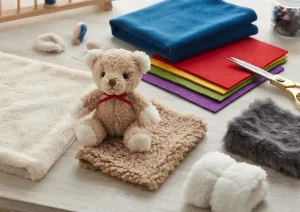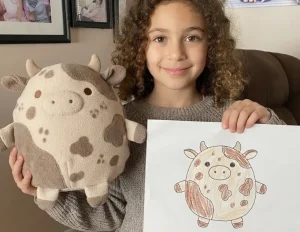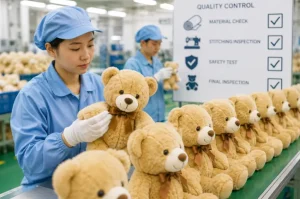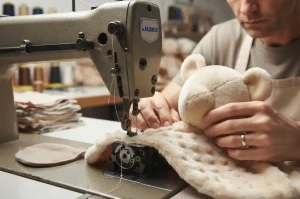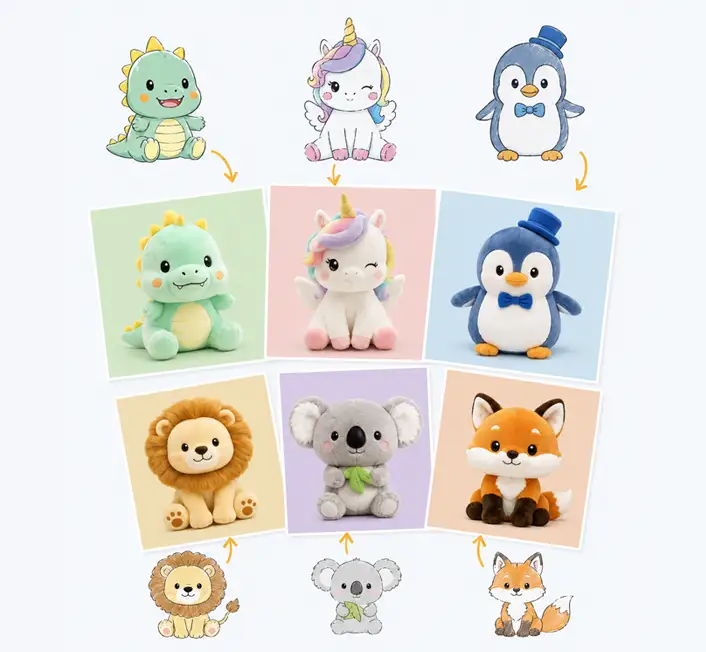
Plush toy manufacturing is the industrial process of designing, cutting, sewing, filling, and finishing fabric-covered stuffed products at scale — from concept sketches to retail-ready goods.
If you are sourcing plush toys for the first time, this guide covers everything you need to understand before placing your first order: what the process involves, what materials are used, how quality is controlled, what compliance standards apply, and what every new buyer consistently underestimates when they start out.
What Is Plush Toy Manufacturing?
Plush toy manufacturing is the end-to-end industrial process that transforms raw fabric, filling, and accessories into finished stuffed toy products — whether those products are branded retail merchandise, custom IP characters, promotional gifts, private-label collections, or children’s toys for regulated consumer markets.
The term “plush” refers to the soft pile fabric — typically a short, dense woven textile with upright cut fibers — that gives stuffed toys their distinctive texture. In industry usage, “plush toy” and “stuffed animal” are often used interchangeably, though the plush category also includes non-animal forms: characters, food shapes, vehicles, plants, fantasy creatures, and weighted sensory products.
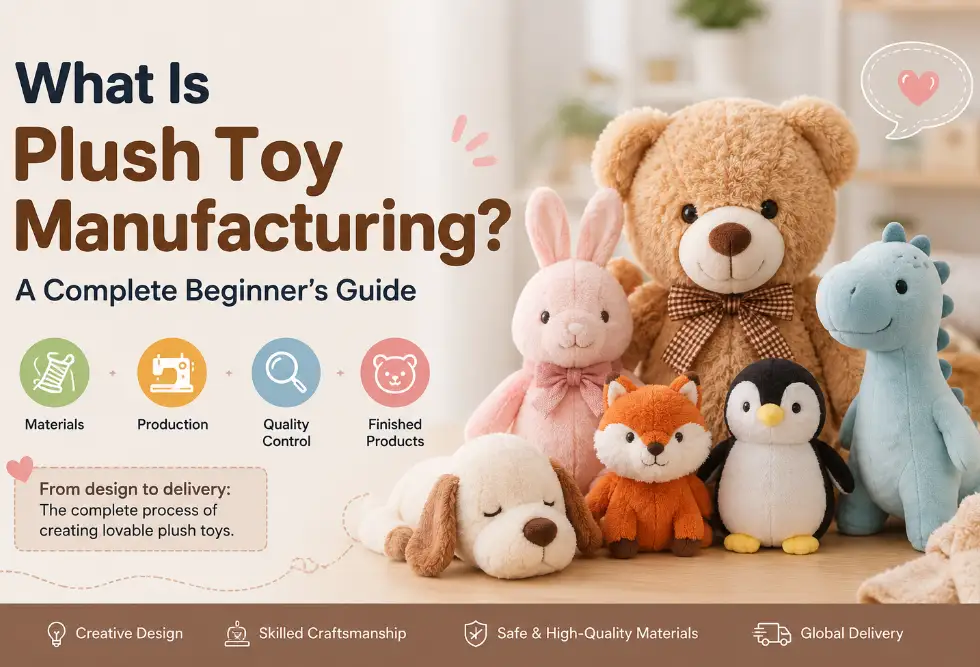
Manufacturing plush toys at a commercial scale is fundamentally different from handmade or artisan production. It involves pattern engineering, material sourcing from certified suppliers, cut-and-sew production lines, filling operations, assembly of accessories, embroidery or printing of surface details, and multi-stage quality inspection — all coordinated across a production timeline that typically spans several weeks from order confirmation to shipment.
Plush toy product categories and their typical manufacturing characteristics
| Product Category | Typical Construction | Key Buyer Segment | Common Compliance Requirement |
|---|---|---|---|
| Children’s stuffed animals | Velboa or minky shell, PP cotton fill, safety eyes | Toy brands, retailers, gift shops | ASTM F963, EN71, CPSIA |
| Branded IP characters | Custom fabric colors, embroidered features, and hang tags | Entertainment licensors, gaming brands | Brand standards + toy safety |
| Promotional plush | Simplified construction, logo embroidery, or patch | Corporate gifting, events, and marketing | Often EN71-3 or basic REACH |
| Weighted sensory toys | Double-shell, pellet or bead fill, reinforced seams | Wellness brands, therapeutic product sellers | Weight containment testing |
| Collectible blind box plush | Premium materials, consistent character likeness | Pop culture brands, art toy retailers | Toy safety + IP compliance |
| Pet plush toys | Heavy-duty stitching, non-toxic fill, reinforced seams | Pet brands, e-commerce sellers | ASTM F963 Section 4 variants |
Understanding which product category a buyer’s project falls into is the foundation of every manufacturing decision that follows — because category determines material requirements, compliance obligations, construction standards, and the kind of supplier best suited to the project.
Tip — Define your product category before sourcing. Buyers who approach manufacturers with a clear category — “children’s stuffed animal for US retail” versus “adult collectible character” — receive more accurate quotes, more relevant material recommendations, and faster sampling timelines. Vague briefs produce generic responses. Specific briefs produce specific solutions.
How Does the Plush Toy Manufacturing Process Work Step by Step?
Plush toy manufacturing follows a sequential production workflow in which each stage must be completed correctly before the next can begin. Errors introduced early — in pattern development or material selection — compound through the production chain and are significantly more expensive to resolve after bulk production has started than before.
Most buyers interact with the sampling stage most actively, because it is the moment when the design on paper becomes a physical product. But understanding all stages of the process — not just sampling — is what allows buyers to set realistic timelines, identify where delays most commonly originate, and communicate productively with their manufacturing partner throughout production.
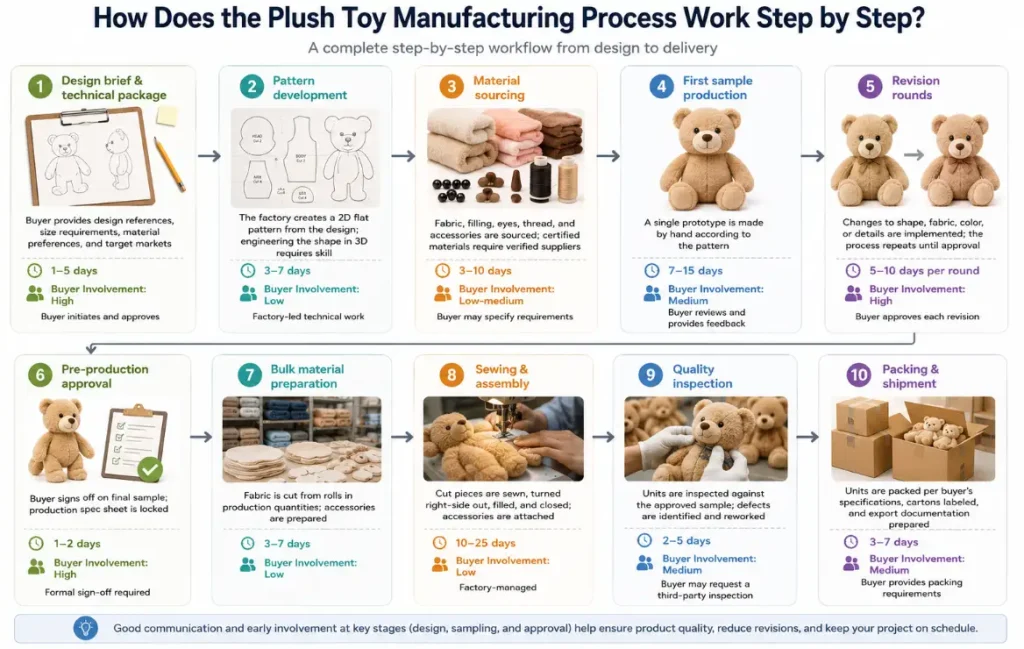
Plush toy manufacturing process stages and typical timelines
| Stage | What Happens | Typical Duration | Buyer Involvement |
|---|---|---|---|
| 1. Design brief & technical package | Buyer provides design references, size requirements, material preferences, and target markets | 1–5 days | High — buyer initiates and approves |
| 2. Pattern development | The factory creates a 2D flat pattern from the design; engineering the shape in 3D requires skill | 3–7 days | Low — factory-led technical work |
| 3. Material sourcing | Fabric, filling, eyes, thread, and accessories are sourced; certified materials require verified suppliers | 3–10 days | Low-medium — buyer may specify requirements |
| 4. First sample production | A single prototype is made by hand according to the pattern | 7–15 days | Medium — buyer reviews and provides feedback |
| 5. Revision rounds | Changes to shape, fabric, color, or details are implemented; the process repeats until approval | 5–10 days per round | High — buyer approves each revision |
| 6. Pre-production approval | Buyer signs off on final sample; production spec sheet is locked | 1–2 days | High — formal sign-off required |
| 7. Bulk material preparation | Fabric is cut from rolls in production quantities; accessories are prepared | 3–7 days | Low |
| 8. Sewing & assembly | Cut pieces are sewn, turned right-side out, filled, and closed; accessories are attached | 10–25 days | Low — factory-managed |
| 9. Quality inspection | Units are inspected against the approved sample; defects are identified and reworked | 2–5 days | Medium — buyer may request a third-party inspection |
| 10. Packing & shipment | Units are packed per buyer’s specifications, cartons labeled, and export documentation prepared | 3–7 days | Medium — buyer provides packing requirements |
Where Most Delays Actually Originate
First-time buyers commonly assume that production delays originate on the factory floor. In practice, the most frequent sources of timeline extension are the sampling and revision stages, where unclear buyer feedback, multiple simultaneous revision requests, or repeatedly changing design specifications lengthen the pre-production phase significantly.
A project that requires three revision rounds before sample approval takes two to four weeks longer than one approved after the first round. The difference in total project timeline is not created by the factory’s production speed — it is created by the clarity and decisiveness of the buyer’s review process. Buyers who prepare detailed briefs, provide specific written feedback rather than general impressions, and make decisions about revisions with authority rather than by committee consistently achieve faster sampling cycles.
Tip — Consolidate all revision feedback into a single document per round. Sending feedback in pieces — one email today, another after seeing the sample again tomorrow — adds unnecessary rounds and creates confusion about which instructions supersede which. One consolidated review document per revision round, with annotated photos and specific measurements where relevant, reduces revision cycles and keeps the timeline predictable.
What Materials Go Into a Plush Toy?
The materials used in plush toy construction are not interchangeable. Each material selection affects the product’s appearance, texture, compliance status, durability, and cost, and materials that appear similar on the surface can have significantly different performance characteristics in production and in the hands of end users.
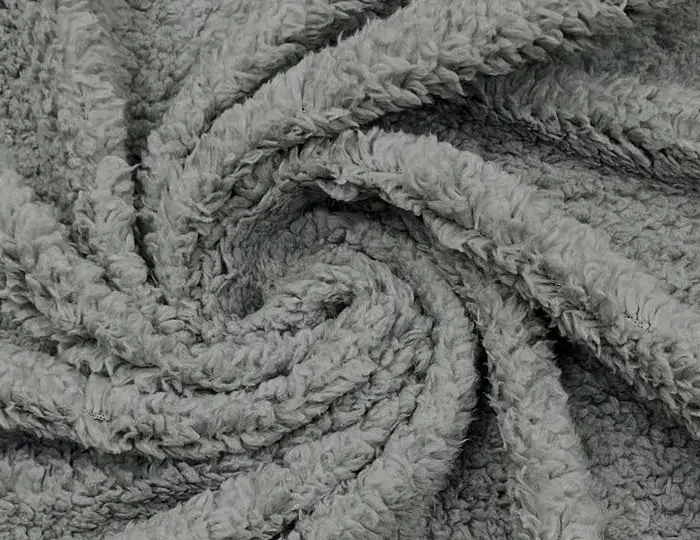
Material selection is also one of the primary drivers of price variation between quotations for apparently identical products. Two quotes for the same design may differ substantially in unit price while actually reflecting different material specifications — making them genuinely different products rather than different prices for the same one.
Primary materials used in plush toy manufacturing and their key properties
| Material Component | Common Options | Key Selection Criteria | Compliance Consideration |
|---|---|---|---|
| Outer fabric | Velboa, minky, faux fur, short-pile plush, sherpa | Pile height, density, color accuracy, softness | OEKO-TEX Standard 100, REACH compliance |
| Filling material | PP cotton (polyester fiberfill), pellets, microbeads | Density grade, shape retention, hypoallergenic status | Chemical content testing, CPSIA lead limits |
| Safety eyes & noses | Plastic washer-back eyes, embroidered eyes, printed features | Size (choking hazard threshold), pull-test force | ASTM F963 Section 4.11, EN71-1 small parts |
| Sewing thread | Polyester thread, nylon thread | Tensile strength, colorfastness, seam durability | No direct standard, but it affects seam strength testing |
| Embroidery thread | Rayon, polyester embroidery thread | Color matching, sheen, and washability | Azo dye restrictions under REACH |
| Accessories & trims | Ribbons, buttons, heat-transfer labels, hang tags | Attachment security, material compatibility | Separate pull-test requirement for attached items |
| Inner lining (weighted toys) | Cotton inner bags, woven inner shells | Fill containment, seam reinforcement | Pellet retention testing under abuse conditions |
The Fabric Pile Question — What It Means in Practice
Plush fabric pile height — the length of the individual fibers above the base weave — directly affects how a toy looks, feels, and performs over time. Short-pile fabric (3–5mm pile height) produces a smooth, dense surface that holds printed or embossed detail well and resists matting. Medium pile (8–12mm) gives the classic stuffed animal look — soft and slightly fluffy, with good color saturation. Long-pile faux fur (15–25mm+) creates a dramatic shaggy texture but requires more careful handling to avoid pilling and directional inconsistency during cutting.
Buyers specifying fabric for the first time frequently focus on color and softness while underspecifying pile height and density — which are the characteristics that actually determine production consistency and long-term appearance. When requesting fabric samples from a manufacturer, always ask for the pile height in millimeters and the grams-per-square-meter fabric weight alongside the visual and tactile sample.
Why Certified Materials Cost More — and Why the Premium Is Legitimate
Fabrics and fillings that carry OEKO-TEX Standard 100 certification or REACH compliance documentation cost more than uncertified alternatives because they have undergone independent chemical testing and are sourced from manufacturing operations with documented quality controls. This premium reflects real costs — testing fees, more rigorous supplier audits, and the premium that certified material suppliers command in the market.
For products sold in the US, EU, or UK markets, using certified materials is not optional — it is the foundation of compliance. A lower quote based on uncertified materials is not a more competitive price for the same product. It is a lower price for a different product that carries an unquantified compliance risk.
Tip — Request material certification documentation before approving bulk production. Any manufacturer working to professional standards should be able to provide material test reports or certification references for the specific fabric and filling grades being used in your product. If a manufacturer cannot or will not provide this documentation, treat it as a serious capability signal before committing to bulk production.
What Types of Plush Toys Can Be Manufactured?
The range of products that fall under the “plush toy” category is significantly broader than most first-time buyers initially realize. Modern plush toy manufacturing encompasses not just classic stuffed animals but a wide spectrum of soft goods products that share the same foundational production techniques — cut-and-sew fabric construction, fiberfill or alternative stuffing, and surface detail through embroidery, printing, or appliqué.

Plush toy product types and typical manufacturing considerations
| Product Type | Construction Notes | Typical MOQ Range | Complexity Level |
|---|---|---|---|
| Classic stuffed animals | Standard sewn shell, PP cotton fill, safety accessories | 300–1,000 units | Low–medium |
| Custom IP / character plush | Color-matched fabric, sculpted features, brand-specific details | 500–2,000 units | High |
| Plush keychains / mini plush | Small scale (8–15cm), simplified construction, keyring attachment | 500–1,000 units | Medium |
| Plush cushions/pillows | Square or shaped form, flat construction, decorative front panel | 300–800 units | Low |
| Hand puppets | Open-base construction, internal finger channel, and mouth mechanism | 500–1,500 units | Medium–high |
| Electronic interactive plush | Internal speaker or sensor module, sewn-in electronics pocket | 1,000–5,000 units | Very high |
| Crochet plush | Handmade amigurumi-style construction; labor-intensive | 200–500 units | High |
| Weighted plush | Double-layer construction, pellet or bead fill, reinforced inner closure | 500–1,500 units | Medium–high |
The distinction between product types matters for sourcing because different product types require different manufacturing capabilities. A factory that produces high-quality classic stuffed animals at scale may not have the pattern engineering capability to accurately reproduce a complex custom character. A factory with strong electronic integration experience may not have the same surface embroidery quality as a specialist soft goods manufacturer. Matching the product type to the factory’s genuine capability — rather than their capability as represented in a sales presentation — is one of the most important assessments a buyer needs to make before committing to production.
What Compliance and Safety Standards Apply to Plush Toys?
Plush toys sold in consumer markets are subject to product safety regulations that govern material content, mechanical performance, flammability, and labeling. The specific standards that apply depend on the destination market — different countries have different regulatory frameworks — and on the intended end user, with children’s products subject to significantly more stringent requirements than adult collectibles or promotional products.
Understanding which compliance standards apply to a specific product and market is not optional for buyers sourcing plush toys at a commercial scale. Products that fail to meet applicable standards cannot legally be sold in those markets and may be subject to customs detention, retailer removal, or consumer recall — all of which are significantly more expensive than the compliance investment that would have prevented them.
Key plush toy safety standards by market
| Standard | Market | What It Covers | Key Requirements for Plush |
|---|---|---|---|
| ASTM F963 | United States | Toy safety for products marketed to children under 14 | Small parts testing, fabric flammability, heavy metals in surface coatings, pull-force on attached elements |
| CPSIA | United States | Children’s product safety act — chemical content | Lead content limits in all accessible materials, phthalate restrictions, third-party testing, and the Children’s Product Certificate requirement |
| EN 71 (Parts 1, 2, 3) | European Union / UK | European toy safety standard | Mechanical and physical safety (Part 1), flammability (Part 2), chemical migration from materials (Part 3) |
| REACH Regulation | European Union | Chemical substances in products | Restriction on hazardous substances in fabric dyes, coatings, and accessories; SVHC candidate list compliance |
| OEKO-TEX Standard 100 | Global (voluntary certification) | Textile chemical safety certification | Independent test certification that textile materials meet defined chemical limits; widely accepted by retailers as material compliance evidence |
| GB 6675 / GB 14747 | China’s domestic market | Chinese toy safety national standards | Mechanical safety, chemical content, and flammability for products sold within China |
The Age Grading Decision — Where Compliance Requirements Diverge Most Sharply
The single most consequential compliance decision in plush toy manufacturing is age grading — determining whether a product is classified as a children’s toy (typically defined as intended for users under 14 in the US and under 14 in most EU frameworks) or as an adult collectible or decoration. Products classified as children’s toys in the US trigger CPSIA third-party testing requirements and must be accompanied by a Children’s Product Certificate. Products classified as adult-only items are not subject to the same testing mandate, but making an incorrect age grade claim carries significant legal risk if the product is found in children’s hands.
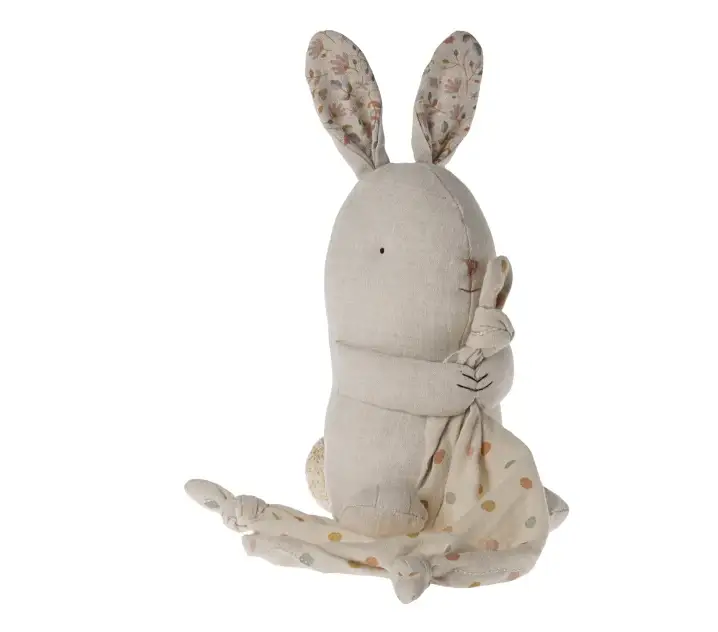
Buyers should make age-grading decisions deliberately, in consultation with their compliance advisor, before product design is finalized — because certain design elements (small parts, long pile length, button eyes) create inherent compliance challenges for children’s classifications that are more easily avoided at the design stage than resolved through testing after the fact.
Tip — Never treat compliance as an afterthought. The most expensive compliance failures happen when buyers source a product without specifying compliance requirements upfront, then discover that the factory’s standard materials do not meet the target market’s standards after bulk production is complete. Stating your compliance requirements in the initial brief — “This product is intended for children under 3 in the US market; CPSIA and ASTM F963 compliance required” — ensures that material sourcing and construction standards align with the requirement from the start.
How Is Quality Controlled in Plush Toy Production?
Quality control in plush toy manufacturing is a systematic process of checking that production output conforms to the standard established by the buyer-approved sample — across dimensions of appearance, construction integrity, material conformance, and safety performance. It is not a single inspection at the end of production. Effective quality control is embedded throughout the production process, at multiple checkpoints, rather than applied only as a final gate.
The difference between factories with robust quality systems and those without one is not always visible in a product photograph or a factory presentation deck. It becomes visible in the defect rate on delivered bulk orders — in loose seams, inconsistent stuffing density, color variation between units, misaligned embroidery, or accessories that do not pass pull-force testing. These are the quality failures that reach buyers after production, at a point where the cost of resolution — rework, re-inspection, partial replacement, and timeline extension — substantially exceeds what a more rigorous pre-production investment would have cost.
What a Professional QC System in Plush Toy Manufacturing Looks Like
A professional quality control system in plush toy manufacturing operates across four distinct stages: incoming material inspection, in-process quality checks, pre-shipping final inspection, and product testing. Each stage addresses different risk categories — material non-conformance at incoming, process drift during production, bulk conformance at final, and compliance at testing.
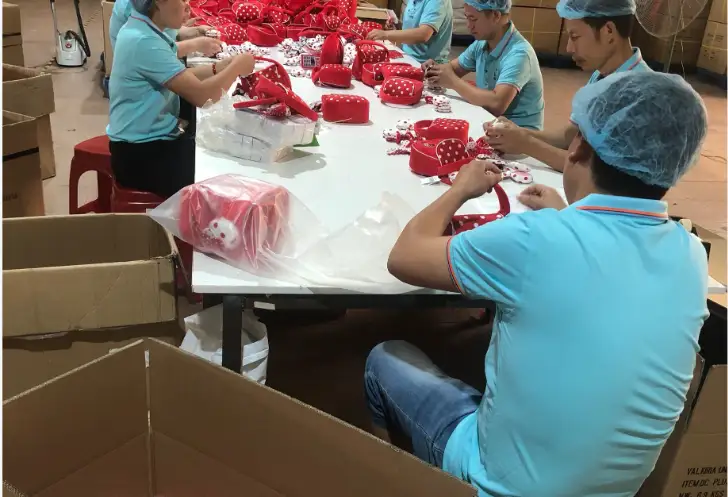
Buyers evaluating a factory’s QC capability should ask specifically about each of these stages — not just whether the factory “has quality control” — and request documentation of their defect rate history and the results of their last third-party product test. Factories with genuine QC systems will be able to answer these questions specifically. Those whose QC exists primarily in their sales materials will deflect, generalize, or provide non-responsive answers.
Third-Party Inspection — When to Use It and What It Covers
Third-party inspection — engaging an independent quality inspection firm to conduct a pre-shipping audit of a bulk production run against the buyer’s approved sample and specification sheet — is standard practice for commercially serious plush toy orders. Typical inspection costs range from $250 to $500 for a standard AQL-based pre-shipment inspection, which is a small fraction of the cost of a defective shipment that reaches its destination.
Third-party inspection is particularly valuable for first orders with a new manufacturer, for high-value or high-visibility orders, and for products where appearance consistency is commercially critical. It provides an independent verification layer that the factory’s internal QC cannot substitute for, because the inspecting party has no production investment in the outcome of the audit.
What Are Typical MOQs, Lead Times, and Costs in Plush Toy Manufacturing?
Minimum order quantities, production lead times, and unit costs in plush toy manufacturing are not fixed industry constants. They vary significantly based on product complexity, factory type, material requirements, and order timing. Understanding the typical ranges — and the factors that drive variation within those ranges — is essential for planning a first order with realistic expectations.
Typical ranges for MOQ, lead time, and unit cost by product type
| Product Type | Typical MOQ | Sampling Lead Time | Production Lead Time | Indicative Unit Cost Range |
|---|---|---|---|---|
| Simple stuffed animals (20–30cm) | 300–1,000 units | 10–20 days | 30–45 days | $3.50–$8.00 |
| Custom character plush (25–35cm) | 500–2,000 units | 15–30 days | 35–55 days | $6.00–$18.00 |
| Mini plush / keychains (8–15cm) | 500–1,500 units | 10–20 days | 25–40 days | $2.00–$5.50 |
| Plush cushions/pillows (40cm+) | 300–800 units | 8–15 days | 25–35 days | $4.50–$12.00 |
| Weighted plush (500g–2kg) | 500–1,500 units | 15–25 days | 35–50 days | $10.00–$28.00 |
| Electronic interactive plush | 1,000–5,000 units | 25–45 days | 45–70 days | $15.00–$45.00 |
The Real Cost of a First Order — Beyond the Unit Price
Unit price is the most visible number in a plush toy quotation and frequently the least complete representation of the total investment a first order requires. Sampling fees, revision round costs, compliance testing fees, third-party inspection, and inbound freight all contribute to the true cost of getting a product from concept to warehouse — and these components are often not included in the unit price a factory quotes.
A realistic first-order budget framework for a new custom plush product at 1,000 units should include: first sample development fee ($100–$300), revision rounds if needed ($80–$200 per round), compliance testing ($400–$1,200 depending on standard), third-party inspection ($250–$500), and inbound freight ($0.50–$3.00 per unit depending on mode and destination). These pre-production and logistics costs can add $1.50–$5.00 per unit to the effective total cost, which matters significantly at lower order volumes where fixed costs have a higher per-unit impact.
Tip — Build a total cost model, not just a unit price comparison. When evaluating quotes from multiple manufacturers, calculate the total project cost — including sampling, testing, inspection, and freight — not just the per-unit production price. A manufacturer with a slightly higher unit price who includes compliance documentation, achieves first-round sample approval, and has lower development overhead frequently delivers a lower total cost than a cheaper quote with higher pre-production friction.
What Do First-Time Buyers Most Often Get Wrong in Plush Toy Manufacturing?
The patterns of error among first-time plush toy buyers are remarkably consistent — not because buyers are careless, but because the gap between what the manufacturing process appears to require and what it actually requires is not obvious until you have been through it once. Understanding where first-time buyers most commonly encounter problems is the most efficient shortcut to avoiding those problems on a first order.
Underestimating the Complexity of Design-to-Sample Translation
The most frequent source of first-order disappointment is the gap between a design concept and its physical realization in a first sample. A 2D illustration or digital render communicates visual characteristics — color, proportion, expression — but does not communicate the three-dimensional engineering decisions that determine how a design actually looks as a stuffed form. Translating a flat design into a sewn, stuffed, three-dimensional product requires pattern engineering decisions that the factory must make in the absence of complete information, and the first sample frequently does not match the buyer’s mental image of what the design would look like in physical form.
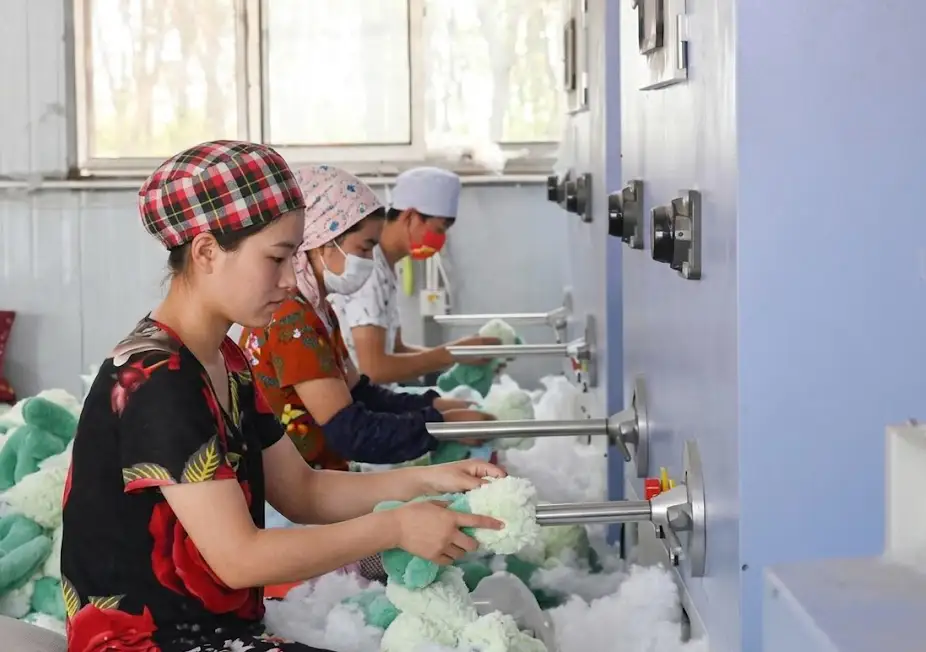
The most effective way to reduce this gap is to provide reference physical samples alongside the 2D design — existing products that are similar in construction complexity, proportion, or fabric type — so the pattern maker has a three-dimensional reference point rather than working purely from a flat image. A reference sample does not need to be the exact product; it just needs to communicate the dimensional and textural characteristics the buyer is aiming for.
Confusing Product Testing with Material Certification
Many first-time buyers assume that if they source from a factory with OEKO-TEX certified materials, their product is compliant with ASTM F963 or EN71. Material certification and product testing are different things that address different compliance requirements. Material certification (OEKO-TEX, REACH) addresses chemical content in the materials before they are made into a product. Product testing (ASTM F963, EN71) addresses the performance and safety characteristics of the finished product — including mechanical testing, pull-force testing on accessories, and small parts assessment — that can only be conducted on the finished product itself.
Both are required for children’s toys sold in regulated markets. Having one does not substitute for the other. Buyers who discover this distinction after bulk production is complete find themselves holding a product that cannot be shipped to its target market until product-level testing is completed — and if any test failures require material or construction changes, the bulk order may need to be reworked or replaced.
Not Specifying Packing Requirements Early Enough
Packing and packaging requirements — polybag specifications, carton dimensions, labeling requirements, suffocation warning text, barcode placement — are frequently treated as an afterthought by first-time buyers, who focus their attention on the product itself and leave packing discussion until the final production stage. This creates predictable problems: retail-ready packing that does not comply with a retailer’s requirements must be redone; carton dimensions that are not specified early can produce freight configurations that are inefficient or incompatible with the buyer’s warehouse receiving process; missing regulatory labeling (choking hazard warnings, fiber content labels, country of origin) can create compliance issues at customs or point of sale.
Packing specification should be included in the initial production brief alongside the product specification — not as a separate conversation after production is underway. Professional manufacturers will request this information proactively; those who do not should be prompted to address it at a brief stage.
Frequently Asked Questions About Plush Toy Manufacturing
Q1: What is the minimum order quantity for custom plush toys, and is there a way to start with a smaller volume?
Most professional plush toy factories set minimum order quantities between 300 and 1,000 units for standard products, with higher minimums for products requiring complex custom tooling or specialized materials. Some manufacturers offer smaller development or trial runs at 100–200 units, typically at higher unit costs that reflect the fixed overhead being amortized across fewer pieces. For buyers who need very low volumes — under 100 units — handmade or artisan production methods are more appropriate than factory manufacturing, as the economics of production-line manufacturing do not work at very low volumes. The most cost-effective approach for most buyers entering the category is to plan for 500–1,000 units on a first order, which hits reasonable price points while leaving enough product to test the market effectively.
Q2: How do I protect my plush toy design from being copied by the manufacturer?
Design protection in B2B manufacturing operates on several levels. Before sharing detailed design files, a non-disclosure agreement (NDA) with the manufacturer is standard practice and should be signed before any proprietary design information is shared. At the legal level, design patents or registered design rights in the target market provide the strongest protection for distinctive product shapes, but obtaining them takes time and legal investment. At the practical level, sourcing from manufacturers with a demonstrated track record of IP respect — verified through reference checks with existing clients — is more protective in practice than legal frameworks alone, because enforcement across international borders is challenging. Many experienced buyers also source from manufacturers whose business model depends on long-term B2B relationships rather than one-time transactions, as reputational risk provides a meaningful deterrent against IP infringement.
Q3: What is the difference between OEM and ODM in plush toy manufacturing?
OEM (Original Equipment Manufacturing) in plush toys means the buyer provides the design — either a complete technical package or a detailed brief — and the factory produces to that specification. The buyer owns the design; the factory provides the manufacturing capability. ODM (Original Design Manufacturing) means the factory designs the product — either from its existing catalog or through a design process where the factory creates the concept — and the buyer purchases rights to that design, typically with some degree of customization (color, fabric, labeling). ODM products are generally faster to market and less expensive to develop because the design engineering has already been done. OEM products offer stronger design exclusivity and are the appropriate model for buyers who have a specific character or brand identity to protect. Many buyers use a hybrid approach — starting with ODM for speed and cost efficiency on initial market entry, then transitioning to OEM for hero products once market demand is validated.
Q4: How long does the entire process take from concept to delivery — a realistic timeline for a first-time buyer?
A realistic total timeline for a first custom plush order — from initial brief to goods arriving at the buyer’s warehouse — is typically 16 to 24 weeks for a new buyer working with a new manufacturer. This breaks down approximately as follows: design brief and factory selection (1–2 weeks), first sample development (2–4 weeks), revision rounds (2–6 weeks, depending on number of rounds), pre-production approval and order placement (1 week), bulk production (4–7 weeks), quality inspection and export documentation (1–2 weeks), and ocean freight (3–5 weeks for Asia-to-US or Asia-to-Europe shipping). Buyers who have worked with a manufacturer before and have an approved design brief can compress this timeline significantly, as the sampling stage is eliminated. First-time buyers who underplan the sampling and revision timeline — assuming first samples will be perfect — consistently experience the most significant timeline overruns.
Q5: Can plush toys made in China meet US and EU safety standards?
Yes — the majority of plush toys sold in the US and European markets are manufactured in China, and Chinese manufacturers with the appropriate material sourcing practices, production standards, and QC systems are entirely capable of producing products that meet ASTM F963, CPSIA, EN71, and REACH requirements. The distinction is not geography — it is capability and commitment. Manufacturers who use certified materials from verified suppliers, maintain documented production standards, and conduct product testing through accredited third-party laboratories consistently produce compliant products regardless of their location. The compliance requirement is not about where the product is made; it is about whether the materials and finished product meet the applicable standards, which are established through testing rather than origin.
Q6: What should a design brief include when approaching a plush toy manufacturer for the first time?
A complete design brief for a first approach to a plush toy manufacturer should include: (1) visual references — design illustrations, character sheets, or reference products that communicate the target appearance; (2) size specification — overall dimensions and proportions; (3) material preferences — fabric type, color references (Pantone if available), filling type; (4) compliance requirements — target market, intended age group, applicable standards; (5) quantity and timeline — planned order volume and required delivery date; (6) packing requirements — retail-ready vs. bulk, any specific labeling requirements; and (7) budget range, if the buyer is comfortable sharing it. A brief that includes all of these elements enables a factory to quote accurately and propose appropriate solutions. Briefs that omit key elements — particularly compliance requirements and quantity — produce quotes that are difficult to compare and frequently require extensive follow-up to make actionable.
Q7: What is the difference between sampling fees and tooling costs, and do I get these back if I place a bulk order?
Sampling fees are the costs charged for producing the physical prototype of a new design — covering the pattern maker’s time, the handmade construction of the sample, and the materials used. Tooling costs are charges for creating custom physical components that require manufacturing investment — primarily injection-molded plastic accessories (custom eye shapes, nose designs, or unique components) that require a mold to be made.
Whether sampling fees are credited toward a bulk order varies significantly between manufacturers. Some factories credit sampling fees against the bulk order invoice when a minimum order is placed; others treat sampling as a separate, non-refundable design development cost. Tooling costs are almost always treated as a separate one-time investment that is not credited, but the tooling itself remains available for re-use on subsequent orders of the same design. Buyers should clarify both the amount and the crediting policy for sampling and tooling costs before commissioning samples.