Skip to content
Today, we will explore the details of plush toy sewing thread types. Choosing the right sewing thread for plush toys is one of the most overlooked decisions in soft toy making — yet it directly determines how safe, durable, and beautiful your finished piece will be. Whether you are a beginner crafting your first stuffed animal or a professional manufacturer scaling production, understanding thread types, tensile strength, fiber content, and seam behavior is essential knowledge.
Why Thread Choice Matters in Plush Toy Construction
Plush toys are subject to a unique set of mechanical stresses. They get hugged, squeezed, thrown, chewed, and washed repeatedly — sometimes all in the same afternoon. The seams holding the toy together must withstand constant multi-directional tension without breaking or fraying. The thread used in those seams is the single most critical factor in seam integrity.
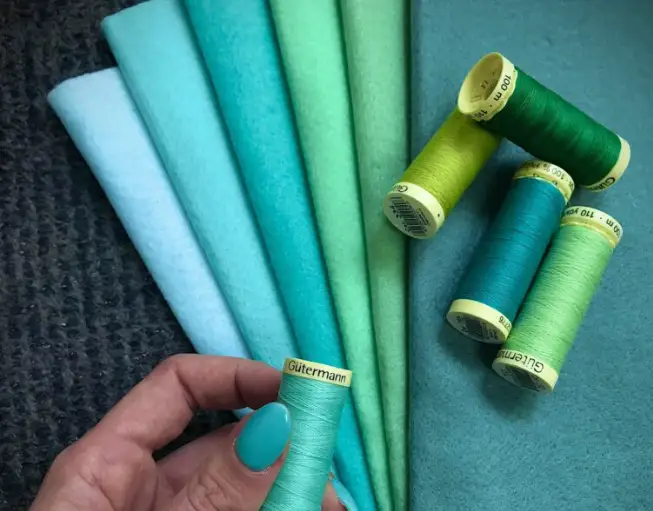
Beyond durability, thread selection also affects the visual finish of the toy. Decorative embroidery on a teddy bear’s face, for example, requires a thread with entirely different properties than the structural thread closing its back seam. Understanding the distinction between functional sewing thread and decorative thread is the first conceptual split every plush maker needs to internalize.
Thread weight, fiber composition, twist direction, and finish coating all interact with the fabric pile of minky, fleece, faux fur, and velboa — the four most common plush toy fabrics — in ways that are not always intuitive. A thread that performs beautifully on woven cotton will behave very differently when pushed through a thick pile fabric.
The Main Categories of Thread Used in Plush Toy Making
Polyester thread — the workhorse of structural seams
All-purpose polyester thread is the dominant choice for structural seams in commercial and hobbyist plush toy production. Its core advantage is a combination of tensile strength and elasticity that no natural fiber thread can match at an equivalent price point. Polyester thread stretches slightly under load and returns to its original length — a property called elastic recovery — which is precisely what you need when a stuffed animal is being hugged repeatedly.
Polyester thread is also colorfast and wash-resistant, meaning repeated trips through a washing machine will not cause it to bleed onto the plush fabric. This is a critical safety and aesthetic property for toys intended for young children.
| Thread type | Tensile strength | Stretch/recovery | Best use in plush | Wash resistance |
|---|---|---|---|---|
| All-purpose polyester | High (4–6 N/tex) | 15–20% elongation before break | Structural seams, closing seams | Excellent — colorfast at 60°C |
| Nylon monofilament | Very high (6–9 N/tex) | 20–30% elongation | Invisible ladder stitch, joints | Good — UV sensitive over time |
| Cotton thread | Moderate (2–3 N/tex) | Less than 5% elongation | Embroidery, decorative facial features | Moderate — may fade with bleach |
| Upholstery polyester | Very high (7–10 N/tex) | 15% elongation | Heavy limb joints, machine ladder stitch | Excellent — rated for outdoor use |
| Embroidery floss (cotton) | Low (structural use not recommended) | Minimal | Hand-embroidered noses, mouths, eyes | Moderate — separate wash recommended |
Nylon monofilament — the invisible hand
Nylon monofilament thread is transparent, smooth, and extremely strong relative to its diameter. In plush toy making, it has one primary application: the invisible closing seam. When you stuff a plush toy and need to close the opening by hand using a ladder stitch, monofilament thread disappears entirely into the pile, leaving no visible stitch line on the surface of the fabric. This is particularly valuable on short-pile minky or velboa where coloured thread would show clearly.
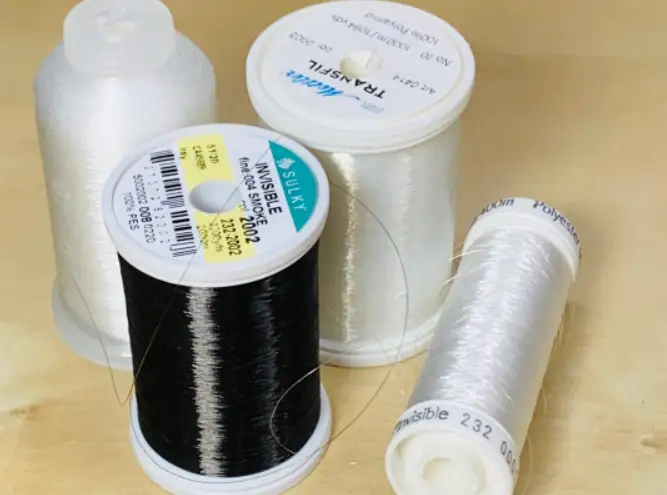
The trade-off is handling difficulty. Monofilament has a springy memory that makes it prone to kinking and tangling, and it can be uncomfortable to work with by hand for extended periods. It is also not recommended for machine sewing at high speeds because the friction heat generated can weaken the thread significantly.
Cotton thread — tradition and embroidery
Cotton thread has a long history in soft toy making and remains irreplaceable in one specific context: hand embroidery of facial features. The natural fiber structure of cotton holds embroidery knots securely, lies flat against the fabric surface without springing, and accepts dye in the rich, saturated way that gives hand-embroidered teddy bear noses their distinctive appearance.
For structural seams, cotton thread is significantly weaker than polyester and lacks the elastic recovery that plush seams require. It is also more susceptible to degradation from repeated washing, particularly at elevated temperatures. Most professional plush makers reserve cotton exclusively for decorative work.
Thread Weight and Needle Size: Getting the Pairing Right
Thread weight is expressed in several competing systems — tex, denier, and the weight number system (such as 40wt or 50wt) — which can be confusing for beginners. In practical terms for plush toy making, the key principle is straightforward: heavier thread requires a larger needle, and the needle size must be matched to both the thread and the fabric thickness.
Most structural seams in plush toys are sewn with 40-weight polyester on a size 90/14 or 100/16 needle. Thicker upholstery thread used for joint attachment or ladder stitching heavy limbs may require a size 110/18 or even a leather needle for very dense pile fabrics. Embroidery work on plush typically uses a 6-strand cotton floss separated into 2–3 strands and a hand embroidery needle in size 5 or 7.
| Thread weight | Recommended needle size | Fabric type | Seam type |
|---|---|---|---|
| 40wt polyester | 90/14 – 100/16 | Minky, fleece, short-pile faux fur | Machine straight stitch, zigzag |
| 50wt polyester | 80/12 – 90/14 | Velboa, thin felt | Machine seams, detail stitching |
| Upholstery thread (20–30wt) | 100/16 – 110/18 | Long-pile faux fur, sherpa | Ladder stitch, joint attachment |
| Monofilament (0.2 mm) | Hand needle size 7–9 | All pile fabrics | Hand closing seam (ladder stitch) |
| Embroidery floss 2–3 strands | Hand embroidery needle 5–7 | Short-pile fabric face areas | Satin stitch, stem stitch, French knot |
Thread tension and pile direction
One of the most common sewing problems specific to plush toy making is the puckered or gathered seam caused by incorrect thread tension combined with pile direction. Because pile fabrics have directional nap, feeding them through a sewing machine requires lowering the presser foot pressure and often reducing upper thread tension by 10–15% compared to woven fabric defaults. The thread must have enough give to accommodate the slight shifting of the pile as the two fabric layers move through the feed dogs.
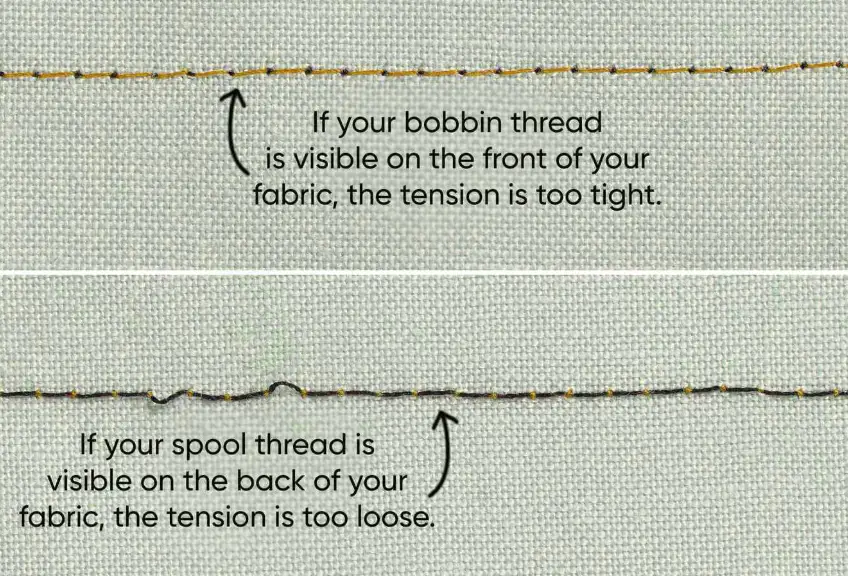
Walking foot attachments — which feed both the top and bottom fabric layers simultaneously — dramatically reduce this problem and are considered standard equipment in professional plush toy workshops.
Specialty Threads for Advanced Plush Techniques
Waxed linen thread for traditional joint attachment
Traditional jointed teddy bears and poseable plush toys use a disc-and-bolt joint system that requires a thread connection between the limb and body. Waxed linen thread, though rarely discussed in modern tutorials, has been used for this purpose for over a century. The wax coating prevents the thread from fraying where it contacts the metal hardware of the joint, and the natural linen fiber has sufficient stiffness to pull through multiple layers of felt and stuffed body without collapsing.
Elastic thread for sculptural effects
Elastic thread, wound in the bobbin of a sewing machine, creates a shirred (gathered) effect in the fabric. In plush toy making, this technique is used to create dimensional shaping — such as the gathered snout of a stuffed pig or the sculpted belly of a seated plush bear. The thread itself is rubber-core with a nylon or polyester wrapping and is not a structural thread in the conventional sense; the gathering it creates redistributes the stuffing pressure across the gathered area.
| Specialty thread | Composition | Application in plush | Skill level required |
|---|---|---|---|
| Waxed linen | Linen fiber + beeswax or paraffin coating | Traditional disc joint attachment, leather nose attachment | Intermediate — hand sewing |
| Elastic thread | Rubber core + polyester/nylon wrap | Shirring for 3D body sculpting | Intermediate — bobbin winding technique |
| Quilting thread | Long-staple cotton or polyester | Needle sculpting facial features | Advanced — precise tension control |
| Beading thread (Nymo) | Nylon multifilament | Attaching safety eyes via thread loop method | Beginner — widely available |
| Heavy-duty upholstery thread | Bonded polyester, trilobal nylon | Reinforced limb seams on large toys (>60 cm) | Beginner — standard machine sewing |
Thread color matching with pile fabrics
Color matching thread to a pile fabric is harder than matching to woven fabric because the pile surface presents a blended visual impression. A minky fabric that appears medium gray on the bolt may be composed of individual fibers ranging from off-white to charcoal. For best results, pull a few fibers from the selvedge edge of the fabric and lay them over several candidate threads in natural daylight. The thread that disappears most effectively against the pulled fibers will disappear most effectively in the finished seam.
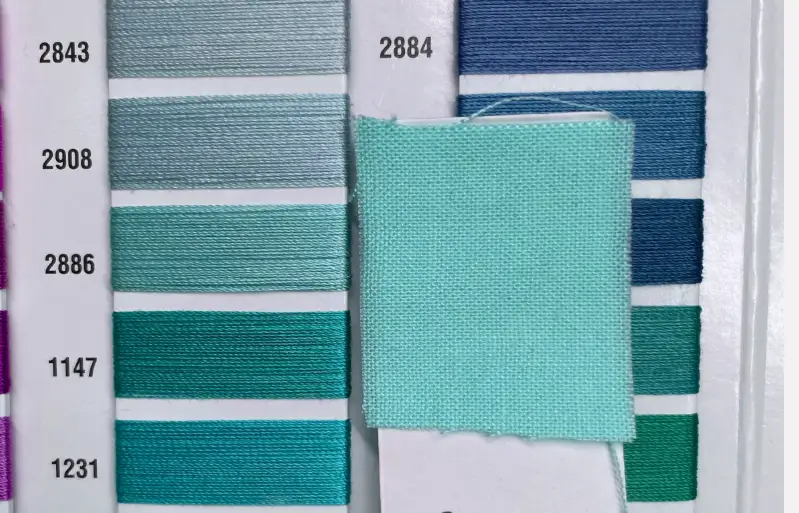
For faux fur, where the seams are typically hidden inside the pile, a slightly darker thread than the base fabric color provides the most reliable camouflage when any small amount of thread is visible at the seam line.
Safety Considerations: Thread in Toys for Young Children
When plush toys are intended for children under 36 months, thread selection carries additional safety dimensions. Loose or fraying thread creates a strangulation risk and a choking hazard. All structural seams should use a thread with sufficient tensile strength to pass a seam tug test — typically defined in EN 71-1 (European toy safety standard) as the ability to withstand a 90 Newton pull force without seam failure.
Thread ends must be secured with backstitching at minimum and ideally with a knot and buried thread end that prevents any free length of thread from becoming accessible. Decorative embroidery, particularly long satin stitches on facial features, should be limited in individual stitch length to reduce snagging risk — a maximum stitch length of 10mm is a commonly cited guideline in toy safety literature.
| Safety standard reference | Requirement | Thread implication |
|---|---|---|
| EN 71-1 (EU) — seam strength | 90 N pull force without seam failure | Use 40wt+ polyester on all structural seams; test before production |
| ASTM F963 (USA) — seam integrity | Similar pull-force requirements; fabric may fail before seam | Minimum 40wt bonded polyester recommended |
| EN 71-1 — accessible component | No component detachable by 90 N pull | Thread-attached features (noses, buttons) must be knotted and buried |
| General toy safety — embroidery stitch length | Individual stitch length ≤10 mm (widely cited guideline) | Avoid long satin stitch runs; use fill patterns for large areas |
| Wash durability | Toys should withstand domestic washing cycles | Polyester thread colorfastness at 40–60°C required |
Maker tip
Always sew structural seams with a 1.2–1.5 cm seam allowance and reinforce stress points — limb attachment, ear roots, and tail joints — with a second pass of stitching or a bar tack. Thread quality cannot compensate for an insufficient seam allowance in high-stress areas.
Building a Beginner Thread Kit for Plush Toy Making
If you are starting out in plush toy making, the following thread selection covers the vast majority of projects you will encounter. You do not need to invest in every specialty thread on day one — the three-thread starter kit below handles over 90% of common plush toy construction tasks.
- One spool of 40-weight all-purpose polyester thread in a neutral color (medium gray or ivory) for machine seams
- One spool of nylon monofilament (0.2 mm) for invisible closing seams
- One set of 6-strand cotton embroidery floss in black, brown, and pink for hand-embroidered facial features
As your skills develop, adding a spool of upholstery-weight bonded polyester thread and a set of waxed linen for jointed projects will expand your capabilities significantly. Matching thread color to each specific fabric project, rather than relying on a single neutral, will also noticeably improve the finish quality of your seams.
| Thread | Approx. price range (per spool/skein) | Spool size (typical) | Projects covered |
|---|---|---|---|
| 40wt polyester (all-purpose) | USD $2–$5 | 200–500 m | All machine-sewn structural seams |
| Nylon monofilament 0.2 mm | USD $3–$6 | 100–200 m | Invisible closing seams, joint loops |
| Cotton embroidery floss | USD $0.50–$1.50 per skein | 8 m per skein | Hand-embroidered face features |
| Upholstery/heavy-duty polyester | USD $5–$10 | 100–200 m | Large toy seams, joint attachment |
| Waxed linen thread | USD $8–$15 | 50–100 m | Traditional disc joints, leather noses |
Frequently Asked Questions
What is the best thread for sewing minky fabric plush toys?
All-purpose 40-weight polyester thread is the best choice for sewing minky fabric. Minky is a stretchy, pile fabric with a slippery surface, and polyester’s combination of tensile strength, slight elasticity, and smooth passage through the needle makes it ideal.
Use a ballpoint or stretch needle (size 90/14) to avoid piercing the individual fibers of the knit backing, and reduce your presser foot pressure to prevent the fabric from stretching out as it feeds through the machine. For the closing seam on a minky project, nylon monofilament hand-sewn in a ladder stitch gives the cleanest invisible finish.
Can I use regular sewing thread for embroidering a plush toy’s face?
Regular all-purpose sewing thread is technically usable for embroidery on plush toy faces, but it is not ideal. Sewing thread is a single twisted strand, which means it covers the fabric surface less efficiently than multi-strand embroidery floss.
The result tends to look thin and wiry rather than smooth and filled. Cotton embroidery floss, separated into 2–3 strands for fine detail or used as a full 6 strands for bold features like noses, produces a significantly better visual result. The slight sheen of stranded cotton also reads more expressively as a facial feature on the matte pile surface of most plush fabrics.
How strong does thread need to be for a toy that will be used by a toddler?
For toys intended for children under 36 months, structural seams should be able to withstand a minimum pull force of 90 Newtons without failure — this is the benchmark referenced in the EN 71-1 European toy safety standard and approximated by ASTM F963 in the United States. In practical terms, this means using a minimum of 40-weight bonded polyester thread and sewing seams with a seam allowance of at least 1.2 cm.
High-stress areas such as limb attachment points and ear roots should be double-sewn or reinforced with a bar tack. Thread-attached features such as embroidered noses must have knots buried inside the toy so no free thread length is accessible.
What is the difference between upholstery thread and regular sewing thread for plush toys?
Upholstery thread is significantly heavier and stronger than standard all-purpose sewing thread. It is typically made from bonded polyester or trilobal nylon — fibers that are bonded together with a resin coating to prevent fraying and add surface lubrication for smooth machine passage.
The tensile strength of upholstery thread is roughly twice that of standard 40-weight thread, making it appropriate for the highest-stress seams in large plush toys (over 40–50 cm in height) and for ladder-stitching limbs and bodies that will be under significant stuffing pressure. The trade-off is that upholstery thread is too thick for fine detail work and requires a large needle that may leave visible holes in short-pile fabrics.
Is there a thread that works for both machine sewing and hand finishing on plush toys?
Yes — standard 40-weight all-purpose polyester thread works well for both machine sewing and hand finishing tasks on most plush toy projects. For machine sewing, it runs smoothly through a standard needle and produces consistent tension on pile fabrics.
For hand finishing, particularly the ladder stitch used to close a stuffed toy, you can thread it onto a hand needle (size 5 or 7 sharp) and work it through the seam allowance edges. However, for invisible closing seams on short-pile or smooth-pile fabrics such as minky, nylon monofilament remains superior because it becomes truly invisible in the pile, whereas even a well-matched polyester thread will show a faint stitch line on close inspection.