Skip to content
Plush toy vacuum packing is an efficient solution for reducing shipping volume and saving storage space while keeping plush products protected during transportation. Everything manufacturers, retailers, and consumers need to know about vacuum packing plush toys — from material compatibility and compression ratios to recovery performance and storage best practices.
Vacuum packing has become one of the most widely adopted packaging strategies in the plush toy industry. By removing air from a sealed bag around a stuffed animal, manufacturers and retailers can dramatically reduce product volume, cut shipping costs, lower warehousing footprint, and present a compact, shelf-friendly package that stands out at retail. For consumers storing seasonal plush collections or traveling with beloved stuffed animals, vacuum bags offer a practical space-saving solution at home as well.
But vacuum packing plush toys is not without nuance. Not every stuffing material responds equally well to sustained compression. Certain fabric types can crease permanently. And if the process is done incorrectly, a beautifully crafted plush toy can emerge from its bag misshapen, matted, or structurally compromised. This guide covers the full picture — from selecting the right vacuum bag and understanding compression ratios to restoring loft after unpacking and avoiding the most common mistakes.
How Vacuum Packing Works for Plush Toys
Vacuum packaging works by placing an item inside an airtight, multi-layer plastic bag and then using a vacuum pump or standard household vacuum cleaner to extract the air from inside the sealed enclosure. As air is removed, atmospheric pressure from outside the bag compresses the contents inward, collapsing the soft fill material and reducing the overall volume of the product. The bag’s one-way valve prevents air from re-entering until the seal is deliberately broken.
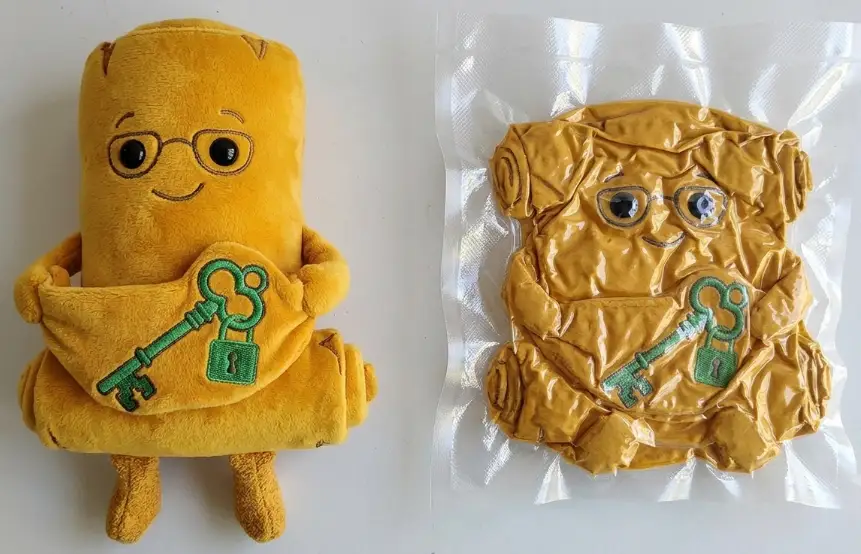
For plush toys, the degree of compression achievable depends primarily on the fill material, the density of the outer fabric, the size and shape of the toy, and the quality of the vacuum bag itself. Polyester fiberfill — the most common commercial plush stuffing — compresses readily and recovers well. Natural fills such as cotton and wool are more resistant to compression and may take longer to fully recover their original shape after an extended vacuum-packed period.
Vacuum Compression Performance by Stuffing Material
| Fill Material | Compression Ratio | Recovery Speed | Long-Term Storage Risk |
|---|---|---|---|
| Polyester fiberfill (standard) | Up to 75–80% | Fast (minutes to hours) | Low; fibers spring back reliably |
| Siliconized polyester fill | Up to 75% | Very fast | Very low; silicone coating aids recovery |
| Recycled rPET fiberfill | Up to 70–75% | Fast | Low to moderate |
| Organic cotton fill | Up to 50–60% | Slow (hours to days) | Moderate; prone to clumping if damp |
| Wool fill | Up to 40–55% | Slow (days) | Moderate; felting risk under heat |
| Shredded foam | Up to 30–40% | Variable | High; foam can deform permanently |
| Weighted pellets/beads | Minimal (fill is rigid) | N/A | Low for fill; check bag seal integrity |
💡 Tip: Always confirm the fill type before vacuum packing. Toys stuffed with shredded foam or memory foam are poor candidates for vacuum compression — extended pressure can cause permanent deformation that does not reverse upon unpacking.
Choosing the Right Vacuum Bag
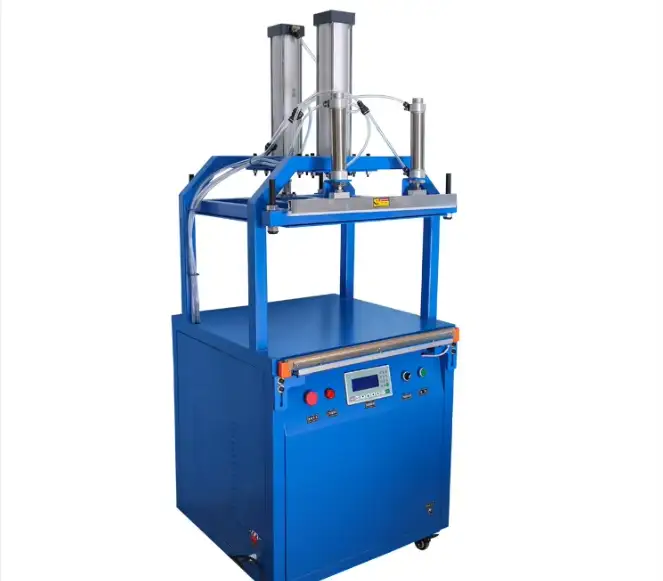
Not all vacuum bags are created equal, and selecting the wrong type is one of the most common mistakes in plush toy packaging. Industrial-grade vacuum bags used in toy manufacturing are designed for high-volume, repeatable sealing and are typically made from multi-layer co-extruded films that combine barrier layers (to prevent air permeation) with puncture-resistant outer layers. Consumer-grade vacuum storage bags are adequate for home storage but vary considerably in seal quality and durability.
Key Bag Specifications to Evaluate
Bag thickness (measured in microns) is the primary indicator of puncture resistance. For plush toys with hard plastic eyes, nose components, or embroidered details that may create pressure points, thicker bags — typically 100–120 microns or above — reduce the risk of micro-punctures that cause slow air re-entry and partial reinflation during storage or transit.
Valve type is equally important. Double-seal zip-lock valves provide the strongest airtight closure for retail packaged toys. Single-valve roll-seal bags are more common in industrial packing lines and allow faster throughput. For toys being shipped in secondary cartons, the valve should face inward or be protected by a secondary layer of cardboard to prevent valve damage during handling.
Vacuum Bag Types and Recommended Applications
| Bag Type | Thickness | Best For | Seal Method |
|---|---|---|---|
| Industrial co-extruded bag | 100–150 microns | Factory-scale packing lines; export shipping | Heat seal + machine vacuum |
| Retail zip-valve bag | 80–100 microns | Consumer-facing shelf packaging | Double zip + manual or pump vacuum |
| Travel compression bag | 60–80 microns | Consumer home storage, travel | Roll-seal or zip + hand roll |
| Eco / compostable bag | Varies | Sustainable packaging lines | Heat seal; check barrier performance |
💡 Tip: For retail display, choose a bag with a frosted or clear matte finish — it reduces glare under store lighting and allows the toy’s colors and design to remain visible through the packaging without looking like a basic storage bag.
Step-by-Step Vacuum Packing Process for Plush Toys
Whether packing at industrial scale or at home, the core process follows the same sequence. Attention to each step prevents the most common defects — incomplete seals, fabric creasing, hard-component punctures, and insufficient loft recovery after unpacking.
Pre-Packing Preparation
Inspect each plush toy before packing. Confirm that the toy is clean and fully dry — any residual moisture sealed inside a vacuum bag creates an anaerobic environment where mold and mildew can develop, even at low humidity. Check for loose threads, open seams, or protruding hard components (safety eyes, plastic noses, wire armatures in poseable toys) that could pierce the bag under compression pressure.
Packing and Sealing
Position the toy inside the bag with its most visually important face forward if the bag will be used as retail packaging. For multi-toy batch packing, ensure toys are oriented consistently so that pressure is applied evenly across the fill. Partially close the bag seal, leaving a small gap for the vacuum nozzle or pump attachment. Extract air in a controlled, steady manner — rapid vacuum extraction on delicate plush fabrics can cause surface fiber distortion or seam stress. Once target compression is achieved, complete the seal immediately before air can re-enter.
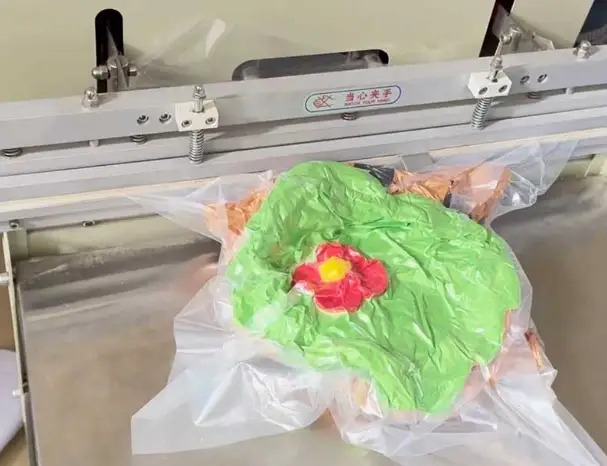
Post-Seal Quality Check
After sealing, gently press the bag surface to confirm uniform compression with no air pockets. Inspect the seal line visually for gaps or folds that may compromise the airtight barrier. For factory production runs, a statistical sampling protocol — checking seal integrity on a percentage of units per batch — is recommended as part of the quality control process.
Vacuum Packing Quality Checklist
| Checkpoint | What to Verify | Consequence of Failure |
|---|---|---|
| Toy condition | Clean, dry, no loose seams | Mold growth; seam failure under compression |
| Hard component protection | Padding applied over protruding parts | Bag puncture; air re-entry during storage |
| Seal integrity | No folds, gaps, or partial seals | Gradual reinflation; transit damage |
| Compression uniformity | No isolated air pockets in bag | Uneven pressure; fabric distortion |
| Label/barcode visibility | Readable through bag after compression | Retail scanning failure; misidentification |
| Secondary packaging fit | Compressed toy fits carton spec | Carton bulge; pallet inefficiency |
Loft Recovery: What to Expect After Unpacking
One of the most frequently asked questions about vacuum-packed plush toys concerns loft recovery — whether the toy will return to its original plump, full shape after the bag is opened. The answer depends on fill material, compression duration, storage temperature, and the fabric structure of the outer shell.
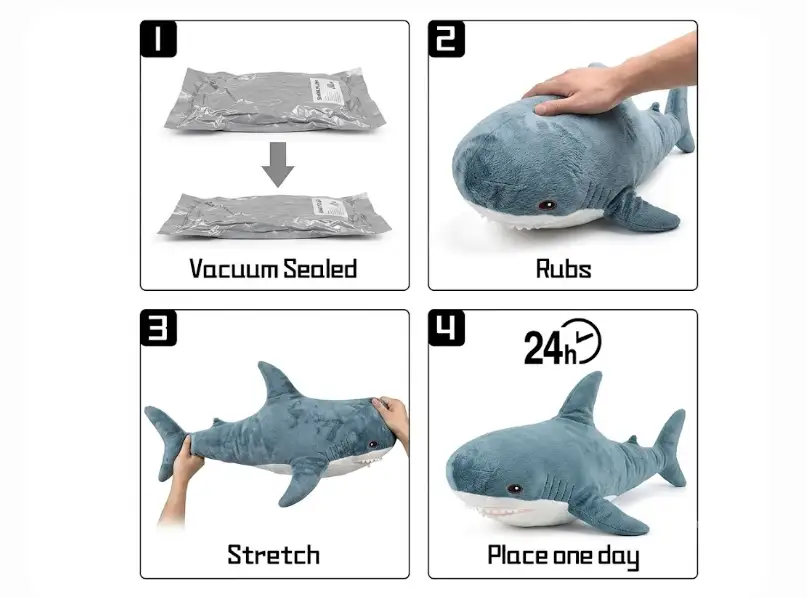
Polyester fiberfill, particularly siliconized grades, is specifically engineered for resilience and elastic recovery. A toy stuffed with high-quality siliconized polyester will typically regain 90–100% of its original volume within minutes to a few hours of unpacking, simply by being exposed to air and gently fluffed by hand. The crimped, hollow-fiber structure of polyester fill acts like a compressed spring — once the external pressure is removed, the fibers naturally push outward and restore loft.
Natural fills require more patience. Organic cotton fill may take several hours or overnight to recover, and may benefit from being placed in a warm, dry environment or given a brief low-heat tumble in a dryer. Wool fill should never be tumble dried; instead, reshape gently by hand and allow to air recover at room temperature away from direct sunlight.
💡 Tip: To accelerate loft recovery after unpacking, place the toy in a sealed bag with a slightly damp cloth (not in contact with the toy) and leave in a warm room for 30–60 minutes. The gentle humidity helps polyester fibers relax and expand back to their original volume faster — particularly useful for toys that have been in transit compression for more than a week.
Expected Loft Recovery Timeline by Storage Duration
| Compression Duration | Polyester Fill Recovery | Cotton Fill Recovery | Wool Fill Recovery |
|---|---|---|---|
| Under 48 hours | Minutes to 1 hour | 1–4 hours | 2–6 hours |
| 1–4 weeks | 1–4 hours | 4–12 hours | 12–24 hours |
| 1–3 months | 2–8 hours; hand fluff recommended | 12–48 hours; dryer assist helpful | 24–72 hours; hand reshape required |
| 3–12 months | Up to 24 hours; partial loss possible | May not fully recover; clumping risk | Significant reshape effort; felting possible |
| Over 12 months | Partial recovery; restuffing may be needed | High clumping risk; poor recovery | Not recommended for extended storage |
Shipping and Retail Benefits of Vacuum Packing
From a logistics and commercial standpoint, vacuum packing plush toys delivers measurable advantages across the supply chain. Compressed toys occupy significantly less volume per carton, allowing more units per master carton and more cartons per pallet — directly reducing freight cost per unit on both ocean and air shipments. For brands shipping from Asian manufacturing hubs to North American or European distribution centers, the savings on container utilization alone can justify the investment in vacuum packaging equipment and materials.
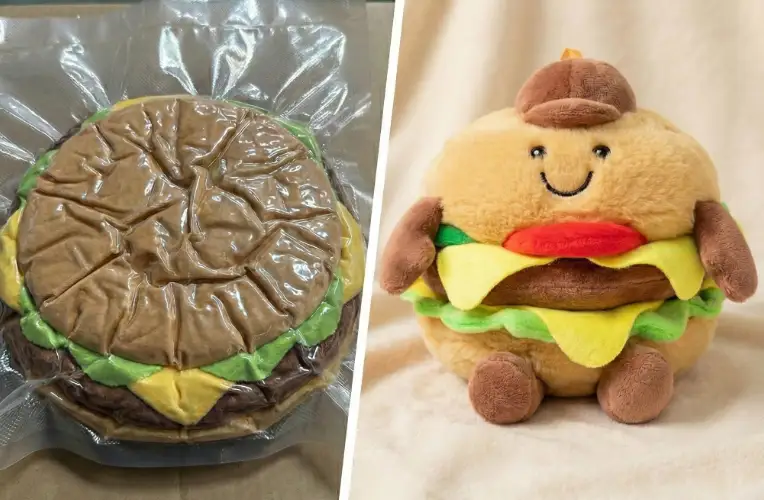
At retail, compact vacuum-packed plush toys require less shelf space per unit, enabling higher product density on shelves and improving visual merchandising options. Vacuum packaging also provides a degree of product protection during transit — the compressed toy is less likely to shift, absorb odors, or accumulate dust inside its sealed bag compared to loosely bagged alternatives.
Shipping Efficiency Comparison: Vacuum-Packed vs. Standard Packaging
| Metric | Standard Polybag Packaging | Vacuum-Packed Packaging |
|---|---|---|
| Volume reduction | Baseline | 50–75% reduction typical |
| Units per master carton | Baseline | 2–4× more units per carton |
| Freight cost per unit | Baseline | Reduced by 30–60% on volume-rated shipments |
| Warehouse storage density | Baseline | Significantly higher; fewer pallet positions needed |
| Transit damage risk | Moderate (toys shift) | Lower (toys fixed in compressed state) |
| Consumer unboxing experience | Standard | Novelty value; visible size transformation on unpacking |
Frequently Asked Questions
1. Can vacuum packing permanently damage a plush toy?
For the majority of plush toys stuffed with polyester fiberfill, vacuum packing does not cause permanent damage when done correctly and for reasonable durations (typically under six months). The risk of permanent damage increases significantly with natural fills — particularly wool and cotton — which are more susceptible to clumping, felting, and fiber compression set when held under pressure for extended periods.
Toys with foam stuffing (shredded foam or memory foam) are the most vulnerable: foam cells can collapse permanently under sustained compression, resulting in a toy that remains flat and lumpy even after unpacking. Hard plastic components such as safety eyes, noses, and decorative buttons can also stress or puncture the bag under compression if not protected. Choosing the right fill type and limiting compression duration are the most effective ways to avoid damage.
2. How long can plush toys safely remain vacuum packed?
For toys with polyester fiberfill, vacuum compression for up to three months presents minimal risk of permanent loft loss, with good recovery expected after unpacking. Storage between three and twelve months carries moderate risk — the toy will still recover, but may require more time and some manual fluffing to fully restore shape. Beyond twelve months, partial permanent compression set becomes increasingly likely, particularly in the densest-filled areas of the toy.
For natural fill materials, the recommended maximum compression duration is significantly shorter: no more than four to eight weeks for cotton fill, and ideally no more than two to four weeks for wool fill. Regardless of fill type, vacuum-packed toys should always be stored in cool, dry conditions away from direct sunlight — heat accelerates compression set in both synthetic and natural fibers.
3. Do vacuum-packed plush toys need special labeling or consumer instructions?
Yes — and this is an area where many brands fall short. Consumers who have never purchased a vacuum-packed plush toy before may be surprised or concerned by the compressed appearance of the product on the shelf or upon delivery. Including a clear, prominent on-pack message such as “Fluffy and full-sized inside — just open and enjoy!” sets the right expectation and reduces returns caused by consumer confusion about the compressed state.
The packaging should also include a brief recovery instruction — for example, “Remove from bag and gently fluff to restore shape. Full loft returns within a few hours.” For toys with natural fills that require longer recovery times, more specific guidance should be provided. From a regulatory standpoint, standard toy safety labeling requirements (age grading, CE marking, ASTM compliance) still apply to the outer packaging regardless of whether the toy is vacuum packed.
4. Can I vacuum pack plush toys at home for storage or travel?
Absolutely — vacuum packing is one of the most practical ways to store plush toy collections, seasonal stuffed animals, or to pack plush toys for travel without consuming excessive luggage space. Consumer vacuum storage bags (available widely online and in home goods stores) paired with a standard household vacuum cleaner are effective for this purpose.
The same guidelines that apply to commercial packing apply at home: ensure the toy is clean and completely dry before sealing, avoid extended compression of natural-fill or foam-fill toys, and protect any hard plastic or metal components from creating pressure points on the bag. For travel specifically, compression bags that use a roll-seal rather than a vacuum valve are airport-friendly — they can be compressed and re-sealed without a vacuum pump, making them easy to repack after the bag has been opened at a destination.
5. Does vacuum packing affect the fabric or surface texture of a plush toy?
The outer fabric of a plush toy can be temporarily affected by vacuum compression — particularly pile fabrics such as minky, sherpa, or long-pile faux fur, which may show compression marks, flattened pile, or directional matting after being held under pressure. In most cases, these surface effects are temporary and resolve within a few hours of unpacking, especially if the toy is gently stroked or brushed in the direction of the pile.
High-sheen fabrics (such as velvet or metallic plush) are more sensitive and may retain compression marks for longer. For premium products with delicate surface textures, it is worth conducting a compression test on samples before committing to vacuum packing as the primary packaging format — test at the intended compression duration and evaluate fabric recovery before the packaging decision is finalized.
Conclusion
Vacuum packing is a powerful tool for plush toy manufacturers, retailers, and consumers alike — offering genuine advantages in shipping efficiency, storage density, product protection, and retail presentation when applied correctly. The key to success lies in matching the packaging approach to the product: understanding the fill material, selecting an appropriate bag specification, protecting hard components, and setting the right consumer expectations around loft recovery.
As e-commerce continues to drive a higher proportion of plush toy sales, the compact, protective, and visually distinctive qualities of vacuum-packed plush products make them increasingly well-suited to the realities of modern logistics and online unboxing experiences. With the right process, quality checks, and consumer communication in place, vacuum packing can enhance both the commercial performance and the perceived quality of plush toy products from the factory floor to the living room floor.