Skip to content
Plush toy size selection plays a crucial role in creating the perfect plush toy, as the right size impacts comfort, functionality, production costs, and customer appeal. A practical reference for B2B buyers, brand developers, and sourcing managers evaluating stuffed toy dimensions, fill weight specifications, and age-appropriate sizing standards.
Why Plush Toy Size Matters More Than You Think
Selecting the right plush toy size is one of the most consequential decisions in product development — and one of the most frequently underestimated. Size directly influences material cost, packaging volume, retail shelf placement, shipping logistics, and most critically, compliance with age-appropriate safety standards. A miscalculated dimension can cascade into higher per-unit costs, failed drop tests, or regulatory non-compliance in target markets.
For brands sourcing from contract manufacturers, size selection must be considered in tandem with stuffing density, fabric stretch tolerance, and the intended retail channel. A 30 cm sitting bear intended for a mass-market toy chain carries fundamentally different specification requirements than a 12 cm keychain plush designed for crane machine distribution.
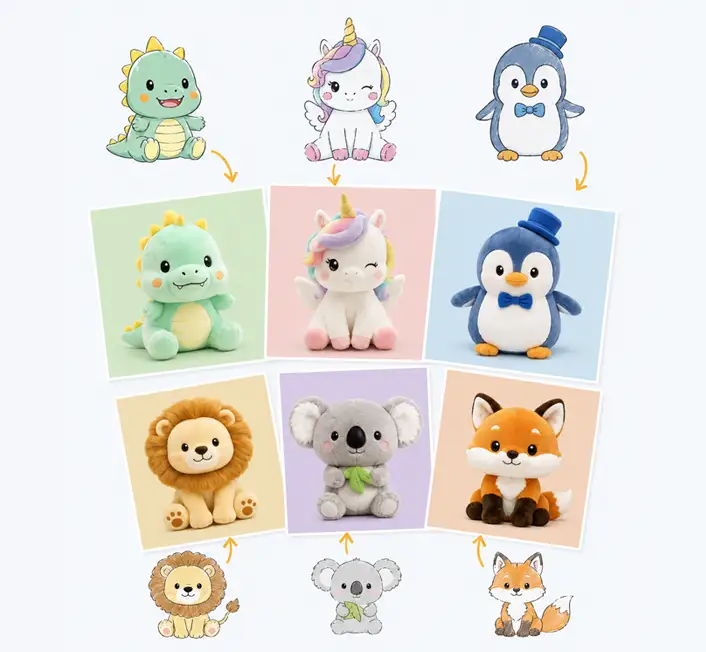
At Ken Wang Toys, we work closely with sourcing teams and brand developers to define size parameters early in the product brief — before sampling begins — because revisions at the prototype stage add both time and cost.
Standard Plush Toy Size Categories by Retail Application
| Size Category | Typical Dimension (cm) | Primary Retail Channel | Common Use Case |
|---|---|---|---|
| Mini / Keychain | 5 – 12 cm | Vending, crane machines, gift shops | Promotional items, blind bag collectibles |
| Small | 13 – 25 cm | Mass market, convenience stores | Kids’ toys, branded mascots |
| Medium | 26 – 45 cm | Toy specialty, department stores | Character plush, holiday gifts |
| Large | 46 – 70 cm | Big box, online-first brands | Premium plush, limited editions |
| Oversized / Jumbo | 71 cm + | Event, e-commerce, brand activation | Display pieces, photo props, custom orders |
Size, Safety, and Age-Grading: The Regulatory Dimension
Plush toy dimensions are inseparable from safety compliance frameworks. In the United States, ASTM F963 governs toy safety requirements across age groups; in the European Union, EN 71 applies. Both standards use physical size as a proxy for ingestion and suffocation risk, particularly for products marketed to children under 36 months.
Small parts regulations define any toy component that fits entirely within a small-parts cylinder (approximately 3.17 cm diameter × 5.71 cm depth) as a choking hazard for children under 3. This means that a plush toy measuring less than roughly 8–10 cm in its smallest dimension must either carry a strict age warning (3+) or be redesigned to eliminate small-part risk entirely.
Tip for sourcing managers: Always request a small-parts test report alongside your plush sample. If your target market includes the US or EU and your product targets children under 36 months, verify that eye components, nose fittings, and embroidered elements all pass the small-parts cylinder test before bulk production begins.
Age-Grading Reference by Plush Toy Size and Safety Standard
| Age Group | Recommended Min. Size | Key Compliance Standard | Critical Risk Factor |
|---|---|---|---|
| 0 – 18 months | ≥ 30 cm (sitting) | ASTM F963 / EN 71 | Suffocation risk; no loose fill |
| 18 – 36 months | ≥ 15 cm (smallest dim.) | ASTM F963 / EN 71 | Small parts; secure eye/nose attachment |
| 3 – 6 years | ≥ 8 cm | ASTM F963 / EN 71 / CPSIA | Button eye pull test; cord length |
| 6 – 12 years | No minimum; design-driven | CPSIA (US lead content) | Chemical content of dyes and fill |
| Teen / Adult collectible | No minimum | Country-specific import rules | Flammability, labeling accuracy |
How Stuffing Fill Weight Relates to Perceived Size
One of the more nuanced aspects of plush toy specification is the relationship between physical shell dimension and fill weight. Two plush toys with identical outer shell patterns can produce dramatically different products depending on fill density. Under-stuffed pieces feel limp and low-quality; over-stuffed pieces distort seam geometry and can cause joint stress over time.
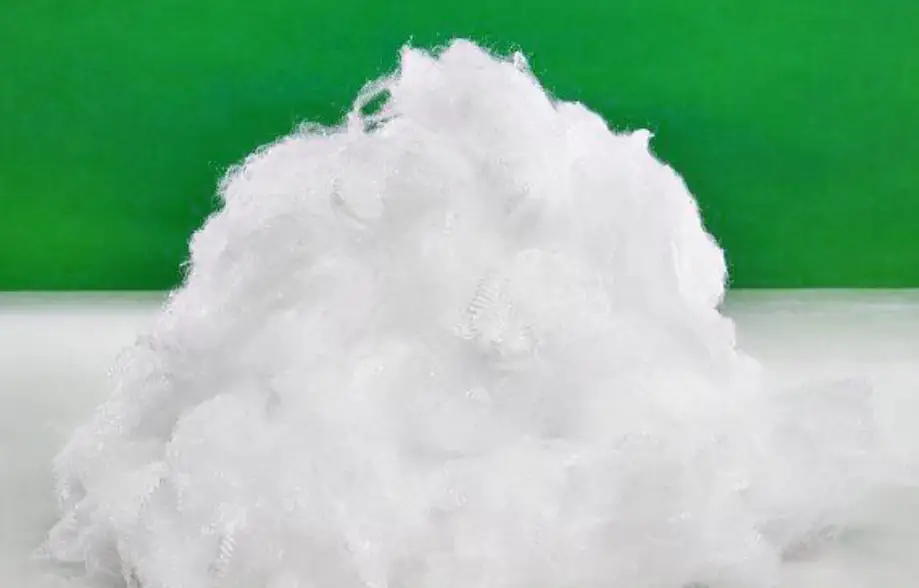
Polyester fiberfill (PP cotton) is the most commonly used fill material in commercial plush manufacturing. Fill density is typically measured in grams per unit, with standard ranges varying significantly by product category. A well-specified plush product brief will include both the outer dimension target and the fill weight specification, cross-referenced to the target body firmness rating.
Recommended Fill Weight Ranges by Product Size
| Product Size | Typical Fill Weight (g) | Firmness Profile | Application Note |
|---|---|---|---|
| Mini (5–12 cm) | 10 – 40 g | Firm to semi-firm | Keychain plush; crane prize standard |
| Small (13–25 cm) | 40 – 120 g | Semi-firm | Most common retail plush range |
| Medium (26–45 cm) | 120 – 350 g | Medium to soft | Character plush; gift-grade products |
| Large (46–70 cm) | 350 – 700 g | Soft to very soft | Premium and display-grade plush |
| Jumbo (71 cm +) | 700 g – 2,000 g+ | Variable; often semi-firm for shape | Custom orders; event pieces |
Matching Size to Packaging, Logistics, and Retail Shelf Reality
Product size has a direct impact on every downstream logistics cost. Plush toys are classified as lightweight but high-volume products, which means they are typically assessed on dimensional weight (DIM weight) by freight carriers rather than actual weight. A 60 cm plush bear, even if it weighs only 450 g, will occupy significant cubic volume and be rated accordingly for air or sea freight.
Retail shelf allocation is another critical consideration that brand developers often discover too late. Standard gondola shelves in mass-market toy aisles are typically 30–40 cm deep. A plush product exceeding 35 cm in its seated or standing height will require either a front-facing single-unit display or a floor-standing unit — both of which carry retailer-specific fixture fees.
Tip for brand developers: Before finalizing dimensions, request a carton-pack simulation from your manufacturer. For most small-to-medium plush, optimal inner carton quantities are 6, 12, or 24 units. Sizing your product to pack cleanly into a standard carton configuration reduces per-unit freight cost and simplifies retail replenishment.
For e-commerce-first brands, the calculation shifts. Products sold direct-to-consumer through platforms like Amazon or Shopify face different dimensional economics — oversized surcharges from fulfillment centers can erode margin on large plush significantly. The 45 cm threshold is commonly cited as a practical upper limit for products relying on FBA or comparable third-party fulfillment.
Packaging and Logistics Benchmarks by Plush Toy Size Tier
| Size Tier | Typical Carton Qty | Avg. Carton CBM | Retail Display Format | E-commerce Notes |
|---|---|---|---|---|
| Mini (≤ 12 cm) | 24 – 72 pcs | 0.01 – 0.05 | Floor bin/blister card | Standard parcel; no surcharge |
| Small (13–25 cm) | 12 – 24 pcs | 0.03 – 0.10 | Shelf-ready packaging (SRP) | Standard parcel; typically fine |
| Medium (26–45 cm) | 6 – 12 pcs | 0.08 – 0.25 | Front-facing shelf unit | Check DIM weight threshold |
| Large (46–70 cm) | 2 – 6 pcs | 0.20 – 0.60 | Floor display / end-cap | Oversized surcharge likely |
| Jumbo (71 cm+) | 1 – 2 pcs | 0.50 + | Freestanding / event display | LTL or special handling required |
Custom Size Specification: How to Brief Your Manufacturer
When requesting a custom size plush toy from a contract manufacturer, the quality of your technical brief directly determines how close the first sample will be to your vision — and how many revision rounds you will need. Vague briefs such as “approximately 30 cm, medium size” consistently produce divergent samples because manufacturers interpret ambiguous language differently.
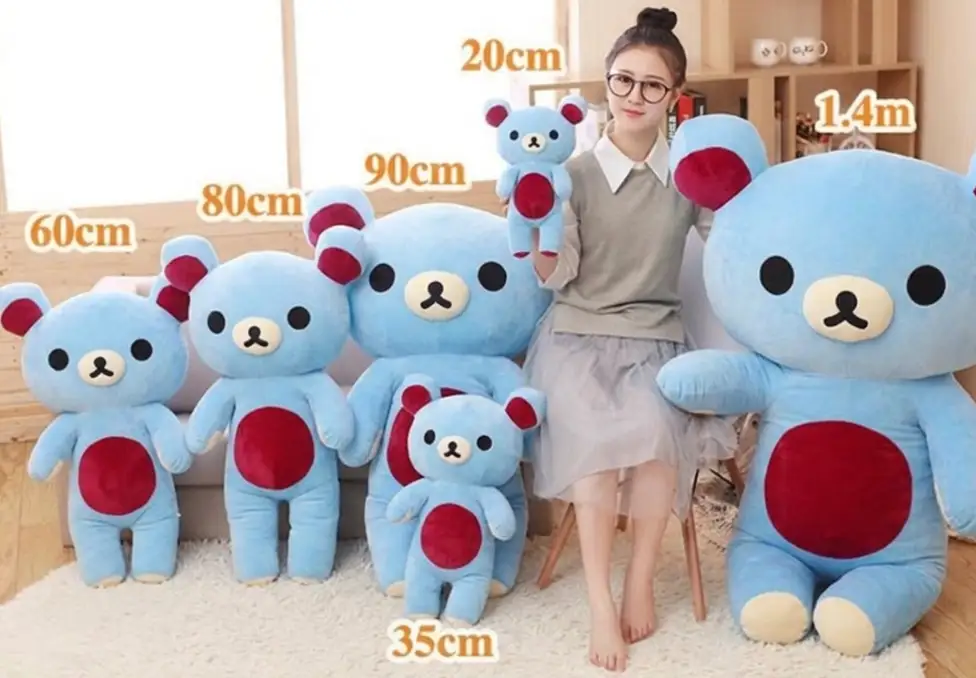
A complete plush toy size specification should include: overall height (standing or sitting, clearly stated), body width at widest point, head circumference or diameter, limb proportions relative to body, and fill firmness rating (typically described on a 1–5 scale from very soft to firm). Accompanying these measurements with a dimensional sketch — even a rough one — reduces miscommunication significantly.
Tip for product developers: Specify both the target dimension and the acceptable tolerance. A typical manufacturing tolerance for plush is ±5–10% on any given dimension. If your product has tight dimensional requirements — for example, a character that must fit a specific branded packaging box — tighten the tolerance specification to ±3% and confirm the manufacturer can hold it before committing to production.
Frequently Asked Questions
What is the most popular plush toy size for retail gift stores?
The small-to-medium range — typically 20 to 35 cm in seated height — is the dominant size tier in gift retail environments globally. This range balances perceived value with practical logistics: the product is large enough to feel substantial and gift-worthy, yet compact enough to pack efficiently in standard cartons and display on conventional gondola shelving.
For branded character plush sold in theme parks, souvenir shops, and gift boutiques, 25 cm sitting height has emerged as something of an informal industry benchmark. Products in this range also tend to fall within standard parcel shipping thresholds for direct-to-consumer fulfillment, making them versatile across both wholesale and e-commerce channels. Buyers sourcing for gift retail should also consider that the visual impact of a plush toy on shelf is partly a function of head-to-body ratio, not just raw size — a well-proportioned 25 cm plush can outperform a poorly designed 40 cm one in terms of perceived value.
How does plush toy size affect minimum order quantity (MOQ)?
Plush toy MOQ is typically driven more by unit economics and production run efficiency than by size alone, but size does play an indirect role. Larger plush toys consume more material, require longer sewing cycle times, and take up more storage and container space — all of which compress the manufacturer’s margin at small quantities. For mini and small plush (under 20 cm), MOQs at most contract manufacturers range from 500 to 2,000 units per design.
For medium plush (20–45 cm), MOQs typically start at 300 to 1,000 units. For large and jumbo plush, MOQs can be as low as 100–300 units per SKU, simply because each unit generates sufficient revenue to justify the production run. Custom size specifications — those requiring new pattern development — typically carry a one-time tooling or sampling fee that is separate from unit price negotiation. Working with an experienced manufacturer like Ken Wang Toys allows buyers to explore lower MOQ options for new product categories while maintaining competitive unit pricing.
Can the same plush toy design be offered in multiple sizes economically?
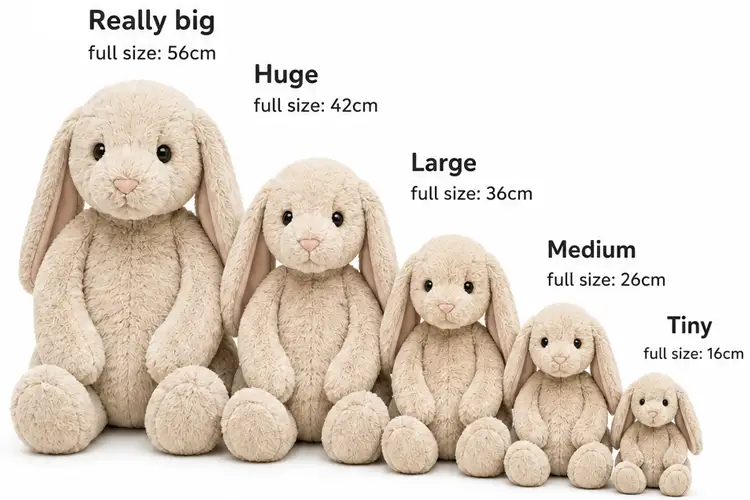
Yes, and it is a widely used commercial strategy, commonly referred to as size scaling or family sizing. A single character design offered in three sizes — for example, 15 cm, 30 cm, and 50 cm — creates a tiered price point range within a single SKU family, broadening retail placement options and enabling gift-set bundling. From a manufacturing standpoint, scaling a pattern requires proportional adjustment of all pattern pieces, not simply resizing the shell. Head-to-body ratios, eye placement, and limb proportions often need manual correction at each scale point to maintain the intended aesthetic.
A skilled manufacturer will create a separate graded pattern for each size rather than applying a blanket percentage scale. The incremental cost of creating additional sized patterns is typically modest compared to the commercial upside, and most experienced plush manufacturers include basic size scaling in their sampling capability. Buyers should confirm at briefing whether the factory has digital pattern grading capability or relies on manual re-drafting.
What size plush toys are typically used for promotional and corporate gifting?
Corporate and promotional plush programs predominantly favor the 15 to 25 cm size range. This tier offers an optimal balance of perceived value, brand visibility (sufficient surface area for embroidery, printing, or fabric color blocking to represent brand identity), and cost efficiency for volume orders. Products in this range also qualify as carry-on-friendly gifts at trade shows and events, and pack efficiently into mailer boxes for direct-to-recipient delivery.
For branded mascot plush — animals or characters representing a company or sports team — 20 to 30 cm is the most requested specification range among B2B buyers. Smaller promotional plush (under 12 cm) are also popular for high-volume giveaway programs where per-unit cost is the primary constraint. For premium corporate gifting — items with a perceived value of USD 25 and above — medium to large plush in the 30 to 50 cm range with high-quality materials such as minky or premium velboa fabric are increasingly common. Ken Wang Toys handles the full range of corporate plush programs, from 500-unit promotional runs to large-scale event orders.
How should I specify plush toy size when requesting a factory quote?
A quotation-ready plush size specification should include at minimum: the measurement method (sitting height, standing height, or overall length for animals), the specific target dimensions in centimeters, the acceptable manufacturing tolerance (typically ±5–8%), and the fill firmness rating. If you have a reference sample — either your own prototype or a competitor product — shipping it to the factory alongside your specification sheet dramatically improves first-sample accuracy.
When dealing with characters with complex proportions, a dimensional drawing or annotated photo (showing key measurement points) is strongly recommended. Avoid specifying size in vague descriptors like “medium” or “small” without numerical backing, as these terms mean different things to different manufacturers in different markets. If your product will be sold in the EU or US, confirm that the factory is familiar with the applicable sizing-related safety standards (EN 71 small-parts requirements, ASTM F963 age-grading guidelines) and can document compliance in the order paperwork.