Skip to content
Third-Party Testing in Plush Toys plays a crucial role in verifying product safety, meeting regulatory requirements, and building consumer confidence in global markets. When a plush toy reaches a child’s hands, the safety assurances behind it are only as credible as the process used to verify them.
Self-declared compliance — where a manufacturer certifies its own products without external verification — carries structural limitations that regulators, retail buyers, and liability insurers have recognized for decades.
Third-party testing, conducted by an accredited independent laboratory with no financial relationship to the product being assessed, addresses those limitations directly. It transforms a supplier’s internal claim into an auditable, market-recognized certificate of conformity. For brands and importers operating across multiple destination markets, independent laboratory testing is not simply best practice — it is a legal and commercial prerequisite.
What Third-Party Testing Actually Means
The term “third-party testing” has a precise meaning in the regulatory context. The manufacturer itself conducts first-party testing. Second-party testing is conducted by a buyer or retailer auditing a supplier. Third-party testing is conducted by an independent organization that is neither the manufacturer nor the buyer — typically an accredited laboratory operating under ISO/IEC 17025, the international standard for testing and calibration laboratory competence.
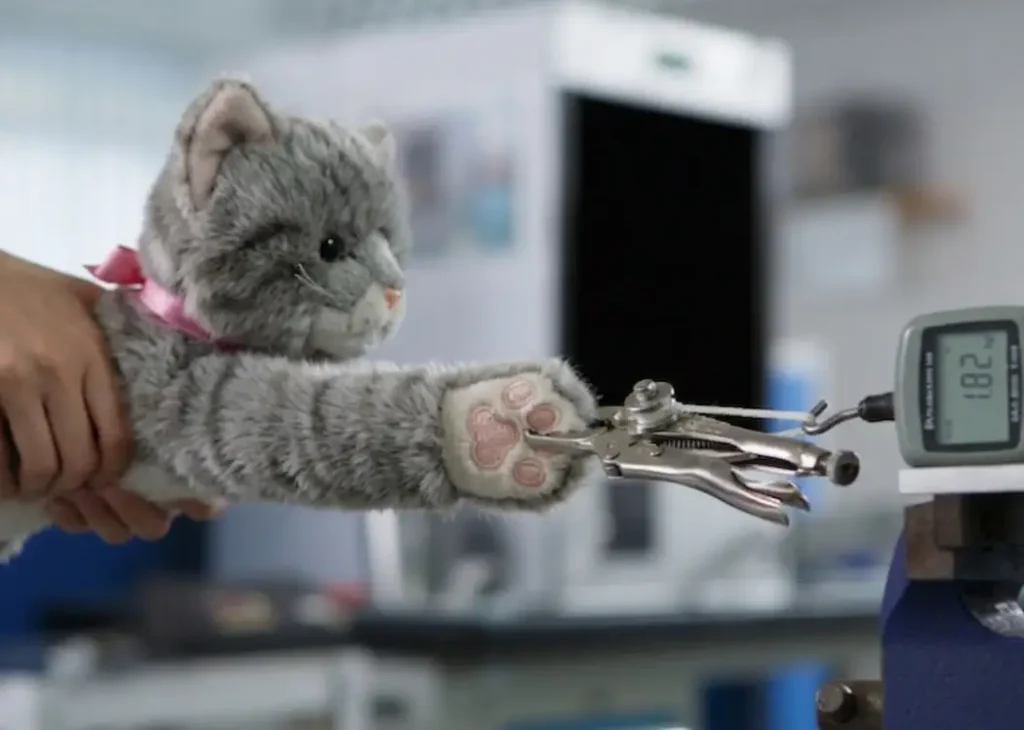
For plush toys, third-party testing encompasses physical and mechanical assessments, chemical content analysis, flammability evaluation, and labeling verification. Each of these domains requires specialized equipment, calibrated measurement tools, and trained personnel — none of which are routinely available within a toy production facility. The independence of the laboratory is what makes the resulting test report credible to regulators, customs authorities, and retail compliance teams.
Comparison of testing party types in toy safety compliance
| Testing Type | Conducted By | Regulatory Acceptance | Limitation |
|---|---|---|---|
| First-party | Manufacturer/factory | Not accepted for regulated markets | Conflict of interest; no external calibration |
| Second-party | Buyer/brand/retailer audit team | Limited; accepted for internal sourcing decisions | Buyer-supplier relationship reduces independence |
| Third-party | Accredited independent laboratory | Accepted by CPSC, EU authorities, ACCC, and most retail standards | Requires planning; adds lead time and cost |
The Regulatory Case for Independent Verification
In the United States, the Consumer Product Safety Improvement Act (CPSIA) mandates third-party conformity testing for all children’s products, a category that includes virtually all plush toys. The resulting Children’s Product Certificate (CPC) must reference a test report issued by a CPSC-accepted third-party laboratory. Importing children’s products without a valid CPC is a federal violation, with civil penalties reaching tens of thousands of dollars per violation and potential product seizure at the port of entry.
In the European Union, the Toy Safety Directive (2009/48/EC) and its implementing regulations establish a risk-based framework under which certain toy categories — including those for children under 36 months — require mandatory third-party testing before a CE mark can be affixed. For toys outside those mandatory categories, EN 71 compliance testing is still strongly recommended and practically required by major retail accounts, even when technically self-certifiable under the directive.
Regulatory requirements for third-party testing by market
| Market | Governing Regulation | Third-Party Requirement | Documentation Outcome |
|---|---|---|---|
| United States | CPSIA (15 U.S.C. §2063) | Mandatory for all children’s products | Children’s Product Certificate (CPC) |
| European Union | Toy Safety Directive 2009/48/EC | Mandatory for under-36-month toys and certain risk categories | Declaration of Conformity + CE mark |
| United Kingdom | UK Toy Safety Regulations 2011 (as amended) | Same scope as EU directive (post-Brexit equivalent) | Declaration of Conformity + UKCA mark |
| Canada | Canada Consumer Product Safety Act | Strongly recommended; required for major retail chains | Test report + risk assessment file |
| Australia | AS/NZS 8124 / Mandatory Standard | Required for mandatory standard product categories | Supplier declaration + supporting test evidence |
Why In-House Testing Cannot Replace Laboratory Accreditation
A common question among manufacturers expanding into export markets is whether robust in-house quality control can substitute for third-party laboratory testing. The answer, in regulated markets, is no — and the reasons are both technical and structural.
Equipment and Calibration Requirements
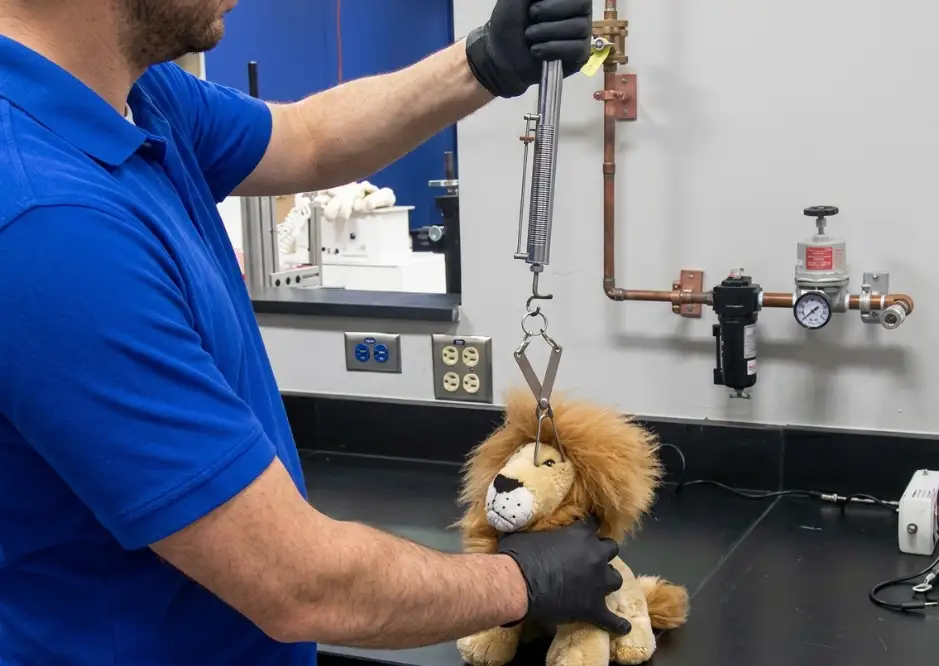
Standard plush toy test methods require equipment that is prohibitively costly for most production environments: calibrated tensile testing machines for pull-force assessments, atomic absorption spectroscopy or ICP-MS instrumentation for heavy metal analysis, standardized burn test chambers for flammability evaluation, and small-parts cylinders that must meet geometric tolerances specified in ASTM F963 and EN 71-1. Accredited laboratories maintain these instruments on documented calibration schedules traceable to national measurement standards — a requirement that underpins the legal credibility of the results they produce.
The Objectivity Problem
Beyond equipment access, there is a fundamental objectivity constraint. A quality team employed by the entity whose product is being tested has an organizational incentive — however inadvertent — toward favorable interpretation of borderline results. Independent laboratories have no such incentive. Their business model depends on the credibility of their reports, which aligns their institutional interest with accurate, unbiased outcomes. This structural independence is precisely what regulatory frameworks are designed to require.
Testing capabilities: in-house QC versus accredited third-party laboratory
| Test Area | In-House QC | Accredited Laboratory |
|---|---|---|
| Seam pull force | Approximate (manual pull test) | Calibrated tensile tester; ISO 17025 traceable |
| Lead content | XRF screening (not legally sufficient) | ICP-MS or AAS per CPSC accepted methods |
| Flammability | Informal burn observation only | Standardized burn chamber; EN 71-2 / ASTM protocol |
| Small parts | Visual check; informal cylinder | Calibrated small-parts cylinder; documented results |
| Phthalate content | Not measurable in-house | GC-MS per EN 71-9 / CPSIA method |
| Report legal standing | No regulatory acceptance | Accepted by CPSC, EU, UKCA, and retail compliance |
Sourcing Tip
Use in-house QC as a pre-screen, not a substitute. A well-run internal inspection — checking eye attachment pull resistance with a handheld scale, verifying seam stitch density, and reviewing supplier certificates — can identify likely failure points before laboratory submission, reducing the risk of a costly first-attempt failure. In-house screening adds value; it just cannot replace the accredited test report for regulatory or retail compliance purposes.
How Third-Party Testing Protects Supply Chain Integrity
Plush toy production typically involves multiple tiers of suppliers: fabric mills, stuffing material producers, trim and accessory manufacturers, embroidery and printing subcontractors, and final assembly factories. Each tier introduces material variability that upstream brand owners cannot fully control through contract language alone. Third-party testing creates a verification checkpoint that cuts across the entire supply chain, catching non-conformances that supplier declarations, factory audits, and internal QC may have missed.
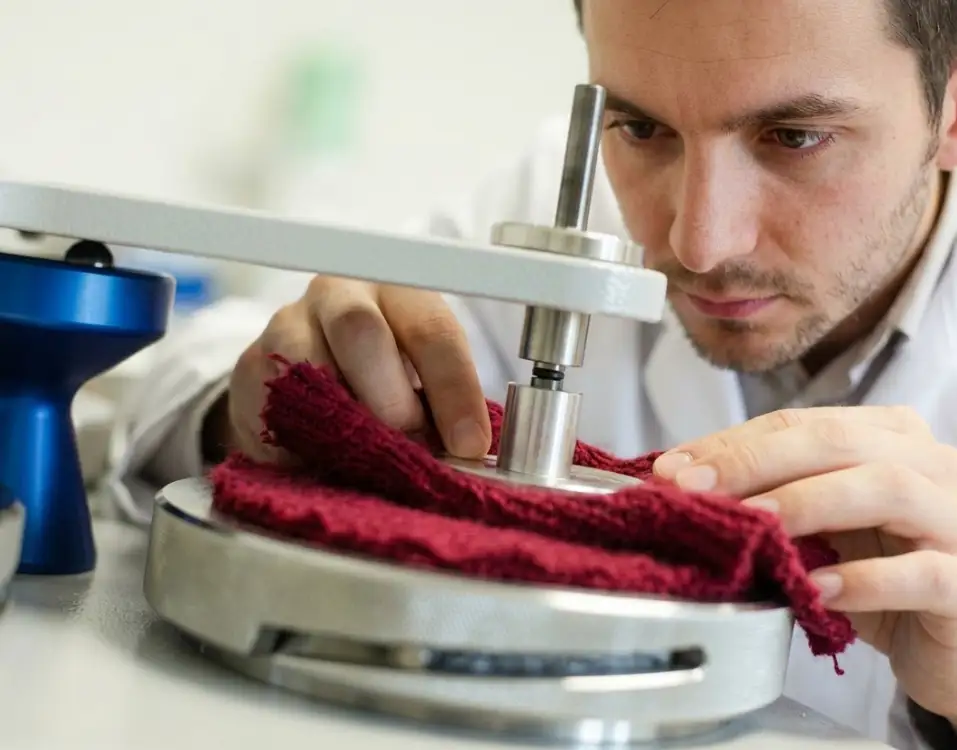
Restricted substance violations — particularly for azo dyes, formaldehyde, phthalates, and lead — frequently originate not in the primary fabric but in secondary materials: dyed trims, coated accessories, adhesive-bonded labels, or printed decorations. These components are often sourced independently by assembly factories and may not be covered by the fabric supplier’s Oeko-Tex certificate. Third-party chemical testing at the finished product level provides coverage that no upstream material certificate alone can replicate.
Common supply chain failure points identified through third-party testing
| Failure Type | Typical Origin in Supply Chain | Test That Detects It |
|---|---|---|
| Excess lead in surface coating | Painted or coated accessories (eyes, nose plates) | CPSIA §101 lead content; EN 71-3 migration |
| Azo dye violation | Low-cost trims or ribbon sourced separately from main fabric | EN 71-9 / REACH restricted azo amines |
| Seam failure after wash | Thread substitution in assembly without brand approval | EN 71-1 §8.7 seam strength after conditioning |
| Eye detachment | Under-specification post length or washer diameter | EN 71-1 pull-out force; ASTM F963 §4.6 |
| Flammability non-conformance | Undisclosed fabric substitution (e.g. higher-pile alternative) | EN 71-2 surface flame propagation |
Risk Management Tip
When changing any raw material supplier mid-production — even for a component that appears minor, such as a ribbon trim or plastic eye backing — treat the change as a potential retest trigger. Request a material safety data sheet and substance declaration for the new component before it enters production, and evaluate whether the change falls within the scope of your existing test report or requires a new laboratory submission.
Commercial and Retail Requirements Beyond Regulatory Minimums
Even in markets where third-party testing is technically optional for certain toy categories, the commercial reality of modern retail distribution makes independent certification effectively mandatory. Major e-commerce platforms, mass-market retail buyers, and specialty toy chains have established vendor compliance programs that require third-party test reports as a condition of listing, purchasing, and continued supply. These private standards often extend beyond the regulatory baseline, specifying additional chemical restrictions, audit frequency requirements, and documentation retention periods.
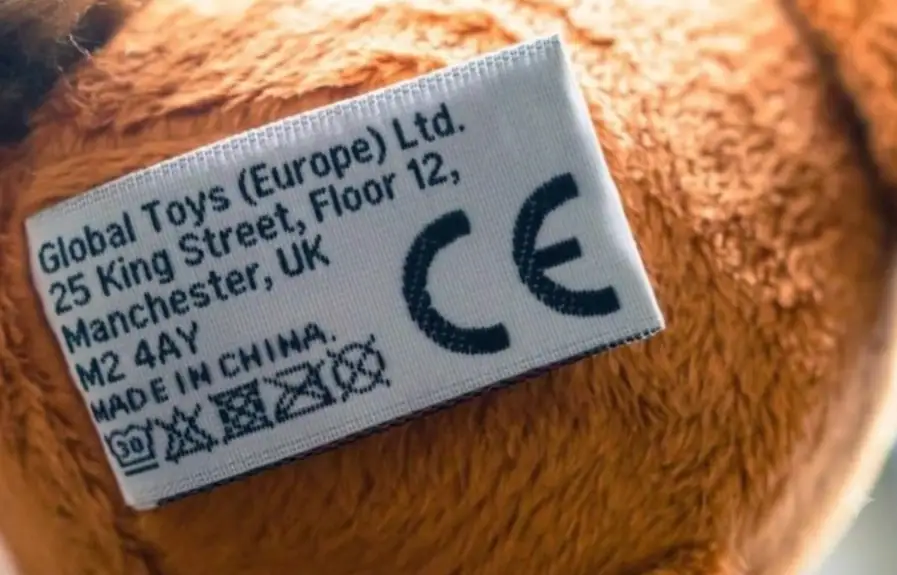
Retail compliance programs serve the same risk management function as regulatory requirements, but from the buyer’s perspective. A retailer that sells a recalled toy bears reputational damage, legal liability, and significant operational disruption — all of which create a strong institutional incentive to require rigorous supplier documentation. For a plush toy brand seeking distribution at scale, the ability to produce current, comprehensive third-party test reports is as important a qualification as price competitiveness and production capacity.
Typical retail vendor compliance requirements for plush toys
| Requirement Category | What Retailers Typically Ask For | Frequency |
|---|---|---|
| Test report currency | Report dated within 12–24 months | Annual renewal for ongoing orders |
| Laboratory accreditation | ISO/IEC 17025 scope covering toy test methods | Verified at onboarding + annually |
| Chemical scope | Often exceeds regulatory minimums (e.g., extended phthalate panel, SVHC list) | Per shipment for new materials |
| Age grading documentation | Written justification for age rating, signed by technical officer | Per product SKU |
| Factory audit | SMETA, BSCI, or equivalent social compliance audit | Annual; sometimes biannual |
Frequently Asked Questions
What makes a laboratory “accredited” for plush toy testing, and how do I verify it?
Laboratory accreditation for toy testing is granted by national accreditation bodies operating under ISO/IEC 17011, which oversees accreditation organizations globally. In the United States, the CPSC maintains a publicly searchable list of CPSC-accepted third-party laboratories at cpsc.gov, and accreditation is typically granted through A2LA or NVLAP.
In the EU, accreditation is issued by national bodies such as UKAS (UK), DAkkS (Germany), COFRAC (France), or equivalent bodies in each member state. To verify a laboratory’s scope, request a copy of their current accreditation certificate and scope document, which lists the specific test methods they are accredited to perform. Accreditation to ISO/IEC 17025 in general does not automatically mean the laboratory is scoped for EN 71 or ASTM F963 — the scope document is the definitive reference.
How many plush toy samples does a laboratory typically need for a full safety test submission?
Sample quantity requirements vary by standard and the scope of testing requested. A comprehensive EN 71 submission covering Parts 1, 2, and 3 typically requires between 3 and 8 units of each product variant, depending on whether destructive testing (abuse testing, seam pull testing, flammability) is included — which it normally is. Chemical testing for restricted substances requires additional material samples, sometimes in the form of fabric swatches, trim components, or accessory specimens rather than whole toys.
For ASTM F963 and CPSIA submissions, similar quantities apply. When submitting for both US and EU standards simultaneously from a single engagement, laboratories can often share sample consumption across test methods, reducing the total units required. Confirming exact sample requirements with the laboratory before shipment avoids delays caused by insufficient sample quantities.
Does a third-party test report cover all color variants and size variants of a plush toy, or does each variant need its own report?
This is one of the most practically significant questions in toy compliance, and the answer depends on what differs between variants. A single test report can cover multiple size variants if the construction, materials, and components are identical and only physical dimensions differ — provided the smallest variant passes small-parts testing independently.
Color variants, however, are treated differently: different fabric colors involve different dye lots and potentially different dye chemistry, which means chemical testing — particularly for restricted azo dyes and heavy metals — must be conducted on each distinct color. Structural variants (e.g., a version with sewn-on eyes versus a version with plastic button eyes) require separate mechanical testing because the failure modes differ. When in doubt, consult the laboratory at the planning stage to determine the minimum sample matrix that provides valid coverage across your product range.
What happens if a third-party test report expires while a product is still being sold?
Regulatory frameworks differ on the question of certificate expiration. Under CPSIA, a Children’s Product Certificate remains valid as long as the product and its materials have not changed — there is no mandatory expiration period imposed by the CPSC itself. However, the underlying test methods and chemical limit schedules are updated periodically, and a certificate based on an outdated test method may no longer demonstrate compliance with current requirements.
In the EU, the Declaration of Conformity does not carry an expiration date, but it must reflect the current state of the product and the current applicable standards. In practice, most retail vendor compliance programs impose their own certificate renewal requirements — typically 12 to 24 months — regardless of whether the product or regulation has changed. Maintaining a compliance calendar that tracks renewal windows for each active SKU prevents gaps in documentation that can interrupt purchase orders or trigger delisting.
Can a product fail third-party testing even if the factory has been producing the same design for years without reported incidents?
Yes, and this situation occurs more often than buyers and brands expect. There are several reasons why a long-running product may fail when formally submitted for third-party testing. First, historical production may have used materials that are no longer compliant because chemical limits have been tightened — particularly for lead, phthalates, and certain azo dyes, which have seen progressive restriction over the past two decades.
Second, undocumented material substitutions at the factory level are common: thread, trim, stuffing, or accessory suppliers change without formal notification to the brand, altering the product’s compliance profile. Third, a product may have been tolerated by consumers without a formal complaint even while technically non-conforming — the absence of reported incidents does not establish compliance. The only reliable way to establish that a currently produced product meets current standards is to test a current production sample against current test methods.