Skip to content
CE certification for plush toys is essential for ensuring product safety, regulatory compliance, and smooth access to the European market. A practical breakdown of what the CE mark means for plush toy manufacturers and importers — covering EN 71 testing, technical documentation, Declaration of Conformity, and market surveillance risks.
The CE mark is one of the most recognized regulatory symbols in international trade, yet it remains widely misunderstood — particularly among plush toy brands and importers entering the European market for the first time. Affixing the CE mark to a plush toy is not simply a formality or a design choice. It is a legal declaration that the product has been assessed against applicable European Union safety directives, meets all mandatory requirements, and is accompanied by the technical documentation to prove it.
For plush toys, CE certification sits at the intersection of the EU Toy Safety Directive (2009/48/EC), harmonized testing standards — primarily EN 71 — and a set of documentation, labeling, and traceability obligations that apply to every actor in the supply chain. Whether you are a manufacturer in China, a brand owner importing to the EU, or a European distributor carrying own-label plush products, understanding what CE compliance actually requires is essential for both legal protection and market access.
What the CE Mark Actually Means
CE stands for Conformité Européenne — French for “European Conformity.” It is a mandatory conformity marking for products sold within the European Economic Area (EEA), indicating that the product meets EU safety, health, and environmental requirements. For toys, the governing directive is the EU Toy Safety Directive 2009/48/EC, which came into full effect in July 2013 and applies to all products designed or intended for play by children under 14 years of age.
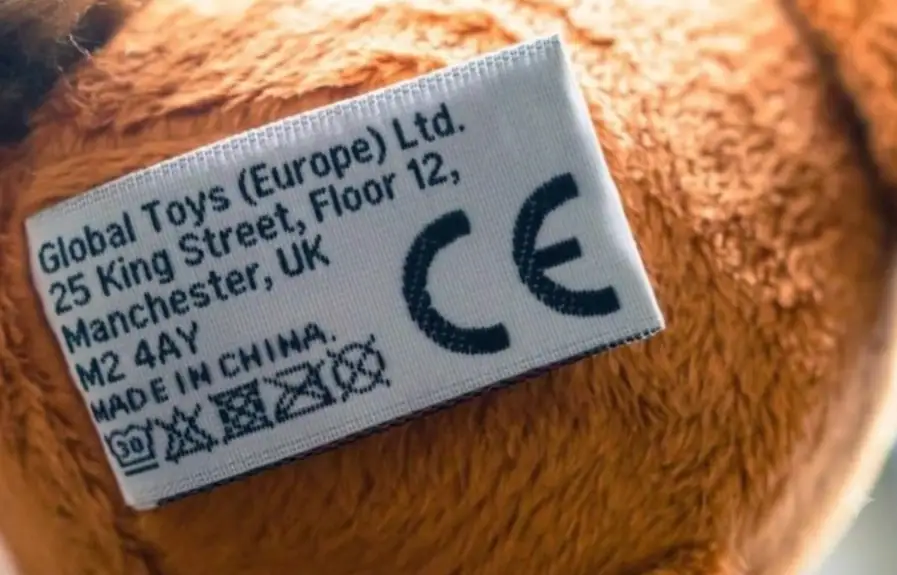
Critically, the CE mark is not issued by any government authority or independent certification body. It is a self-declaration by the manufacturer or the EU-based responsible party. This means the legal and commercial responsibility for CE compliance rests entirely with the manufacturer or importer — not with a testing laboratory. A third-party test report supports the CE declaration but does not itself constitute certification.
💡 Tip: Many new importers mistakenly believe that receiving a test report from a lab means their product is “CE certified.” In legal terms, no such certification exists — the CE mark is a self-declaration backed by a Technical File. The test report is one component of that file, not a standalone certification document.
The EU Toy Safety Directive and Plush Toys
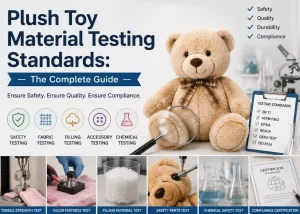
The Toy Safety Directive (TSD) 2009/48/EC establishes the essential safety requirements that all toys placed on the EU market must meet. For plush toys specifically, the directive covers mechanical and physical properties, chemical substance restrictions, flammability behavior, and labeling requirements. The directive is enforced through harmonized European standards — most importantly the EN 71 series — which provide the specific test methods and performance criteria that constitute compliance.
Key EN 71 Standards Applicable to Plush Toys
EN 71 is a multi-part standard, and plush toys are typically assessed against several parts depending on their design, intended age group, and features. Understanding which parts apply to a given plush product is one of the first steps in planning a compliant testing program.
EN 71 Standard Parts Relevant to Plush Toys
| EN 71 Part | Scope | Key Tests for Plush Toys |
|---|---|---|
| EN 71-1 | Mechanical and physical properties | Bite force, pull force on components, sharp edges/points, small parts for under-3 toys, seam strength |
| EN 71-2 | Flammability | Surface flammability of fabric; flame spread rate; pile fabric behavior |
| EN 71-3 | Migration of certain elements | Heavy metal migration from materials that may be mouthed (fabric, filling, eyes, nose) |
| EN 71-9 | Chemical compounds — organic chemical compounds | Restrictions on formaldehyde, azo dyes, phthalates in fabric and filling materials |
| EN 62115 | Electric toys (if applicable) | Applies to plush toys with electronic components, sound modules, or light features |
💡 Tip: If your plush toy includes a sound chip, LED light, or motion sensor, EN 62115 (electrical toy safety) and potentially the Low Voltage Directive or Radio Equipment Directive may also apply — adding scope to both testing and documentation requirements. Always scope your compliance obligations before finalizing the product design.
Chemical Restrictions: REACH and Substance Limits
Beyond the EN 71 standard, plush toys sold in the EU must also comply with REACH Regulation (EC) No 1907/2006 — the EU’s comprehensive framework for chemical safety in materials and articles. REACH restricts or prohibits the use of a wide range of substances of very high concern (SVHCs) in products, including certain phthalates, azo colorants that release carcinogenic amines, nickel in metal components, and flame retardants in textile materials.

For plush toys, the most frequently tested chemical parameters include formaldehyde content in fabric, phthalates in any soft PVC components, heavy metal content in printing inks and dyes, and pH value of fabric materials — which must fall within a range that is safe for prolonged skin contact with children.
Key Chemical Substance Limits for Plush Toy Compliance
| Substance / Parameter | Applicable Limit | Material of Concern | Regulation |
|---|---|---|---|
| Formaldehyde (free) | ≤ 30 mg/kg (baby); ≤ 75 mg/kg (children) | Outer fabric, lining | EN 71-9, REACH |
| Azo dyes (carcinogenic amines) | ≤ 30 mg/kg per amine | Dyed fabric, thread | REACH Annex XVII |
| Total phthalates (DEHP, DBP, BBP) | ≤ 0.1% by weight | PVC decorative parts | REACH Annex XVII |
| Heavy metals (EN 71-3) | Varies by element (e.g., Lead ≤ 13.5 mg/kg) | Paint, eyes, nose, fill | EN 71-3 |
| pH value (fabric) | 4.0–7.5 (infants); 4.0–8.0 (children) | Outer shell fabric | EN 71-9, Oeko-Tex |
| Nickel release | ≤ 0.5 μg/cm²/week | Metal zippers, clasps | REACH Annex XVII |
Building the Technical File
The Technical File — sometimes called the Technical Documentation — is the core compliance record that manufacturers must create and maintain for each plush toy product placed on the EU market. It does not need to be submitted to any authority proactively, but it must be made available to national market surveillance authorities upon request. Failure to produce a complete Technical File when requested is itself a compliance violation, separate from any product safety issue.
What the Technical File Must Contain
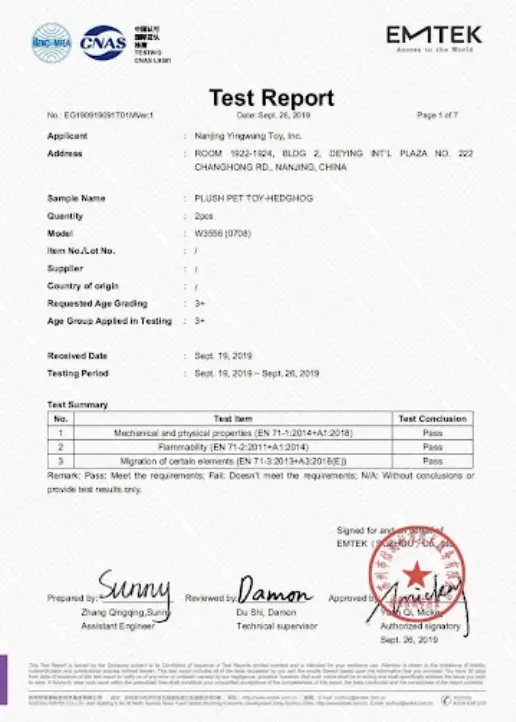
The Technical File for a plush toy typically includes a detailed product description and design drawings, a list of all applicable EU directives and harmonized standards, third-party test reports demonstrating conformity with EN 71 and relevant chemical standards, a risk assessment conducted by or on behalf of the manufacturer, and records of any corrective actions taken during product development. The file must be retained for a minimum of ten years from the date the product is last placed on the market.
Technical File Components for Plush Toy CE Compliance
| Document | Purpose | Who Prepares It |
|---|---|---|
| Product description and drawings | Identifies the product and its construction details | Manufacturer/designer |
| List of applicable directives and standards | Defines the regulatory scope | Manufacturer/compliance consultant |
| EN 71 test reports | Evidence of mechanical, flammability, and chemical compliance | Accredited third-party laboratory |
| REACH / chemical test reports | Substance restriction compliance evidence | Accredited third-party laboratory |
| Risk assessment | Documents hazard identification and mitigation | Manufacturer / technical consultant |
| Declaration of Conformity (DoC) | Formal self-declaration of compliance | Manufacturer or EU Authorised Representative |
| Quality control records | Demonstrates production consistency | Manufacturer / QC team |
💡 Tip: Non-EU manufacturers (e.g., factories in China or Vietnam) are not required to sign the Declaration of Conformity themselves — but they must ensure it is signed by their EU-based importer or an appointed EU Authorised Representative before the goods enter the EU market. Appointing an EU AR is a low-cost, high-value step that non-EU brands frequently overlook until customs or market surveillance raises a flag.
Age Grading, Labeling, and Traceability Requirements
CE marking compliance for plush toys extends beyond testing and documentation to encompass physical product labeling. Every toy must bear the CE mark visibly, legibly, and indelibly — either directly on the product, on attached labeling, or on the packaging when the size of the toy makes direct marking impractical.
Age grading warnings are mandatory for toys not suitable for children under 36 months. For plush toys intended for infants and toddlers under three, the warning “Not suitable for children under 36 months” or the equivalent graphic symbol must appear on the product and packaging. Products with small detachable components that present a choking hazard require this warning regardless of the stated age range.
Traceability requirements under the TSD mandate that every toy placed on the EU market must bear the name and postal address of the manufacturer. For imported toys, the EU importer’s name and address must also appear on the product or its packaging. Batch or lot numbers that enable product identification back to a specific production run are strongly recommended and increasingly expected by market surveillance authorities.
CE Labeling Requirements for Plush Toys
| Labeling Element | Requirement | Location |
|---|---|---|
| CE mark | Mandatory; minimum height 5mm; must be proportional | Product, label, or packaging |
| Manufacturer name and address | Mandatory; must be a contactable EU address | Product or packaging |
| EU importer name and address | Mandatory for non-EU manufactured products | Product or packaging |
| Age warning (under 3 years) | Mandatory if applicable; graphic or text | Product and packaging |
| Batch/lot number | Strongly recommended; required for traceability | Product, label, or packaging |
| Care and safety instructions | Required where relevant (wash instructions, etc.) | Attached label or packaging insert |
Market Surveillance and Non-Compliance Consequences
CE marking compliance is actively enforced across EU member states through national market surveillance authorities. These authorities conduct both targeted and random product inspections at customs, in retail stores, and on online marketplaces. Platforms such as Amazon EU and major European retailers are increasingly required to verify CE compliance documentation before listing toy products.
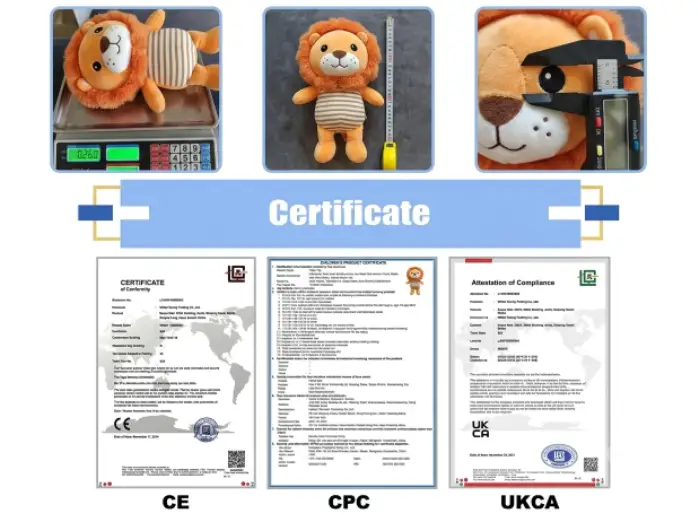
Consequences of non-compliance range from product recall and withdrawal from market to significant financial penalties and — in serious cases — criminal liability. The EU’s RAPEX (Rapid Alert System for Dangerous Non-Food Products) publicly lists recalled toys, and a RAPEX listing carries severe reputational damage in addition to direct compliance cost. Plush toys consistently feature among the most commonly notified product categories in RAPEX reports.
CE Non-Compliance Risks and Consequences
| Non-Compliance Issue | Likely Consequence | Responsible Party |
|---|---|---|
| Missing or incorrect CE mark | Product withdrawal; market ban | Manufacturer / importer |
| No Technical File available | Fines; forced withdrawal; criminal liability | Manufacturer / EU AR |
| Failed EN 71-1 mechanical test | RAPEX notification; mandatory recall | Manufacturer/importer |
| Prohibited chemical substance | Recall; destruction of stock; media coverage | Manufacturer / importer |
| Missing age warning for under-3 hazard | Market withdrawal; enforcement notice | Importer/distributor |
| No EU Authorised Representative (non-EU brand) | Customs detention; import ban | Non-EU manufacturer/brand |
💡 Tip: Before finalizing a new plush toy design for the EU market, commission a pre-compliance design review with an accredited testing laboratory or regulatory consultant. Identifying potential failure points — such as a small detachable eye button or a fabric with insufficient flammability performance — at the design stage costs a fraction of what a product recall or redesign costs after manufacturing has begun.
Frequently Asked Questions
1. Does every plush toy sold in the EU need a CE mark?
Yes — any product designed or intended for play by children under 14 years of age and sold within the European Economic Area must bear the CE mark under Directive 2009/48/EC. This applies regardless of whether the product is sold through a physical retailer, an online marketplace, or directly to consumers via a brand’s own website. Plush toys — including stuffed animals, soft dolls, and cuddly characters — fall squarely within this definition.
There are no exemptions for small batch production, handmade products, or low-price-point items. Products sold as collectibles or decorative items “not intended for children” may argue exemption, but this position requires clear and credible age restriction at point of sale and is scrutinized carefully by market surveillance authorities.
2. Can a manufacturer in China self-declare CE compliance, or is a Notified Body required?
For the majority of plush toys, the conformity assessment route under the Toy Safety Directive does not require involvement of a Notified Body — meaning the manufacturer (or the EU importer on their behalf) can self-declare compliance based on internal technical documentation and third-party test reports. A Notified Body is only mandatory when a toy does not conform to a harmonized standard or when there is no harmonized standard covering the safety aspect in question.
In practice, the vast majority of standard plush toys comply through the self-declaration route backed by EN 71 test reports from an accredited laboratory. However, the Declaration of Conformity must be signed by someone with an EU address — either the EU importer or an appointed EU Authorised Representative — meaning a China-based manufacturer cannot sign the DoC for EU market products without EU representation.
3. How long does CE compliance testing take, and what does it typically cost?
For a standard plush toy with no electronic components, a full EN 71 Part 1, 2, and 3 test program typically takes between two and four weeks from sample submission to receipt of the test report. Adding chemical testing panels (EN 71-9, REACH parameters) may add one to two additional weeks depending on the number of materials tested.
Cost-wise, a comprehensive EN 71 and chemical compliance test package for a plush toy typically ranges from USD 500 to USD 1,500 per product, depending on the number of materials, components, and test parameters required. Laboratories such as SGS, Bureau Veritas, Intertek, and TÜV Rheinland offer plush toy compliance testing with internationally recognized accreditation. Rush testing services are available at a premium for time-sensitive product launches.
4. What happens if a plush toy fails EN 71 testing?
A test failure means the product in its current form does not meet the mandatory requirements of the Toy Safety Directive and cannot legally be placed on the EU market with a CE mark. The appropriate response depends on which test was failed. Mechanical failures — such as a button eye that detaches under the specified pull force, or a seam that fails under bite force simulation — typically require a design or construction change, such as upgrading the eye attachment method or reinforcing the seam stitching. Flammability failures may require changing the outer fabric to a less flammable alternative.
Chemical failures require substituting the non-compliant material and re-testing the affected component. The product cannot ship to the EU until revised samples pass all applicable tests. Manufacturing and shipping based on a known failed test report exposes the importer to the full range of enforcement consequences, including RAPEX notification.
5. Does Brexit mean UK brands still need CE marking to sell plush toys in Great Britain?
No — since January 1, 2021, Great Britain (England, Scotland, and Wales) has operated its own product safety framework separate from the EU. Products sold in Great Britain now require the UKCA (UK Conformity Assessed) mark rather than the CE mark, under the UK Toys (Safety) Regulations 2011 as retained in UK law. The underlying technical requirements largely mirror EN 71 and the EU Toy Safety Directive, but the marking, documentation, and responsible party rules differ.
Northern Ireland continues to follow EU rules under the Windsor Framework and requires the CE mark for toys sold there. Brands selling into both the EU and UK market must maintain separate conformity declarations and technical documentation to satisfy both regulators. Mutual recognition arrangements between the UK and EU for toys do not currently exist, meaning full compliance with both frameworks is required for brands active in both markets.
Conclusion
CE certification for plush toys is a structured, legally binding compliance process that protects both children and brands operating in the European market. At its core, it requires a clear understanding of the applicable directives and standards, a well-documented Technical File, credible third-party test evidence, and correctly labeled products with a valid Declaration of Conformity signed by an EU-based responsible party.
For manufacturers and importers approaching the EU market for the first time, the compliance landscape can appear complex — but it is entirely navigable with the right preparation. Engaging an accredited testing laboratory early in the product development cycle, appointing an EU Authorised Representative if operating from outside the EU, and building compliance documentation into the product launch timeline are the three most impactful steps any plush toy brand can take to ensure smooth market entry and long-term regulatory confidence.