Skip to content
How to choose faux fur fabrics for premium plush toys? The tactile experience of a premium plush toy begins with one material decision: the faux fur fabric. Softness, pile consistency, color vibrancy, and long-term durability are all determined at the fabric selection stage — long before a single seam is sewn.
For brands competing in the premium segment of the plush toy market, understanding faux fur fabric specifications, grading criteria, and sourcing considerations is foundational to product quality and customer satisfaction.
What Faux Fur Fabric Is and How It Is Constructed
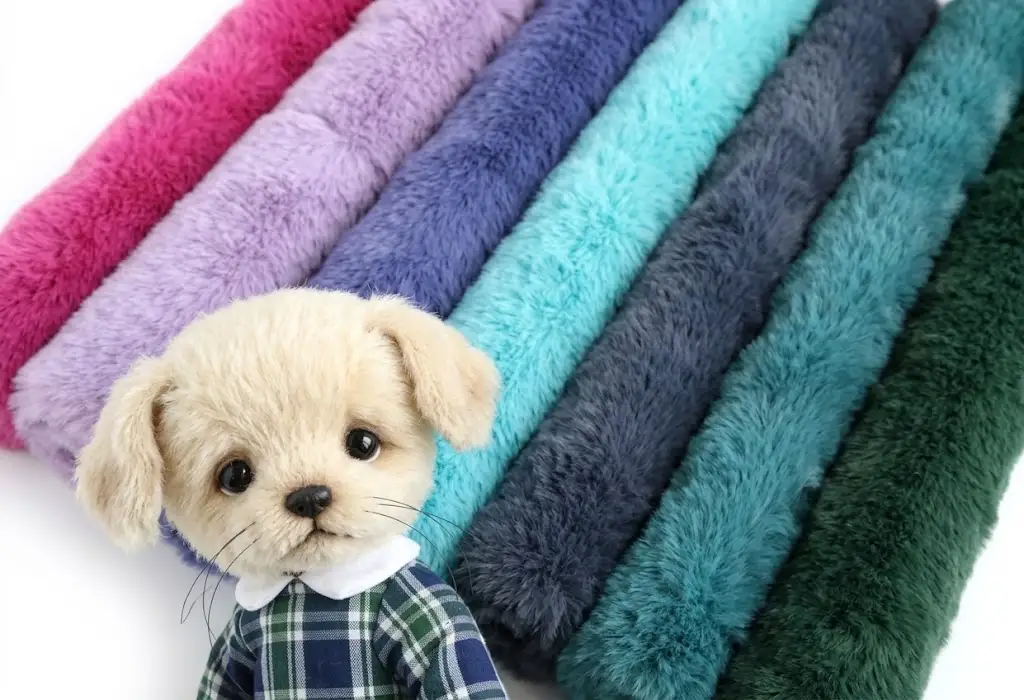
Faux fur is a pile fabric engineered to replicate the appearance and tactile properties of natural animal fur using synthetic fibers. The construction consists of two distinct components: a knitted or woven backing substrate that provides dimensional stability, and a surface pile of synthetic fibers — typically polyester, acrylic, or a blended composition — that creates the soft, textured exterior.
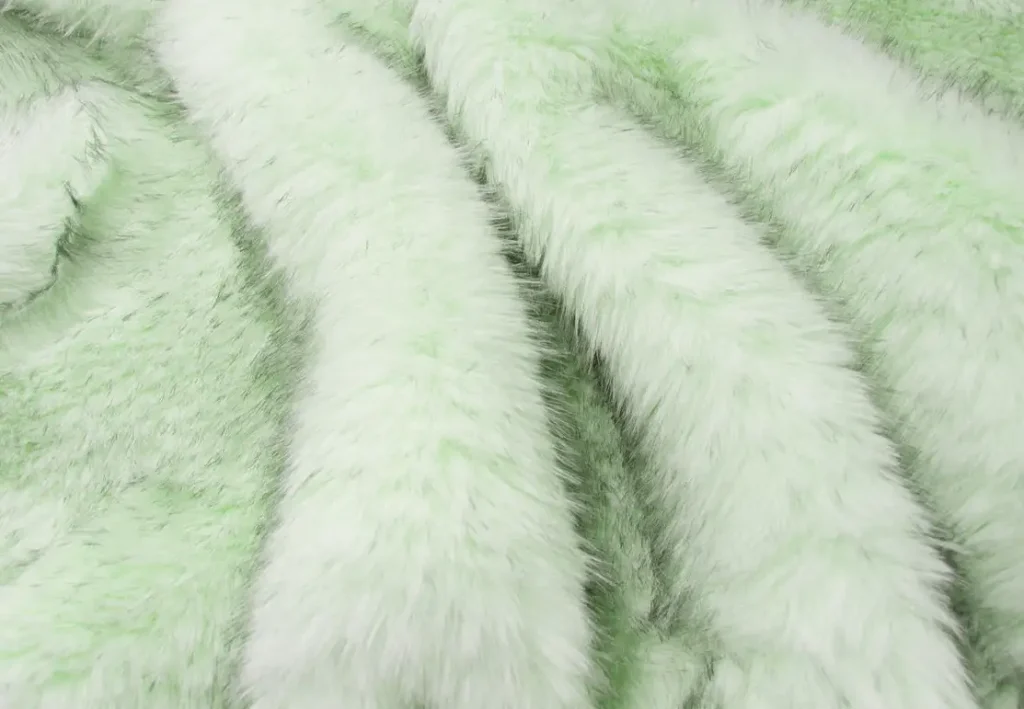
The pile is either cut during manufacturing to create an open, brushed surface, or left looped for specific textural effects. Pile height, fiber density, and backing weight are the three primary variables that determine how a faux fur fabric performs in plush toy production and how it feels to the end consumer.
Unlike apparel or upholstery faux furs, plush toy faux fur must simultaneously satisfy tactile softness standards, dimensional stability requirements for accurate pattern cutting, colorfastness specifications for children’s product compliance, and safety standards governing fiber shedding and flammability — a uniquely demanding combination of performance requirements.
The Primary Fiber Types Used in Premium Plush Faux Fur
Polyester Pile Fabrics
Polyester is the dominant fiber in premium plush toy faux fur. High-tenacity polyester filaments produce consistent pile height, excellent resistance to matting and compression over time, and superior colorfastness compared to natural alternatives. Polyester pile recovers well after washing, making it the preferred choice for plush toys marketed as machine-washable. Its relatively low moisture absorption also inhibits mold and mildew development in toys exposed to humidity or saliva.
For premium applications, microfiber polyester — where individual filaments measure below 1 denier — produces a notably silkier surface texture that elevates perceived quality in the hand of both retail buyer and end consumer.
Acrylic Pile Fabrics
Acrylic fibers are used where a particularly soft, wool-like pile texture is desired. Acrylic produces a pile with a natural warmth and slight crimp that closely mimics the irregular fiber structure of real fur. The trade-off is lower resilience — acrylic pile compresses and mats more readily than polyester under sustained pressure and does not recover as fully after washing. For display items, collector plush, or decorative applications where frequent laundering is not expected, acrylic-based faux fur delivers an exceptionally natural tactile character.
Blended Fiber Constructions
Many premium faux fur fabrics combine polyester and acrylic in specific ratios to balance the resilience advantages of polyester with the texture softness of acrylic. A common high-performance blend for premium plush is 70–80% polyester and 20–30% acrylic. This combination produces fabrics that are soft enough to satisfy premium tactile standards while maintaining the structural resilience needed for children’s products subjected to regular washing and extended use.
Key Faux Fur Specifications Buyers Must Evaluate
| Specification Parameter | Standard Grade | Premium Grade | Ultra-Premium Grade |
|---|---|---|---|
| Pile height | 8–12 mm | 12–20 mm | 20–35 mm |
| Fiber denier | 3–6 denier | 1.5–3 denier | Below 1.5 denier (microfiber) |
| Backing weight | 180–220 g/m² | 220–280 g/m² | 280–350 g/m² |
| Pile density (fibers/cm²) | 18,000–25,000 | 25,000–40,000 | 40,000–60,000+ |
| Colorfastness (washing) | Grade 3–4 | Grade 4 | Grade 4–5 |
| Pilling resistance | Grade 3 | Grade 4 | Grade 4–5 |
Backing weight directly impacts dimensional stability during cutting and sewing. Lighter backings tend to stretch during pattern cutting, causing dimensional inaccuracies that accumulate through the construction process. For complex character plush with tight dimensional tolerances, a backing weight of at least 220 g/m² is recommended.
Pile Height Selection for Different Plush Toy Categories
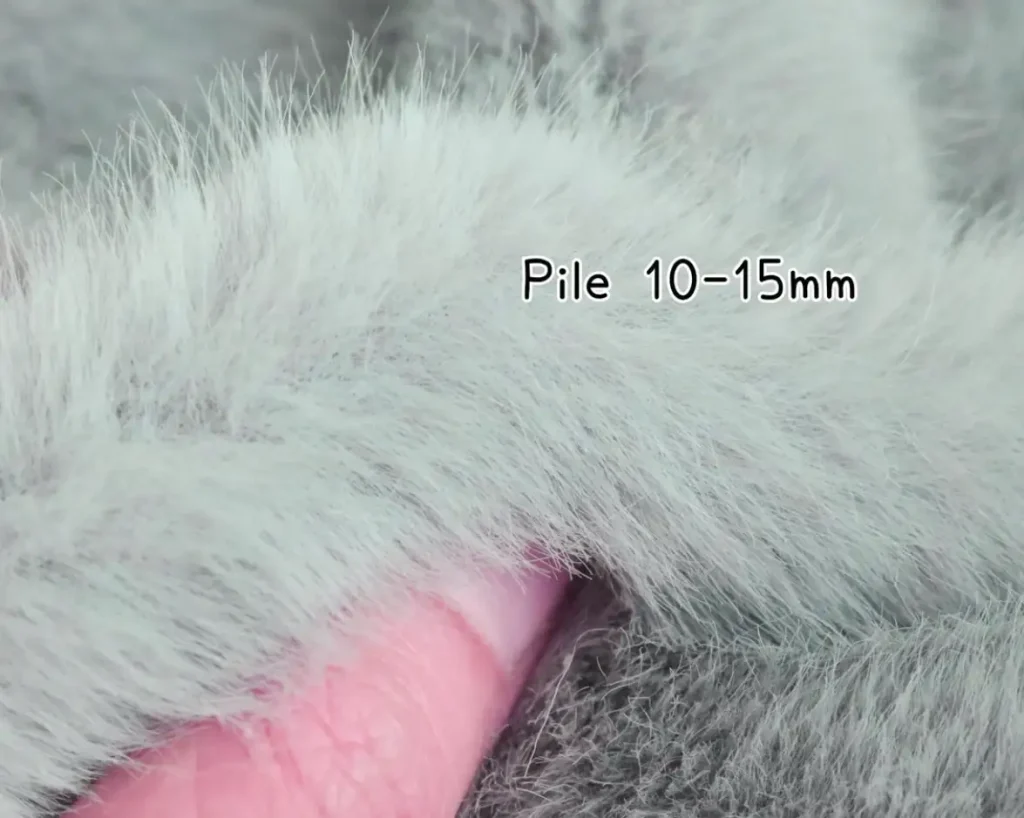
Pile height is one of the most visible quality differentiators in premium plush. It affects perceived luxury, tactile softness, and the toy’s ability to retain its appearance after use and washing.
| Plush Toy Category | Recommended Pile Height | Rationale |
|---|---|---|
| Infant and baby plush (0–12 months) | 8–12 mm (short pile) | Safety: reduces fiber shedding risk; easier to sanitize |
| Toddler character plush (1–3 years) | 12–16 mm (medium pile) | Balance of softness and durability for active use |
| Collector and display plush | 20–35 mm (long pile) | Maximum visual impact and luxury tactile experience |
| Licensed character plush | 10–18 mm (varies by design) | Pile length matched to character design intent |
| Weighted comfort plush | 10–14 mm (medium-short pile) | Structural fabric stability for weight insert integration |
Short pile faux fur (below 12mm) also offers practical advantages in precision pattern work. Tight facial feature areas — eyes, muzzle definition, ear edges — hold their shape more cleanly in shorter pile, while very long pile can obscure fine design detail and create assembly challenges at seam edges.
Colorfastness and Dye Standards in Faux Fur for Children’s Products
Colorfastness is a compliance-critical specification for faux fur fabrics used in children’s plush toys. Azo dyes, which were historically common in synthetic textile dyeing, are restricted or prohibited in children’s products in the European Union under REACH Regulation and in several US states under Prop 65-adjacent legislation. Premium faux fur suppliers should provide dyestuff certification confirming the absence of restricted azo colorants.
For practical quality evaluation, colorfastness testing covers washing fastness (resistance to dye bleed during laundering), rubbing fastness (resistance to color transfer during physical contact), and light fastness (resistance to fading under UV exposure). The ISO 105 series provides the internationally recognized test protocols for each of these parameters. Grade 4 or above on the ISO 105 scale is the minimum acceptable standard for retail plush toys; Grade 4–5 is expected for premium branded products.
Fiber Shedding and Safety Testing Requirements
One of the most important safety parameters for faux fur in children’s plush is fiber shedding — the release of loose pile fibers during normal use. Excessive fiber shedding creates aspiration risk, particularly for infants and toddlers. EN 71-1 addresses this through the fabric durability and bite resistance tests, but pile fiber release is also evaluated independently in some market-specific standards.
| Test Parameter | Test Method | Acceptable Limit | Target Market |
|---|---|---|---|
| Fiber shedding (pile loss) | EN 71-1 dynamic abuse test | No excess free fiber accumulation | EU (CE marking) |
| Flammability (surface burning) | 16 CFR 1610 | Class 1 (normal flammability) | United States |
| Restricted substances (AZO dyes) | EN ISO 14362-1 | ND or below 30 mg/kg | EU / REACH |
| Formaldehyde content | ISO 14184-1 | ≤ 75 mg/kg (children’s) | EU, Japan, US |
| pH value of fabric | ISO 3071 | 4.0 – 7.5 | EU, Japan |
| Heavy metals in dyes | EN 71-3 | Category III limits | EU (CE marking) |
Buyers sourcing faux fur directly from fabric mills — particularly for proprietary colorways or custom pile specifications — should require test reports covering each of the above parameters before committing to production yardage. Fabric mills with established compliance documentation for toy-grade textiles reduce sourcing risk significantly compared to mills primarily serving apparel markets.
Sourcing Premium Faux Fur Fabric: Key Supplier Markets
China (Zhejiang and Guangdong Provinces)
China dominates global faux fur fabric production, with Tongxiang in Zhejiang Province recognized as the largest specialized faux fur manufacturing cluster in the world. Suppliers in this region produce the full specification range from budget-grade to ultra-premium microfiber constructions. Lead times for standard constructions run 15–25 days; custom color and pile specifications require 30–45 days. MOQs from established mills typically start at 300–500 meters per colorway.
South Korea
Korean faux fur mills are particularly well regarded for high-pile luxury constructions used in collector and premium licensed character plush. Korean suppliers invest heavily in fiber technology and produce consistent quality at mid-to-upper price tiers. Minimum order quantities are generally higher than Chinese mills, and lead times are comparable. Korean-origin faux fur commands a price premium of 15–40% over Chinese equivalents but is frequently specified for brand-sensitive applications where tactile differentiation is a marketing priority.
Turkey
Turkish mills serve the European market primarily and offer advantages in logistics lead time for EU-based plush manufacturers. Quality ranges from mid-grade to premium, with strong compliance documentation for REACH and EN standards. Turkish faux fur is competitively priced for short-to-medium pile constructions and is increasingly specified by European plush brands seeking supply chain diversification.
Price Reference: Faux Fur Fabric Cost by Grade and Origin
| Fabric Grade | Pile Height | Origin | Approximate Price (USD/meter) | MOQ (meters) |
|---|---|---|---|---|
| Standard grade | 8–12 mm | China | $2.50 – $4.00 | 300–500 |
| Premium grade | 12–20 mm | China | $4.00 – $7.50 | 300–500 |
| Ultra-premium microfiber | 15–25 mm | China / Korea | $7.50 – $14.00 | 200–500 |
| High-pile luxury | 25–35 mm | Korea | $12.00 – $22.00 | 200–300 |
| EU-compliant premium | 10–18 mm | Turkey | $5.50 – $9.00 | 200–400 |
These price ranges reflect FOB mill pricing for standard constructions. Custom colorways, anti-static treatments, flame-retardant finishing, or antimicrobial treatments will add $0.50–$2.50 per meter depending on specification complexity.
Frequently Asked Questions
What is the difference between standard faux fur and toy-grade faux fur fabric?
Toy-grade faux fur is manufactured to a higher set of safety and performance specifications than general-purpose faux fur used in apparel or home furnishings. The primary differences involve restricted substance compliance — particularly the absence of prohibited azo dyes, formaldehyde limits within children’s product thresholds, and pH values within the acceptable range for skin-contact children’s textiles.
Toy-grade faux fur also undergoes pile shedding evaluation to confirm that fiber release during simulated use does not create aspiration risk. Apparel-grade faux fur may be visually and tactilely comparable but lacks the compliance documentation required for CE marking in the EU or CPSIA compliance in the US.
How does pile height affect the manufacturability of a plush toy?
Longer pile heights create challenges at seam edges, particularly in areas with tight curves or small-radius design features. Very long pile — above 25mm — tends to become trapped in seam allowances during sewing, creating visible pile compression lines along seam edges that reduce finished appearance quality.
Skilled manufacturers manage this through pile direction trimming at seam margins and the use of specialized presser feet designed for high-pile fabrics. Short-to-medium pile (10–18mm) offers the best balance of softness and manufacturing precision for most commercial plush toy constructions.
Is polyester faux fur or acrylic faux fur better for machine-washable plush toys?
Polyester faux fur significantly outperforms acrylic in machine-wash durability. Polyester pile retains its height, density, and surface texture more consistently through repeated wash cycles than acrylic, which is more prone to matting, felting, and permanent compression after washing.
For plush toys marketed as machine-washable — which is a commercially important claim in the children’s product market — polyester or a polyester-dominant blend is strongly recommended. If the softness characteristics of acrylic are essential to the design brief, a 70/30 polyester-acrylic blend provides a workable compromise between tactile quality and wash performance.
What pile density should I specify for a premium plush toy?
For premium commercial plush toys sold through specialty retail or licensed character programs, a pile density of 25,000–40,000 fibers per square centimeter provides the combination of luxurious surface fullness and structural resilience that supports premium price positioning. Below 18,000 fibers per cm², pile thinness becomes perceptible to the consumer’s hand, particularly along seam edges and curved surfaces where pile density is naturally lower. Ultra-premium collector plush targeting adult consumers may specify 40,000–60,000 fibers per cm² for maximum perceived quality, though this specification level increases both fabric cost and cutting complexity.
How do I evaluate faux fur fabric quality before committing to a production order?
Request a physical swatch minimum of 20×20cm for each candidate fabric. Evaluate the swatch under consistent lighting for color accuracy against your approved standard. Run a thumbnail drag across the pile surface to assess pile recovery — premium pile springs back immediately after distortion, while lower-grade pile retains the track of your thumbnail. Perform a basic wash test by laundering the swatch at 40°C and inspecting pile condition post-drying.
Check for color bleeding in the wash water and assess pile height retention after tumble or air drying. Finally, firmly rub the swatch against a white cotton cloth to evaluate rubbing colorfastness. These manual evaluations provide meaningful pre-order intelligence before committing laboratory testing costs.
What certifications should I require from a faux fur fabric supplier?
At minimum, require OEKO-TEX Standard 100 certification for fabrics used in children’s plush toys. OEKO-TEX Standard 100 Product Class I (for babies and toddlers) or Product Class II (for general children’s products) certifies that the fabric has been tested for harmful substances including restricted azo dyes, formaldehyde, heavy metals, pH, and a range of additional chemical parameters.
For EU market products, additionally require REACH compliance documentation and test reports confirming EN ISO 14362-1 conformance for azo dye restrictions. For the US market, request Prop 65 compliance documentation covering lead, cadmium, and phthalate content in dyes and finishing agents.
Can faux fur fabric be custom-dyed to match a brand’s specific color standards?
Yes. Established faux fur mills offer custom color development services where pile fibers are dyed to match a buyer-provided color standard — typically a Pantone reference, physical color chip, or approved fabric standard. Custom color development involves a lab dip process (small-scale test dyeing) followed by buyer approval before production dyeing.
This process typically requires 2–4 lab dip rounds and adds 3–6 weeks to lead time versus ordering from a standard color card. Minimum order quantities for custom colors are generally higher than standard colorways — commonly 500–1,000 meters — to justify the dye bath setup costs associated with a new color formulation.
How does anti-static treatment affect faux fur fabric performance in plush toys?
Synthetic faux fur fabrics — particularly polyester — have a natural tendency to accumulate static charge, which attracts dust, pet hair, and particulate matter. In retail environments, static accumulation reduces the visual appeal of displayed plush. Anti-static finishing treatments are applied to the fabric backing or pile during manufacturing and significantly reduce this tendency.
For premium retail plush, anti-static treatment is a worthwhile specification that adds approximately $0.30–$0.80 per meter to fabric cost. The treatment does not affect tactile properties or compliance performance and is compatible with standard washing protocols. Buyers should confirm whether anti-static treatment is a permanent finish or a topical wash-off application, as the latter loses effectiveness after the first laundering.