Skip to content
How to Evaluate Plush Toy Stitching Quality? When sourcing custom plush toys — whether for retail, licensing, or promotional use — stitching quality is one of the most reliable indicators of overall manufacturing standard. Poor stitching leads to seam failures, stuffing exposure, safety hazards, and product returns. Understanding how to assess plush toy stitching quality before approving a sample or placing a bulk order gives buyers a significant advantage in quality control, supplier selection, and production oversight.
Why Stitching Quality Defines the Durability of a Plush Toy
Stitching is the structural system of a plush toy. Unlike hard goods where material rigidity provides inherent strength, a soft toy’s integrity depends entirely on the quality and consistency of its seams. A plush toy subjected to normal use — repeated hugging, stretching, washing, and biting by young children — places continuous stress on every seam junction. Seam failure at any point compromises the product structurally and, in the case of toys intended for children under three, creates a potential choking hazard from released stuffing or sewn-in components.
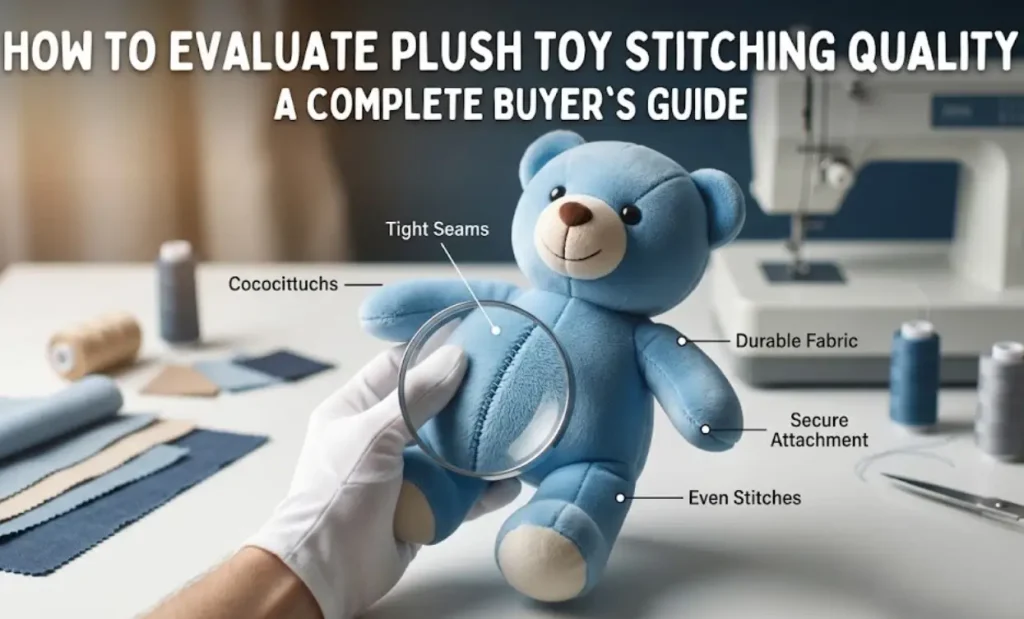
Evaluating stitching quality is therefore not only a product performance issue but a regulatory compliance consideration for any brand selling into markets governed by CPSIA, EN 71, or ASTM F963.
The Core Stitching Parameters Buyers Must Inspect
Stitch Density and Stitch Count Per Inch
Stitch density — measured as stitches per inch (SPI) or stitches per centimeter — is the primary determinant of seam strength. Higher stitch counts create tighter, more resistant seams, while low-density stitching leaves gaps that elongate under tension and eventually tear. For plush toys, an acceptable range for main body seams is 8–12 SPI using a lockstitch. Decorative surface stitching on facial features may vary, but structural seams should never fall below 7 SPI.
Thread Type and Tensile Strength
The thread itself matters as much as the stitch pattern. Bonded nylon and polyester threads are standard in commercial plush manufacturing due to their high tensile strength, UV resistance, and color stability. Cotton thread, while used in premium hand-finished products, is more susceptible to degradation from moisture and repeated washing. Buyers should confirm thread specification — weight (tex rating), material, and core construction — when reviewing factory material documentation.
Seam Allowance Consistency
Seam allowance refers to the fabric margin between the stitch line and the cut edge of the material. Inconsistent seam allowances — varying from 6mm to 12mm within the same product — indicate poor pattern adherence or operator inconsistency on the production line. Narrow seam allowances increase seam failure probability because there is insufficient fabric to anchor the stitch under stress.
Reference Table: Stitching Quality Standards by Application
| Stitching Parameter | Minimum Acceptable | Recommended Standard | High-Stress Applications |
|---|---|---|---|
| Stitch density (main seams) | 7 SPI | 9–10 SPI | 11–12 SPI |
| Thread tensile strength | 1.5 kg/mm² | 2.0 kg/mm² | 2.5 kg/mm² |
| Seam allowance | 6 mm | 8–10 mm | 10–12 mm |
| Seam overlap at closures | 10 mm | 15 mm | 20 mm |
| Knot security at thread ends | Single knot + trim | Double knot | Double knot + adhesive lock |
Visual Inspection Techniques for Sample Evaluation
Examining Seam Linearity and Tension
A properly stitched seam should run in a straight, consistent line without puckering, waviness, or gathering of the base fabric. Puckering occurs when thread tension is incorrectly calibrated — either too tight (which draws fabric into ridges) or too loose (which creates looping on the underside of the seam). Hold the seam under good lighting and run a finger along its length. Any irregular texture or visible bunching is a warning sign.
The Stretch Test
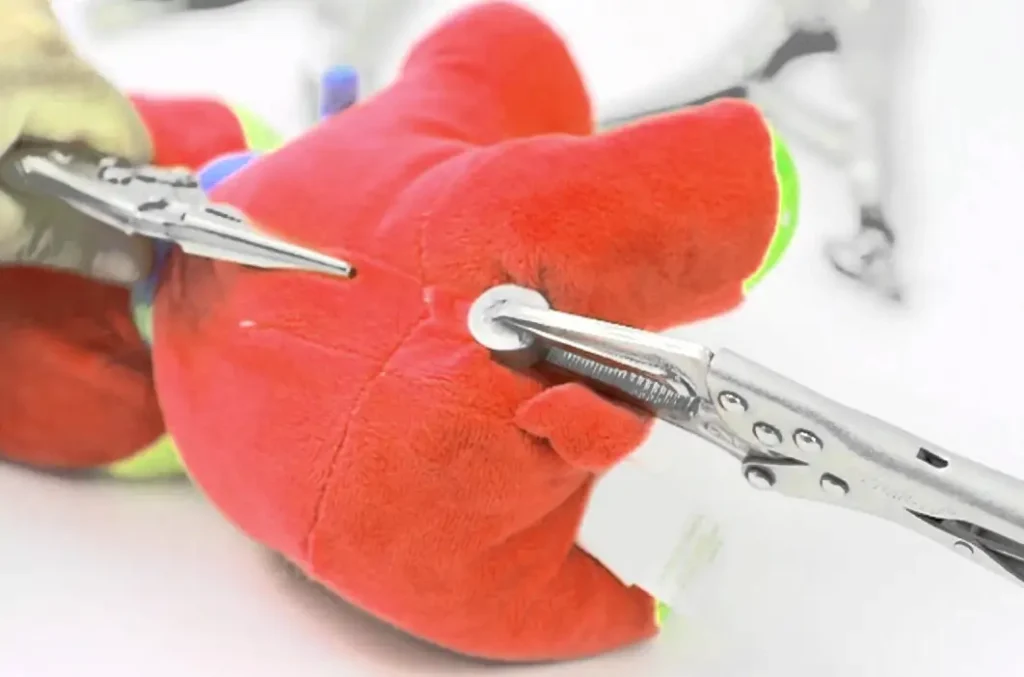
Apply gentle bilateral tension to a sewn seam by pulling both sides of the fabric away from each other with moderate force. A well-constructed seam should resist elongation visibly, with the stitch line holding its position. Any immediate gapping, thread breakage, or seam separation under moderate manual tension indicates insufficient stitch density or inadequate thread quality. This test is particularly important at gussets, joint attachment points, and closure seams.
Inspecting Embroidery and Surface Detail Stitching
Facial embroidery — eyes, noses, mouths, and other expressive details — represents a special stitching challenge because these areas are subject to targeted pulling by young children. Inspect embroidered features for raised or loose thread loops (known as float threads), uneven fill density, and poorly anchored perimeter stitching. The backing material beneath embroidered elements should be bonded or stabilized to prevent puckering of the face fabric over time.
Seam Type Analysis: What Different Constructions Mean for Quality
| Seam Type | Construction Method | Strength Level | Typical Application |
|---|---|---|---|
| Lockstitch seam | Interlocking top and bottom thread | High | Main body panels, limb attachment |
| Chain stitch seam | Looped single thread | Medium | Temporary closures, some decorative seams |
| Overlock / serged seam | Wraps fabric edge while joining | Medium–High | Fabric edge finishing, stretch fabrics |
| French seam | Double-sewn, enclosing raw edge | Very High | Premium products, baby toys |
| Blind stitch closure | Hand-finished invisible closing seam | High (variable) | Final stuffing closures |
For toys intended for children under 36 months, lockstitch and French seam constructions are strongly preferred on all structural joints. Chain stitch alone is insufficient for load-bearing seams in this application.
Stress Point Evaluation: Where Failures Begin
The most common locations for stitching failure in plush toys are not in the flat panel seams but at structural stress concentrations. These include limb-to-body attachment points, tail and ear base seams, zipper end stops, and the closure seam used to seal stuffing after filling. Each of these points experiences asymmetric or concentrated load during normal use.
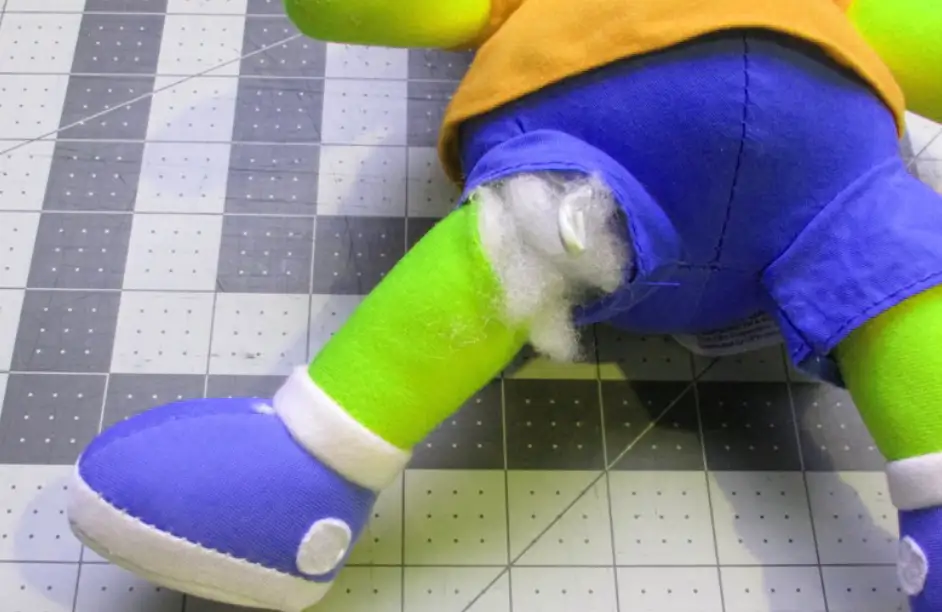
When evaluating a sample, apply focused attention to each of these areas:
At limb attachment points, check that the seam runs fully around the circumference of the attachment with no skipped stitches or thread breaks. At closure seams — the final hand-stitched or machine-stitched line used to close the stuffing opening — verify that the overlap is at least 15mm and that the stitch line is double-sewn or back-stitched at both ends to prevent unraveling. At zipper terminations, confirm that the fabric is bartacked (a dense cluster of reinforcing stitches) to prevent the zipper from tearing free under tension.
Washing and Durability Testing for Stitching Integrity
A single physical inspection does not predict long-term stitching performance. For products marketed as machine-washable or intended for regular laundering — common requirements in children’s product markets — wash cycle durability testing is essential.
| Test Method | Protocol | Pass Criterion | Applicable Standard |
|---|---|---|---|
| Machine wash cycle test | 5 cycles at 40°C, standard agitation | No seam separation, no thread breakage | EN 71-1, ASTM F963 |
| Accelerated wash durability | 10 cycles at 60°C, heavy agitation | Less than 2mm seam gap, no stuffing exposure | Internal QC benchmark |
| Tensile seam strength test | Pull at 10N for 10 seconds | No seam failure | EN 71-1 Clause 8.7 |
| Bite and pull simulation | 90N pull force on facial features | Feature remains attached | EN 71-1 Clause 8.2 |
| Visual post-wash inspection | Full surface review after drying | No pilling, no seam distortion | ISO 6330 |
Buyers sourcing for EU retail should require test reports from accredited laboratories confirming EN 71-1 seam strength compliance. US retailers typically require ASTM F963 documentation. These should accompany the production sample approval, not be requested after mass production begins.
How to Assess Factory Stitching Capability Through Factory Audit
Beyond evaluating individual samples, buyers conducting factory audits should assess the underlying production environment that generates stitching quality. Key indicators include the age and maintenance condition of sewing machinery, the availability and use of seam guides and presser foot specifications, whether the factory employs in-line seam inspection or only end-of-line quality checks, and the ratio of experienced senior operators to new hires on the plush assembly line.
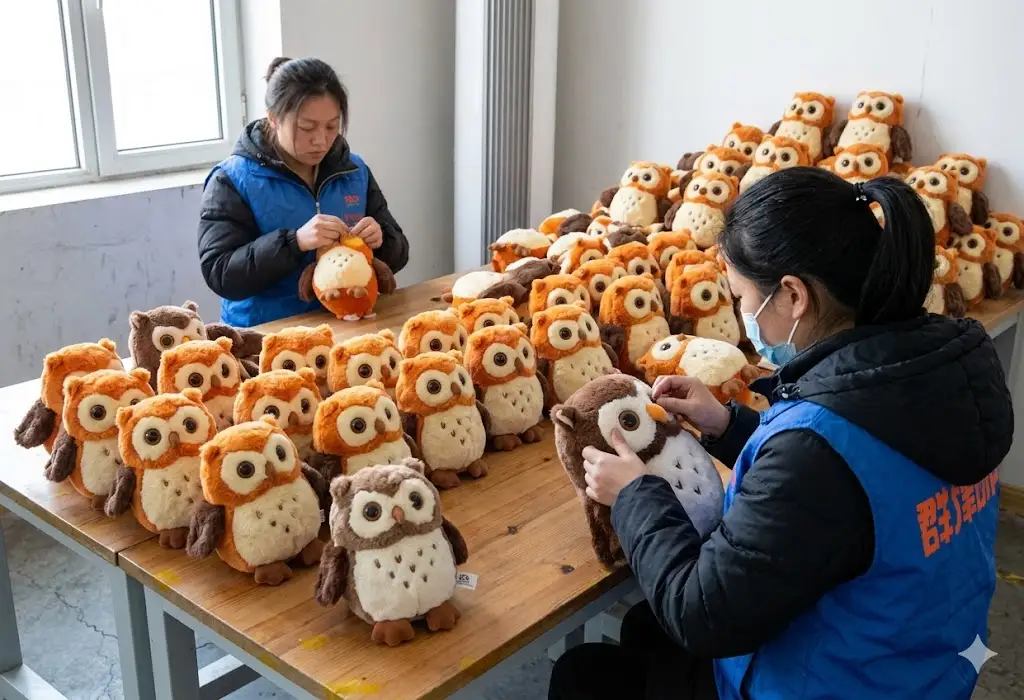
Factories with documented standard operating procedures (SOPs) for stitch density calibration, thread tension setting, and needle gauge selection consistently produce more uniform stitching than those relying on operator instinct. Ask to review SOP documentation during audits and confirm that calibration records for sewing machines are maintained.
Grading Plush Toy Stitching Quality: A Practical Scoring Framework
| Quality Grade | Stitch Density | Seam Consistency | Stress Point Reinforcement | Wash Durability | Suitable For |
|---|---|---|---|---|---|
| Grade A | 10–12 SPI | Highly consistent | Bartacked + double sewn | Pass 10-cycle test | Premium retail, licensed IP, baby products |
| Grade B | 8–10 SPI | Consistent with minor variation | Back-stitched ends | Pass 5-cycle test | Standard retail, promotional plush |
| Grade C | 6–8 SPI | Moderate variation | Single-pass seam | Pass 3-cycle test | Display items, adult collectibles |
| Grade D | Below 6 SPI | Inconsistent | Insufficient | Fail wash test | Not suitable for retail or children’s use |
Most national retail programs in North America and Europe require Grade B or above. Baby and infant product categories typically mandate Grade A standards regardless of stated safety compliance documentation.
Frequently Asked Questions
What is the minimum acceptable stitch count per inch for a children’s plush toy?
For structural seams on plush toys intended for children, the minimum acceptable stitch density is 7 stitches per inch (SPI) using a lockstitch. However, the industry standard for quality-grade products sold through retail channels is 9–10 SPI on main body seams and limb attachment points.
Below 7 SPI, seams are structurally vulnerable to failure under the pulling and stretching forces that children routinely apply. For infant and toddler products, 10–12 SPI with reinforced stress-point bartacking is the recommended specification.
How do I tell if embroidery on a plush toy face is properly secured?
Properly secured facial embroidery has no raised or floating thread loops on the surface, even fill density with no visible gaps in solid areas, and a firm, puckle-free backing. The most important check is to pinch the embroidered area between two fingers and apply gentle upward tension.
Well-secured embroidery resists this force without lifting away from the fabric substrate. Any separation of the embroidery layer from the face material, thread loop movement, or backing distortion indicates inadequate stabilization.
What thread material is best for plush toy manufacturing?
Bonded polyester thread is the industry standard for structural plush toy seams. It offers high tensile strength, excellent resistance to washing and moisture, color fastness under UV exposure, and consistent performance on industrial sewing equipment.
Bonded nylon is also acceptable and offers slightly higher abrasion resistance but can yellow over time with UV exposure. Cotton thread is suitable for hand-finished details on premium adult collectibles but should not be used for structural seams on children’s toys due to its lower wet strength and susceptibility to degradation.
How do I evaluate the closure seam, since it’s usually hand-stitched?
The closure seam — the final seam used to close the stuffing opening after filling — is typically hand-stitched using a ladder stitch or slip stitch. To evaluate it, run your fingernail along the seam line and apply lateral pressure. A well-executed closure seam maintains consistent 4–6mm stitch spacing, lies flat against the toy’s surface without ridging, and shows no visible thread loops or gaps.
The thread ends should be securely knotted and buried inside the toy rather than trimmed flush with the surface. In quality-critical applications, request that factories use a double-sewn machine blind stitch for closure seams rather than hand finishing.
What do puckered seams indicate about manufacturing quality?
Seam puckering — the gathering or wrinkling of fabric along a stitch line — indicates either incorrect thread tension calibration, an inappropriate needle gauge for the fabric weight, or operator inconsistency in feeding fabric through the machine. It is not merely a cosmetic issue.
Puckered seams have reduced structural integrity because the fabric is gathered rather than lying flat under the stitch, which means the seam distributes stress unevenly. In stretch fabrics used for plush toy bodies, puckering also indicates that the wrong stitch type may have been used — a straight lockstitch on a high-stretch fabric, for example, will pucker and is likely to break under extension.
Should I require third-party stitching strength testing before production approval?
Yes, particularly for products entering regulated retail markets in the US, EU, or Australia. EN 71-1 seam strength testing conducted by an accredited laboratory provides objective, legally defensible evidence of stitching integrity that internal quality inspection cannot replicate. The test measures actual load-bearing performance under standardized tension rather than relying on visual assessment.
For children’s toys under 36 months, EN 71-1 seam and joint strength tests are mandatory for CE marking in the EU, and equivalent ASTM F963 testing underpins CPSC compliance documentation in the US. Budget $200–$400 per product for dedicated seam strength testing from laboratories such as SGS, Intertek, or Bureau Veritas.
What is bartacking and when should it be required on plush toys?
Bartacking is a dense cluster of parallel stitches — typically 20–30 closely spaced passes — applied at a single point to reinforce high-stress locations. On plush toys, bartacking is most important at limb attachment points where the limb meets the body, at zipper end stops, and at any sewn-in loop or hang tag attachment.
A bartack effectively creates a localized seam reinforcement that resists the asymmetric pulling forces these locations experience during use. Buyers sourcing toys for the children’s market should specify bartacking at all limb and appendage attachment points as a standard requirement in their product specification sheet.
How many stitching defects per unit are acceptable in a production batch?
Industry practice uses an Acceptable Quality Level (AQL) framework to define defect tolerance in plush toy production. Under AQL 2.5 — the standard most consumer goods retailers apply — the allowable defect rate is 2.5% for major defects and 4.0% for minor defects in a randomly sampled inspection lot. Stitching failures that expose stuffing, compromise structural integrity, or create sharp thread ends accessible to children are classified as critical defects with zero acceptable incidence under AQL standards.
Loose thread ends, minor stitch skipping in non-structural areas, and slight seam tension variation are typically classified as minor defects subject to the 4.0% threshold. Define defect classification explicitly in your supplier quality agreement to avoid ambiguity at the inspection stage.