Skip to content
Every year, millions of plush toys land in the hands of children around the world. From stuffed animals to character dolls, these products bring comfort and joy — but the small components that give them personality, particularly their eyes, carry significant safety responsibilities.
Understanding plush toy eye materials and the regulatory frameworks that govern them is essential for manufacturers, sourcing teams, and safety-conscious parents alike.
Why Plush Toy Eye Safety Is a Critical Manufacturing Decision
The eyes of a plush toy are among its most scrutinized components. Regulatory agencies classify toy eyes as “small parts” when they can be detached, making them potential choking hazards for children under three years of age. Beyond the choking risk, certain eye materials may contain harmful chemicals, sharp internal wire frames, or inadequate fastening mechanisms that fail under stress testing.
For manufacturers operating in global markets, eye component selection directly affects product compliance, liability exposure, and brand reputation. A single non-compliant batch can trigger market recalls, customs seizures, and reputational damage that far outweighs the cost savings from cheaper components.
The relationship between material choice, attachment method, and age-appropriateness forms the foundation of responsible plush toy design. Sourcing teams must evaluate these three variables together rather than in isolation.
Common Eye Materials Used in Plush Toys
Plastic Safety Eyes
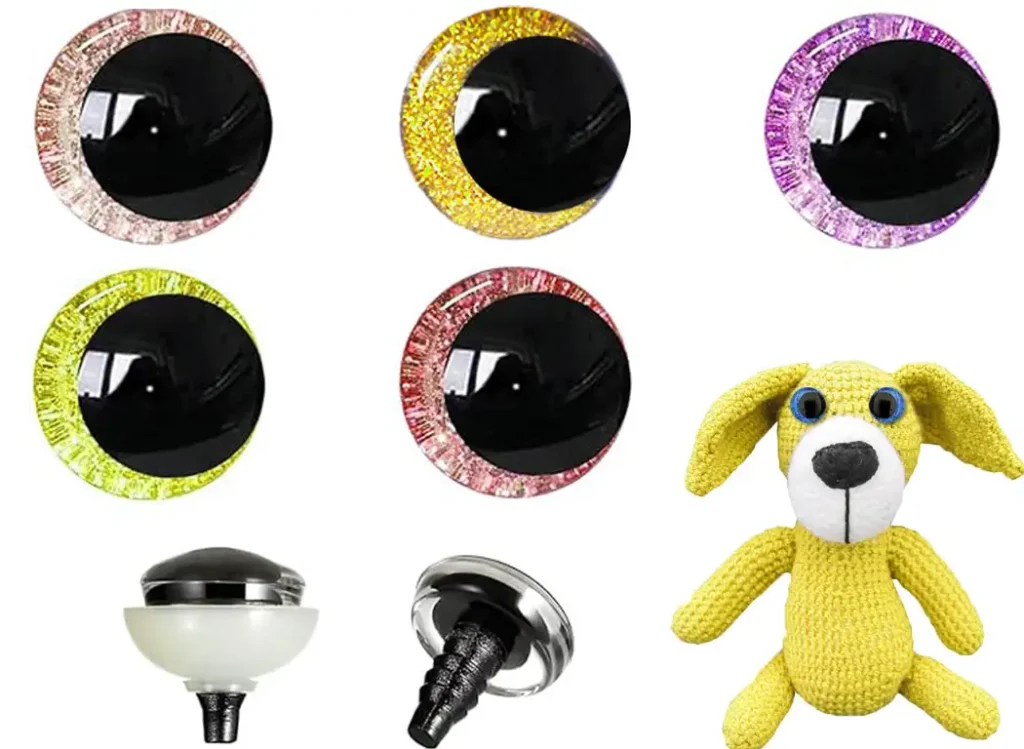
Plastic safety eyes are available in sizes ranging from 6mm to 40mm and in both solid and crystal-effect finishes. Compliant variants must meet pull-force thresholds — typically 90 Newtons or more for toys intended for children under 36 months — and must be free from phthalates, BPA, and heavy metals including lead and cadmium.
Injection-molded plastic eyes are the dominant choice in commercial plush toy manufacturing. They are produced from ABS (acrylonitrile butadiene styrene) or high-density polyethylene and feature a shank-and-washer locking mechanism that, when correctly installed, provides substantial pull-force resistance.
| Specification | Requirement |
|---|---|
| Pull-force resistance (under 36 months) | ≥ 90 N |
| Heavy metals (lead) | ≤ 90 mg/kg |
| Phthalates (DEHP, DBP, BBP) | ≤ 0.1% by weight |
| Sharp internal edges | Not permitted |
| Eye diameter (small parts threshold) | Must exceed 31.7mm sphere test or be permanently attached |
Glass Eyes
Glass eyes deliver superior optical realism and are commonly specified for collectible plush, artist bears, and high-end stuffed animals. They are typically hand-blown or machine-formed and feature a wire loop at the back for thread attachment.
Due to their fragility and the presence of a metal wire loop, glass eyes are generally not suitable for children under 14 years unless enclosed in a fully sealed construction. The wire loop creates an additional small-parts and sharp-edge hazard. However, for collector-grade and display products, glass eyes remain the industry benchmark for aesthetic quality.
Embroidered Eyes
Embroidered eyes represent the safest option for infant and toddler plush toys. Because they are stitched directly into the fabric body of the toy, there are no detachable components and no choking hazard. Embroidered eyes meet ASTM F963 and EN 71 requirements for products labeled for children under 12 months without the need for additional pull-force testing.
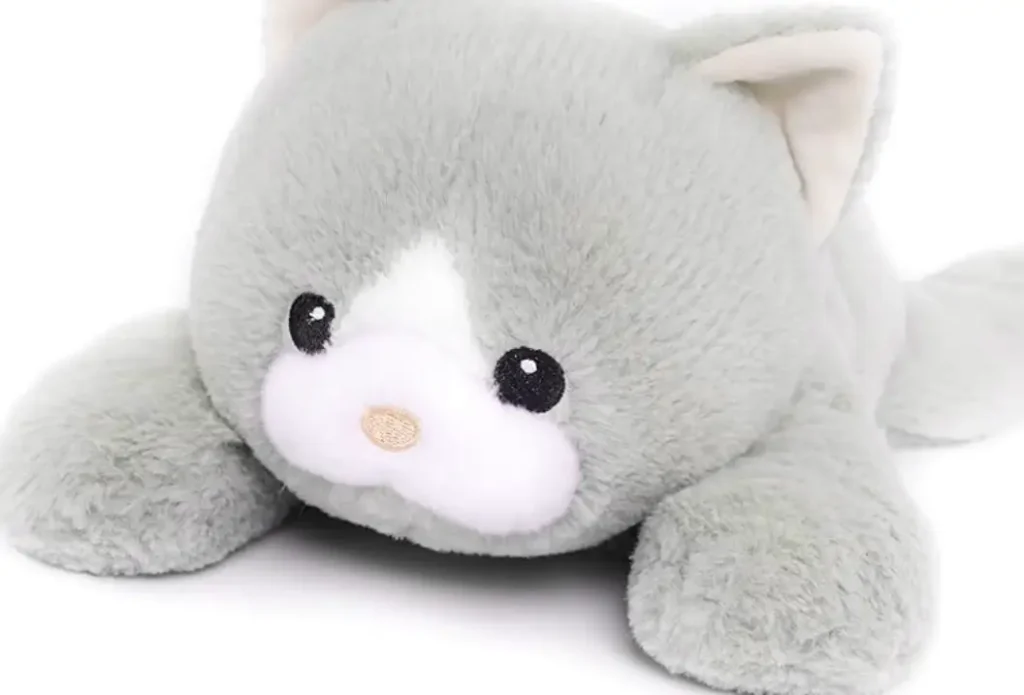
The tradeoff is aesthetic limitation — embroidered eyes cannot replicate the three-dimensional depth of molded or glass options. For mass-market infant products, however, this is an acceptable design constraint given the safety benefit.
Button Eyes
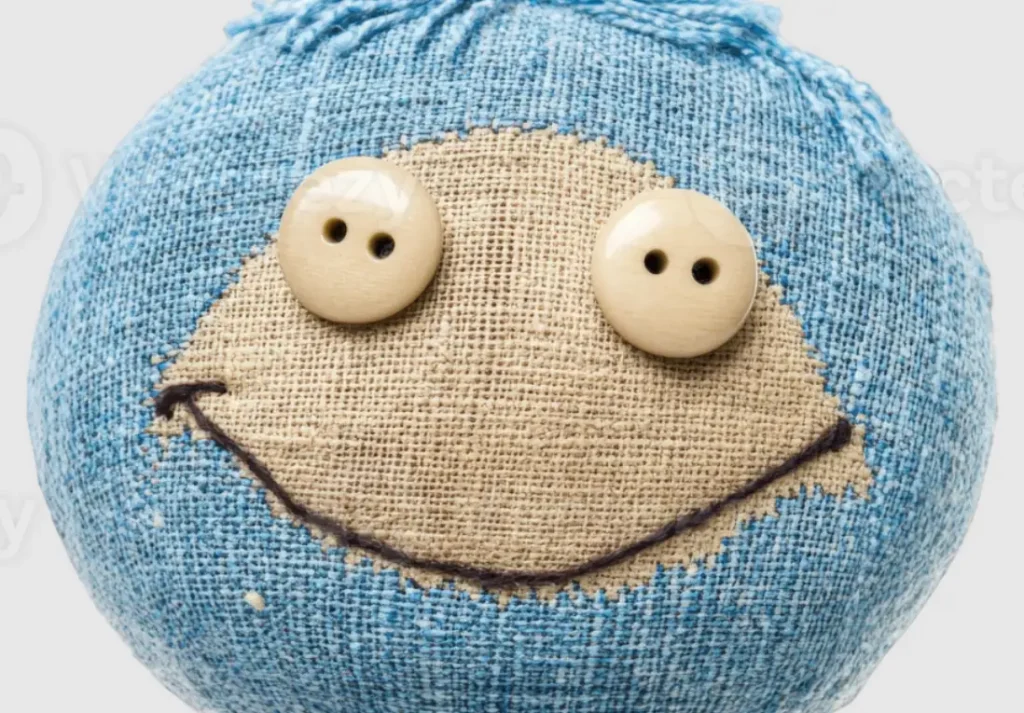
Sewn-on button eyes are a traditional construction method that presents the highest safety risk in modern regulatory environments. Buttons can be pulled free with moderate force and represent a documented choking hazard. Most global toy safety standards either prohibit or heavily restrict button eyes on toys intended for children under three. Their use is now largely confined to adult craft items, DIY kits, or products with explicit age warnings.
Global Safety Standards Governing Plush Toy Eyes
ASTM F963 (United States)
The American Society for Testing and Materials standard F963 is the primary toy safety specification in the United States, enforced through the Consumer Product Safety Improvement Act (CPSIA). It addresses small parts, pull-force requirements, sharp points, and chemical content. Products must pass third-party testing by a CPSC-accepted laboratory before being offered for sale.
| Standard | Jurisdiction | Key Eye-Related Requirements |
|---|---|---|
| ASTM F963 | USA | Small parts test, 90N pull-force, chemical limits |
| EN 71 Part 1 | European Union | Mechanical and physical properties, torque test |
| EN 71 Part 3 | European Union | Migration limits for 19 elements including lead and cadmium |
| ISO 8124 | International | Harmonized base standard for mechanical safety |
| GB 6675 | China | National mandatory standard aligned with ISO 8124 |
| AS/NZS 8124 | Australia/NZ | Adoption of ISO 8124 with regional amendments |
EN 71 (European Union)
EN 71 is a multi-part standard with Part 1 covering mechanical and physical properties and Part 3 covering chemical migration limits. For plush toy eyes, Part 1 is particularly relevant — it specifies torque and pull-force tests for accessible components, and requires that any component that detaches under test conditions must itself pass the small-parts cylinder test.
The EU’s REACH regulation adds a further layer of chemical compliance, restricting substances of very high concern (SVHCs) in toy components, including plasticizers used in flexible PVC eyes.
ISO 8124
The International Organization for Standardization’s toy safety series provides the baseline that many national standards either adopt or adapt. ISO 8124-1 covers mechanical and physical properties, and ISO 8124-3 covers chemical migration. Manufacturers targeting multiple export markets often use ISO 8124 as their primary compliance framework and then layer jurisdiction-specific amendments.
Age Classification and Eye Selection Matrix
| Target Age Group | Recommended Eye Type | Prohibited Options | Testing Priority |
|---|---|---|---|
| 0–12 months | Embroidered only | All attached components | Fabric integrity, dye migration |
| 1–3 years | Embroidered or high-pull-force plastic | Button eyes, glass eyes | Pull-force ≥ 90N, small parts |
| 3–6 years | Plastic safety eyes, embroidered | Glass eyes (wire loop) | Pull-force, chemical content |
| 6–14 years | Plastic, fabric, limited glass (enclosed) | Unsecured wire-loop glass | Chemical migration |
| 14+ years / Collectors | All types including glass | None (with appropriate labeling) | REACH/chemical compliance |
Quality Control and Incoming Inspection for Eye Components
Reliable compliance begins before production, not during it. Sourcing teams should implement a documented incoming inspection protocol for every batch of eye components. Key verification steps include measuring shank diameter and washer engagement depth, conducting sample pull-force testing using calibrated equipment, and reviewing material safety data sheets from suppliers.
Third-party laboratory testing through accredited facilities — such as SGS, Intertek, or Bureau Veritas — provides the test reports required for market access in the US, EU, and most major export destinations. Test reports should be retained for a minimum of five years as part of a technical file.
| QC Check | Method | Frequency |
|---|---|---|
| Pull-force resistance | Tensile testing machine | Per batch, minimum 5 samples |
| Small parts assessment | ASTM/EN cylinder test jig | Per new component |
| Heavy metals (XRF screening) | X-ray fluorescence | Per material lot |
| Sharp edges and points | Tactile and visual inspection | 100% of incoming stock |
| Dimensional verification | Calipers, gauge pins | Per batch |
Sustainable and Alternative Eye Materials
Growing ESG expectations in the toy industry are driving interest in alternative eye materials. Bio-based PLA (polylactic acid) eyes, recycled HDPE options, and natural shell buttons (for adult products) are entering the market. These materials must meet the same mechanical and chemical standards as conventional options, but allow brands to support sustainability claims.
Certification programs such as OEKO-TEX STANDARD 100 and the Global Recycle Standard (GRS) are increasingly requested by major retailers as a condition of listing, particularly in European markets.
| Material Alternative | Sustainability Credential | Safety Compatibility |
|---|---|---|
| Recycled HDPE plastic eyes | GRS certified recyclate | Fully compatible with EN 71 / ASTM F963 |
| Bio-based PLA eyes | Reduced carbon footprint | Suitable for age 3+ with standard testing |
| Natural shell (adult products) | Biodegradable | Limited to collector/adult labeling only |
| Organic cotton embroidery | GOTS certified fiber | Fully compatible, infant-safe |
| Cork eyes (craft/art toys) | FSC certified | Adult/display use only |
Frequently Asked Questions
What is the minimum pull-force requirement for plastic safety eyes on toys for children under 3?
Under ASTM F963 and EN 71, eyes and other attached components on toys intended for children under 36 months must withstand a minimum pull-force of 90 Newtons when tested per the specified method. This threshold is designed to resist the force a young child can realistically apply during play. Components that detach below this threshold must themselves pass the small-parts cylinder test, which simulates the dimensions of a child’s airway.
Are button eyes allowed on plush toys sold in the United States?
Button eyes are not automatically prohibited by ASTM F963, but they are subject to the same pull-force and small-parts requirements as any other attached component. In practice, sewn-on buttons rarely achieve the required 90 Newton pull-force resistance on plush fabric substrates, which effectively limits their use to toys clearly labeled for children aged 3 and above, or to adult and craft products outside the scope of the children’s toy standard.
Do glass eyes need to meet the same standards as plastic eyes?
Yes — any eye component on a toy sold as a children’s product must meet the mechanical, chemical, and small-parts requirements of the applicable toy safety standard regardless of material type. Glass eyes additionally present a fragility hazard; if a glass eye breaks during use, it may create sharp fragments. For this reason, most manufacturers restrict glass eyes to collector-grade products labeled for ages 14 and above, where the hazard profile is substantially different.
What chemical restrictions apply to plastic eye components in the EU?
Under EN 71 Part 3 and REACH, plastic eye components must comply with migration limits for 19 regulated elements including lead, cadmium, barium, and antimony. Additionally, phthalates (DEHP, DBP, BBP, and DIBP) are restricted to 0.1% by weight under REACH Annex XVII for toys and childcare articles. ABS eyes are generally low-risk for chemical migration, but suppliers should provide material declarations confirming compliance, particularly for colored or coated variants.
How should embroidered eyes be tested for safety?
While embroidered eyes eliminate the small-parts and pull-force concerns associated with attached components, they are still subject to testing for color fastness, dye migration, and fabric integrity. Thread and dye must comply with chemical limits under EN 71-3 and REACH. For infant products, saliva and perspiration fastness testing is particularly relevant, as babies frequently mouth their toys. OEKO-TEX STANDARD 100 certification of the embroidery thread provides a strong baseline assurance of chemical safety.
What documentation is required for importing plush toys with plastic eyes into the United States?
For toys subject to CPSIA, importers must have a Children’s Product Certificate (CPC) issued on the basis of third-party testing by a CPSC-accepted laboratory. The CPC must identify the product, applicable standards (including ASTM F963), the test lab, and the specific test reports. Records must be maintained for at least five years. Products must also comply with state-level regulations such as California Proposition 65, which may impose additional labeling or reformulation requirements for certain chemicals used in toy components.
Conclusion
Plush toy eye materials sit at the intersection of aesthetics, child safety, and global regulatory compliance. Whether you are a manufacturer selecting components for a new product line, a sourcing professional evaluating supplier capabilities, or a brand responding to retailer compliance requirements, a thorough understanding of material options, age-appropriate specifications, and the testing frameworks that govern them is indispensable.
The choices made at the component level determine not only whether a product reaches market, but whether it can be trusted to stay safe in a child’s hands.