Skip to content
Plush Toy Manufacturing MOQ plays a crucial role in determining production costs, customization options, and overall business profitability for toy brands and buyers. Minimum order quantity — MOQ — is one of the first terms you will encounter when sourcing plush toys from a manufacturer.
It sits at the intersection of production economics, supply chain logistics, and buyer cash flow, and getting it wrong can mean either overstocking thousands of unsellable units or paying a premium that kills your margin before a single toy ships. This guide explains how MOQ works in the plush toy industry, what drives it, and how to negotiate it in your favour.
What MOQ Actually Means in Plush Toy Production
Minimum order quantity is the smallest number of units a manufacturer will accept for a single production run. It is not an arbitrary number: it reflects the real cost structure of soft toy manufacturing, including material procurement thresholds, pattern-cutting setup time, machine changeover costs, and quality-control overhead. When a factory states an MOQ of 500 pieces, it is communicating the volume at which the production run becomes economically viable for them, not a figure they are willing to negotiate away without a trade-off elsewhere.
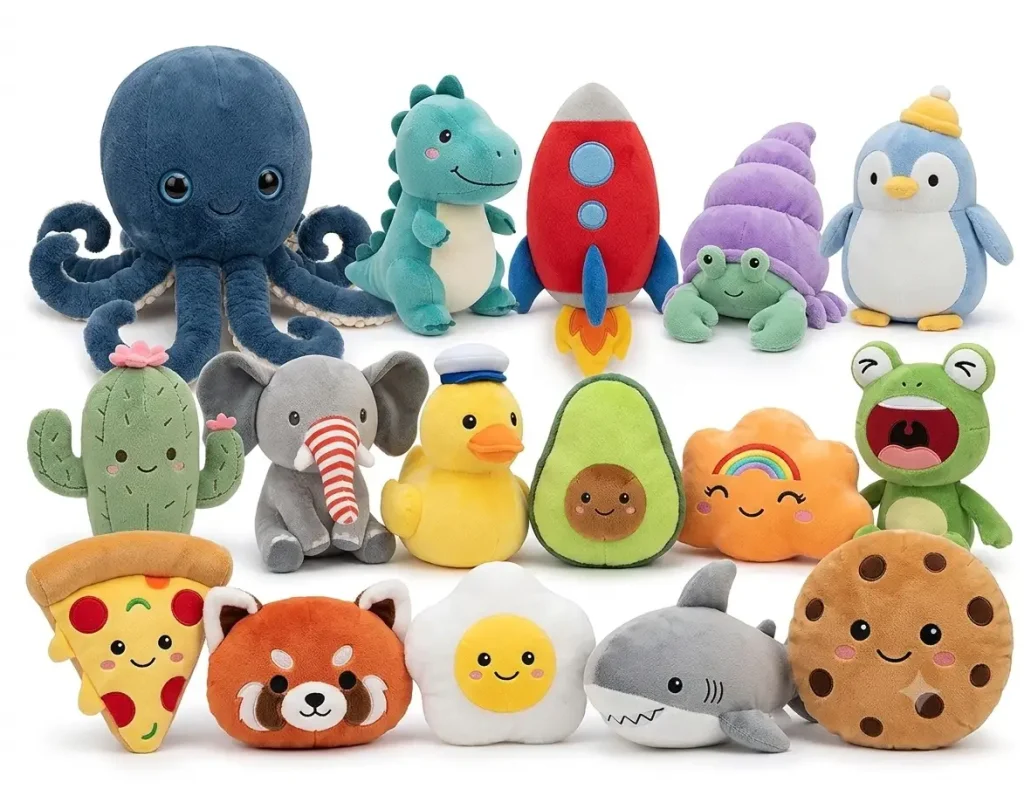
In the plush toy segment, MOQ varies enormously depending on the production method, factory scale, product complexity, and geographic location of the supplier. A large Chinese export manufacturer focused on retail chains may quote MOQs of 1,000–5,000 pieces per SKU. A smaller domestic cut-and-sew operation or a Vietnamese artisan workshop may work at 100–300 pieces. Understanding what category of supplier you are dealing with is the essential first step in any MOQ conversation.
MOQ is also closely linked to unit cost. The relationship between order volume, unit price, and total cost of goods is the central tension every buyer must resolve. Higher MOQs typically unlock lower per-unit costs due to economies of scale, but they also commit more capital and introduce inventory risk. Lower MOQs preserve flexibility and reduce upfront investment but almost always carry a higher per-unit cost that can compress or eliminate retail margin.
The Key Factors That Set MOQ in Plush Toy Manufacturing
Raw material procurement and fabric minimums
Plush toy manufacturers source pile fabrics — minky, faux fur, velboa, sherpa — in bulk rolls, and fabric mills impose their own minimum order quantities, typically expressed in linear meters or yards per colour and texture. If your custom plush toy requires a proprietary colour of minky fabric that the mill does not carry as a stock item, the mill’s minimum dye-lot run is usually 300–500 metres, which forces the manufacturer to price that material cost into your MOQ even if the physical amount of fabric per toy is small. This upstream material MOQ cascades directly into your finished-goods MOQ.
Standard stock fabrics in widely available colours have no such constraint, which is one reason custom colourways consistently result in higher MOQs than designs that use off-the-shelf material palettes. Buyers with flexibility on colour can often negotiate significantly lower minimums by accepting standard stock colours, a trade-off worth considering seriously during the product development phase.
Pattern-cutting setup and tooling
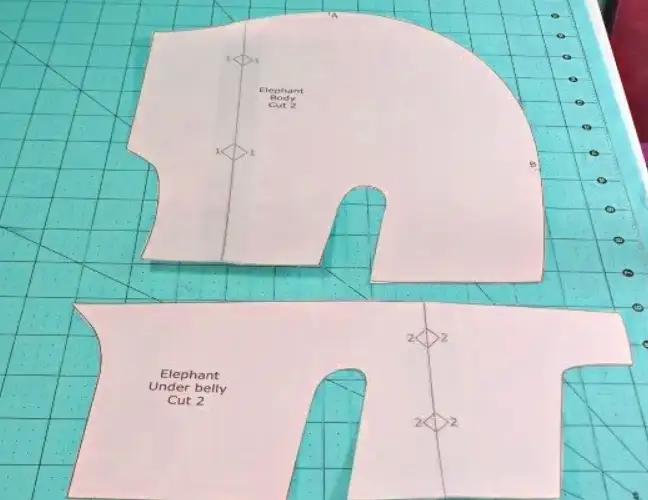
Each new plush toy design requires the creation of a pattern template set, which is then used to programme the automated cutting machine. This setup has a fixed labour cost regardless of run size. On a 5,000-unit run, that setup cost is spread across so many units that it becomes negligible. On a 50-unit run, the same fixed cost becomes a large proportion of the total production cost per unit. Manufacturers address this by either setting a minimum that spreads setup costs adequately, or by charging a separate one-time tooling/setup fee — typically USD $150–$500 — that allows the buyer to order at lower volume without distorting the per-unit price.
Embellishments, accessories, and component sourcing
Safety eyes, swing tags, inner beans or pellets, sound modules, heat-transfer labels, and embroidered patches all have their own supplier MOQs. A plush toy with a sewn-in sound chip requires the sound module supplier to produce or programme a minimum batch — often 500–1,000 units — which sets a floor on the finished toy MOQ regardless of what the factory’s own sewing capacity might allow. Complex toys with multiple custom components effectively have a MOQ set by the most constrained component in the supply chain, not by the assembly factory itself.
MOQ drivers by production factor
| Production factor | Typical MOQ impact | Buyer lever to reduce | Risk if ignored |
|---|---|---|---|
| Custom fabric colour/texture | +200–500 units vs stock | Use stock colourways; limit custom fabric to one component | Mill dye-lot surplus charged to buyer |
| Pattern setup/cutting programme | Fixed cost; pushes min to 300–500 pcs | Pay a separate tooling fee to decouple from unit price | High per-unit cost at low volume |
| Custom sound/electronic module | 500–1,000 pcs floor | Use pre-programmed stock modules; avoid custom audio on first orders | MOQ set by component, not assembly factory |
| Embroidered patch or woven label | +200–300 units minimum batch | Printed heat-transfer label has no MOQ constraint | Label supplier MOQ strands excess inventory |
| Hang tag / swing tag printing | 500–1,000 pcs typical print run | Use digital-print-on-demand for initial runs | Tag overage stored or wasted |
Typical MOQ Ranges by Supplier Type and Region
Plush toy sourcing is a genuinely global market, and the MOQ landscape varies significantly by geography, factory scale, and intended market. Buyers sourcing for large retail programmes will encounter a very different set of minimums than independent brand owners developing a limited-edition character or a crowdfunding product. Understanding the supplier landscape before approaching factories prevents wasted negotiation time and protects the buyer from accepting unsuitable terms.
Chinese export factories remain the dominant supplier for mid-to-high volume orders. The country’s mature cluster of plush toy manufacturers in Guangdong, Jiangsu, and Zhejiang provinces offers vertical integration — fabric weaving, cutting, sewing, and finishing all within a close geographic network — that supports competitive pricing at relatively moderate MOQs compared to equivalent capability elsewhere. Vietnamese and Bangladeshi manufacturers have grown rapidly as second-source options, often with lower labour costs but less developed material supply chains that can push effective MOQs higher for complex designs.
MOQ benchmarks by supplier region and scale
| Supplier type/region | Typical MOQ range | Unit cost tier | Lead time (sample to bulk) | Best suited for |
|---|---|---|---|---|
| Large Chinese export factory (Guangdong) | 1,000–5,000 pcs/SKU | Low–medium (USD $3–$12) | 45–75 days | Retail chains, e-commerce at scale |
| Mid-size Chinese factory | 300–1,000 pcs/SKU | Medium (USD $5–$18) | 50–80 days | Brand owners, wholesale buyers |
| Vietnamese manufacturer | 500–2,000 pcs/SKU | Low–medium | 60–90 days | Retail, BSCI/SEDEX-compliant sourcing |
| Domestic cut-and-sew (USA/EU/AU) | 50–300 pcs/SKU | High (USD $20–$80+) | 3–8 weeks | Limited editions, IP licensing, prototypes |
| Artisan workshop (Southeast Asia/Latin America) | 30–150 pcs/SKU | Medium–high | 4–10 weeks | Boutique brands, gift market, crowdfunding |
How to Negotiate MOQ as a Small or Independent Buyer
The tooling fee approach
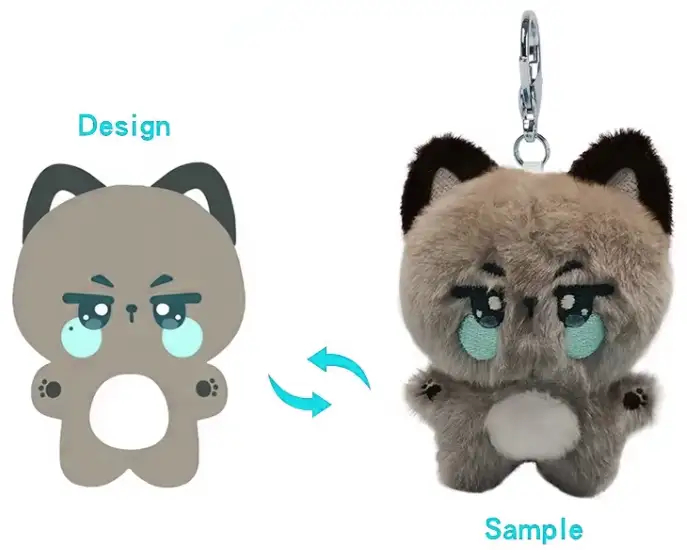
One of the most effective strategies for reducing MOQ without triggering a sharp increase in per-unit cost is to offer to pay a one-time setup or tooling fee upfront. This compensates the factory for the fixed costs of pattern creation, cutting-machine programming, and sample development, removing the need for those costs to be amortised across the production run. In practice, a tooling fee of USD $200–$400 can reduce a factory’s effective MOQ floor from 500 to 200 pieces or fewer on straightforward designs. Frame this conversation as a partnership: you are funding the shared infrastructure, and in return, the factory can accept a smaller initial run.
SKU consolidation and colourway strategy
If your product range involves multiple characters or colourways, negotiating a combined MOQ across the range — rather than a per-SKU minimum — can dramatically reduce the volume commitment while still meeting the factory’s economic threshold. A factory with a 500-piece MOQ per SKU may accept an order of 200 pieces across three colourways (600 total) because the combined run meets their setup-cost recovery target. This approach requires careful attention to pattern compatibility: designs that share the same base pattern but differ only in fabric colour or embroidery are the easiest cases for combined-MOQ negotiation.
Phased ordering and repeat order commitments
Factories value predictable forward demand because it helps them schedule production capacity. Offering a written commitment to a follow-on order — typically at standard MOQ — in exchange for a reduced first-order minimum is a recognised negotiation tactic in the plush toy sourcing industry. This commitment need not be a binding purchase order; a letter of intent that demonstrates genuine commercial intent is often sufficient to unlock a lower initial minimum from a factory that has assessed the buyer as a credible long-term customer.
MOQ negotiation strategies and expected outcomes
| Strategy | Typical MOQ reduction | Cost trade-off | Complexity |
|---|---|---|---|
| Pay upfront tooling fee | 30–60% reduction possible | USD $150–$500 one-time; per-unit cost unchanged | Low — straightforward negotiation |
| Consolidated SKU run | Meets factory total; per-SKU volume lower | Slightly higher per-unit if pattern varies | Medium — requires design coordination |
| Phased order + LOI commitment | First run 30–50% below standard MOQ | Binds buyer to future purchase timeline | Medium — relationship trust required |
| Use stock fabrics and components | Up to 50% reduction vs custom spec | Design flexibility reduced | Low — product design decision |
| Shared production slot (agent/sourcing platform) | Can reach 50–100 pcs via consolidated orders | Agent/platform fee (5–12% of FOB) | High — relies on third-party |
MOQ, Unit Cost, and Landed Cost: Running the Numbers
MOQ decisions cannot be made in isolation from unit cost and landed cost modelling. A factory offering a low MOQ at a high per-unit cost may produce a worse landed-cost outcome than a higher-MOQ option at a lower unit price, once freight, duty, and logistics fees are accounted for. The break-even analysis between two MOQ options is a straightforward calculation, but buyers often skip it and make decisions based on MOQ alone — a mistake that costs margin.
Landed cost for a plush toy imported from China to Australia or the United States typically includes FOB unit price, ocean freight (often calculated per cubic metre or per container), import duty (ranging from 0% to 12% depending on HS code and bilateral trade agreement status), customs clearance fees, and last-mile delivery. For orders near the MOQ threshold, per-unit freight costs are disproportionately high because ocean freight is sold in container minimums — a less-than-container-load (LCL) shipment of 500 toys will have a much higher freight cost per unit than a full-container-load (FCL) of 5,000 toys.
Illustrative landed cost comparison across order volumes (USD, China to USA)
| Order volume | FOB unit price | Freight per unit (est.) | Duty + clearance per unit | Total landed cost per unit |
|---|---|---|---|---|
| 100 pcs (low MOQ) | USD $14.00 | USD $4.50 (LCL) | USD $1.80 | USD $20.30 |
| 300 pcs | USD $10.50 | USD $3.20 (LCL) | USD $1.40 | USD $15.10 |
| 500 pcs (standard MOQ) | USD $8.00 | USD $2.10 (LCL) | USD $1.05 | USD $11.15 |
| 1,000 pcs | USD $6.20 | USD $1.40 (LCL/FCL boundary) | USD $0.82 | USD $8.42 |
| 3,000 pcs (FCL) | USD $4.80 | USD $0.65 (FCL) | USD $0.63 | USD $6.08 |
| Sourcing tip Always request a full proforma invoice that itemises FOB price, packaging, inland freight to port, and any export documentation fees before comparing suppliers on MOQ alone. Two factories quoting the same FOB price may produce very different landed costs once packaging dimensions and cubic weight are calculated. |
Quality Compliance and MOQ: The Hidden Connection
Quality assurance testing — including EN 71-1 mechanical and physical properties testing, ASTM F963 compliance for the US market, and REACH chemical safety testing — adds a fixed per-order cost that affects the effective economics of low-MOQ orders. A third-party lab test from an accredited testing body typically costs USD $300–$800 per product per market, depending on the test scope. On a 500-unit order, that testing cost adds USD $0.60–$1.60 per unit — a manageable overhead. On a 50-unit order, the same testing cost becomes USD $6–$16 per unit, which can double or triple the effective unit cost for a small toy.
This is not a reason to skip testing — compliance certification is a legal requirement in most retail channels and a baseline expectation from responsible retailers and platform marketplaces. It is, however, a strong argument for consolidating product ranges so that a single test certificate covers as many units and reorders as possible, and for timing testing to coincide with meaningful order volumes rather than prototyping runs.
Testing cost impact on effective unit cost by order volume
| Order volume | Typical test cost (EN 71 + ASTM scope) | Test cost per unit | Recommendation |
|---|---|---|---|
| 50 pcs | USD $400–$600 | USD $8.00–$12.00 | Delay full testing; use factory’s existing cert if design matches |
| 200 pcs | USD $400–$600 | USD $2.00–$3.00 | Test if selling to retail; cost manageable |
| 500 pcs | USD $400–$800 | USD $0.80–$1.60 | Always test; cost well absorbed |
| 1,000 pcs+ | USD $500–$800 | USD $0.50–$0.80 | Full test suite; include factory audit |
| Reorder (same spec) | USD $100–$200 (repeat test) | Minimal impact at volume | Annual re-testing typically sufficient |
Frequently Asked Questions
What is a typical MOQ for a custom plush toy order from China?
For a fully custom plush toy — meaning a new design with custom fabric, embroidery, and packaging — a typical MOQ from a mid-size Chinese factory is 300 to 500 pieces per SKU. Large export factories focused on mass-retail clients often quote 1,000 to 3,000 pieces as their standard minimum.
If your design uses stock fabrics and standard components without custom colourways, you may be able to negotiate a minimum as low as 100 to 200 pieces, particularly if you are willing to pay a separate one-time tooling and setup fee. The MOQ will also depend on the complexity of the design: a simple shape with flat seams and minimal embellishment has a lower effective MOQ than a multi-part, jointed character with a sound module and custom hang tag.
Can I get a plush toy manufactured with an MOQ below 100 pieces?
Yes, but typically not from a standard export factory in China or Vietnam. Orders below 100 pieces are more the territory of domestic cut-and-sew workshops, artisan manufacturers, or specialist small-batch production services in countries like the United States, the United Kingdom, or certain Southeast Asian countries with active boutique manufacturing sectors.
These suppliers operate at a fundamentally different cost structure — per-unit prices are significantly higher, often USD $20 to $80 or more depending on size and complexity — but they provide the flexibility that very small brands, crowdfunding campaigns, or event-specific limited editions require. Some sourcing platforms and trading companies aggregate orders from multiple buyers to meet factory minimums, which can allow individual buyers to place orders of 50 to 100 units while the platform consolidates the production run to meet the factory’s threshold.
Why does adding a custom colour increase the MOQ?
Custom colours in plush toy manufacturing trigger upstream fabric minimums that flow through to the finished-goods MOQ. Pile fabrics such as minky and faux fur are dyed at the mill level, and mills typically require a minimum dye-lot run of 300 to 500 linear metres per custom colour to make the dyeing process economically viable. The manufacturer must therefore order at least that much fabric, which commits them to producing a corresponding minimum number of finished toys using that fabric.
If you specify a custom colour that no other client is ordering, the manufacturer cannot spread the fabric minimum across multiple buyers, so the full fabric MOQ becomes your effective minimum. Using stock colours that the factory already purchases regularly eliminates this constraint entirely, which is why colour flexibility is one of the highest-leverage variables in MOQ negotiation.
How does MOQ affect pricing — is a lower MOQ always more expensive per unit?
Yes, almost without exception. Lower MOQ orders carry higher per-unit costs because the fixed costs of production — setup, pattern cutting, quality inspection, compliance documentation — are spread across fewer units. The relationship is not linear: the cost reduction from increasing an order from 100 to 500 units is typically much steeper than the reduction from 1,000 to 2,000 units, because the initial spread of fixed costs over more units has the greatest impact at low volumes.
Beyond the factory price, freight cost per unit also rises sharply at low volumes because ocean freight is sold in container minimums and small orders ship as less-than-container-load (LCL) cargo at premium rates. A complete landed-cost model — including FOB price, freight, duty, and compliance testing — will almost always show that an order at twice the MOQ produces a materially lower cost per delivered unit than an order exactly at the MOQ floor.
What is the difference between MOQ and MPQ in plush toy sourcing?
MOQ refers to the minimum order quantity for a production run — the smallest number of units a factory will manufacture in a single order. MPQ, or minimum purchase quantity, is a related but distinct term more commonly used in wholesale and distribution contexts: it refers to the smallest quantity a buyer must purchase per transaction from a distributor or wholesaler who already holds finished inventory.
In plush toy sourcing, you will encounter MOQ when working directly with a manufacturer for custom production, and MPQ when purchasing from a trading company, importer, or wholesaler who has already manufactured the product. MPQs in a wholesale context are typically much lower than factory MOQs — often as few as 6, 12, or 24 pieces per style — because the wholesaler has already absorbed the production MOQ risk and is now recovering margin by selling smaller quantities at a higher per-unit price.