Skip to content
Why Understanding the Mass Production Workflow Changes Your Sourcing Outcomes
Buyers who understand the production workflow are systematically better sourcing partners — and they get systematically better outcomes — for reasons that are directly operational rather than abstract.

Understanding the mass production workflow changes your sourcing outcomes because every stage in the production process involves decisions, dependencies, and risk points that the buyer influences through their choices before production begins. The fabric specification decision affects the IQC stage. The approved sample affects every comparison made by QC throughout the run. The accuracy of the design brief affects how much production time is lost to mid-run clarifications. A buyer who understands these connections makes better upstream decisions — and those decisions compound into better quality, more reliable timelines, and fewer end-stage surprises.
Here is a summary of the full workflow at a glance, before each stage is explained in detail:
| Stage | Workflow Step | Typical Duration | Key Risk If Mismanaged |
|---|---|---|---|
| 1 | Order confirmation and production scheduling | 1–3 days | Timeline misalignment, capacity conflict |
| 2 | Material sourcing and IQC | 3–10 days | Non-compliant or inconsistent materials enter production |
| 3 | Pre-production meeting and master specification review | 0.5–1 day | Specification ambiguity carried into production |
| 4 | Cutting | 1–3 days | Dimensional errors, grain misalignment, waste |
| 5 | Sewing and assembly | 5–15 days | Seam failures, shape deviation, and inconsistent embellishments |
| 6 | Stuffing and shaping | 1–3 days | Density variation, shape inconsistency |
| 7 | In-process quality control (IPQC) | Continuous | Defects not caught before the quantity accumulates |
| 8 | Finishing and detail work | 1–3 days | Accessory misalignment, trimming quality |
| 9 | Final quality control (FQC) | 1–2 days | Non-conforming units shipped to the buyer |
| 10 | Packaging and labeling | 1–3 days | Compliance failures, labeling errors |
| 11 | Pre-shipment inspection | 0.5–1 day | Last opportunity defect identification was missed |
| 12 | Logistics coordination and shipment | 3–5 days | Documentation errors, Incoterms confusion |
Stage 1: Order Confirmation and Production Scheduling — What Happens Before Production Begins?
Order confirmation is not the beginning of production. It is the beginning of a production preparation phase that determines how smoothly the production itself will run. What happens in the days between order confirmation and the first cut is as important to the final outcome as anything that happens on the production floor itself.
When an order is confirmed, the factory’s production planning team immediately faces two questions: when can this order be scheduled, and what does it require? The first question is a capacity management question — where does this order fit within existing production commitments, and what is a realistic start date given current utilization? The second is a specification question — is everything needed to begin production available: approved sample, complete spec sheet, confirmed materials, and finalized artwork for labels and packaging?
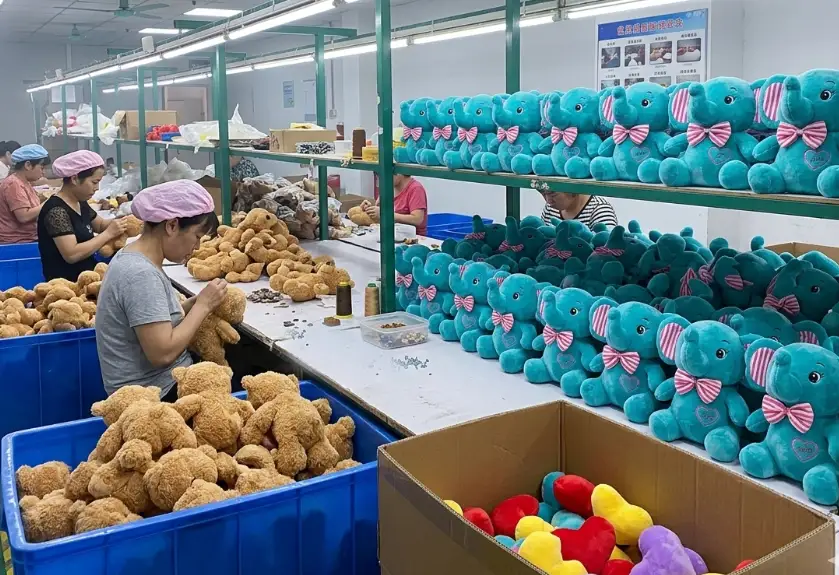
Both questions need accurate answers before production begins, and the buyer is the only source of the specification information. Delays in providing final artwork, packaging specifications, or answers to outstanding design questions at this stage are not neutral — they compress the remaining production timeline without changing the ship date, creating production pressure that manifests as quality risk later in the run.
Here is what a professional production scheduling process covers at order confirmation:
| Scheduling Element | What the Factory Determines | Why It Matters for the Buyer |
|---|---|---|
| Production start date | Based on current capacity and material lead time | Sets the realistic ship date the buyer should plan against |
| Material procurement trigger | Outstanding materials ordered immediately | Long lead time materials can delay the start by days or weeks |
| Line assignment | Which production line(s) handle this order | Affects which QC team and supervisors oversee the order |
| Timeline milestone map | Key stage completion dates through shipment | Buyer reference for production update requests |
| Outstanding information checklist | What the factory still needs from the buyer | Flags buyer-side action items before production start |
The Deposit-to-Scheduling Relationship
In most professional plush toy manufacturing relationships, production scheduling is triggered by deposit payment — not by order confirmation alone. A factory that schedules production capacity without deposit confirmation is making a commercial commitment it cannot enforce, which means it must leave that capacity flexible for paying orders that may arrive. Buyers who delay deposit payment while expecting production to proceed on the confirmed timeline are often surprised to discover their order has been pushed back — not out of negligence, but because the factory had no contractual basis to hold the line.
Paying the confirmed deposit promptly — typically 30 to 50 percent of the total order value — is the most direct action a buyer can take to protect their production timeline at the order confirmation stage.
Stage 2: Material Sourcing and Incoming Quality Control — Why Materials Define Everything That Follows
Material sourcing is where the quality of a plush toy is established before a single stitch is made. The fabric that goes onto the cutting table, the filling that goes into the stuffed body, the plastic safety eyes, the thread, and the trim all determine the baseline quality characteristics of the finished product. No amount of skilled production work can compensate for materials that are the wrong weight, the wrong color, or the wrong compliance status.

Materials define everything that follows because the quality of the finished product is bound by the quality of the materials from which it is made. A factory with excellent sewing capability working with inconsistent fabric produces inconsistent output. A factory with average sewing capability working with high-quality, specification-compliant materials produces reliably adequate output. Material quality sets the ceiling; production skill determines where within that ceiling the actual output lands.
Here is what incoming quality control at a professional factory covers for each material type:
| Material | IQC Check | Specification Benchmark | Reject Trigger |
|---|---|---|---|
| Outer fabric | Color match, pile height, density, and width | Approved fabric swatch with spec card | Color deviation > approved tolerance, pile height ≠ spec |
| PP cotton filling | Density, whiteness, and moisture content | Grade specification from purchasing | Clumping, discoloration, and moisture above threshold |
| Safety eyes/noses | Diameter, post length, pull strength | Safety accessory spec sheet | Dimensional deviation, pull test failure |
| Thread | Tensile strength, color consistency | Thread specification per design color | Breakage in tensile test, color inconsistency |
| Labels and hang tags | Artwork accuracy, barcode scan validity | Approved print proof | Artwork error, barcode failure |
| Packaging materials | Dimension, print accuracy, material grade | Packaging spec sheet | Size mismatch, print error, material grade failure |
What Happens When Incoming Materials Fail IQC
When an IQC check identifies a non-conforming material — fabric that does not match the approved color standard, filling that fails the density check, accessories that do not meet the pull test requirement — the correct response is to quarantine the non-conforming batch and immediately notify the buyer of the issue, the proposed alternative, and the timeline impact.
Non-conforming materials that enter production without buyer notification create the worst kind of quality problem: one that only becomes visible in the finished product, after production labor has already been invested in material that should never have been used. Buyers evaluating manufacturers should ask directly how non-conforming incoming materials are handled — a factory with a genuine IQC process will have a specific, documented answer. One that responds vaguely or assures the buyer that “all materials are always checked” without describing a specific process is likely describing aspiration rather than practice.
Stage 3: Pre-Production Meeting and Master Specification Review — The Last Line of Defense Before Cutting
Before any material is cut, a professional factory conducts a pre-production meeting — a structured review of everything the production team needs to know to execute the order correctly. This meeting is not a formality. It is the last opportunity to surface and resolve any ambiguity in the specification before that ambiguity gets cut into the fabric.

The pre-production meeting matters because specification ambiguity is not neutral in a manufacturing context. When a sewing operator encounters something the spec does not address — which direction should the ear seam face, how tightly should the nose be anchored, what is the acceptable range for the eye placement — they make a judgment call. That judgment call may be correct. It may be applied inconsistently across the production run. Or it may be systematically wrong in ways that are only discovered in the final QC check. Any of these outcomes is more expensive than resolving the ambiguity before production begins.
Here is what a complete pre-production review covers:
| Review Element | Specific Questions Addressed | Production Impact if Skipped |
|---|---|---|
| Approved sample confirmation | Is the approved sample present, accessible, and understood as the quality benchmark?The | QC team has no objective reference for comparison |
| Construction sequence | What is the correct order of assembly operations? | Assembly errors from sequence confusion |
| Embroidery placement | Exact position coordinates for all embroidered elements | Inconsistent feature placement across units |
| Safety accessory anchoring | Required method and depth for eyes, noses, and attached accessories | Pull test failures in finished units |
| Filling density standard | Target density and measurement method for the specific product | Shape inconsistency across the production run |
| Finishing requirements | Trimming, clipping, and brushing standards for this product | Inconsistent surface appearance |
| Packaging sequence | How units are packed, folded, tagged, and boxed | Packaging damage, mislabeling, and compliance failures |
Stage 4: Cutting — How Dimensional Accuracy Is Established Before Sewing Begins
Cutting is the stage where the two-dimensional fabric becomes the three-dimensional pattern pieces that will be assembled into the finished plush toy. It appears deceptively simple — operators use pre-made pattern templates to cut fabric into the correct shapes. In practice, cutting is one of the most consequential stages for quality, because dimensional errors made here propagate through every subsequent production stage and cannot be corrected in final QC.
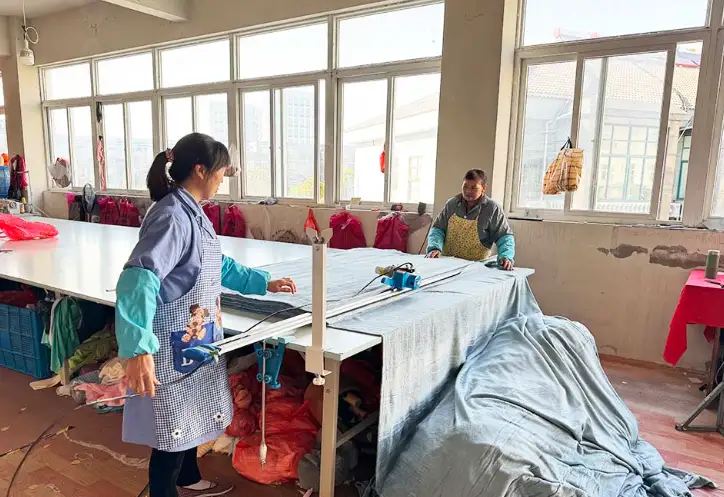
Cutting establishes dimensional accuracy for the finished product because the shape, size, and proportional relationships of the cut pieces directly determine the shape, size, and proportional relationships of the assembled toy. A piece cut 3mm too short at the cutting table cannot be extended at the sewing table — it produces a finished toy that is slightly off in ways that may be individually subtle but cumulatively visible as inconsistency across the order.
Here is what professional cutting quality control covers:
| Cutting Control Element | What It Prevents | How It Is Checked |
|---|---|---|
| Pattern template accuracy | Dimensional drift from worn or distorted templates | Templates are measured against the master before each run |
| Fabric grain alignment | Pile direction inconsistency across units | Visual check of pile direction on cut pieces |
| Layering depth | Inconsistent dimensions from too many fabric layers | Maximum layer count per fabric type enforced |
| Color separation | Mixed fabric batches produce color variation | Single color batch per cutting table |
| Notch and mark placement | Misaligned assembly causing shape distortion | Spot check notch positions against the master |
| Waste tracking | Material over-consumption indicates a cutting error | Cut yield measured against planned yield |
Why Computerized Pattern Cutting Improves Consistency
Factories that have invested in computerized cutting equipment — where pattern shapes are stored digitally and cut by automated systems rather than manually traced templates — consistently achieve higher dimensional accuracy than those relying entirely on manual cutting. The template drift that occurs over time with manual cutting, the layering inconsistencies that result from operator variation, and the grain alignment errors that come from manual fabric positioning are all substantially reduced in computerized systems.
This is not to say that manual cutting cannot produce excellent results — it can, in well-managed facilities with experienced operators and regular template maintenance. But when evaluating factories, asking about their cutting process and the equipment they use is a legitimate quality question, not just a capability curiosity.
Stage 5: Sewing and Assembly — Where the Product Takes Shape and Where Most Defects Are Born
Sewing and assembly are the production stages that most buyers associate with plush toy manufacturing — and with good reason. It is the longest stage, the most labor-intensive, and the one where the greatest variety of quality problems can originate. It is also the stage that is most directly affected by the quality of the stages that preceded it: accurately cut pieces sewn by skilled operators following a clear specification produce consistent, high-quality output. Inaccurately cut pieces, ambiguous specifications, or undertrained operators compound quality problems across tens or hundreds of units before correction is possible.
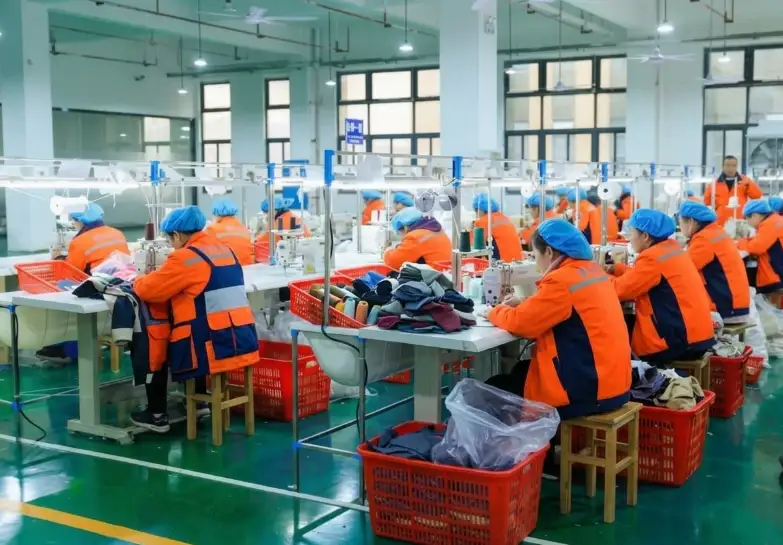
Sewing and assembly quality is determined by the combination of operator skill, machine calibration, stitch specification, seam allowance consistency, and real-time QC monitoring. A factory with strong capability in all five of these areas produces assembly quality that is consistent enough to match the approved sample across the full production run. A factory that is strong in some dimensions but weak in others produces output that may be generally acceptable but inconsistently so — with defect clusters that trace back to specific operators, specific machine stations, or specific construction steps where the system is weakest.
Here is the key assembly operations sequence for a standard plush toy:
| Assembly Step | Description | Critical Quality Check |
|---|---|---|
| Embroidery (if applicable) | Facial features or branding embroidered before body assembly | Placement position, density, and color accuracy |
| Body panel joining | Main body pieces sewn together, leaving a filling opening | Seam allowance consistency, stitch density |
| Limb and appendage attachment | Arms, legs, ears, and tails are attached to the main body | Symmetry and angular positioning |
| Turning | Body turned right-side out through the filling opening | Tear risk at corners, seam stress assessment |
| Safety accessory insertion | Eyes, noses, and squeakers inserted before final closure | Position accuracy, fastening security |
| Pre-closure inspection | Unit inspected before filling the opening is closed | Last opportunity to address interior defects |
What Seam Quality Actually Means
Seam quality is one of those production concepts that buyers often assess informally — the toy looks well-sewn, so it must be — without understanding what professional seam quality standards actually require. A seam that looks clean can fail a pull test. A seam that passes a pull test can come apart after repeated washing. The relevant quality parameters for plush toy seams are stitch density (stitches per centimeter), seam allowance width, thread tension, and seam type, and each of these has a specification that should be defined in the product spec sheet and checked during IPQC.
Buyers who want to verify seam quality standards before ordering should ask specifically: what stitch density do you use on body seams, and how is it verified during production? A factory with documented seam standards will answer this question specifically. A factory without them will provide a general assurance that seam quality is “very good,” which tells you nothing about what you will actually receive.
Stage 6: Stuffing and Shaping — How Fill Density and Distribution Determine the Finished Feel
Stuffing is a production step that looks straightforward from the outside and is surprisingly complex to execute consistently at production volumes. The target is simple: each unit should have the same density of filling, distributed in the same pattern, producing the same feel and shape as the approved sample. Achieving that target consistently across hundreds or thousands of units requires more than inserting filling into an opening — it requires a controlled process with specific density targets, measurement tools, and distribution techniques.
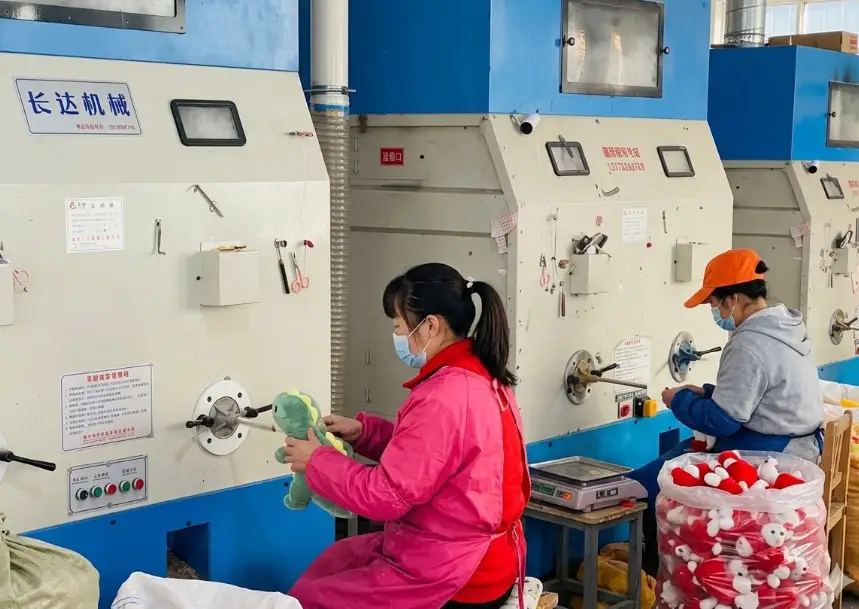
Fill density and distribution determine the finished feel because the physical characteristics that consumers associate with quality plush toys — firmness, shape retention, surface smoothness, weight — are all products of how much filling is used and how it is distributed. An under-filled unit feels flat and shapeless. An overfilled unit feels stiff and loses the softness that makes plush toys appealing. A unit where filling is distributed unevenly has lumps in high-density areas and flat spots in low-density areas — quality problems that no amount of post-stuffing work can fully correct.
Here is how professional factories control stuffing consistency:
| Stuffing Control Element | What It Prevents | How It Is Applied |
|---|---|---|
| Weight-based filling targets | Under- or over-filling produces an inconsistent feel | Each unit’s filling was weighed before insertion |
| Zone-by-zone distribution | Uneven density creates lumps and flat spots | Filling added in sequence by body zone |
| Mechanical stuffing consistency | Operator-to-operator density variation | Calibrated filling equipment, where applicable |
| Post-stuffing density check | Density variation outside acceptable toleranceThe | QC team weighs and palpates the sample units |
| Shape comparison against the master | Shape deviation from the approved sample | Visual and tactile comparison at QC check |
Stage 7: In-Process Quality Control — The Checkpoint System That Prevents Defect Accumulation
In-process quality control (IPQC) is the continuous monitoring system that runs throughout the sewing and assembly stages — not a single checkpoint but a series of structured checks at defined intervals that catch quality deviations before they accumulate into large defective batches. IPQC is the operational expression of the fundamental quality management principle that prevention is cheaper than correction: finding a seam tension problem in the third unit of the day costs one corrective action; finding the same problem in the three hundredth unit costs three hundred corrective actions.
IPQC prevents defect accumulation by creating a sampling-based monitoring system that identifies process deviations early enough for corrective action before significant production volume has been affected. A well-designed IPQC system catches the vast majority of systematic quality problems — those that originate from a process miscalibration, a material inconsistency, or a specification misunderstanding — within the first checking interval after the problem begins, limiting the quantity of affected units to a manageable number.
Here is what a professional IPQC system monitors during plush toy production:
| IPQC Check Type | Frequency | Sample Size | Key Attributes Checked |
|---|---|---|---|
| First-off inspection | At the line start and after each setup change | First 3–5 units | Full comparison against the approved sample |
| Seam quality check | Every 1–2 hours per line | 5–10 units | Stitch density, seam allowance, tension |
| Embroidery position check | Every 50 embroidered units | 3 units | X/Y position against spec coordinates |
| Safety accessory check | Every 100 units | 5 units | Pull test, position accuracy |
| Stuffing density check | Every 2 hours | 3 units | Weight check, shape comparison |
| Surface finish check | Every 200 units | 5 units | Trimming, brushing, and overall appearance |
The First-Off Inspection — Most Critical, Most Often Compressed
Of all the IPQC checks in a production run, the first-off inspection — the comparison of the first completed units against the approved sample at the start of production — is both the most important and the most frequently compressed under production schedule pressure. When a production line has been set up and the schedule is running, the pressure to move from the first completed units to full-volume production as quickly as possible is real. Taking the time for a thorough first-off review can feel like a delay.
But the first-off inspection is the moment when any remaining specification ambiguity becomes concrete and correctable at minimal cost. Catching an embroidery position error at the first stage means correcting one or a few units and adjusting the process. Missing it at the first-off stage means discovering it in the FQC check after the full run is complete, with the rework cost multiplied by the entire production volume.
Buyers who want to verify whether a factory takes first-off inspection seriously can ask: What documentation does the factory produce for the first-off inspection, and can we receive that documentation before bulk production continues? A factory with a genuine first-off process will have a specific answer. One that is vague about documentation is likely treating first-off as a cursory check rather than a structured quality gate.
Stage 8: Finishing and Detail Work — The Stage That Determines Perceived Quality
Finishing is the production stage between completed assembly and formal quality inspection — the set of operations that bring the product from structurally complete to visually polished. It includes trimming loose threads, clipping any excess material at seams, brushing or combing the pile to restore its texture after handling, checking and repositioning accessories that have shifted during assembly, and making any minor repairs to items that have small defects not severe enough to be rejected but requiring correction before QC.
Finishing determines perceived quality because the attributes that consumers assess immediately upon seeing and handling a plush toy — surface cleanliness, consistent pile texture, neat seams with no loose threads, symmetrically positioned features — are almost entirely products of the finishing stage. A structurally sound toy that has not been properly finished looks cheap regardless of the material quality underneath. A properly finished toy projects quality from first contact in a way that is disproportionate to the operational cost of the finishing work.
Here is what professional finishing covers:
| Finishing Operation | Quality Standard | Common Failure Mode |
|---|---|---|
| Thread trimming | Zero visible loose threads | Threads missed at seam intersections, internal thread trails |
| Pile brushing | Consistent pile direction matching the approved sample | Flat spots, brushing direction inconsistency |
| Seam inspection | No puckering, no exposed seam allowance | Seam pulling due to tension, turning trauma |
| Feature alignment check | Symmetry within approved tolerance | Eyes off-center, ears uneven, nose placement drift |
| Soil and contamination check | No oil stains, machine grease, or production marks | Line soiling, storage contamination |
| Shape correction | Overall form consistent with the approved sample | Sagging, asymmetry from uneven filling |
Stage 9: Final Quality Control — The Systematic Gate Between Production and Shipment
Final quality control (FQC) is the formal inspection stage that occurs after all production and finishing is complete — a structured, sampling-based assessment of the finished, packed units against the approved sample and product specification. FQC is not a production stage; it is a quality gate whose function is to separate acceptable from non-acceptable production before the buyer’s goods are committed to shipment.
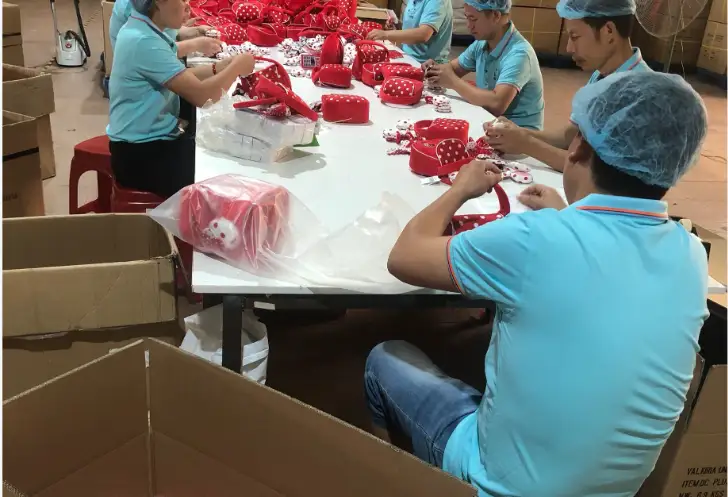
FQC matters because it is the last moment in the production process when quality problems can be identified and corrected before the buyer receives the goods. A factory that conducts rigorous FQC protects its buyers from receiving non-conforming goods. A factory that treats FQC as a rubber-stamp exercise — quickly checking a few units and approving the batch — provides no meaningful protection against quality problems that have accumulated undetected through the production run.
Professional FQC follows an Acceptable Quality Level (AQL) sampling plan — a statistically based approach to batch inspection that defines how many units must be inspected from a given batch size, and what number of defects at each severity level triggers batch rejection rather than acceptance.
Here is how AQL sampling typically applies to plush toy production batches:
| Batch Size | Normal Inspection Sample Size | AQL 1.0 Reject Point (Critical) | AQL 2.5 Reject Point (Major) | AQL 4.0 Reject Point (Minor) |
|---|---|---|---|---|
| 281–500 units | 50 | ≥ 2 | ≥ 4 | ≥ 7 |
| 501–1,200 units | 80 | ≥ 3 | ≥ 6 | ≥ 10 |
| 1,201–3,200 units | 125 | ≥ 4 | ≥ 8 | ≥ 15 |
| 3,201–10,000 units | 200 | ≥ 6 | ≥ 12 | ≥ 22 |
Understanding Defect Classification
AQL sampling works on defect classification — the categorization of each identified defect by its severity and commercial consequence. Getting the classification right matters because it determines whether an identified defect triggers batch rejection or is counted against the more tolerant minor defect limit.
Critical defects in plush toys are those that present a direct safety risk — a safety eye that fails the pull test, filling material that fails chemical testing, or a seam failure that exposes internal components. These defects have an AQL 0 in most professional sourcing standards, meaning any critical defect found in sampling triggers full batch rejection.
Major defects are those that would lead a reasonable consumer to reject the product or seek a return: significant color deviation from the approved sample, clearly asymmetric feature placement, seam failures that affect appearance but not safety, material pilling, or texture inconsistency. These are held to AQL 1.0 or AQL 2.5 in most professional standards.
Minor defects are those that are noticeable under close inspection but do not affect function, safety, or the consumer’s decision to keep the product — minor thread tails, slight surface roughness in non-visible areas, small variations in non-critical dimensions. These are typically held to AQL 4.0.
Stage 10: Packaging and Labeling — Where Compliance Failures Happen at the Last Minute
Packaging and labeling is the production stage that most commonly produces compliance failures at the last stage of the workflow — failures that could have been prevented by treating packaging as a specification element requiring the same rigorous review as the product itself, not as an afterthought addressed after the product is complete.
Packaging failures are particularly costly because they occur at the end of the production process. A labeling error discovered at the FQC or pre-shipment inspection stage — wrong barcode, missing safety language, incorrect country-of-origin marking, non-compliant age grading — requires reprinting and reapplication of the affected labels across the entire batch, potentially delaying shipment and adding unplanned cost at the moment when the buyer is least prepared to absorb either.
Here is what a professional packaging and labeling review covers before bulk packaging begins:
| Packaging Element | Compliance Requirement | Common Failure Mode |
|---|---|---|
| Age grading label | ASTM / EN71 / local market specific | Wrong age grade, missing warning language |
| Country of origin | Required for US/EU customs clearance | Missing, incorrect, or unclear marking |
| Safety warning language | Market-specific language and format requirements | Missing language, wrong market requirements |
| Barcode / UPC | Buyer or retailer specification | Scanning failure, wrong format |
| Material content label | Required in most regulated markets | Missing, incomplete, or inaccurate |
| Tracking/compliance marks | CE, ASTM compliance statement | Missing from regulated markets |
| Carton marking | Buyer’s routing and shipping marks | Missing required fields, wrong format |
Stage 11: Pre-Shipment Inspection — The Buyer’s Last Opportunity Before Goods Leave the Factory
Pre-shipment inspection (PSI) is the final inspection of packed, cartonized goods before they are released for shipment. It is distinct from FQC — which is conducted by the factory’s internal QC team — in that it is typically conducted either by an independent third-party inspection company contracted by the buyer, or by a factory QC team operating under a documented protocol agreed with the buyer.
The distinction matters because the incentive structure of internal versus third-party inspection is different. A factory’s internal QC team has an interest in shipping on time, which creates subtle pressure toward approval in borderline situations. A third-party inspection company works for the buyer and has no financial relationship with the factory, which creates bias toward approval. For orders where the stakes are high — new supplier, new product, large volume, tight retail deadline — a third-party PSI is the most reliable protection available to the buyer.
Here is what a professional pre-shipment inspection covers:
| PSI Activity | What It Checks | Why It Cannot Be Skipped |
|---|---|---|
| Carton quantity verification | Actual carton count against packing list | Discrepancy between document and physical count |
| Carton condition assessment | External condition of shipping cartons | Damage indicating handling problems or storage issues |
| Random unit extraction | AQL sample extracted from random cartons | Ensures the sample is not drawn from pre-selected good units |
| Product inspection against spec | Full product inspection against the approved sample | Final confirmation of production conformance |
| Labeling and marking check | All labels checked against approved artwork | Compliance failures not caught in FQC |
| Barcode scanning | All barcode labels scanned for accuracy | Ensures retailer systems can process the goods |
| Packing list reconciliation | Actual contents verified against packing list | Discrepancies that cause customs or receiving problems |
When to Commission a Third-Party PSI
Third-party PSI is most clearly justified in four situations: first order with a new supplier, where no track record exists to support confidence in internal QC; unusually large orders, where the cost of receiving non-conforming goods is proportionally high; products with complex compliance requirements, where the stakes of compliance failures are significant; and any situation where previous orders with the same supplier have produced quality concerns.
The cost of a professional third-party PSI — typically $250 to $500 for a one-day inspection — is routinely recoverable in prevented rework, return, or compliance costs on orders of even modest size. Buyers who routinely skip third-party PSI on the basis that it is an unnecessary expense are transferring a risk to themselves that is almost always larger than the inspection cost they are avoiding.
Stage 12: Logistics Coordination and Shipment — Getting Goods from Factory to Destination
Logistics coordination is the final operational stage of the mass production workflow — the set of activities that translates a completed, inspected batch of goods into a shipment delivered to the buyer’s location. It includes freight booking, export documentation preparation, customs clearance at origin, handoff to the carrier, and coordination of all the documentation that the buyer needs to receive and import the goods at the destination.
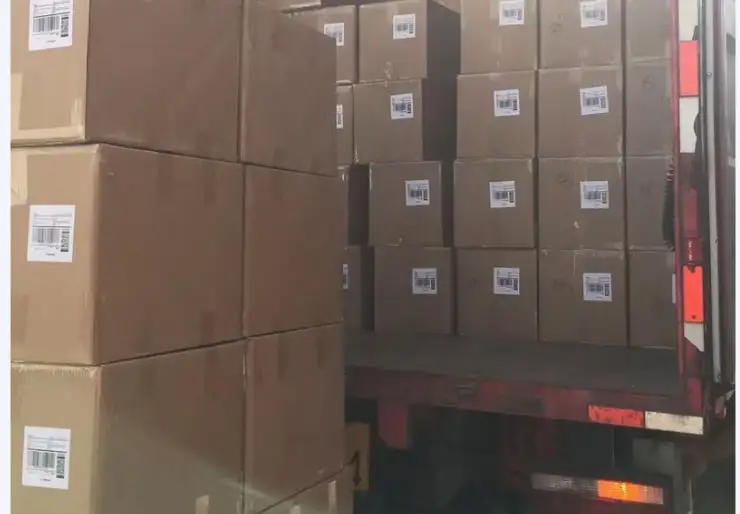
Logistics coordination is where Incoterms — the internationally standardized trade terms that define which party is responsible for freight, insurance, and import duties at each stage of transit — become operationally consequential. A buyer who does not understand what FOB, CIF, or EXW mean in practice is not equipped to evaluate whether the factory’s logistics proposal is appropriate for their sourcing situation or to catch discrepancies between what was agreed and what has been arranged.
Here is a practical summary of the most common Incoterms for plush toy exports:
| Incoterm | Who Books Freight | Risk Transfer Point | Import Duty Responsibility | Best Suited For |
|---|---|---|---|---|
| EXW (Ex Works) | Buyer | Factory gate | Buyer | Buyers with established freight forwarders |
| FOB (Free on Board) | Buyer | Port of departure, on the vessel | Buyer | Most common for experienced B2B buyers |
| CIF (Cost, Insurance, Freight) | Seller | Port of destination | Buyer | Buyers who prefer the seller to manage freight |
| DDP (Delivered Duty Paid) | Seller | Buyer’s door | Seller | Buyers want door-to-door management |
The Documentation Package — What Should Accompany Every Shipment
A complete shipment from a professional plush toy manufacturer includes a specific set of documents that serve different purposes at customs, at the buyer’s receiving dock, and in the buyer’s compliance files. Missing or inaccurate documentation creates customs holds, receiving discrepancies, and compliance audit failures that cost disproportionately more time and money to resolve than the cost of getting the documentation right in the first place.
The standard documentation package should include a commercial invoice, packing list, bill of lading or airway bill, certificate of origin, any required compliance test reports, and any customs documentation required by the destination country. For products entering the US, a Children’s Product Certificate (CPC) is required for toys intended for children under 12. For products entering the EU, an EU Declaration of Conformity referencing the applicable CE marking directives is required. Buyers who do not verify that this documentation is complete before the goods are released for shipment risk delays at import that are entirely preventable.
How Each Stage Connects: The Cumulative Quality Effect
One of the most important things to understand about the plush toy mass production workflow is that quality at each stage is cumulative, not independent. Each stage operates on the output of the stage before it, which means that quality problems that originate early in the workflow compound through subsequent stages — and that quality investments made early in the workflow pay dividends that multiply through the stages that follow.
The cumulative quality effect means that buying well — providing accurate specifications, maintaining clear communication, verifying materials before production begins, and reviewing the approved sample carefully before sign-off — is not just good practice. It is the most cost-effective quality investment a buyer can make, because it prevents problems at the stage where they are cheapest to prevent rather than discovering them at the stage where they are most expensive to correct.
Here is a practical illustration of how a specification ambiguity compounds through the workflow:
| Stage | Manifestation of Original Ambiguity | Cost of Correction at This Stage |
|---|---|---|
| Pre-production meeting | Ambiguity about eye placement coordinates | Zero cost — resolved in discussion |
| First-off inspection | Eye placement inconsistency was identified in the first units | Minimal — adjust process, rework 3–5 units |
| IPQC check (hour 4) | Eye placement drift was identified on 50 units | Low — rework 50 units, adjust process |
| FQC check | Eye placement inconsistency found across the full run | High — rework 300+ units or negotiate a discount |
| Post-delivery discovery | Buyer discovers inconsistency in customer photos | Very high returns, reputation cost, reorder decision |
The practical takeaway is straightforward: the time invested in clarifying specifications before production begins is recovered many times over in prevented correction costs throughout the production workflow. Every hour spent making the specification clear at the pre-production stage saves multiple hours of rework, communication, and negotiation at later stages.
What Buyers Can Do at Each Workflow Stage to Protect Their Outcomes
Understanding the workflow is necessary but not sufficient. What converts workflow knowledge into sourcing advantage is knowing what specific actions buyers can take at each stage to protect their quality outcomes without becoming operational micromanagers.
Here is a practical guide to buyer actions at each workflow stage:
| Stage | Buyer Action | What It Prevents |
|---|---|---|
| Order confirmation | Pay deposit promptly, provide final specifications and artwork in one consolidated package | Production timeline delay, specification gap |
| Material sourcing | Request the IQC report confirmation before production starts | Non-compliant materials entering production |
| Pre-production meeting | Ask for the pre-production checklist or meeting notes | Specification ambiguity carried into production |
| Cutting | Request first-off cut piece confirmation (photo or video) | Dimensional errors carried into sewing |
| Sewing and assembly | Request first-off product comparison photos against the approved sample | Assembly deviations carried through the full run |
| IPQC | Request in-process QC reports at defined milestones | Defect accumulation is going undetected |
| Finishing | Request finishing completion confirmation before FQC begins | Unfinished units entering FQC |
| FQC | Request the FQC report before approving the balance payment | Non-conforming goods shipped |
| Packaging | Verify label artwork approval has been confirmed by the factory | Compliance failures in packaging |
| PSI | Commission a third-party inspection for large or first orders | Last-stage quality problems shipped undetected |
| Logistics | Review the documentation package before goods are released | Import delays from documentation errors |
| Shipment | Confirm tracking information and expected arrival window | Logistics surprises affecting receiving planning |
Conclusion
The plush toy mass production workflow is not a sequence of events that happens to the buyer’s order — it is a system of interconnected stages that the buyer influences at every point through the quality of their specifications, the clarity of their communication, the timing of their approvals, and the structure of the verification process they apply.
Buyers who understand this system make better sourcing decisions, ask better questions, and get better outcomes — not because they are more demanding, but because they are more informed. They know where problems originate, what prevents them, and what it costs to wait until later stages to discover them. That knowledge translates directly into lower defect rates, more reliable timelines, and manufacturing relationships that improve with each successive order rather than cycling through recurring problems.
The twelve stages described in this guide represent the full scope of what happens between the moment you confirm an order and the moment your goods arrive. Each stage has its own logic, its own risk profile, and its own set of buyer actions that protect quality outcomes. Knowing all of them — not just the visible endpoints — is the foundation of genuinely effective plush toy sourcing.
At Ken Wang Toys, our production workflow follows every stage described in this guide, with documented QC processes, milestone-based buyer communication, and a pre-shipment inspection protocol that gives buyers confidence in what they are receiving before it leaves our facility. We are glad to walk prospective buyers through our production process in detail — including the documentation we produce at each stage — as part of the evaluation process. Reach out to our team at kenhu@kenwangtoys.com or visit kenwangtoys.com to start that conversation.
FAQ
Q1: How long does the full plush toy mass production workflow take from order confirmation to shipment?
The total production timeline depends on order volume, product complexity, and material lead time — but for a typical custom plush order of 500 to 3,000 units with standard complexity, the full workflow from order confirmation to goods ready for shipment typically runs 35 to 55 days. Material sourcing adds 3 to 10 days at the front end if materials are not already in factory stock. Complex designs with embroidery, multiple fabric types, or functional accessories add production time at the sewing and assembly stage.
Compliance testing — which is conducted after a pre-production sample is approved rather than on finished bulk goods in most professional workflows — adds time if test results require any material adjustment before production proceeds. Buyers planning against retail deadlines or seasonal windows should build their timeline backward from the required delivery date and confirm with the factory whether the resulting production start date is achievable at their current capacity before placing the order.
Q2: What is the difference between the internal factory FQC and a third-party pre-shipment inspection, and do I need both?
Internal FQC and third-party PSI serve different functions with different incentive structures. Factory FQC is conducted by the manufacturer’s own quality team and is the factory’s self-assessment of conformance to the agreed standard — it is systematic and professional in a well-run factory, but the inspection team ultimately works for the factory that is being inspected. Third-party PSI is conducted by an independent inspection company contracted by the buyer, with no financial relationship with the factory, which creates bias toward approval. Whether you need both depends on your risk situation.
For established suppliers with a consistent quality track record and smaller orders, factory FQC with a request for the FQC report may be sufficient. For first orders with a new supplier, large volume orders, or products with stringent compliance requirements, a third-party PSI adds a layer of independent verification that is worth its cost. Many experienced buyers use a combination: factory FQC as the standard process and third-party PSI on first orders and annual audits thereafter.
Q3: What happens if a quality problem is discovered at the FQC stage — how should buyers expect the manufacturer to respond?
The appropriate manufacturer response to a quality problem identified at FQC is a structured sequence: immediate notification to the buyer, clear identification of the nature and scope of the problem, a proposed resolution plan with a timeline, and confirmation of what — if any — timeline impact the resolution will create. Resolution options typically include full rework of affected units (most common for cosmetic issues), partial rejection and reproduction of defective units (common for structural issues), a negotiated price adjustment for minor non-conformities that the buyer is willing to accept, or batch rejection and full reproduction (for systematic problems that cannot be resolved through rework).
Buyers should be wary of manufacturers who minimize or dismiss FQC findings rather than addressing them transparently — this behavior pattern at the FQC stage is a reliable predictor of how the factory will handle larger quality problems if they arise in the future.
Q4: How can buyers track production progress without being on-site at the factory?
Production progress tracking for buyers who are not on-site relies on two mechanisms: factory-provided milestone updates and independent verification through third-party inspection. Factory-provided updates — production start confirmation, mid-production status photos, FQC completion notification — are the standard communication that professional factories provide to clients. Buyers should agree on a specific update schedule as part of the order confirmation — for example, confirmed production start, first-off inspection photos, and FQC report before balance payment — rather than relying on the factory to determine when updates are appropriate.
For large orders or first-order relationships, supplementing factory updates with a third-party IPQC visit — a factory visit by an independent inspector during production rather than at the pre-shipment stage — provides mid-production visibility that factory updates alone cannot fully replicate.
Q5: Are there specific stages in the workflow where buyers should withhold payment milestones to maintain quality leverage?
Payment milestone structure is one of the most effective commercial tools buyers have for maintaining quality leverage throughout the production workflow. The most commonly used structure links the balance payment — typically 50 to 70 percent of the order value — to satisfactory completion of the pre-shipment inspection rather than to shipment confirmation or production completion. This structure creates a strong incentive for the factory to resolve any FQC or PSI findings before the balance is released, because the balance is not due until the buyer has independently verified that the goods meet the agreed standard.
Buyers who release the balance before inspection — or who pay against shipment confirmation without a pre-shipment inspection — lose the primary commercial leverage that the payment milestone structure provides. The additional flexibility this structure requires in cash flow management is routinely worth the quality protection it creates.