Skip to content
Everything toy designers, brand owners, and sourcing teams need to know about choosing between plastic safety eyes and embroidered eyes — covering safety compliance, cost, durability, aesthetics, and production efficiency.
What Are Safety Eyes and Embroidered Eyes in Plush Toy Manufacturing?
Eye construction is one of the most consequential decisions in plush toy design. It affects how a character looks, how the toy performs in safety testing, how long it survives repeated handling, and how much it costs to produce at scale. Two methods dominate the industry: safety eyes, which are pre-molded plastic or glass components locked into the fabric with a washer, and embroidered eyes, which are stitched directly into the fabric surface using thread, appliqué panels, or a combination of both.
Neither option is universally “better.” The right choice depends on the target age group, the intended sales channel, the character’s design complexity, and the regulatory standards the finished toy must meet. A plush toy destined for a toddler product line has fundamentally different eye-construction requirements than a collectible aimed at adult buyers or a promotional mascot built for durability under heavy handling.
This guide compares both eye types across every dimension that matters in a sourcing or design decision, with reference data drawn from common manufacturing practice and international toy safety frameworks.

Safety Eyes vs Embroidered Eyes: Core Differences at a Glance
Before going deeper into construction and compliance, the table below summarizes how the two eye types compare across the criteria that most frequently drive a sourcing decision.
Quick Comparison: Safety Eyes vs Embroidered Eyes
| Criteria | Safety Eyes | Embroidered Eyes |
|---|---|---|
| Primary material | Plastic (acrylic/PP) or glass with a metal or plastic locking washer | Polyester or cotton thread, sometimes with felt or fabric appliqué |
| Recommended minimum age | Generally 3 years and older | Suitable from birth (0+) when properly reinforced |
| Choking hazard risk | Present if the washer fails or the shank pulls loose | Effectively eliminated when stitched correctly |
| Visual style | Glossy, dimensional, cartoon-accurate | Soft, matte, hand-crafted appearance |
| Production speed | Fast — components are pre-made and mechanically inserted | Slower — depends on embroidery digitizing and stitch density |
| Typical unit cost impact | Lower component cost, low labor time | Higher labor time, especially for multi-color designs |
| Washability | Excellent; components do not degrade in washing machines | Good, though loose threads can fray over repeated washing |
| Common use case | Retail plush, character licensing, general play toys 3+ | Infant-safe plush, newborn gift lines, premium soft sculpture |
What Are Safety Eyes? Construction, Materials, and Installation
Safety eyes, sometimes called plastic doll eyes or animal eyes in the trade, are a two-part hardware component. The visible eye — typically injection-molded from acrylic or polypropylene, or occasionally cast in glass for premium collectibles — has a shank or post extending from the back. That post is pushed through a pre-cut hole in the fabric and locked in place from the inside with a washer, most commonly a toothed metal or nylon locking washer designed to resist being pulled back out.
Safety Eye Components and Locking Mechanism
A properly installed safety eye is functionally a rivet: once the washer clicks over the ribbed shank, separating the two halves requires far more force than a hand can generate. This is precisely why the component is called a “safety” eye — the locking mechanism is engineered to survive pulling, twisting, and biting forces well beyond normal play, provided installation torque and shank length match the fabric and stuffing density being used.
The eye housing itself usually contains an inner pupil layer, giving the finished piece visual depth that flat embroidery cannot replicate. This is one reason safety eyes remain the default choice for licensed characters and cartoon-style plush, where a glossy, expressive eye is central to brand recognition.
Safety Eye Sizes and Material Options
Safety eyes are sold in a wide range of diameters and finishes to match different plush scales and design intents. The table below outlines the most common specifications used across the industry.
Common Safety Eye Specifications by Size and Material
| Diameter | Typical Application | Material | Shank Length Range |
|---|---|---|---|
| 6–9 mm | Miniature plush, keychain plush, amigurumi | Acrylic | 6–8 mm |
| 10–14 mm | Small to mid-size plush animals | Acrylic or PP | 8–10 mm |
| 15–20 mm | Standard teddy bears, mascots | Acrylic, sometimes glass | 10–13 mm |
| 21–30 mm | Jumbo plush, floor displays | Reinforced acrylic with extended post | 13–18 mm |
| Custom molded | Licensed character-accurate eyes | Injection-molded acrylic with printed iris detail | Project-specific |
Tip: Match shank length to stuffing density, not just fabric thickness. Densely stuffed plush compresses less around the eye, so a shank that feels secure on a loosely filled sample can still work loose once the toy reaches full firmness in mass production.
What Are Embroidered Eyes? Techniques and Applications
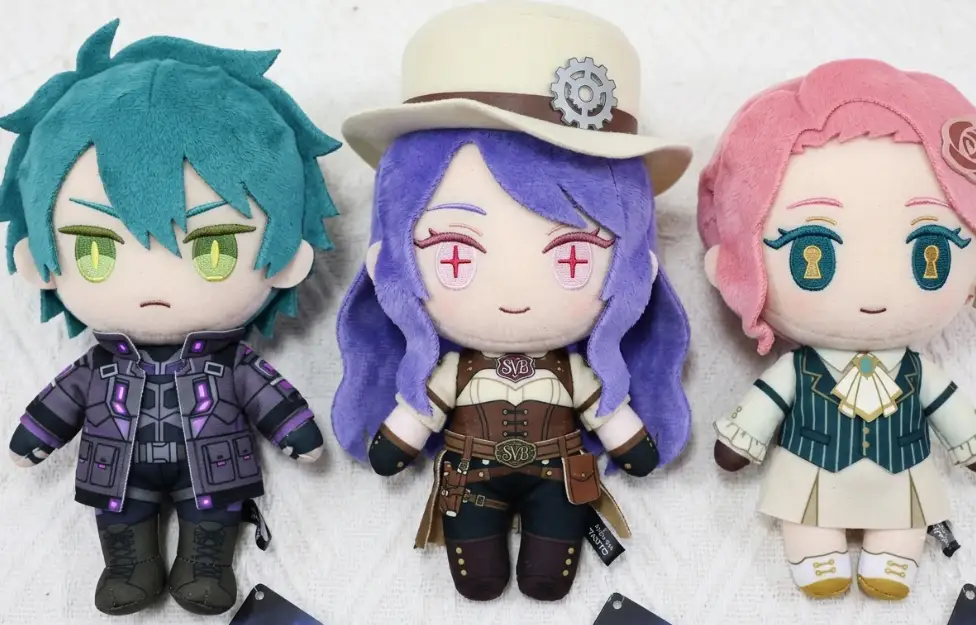
Embroidered eyes replace hardware entirely with thread. Instead of piercing the fabric with a rigid component, the eye shape — pupil, iris, highlight, and sometimes eyelash detail — is built up through satin stitch, fill stitch, or appliqué layering, using an embroidery machine guided by a digitized stitch file or, less commonly, hand needlework for small-batch and artisan products.
Embroidery Methods Used for Plush Eyes
Most production embroidery uses a digitized file that controls stitch direction, density, and color changes automatically. Satin stitch produces a smooth, glossy block of color ideal for pupils and simple round eyes. Fill stitch covers larger areas efficiently and is often used for background eye shapes before satin stitch adds definition on top. For more expressive characters, appliqué eyes — small pre-cut felt or fabric shapes attached with a zigzag or tackle stitch border — allow multi-layered eye designs that would be difficult to achieve with thread alone.
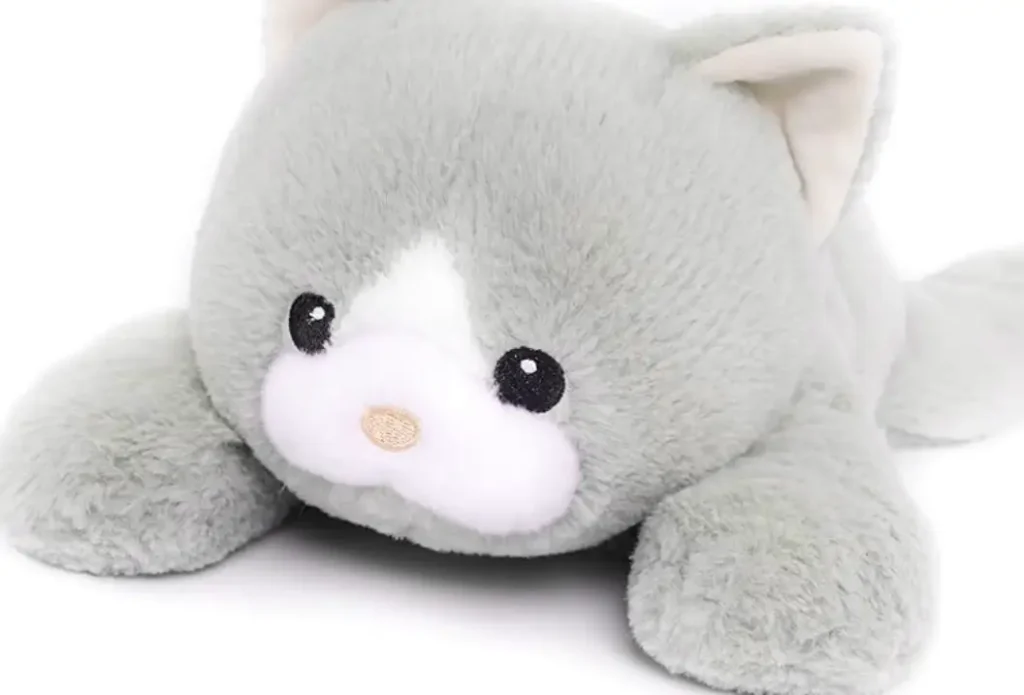
Because embroidery leaves no rigid component protruding from the surface, there is no shank, no washer, and no mechanical failure point that can separate from the plush body. This structural simplicity is the foundation of embroidery’s safety advantage.
When Embroidered Eyes Are the Better Choice
Embroidered eyes are the standard for any plush toy marketed to infants, since most regulatory frameworks either restrict or outright prohibit small, separable hard components on toys intended for children under 36 months. They are also favored for premium or “heirloom” style plush where a soft, hand-finished aesthetic is part of the brand story, and for any product where machine washing at high frequency is expected — daycare toys, comfort blankets, and hospital-gifted plush all commonly specify embroidered eyes for exactly this reason.
Tip: If a design calls for embroidered eyes but the brand still wants dimensional depth, consider a layered appliqué eye with a satin-stitch highlight. It approximates the glossy look of a safety eye without introducing a hard, separable part.
Safety Standards and Age Compliance: Which Eye Type Passes Testing?
Toy safety regulations in most major markets are built around small-parts and pull-force testing, and eye construction is one of the components most frequently flagged during third-party lab testing. Safety eyes are permitted for age 3+ products in most jurisdictions provided they pass a specified minimum pull-force test without separating from the fabric.
For products targeting children under 3, or for any plush marketed as suitable “from birth,” regulators generally require that eyes either pass a substantially higher pull-force threshold or be constructed without a separable hard component at all — which is where embroidery becomes not just a design preference but a compliance requirement.
Safety Testing Benchmarks Relevant to Plush Toy Eyes
| Standard / Region | Applicable Test | Typical Pull-Force Requirement | Practical Implication |
|---|---|---|---|
| ASTM F963 (US) | Tension/pull test on small parts | Approx. 90 N (about 20 lbf) sustained without separation | Safety eyes must be installed with correctly matched washers to pass |
| EN 71-1 (EU) | Torque and tension testing | Similar force thresholds; also evaluates torque resistance | Component and fabric quality both affect pass/fail outcome |
| ISO 8124 | Mechanical and physical properties | Aligned with EN 71-1 methodology | Commonly referenced for export-oriented production |
| 0–36 month category (most regions) | Small parts cylinder test plus pull test | Hard, separable components are heavily restricted or excluded | Embroidered or appliqué eyes are the default-safe approach |
It is worth emphasizing that passing a lab test is not the same as guaranteeing field safety. Pull-force testing is performed on a sample at a point in time; consistent factory-floor quality control — correct washer selection, correct insertion pressure, and periodic in-line pull testing — is what actually keeps that margin of safety intact across a full production run.

Tip: Always request the eye supplier’s pull-force test data for the specific shank length and fabric combination being used, not a generic spec sheet. Pull-force performance changes meaningfully with fabric weight, stuffing firmness, and washer type.
Cost, Lead Time, and Production Efficiency Comparison
From a sourcing standpoint, eye construction affects three separate cost drivers: component cost, direct labor time, and rework rate. Safety eyes are typically inexpensive as a raw component and install quickly with hand tools or pneumatic presses, making them efficient at almost any order volume. Embroidered eyes shift the cost structure toward labor and machine time — digitizing a new stitch file is a one-time setup cost, but each unit then requires embroidery machine time proportional to stitch count and color changes, which scales with design complexity rather than staying flat.
Production Cost and Lead Time Comparison
| Factor | Safety Eyes | Embroidered Eyes |
|---|---|---|
| Component/setup cost | Low; stock sizes are inexpensive off-the-shelf parts | One-time digitizing fee for custom designs |
| Per-unit labor time | Seconds per unit with a press or hand tool | 30 seconds to several minutes depending on stitch density |
| Tooling for custom looks | Custom molded eyes require injection tooling lead time | New stitch file only; no hard tooling required |
| Typical rework driver | Misaligned placement, loose washer, cracked housing | Thread breaks, color mismatch, puckered fabric under dense stitching |
| Best fit for large multi-SKU runs | Very efficient; consistent across sizes | Efficient once digitized, but each new eye shape needs its own file |
For character-accurate licensing programs, custom-molded safety eyes carry a hard tooling cost and a longer lead time upfront, but amortize well across long production runs. Embroidery avoids hard tooling entirely, which makes it attractive for smaller runs, frequent design refreshes, or brands that want to update a character’s expression season to season without re-tooling.
Tip: If a product line will run multiple color variants of the same character, request embroidery quotes broken down by stitch count per color block. Small reductions in fill-stitch density on non-critical areas can meaningfully cut machine time across a large order without changing the visible design.
Durability and Long-Term Performance
Durability expectations differ depending on how a plush toy will actually be used. Safety eyes, once correctly locked, resist pulling and twisting extremely well and hold their color and gloss over years of handling since the plastic surface does not fade or fray the way thread can. Their main long-term failure mode is not the eye itself but the surrounding fabric: repeated stress on the same point can eventually weaken the stitching around the eye hole if the fabric was not reinforced during assembly.
Embroidered eyes distribute stress across many individual stitches rather than concentrating it at a single mechanical joint, which is part of why they perform so well in aggressive-chew or heavy-wash environments. Their primary wear pattern is surface abrasion — repeated friction, such as a toddler rubbing a comfort object against their face daily, can gradually flatten or fuzz the stitch texture over months or years of use, though this rarely creates a safety issue since there is no component to detach.
In washing-machine testing, both eye types generally perform well through dozens of cycles when installed correctly, but embroidery tends to show more graceful, gradual wear (fading, slight texture softening) compared to the more binary failure mode of a safety eye, which either stays fully secure or, in rare defective cases, detaches outright.
Tip: For products expected to endure heavy chewing (pet plush, teething-adjacent comfort toys), specify embroidered or appliqué eyes even for products technically rated 3+, since the failure mode is fundamentally safer regardless of the age grading on the box.
Choosing the Right Eye Type for Your Plush Toy Project
There is no single correct answer — the decision should follow from the product’s real-world use case rather than aesthetic preference alone. A few practical guidelines help narrow the choice quickly:
- Target age under 3, or “infant-safe” positioning: Embroidered or appliqué eyes are close to a default requirement.
- Licensed cartoon character with glossy, expressive eyes: Safety eyes generally match brand art direction more accurately.
- Premium, hand-finished, or artisan-positioned plush: Embroidered eyes often better support the intended tactile, soft aesthetic.
- High-volume promotional or mascot plush for general retail: Safety eyes offer speed and cost efficiency at scale.
- Products expected to face heavy chewing, tugging, or frequent machine washing: Embroidered eyes reduce mechanical failure risk over the product’s lifespan.
Many manufacturers also blend the two approaches within a single product line — using safety eyes on an adult collector’s edition of a character while producing an embroidered “baby-safe” version of the same design for the infant gifting market. This dual-SKU strategy lets a brand serve both audiences without compromising either the visual fidelity of the character or the safety profile expected by parents of very young children.
Tip: When in doubt about an intermediate age range (roughly 2–4 years, where a product may be gifted to a younger sibling despite its label), default to the more conservative embroidered construction. It removes an entire category of testing and liability risk at a relatively small cost tradeoff.
Frequently Asked Questions
Q1. Are safety eyes actually safe for young children?
Safety eyes are engineered to resist pulling and twisting forces well beyond normal play when installed correctly with a matched locking washer, and they can pass standard pull-force testing for products rated age 3 and above. However, most regulatory frameworks either restrict or exclude hard, separable components like safety eyes on toys intended for children under 36 months, since a failure — however rare — creates a choking hazard. For that age group, embroidered or appliqué eyes are the safer and typically required construction.
Q2. Can embroidered eyes look as expressive as safety eyes?
Yes, particularly when layered techniques are used. Combining fill stitch for the base shape, satin stitch for definition, and a small appliqué highlight can produce a surprisingly dimensional, glossy-looking eye without any hard component. It generally takes more design iteration to match the punch of a molded safety eye, but well-digitized embroidery can get very close, especially at larger plush sizes where there is more surface area to work with.
Q3. What is the minimum pull-force a safety eye needs to pass testing?
Requirements vary slightly by standard and region, but most major frameworks such as ASTM F963 and EN 71-1 test in the range of roughly 90 newtons (about 20 pounds-force) of sustained tension without the eye separating from the fabric. The exact figure and test method should always be confirmed against the specific standard applicable to the target market, since thresholds and testing protocols can differ by product category and age grading.
Q4. How much more expensive is embroidery compared to safety eyes?
It depends heavily on design complexity. A simple, single-color embroidered eye can be nearly comparable in per-unit cost to a safety eye once digitizing is amortized across a production run. Multi-color, high-stitch-density designs cost meaningfully more per unit because embroidery time scales directly with stitch count, whereas a safety eye’s installation time stays roughly constant regardless of its visual complexity.
Q5. Do safety eyes ever need to be replaced or repaired after installation?
Properly installed safety eyes rarely require replacement, since the locking washer mechanism is designed to be effectively permanent once seated. The more common failure point is the surrounding fabric weakening from repeated stress rather than the eye component itself. Quality control during assembly — verifying washer seating and reinforcing the fabric around the eye hole — does far more to prevent future issues than the eye hardware itself.
Q6. Can a single plush toy use both safety eyes and embroidery in different areas?
Yes, this is a common hybrid approach. Some products use safety eyes for the primary eyes but embroider secondary features like eyebrows, eyelashes, or nose details. Others reserve safety eyes for an adult or collector version of a character while producing a fully embroidered version of the same design for infant-safe gifting, allowing one character concept to serve multiple age segments without compromising safety compliance.
Q7. Which eye type holds up better in the washing machine over time?
Both eye types generally perform well through dozens of wash cycles when installed correctly, but they degrade differently. Safety eyes tend to stay visually unchanged until a rare mechanical failure occurs, while embroidered eyes wear more gradually — slight fading or softened stitch texture over months of repeated washing — without introducing a detachment risk. For products expected to be washed frequently and roughly, such as daily-use comfort plush, embroidery’s gradual wear pattern is generally considered the lower-risk option.